

What do you think?

Fleet of Worlds #2
Juggler of Worlds
For too long, the Puppeteers have controlled the fate of worlds. Now Sigmund is pulling the strings... Covert agent Sigmund Ausfaller is Earth's secret weapon, humanity's best defense against all conspiracies, real and potential - and imaginary - of foes both human and alien. Who better than a brilliant paranoid to expose the devious plots of others? He may finally have met his match in Nessus, representative of the secretive Puppeteers, the elder race who wield vastly superior technologies. Nessus schemes in the shadows with Earth's traitors and adversaries, even after the race he represents abruptly vanishes from Known Space. As a paranoid, Sigmund had always known things would end horribly for him. Only the when, where, how, why, and by whom of it all had eluded him. That fog has begun to lift... But even Sigmund has never imagined how far his investigations will take him - or that his destiny is entwined with the fates of worlds.
349 pages, Hardcover
First published September 16, 2008
About the author
Larry Niven
690 books3,387 followersLaurence van Cott Niven's best known work is Ringworld (Ringworld, #1) (1970), which received the Hugo, Locus, Ditmar, and Nebula awards. His work is primarily hard science fiction, using big science concepts and theoretical physics. The creation of thoroughly worked-out alien species, which are very different from humans both physically and mentally, is recognized as one of Niven's main strengths.
Niven also often includes elements of detective fiction and adventure stories. His fantasy includes The Magic Goes Away series, which utilizes an exhaustible resource, called Mana, to make the magic a non-renewable resource.
Niven created an alien species, the Kzin, which were featured in a series of twelve collection books, the Man-Kzin Wars. He co-authored a number of novels with Jerry Pournelle. In fact, much of his writing since the 1970s has been in collaboration, particularly with Pournelle, Steven Barnes, Brenda Cooper, or Edward M. Lerner.
He briefly attended the California Institute of Technology and graduated with a Bachelor of Arts in mathematics (with a minor in psychology) from Washburn University, Topeka, Kansas, in 1962. He did a year of graduate work in mathematics at the University of California at Los Angeles. He has since lived in Los Angeles suburbs, including Chatsworth and Tarzana, as a full-time writer. He married Marilyn Joyce "Fuzzy Pink" Wisowaty, herself a well-known science fiction and Regency literature fan, on September 6, 1969.
Niven won the Hugo Award for Best Short Story for Neutron Star in 1967. In 1972, for Inconstant Moon, and in 1975 for The Hole Man. In 1976, he won the Hugo Award for Best Novelette for The Borderland of Sol.
Niven has written scripts for various science fiction television shows, including the original Land of the Lost series and Star Trek: The Animated Series, for which he adapted his early Kzin story The Soft Weapon. He adapted his story Inconstant Moon for an episode of the television series The Outer Limits in 1996.
He has also written for the DC Comics character Green Lantern including in his stories hard science fiction concepts such as universal entropy and the redshift effect, which are unusual in comic books.
http://us.macmillan.com/author/larryn...
Niven also often includes elements of detective fiction and adventure stories. His fantasy includes The Magic Goes Away series, which utilizes an exhaustible resource, called Mana, to make the magic a non-renewable resource.
Niven created an alien species, the Kzin, which were featured in a series of twelve collection books, the Man-Kzin Wars. He co-authored a number of novels with Jerry Pournelle. In fact, much of his writing since the 1970s has been in collaboration, particularly with Pournelle, Steven Barnes, Brenda Cooper, or Edward M. Lerner.
He briefly attended the California Institute of Technology and graduated with a Bachelor of Arts in mathematics (with a minor in psychology) from Washburn University, Topeka, Kansas, in 1962. He did a year of graduate work in mathematics at the University of California at Los Angeles. He has since lived in Los Angeles suburbs, including Chatsworth and Tarzana, as a full-time writer. He married Marilyn Joyce "Fuzzy Pink" Wisowaty, herself a well-known science fiction and Regency literature fan, on September 6, 1969.
Niven won the Hugo Award for Best Short Story for Neutron Star in 1967. In 1972, for Inconstant Moon, and in 1975 for The Hole Man. In 1976, he won the Hugo Award for Best Novelette for The Borderland of Sol.
Niven has written scripts for various science fiction television shows, including the original Land of the Lost series and Star Trek: The Animated Series, for which he adapted his early Kzin story The Soft Weapon. He adapted his story Inconstant Moon for an episode of the television series The Outer Limits in 1996.
He has also written for the DC Comics character Green Lantern including in his stories hard science fiction concepts such as universal entropy and the redshift effect, which are unusual in comic books.
http://us.macmillan.com/author/larryn...
Ratings & Reviews
Friends & Following
Create a free account to discover what your friends think of this book!
Community Reviews
Displaying 1 - 30 of 153 reviews

November 17, 2018
The galactic core had exploded?
What a tricky book to review! Is it a companion novel to Crashlander? Is it a sequel to Fleet of Worlds? It is the second book in the Fleet Of Worlds series, which again is intended to serve as a prequel to Ringworld.
Okay, here’s the deal. If you are completely unfamiliar with Niven’s Known Space, you should consider brushing up a bit first. You could read this novel without the aforementioned exposure, but it would possibly be a bit like drinking gin and tonic without the gin. I would particularly recommend reading Crashlander (the Beowulf Shaeffer stories), since Juggler Of Worlds is, to at least some extent, the yin to that book’s yang. This time round the focus is on the political ramifications of Known Space events previously depicted, and the story is told from the viewpoint of Sigmund Ausfaller.
The timeline is also important, since this sequence converges with the events depicted in Fleet of Worlds. The whole thing is actually quite clever.
"The oceans were seeded with genetically engineered, infrared-photosynthesising plankton. At the rim of the solar system, away from the danger, our sky became dark."
And, of course: Puppeteers.
Juggler expands on the history and motivations of this race. Since the title of the series refers to the worlds of the Puppeteers, fleeing the explosion at the galactic core, it’s safe to suppose that this will be a recurring theme throughout. After the events depicted in the previous book (and for that matter, here as well), I have cultivated a healthy dislike for these manipulative gobshites, but that’s beside the point. It’s always interesting to see how authors can envision and develop an extraterrestrial race with its own racial histories, social structures and cultural motivations.
Danger lurked in simple blue lines.
This is big concept science fiction, and the fleet of worlds from which the series borrows its name is the obvious case in point. When the novel does dish out the visuals it can get quite good (look out for The Outsiders and the Star Lures). Still, the book deals primarily in intrigue and politics and behind-the-scenes machinations.
An oddity: the sequence with the Kzin (Chuft-Captain and crew) ties back to crossover events in the Star Trek animated series (the Star Trek universe appears to have “borrowed” the Kzin race from Niven). This sequence is a bit of a digression from the overall plot and detracts from the (already somewhat fragile) cohesiveness of the book.
Also: the dedication of the novel gives a hint to its nature: ”To the readers who work on a book long after it's closed, and really get their money's worth”. It’s intended to be an immersive experience; to add value to the pre-existing and established universe. Niven has a history of engaging with his readers, particularly insofar as Ringworld itself is concerned. In fact, wasn’t The Ringworld Engineers a product of reader outcry, to address some of the scientific quirks that were pointed out by the Sci Fi community?
Two stars, one yellowish and one eye-piercingly white-violet, blazed in the view port. Glowing red smoke in a many-ringed coil looped around them. The outer end of the coil lashed and nailed, diffusing into a red veil spread across half the sky.
So much beauty! It displaced, for a little while at least, the dread that had immobilised him.
In the end, it was an engaging enough read that got better and better as the novel progressed. It is a slow story, but there is a nice payoff at the end. I’m still keen to follow the series and see where it leads.
3.5 stars.

July 30, 2013
I was rewarded with this as a satisfactory return to Niven’s world of “Known Space” several hundred years in the future. It’s pretty special to get a substantive expansion of his spectrum of interconnected tales forty years after he first created it. This is the second of a series of four prequels to 1970’s “Ringworld” that explore (invent) a complex interdependent relationship between humans and aliens known as Puppeteers. The latter are technologically advanced, generally peaceful herbivores with an odd body form (three hooved legs and two ostrich-like heads). They sell the Earthers technology for faster-than-light travel but remain secretive due to their fearful and mistrusting nature.
The "Fleet of Worlds” (which you must read first, with "Ringworld" itself but a reasonable option) dealt with the dark side of the Puppeteer’s paranoia with respect to humans, considered dangerous because of their unbounded curiosity and history of war. The Puppeteers are vulnerable during the long process of moving their planets from the supernovae at the galactic corps. A colony of humans have been raised from frozen embryos aboard a ship captured several hundred years previously, which was initially a “know thy enemy” move but eventually slipping down the moral slope until they become effectively a slave race ignorant of their own history (sound familiar?). Even their language has been purged of dangerous words, such as “war”.
Whereas the previous book focused on the beginning of a revolt by these colonists, this one makes a story out of the Earth’s UN security forces trying to counter the spying and interfering schemes of the Puppeteers designed to neutralize the human threat. The biggest such threats are the discovery of their Fleet of Worlds and of unusual resources that could enable them to destroy the supposedly impenetrable hulls of spacecraft now used by both species. The hero of the human efforts is agent Sigmund Ausfaller, who ironically succeeds so well because his paranoia is equal to that of the aliens. The other key character is the Puppeteer Nessus, whom we learned in the previous book is gifted in working with humans and is more moderate compared to others of his race who are more of the “kill for peace” persuasion. A third alien species, the mysterious and ancient Outsiders of interstellar regions, becomes a target for both humans and Puppeteers as a source of leverage in their conflict.
I don’t have the problem other readers have over the recycling of some of the plot elements used previously in short stories from decades before. The broad sci fi theme of whether humans could successfully cooperate with alien species or would end up engaging in a genocidal war is explored very imaginatively in these books in my view. A society of humans trying to discover and create their own identity when their own language has been purged of dangerous concepts was also a fascinating part of the story. As you can imagine, some form of intersection between native and “wild” human societies was bound to become an important part of the plot. Things are bound to get nasty in the next book based on its title: “Destroyer of Worlds”.
I am hooked, and look forward to the ultimate denouement in a fifth book, “Fate of Worlds: Return from the Ringworld,” which moves past the Ringworld novel and is supposed to resolve the outcome of the competition between species.
The "Fleet of Worlds” (which you must read first, with "Ringworld" itself but a reasonable option) dealt with the dark side of the Puppeteer’s paranoia with respect to humans, considered dangerous because of their unbounded curiosity and history of war. The Puppeteers are vulnerable during the long process of moving their planets from the supernovae at the galactic corps. A colony of humans have been raised from frozen embryos aboard a ship captured several hundred years previously, which was initially a “know thy enemy” move but eventually slipping down the moral slope until they become effectively a slave race ignorant of their own history (sound familiar?). Even their language has been purged of dangerous words, such as “war”.
Whereas the previous book focused on the beginning of a revolt by these colonists, this one makes a story out of the Earth’s UN security forces trying to counter the spying and interfering schemes of the Puppeteers designed to neutralize the human threat. The biggest such threats are the discovery of their Fleet of Worlds and of unusual resources that could enable them to destroy the supposedly impenetrable hulls of spacecraft now used by both species. The hero of the human efforts is agent Sigmund Ausfaller, who ironically succeeds so well because his paranoia is equal to that of the aliens. The other key character is the Puppeteer Nessus, whom we learned in the previous book is gifted in working with humans and is more moderate compared to others of his race who are more of the “kill for peace” persuasion. A third alien species, the mysterious and ancient Outsiders of interstellar regions, becomes a target for both humans and Puppeteers as a source of leverage in their conflict.
I don’t have the problem other readers have over the recycling of some of the plot elements used previously in short stories from decades before. The broad sci fi theme of whether humans could successfully cooperate with alien species or would end up engaging in a genocidal war is explored very imaginatively in these books in my view. A society of humans trying to discover and create their own identity when their own language has been purged of dangerous concepts was also a fascinating part of the story. As you can imagine, some form of intersection between native and “wild” human societies was bound to become an important part of the plot. Things are bound to get nasty in the next book based on its title: “Destroyer of Worlds”.
I am hooked, and look forward to the ultimate denouement in a fifth book, “Fate of Worlds: Return from the Ringworld,” which moves past the Ringworld novel and is supposed to resolve the outcome of the competition between species.

November 18, 2022
Despite this being the middle book of a trilogy–and not having read the first–I had no trouble following the action, and didn't feel as though I was missing anything. This may be partly due to the fact that I've read a fair amount of Niven in general, so I'm fairly familiar with the Known Space timeline.
Ultimately, the novel is about the length to which some races will go to hide their secrets. It also very cleverly incorporates references to previous stories, frequently putting a different spin on them. At one point, I suddenly recognized the events leading up to the classic Niven short story, "Neutron Star." Indeed, we get something of a backstage view of at least most of the Beowulf Shaeffer stories (published in one volume as Crashlander.) Beowulf's knack for being involved in so many adventures makes certain parties suspicious …
We also get the events of another classic, "The Soft Weapon," from Nessus' point of view. And we get quite a bit of the Outsiders. What I'm saying is that Nivenophiles will love this book, no question. Casual readers? Hard to say. A great deal of the appeal for me were all the threads linking this book to previous stories in Niven's Known Space continuum. Obviously, a reader new to his books wouldn't get any of that. Doesn't mean that they wouldn't enjoy it. I'm just not sure.
My past experience has been that, with rare exceptions, Niven doesn't do sequels well. This book would appear to be one of those exceptions (to be fair, his collaborative sequels tend to be better than his solo ones.) I can extrapolate from the events in this book what probably happened in the first book in the trilogy, but I'd still like to read it. Based on this book, it would appear that the entire Worlds trilogy is worth reading. I'll have to see what I can do to track down the other two books …
Addendum: According to Goodreads, I've already read the first book in the series, but I'm dubious. I think it more probable that I confused it with a different book? The lack of a review means that it was in my reading logs prior to joining Goodreads, so all I would have had would have been the title and author. Three stars was my go-to rating for "Read, but don't recall details." I think it highly improbable that *some* memories of it wouldn't have surfaced upon reading this book, regardless of how much time passed.
Ultimately, the novel is about the length to which some races will go to hide their secrets. It also very cleverly incorporates references to previous stories, frequently putting a different spin on them. At one point, I suddenly recognized the events leading up to the classic Niven short story, "Neutron Star." Indeed, we get something of a backstage view of at least most of the Beowulf Shaeffer stories (published in one volume as Crashlander.) Beowulf's knack for being involved in so many adventures makes certain parties suspicious …
We also get the events of another classic, "The Soft Weapon," from Nessus' point of view. And we get quite a bit of the Outsiders. What I'm saying is that Nivenophiles will love this book, no question. Casual readers? Hard to say. A great deal of the appeal for me were all the threads linking this book to previous stories in Niven's Known Space continuum. Obviously, a reader new to his books wouldn't get any of that. Doesn't mean that they wouldn't enjoy it. I'm just not sure.
My past experience has been that, with rare exceptions, Niven doesn't do sequels well. This book would appear to be one of those exceptions (to be fair, his collaborative sequels tend to be better than his solo ones.) I can extrapolate from the events in this book what probably happened in the first book in the trilogy, but I'd still like to read it. Based on this book, it would appear that the entire Worlds trilogy is worth reading. I'll have to see what I can do to track down the other two books …
Addendum: According to Goodreads, I've already read the first book in the series, but I'm dubious. I think it more probable that I confused it with a different book? The lack of a review means that it was in my reading logs prior to joining Goodreads, so all I would have had would have been the title and author. Three stars was my go-to rating for "Read, but don't recall details." I think it highly improbable that *some* memories of it wouldn't have surfaced upon reading this book, regardless of how much time passed.

September 19, 2010
(Niven-ist, that's what I've been this summer and fall. I started re-reading the Known Space books to escape a harsh reality, but like a narcotic painkiller, I keep finding reasons to pick up another KS story long after the original need has passed.)
The paranoid ARM agent, Sigmund Ausfaller, does not believe that the alien Pierson's puppeteers have left Known Space. He and no one else. The equally paranoid puppeteer Nessus acts as rear guard to the Fleet of Worlds (Book 1 of the series), instigating human riots, bribing officials, setting up space pirates with a black hole trap, and subverting the world-spanning stepping disk system. And yet the dogged Sigmund keeps coming.
Here, in book 2 of the series, the narrative passion derives from a human investigator who will not be deterred, and an alien species who will go to great lengths to keep their secrets. The emotional depth of book 1 carries on in this book, focusing a narrative that is ever on the verge of going off on a tangent. In the end, it doesn't matter as much whether or not one has read the circa-1960s stories that underpin this novel, for the reward is in the surprising resolution of the contest between Nessus and Sigmund.
One wonders. Why re-write perfectly good stories? At the start of his career in the 60s, Larry Niven wrote a stellar set of hard SF stories that established Known Space. The stories were later collected in several anthologies including Neutron Star, Tales of Known Space: The Universe of Larry Nivenand Crashlander. The Known Space universe grew in detail and following, spawning other series such as Ringworld, the Man-Kzin Wars and Fleet of Worlds. Obsessed fans put together detailed timelines and even a glossary of KS terms and names.
Juggler draws largely on the history and timeline built by the older stories, even rehashing several shorts (from different POVs) including the award-winning "Borderland of Sol" and "Soft Weapon". Why? To fix some mistakes, perhaps. Or to tie-in to other events, filling in any gaps and resolving conflicts? For posterity? I would say, to bring the stories to a new audience by injecting new sensibilities (the earlier stories were children of the time; i.e., the free-loving, pre-emancipated, sexist 60s).
In my opinion, as noted earlier, the overall result with Juggler is an engaging read with contemporary worldview. And of course, not without a surprise or two to keep original fans attentive. Great work and I am upping the rating to 5 stars on this re-read.
The paranoid ARM agent, Sigmund Ausfaller, does not believe that the alien Pierson's puppeteers have left Known Space. He and no one else. The equally paranoid puppeteer Nessus acts as rear guard to the Fleet of Worlds (Book 1 of the series), instigating human riots, bribing officials, setting up space pirates with a black hole trap, and subverting the world-spanning stepping disk system. And yet the dogged Sigmund keeps coming.
Here, in book 2 of the series, the narrative passion derives from a human investigator who will not be deterred, and an alien species who will go to great lengths to keep their secrets. The emotional depth of book 1 carries on in this book, focusing a narrative that is ever on the verge of going off on a tangent. In the end, it doesn't matter as much whether or not one has read the circa-1960s stories that underpin this novel, for the reward is in the surprising resolution of the contest between Nessus and Sigmund.
One wonders. Why re-write perfectly good stories? At the start of his career in the 60s, Larry Niven wrote a stellar set of hard SF stories that established Known Space. The stories were later collected in several anthologies including Neutron Star, Tales of Known Space: The Universe of Larry Nivenand Crashlander. The Known Space universe grew in detail and following, spawning other series such as Ringworld, the Man-Kzin Wars and Fleet of Worlds. Obsessed fans put together detailed timelines and even a glossary of KS terms and names.
Juggler draws largely on the history and timeline built by the older stories, even rehashing several shorts (from different POVs) including the award-winning "Borderland of Sol" and "Soft Weapon". Why? To fix some mistakes, perhaps. Or to tie-in to other events, filling in any gaps and resolving conflicts? For posterity? I would say, to bring the stories to a new audience by injecting new sensibilities (the earlier stories were children of the time; i.e., the free-loving, pre-emancipated, sexist 60s).
In my opinion, as noted earlier, the overall result with Juggler is an engaging read with contemporary worldview. And of course, not without a surprise or two to keep original fans attentive. Great work and I am upping the rating to 5 stars on this re-read.

December 6, 2008
Engineers often conceptualize new designs in a marathon whiteboard session. Juggler was the reading equivalent of walking into the end of an engineering session, seeing a huge whiteboard with scribbles, an overall flow, elements of concise detail, and some moments of brilliance. A first question could be "This looks interesting. What are the next steps to the finished product?"...In Juggler, the answer was "oh, this is the finished product!".
Juggler could have been repackaged as either several viginettes within a larger outline, or methodically rewritten in additional drafts, to polish up the rough points in characterization, narrative and plot.
I'd recommend this book only to fully versed and die-hard 'known worlds' fans. In that case, I would truly recommend it. There are seriously brilliant points in the novel. For all other readers, go back to Ringworld, and then read as a followup Fleet of Worlds and/or some of the earlier short story collections from known space.
Juggler could have been repackaged as either several viginettes within a larger outline, or methodically rewritten in additional drafts, to polish up the rough points in characterization, narrative and plot.
I'd recommend this book only to fully versed and die-hard 'known worlds' fans. In that case, I would truly recommend it. There are seriously brilliant points in the novel. For all other readers, go back to Ringworld, and then read as a followup Fleet of Worlds and/or some of the earlier short story collections from known space.

September 5, 2013
This is a book that can not stand on its own. Most of it is a parallel story to Crashlander, but toward the end it moves on to parallel "The Soft Weapon", and then to act as a sequel to Fleet of Worlds. The result is Frankenstein-like construct that technically holds together but doesn't say much on its own and is entirely dependent on both Crashlander and Fleet of Worlds to make any sense.
To a certain extent, I think Lerner's prose is helped by the fact that he's forced into tight, constrained stories -- as the sections that parallel that various Known World shorts are tighter and more to the point than the prose of this book's predecessor, Fleet of Worlds. However, piling more retcons on the retcons already found in Crashlander doesn't do the original Beowulf Schaefer stories any good -- and it makes this reader roll his eyes.
Overall, I enjoyed seeing Known Space again, and I actually did like seeing the Beowulf stories in a larger context, but unfortunately Lerner didn't add anything to the stories he repeated. So, overall, this was just an OK book. I'd only recommend it to folks who were big fans of Known Space, and only if they'd read Crashlander recently.
To a certain extent, I think Lerner's prose is helped by the fact that he's forced into tight, constrained stories -- as the sections that parallel that various Known World shorts are tighter and more to the point than the prose of this book's predecessor, Fleet of Worlds. However, piling more retcons on the retcons already found in Crashlander doesn't do the original Beowulf Schaefer stories any good -- and it makes this reader roll his eyes.
Overall, I enjoyed seeing Known Space again, and I actually did like seeing the Beowulf stories in a larger context, but unfortunately Lerner didn't add anything to the stories he repeated. So, overall, this was just an OK book. I'd only recommend it to folks who were big fans of Known Space, and only if they'd read Crashlander recently.

November 7, 2024
I should have known better...
Follow-up books in a otherwise completed series, written many years later, rarely adds anything new and often comes across as a desperate attempt at milking the last drops out of an old success, but then again it worked quite decently for Asimov with Foundation and Earth .
Popular writers starting to "co-write" novels with otherwise unknown writers, can also be sign of declining quality, but Niven actually did several succesful collaboration novels like The Mote in God's Eye with Jerry Pournelle in the past.
Retelling old stories from another viewpoint can be interesting, as in Zoe's Tale. And the first volume of fleet of worlds, recounting the stories in Crashlander from another viewpoint, was somewhat interesting. But repeating the same stories again from yet another viewpoint, as in this one, seems pointless.
No point in picking up the remaining 2 novels in the series.
Follow-up books in a otherwise completed series, written many years later, rarely adds anything new and often comes across as a desperate attempt at milking the last drops out of an old success, but then again it worked quite decently for Asimov with Foundation and Earth .
Popular writers starting to "co-write" novels with otherwise unknown writers, can also be sign of declining quality, but Niven actually did several succesful collaboration novels like The Mote in God's Eye with Jerry Pournelle in the past.
Retelling old stories from another viewpoint can be interesting, as in Zoe's Tale. And the first volume of fleet of worlds, recounting the stories in Crashlander from another viewpoint, was somewhat interesting. But repeating the same stories again from yet another viewpoint, as in this one, seems pointless.
No point in picking up the remaining 2 novels in the series.

May 5, 2017
Juggler of Worlds is the second book in the Fleet of Worlds series. This series of books are meant to fill in the backstory of the Ringworld books, so I would recommend reading through those first, and moving onto the Fleet of Worlds if you want more info.
Juggler begins at a time in which the Puppeteers are heavily involved in Earth and human activities. Sigmund Ausfaller, an ARM agent (something like CIA/FBI), is studying the Puppeteers and Beowulf Shaeffer, certain there are devious plots. Beowulf is a character from older stories in the Known Space universe. Sigmund is neurotic, which helps his work, but doesn't help his personal life. He tries to uncover plots and hold together his romantic relationships.
Juggler of Worlds has a bit of an identity crisis. It is 2/3 backstory to Beowulf Shaeffer stories and 1/3 sequel to Fleet of Worlds. The plot summary on the actual book doesn't even mention Beowulf, and instead makes it seem like it's focused on Sigmund Ausfaller and Nessus.
I thought in the beginning of the book I was having attention problems. There were plot items being referenced at a rapid clip and a strange fixation by Sigmund on Beowulf as being responsible for everything.
I brought up Goodreads and read through a few reviews, and realized that it wasn't my reading comprehension that was the issue. The issue with Juggler of Worlds is that it is attempting to fill in backstory for what I assume are the majority of Beowulf's stories. If I had known that, I would have attempted to read some of them beforehand.
Beowulf's escapades have already been written about and his contentious relationship with Sigmund. Throw in a bunch of side characters that also appear to have been established in earlier books, it makes it confusing at times. The way it was written makes it seem like chapters were missing. It didn't feel cohesive to me.
Unfortunately, the backstory isn't very interesting compared to what the actual Beowulf stories are about, from what I surmised. It seems like it was an attempt to reconcile some of the older stories with how the plot has unfolded in latter books. It ends up being a page summary of what Beowulf did, and then Sigmund musing for a few pages more about the implications.
That's not necessarily a bad idea, but may have been better suited to a standalone book in the Known Space universe with that description.
Once I reached the last 1/3 of the book, the events of Fleet of Worlds met Juggler, and I really enjoyed the advancement of the plot. Without getting into spoilers, Sigmund does become involved with the characters and events in Fleet.
The Puppeteers are featured frequently, and in my opinion, they're always the best part. Nessus, Achilles, and Nike are focused on the fate of the Puppeteers. I would be find with just a Puppeteer book.
I'll be interested to read the next one, but I am bummed by how heavily this relied on previous knowledge of Beowulf stories.
Juggler begins at a time in which the Puppeteers are heavily involved in Earth and human activities. Sigmund Ausfaller, an ARM agent (something like CIA/FBI), is studying the Puppeteers and Beowulf Shaeffer, certain there are devious plots. Beowulf is a character from older stories in the Known Space universe. Sigmund is neurotic, which helps his work, but doesn't help his personal life. He tries to uncover plots and hold together his romantic relationships.
Juggler of Worlds has a bit of an identity crisis. It is 2/3 backstory to Beowulf Shaeffer stories and 1/3 sequel to Fleet of Worlds. The plot summary on the actual book doesn't even mention Beowulf, and instead makes it seem like it's focused on Sigmund Ausfaller and Nessus.
I thought in the beginning of the book I was having attention problems. There were plot items being referenced at a rapid clip and a strange fixation by Sigmund on Beowulf as being responsible for everything.
I brought up Goodreads and read through a few reviews, and realized that it wasn't my reading comprehension that was the issue. The issue with Juggler of Worlds is that it is attempting to fill in backstory for what I assume are the majority of Beowulf's stories. If I had known that, I would have attempted to read some of them beforehand.
Beowulf's escapades have already been written about and his contentious relationship with Sigmund. Throw in a bunch of side characters that also appear to have been established in earlier books, it makes it confusing at times. The way it was written makes it seem like chapters were missing. It didn't feel cohesive to me.
Unfortunately, the backstory isn't very interesting compared to what the actual Beowulf stories are about, from what I surmised. It seems like it was an attempt to reconcile some of the older stories with how the plot has unfolded in latter books. It ends up being a page summary of what Beowulf did, and then Sigmund musing for a few pages more about the implications.
That's not necessarily a bad idea, but may have been better suited to a standalone book in the Known Space universe with that description.
Once I reached the last 1/3 of the book, the events of Fleet of Worlds met Juggler, and I really enjoyed the advancement of the plot. Without getting into spoilers, Sigmund does become involved with the characters and events in Fleet.
The Puppeteers are featured frequently, and in my opinion, they're always the best part. Nessus, Achilles, and Nike are focused on the fate of the Puppeteers. I would be find with just a Puppeteer book.
I'll be interested to read the next one, but I am bummed by how heavily this relied on previous knowledge of Beowulf stories.
July 9, 2026
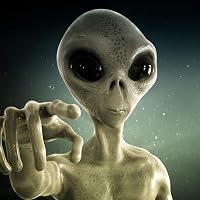
What were the authors smoking?
And can I get some?
And can I get some?
June 11, 2021
What a jumbled mess of a novel. It reads like four or five short stories were re-written to work together as a cohesive novel, and possibly re-written by committee.
There are some great ideas in this book that fit well with Niven's larger body of work. The idea of a spy agency where all agents are naturally or drugged to be paranoid so they never stop investigating potential threats and interpret every piece of data in the most suspicious light is genuinely interesting and entertaining, and so thoroughly Niven (Heinlein is probably the only other sci-fi writer I could see being able to make the idea work). The expansion of the Known Space mythos and learning more about that universe's history and elder races were some of the novel's other highlights.
The problem is that none of these pieces end up really fitting together. The novel is awkwardly told in time jumps. One moment we are with our main character investigating one theory, then we are with other characters we know little about on some other plot, then a time jump or two later one of those characters will interact with our main character but their original sub-plot doesn't seem to really have much to do with what the main character is up to now...I can't even summarize it in a way that makes much sense.
The novel needed to choose one larger, overarching story and to stick with it. Instead it's like the authors had several smaller plots they liked, and decided if they just added them together it would add up to a cohesive, novel spanning plot that would make sense by the end. It never quite gets there.
There are still things to enjoy and if you are a big Niven fan I would say it's still worth a read. It simply pales in comparison to his better works.
There are some great ideas in this book that fit well with Niven's larger body of work. The idea of a spy agency where all agents are naturally or drugged to be paranoid so they never stop investigating potential threats and interpret every piece of data in the most suspicious light is genuinely interesting and entertaining, and so thoroughly Niven (Heinlein is probably the only other sci-fi writer I could see being able to make the idea work). The expansion of the Known Space mythos and learning more about that universe's history and elder races were some of the novel's other highlights.
The problem is that none of these pieces end up really fitting together. The novel is awkwardly told in time jumps. One moment we are with our main character investigating one theory, then we are with other characters we know little about on some other plot, then a time jump or two later one of those characters will interact with our main character but their original sub-plot doesn't seem to really have much to do with what the main character is up to now...I can't even summarize it in a way that makes much sense.
The novel needed to choose one larger, overarching story and to stick with it. Instead it's like the authors had several smaller plots they liked, and decided if they just added them together it would add up to a cohesive, novel spanning plot that would make sense by the end. It never quite gets there.
There are still things to enjoy and if you are a big Niven fan I would say it's still worth a read. It simply pales in comparison to his better works.
June 26, 2009
I went into this with pretty low expectations, not having been all that impressed with Fleet of Worlds. I ended up being pleasantly surprised. I'm assuming this is by and large Lerner's book written in Niven's setting. If so, he seems to have found his voice a bit more, and isn't really trying to duplicate Niven's style as much. That's part of the appeal. The two viewpoint characters here are ones that Niven created, but wouldn't have tended to use much as narrators. The Man-Kzin Wars books have shown for some time that Niven's invented history is robust enough for other authors to build on-- I think this is more or less the same principle.
That said, I have to admit there's a little bit of fanfic-y appeal here, given the extent to which events fit around existing Niven stories in the Known Space canon. The book is liable to be pretty opaque to anyone not familiar with the material on which it's built. Still, it's done a lot better than that sort of thing is generally known for-- I'm pretty leery of such an approach generally, and enjoyed this book all the same.
That said, I have to admit there's a little bit of fanfic-y appeal here, given the extent to which events fit around existing Niven stories in the Known Space canon. The book is liable to be pretty opaque to anyone not familiar with the material on which it's built. Still, it's done a lot better than that sort of thing is generally known for-- I'm pretty leery of such an approach generally, and enjoyed this book all the same.

February 19, 2011
The Puppeteers are fleeing and the fate of humankind is at peril. Who better to save the world than a paranoid ARM agent named Sigmund.
A multiple world, multiple entity battle of wits, intrigue and deception at truly galactic scales. We follow a set of three characters, one human and two Puppeteers as they jostle for power and control of their lives, their races and more.
Lots of high-tech gadgetry, and I found Sigmund a truly enjoyable paranoid.
Somewhere around the middle of this book I started thinking that the title might be juggler of words, because the story seemed to be just circling around without ever really going anywhere. Luckily Mr. Niven and Mr. Lerner pull the story out of a nose-dive and wrap to a satisfying conclusion, which makes it all a little more worth while.
On the positive side, reading Mr. Niven again after so many years is a remembered joy. His ability to create real personalities for non human races is marvelous, and I could shudder with Nessus's fears as easily as Sigmund's paranoia.
It has been perhaps dozens of years since I read Ringworld, but it in no way diminished my enjoyment of this book.
A multiple world, multiple entity battle of wits, intrigue and deception at truly galactic scales. We follow a set of three characters, one human and two Puppeteers as they jostle for power and control of their lives, their races and more.
Lots of high-tech gadgetry, and I found Sigmund a truly enjoyable paranoid.
Somewhere around the middle of this book I started thinking that the title might be juggler of words, because the story seemed to be just circling around without ever really going anywhere. Luckily Mr. Niven and Mr. Lerner pull the story out of a nose-dive and wrap to a satisfying conclusion, which makes it all a little more worth while.
On the positive side, reading Mr. Niven again after so many years is a remembered joy. His ability to create real personalities for non human races is marvelous, and I could shudder with Nessus's fears as easily as Sigmund's paranoia.
It has been perhaps dozens of years since I read Ringworld, but it in no way diminished my enjoyment of this book.

September 14, 2010
I absolutely loved this book (#2 in the Fleet of Worlds series). What really impressed me was how well integrated the plot was with the other Known Space novels, specifically "Crashlander," a collection of short stories Niven wrote back in the 60's. I keep wondering if he must have had these books in mind way back then, they fuse together so seamlessly. On the flip side, if you haven't read that book or any other Known Space novels, you might be really lost.
It's also really great to be able to enjoy a series by Larry Niven again. Sometime in the 90's he became something of a crank, railing against environmentalists in many of his books, and I couldn't stomach any of them. This series is like something straight out of his early days, only with much more fluid writing (still rather clunky, but very good for him). Perhaps that's the assistance of his coauthor, Edward M. Lerner.
I'm really looking forward to the next book in this series.
It's also really great to be able to enjoy a series by Larry Niven again. Sometime in the 90's he became something of a crank, railing against environmentalists in many of his books, and I couldn't stomach any of them. This series is like something straight out of his early days, only with much more fluid writing (still rather clunky, but very good for him). Perhaps that's the assistance of his coauthor, Edward M. Lerner.
I'm really looking forward to the next book in this series.

November 30, 2012
Who better than a brilliant paranoid to expose the devious plots of others?
Who indeed, agrees Sigmund Ausfaller, one of Earth’s few remaining “natural” paranoids. His bosses feel likewise. Sigmund Ausfaller is the ace up the sleeve of ARM, the Amalgamated Regional Militia, whose Bureau of Alien Affairs on Earth employs a group of paranoid agents, most of them drug-induced, to ferret out the secrets of the Citizens, an alien race known unaffectionately by humans as the Puppeteers. Ausfaller sees conspiracies within conspiracies and his fearful distrust of everyone, most notably the Puppeteers, makes him the ideal agent to seek out the location of the Puppeteer homeworld.
Niven and Lerner’s series of prequel novels to the seminal classic Ringworld began with Fleet of Worlds, an excellent blend of interesting scientific concept and engaging adventure story, and continues with Juggler of Worlds.
Come on over to my blog to check out the rest of my review:
http://www.stainlesssteeldroppings.co...

September 4, 2011
I really liked this one, but I'm not sure that anyone who hasn't read most of Niven's earlier Known Space series would be able to figure out what was happening. It's a nice companion piece to the previous FLEET OF WORLDS, giving back-story to the events in that book and then continuing the narrative once the side stories have caught up with one another. The pacing was much slower, with more political intrigue than I thought was absolutely necessary, and there's a lot of explanation given to concurrent events with many of the previous characters and stories from the series. I think that Niven must have had a great time cashing in all of his notes and notions from years earlier, sort of like those comic series where every single character who ever appeared in a Marvel or DC comic has to make an appearence or get a mention. Here, Louis Wu even has a cameo! I'd suggest this one heartily for Niven fans, but suggest that anyone not as familiar start somewhere else.

March 16, 2012
I thought this was great.
I admit it is largely a rehashing of Beowulf Schaeffer stories, often from the ARM agent Sigmund's point of view, but I was okay with that.
There was a combination of enough new things throughout, and a different viewpoint to keep it from being stale, or feeling rehashy to me.
I am also fond of the knitting together of the far flung story lines of lots of past inven stories.
I guess that means the next volume should have Protectors right? Maybe Louis Wu will show his face in an oblique fashion. Like the Millenium Falcon in Attack of the Clones.
I admit it is largely a rehashing of Beowulf Schaeffer stories, often from the ARM agent Sigmund's point of view, but I was okay with that.
There was a combination of enough new things throughout, and a different viewpoint to keep it from being stale, or feeling rehashy to me.
I am also fond of the knitting together of the far flung story lines of lots of past inven stories.
I guess that means the next volume should have Protectors right? Maybe Louis Wu will show his face in an oblique fashion. Like the Millenium Falcon in Attack of the Clones.

September 24, 2025
I went into this one completely cold — no prior knowledge of the series, no context for the world or the characters. Right away, I could tell I was stepping into something much larger than just this book. It felt like walking into the middle of a long-running story, where everyone else already knows the rules, the players, and the history.
The main character is an intelligence agent — brilliant, cynical, borderline paranoid — and most of the story unfolds through his perspective as he tries to piece together the truth behind a web of alien manipulations, secret missions, and half-buried histories. The tone is more psychological and strategic than action-packed, with a strong focus on surveillance, secrecy, and misdirection.
What caught my attention was how it doesn’t follow a traditional linear narrative. Instead, it jumps around in time, revisits key events from different angles, and slowly reveals how seemingly unrelated stories connect. As someone who hadn’t read the original versions of those stories, it sometimes felt like I was missing out on emotional weight or context — like I was getting the “director’s commentary” without having seen the movie.
That said, I was never bored. The world (or rather, the galaxy) is complex and intellectually engaging. The alien species are particularly well-developed — not just biologically different, but operating with motives and fears that are genuinely alien. The story raises thoughtful questions about how much control is too much, whether secrecy can ever be justified, and what it means to really understand your enemies — or your allies.
Emotionally, it kept its distance. The characters often felt more like thinkers than feelers — minds solving problems, rather than people having experiences. That made it a little hard to connect on a personal level, but it worked for the kind of story this was trying to be.
As a newcomer, I can’t say it was an easy read. I was intrigued but often confused, curious but occasionally frustrated. It’s clearly written with longtime fans in mind — people who already know the broader universe and want a deeper dive into the “why” behind certain events. But even as an outsider, I found value in the challenge.
In the end, I wouldn’t recommend it as a starting point, but I also don’t regret reading it. It left me curious about the rest — and maybe that’s the best kind of endorsement. It made me want to go back, start from the beginning, and see how the puzzle really fits together.
The main character is an intelligence agent — brilliant, cynical, borderline paranoid — and most of the story unfolds through his perspective as he tries to piece together the truth behind a web of alien manipulations, secret missions, and half-buried histories. The tone is more psychological and strategic than action-packed, with a strong focus on surveillance, secrecy, and misdirection.
What caught my attention was how it doesn’t follow a traditional linear narrative. Instead, it jumps around in time, revisits key events from different angles, and slowly reveals how seemingly unrelated stories connect. As someone who hadn’t read the original versions of those stories, it sometimes felt like I was missing out on emotional weight or context — like I was getting the “director’s commentary” without having seen the movie.
That said, I was never bored. The world (or rather, the galaxy) is complex and intellectually engaging. The alien species are particularly well-developed — not just biologically different, but operating with motives and fears that are genuinely alien. The story raises thoughtful questions about how much control is too much, whether secrecy can ever be justified, and what it means to really understand your enemies — or your allies.
Emotionally, it kept its distance. The characters often felt more like thinkers than feelers — minds solving problems, rather than people having experiences. That made it a little hard to connect on a personal level, but it worked for the kind of story this was trying to be.
As a newcomer, I can’t say it was an easy read. I was intrigued but often confused, curious but occasionally frustrated. It’s clearly written with longtime fans in mind — people who already know the broader universe and want a deeper dive into the “why” behind certain events. But even as an outsider, I found value in the challenge.
In the end, I wouldn’t recommend it as a starting point, but I also don’t regret reading it. It left me curious about the rest — and maybe that’s the best kind of endorsement. It made me want to go back, start from the beginning, and see how the puzzle really fits together.

September 1, 2018
Another great read from one of Sci-Fi's unsung masters... Perhaps the greatest of the underrated and underappreciated except by real hardcore Sci-Fi afficionatos. Yeah, of course Ringworld is one of the more cited novel that isnt by the "big 3" of Asimov, Clarke, and Heinlein... but most likely the average reader won't go much further than Ringworld... which is a crying shame, because the deeper I get into the Known Space universe, the more enthralled I get, and the more sucked into it I get.
This, the second of the Fleet of Worlds series was a real treat beacause he did a bang-up job in using Sigmund Ausfaller and Beowulf Shaeffer to draw connections to earlier short stories such as Neutron Star, At the Core, and The Soft Weapon... Especially The Soft Weapon, in that, it recounts the whole ordeal from a different vantage point, (that of Nessus')... And probably many other short stories and events that I wasn't even aware were being referenced because I haven't read them yet!
I really loved seeing him weave the lore and history of the Known Space world into an even denser tapestry, taking stories that are known and loved since the 70's... for around 4 decades, and making them even more cohesive and impactful to the overarching narrative of Known Space... truly a marvel in fleshing out something thats already so dense and rich of a literary universe to the next level. I loved it!
This, the second of the Fleet of Worlds series was a real treat beacause he did a bang-up job in using Sigmund Ausfaller and Beowulf Shaeffer to draw connections to earlier short stories such as Neutron Star, At the Core, and The Soft Weapon... Especially The Soft Weapon, in that, it recounts the whole ordeal from a different vantage point, (that of Nessus')... And probably many other short stories and events that I wasn't even aware were being referenced because I haven't read them yet!
I really loved seeing him weave the lore and history of the Known Space world into an even denser tapestry, taking stories that are known and loved since the 70's... for around 4 decades, and making them even more cohesive and impactful to the overarching narrative of Known Space... truly a marvel in fleshing out something thats already so dense and rich of a literary universe to the next level. I loved it!

January 11, 2025
Sigmund Ausfaller woke up shivering, prone on a cold floor. His head pounded. Tape bound his wrists and ankles to plasteel chains. He had always known it would end horribly. Only the when, where, how, why, and by whom of it all had eluded him. That fog was beginning to lift.
Juggler of Worlds is a serviceable sci-fi novel connected to Larry Niven's greater body of work. I don't have any familiarity with Ringworld or the Fleet of Worlds prequels, so I approached it as entirely standalone, and found it easy enough to follow but almost certainly missed some context.
The story takes place in the far future, a future with established contact between several alien races. Among them are the so-called Puppeteers, an equine race with a hidden home world. Our main characters are Sigmund, a naturally paranoid spy of the Amalgamated Regional Militia on earth, and Nessus, a Puppeteer scout of their government that's known as Concordance. The story juggles between their perspectives in the wake of a worlds-shaking move: the Puppeteers unexpectedly pulling up stakes and leaving human-populated areas.
The story is fine, although it bounces around quite a bit before landing us at a satisfactory ending. And the prose throughout is clipped. Lots of short sentences. That's what the readers like I suppose. You get the idea.
All in all, it's fine, likely for Ringworld fans and not a first-time Niven reader. 3/5.
Juggler of Worlds is a serviceable sci-fi novel connected to Larry Niven's greater body of work. I don't have any familiarity with Ringworld or the Fleet of Worlds prequels, so I approached it as entirely standalone, and found it easy enough to follow but almost certainly missed some context.
The story takes place in the far future, a future with established contact between several alien races. Among them are the so-called Puppeteers, an equine race with a hidden home world. Our main characters are Sigmund, a naturally paranoid spy of the Amalgamated Regional Militia on earth, and Nessus, a Puppeteer scout of their government that's known as Concordance. The story juggles between their perspectives in the wake of a worlds-shaking move: the Puppeteers unexpectedly pulling up stakes and leaving human-populated areas.
The story is fine, although it bounces around quite a bit before landing us at a satisfactory ending. And the prose throughout is clipped. Lots of short sentences. That's what the readers like I suppose. You get the idea.
All in all, it's fine, likely for Ringworld fans and not a first-time Niven reader. 3/5.
February 6, 2019
Hard Sci-Fi, and excellent. I am continually impressed by Niven's ability to mix psychology and strategy with sci-fi scenes and themes.
This book captures the presumed changes in Earth society without beating you over the head with verbosity. Government control, thought control, extreme overcrowding, extended lifespans, mind control, rejuvenation, and how alien societies deal with these supposed problems are all present. The reader is never insulted by the literary equivalent of "See, see? Right here! Can't you see it? I'm open!"
Niven and Lerner capture something else, which is the effectiveness of a man on a crusade. Even the alien societies figure out Sigmund Ausfaller is a force to be reckoned with, and it gives me hope that against all odds such a figure can emerge and survive.
The first time I ran into the Kzin was in an animated Star Trek episode of about 1973 and am again impressed that Niven built such a platform that more stories involving them are fresh and new TWENTY FIVE YEARS after the fact.
Retconning is nothing but tiresome agenda making when it comes to Star Wars, for example. I know I'm reading out of sequence, but Niven/Lerner do this well.
This book captures the presumed changes in Earth society without beating you over the head with verbosity. Government control, thought control, extreme overcrowding, extended lifespans, mind control, rejuvenation, and how alien societies deal with these supposed problems are all present. The reader is never insulted by the literary equivalent of "See, see? Right here! Can't you see it? I'm open!"
Niven and Lerner capture something else, which is the effectiveness of a man on a crusade. Even the alien societies figure out Sigmund Ausfaller is a force to be reckoned with, and it gives me hope that against all odds such a figure can emerge and survive.
The first time I ran into the Kzin was in an animated Star Trek episode of about 1973 and am again impressed that Niven built such a platform that more stories involving them are fresh and new TWENTY FIVE YEARS after the fact.
Retconning is nothing but tiresome agenda making when it comes to Star Wars, for example. I know I'm reading out of sequence, but Niven/Lerner do this well.
This entire review has been hidden because of spoilers.

April 10, 2018
It was fine - about a half or maybe 2/3 was pulling in Nivens OG works from back in the day into the main Known Space series, giving it solid dates, and basically (using a different point of view) retconning to make the stories work. The rest, and specifically the end, actually nudges all that in to the Fleet of Worlds series. In terms of tying together a long lifetime of writing and past successes, it was necessary. Onto itself, I'm not sure it stands up as a good novel. It's incredibly long, winding, often times backwards, and forever being pulled along 'because technology.' And, very often, 'because paranoia'.
As book two, it really only needed to be a 1/3 what it was. I'm not sure he needed to take "Crashlander " and basically republish and then expand on it. From another point of view - if you're just sitting down to read Niven - it's lets you forgo hunting down old PDF's of his OG stories or digging up a copy of crashlander - or I suppose if you're a much older individual they're good reminders. But having read those quasi recently... this book is a little tiresome.
As book two, it really only needed to be a 1/3 what it was. I'm not sure he needed to take "Crashlander " and basically republish and then expand on it. From another point of view - if you're just sitting down to read Niven - it's lets you forgo hunting down old PDF's of his OG stories or digging up a copy of crashlander - or I suppose if you're a much older individual they're good reminders. But having read those quasi recently... this book is a little tiresome.

December 3, 2025
In the first book, the focus is mostly on the Puppeteers, but here the focus shifts to the human characters. Paranoid ARM agent Sigmund Ausfaller is the protagonist. We see some of the same events from Fleet of Worlds with Nessus doing all kinds of stuff to distract Sigmund and the ARMs from looking for the fleet from his perspective now.
Connects some of the Beowulf Schaeffer stories, also another Known Space story called The Soft Weapon, to the Fleet of Worlds narrative.
I found the plot and the motivations of some of the characters hard to follow at times.
Puts the Outsiders in a bit of a different light.
It's a long book. There's a lot going on here. I felt like the authors were working hard to establish continuity with the existing canon while still unfolding major new events.
Connects some of the Beowulf Schaeffer stories, also another Known Space story called The Soft Weapon, to the Fleet of Worlds narrative.
I found the plot and the motivations of some of the characters hard to follow at times.
Puts the Outsiders in a bit of a different light.
It's a long book. There's a lot going on here. I felt like the authors were working hard to establish continuity with the existing canon while still unfolding major new events.

May 28, 2018
Oh well. Another Niven. And again, thankfully no rishatra. But thats probably the only good thing about this one.
Well, ok. The writing is fluent and the book isn't bad as such. The problem is that there isn't anyhting interesting happening! It was the same with the first book in the series. I just did not care about the main characters or about what was going on. There are no surprises and everything seems lame.
At first I was introduced to Niven by Neutron star, which was superb. But after reading about ten of his books I have to say I would have been better of sticking with the short story collections as the long ones just don't work that good.
So after reading this second one in the Fleet of World series I decided I will not read the three remaining but will instead get rid of them and read something interesting.
Well, ok. The writing is fluent and the book isn't bad as such. The problem is that there isn't anyhting interesting happening! It was the same with the first book in the series. I just did not care about the main characters or about what was going on. There are no surprises and everything seems lame.
At first I was introduced to Niven by Neutron star, which was superb. But after reading about ten of his books I have to say I would have been better of sticking with the short story collections as the long ones just don't work that good.
So after reading this second one in the Fleet of World series I decided I will not read the three remaining but will instead get rid of them and read something interesting.

June 26, 2024
In his fifties, Larry Niven, now 86, began collaborating and franchising pieces of his Known Space universe with other writers. I do not know to what extent Niven contributed to the Fleet of Worlds series, but I suspect Lerner drafted them using Niven’s Known Space bible, consulting as needed. Let me know if I am wrong about that.
Juggler of Worlds, the second installment of the series, reintroduces us to several old friends, most notably ARM agent Sigmund Ausfaller, whose paranoia and genius make him an ideal covert investigator. Puppeteer Nessus and Beowulf Schaeffer are also back.
Frankly, the plot, set 200 years before Ringworld, is a bit of a mess, but the book serves well to get one back into the Known Space swing of things.
3.5
Juggler of Worlds, the second installment of the series, reintroduces us to several old friends, most notably ARM agent Sigmund Ausfaller, whose paranoia and genius make him an ideal covert investigator. Puppeteer Nessus and Beowulf Schaeffer are also back.
Frankly, the plot, set 200 years before Ringworld, is a bit of a mess, but the book serves well to get one back into the Known Space swing of things.
3.5
August 13, 2018
First off, this book did an excellent job of further fleshing out Known Space. I enjoyed reading all of the various stories from Crashlander from a different perspective. That being said, it seems like the act of having to adhere to the existing stories was a bit too much. Juggler of Worlds ended up feeling a bit broken up and disjointed (not surprising, considering the stories in Crashlander were all originally separate). I did like the stories, but it didn't have a very cohesive storyline. Having already started the 3rd book, it seems more like this 2nd book was just to flesh out Sigmund's character and only barely push the overall story of the world-fleet along.
September 24, 2018
So, s big chunk of this book was like a flash back to before the fleet of worlds book 1 and meandered its way to tying into the first book. I would not say that is a bad thing but it seemed slower to me then the first book.
It sort of reminded be of how Asimov later in life worked to tie his foundation books into his robots books with spattering of his other stuff thrown in as well to create continuity and ultimately completion of his life’s significant works. He was criticized for it by many but I enjoyed it all.
I am wondering if that is where we are heading here with this series of books.
It sort of reminded be of how Asimov later in life worked to tie his foundation books into his robots books with spattering of his other stuff thrown in as well to create continuity and ultimately completion of his life’s significant works. He was criticized for it by many but I enjoyed it all.
I am wondering if that is where we are heading here with this series of books.
April 14, 2018
I found it boring compared to the first book. Also there were two events which to me screamed "look I'm throwing this into the plot to show that I know about science!" without actually adding much of interest to the plot. Also there was a jarring flashback scene which seemed to have been added only to provide a reason for something that happened in the following scene. Was it added later when the author realized that scene didn't make sense? Overall, seemed like a rushed, poorly edited sequel.
December 23, 2019
Another solid read in a series that I'm enjoying quite a bit. Though it must be stated that this book is not a thing in and of itself, and I don't mean only in that it's the second book in a series of five. It relies heavily on earlier works by Niven, and has such a great Secret History vibe to it that it is wonderful. So, grab it, but also get copies of Crashlander and other chronologically early Known Space books and stories to fill in the gaps and get ready for a great time. In short: highly recommended.

July 18, 2021
What a slog. I'm 28% through and I can't finish it. I want to find out what happens. I want to learn more about known space. But this book is a chore. I can't pay attention. It's just so uncaptivating. My mind wanders. The dialog isn't interesting and there's too much of it. The story moves slowly. I want to read all the known space books. I don't know. Maybe I'm just not in the mood for it. I paused this book and read another book, and now I forgot what's happening, so I'd have to start it again. Perhaps I'll try it again in a few years.
March 29, 2026
This was weird as a novel. The entire first third was a recap of the prior book from some different perspectives, but it didn’t do anything useful for the plot. I’ve never read a second-in-series that spent so much time on info I’d already been given.
The writing style was different as well. The first was much…. richer, I suppose. The story and prose were well balanced.
This book read like they wrote 1 & 2 together, then decided to arbitrarily split it and write a massive prologue in 2 to explain things that had already happened in 1.
Really weird editing choice.
The writing style was different as well. The first was much…. richer, I suppose. The story and prose were well balanced.
This book read like they wrote 1 & 2 together, then decided to arbitrarily split it and write a massive prologue in 2 to explain things that had already happened in 1.
Really weird editing choice.
Displaying 1 - 30 of 153 reviews