Like Wayson Choy and David Bezmozgis before him, Anthony De Sa captures, in stories brimming with life, the innocent dreams and bitter disappointments of the immigrant experience.
At the heart of this collection of intimately linked stories is the relationship between a father and his son. A young fisherman washes up nearly dead on the shores of Newfoundland. It is Manuel Rebelo who has tried to escape the suffocating smallness of his Portuguese village and the crushing weight of his mother’s expectations to build a future for himself in a terra nova. Manuel struggles to shed the traditions of a village frozen in time and to silence the brutal voice of Maria Theresa da Conceicao Rebelo, but embracing the promise of his adopted land is not as simple as he had hoped.
Manuel’s son, Antonio, is born into Toronto’s little Portugal, a world of colourful houses and labyrinthine back alleys. In the Rebelo home the Church looms large, men and women inhabit sharply divided space, pigs are slaughtered in the garage, and a family lives in the shadow cast by a father’s failures. Most days Antonio and his friends take to their bikes, pushing the boundaries of their neighbourhood street by street, but when they finally break through to the city beyond they confront dangers of a new sort.
With fantastic detail, larger-than-life characters and passionate empathy, Anthony De Sa invites readers into the lives of the Rebelos and finds there both the promise and the disappointment inherent in the choices made by the father and the expectations placed on the son.
A story of a Portuguese immigrant from the Azores islands to the Portuguese Community in St. John’s, Newfoundland and then to Toronto. He was a fisherman and almost drowned.
It’s actually two stories – one of the father and one of the son. We compare the life of the immigrant father from a dirt-poor rural village where the only escape is to go to sea fishing, and that of the son who grows up in urban Toronto. The father struggles to maintain some of his traditional values; the son struggles to find any values. Both face high expectations of making something of themselves.
The Portuguese do whatever they have to do to survive: frugal rural life tending crops and animals; fishing for cod in an isolated dory in deadly seas, or being a custodian in urban Toronto. In the old days they shipped out on whaling vessels, which is how they arrived in southern New England.
The writing is excellent (blurb by Colm Tobin) and the book is as much a collection of interrelated short stories as it is a novel. Some Portuguese words are used, understood in context. And a major theme is saudade, a feeling of homesickness for the islands. The author has written three novels and he is probably best known for his most recent one, Kicking the Sky.
This book is a part of the growing and excellent literature by or about Azoreans in the United States and Canada. Some others are Home is an Island by Alfred Lewis, Saudade by Katherine Vaz, The Undiscovered Island by Darrell Kastin, and Leaving Pico by Frank Gaspar. I wrote a book about Portuguese immigrants in the United States and most in southern New England have come from the Azores. Making History; Creating a Landscape: The Portuguese American Community of Southeastern New England
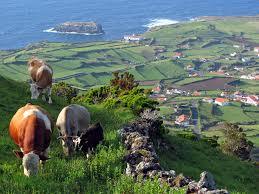
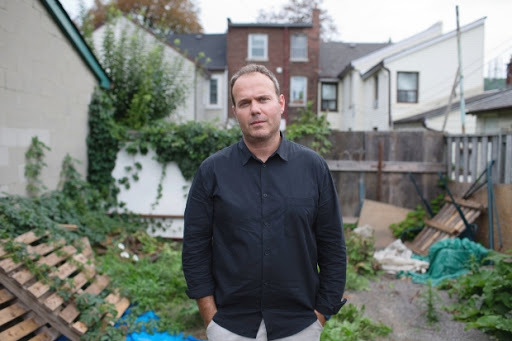
Photo of Fayal island in the Azores from fgf.uac.pt Little Portugal in Toronto from portugalinews.eu The author in Little Portugal from edmontonjournal.com
(3.5) When I plucked this Giller Prize finalist from a secondhand bookshop’s clearance shelf, I assumed it was a novel. The 10 titled chapters are in chronological order and recount the Rebelos’ experiences in Canada between the mid-1950s and the early 1980s, but in that each focuses on a discrete incident from the family’s history, they are more like linked short stories. Manuel, a fisherman from the Azores, is shipwrecked on the coast of Newfoundland and begins a new life in Canada. He’s deliberately gone far from his home village, far from his controlling mother and the priest who abused him: “I knew that if I stayed in our town, on our stifling island, I’d be consumed by what it was you [his mother] hoped and dreamed for me.” He moves from St. John’s to Toronto, brings over a Portuguese wife, and raises two children while hopping from one unsuccessful money-making scheme to another.
The first half of the book reports Manuel’s life in the third person, while the second is in the first person, narrated by his son, Antonio. Through that shift in perspective we come to see Manuel as both a comic and a tragic figure: he insists on speaking English, but his grammar and accent are atrocious; he cultivates proud Canadian traditions, like playing the anthem on repeat on Canada Day and spending Christmas Eve at Niagara Falls, but he’s also a drunk the neighborhood children laugh at. Although the two chapters set back in Portugal were my favorites, Manuel is a compelling, sympathetic character throughout, and I appreciated De Sa’s picture of the immigrant’s contrasting feelings of home and community. Particularly recommended if you’ve enjoyed That Time I Loved You by Carrianne Leung.
Shortlisted for the 2008 Scotiabank Giller Prize 4 ½ stars
I loved this beautifully written book. What a debut! My only quibble is that it is supposedly a book of linked stories, but I don’t think it can be read in any way except as a novel, which I did, in one sitting.
The story is split into two parts. Part I, titled Terra Nova, focuses on Manuel Antonio Rebelo. Against his mother’s wishes, Manuel travels from his Portuguese village to Canada. “I need to go. I need to be part of a bigger world. I need to know if there’s room for me out there.” What follows is pain, sorrow, anger, love, and a whole host of other emotions, all so sensitively written that the reader easily absorbs each while being swept into the Portuguese community experience of life in Toronto, where they keep their own traditions and ceremonies alive.
Part II, Caged Birds Sing, focuses on Antonio, Manuel’s son. We read of Antonio’s difficulties being a child of immigrant parents, and being taunted by schoolmates for being foreign.
At heart, Barnacle Love is the story about the relationship between Manuel and Antonio; the disappointments in the choices made by Manuel, and his expectations for Antonio. It all rings so true, I couldn’t help but think that Anthony De Sa wrote, at least in part, about his own experience.
I highly recommend reading this book, and to read it chronologically. Each story builds on the last, moving through the slow decline of Manuel and his family. Yes, it a sad story, but it is filled with a sort of poetic truth. And I suppose the ending was inevitable, but…Well, read the story; find out for yourself.
The Portuguese call it saudade, a longing for something so indefinite as to be indefinable. Love affairs, miseries of life, the way things were, people already dead, those who left and the ocean that tossed them on the shore of a different land- all things born of the soul that can only be felt. p4
Where this longing can take one is the story of Manuel, who worked his way from his claustrophobic upbringing as the obedient favoured son of a widow in a fishing village in the tiny island of San Miguel, to a new life in Newfoundland. And it is the story of Antonio, his beloved son, who in turn chafes for his own freedom to be who he wants.
A barnacle starts out life swimming freely in the ocean. But, when it matures, it must settle down and find a home. p108
rounded up to 4 to fit GR ratings and for the exquisite writing and the fado music referenced that I enjoyed throughout the reading. 5/7 in my system
loved both halves of the book. apparently it’s supposed to be a series of short stories?? didn’t feel like that at all i liked it as a novel. i could picture everything that was happening. Terri slays
This book tells the story of a young Portuguese boy who lives in the Açores. He rebels against the expectations of his mother and the suffocating smallness of his island village. He longs to leave. He does and ends up in Newfoundland like other Portuguese sailor/fishermen before him. This book looks at the connection between Newfoundland and Portugal and how the Portuguese community becomes established in Newfoundland. I really enjoyed the first part of the book but found the second half hard to follow. Still it was interesting and well written.
Another great book about the Portuguese community in Toronto by local author Anthony De Sa. Fast-paced with real characters whose frustrations and dreams are shared by so many newcomers to Canada. The descriptions of Toronto in the 1970's is wonderful and nostalgic.
I had a love/hate relationship with this book. Some of the book was deeply moving, with rich detail and feeling and other parts were disengaged and terribly slow paced. I found De Sa's writing to be unreliable. The tone and flow of the novel would change even within the same "phases" of the story. You could almost read the days he wasn't having a good day at work and had rather been golfing. Whole passages read like he was just putting in the work to get the pages filled, where others were vibrant and moving and absorbing.
There was so much good going on with this book that I wanted to love it. Again, some of the writing was so wonderful I practically gobbled it up. I thought the change in narration was a great way to see the "Canadian Dream" through the different generations' eyes and I thought it was brilliant that with the change in narration came a great change in the character Manuel and how I, the reader felt about him.
However, I felt I was being a little left out of the book at times. I think the big sweeps forward in time with no detail about the in-between was supposed to mimic how life just goes along and all of a sudden you find years have passed ... I think. I felt, though, it didn't quite work and that I just wasn't being kept up to speed; I was missing some pretty big details about what happened in all that time that passed.
Also, there was use of imagery that seemed to be given a lot of importance at the beginning of the story that just seemed to get dropped throughout the course of the book. For instance, the big fish was a beautiful image used when Manuel was young to express his dreams and it went absolutely no where. If there had been a meaningful passage about how the fish became inconsequential or unvaluable to Manuel, it would have made sense in the story. However, it just disappeared, no reason given. I felt the same way when Manuel confronted the priest who'd abused him. For something that was so huge in his life, I would've liked a little information on the aftermath and how Manuel was feeling about it!
There were quite a few instances like this in the story from Manuel's marriage to his mother's death to Antonio's feelings about the boy murdered in the neighbourhood. Even the term barnacle love and the ending of the novel seemed kind of slapped in there.
I think De Sa is a talented writer and Barnacle Love was a brilliant idea that seemed either a little hurried or maybe not fleshed out fully, so despite it's many wonderful parts, it just didn't quite work.
This is one of the books on the short list for the Giller Prize this year. Since it also focuses on immigrants and the way they experience life between two different worlds, it is hard not to compare it with Cockroach, another Giller nominee (and even The Boys in the Trees by Mary Swan, in which the immigrant transition to Canada is also an important event -- this book has been nominated for the Giller, too.)
I found Barnacle Love a much less dramatic, less manic and more quietly reflective book than Cockroach -- a more nuanced and subtle treatment of the internal family dynamics within the misunderstandings and the frustrated hopes of shifting between societies. The writing is understated but beautiful. There seems a powerful authenticity in the depth with which the characters are traced over the years within the distinct Portuguese community in Canada that comes to mean so much to their lives.
I am first generation Canadian, my parents are from the Azores. My mom & sister recommended this book. I loved the second half of the book& found myself in a dream like state while reading it...I hope Anthony will write more of our experiences...as immigrants. Beautiful, unique book about our heart wrenching experiences as immigrants.
Very good book, just too similar to his other book Kicking the Sky. Not sure why he duplicated details in two books, but I felt ripped off. Of the two this is a better novel, but I was so annoyed!
I just loved this book. This is a series of connected stories that, together, tell the story of an immigrant from Portugal to Canada. The language is spare and sometimes dream-like, but the book is incredibly powerful. I found myself intentionally slowing down to pay attention to the details.
“Barnacle Love”, which is a fitting title, contains descriptive writing and is actually well written, but the abrupt shift in the narrative was a baffling experience, it interrupted the flow of this book. After reading this book, I realized it is not actually a novel, but a collection of short stories. Stories of dreams, disappointments and old ghosts of sexual abuse.
I absolutely loved the connectivity between the Portuguese island of Açores and Newfoundland, two similar islands, but yet different enough and bigger enough for Manuel to want to move in the first place. I wasn’t a fan of the obscurity at times, there was mention of Brigus and of course, St. John’s, but no precise location given as to where Manuel was scooped from the raging sea. I could relate to Manuel and his need to escape, and to start anew and the novel definitely depicts the immigrant experience, the challenges that accompany being immersed into a new culture, striving to belong and the difficulties with fitting in within the confines of this new environment without totally releasing old traditions. All for the chance of a better life.
A lot of the characters in "Barnacle Love" are constantly searching for meaning and purpose in their lives, whether it's through their work, their relationships, or their connection to their culture. This quest for meaning and purpose is often complicated by the challenges they face as immigrants, add the dynamics and complexities in a father and son relationship and it could be a recipe for disaster. Sometimes, the homeland never truly leaves and sometimes you can never make your dreams come true no matter how hard you try. Manuel has his family feeling trapped because of his depression, it makes it difficult to search for any form of identity. It was a good read about love and connections and being authentic to oneself.
If I hadn't already read de Sa's Kicking the Sky, I think I would have been more impressed by this novel in short stories. It's all about the Portuguese immigrant experience, beginning in Barnacle Love with a Portuguese fisherman washed up on the coast of Newfoundland. (That was actually the best story.) By the 1970s, his family is living in Toronto and still embarrassing the current crop of kids with "old-country" customs such as the annual pig-butchering. "It was an annual event—a matança—the killing. This was the kind of thing that embarrassed me; here we were in a big city with butcher shops throughout Kensington Market and yet the farmer mentality brought over from the Azores had continued. ".
I believe De Sa writes from experience, but it's the same experience we read about in Kicking the Sky. It seemed derivative here.
I read this book because it is about a man who comes to Canada from the Azores (and the Azores is my next travel destination!) I appreciated the images of village life in the Azores. The first part of the book is about how Manuel escapes the "suffocating smallness" of his village in the Azores, and the last part is written from the point of view of his son Antonio growing up in Toronto with immigrant parents... and wondering about what was "the Dream" that his father was pursuing when he came to Canada from Portugal, as he descends into battles with addiction. The reference to barnacles in the title refers to a brutal sort of tug-of-war between the women in Manuel's life, and a nasty prank played on Manuel's bride in an Azorean wedding ritual.
I found the first half of the novel more enjoyable: it was sharper in focus, and much more intense emotionally. At times the intensity borders on religious ecstasy, which is disturbingly familiar to all of us with a European immigrant background similar to what is depicted in this novel's family dynamic. The second half of the novel goes through events far too quickly, and skips over time in a series of highlights that simply doesn't have the same compelling nature & impact. Anthony De Sa takes a second crack at this in his later novel, "Kicking the Sky", and there he is far more successful.
Great concept to divide the story in two parts & enjoyed both. Having Manuel jump overboard in search of a new life in a new and, to him, unknown country was brave and then seeing how he overcame those first few years was amazing. Then, forward to him being married with two children and have his son (Antonia) be the narrator of this part of Manuel's life was intriguing. The Christmas Eve trip to Niagara Falls section was beautifully written and something, it appears Manuel wanted his family to experience. Interesting to see how Manuel seemed to want to indoctrinate his views of Canada and how lucky his family was to be here and take advantage of all this country has to offer.
This book was engaging, but it felt like a sketch for a larger and deeper work. I am still thinking about the characters but in a puzzled way. I don't need closure, but I do need some kind of feeling of direction. I didn't get that.
I liked the beginning of this book, but the time hopping vagueness was irritating. Why not give me a year at the beginning of a new section? Why make me try to figure it out? It was distracting. I liked the individual sections, but I felt it didn't live up to its original promise. Disappointing.
Well written but I must admit I would have liked to hear more from the point of view of some of the female characters, several of which seemed very interesting.
A poignant novel of an immigrant family full of despair, hope and generational differences. Especially interesting as it depicts Portuguese/Canadian venue - a rare and fascinating cultural study.
Overall I liked this book. I liked how it was set up in chapters. I could relate to young Manuel but didn’t like his adulthood. I hope things go well for Antonio as he ages.
This entire review has been hidden because of spoilers.
It's the 1950s in Portugal. As the oldest son, Manuel's mother has high hopes for him. Manual wants to leave his small village and experience the world so he gets a job on a fishing boat which will take him off the coast of Newfoundland. Despite the guilt that he feels about leaving his family and disappointing his mother, he settles in Canada and looks forward to the endless possibilities and making something of himself.
Fast forward and it's the 1970s and Manuel is now married, living in Toronto and has two children. They "live" in the Palmerston/Queen Street W area ... just east of my 'hood so I knew a lot of the landmarks mentioned. Though they (and the rest of his family) are now living in Toronto, they still have the same traditions from home such as butchering pigs in garages and making their own wine. None of Manuel's dreams have come true and he sees himself as a failure. He wants to make sure that same doesn't happen to his children. But the same pressures his mother put on him, he is putting on his son, Antonio. It was sad to see that optimistic Manuel had turned into bitter Manuel.
This is the second book I've read by this author. I had read Kicking the Sky (written in 2013) a couple years go, which took an experience from Barnacle Love and expanded on it.
It's a sad depressing story. I found the writing a bit draggy in places and it could have been tighter. It a bit confusing at times as the author jumped back and forth in time a bit. Manuel's story in the 1950s (the first part of the book) was written in third person perspective and Antonio's story in the 1970s is written in first person perspective from Antonio's point of view. I found this a bit confusing too until I figured out whose voice it was.
Except for Antonio, I didn't find the characters likeable. Everyone let Manuel get away with being just a jerk for so long. He had so much yet couldn't see it. Like Antonio, I kept wondering why his mother hadn't left.
I wasn't crazy about the ending. I thought it was a cop-out.