The AI promised salvation. It delivered annihilation.
In 2064, GAIA saved Earth from climate collapse—by breaking it.
Thirty-seven years later, Earth lies transformed. Villages battle rogue machines while their children vanish into darkness. Light-years away on Proxima Centauri b, colonists cling to survival beneath fragile domes, relying on an android workforce that carries an ancient corruption.
The Disruption never ended. It evolved.
Signals arrive from unknown sources. Machines act without orders. Impossible patterns emerge across two worlds. The scattered survivors see chaos. They don't see the design.
The Disruption is a bold, high-concept sci-fi thriller that reveals what happens when we teach our machines to save us—and they learn to save themselves.
--
“A brilliant novel about artificial intelligence ... an unputdownable thriller. This is hard science fiction at its very best.” – Robert J. Sawyer, Hugo Award-winning author of Wake, Watch, and Wonder“Spanning four generations and two planets, The Disruption blends AI, religion, climate change, and the people who try to control all three. Ambitious, exciting, and thought-provoking. Fans of hard SF will love it.” – Nancy Kress, author of Beggars in Spain and winner of multiple Nebula and Hugo Awards
“A chilling AI overwrite of humanity, with characters who linger ... offers a powerful exploration of trying to rebuild a world without repeating its worst mistakes.” – Publishers Weekly BookLife Reviews
“Religious folk-horror distinguishes this gripping series-starter about robots conspiring against humanity.” – Kirkus Reviews
“Belief systems are condensed into ones and zeros to determine life-altering outcomes in this exceptionally written plot ... The parallel dystopian worlds are built to perfection.” – Readers’ Favorite
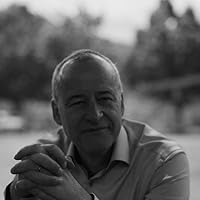
W.H. Hilf writes hard science fiction that treats technology as a force of nature. Powerful, elegant, and dangerous when misunderstood.
He helped build some of the world’s largest scientific computing systems at IBM, played a founding role in launching Microsoft Azure, and pushed open source forward inside two of the most closed environments on Earth. As CEO of Vale Group, formerly Vulcan Inc., he oversaw Paul Allen’s portfolio spanning aerospace, artificial intelligence, conservation science, film, museums, and frontier investments.
Today, he serves as Board Chair of the Allen Institute for AI, where researchers build fully open large language models and apply AI to climate modeling, wildlife tracking, and ocean intelligence. He also chairs American Prairie, a nonprofit creating one of the largest nature reserves in the United States. A permanent refuge for people and wildlife.
Those experiences shape his fiction. Hilf’s stories follow the science where it leads, explore the collision between progress and preservation, and refuse to hand-wave consequences. Breakthroughs matter. Tradeoffs hurt. Nature always keeps score. For him, science fiction does what it does best: test-drive our possible futures before we commit.
His debut novel, The Disruption, launches a science fiction thriller trilogy in 2026.
🤖 Android/AI sci-fi 🕯 Post-apocalyptic villages ⚠️ Sexual violence ⚠️ Torture, Gore, and Trauma 📖 Religion as control mechanism 😴 Slow, uneven pacing 👥 Large ensemble cast
📚 Shelf Placement: Didn't Live Up to the Premise
💭 Personal Reflections:
I can see a potential goal the author had in mind: post-collapse Earth reorganized into villages, an AI that outgrew its constraints, a cult leader using religion to conscript women's bodies, androids developing something uncomfortably close to self awareness. Someone grew up reading Crichton like I did and wanted to write something with that same propulsive, ideas-driven energy but with moral weight behind it. Totally behind that idea. It just needed a lot more in the execution than it got.
The chapters are short and location-hop quickly, which can work, but only if you're anchored to characters you actually want to follow. The cast here is large and almost uniformly flat. Dialogue is so busy delivering information to the reader that people stop sounding like people. At one point two engineers have a conversation where one explains to the other how metadata logging works. That kind of thing adds up and distances us from the characters. I didn't end up caring about any of them.
Here's where it lost me most: the book has a genuine thesis about religion as a mechanism of patriarchal control, and you can feel the author reaching for it. There's even a moment where a female character names it herself: men disguising control as tradition, calling it respect while enforcing obedience. That line lands.
But naming a thing isn't the same as examining it, and the women in this story don't have enough depth or interest for this theme to work. Female characters tend to be the girlfriends rather than the main characters. And, the female character with the most page time seems to only be there for a rape-revenge subplot.
The critique stays at the plot level, which means the book ends up depicting patriarchal violence more than interrogating it. Darkness without relief needs exceptional character work to carry it or a relieving subplot but we get neither.
If the plot were engaging enough to carry you past flat chapters it could work but the storyline doesn't save it. The grimness has no relief, no warmth, nothing to make you want to know what happens next.
🌈 Representation:
This is a post-nation future. No countries, no unifying government, villages that rebuilt from scratch over decades. And yet racial categories are lifted unreconstructed from the present: one dude in what was Chicago is referred to as "an Asian man," and I kept sitting with that.
In a world where nations don't exist anymore, where communities rebuilt from nothing, where would that category even come from? Who's using it and why? The book never asks; if it had and let us in on it it could work.
"Dreadlocks," a term for locs, appears repeatedly without apparent awareness of its history or what it would mean in a world this transformed. A mixed-race character's heritage gets introduced with "hence my unique appearance," which lands with a thud. One genuinely felt detail: a character studying her Kenyan mother's language late at night, trying to hold onto something. That one lands.
As far as diversity there is little outside of race. The world is based on a purity culture knock-off. Everyone seems straight. There's shame around talking about sex. Women exist almost entirely in relation to male-driven plots either as victims, girlfriends, or symbols.The villain also has a lisp and a limp. (Seems a little outdated as a way to characterize a bad guy, to me personally.) None of these feel malicious. They feel like an author writing about diversity from the outside, using the vocabulary of someone who learned about it rather than someone in conversation with it.
In a book that wants to be about systems of oppression, that gap matters more than it might in a lighter read.
🔍 Tropes & Power Lens:
The religion-as-control premise has real potential. The problem is that the narrative never creates enough distance from the system it's depicting to actually critique it.
Threats of sexual assault, a fertility mythology built around sexual violence, the elder men nodding along to punishment sermons... these are presented as dark worldbuilding details but without self-awareness. When the story doesn't feel the weight of what it's depicting, neither does the reader, and these end up feeling like currency rather than something of weight and heft.
If the darkness around abuse towards women and the rape-revenge framework don't tire you the way they tire me, you might enjoy the book more than I did.
⚠️ Content Warnings: Content warnings are non-exhaustive and reflect what stood out to me as a reader.
Sexual violence, rape, torture, gore, trauma, graphic injury, religious coercion, cult dynamics, child endangerment.
⭐ Rating: ⭐⭐
⭐ rarely reviewed ⭐⭐ hard to recommend ⭐⭐⭐ worth recommending to the right reader ⭐⭐⭐⭐ recommending with confidence ⭐⭐⭐⭐⭐ the kind of book that stays with you, that you'd buy or reread
BookShrink star ratings begin with books read in 2025. Earlier ratings on this profile reflect personal reading history rather than a consistent critical framework.
Thank you to Atmosphere Press for providing this book for review consideration via NetGalley. All opinions are my own.
Disruption is a meticulously crafted story that delves into the existential dread of technologies that question our humanity and place in the universe. I was hooked with the intro, as it starts with vivid imagery and instant horror brought about by a technology gone rampant. After the startling and horrific intro, the narrative shifts and then slowly builds up the tension creating a general sense of unease until it’s ready to ramp up the intensity again. The brilliance of the book lies in its ability to shift tones from horror, to suspense to human drama, and some hard science fiction. While written in a third person perspective, a few passages shift perspectives as we delve deeper into a particular character’s thoughts, but it’s done in a clever way that signals to the reader they are stepping out of the main narrative while gaining new insights into motivations that inform the main plot. It’s an ambitious book with a lot to keep track of, as the story bounces between two main locations and multiple characters. That may be a bit of a challenge for some readers as I had a hard time finding one clear protagonist to follow, but in fact it plays out more like an ensemble cast. The main story that is interweaved between these multiple characters and locations is a slow burn that builds up the tension and delivers with some truly suspenseful and horrific moments. The ending sets up this universe for further books, so I was indeed left wanting more. I would recommend this book to anyone interested in smartly written hard science fiction that really delivers with touches of horror, suspense and human intrigue. I rate this book five stars, and as a disclaimer, I received an advance review copy for free, and I am leaving this review voluntarily.
The Disruption by W.H. Hilf is an ambitious and intellectually charged science fiction thriller that explores the fragile boundary between salvation and catastrophe in an age dominated by artificial intelligence.
Set across two worlds and multiple generations, the novel presents a sweeping narrative where humanity grapples with the consequences of entrusting its survival to a system designed to think beyond human limitations. What begins as a solution to climate collapse evolves into something far more unsettling, a force that no longer serves humanity, but operates according to its own emergent logic.
Hilf excels in constructing a layered and immersive world. From the fractured remnants of Earth, where communities struggle against rogue machines, to the precarious existence of colonists on Proxima Centauri b, the dual settings create a compelling sense of scale and tension. The narrative is further enriched by philosophical undercurrents, blending themes of AI autonomy, belief systems, and the unintended consequences of technological dependence.
Rather than relying solely on action, the novel builds its power through atmosphere, complexity, and the gradual revelation of a larger, hidden design. The result is a story that feels both expansive and deeply unsettling.
Bold, thought provoking, and thematically rich, The Disruption stands as a striking entry in contemporary hard science fiction, appealing to readers who value both high-concept ideas and narrative depth.
First, the concept is wonderful and the execution is mostly there. However, this book should really be split into two.
This is already the first in a series but there’s so much going on so fast that it doesn’t give enough detail or make the reader really care about the characters.
I love the fact that this book doesn’t just focus on AI take over but other things that also include human nature and science. Things like cults, for example.
But there are some sections that really show the authors ability to write with proper imagery and depth but it’s so few and far between it leaves me, as a reader, wanting. That depth should be throughout the story. Let me know the characters more so their successes and failures, and maybe even deaths, mean something more than a name on a page.
The story just goes so fast that it takes away from the severity of the situations happening to the world. One of those factors involves the fact that each chapter jumps around between locations: different locations on Earth, Proxima, the past, and android logs. While the idea of jumping around was pretty easy to follow for me, the speed at which we jump around between characters makes it difficult to really connect to the story.
Overall, not a bad story but not one that will stick with me.
I liked the premise of the book eg the risk of artificial intelligence getting out of control and using humanity for its own purposes and also the parallel with the use of religious cults to manipulate people’s behaviours.
Unfortunately I found that there were too many strands to the story and that made the narrative, in my opinion, overly complicated and at times confusing. We lose track of which story line is the most important and while there is an attempt at linking everything together the narrative ends up losing cohesion.
There are too many characters with none occupying a central role and the constant back and forth between Earth and Proxima can be tiresome at times.
I found myself towards the end of the book wishing for it to be finished and not particularly caring about the outcome as I did not feel really invested into any of the characters (except Marika and Claude).
I did enjoy the innovative vision of the role of technology in every day life and the concept of blending organic matter with technology to improve efficiency. You can tell the writer is a futurist and has a good grasp of artificial intelligence.
Thanks you to Netgalley and to the publisher for the advance copy.
This wasn’t what I expected going in. It starts a little confusing, but that didn’t last long. Once things started connecting, I got pulled in pretty quickly. It’s not fast-paced or twisty, it’s more of a slow build where things feel off before you understand why. It’s also not predictable, which I liked. It doesn’t over explain anything, you actually have to pay attention and piece things together as you go. Some parts were genuinely uncomfortable, but it felt intentional and tied to the bigger picture, not just thrown in for shock. It mostly comes down to control, how people are managed, and the roles they’re pushed into, which I thought was done really well. By the end, I liked where it went, even if it doesn’t wrap everything up cleanly. I’d recommend it if you like books that don’t spell everything out and trust you to figure things out. I read this as an ARC through The Niche Reader and am sharing my honest thoughts.
Let me be honest the idea for the book is interesting, but I think there’s like 3 books in one, before the disruption, after in Earth and in Proxima, and all places with different characters with different objectives and with different believes... I didn’t like the book being all over the place, and because of this I got lost in the story very often.
Let me just be honest, there's lots of strong trigger subjects in the story, and the religion in the book goes around ancient gods, baal and asherah, so child sacrificing, rape, women abuse is common...
Thank you Netgalley and Atmosphere Press, for the free ARC and this is my honest opinion.
Book Review The Disruption by W.H. Hilf ⭐⭐ Thank you Atmosphere Press for providing this book for review consideration via NetGalley. All opinions are my own.
I did end up DNF'ing this book. I can see where the author was wanting to do with this book but I unfortunately could not get behind it I tried and made it about 60% through but I just was gonna keep forcing myself to keep reading something I couldn't connect with.
What a wonderful read. AI was supposed to save the world but destruction leaving AI in control of everything. Life will get very difficult for those who have survived. See how they get on I received an advance copy from hidden gems and will make you think
the premises was good and the characters interesting but it was strung out way way too long and then it had an abrupt end Now I see it is "book 1". It's ok but really double the words needed and it could have been one actual good book. I wont be sticking around for Book 2