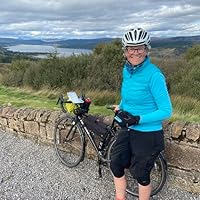
In 2009, while the US Government is hunting down Osama bin Laden in the Middle East, Helen Watson and her husband Ed set off on a cycling expedition from Glasgow to China. Driven by a desire to understand the world beyond the media portrayal of George W. Bush’s ‘Axis of Evil’, the couple pedal 15,000 km along the Silk Road – ancient trade routes that were undergoing rapid modernisation. Crossing deserts and mountains, minefields and military zones, they reach Muslim China via Syria, Turkey, Iran and Central Asia.
Plagued by sandstorms, overzealous officials and endless punctures, Helen and Ed camp with Bedouin, sleep in farmers’ houses, and are hosted by students and local dignitaries. They are waylaid with hundreds of cups of tea and interrogated about Western culture… and marriage. Soon after the couple return home, the Arab Spring breaks, and the world Helen and Ed have visited is plunged into war and unrest. Memories of the hospitality the pair received lead them to welcome refugees to Scotland through the UK’s first community sponsorship scheme – and to Helen writing about their adventure.
Tea and a Bicycle Journey along the Silk Road illuminates places rarely visited by Western travel writers. Through Helen’s evocative prose, visit Homs, the most embattled city of the Syrian War; Raqqa, the former capital of Islamic State; the Kurdish heartland of Eastern Turkey; the Islamic Republic of Iran; the secretive state of Turkmenistan; and Kashgar in Uyghur China. Through Helen’s eyes, gain privileged glimpses into the lives of women in parts of the world characterised by the oppression of female liberties. Join Helen and Ed as they forsake the white noise of everyday British life to focus on real where to sleep, what to eat, how to stay safe.
Rich in insight and compassion, Tea and Grit is a book about the rich and poetic cultures of the Silk Road, which have become imperilled by the aftermath of 9/11. Above all, Tea and Grit is a book about why it is more important than ever before to drink tea with the people we fear as strangers.
Humanity has always been on the move. We came out of Africa and have swirled about the planet until we will have filled it. Modern migration has gone from a humanitarian need to a political hot potato. It doesn’t mean that it has gone away, though…
Crossing borders is always a focus of nerves, at the beginning of this journey. Moving from Turkey to Syria has its moments, but a new country has its delights too; learning about the people and the country are two of Watson’s favourite things to do.
One of the best places to do this is to go to a market in a town. It isn’t long before they are accosted and persuaded to visit the stall run by Mahoud. He then invites them to the family home, which, according to him, is only a 20-minute bus ride away.
Another day, another town and a new market to explore. Watson’s descriptions of the produce and goods piled up on the stalls is very evocative. There is a rich mix of people and cultures in Syria, but finding an individual with red hair in this melting pot was most unexpected. They wander around Roman remains in Apamea, absorbing just how good the Romans were and designing and building things.
Cycling into Damascus is somewhat problematic as they have to battle against a sandstorm. It is really tough going, and they end up pushing against the wind for some of the ride. Leaving a city is much harder, not just navigation-wise; the clear route in is often very complicated going the other way, but also leaving behind some of the creature comforts that city life brings. Their next leg would be doubly hard as they would be crossing a desert with precious few places to get water.
One aspect that comes across in this book is that we share a common humanity, even though the cultural differences are huge between Watson and the people of Syria that she meets. They are constantly reminded of the geopolitical conflicts that have affected this country and its place on the world stage.
Next up is Turkey. It is different in lots of ways, but also very familiar. The culture and foods are very similar in both countries, probably because the way that people farm in a region is broadly similar, regardless of what side of the border you are on. Looking at the map, lots of the places that they were considering cycling through were marks as red. Bandit country! It was both worrying and slightly exciting at the same time. They decide to go for it. Spoiler alert. They survive. Otherwise, I wouldn’t be reading this book.
They spend a short while contemplating their next route. Cycling through Iran had made one member of Watson’s family worried and unhappy. However, all of the people that they met in their first days cycling through had been warm and welcoming. There were delays in getting their next visas, so they knew they would have to change their route.
Tehran is a crowded and busy metropolis. Because of things that have happened and being pragmatic, they decide to take a bus for the next leg of the journey, and then cycle from that place onto the next border. Being back on the bikes was good, but their deadline to reach the next border was fast approaching, and they still had to obtain the next visa for Turkmenistan, which led to a surreal moment before they got to that. The message from the people of Iran was: tell the world what we’re actually like. They pass through Turkmenistan in a handful of days, battling against the headwinds through the desert. They found the people to be warm and generous all the way through the country.
Uzbekistan beckoned. They didn’t have the best start there, but they warmed to the people after a while. It took a while, but they did find them to be as welcoming and warm as the other countries that they had passed through.
As they passed through the border into Tajikistan, the fatigue from the physical endurance began to show. The upside was that as they cycled through the mountains, the views were spectacular. The grinding relentlessness of the ride was evident, though.
They cycle past minefields and end up camping alongside a Swiss organisation that is helping clear the mines. They endure a two-day uphill ride (!!) along the Wakhan, but are assisted by numerous children who help push them up the steepest bends. They are in border country now, where Tajikistan meets Afghanistan, Pakistan and China, with India nearby. The people have lived in the region for years and are not really concerned about the swirl of geopolitical posturing around them. Every pedal stroke takes them closer to their final destination, China.
I found this to be a really enjoyable travel book. Watson is an engaging writer with a keen eye for the human story in all of the countries that they pass through. She and her partner, Ed, go through all the elation and trauma that cycle touring can throw at them on this journey and yet they still keep smiling and pedalling. Either they were very lucky with their bikes, or she didn’t write much about the wear and tear that the bikes would have inevitably suffered from. I have read a lot of travel books over the years, and I can confidently say that this is one of the good ones. Well worth reading.
Took me a little while to ease into this but I really enjoyed it. A great mixture of adventure, history and personal adversity. As a man, it really made me think about my privilege while travelling. The ending really got me in the feels. What a great book.
There was much to like about this travel adventure: each chapter starts with a short translated poetry piece; each country section has a map; and the journey is full of Helen and Ed's interactions with the generally very friendly locals. There were some brief historical background sections, but most of the book described their arduous cycling, the people they met and the sights they saw. I couldn't escape the ever present sense of danger Helen must have felt due to being a woman. All the other books I have read about these regions have been by male authors. The first and last chapters are about the authors work with refugees in Scotland, motivated (at least in part) by the generosity and friendliness of the people they met whilst travelling. The cycling part of the book begins in Turkey, I guess the European countries were too familiar to be interesting? (or it might have made the book too long!)
This book is wonderfully written and a really informative read. I was with them as they traveled through the various countries! A heartwarming, and sometimes scary, story of humanity
Tea and Grit is a beautifully understated account of Helen Watson’s 2009–2010 bicycle journey from Glasgow to China — a moment in time just before the regions she crossed were transformed by conflict and political tightening. What struck me most was the contrast between Watson’s scientific training (she is conservation geneticist Helen Senn) and the tenderness of her human observations. Her factual clarity — distances, landscapes, historical notes — sits alongside a quiet sensitivity to ritual and hospitality. Tea becomes more than a drink; it becomes a language of welcome from Syria to Xinjiang. Read today, the book feels like an accidental ethnography of generosity along the Silk Road. Many of the buildings she describes are gone, but the moral culture of hospitality she encountered still feels vividly alive in these pages. A gentle, thoughtful, and memorable travel memoir.
I thoroughly enjoyed reading account of her and her husband’s bike ride along the Silk Road. The human exchanges with the local people they encounter is beautifully interspersed with details of the historical and geopolitical context of the area. Helen is successful in shining a light on the lifestyles and cultural norms of families from a range of religious backgrounds, often inadequately represented in the West. She also carefully shares the more intimidating side of their adventure but without letting it overshadow the overall pleasure and enjoyment they got from the whole experience. It definitely evoked the Wanderlust in me!
In this gripping tale of human endeavour and heartwarming testament to the kindness of strangers, Helen Watson takes you on a fascinating journey. She not only describes the thrills and hardships associated with cycling through challenging terrain in all weathers, but also provides detailed insights into the cultures, traditions and faiths of the people she meets along the way, many of whom show Helen and her husband (this trip was their honeymoon!) incredible generosity. I was moved and inspired in equal measure. The writing gets better and better as the book goes on: as a cycling memoir with intellectual heft, I would rank it alongside Anne Mustoe's A Bike Ride and Rebecca Lowe's Slow Road to Tehran.
One of the best book about bike travelling I have ever read, and I have read many.
What I really like: - writing style, very well written. Landscapes, people, experiences and feeling comes alive out of the pages - selection of the trip, aye decided to explore a part not cover it all: very brave - her view of bike travel which resonate with me
What really struck me is how the book keeps getting better and better as you go. It slowly pulls you in, and before you realise it, you’re completely there — in the landscapes, in the conversations, in the small moments. The writing is just… alive. Places, people, emotions — everything feels vivid without ever feeling forced. It’s beautifully written, but never in a show-off way. The vocabulary is rich when it needs to be, simple when it should be, and always right. You can feel the care behind every sentence.
I also really loved the choice of the journey itself. Not trying to tells the whole trip but selecting a part of it and diving into it. Having suck a big experience is brave and a personal lost for the writer to cut a big part of it but it paid off in the quality of the book because the depth of experience that comes through the pages is incredible.
Her way of seeing bike travel resonated with me a lot. She doesn’t focus on kilometres, achievements, or mechanical struggles. The bike is there, of course, but it’s just the tool. The real story is about people, cultures, history, and human connection — which is exactly why I travel too. I found myself nodding along so many times thinking, “yes, that’s it.”
What stayed with me the most is how she manages to describe experiences I’ve had myself — but so much better than I ever could. The relentless wind in the desert, the overwhelming and sometimes almost uncomfortable hospitality, and especially the realisation that body language is not universal. I remember hitting that wall too, but she goes much further — she observes it, adapts to it, and explains it in a way that made me see those moments again with new depth.
The structure of the book adds something special as well. Each chapter opens with poetry from the region, which clearly comes from deep research and genuine curiosity. I’ll admit poetry isn’t really my thing, but even so, it adds another layer — you can feel there’s a whole cultural world behind those choices, and it made me appreciate how much she engaged with the places she travelled through.
There’s also something very personal about reading this if you’ve been in similar places. I’ve ridden parts of that route myself, and it was incredible to revisit those landscapes through her eyes, at a different moment in time. It felt familiar and new at the same time.
Another aspect that really stayed with me is how honestly she writes about difficult experiences — especially as a woman travelling through regions where interactions can be complex and sometimes uncomfortable. There’s no simplification, no easy conclusions. You can feel the emotional weight of those encounters, the mix of warmth and unease, generosity and disappointment. It adds a layer of honesty that makes the book even more powerful.
And I loved how it all comes together towards the end — especially how the journey doesn’t just stay a memory, but turns into something meaningful back home through her work with refugees. It gives the whole story a sense of continuity, like the journey didn’t really end when the cycling stopped.
If you’re into bike travel, this is a must-read. But even if you’re not, it’s just a beautiful, thoughtful, deeply human book about moving through the world and really paying attention to it.
I was totally hooked on this impressive book. It’s a perfect blend of real human stories, personal (and at times very amusing!) anecdotes and reflections, and moments of drama and suspense, all balanced by tradition, history, and legend. The writing style feels natural and perfectly suited to a travel book, avoiding unnecessary or overlong historical sections. Vivid descriptions of exotic food and colourful dress bring the journey along the Silk Road to life. Read this if you want to be inspired to slow down and foster human connection in a way we often forget in our increasingly digital lives.