Jump to ratings and reviews
Rate this book

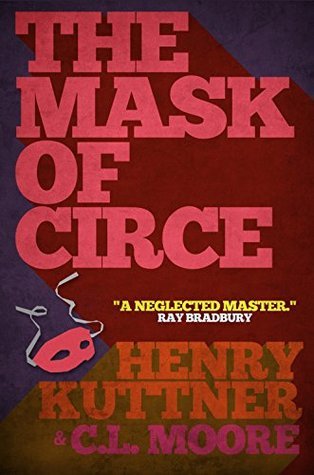
The Mask of Circe

Rate this book
"[A] pomegranate writer: popping with seeds—full of ideas." —Ray Bradbury

From on high of Mount Olympus comes an adventure in mythology, penned by a Hugo-nominated master of the genre.

Jay Seward remembered a former life in a land of magic, gods, and goddesses—a time when he was Jason of Iolcus, sailing in the enchanted ship Argo to steal the Golden Fleece from the serpent-temples of Apollo. But one night the memories became startlingly real, as the Argo itself sailed out of the spectral mists and a hauntingly beautiful voice called: "Jason...come to me!" And suddenly he was on the deck of the Argo, sailing into danger and magic.

158 pages, Kindle Edition

First published May 1, 1948

4 people are currently reading
103 people want to read

About the author

Henry Kuttner

734 books206 followers
Henry Kuttner was, alone and in collaboration with his wife, the great science fiction and fantasy writer C.L. Moore, one of the four or five most important writers of the 1940s, the writer whose work went furthest in its sociological and psychological insight to making science fiction a human as well as technological literature. He was an important influence upon every contemporary and every science fiction writer who succeeded him. In the early 1940s and under many pseudonyms, Kuttner and Moore published very widely through the range of the science fiction and fantasy pulp markets.

Their fantasy novels, all of them for the lower grade markets like Future, Thrilling Wonder, and Planet Stories, are forgotten now; their science fiction novels, Fury and Mutant, are however well regarded. There is no question but that Kuttner's talent lay primarily in the shorter form; Mutant is an amalgamation of five novelettes and Fury, his only true science fiction novel, is considered as secondary material. There are, however, 40 or 50 shorter works which are among the most significant achievements in the field and they remain consistently in print. The critic James Blish, quoting a passage from Mutant about the telepathic perception of the little blank, silvery minds of goldfish, noted that writing of this quality was not only rare in science fiction but rare throughout literature: "The Kuttners learned a few thing writing for the pulp magazines, however, that one doesn't learn reading Henry James."

In the early 1950s, Kuttner and Moore, both citing weariness with writing, even creative exhaustion, turned away from science fiction; both obtained undergraduate degrees in psychology from the University of Southern California and Henry Kuttner, enrolled in an MA program, planned to be a clinical psychologist. A few science fiction short stories and novelettes appeared (Humpty Dumpty finished the Baldy series in 1953). Those stories -- Home There Is No Returning, Home Is the Hunter, Two-Handed Engine, and Rite of Passage -- were at the highest level of Kuttner's work. He also published three mystery novels with Harper & Row (of which only the first is certainly his; the other two, apparently, were farmed out by Kuttner to other writers when he found himself incapable of finishing them).

Henry Kuttner died suddenly in his sleep, probably from a stroke, in February 1958; Catherine Moore remarried a physician and survived him by almost three decades but she never published again. She remained in touch with the science fiction community, however, and was Guest of Honor at the World Convention in Denver in 198l. She died of complications of Alzheimer's Disease in 1987.

His pseudonyms include:

Edward J. Bellin
Paul Edmonds
Noel Gardner
Will Garth
James Hall
Keith Hammond
Hudson Hastings
Peter Horn
Kelvin Kent
Robert O. Kenyon
C. H. Liddell
Hugh Maepenn
Scott Morgan
Lawrence O'Donnell
Lewis Padgett
Woodrow Wilson Smith
Charles Stoddard

Ratings & Reviews

What do you think?
Rate this book

Friends & Following

Create a free account to discover what your friends think of this book!

Community Reviews

5 stars
4 (5%)
4 stars
25 (33%)
3 stars
27 (36%)
2 stars
16 (21%)
1 star
2 (2%)
Displaying 1 - 14 of 14 reviews
Profile Image for Craig.
6,291 reviews178 followers
April 17, 2025
The Mask of Circe was published in the May issue of Startling Stories in 1948, and did not appear in book form until Ace released this edition in 1971 with a great Bob Pepper cover and wonderful interior illustrations by Alicia Austin. When Ace reprinted it in 1977, they added C.L. Moore's name as a collaborator on the title page, but not on the cover. It's a terrific story of alternate worlds and times with a heavy dose of Greek myth to frame it all. I suspect that Kuttner drafted the science fictiony infrastructure and Moore added the romance and poetic descriptions, and I wonder if Roger Zelazny mightn't've found it an inspiration for his Lord of Light. Some of the early short bits of the novel are kind of clunky with too much "ask-self, told-self" narration, and some of the sf bric-a-brac seems forced in order to qualify it as scientific rather than a straight fantasy, but it's quick and fascinating read. The depiction of the Greek myths is really masterful.
Profile Image for Sandy.
575 reviews117 followers
August 18, 2011
Henry Kuttner and C.L. Moore, sci-fi's preeminent husband-and-wife writing team, eased back a bit from earlier years' prolific outputs in 1948, coming out with only four short stories and a short novel. The previous year had seen their sci-fi masterpiece "Fury" serialized in the pages of "Astounding Science-Fiction," and to follow up on that brilliant piece of work, the team switched gears, as it were, and wrote what was in essence an example of hard fantasy, "The Mask of Circe." This tale, which was first published in the May 1948 issue of "Startling Stories," finally got the book treatment it deserved in 1971.

In it, Jay Seward, a modern-day psychiatrist, tells a very strange story over a Canadian campfire. As a result of some narcosynthesis research that he had been engaged in, repressed memories of his had been unearthed, and Seward realized that he was a distant lineal descendant of no less a figure than Jason, of the Golden Fleece and Argonaut fame. And before long, Seward had been mystically transported aboard the Argo herself to the isle of Aeaea, home of the sorceress Circe, and embroiled in a cosmic battle between the warring gods Apollo and Hecate. This story is perhaps one of the most way-out in the entire Kuttner-Moore canon, and for that reason, maybe, the pair thought to give it some grounding in logic and science. Thus, we are given semiplausible theories to explain not only the origin of the Grecian pantheon of gods, but also for the existence of fauns, satyrs, dryads, the Fleece itself, et al. But even with all these attempts at rationalization, the book remains quite an exercise in hard fantasy. Kuttner and Moore's admiration for the master of these types of tales, Abraham Merritt, is evident not only in the book's Canadian wilderness opening, so reminiscent of the Alaskan wilderness opening in Merritt's 1932 classic "Dwellers in the Mirage," but in the central story itself. In Merritt's "The Ship of Ishtar" (1924), archeologist John Kenton is magically transported aboard the galley of the title and becomes involved in a duel between the Babylonian gods Nergal and Ishtar. Kuttner and Moore do a very passable job, thus, of pastiching an author they admired greatly, and to its credit, "The Mask of Circe" is able to stand on its own, uh, merits. With its limbo-world setting, fantastical characters straight out of Homeric mythology (and no, a detailed knowledge of mythology is NOT a prerequisite before getting into this book), seemingly magical weapons and battling gods, the book almost makes for an hallucinatory, lysergic experience. Anyway, I would also like to advise readers to seek out the 1977 Ace paperback edition pictured above, as it contains no less than 15 beautifully rendered, full-page illustrations by an artist named Alicia Austin that greatly enhance the reading experience. Whichever edition the reader picks up, however, "The Mask of Circe" is guaranteed to provide a few evenings of wonder. Like all the works from Kuttner and/or Moore, I more than highly recommend it!
Profile Image for Ivan Lanìa.
215 reviews19 followers
October 12, 2024
Come proposito per la primavera 2022 mi sono imposto di finire i romanzi science fantasy di C.L. Moore e Henry Kuttner, quindi ci ho dato dentro con questo The Mask of Circe – e sinceramente l'ho trovato decente ma non eccelso, un 2,5 arrotondato per eccesso al pari di Valley of the Flame.
Da un lato questo romanzo si muove nello stesso filone dei due immediatamente precedenti, The Dark World e Lands of the Earthquake, e mette anch'esso in scena un giovinotto yankee medio trasportato in un mondo parallelo incantato, dove diventa il pivot di una guerra fra due fazioni – ma esattamente come Lands of the Earthquake, pure The Mask of Circe allunga inutilmente il brodo con una prima fase in cui l'eroe non comprende la natura del mondo parallelo e cerca di metterne assieme i pezzi mentre le due fazioni (letteralmente) se lo palleggiano, così è solo nell'ultimo terzo della storia che la patina artificiosa di mistero si dissolve, l'eroe (e quindi noi lettori) si raccapezza sulle leggi della dimensione incantata, e finalmente succedono cose sensate. Considerando che l'intreccio di The Dark World non cadeva in questa trappola (anzi!), The Mask of Circe in proporzione risulta nettamente più noioso, tuttavia presenta un climax decente nel finale e uno scioglimento deliziosamente malinconico, lati positivi che salvano la trama dall'effetto "minestrone inconcludente" che ho rilevato in Lands of the Earthquake. Va però dato a Cesare quel che è di Cesare e riconosciuto che Lands of the Earthquake metteva in campo un bel world-building che mescolava liberamente suggestioni di orrore cosmico e scenari fiabeschi, laddove The Mask of Circe gioca tutto su una rilettura estremamente banale e raffazzonata del mito di Giasone (in sostanza , e ciò causa pure dei problemi di coerenza interna rispetto al resto della saga argonautica), a malapena tamponata dalle simpatiche spiegazioni pseudo-psicologiche (anziché pseudo-biologiche) dei fenomeni magici – se non erro questo gusto per la "fantascienza della psiche" fu una cifra del Kuttner maturo e di sicuro mi incentiva a recuperare la sua tetralogia di gialli psicanalitici, The Michael Gray Novels: The Murder of Eleanor Pope, The Murder of Ann Avery, Murder of a Mistress, and Murder of a Wife.

Ah, per una volta l'edizione Gollancz aveva pochi errori di battitura!
22 reviews8 followers
November 18, 2012
Oh ... well, I think a sane review is too much for me at the moment (we are allowed to return and rewrite them, I hope?), but briefly this is an alternate world fantasy. Or a dimension shift book. Or something like it.

Actually, the setting is another Earth that split off from our timeline back in the days of Greek mythology, and now they have all the magic while we are stuck with the technology. There will be gods, centaurs, fauns and brave hoplites in armour, biremes and priestesses, cruel spells and fight for liberty. Plus weird twists toward the end, and a sad longing for love and better times.

(I read this in the original magazine version, so there may have been some changes in the posthumous novel.)
Profile Image for Fraser Sherman.
Author 10 books33 followers
August 31, 2019
3.5. Modern-day protagonist Jay is haunted by genetic memories of his ancestor Jason who was caught in a battle between Apollo and Hecate, but ran out on Hecate rather than fight (the book notes that Jason wasn't much for keeping promises). Now Jay is drawn back to that time/parallel world where the gods are locked in combat and decides to fight where his ancestor fled ...
This is science fantasy in the sense that the supernatural elements are all explained by advanced science. It's fun, but some of the explanations are cumbersome, and I honestly don't see the need for a framing sequence (Jay telling this to a stranger he met in the woods). And Circe in any story deserves to be more than just a pretty face, which is all she is here.
Minor note: this story is by Kuttner on the outside, by Kuttner and wife CL Moore according to the inside, and some sources credit it to Moore entirely.
Profile Image for Jerry.
Author 10 books27 followers
December 7, 2019

There is a garden in the Temple of Helios where the flowers of Apollo burn the eyes that behold them. There is a garden where roses of white fire blaze among leaves of flame, dripping droplets of molten sunlight upon a floor of fire. In the center of that garden stands a tree.


This is an amazing story in amazing language, strong from start to finish. Kirbyesque in its scope and grandeur, before such an adjective would have made sense. In some ways an adventure tale, in others a bright horror in contrast to the dark horror of C.L. Moore. Kuttner manages to evoke powers beyond the understanding of men in a novel meant to be read by them.
Profile Image for Simon Vozick-Levinson.
142 reviews
November 22, 2020
I happened upon a used copy of this 1948 novella and was intrigued enough by the title and cover art to give it a shot. It’s a fun fantasy romp through a mixed-up realm drawn from classical mythology, with a smattering of scientific mumbo-jumbo thrown in. The characterization is fairly dated, but the writing is very enjoyable if you like that midcentury SF magazine style. I appreciated it as a very different spin on the Homeric myth retold by Madeline Miller a few years ago. 3.5 stars.
363 reviews2 followers
January 17, 2025
This slim book is a fun Greek fantasy with smatterings of science fiction to make it seem plausible. A modern man is drawn into an alternate world where little has changed since ancient Greece. He also realizes that he has the memories of his distant ancestor Jason (of Jason and the Argonauts). Anyone that has seen the film will be familiar with many of the plot elements, although this book picks up at a time not depicted in the film. The hero must help Circe and Hecate in a final battle with Apollo. The authors (Kuttner is listed as the author but his wife C.L. Moore likely had a hand in it too), use SF trimmings to explain the world hopping and god-like powers, but this really reads as a fantasy. If this had been writen today, it would deserve 3 stars at best, but as a pulp magazine novella it certainly deserves 4. A likely influence on Zelazny's Lord of Light.
Profile Image for Pindar's Muse.
18 reviews
December 18, 2021
A brief blend of science fiction and adventure based on Greek mythology. It rather read like a Star Trek episode.

Apollo and Hecate are at odds. Various symbols of mythology, like the Golden Fleece, are actually devices crafted by the gods. A clever idea, but the book is rather short. Everything is summed up in about 158 pages. The most bizarre aspect of this book is the inclusion of illustrations, said to be by an "award-winning" artist. I found them to be nothing more than basic, vague outlines that barely depicted some part of the story. Perhaps they should have been in color, or more developed. I assume she can do better art than that. Cover art is by a different illustrator.
Profile Image for Jeff Wyonch.
97 reviews5 followers
May 21, 2014
A sci-fi re-imagining of the legend of Jason. Surprisingly good mix of time travel, genetic memory, alternate dimensions, and romance.
Displaying 1 - 14 of 14 reviews

Can't find what you're looking for?

Get help and learn more about the design.