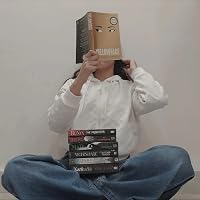
From the author of Shakchunni and The Mine, a terrifying journey into the still, dark waters of the minds of boys and of the men they become.
One a Bollywood superstar. One a professor of physics in California. One is about to become a government minister. One is dying of cancer. Thirty years ago, they were boys. Best friends. Then Pramila was found dead, drowned in a bucket. The police arrested a man. He died in jail. Now, a documentary is asking questions about that night, questions the four men thought had been buried forever. For water remembers. And so does murder.
Arnab Ray, better known as Greatbong, is one of India's most widely read bloggers who blogs at Random Thoughts Of A Demented Mind. He is known for his sarcastic takes on the Indian film industry, Indian politics and society in general. His blog was awarded the "Indiblog of the Year" at Indibloggies in 2006[1] and 2008. He has written for several media outlets like the Washington Post, Outlook magazine and Live Mint. He graduated from Jadavpur University as a Bachelor in Computer Science and Engineering and went on to finish his PhD in Computer Science from State University of New York at Stony Brook. He is presently employed as a research scientist at the University of Maryland and resides in the suburbs of Washington DC. His first book "May I Hebb Your Attention Pliss", published by Harper Collins, was on India Today's Bestsellers list.
Four men—ageing superstar Ishaan, brilliant scientist Basab, upcoming bureaucrat-turned-politician Ranadeep, and eternal loser Krishanu—face their past when a documentary series begins to investigate a 30-year-old murder which impacted all their lives. In 1994, Ishaan’s girlfriend, the beautiful and accomplished Pramila, was drowned in a bucket of water; Ishaan was the prime suspect, but Basab’s testimony (which led to the indictment—and death in custody—of an old and rather odd man) saved him.
Now, 30 years later, some skeletons are tumbling out of closets.
The Bucket is categorized—on the back cover—as a horror novel. It is that, because a creeping sense of spookiness pervades it (is that really Pramila’s ghost that haunts these four men from her past? ). But it is more, too. A pretty solid murder mystery, its layers peeled gradually away to reveal the actual killer.
Combined with that is an exploration of the human psyche on various levels. The ambition, the greed, the rapaciousness connected to both politics as well as show business, and the impact both of these professions have on those who follow them. The frustration of a once-huge star who is now past his prime, and the anxiety of a bureaucrat on the brink of entering politics. The guilt that dogs a man who was not completely honest years ago. Anger, self-pity, self-righteousness, the primeval urge to stand on judgement over others while trying to cover up one’s own inadequacies, one’s own lies.
It is also an absorbing look at how people’s minds work, and how relationships—especially between boys, and the men they come—work. The pulls and pushes, the dynamics, the power games. How the boy can be glimpsed in the man, how the man may perhaps never really outgrow what he had been as a boy. Perhaps too how fathers are reflected in sons.
The characterization is good, the pace is excellent, and the writing, overall, is very readable. One thing I especially appreciated was the way Arnab Ray crafts the appearances and the influence of the ‘ghost’: there is enough background provided to make that a question mark. Was it really the ghost of Pramila, or was there a solidly scientific reason for what happened, what appeared to happen?
I enjoyed this book a lot. Can’t wait to read Ray’s Shakchunni now, which I actually got before Hachette sent me this book.
there is something deeply unsettling about a story that asks: what if the thing you buried didn’t stay buried? not the body. the version of yourself that made the decision. The Bucket opens with a death that was ruled an accident. Pramila, drowned. a man arrested, then dead in custody. case closed. except cases like this are never really closed. they just go quiet until someone points a camera at them. and that’s exactly what a true-crime documentary does, thirty years later, to four men who have spent their whole adult lives becoming people who don’t look like who they were at eighteen. the architecture of it is genuinely sharp. four men, four completely different lives. a Bollywood superstar, a physics professor, a politician in the making, a man who is dying. the idea that success doesn’t immunize you from what you did before you became successful is a thought worth sitting with. and yet. Arnab Ray over-explains himself. consistently. what could land in ten words arrives in forty, and somewhere in the middle of all that description, the thriller loses its grip on you. the tension builds, and builds, and then the writing gets in its own way. by the time the payoff comes, you’ve been exhausted out of caring as much as you should. the women in this book exist mostly to move the men forward. Pramila, whose death is the entire engine of the plot, remains largely a shadow. she is what happened to her, not who she was. that absence is too loud to ignore. the question this book keeps asking, about silence and complicity and the long life of a single night, is one that lingers. I just wish the writing had trusted that question enough to get out of its way.
Four unlikely best friends in Kolkata in the 90s; their friendship and their life trajectory irreversibly altered because of a single incident, and thirty years later they are now forced to confront each other as well as their personal demons.
Arnab Ray’s latest work might be his greatest yet; it’s difficult to slot “The Bucket” into a particular genre and I say that in a good way - it’s as much a coming of age story, as it is a psychological thriller, a whodunnit, a horror, and a social commentary.
But most of all, it is about nostalgia, of innocence lost, a tribute to the various versions of ourselves and others that grow unrecognisable over the years, and the uncomfortable feeling of relatability to all of it.
Arnab’s writing is top notch as usual, and the gripping plot, narrative, and fascinating and complex protagonists ensure that it is difficult to put the book down once you start. I found myself wondering about the story and the characters long after i finished the book. My best read of the year, and several before it.
There are countless books in the "coming-of-age" genre where a group of friends encounters a life-altering event that forces them to "grow up." Works like Ian Caldwell’s The Rule of Four explore the growing pains and challenges inherent in that transition. However, Arnab Ray’s "The Bucket" does something different. It looks at the lives of a group of friends whose best days are long behind them. Men staring into a future devoid of grand promises, forced into a stark, uncomfortable confrontation with their own mortality.
This feeling is compounded by the memory of the very event that defined their youth: the murder of a girl found drowned in a bucket. She was the girlfriend of one, the student of another, and the best friend of a third. After the tragedy, the four friends part ways, believing they have moved on. But as the vigor of youth fades, that suppressed memory gushes back into their consciousness, forcing them to reckon with facts they can no longer ignore. They are left with the crushing questions: Did they play a part in her death? What secrets were buried all those years ago?
At its core, this is a story about the nature of male friendships. The kind that is forged in adolescence through a shared love for cricket and movies, built on collective hopes and fears. It captures how these bonds naturally fray as lives diverge, yet how, in old age, the urge to return to those days, when the future still held promise and they felt capable of conquering the world, becomes overwhelming. Except, for these men, that nostalgia is forever punctuated by a gruesome crime.
Arnab Ray writes a hauntingly beautiful tale about a group of inherently different men and the forces that initially drew them together. But he also masterfully explores what happens when that relationship is shattered. How do friends react? And more importantly, how do they come to terms with it decades later?
Ultimately, The Bucket is much more than a murder mystery. That is merely the guise for a much deeper, more poignant tale about regret, memory, and the ghosts of our past.
Four teenagers "the musketeers", soulmates, thick as thieves, happily sauntering about, growing up in Kolkata. Then their friend Pramila dies, rather drowns in a bucket of water. A suspect is arrested, but he kills himself in jail. Pramila's death shatters something in them. Four lives change forever. Now, thirty years later, there's one more death in water! Are these deaths related? Also, there's a true crime documentary that's asking serious questions about Pramila's death. Who's her killer?
This might sound like a thriller novel premise. It is so to some extent. But this book is so much more than that! This is my first Arnab Ray book, and I must say he took me by surprise. Ray efficiently makes this a thriller as well as a coming of age story. Each of the friends' life journey after Pramila's death is carved thoughtfully, revolving around the tragedy. The friends cannot get past that fateful night in their old neighbourhood in Kolkata.
There are generously explored emotions of insecurity, grief, fear, guilt, jealousy, and fierce love. Each person's layered existence continues to make you gasp as each layer is gently peeled. As each boy grows up, turns out all four are different but in a way the same. They loose touch for 30 years, but are in a way tied to one destiny.
The novel is also very atmospheric, capturing the old and new Kolkata effectively.
Ray's prose is beautiful, evocative and deeply moving. I was hooked from the first line and literally devoured the book in no time. Every line is deeply felt and written with heart and soul into it.
Now as I finish the last page, I'm kind of sitting a little blank...staring at the wall, despite thoroughly enjoying the read.
A super huge thanks to @hachette_india for this ARC 😀
What an amazing read.....this book completely caught me off guard with its shocking twist.
This was my first time picking up an Indian psychological horror, and it definitely didn’t disappoint. The story begins with news about a documentary being made on a cold case.....a girl who was found drowned in a bucket. From there, everything starts to unravel slowly, revealing what really happened that day, layer by layer.
At its core, the story explores a group of male friends and the dark, complex layers within their friendship. It also touches on how parental behavior and perspectives can deeply affect children, which added more depth to the narrative.
The pacing is a bit slow, but it works in the book’s favor...it builds that eerie, unsettling atmosphere and helps you really understand the characters. The horror elements are subtle yet effective, giving you genuine chills.
And the twist? Completely unexpected. It was dark, disturbing, and honestly the most impactful part of the story.....especially the “why” behind it.
The last chapter was my absolute favorite....it ties everything together and takes you back to where it all began.
Overall, I loved how the author blended strong character depth with psychological horror and mystery, all leading up to a powerful twist. Exactly what I look for in a good read.
Four friends, The Musketeers as they call themselves are compiled to confront each other, when the horrors of their past find them. Thirty years ago Pramila died in a bucket or can I say was drowned by someone. After all these years, a true crime documentary digs up the past that they thought was buried. Now the water awaits.
I am a fan of Arnab Ray, the way he captures the true essence of people and places. The Story is truly amazing but my favourite part was the way he has written Calcutta. The place was a character itself, it has its own identity.
The book is all about friendship, love, envy, guilt, transformation of boys to men. It has a dual timeline which perfectly shows the four boys who turns out to be different men but yet the same. No matter how far they go or if they move on but the guilt and terror from the past never leaves them.
The blurb was promising and I thought I knew what was coming but the author caught me completely off guard. The writing was evocative and moving. I was hooked in no time and now I feel empty after finishing the book.
What makes it more special is that Arnab's daughter was the inspiration for this book and there is a poem at the end written by her. Which I must say is a masterful ballad.
A Remarkable Horror Novel About Friendship, Memory, and the Secret Darkness of Growing Up:
Horror Here Does Not Begin With Ghosts, But With Memory:
Some books frighten because they introduce danger from outside — an unknown figure, a haunted place, an unnatural event. This novel works differently and far more effectively. Its fear begins from something already familiar: friendship, childhood memory, and a death that never completely disappeared. That is why the novel becomes disturbing in a deeper way. It understands that the most powerful horror often lies not in what suddenly arrives, but in what has quietly remained present for years, buried beneath ordinary life.
At the centre of the story are four men who have travelled far from the world in which they first knew one another. One has become a Bollywood superstar, another a professor of physics in California, one stands close to political power as a future minister, and another is slowly approaching death through cancer. Their adult lives suggest success, distance, prestige, and separate worlds. Yet the novel immediately strips away those public identities and reminds us that long before these achievements they were simply boys — and more importantly, boys bound by that intense form of friendship that only adolescence can produce.
That is where the emotional power of the novel begins. Because friendship formed in boyhood often survives in ways adults themselves do not fully understand. Time changes profession, class, geography, even language, but old loyalties remain buried beneath the surface. The novel knows this intimately. It knows that male friendship is often built not through confession but through shared silence, private codes, unfinished conversations, and memories that become almost impossible to explain later.
Into this carefully built emotional structure enters the event that defines everything: Pramila is found dead, drowned in a bucket. A man is arrested. He dies in prison. Society accepts a version of truth and moves on. Thirty years pass. Then a documentary begins asking questions again, and the entire architecture of certainty starts collapsing.
The novel introduces one unforgettable line: water remembers.
This is not merely a poetic phrase placed for dramatic effect. It becomes the deepest symbolic truth of the narrative. Water in this book is witness, archive, and accusation. Human beings forget selectively, distort consciously, and survive by rearranging memory. Water does not. It remains patient, silent, and faithful.
The Novel Belongs to the Great Tradition of Guilt Literature:
What makes this book remarkable is that it understands guilt in a literary way rather than simply as a thriller device. It does not rush toward revelation. Instead, guilt slowly enters atmosphere, tone, silence, and hesitation. The fear grows because one begins to sense that every character carries a version of the past that may not entirely agree with the others.
In this sense, the novel immediately invites comparison with And Then There Were None by Agatha Christie. Christie mastered the art of making guilt invisible at first and then gradually allowing it to dominate the room before truth fully appears. In her finest work, suspense does not come merely from discovering who is guilty, but from understanding how guilt changes behaviour before confession arrives. This novel achieves something similar, though in a more emotionally fluid and psychologically layered manner.
There is also a resemblance to Rebecca, where the absent dead continue to shape the living more powerfully than many visible characters. Pramila functions in much the same way. She is physically absent, yet morally central. Her death is not treated as an event that belongs only to the past; it remains active, almost breathing within every present conversation. The novel understands a difficult literary principle: sometimes the most powerful presence in a story is someone who is no longer there.
One of the Finest Portraits of Male Friendship in Recent Fiction:
What elevates the novel beyond conventional horror is its extraordinary understanding of male friendship. The four men are not merely connected by plot; they are connected by emotional history. The novel knows that friendship among boys often contains tenderness and violence together, though neither is openly acknowledged.
This aspect strongly recalls It by Stephen King, particularly in the way childhood becomes the permanent emotional foundation of later fear. King repeatedly returns to the idea that boys do not leave childhood behind; they merely grow around it. Adult success does not erase old terrors. It only teaches people how to hide them more elegantly.
Yet this novel differs from King in one important way: it remains deeply rooted in Indian emotional realities. The friendships here do not feel borrowed from Western narrative models. They feel socially authentic shaped by class, school environments, unspoken competition, masculine pride, and that particular reluctance among boys to articulate vulnerability directly.
The novel understands that many friendships survive precisely because certain truths are never spoken aloud. That is why the return of the past becomes terrifying. It threatens not only exposure but the collapse of an emotional mythology built over decades.
The Bucket as an Object of Horror: Why the Novel’s Image Is So Powerful:
One of the most striking artistic decisions in the novel is the choice of Pramila’s death itself: drowned in a bucket. At first glance, this appears simple. In fact, it is one of the most intelligent choices in the book. Horror usually seeks dramatic settings — ruined houses, dark forests, abandoned corridors, hidden rooms. This novel rejects spectacle and chooses a household object. A bucket is among the most ordinary things in domestic life. It belongs to bathrooms, terraces, courtyards, kitchens, village homes, city apartments. Because of this familiarity, the horror becomes immediate. A bucket is too small, too ordinary, too intimate for death to feel distant there. The image creates discomfort because it forces horror into domestic scale.
This artistic method recalls films such as Dark Water, where ordinary water inside domestic space becomes terrifying precisely because nothing extraordinary is visually required. It also recalls The Others, where fear emerges from restraint rather than spectacle. The bucket in this novel functions similarly. It becomes an object impossible to look at innocently once the story has entered the reader’s mind.
Water as Symbol Across Literature and Why It Works So Deeply Here:
Water has always occupied a special place in world literature because it holds contradiction. It cleanses and destroys, preserves and erases, reflects and conceals. In Beloved, water carries trauma, memory, and inherited pain. In Moby-Dick, water becomes unknowable force, resisting complete interpretation. In cinema, water repeatedly becomes a medium through which unfinished histories return.
This novel enters that long tradition but gives it a distinctly South Asian texture. In Indian life, water is deeply domestic. It is stored, measured, carried, shared, preserved in containers, remembered in rituals, feared during monsoon, depended upon daily. Buckets, tanks, ponds, taps, wells — all belong to lived memory. That is why the symbolic force never feels literary in an artificial sense. It feels natural. The line water remembers succeeds because culturally it already feels believable.
Horror Comes Here as Requirement, Not Decoration:
A major strength of the novel is that horror never feels artificially inserted to increase excitement. It emerges because ordinary realism becomes insufficient to contain what guilt has preserved. This is why the supernatural atmosphere, when it appears, feels justified. The book belongs to that rare category where horror is not decoration but necessity. Some truths are too emotionally unstable to remain inside pure realism; they require another language, and horror becomes that language. This is similar to what happens in many great literary works where haunting is simply another form of unresolved truth.
The Novel Also Examines Masculinity Quietly but Powerfully:
Beneath the mystery lies a subtle examination of masculinity. The novel asks, without openly announcing the question, what boys learn early about power, silence, possession, and complicity. The four men may now represent achievement, but success has not erased the emotional structures formed in youth. Their reactions suggest that adulthood often hides rather than resolves earlier fractures. The novel understands that adult men often carry unfinished versions of themselves into every success they achieve.
Why the Novel Feels So Authentic and Rooted:
Perhaps the greatest achievement of the book is that despite inviting comparisons with global literature, it never loses its own rooted identity. The emotional weather of the novel belongs entirely to a recognisable social landscape. The fear emerges from ordinary memory, ordinary objects, and ordinary human silence. Nothing feels borrowed. That rootedness gives the novel unusual power, because authenticity in horror matters more than complexity of plot.
A Book That Remains After the Final Page:
When the novel ends, what remains is not merely curiosity about the mystery. What remains is discomfort — the productive discomfort created when literature touches something true. The reader continues thinking about friendship, about how boys become men, about what silence protects, and about whether truth ever truly disappears. The finest horror novels do not merely frighten; they deepen the meaning of ordinary things.
After this novel, even still water feels capable of memory.
Amazing book! For those who grew up in the era Arnab depicts, these characters feel instantly real. Unlike the dramatized Bollywood version of male friendship, this is a mature, authentic portrayal—capturing the beauty, flaws, and the jagged, unspoken edges of real bonding.
What gives The Bucket its quiet authority is the manner in which it sets up a conversation between two times, the intimate, slow-burning world of the 1990s in Kolkata, and the restless, curated present that tries to document and reinterpret the past. Arnab Ray avoids the romanticization of the past, preferring to show it as formative, yet fraught, a space in which friendships were made, yet silences were observed, and in which power was exercised, though unnamed.
The dual structure of the book, with the decades-old death on one hand, and the excavation of the same in the present through a real-life crime documentary on the other, puts this tension in sharp relief. The old world is opaque, the new world is transparent, and yet, in the space between, there is only unease, as the past turns out to be unstable, and the truth begins to appear as something contingent, rather than absolute.
Central to the book are four men whose adult lives seem to have taken them far from the past, yet still seem tethered to the unresolved mystery of the past. Perhaps the greatest strength of the book is the author’s nuanced understanding of male friendships, which are based on codes, on unspoken truths, and on an uneasy, though abiding, loyalty.
Equally noteworthy, though, is the way the novel focuses on the figure of Pramila. She is not a victim, nor is she a plot device. She is a figure of desire, of existing, of being seen, and of defining one’s own self beyond what others, particularly men, want of her. That the desire is sublimated, misinterpreted, or erased is, of course, crucial. The tragedy is not only of her death, but also of the lack of recognition of her inner life while she was alive.
The thematic concerns of the novel centre on guilt, but not as a form of confession. Rather, it is a sedimented quality, one that seeps into time and affects both behaviour and memory. The domesticity of the object of the bucket, menacing as it is, underscores this. Horror is not something that happens from outside; it is inside. What is left is a disturbing awareness, time is not a solution; it is a rearrangement and metaphorical water memory. .
🥀 Gruesome? I think it's more than that. A book that can beat today's so called thriller mystery books. But still no one is talking about this one. This book is my first book of the author - and yes, I must say, I'm truly impressed how this book emerged into the light.
🥀 You know who is constant here? The answer would be "DEATH". It feels like death looks like water. Can you imagine anything that much intense and thunderous that I finished this almost 400 pages book in 4 days! Nothing can beat that authentic horror emotions of mine that this book put into me. And yes, I'm not exaggerating anything - but the moment you get to know about the murder you can understand that nothing about misogynistic mindset but a family's upbringing can shape your demise too!
• 𝐂𝐡𝐚𝐫𝐚𝐜𝐭𝐞𝐫𝐬: Well analysed. For giving the backgrounds of these characts it was so easy to understand why they did all these. • 𝐏𝐥𝐨𝐭 𝐭𝐰𝐢𝐬𝐭: The twist was not given from the very first to the last part of the book. But it was revealed when it was needed - when I got to understand who did what. After all of these sudden confession the main twist came forward to give me rage. It left me stunned. • 𝐌𝐲𝐬𝐭𝐞𝐫𝐲: The mystery was talking about degrading humanity and psychology. It was never understandable who is what till the very end. But what was so haunting that is was not only Pramila but also Sunanda got what she didn't deserve.
🥀 𝐏𝐨𝐢𝐧𝐭 𝐨𝐟 𝐭𝐡𝐞 𝐏𝐥𝐨𝐭
• A murder that is haunting them for past thirty years. But it's a secret. Is Ishaan is the main culprit who murdered his girlfriend Pramila? Is his friend Basab telling the truth? Is Krishanu and Rono are innocent?
• I thought that I'm dragged into a never-ending loophole where I can never get to know the culprit and the motive. From the very first page to that 360 pages - I thought it could only be Ishaan against the world who was that much into his own aura to comprehend with his own reality. But...nope. I was totally wrong. From a million distance from here, I could not imagine who did that gruesome murder and why!
• Ishaan is an arrogant one. Basab is calm and composed but also guilty for his own deeds. Rono is just surrounding himself with work so as not to get back to reality. And Krishanu, living with his daughter Sunanda - he's fighting with his cancer. They have their own different lives but also they're tied to that one string and that is 𝐏𝐫𝐚𝐦𝐢𝐥𝐚'𝐬 𝐝𝐞𝐚𝐭𝐡.
• After thirty years, they're still getting that chill of that same day which is left unsolved. But for them - 𝐖𝐡𝐲 𝐧𝐨𝐰? Why now these all are happening when they're at the peak of their careers. That sudden changes make their blood cold. but still the question is hovering around - 𝐈𝐬 𝐈𝐬𝐡𝐚𝐚𝐧 𝐢𝐬 𝐭𝐡𝐞 𝐦𝐮𝐫𝐝𝐞𝐫𝐞𝐫? 𝐖𝐡𝐚𝐭 𝐰𝐚𝐬 𝐭𝐡𝐞 𝐫𝐞𝐚𝐬𝐨𝐧? 𝐂𝐚𝐧 𝐚 𝐜𝐡𝐢𝐥𝐝 𝐝𝐨 𝐭𝐡𝐚𝐭?
• Her body is found after her argumentwith her boyfriend Ishaan - her head is put in a bucket. Police came for investigation and found a man guilty and not Ishaan. Though everyone suspects Ishaan for the murder, but his father's political reach and Basab's confession made him '𝐧𝐨𝐭 𝐠𝐮𝐢𝐥𝐭𝐲' to the crime. But the society? After thirty years of success and fame his past haunts him when 𝐇𝐢𝐝𝐝𝐞𝐧 𝐒𝐞𝐜𝐫𝐞𝐭𝐬, a tv show came to uncover the unsolved mystery of the death of Pramila. From here the plot of lies, death, deeds, karma, friendship, hidden truths begins to decorate the lifeless path of their comforts.
🥀 Without the main suspects of the murder, you can see the character growth of Ishaan via his father. The book takes that melancholic part of the characters where their background shows why and what! The degradation!, their decisions - all belonged for their family's actions. And that was also a crucial reality to think about.
🥀 The more you dig, the more you understand it's both crucial how human psychology can work. Maybe your '𝑎 𝑓𝑟𝑖𝑒𝑛𝑑 𝑖𝑛 𝑛𝑒𝑒𝑑 𝑖𝑠' not '𝑎 𝑓𝑟𝑖𝑒𝑛𝑑 𝑖𝑛𝑑𝑒𝑒𝑑'. The book will force you to confuse yourself and to suspect everyone. With each of them dying in the water, the truth dissolves in an unsolved way and at the end when everyone says goodbye to the characters the journey of the characters for their friendship remains without any judgement.
🥀 But what do you think the murder happened? And after thirty years why is it suddenly on the board? The character is shouting out loud for 𝐯𝐚𝐥𝐢𝐝𝐚𝐭𝐢𝐨𝐧. He has done his part, now he wants others to do their job too. But fate has another role to play. For which reason he made himself a murderer, the reason took his life too. His blindness took his own family too. A group that could be there for a lifetime is now just staying as a headline in a newspaper. It took thirty years to get the fact that no-one is getting away from their deeds.
🥀 You know who is constant here? The answer would be "DEATH". It feels like death looks like water. Can you imagine anything that much intense and thunderous that I finished this almost 400 pages book in 4 days! Nothing can beat that authentic horror emotions of mine that this book put into me. And yes, I'm not exaggerating anything - but the moment you get to know about the murder you can understand that nothing about misogynistic mindset but a family's upbringing can shape your demise too!
🥀 𝐏𝐨𝐢𝐧𝐭 𝐨𝐟 𝐭𝐡𝐞 𝐏𝐥𝐨𝐭
• A murder that is haunting them for past thirty years. But it's a secret. Is Ishaan is the main culprit who murdered his girlfriend Pramila? Is his friend Basab telling the truth? Is Krishanu and Rono are innocent?
• I thought that I'm dragged into a never-ending loophole where I can never get to know the culprit and the motive. From the very first page to that 360 pages - I thought it could only be Ishaan against the world who was that much into his own aura to comprehend with his own reality. But...nope. I was totally wrong. From a million distance from here, I could not imagine who did that gruesome murder and why!
• Ishaan is an arrogant one. Basab is calm and composed but also guilty for his own deeds. Rono is just surrounding himself with work for not to get back to the reality. And Krishanu, living with his daughter Sunanda - he's fighting with his cancer. They have their own different lives but also they're tied to that one string and that is 𝐏𝐫𝐚𝐦𝐢𝐥𝐚'𝐬 𝐝𝐞𝐚𝐭𝐡.
• Her body is found after her argumentwith her boyfriend Ishaan - her head is put in a bucket. Police came for investigation and found a man guilty and not Ishaan. Though everyone suspects Ishaan for the murder, but his father's political reach and Basab's confession made him '𝐧𝐨𝐭 𝐠𝐮𝐢𝐥𝐭𝐲' to the crime. But the society? After thirty years of success and fame his past haunts him when 𝐇𝐢𝐝𝐝𝐞𝐧 𝐒𝐞𝐜𝐫𝐞𝐭𝐬, a tv show came to uncover the unsolved mystery of the death of Pramila. From here the plot of lie, death, deeds, karma, friendship, hidden truths begins to decorate the lifeless path of their comforts.
🥀 Without the main suspects of the murder, you can see the character growth of Ishaan via his father. The book takes that melancholic part of the characters where their background shows why and what! The degradation!, their decisions - all belonged for their family's actions. And that was also a crucial reality to think about.
🥀 The more you dig, the more you understand it's both crucial how human psychology can work. Maybe your '𝑎 𝑓𝑟𝑖𝑒𝑛𝑑 𝑖𝑛 𝑛𝑒𝑒𝑑 𝑖𝑠' not '𝑎 𝑓𝑟𝑖𝑒𝑛𝑑 𝑖𝑛𝑑𝑒𝑒𝑑'. The book will force you to confuse yourself and to suspect everyone. With each of them dying in the water, the truth dissolves in an unsolved way and at the end when everyone says goodbye to the characters the journey of the characters for their friendship remains without any judgement.
🥀 But what do you think the murder happened? And after thirty years why it is suddenly on the board? The character is shouting out loud for 𝐯𝐚𝐥𝐢𝐝𝐚𝐭𝐢𝐨𝐧. He has done his part, now he wants others to do their job too. But fate has another role to play. For which reason he made himself a murderer, the reason took his life too. His blindness took his own family too. A group that could be there for lifetime is now just staying as a headline in a newspaper. It took thirty years to get the fact that no-one is getting away from their deeds.
Disclaimer: I’m a friend of the author — and, much to my dismay, he hasn’t promised me anything to write this.
Arnab returns to familiar territory of urban Bengali milieus, fraught friendships, and the quiet violences of class and gender, a space he has explored with immense comfort in his earlier books and on his blog of nearly twenty years. The narrative ambition here is significantly greater than in his previous works, with deeper character studies and long-running emotional arcs. The chilling prologue sets the tone: water is not only a method of death but a metaphor for memory, guilt, and secrets that refuse to evaporate. The novel’s twin narrative engines, that of a decades-old murder in Kolkata and a contemporary true-crime documentary are handled with impressive control. Arnab’s eye for social nuance remains razor-sharp; his evocation of the para, the Kolkata middle class, and the brittle glamour orbiting Bollywood is vivid. The Bollywood character setup in particular was most engaging given Arnab's long interest in the space and is quite obviously based on some real life superstar who shall not be named. Characters like Basab - brilliant, brittle, and haunted are drawn with a precision and empathy seems to come from a place of having been around several of them in his real life (not the haunted piece).
Where the novel excels, as with The Mine (his second book and first horror novel from 15 years ago), is in fusing psychological unease with social commentary. Arnab interrogates how reputations are built and buried, how power bends justice, and how ordinary people carry extraordinary burdens of silence. The writing is crisp but atmospheric; key scenes (especially the magazine cover reveal and the Ramkrishna Park meeting) are staged with cinematic clarity. One scene that stood out above all others is the school concert, especially the protagonist’s moonwalk performance. I could feel myself in that auditorium, enthralled as Ishaan briefly became Michael Jackson.
My only critical feedback is that, particularly in the last third, the prose sometimes lingers in vivid description just when I was impatient to learn what happens next. At those points, I found myself skimming ahead to the dialogue. I suspect that, on screen, these passages would be visually stunning — but as a thriller reader, my patience may simply be shorter than it used to be!
That said, these are quibbles in a novel that largely hits its mark. Arnab’s trademark blend of sharp observation and emotional intelligence is fully on display. Like his prior novels, this book is less about the mechanics of murder than the moral fog around it—and the friendships, loyalties, and small betrayals that linger long after the headlines fade.
This is my first book by the author, and I'm truly impressed by the writing style and flow of the story. Although it's a thriller with supernatural elements, it is so much more than that. It includes themes of friendship, young love and simpler times but also exposes their harsh realities where friendship equals to indebtedness, love is abusive and simpler times are fraught with financial struggles.
The story alternates between the current timeline where the main characters are in their late 40s and the past era set in the 90s in Kolkata when they were at the cusp of manhood. This helped me see them transition and gain an insight into their personalities.
The characters were layered and complex, and I found it difficult to hold onto an emotion for long. One minute I was pitying someone for their circumstances and getting angry for something they did at the next. It was a rollercoaster ride, and I was hanging at the edge throughout.
I liked the idea that though the characters are broken up due to the incident that occurred when they were merely boys, they're still bound by it even thirty years later. The book had a haunting feel to it, not just because it had a supernatural angle, but also due to the tragedy, betrayal, regrets and the long-lasting impact of a life lost.
I also liked that there were details about Pramila throughout the book that highlighted the person she was — supportive, kind and rebellious. She wasn't just reduced to a victim but also shown as someone who wouldn't just bow down to a man and wanted to carve her own path in life.
I think the saying "Do not judge a book by its cover" is quite apt here because not everything is what it looks like and danger can strike from the most unsuspecting places.
The final outcome of the characters was immensely satisfying and seemed poetic. My only question is that, "Why is it all happening after thirty years?" If it's because of the documentary, then had the case not been picked up, would there be no consequences at all?
Coming to the writing, it is descriptive and beautiful. I could picture every moment in my head like I was watching it all play out right in front of me. The 90s setting took me back and some parts had me reminiscing of my own childhood. The brilliance in storytelling is also evident in the way the author kept some parts lighthearted and then immediately hit with a dark revelation. It kept things interesting.
I recommend it to readers who enjoy a good murder mystery with supernatural horror and strong themes that also make you reflect on human nature. This is a story that lingers long after you've finished reading it, and I'm still experiencing its effects.
Note: I'm glad I came across the book and requested a review copy and thankful to Hachette India for sending me one. I'm looking forward to reading more from the author.
Having been a longtime fan of Arnab Ray's literary output, this is probably the best book he has ever written.
It is a little sad that many people who would otherwise have enjoyed The Bucket will be put off by the cover and it being pitched as a horror novel.
It's a massive failure of branding - viewed as a horror novel or what most people expect when they pick up a horror novel, it's not particularly effective. There are a few conventionally horrific aspects - IMO the weakest parts of the book - but they are unlikely to frighten anyone other than the very timid: far less scary than what a newspaper or an average doom scroll delivers on a daily basis.
Also, there are vast swathes of people (particularly in India) who avoid horror on principle because the genre has a disreputable reputation, being considered unserious and juvenile.
Because of this moronic dismissiveness, they quite likely will miss out on one of the best narratives on the urban male Gen X experience of growing up / old to emerge from an Indian author.
The Bucket is about four friends bound by proximity and commonality of interests, driven apart by the murder of a schoolmate (and love interest for at least two members of the group). They are compelled to seek each other out three decades later when a true crime documentary on the murder threatens to unearth carefully hidden secrets.
For the largest part of its run time, The Bucket is solidly in the literary fiction realm - a character study on the debt we feel compelled to pay our younger selves, and by association, the expectations that the people who we grew up with have of us. Expectations that simultaneously feel like an imposition on the people we are and an obligation and commitment to the people we once were.
I can't think of any other book I've read that equals The Bucket's ability to capture what it felt like to be young at the time, and what it feels like to be old now - maybe being of the same demographic as the author and the characters makes this far more resonant than it would have otherwise been. As it stands, to a far greater extent than more self-consciously 'literary' novels, The Bucket squeezes these reflections into a narrative that moves at a brisk clip, rather than being a static but eloquent exercise in navel gazing.
There's an elegance to the way the plot hangs together - how seemingly arbitrary decisions and judgments by characters appear a lot more considered as the plot unfolds. The conclusion calls back to a blink and you'll miss it moment in the opening pages - the literary equivalent of watching a gymnast nail a perfect 10 routine.
Everything is connected. Everyone is connected! The book started with Ranadeep and ended with Ranadeep. Quite literally at that. I just finished reading this book and I'm still processing it. It's not that I could not believe the narrative, rather I'm surprised I did not think of it myself. The author did give clues on everything going on, but I still didn't piece them together. I should restart my thriller binge- reading 🫠
The Bucket is the story of 4 friends- the muskateers- they called themselves, and a girl who was connected with almost every one of them. The girl who drowned in a bucket. 4 of them are now almost 40 & we're inseparable in their teens. But now, they're merely a memory in each other's lives.
The book started by saying you don't have nostalgic flashbacks of your life right before your death and shows us that what you have are regrets, of how things could be, the things you let go, the way you wronged people and yourself. All the things you could've done different but didn't. You beg God for one more chance at making things right, of living your life once more to rectify those stuff but cannot.
Through this book, we see how toxic relationships can effect someone. Relationships, including friendships too. A page of this book stuck with me too much on how it talks about how a friendship builds dependency and can eventually turn toxic. We may have all gone through such friendships at a point in life. If you haven't, lucky you. Because toxicity in relationships, we can find. But in friendships, by the time you realise it, if you do, it might be too late. And that's exactly what happened here too. The girl Ishaan loved but abused, the girl who Rano held close to his heart and the girl who Basab and Krishanu knew...gone suddenly in the dead of the night. And that single incident changes all of their lives. The beginning of the end. This book takes us through the realities of the world; how politics work, how people play with hope, what a person can grow into as a product of their environment or their upbringing and much more.
Sometimes you’ll be proud of your ability in picking up a book by reading only its blurb because of how good it was. This book falls into that group. One of the best horror fic + murder mystery I have read recently.
The story is of four childhood best friends, the musketeers, who drifted apart after the death of a girl, Pramila, who was connected to all of them. Girlfriend to one, neighbor to another, best friend to one, tutee to another and in short, a good friend to all of them.
Now, after 30 years, one of them is a professor at Caltech, one is dying from cancer, one is about to become a minister and the last one is a fading actor. Four of them are in four different phases of their lives not in touch with each other. This ends when the cold case is reopened for a podcast.
The whole story is so intriguing and so interesting that I couldn’t sleep without knowing the killer. There are different POVs for the same story, from what happens in the minds of these four people, what the podcast put forward and what they all speak to the podcast host. Since all five of them were very good friends and one of them being in a relationship with said girl it was very hard to guess the killer. I didn’t guess it right. The person I guessed was the most innocent 🤣🤣.
Talking the mental psychology of the killer and the other characters in the story was most fun with jennah, whom I decided to buddy read this book with.
Also, i liked the horror part of the story well. Because I could logically explain the happenings. Other than that there were bits of supernatural elements here and there. And, the cover! It was so creepy and one of the reasons I picked this book up. Most of the people around me were intrigued from it and asked me what the book was about.
This book has a good to go from me if you want to start exploring the horror fic + murder mystery genre!
In a small town in Calcutta lived 4 boys- Ishan, Ranadeep, Basab and Krishanu. They were known as the Musketeers and no one I mean no one could break their bond. That's when Ishan fell in love with Pramila, who was the most beautiful girl in their town. Everything looked amazing on the outside, but Ishan was a toxic guy who controlled Pramila too much. At some point he took his toxicity to the next level which made Pramila break up with him. And the next day everybody woke up to the news of Pramila's murder. The culprit was caught pretty soon but this incident broke up the Musketeers. 30 years after this incident the ghost of the past has come back to haunt them, and this time they will not escape! So, what actually happened to Pramila? Was the accused actually innocent?
My Notes: One heck of a book! Thank you, Hachette, for sending me this amazing book. So, I got hooked from the very first chapter and I was not able to put it down. So, the author has done an exemplary job in writing all the characters. The past, the present and their connection it was all mind blowing. I am a thriller fan and I was not able to guess the plot twist! And there are a lot of beautiful quotes in this book, and I have annotated a lot. Annotating a thriller book was the last thing I had in my mind but here we are. And there is also a beautiful Poem on the last page written by Anahita Ray, Arnab Ray's daughter! Overall it is a really good book. Mind-blowing character arcs and great plot! Can't wait to read more books written by Arnab!
The Bucket stayed with me because it’s haunting in a very human way. Though it presents itself as a horror-mystery, it is really a story about tragedy—the kind that echoes Dumbledore’s reminder to “pity the living” more than the dead. Beneath the eerie surface lies a meditation on grief, terror, and the emotional weight people carry. It’s also a quiet love story. Love—impulsive and idealistic in the young, complicated and weathered in the older—drives nearly every action in the book. Alongside this, the novel offers an unusually honest look at male friendship, stripped of nostalgia and sentimentality. It shows bonds defined by unspoken loyalties and flawed humanity. The characters are distinct yet connected by a shared emotional thread, and their interactions feel both real and compelling. What deepened my fascination most was the book’s exploration of memory—how it distorts, protects, reveals. It reminded me of Bergman’s Wild Strawberries and Rowling’s Pensieve scenes, where memory becomes a terrain of truth and illusion.
And then there is the motif if the rose—an image that lingers, open to interpretation. I have my theories but the ambiguity may be the novel’s most beautiful touch.
'The Bucket' is auspiciously woven take of old times and dead secrets that come alive with one ignite.
The story follows the Musketeers, the friends that once played cricket under scorching sun and went school with similar uniforms just different pocket size. And, one murder that changed their course of life. Now after years, decades, a show, a crime story show, has come up with a plan to uncover the death of Pramila and bring about lost suspects. 4 people, 3 perspectives, but one same connection and everyone with their own motives and some weaving fiction. What is truth?
I would say Arnab Ray doesn't disappoint. I have read his book, 'The Mine' and really, this book was a must for me.
Honestly, I have no idea why some people didn't like it or said there were too many characters to be remembered and build a story. Because, I was hooked. Yes, a little bored with long chapters and details but still hooked.
Author has really put in the work, the research, the plot and the twists in his own twisted way.
If you are thriller person with drama, murder and mystery, this book is it for you.
Four friends grow up together in 1990s Kolkata. One becomes a Bollywood superstar, another a renowned physicist in the US, a third rises to become a powerful civil servant, while the fourth—the “master of none”—remains in Kolkata, trapped in nostalgia, burdened by debt, and battling illness.
A murder involving a bucket ties their lives together through a dark secret from the past—one that resurfaces when a documentary threatens to expose it.
Arnab Ray’s latest novel is a compelling psychological thriller that skillfully blends the supernatural with human psychology, suspense, and mystery. The story gradually builds an atmosphere of unease, keeping you guessing while exploring themes of friendship, guilt, ambition, and the lingering weight of the past.
The writing is one of the book’s biggest strengths. Richly descriptive and often metaphorical, it vividly brings both the setting and the characters’ emotional landscapes to life, making it easy to immerse yourself in the world of the novel.
One of Arnab Ray’s finest works so far. A gripping, unsettling, and deeply satisfying read.
I have followed the author's works since the blogging and MIHYAP. I have read all his books except for Yatrik. While I hoped the next book would be SOD2 but Bucket surprisingly resonated in multiple ways. While most men may not have experienced a tragic event as a group, the feelings of conflict, loyalty and betrayal were very relatable.
Probably the biggest achievement of this book is being able to describe how boys grow up to be men, shaped by circumstances, experiences and the world around them in all its glory and flaws. How same event is experienced by close friends in a completely different manner and how it changes dynamics between each of them. Kudos to the author.
While commenting first for iPod ( or was it iPhone) ran out as a joke, I wish Arnab finishes SOD2 soon.
Arnab Ray's The Bucket is psychological horror at its finest. A slow-burn story, it builds dread gradually. The story sets itself up in the first chapter, and its connection to the final chapter delivers a satisfying shock. The character arcs are excellent, especially those of the four schoolboys, and their friendship made me feel nostalgic about my school life.
Having read his previous horror novels, I was thrilled to learn that he had written another one, and after reading it, I found the ending deeply moving. The Bucket is a near-perfect psychological horror novel, exactly what I expected from him after the brilliant Shakchunni! Easily one of his best!
An excellent novel that manages to hold the suspense fairly well until the ast act. The suspense is not what it is about though - it is just incidental. The real thing underlying the mystery is a story about friendship and different kinds of love, and it is wrapped in a beautifully written love letter to the 1990s Calcutta. Some of the themes, about death and loss and passing of childhood etc, are familiar to me as a regular reader of the author's works, but there are other fresh ideas where he excels himself. This may be his best work yet. Waiting for more!
The Bucket feels honest and grounded. It starts with a tragic incident from the past, but slowly shows how memory, choices, and unspoken truths shape the characters’ lives. They’re messy, conflicted, and human, and their friendships aren’t perfect—sometimes awkward, sometimes supportive, and often complicated.
Unlike Bollywood films like Dil Chahta Hai or Zindagi Na Milegi Dobara, which glamorise friendship, this book shows the good, the bad, and the ugly—the compromises, misunderstandings, and lingering guilt that make relationships feel real.
This is true psychological horror. The tension unfolds more in the mind than in reality, as four minds slowly dissolve under the weight of what they have done. The mystery isn’t in the plot but in the characters themselves—the boys they were then, and the middle-aged men they’ve become now. It’s much more character-driven than any of Arnab Ray’s other novels.
Although I loved Shakchunni, in my subjective eyes, The Bucket has outdone it. Thoughtful, reflective, and relatable, it lingers long after you finish.
Mish mash of random plots and incoherent thoughts. All 5 star ratings are from friends propping up the book. Anyone with 2 cents of a brain can't get past few chapters.