A story of religious trauma, hope, and womanhood set against a backdrop of Christian fundamentalism.
Selah Bowman has visions of the Second Coming. She also doesn't legally exist.
Born on the kitchen floor to parents who chose not to file a birth certificate, Selah is homeschooled and raised to be a wife and mother. But she might never get the the rapture is due any minute. When she's not shooting guns in the woods or escaping into daydreams of mythical beasts, she's haunted by terrors of the end. All Selah wants is to grow up before the world burns.
Seizing her chance at adulthood before it's gone forever, teenage Selah agrees to a hasty marriage with Seth, a sheltered farm boy from church. She tries her hardest to be happy, but jarring realities lurk beneath the surface of married life. Selah is shaken in her belief that roles and rules equal blessing and authority figures always mean well. Hamstrung by self-doubt and growing paranoia, Selah must wrestle with her fear, her faith, and the lies she's been told if she is to forge a future of her own.
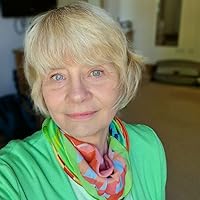
I grew up in Pennsylvania where I fell in love with exploring the forest and reading classic literature. I write fantasy and literary fiction marked by a fascination with the natural world, the human experience, and religious symbolism. I now live in the Ozark Mountains with my husband, three sons, and 100 lb. Great Pyrenees.
I also write a monthly newsletter where I share book reviews and nature-related observations (often about about creepy insects).
Each page offers the unsentimental release of an interior life, one deeply attuned to the complexities of human experience. It asks questions you’ve likely asked. Questions I’ve asked. Religious fundamentalism is the setting, but Selah is, fundamentally, about identity and how to live according to the stories we inherit about ourselves and the world. Who are we in the world? And, most pressingly, how do we live when our world ends and we have to keep living? Selah is an honest, deeply human book.
Honest writing is its own joy. But good writing is another one. Stegner wrote that a writer must be an “incorrigible lover of concrete things... a vendor of the most sensuous particulars of life.” Selah is alive with these sensuous particulars. Whether a hue of color, the movement of a character through grass, or the scarcely describable feeling of dread, Richmond’s writing attends to the particulars of real life. She constructs wonderful sentences that demonstrate the twin virtues of great writing: attention and imagination.
One of those little-known and aged luminaries of yesteryear once wrote, “I am convinced that every soul is a stage for the great wonders that are contained in the history of creation and the entire Holy Scripture.” Selah is a soul, the stage upon which we witness miracles. Fortitude. Patience. But we see more than these. One of Christianity’s greatest miracles is hope. Selah sees the arduous labor and birth of hope in a young woman’s soul. This is, perhaps, why I like the book so much. Not because it pretends to a world untouched by pain. But because it knows Tomorrow is coming: “You will find that worlds end and begin. This is not the great fire, or a second flood. It is only a storm. When the waters subside, you will see” (356). Selah reminds me of “Snowdrops” by Louise Gluck:
“Do you know what I was, how I lived? You know what despair is; then winter should have meaning for you.
I did not expect to survive, earth suppressing me. I didn't expect to waken again, to feel in damp earth my body able to respond again, remembering after so long how to open again in the cold light of earliest spring--
afraid, yes, but among you again crying yes risk joy
in the raw wind of the new world.”
Selah, the character, sings in the raw wind of her new world.
Selah is a Hebrew word we encounter in the Psalms. Most scholars understand it to be a musical term. A term that invites pause and reflection. It’s an apt title. Let Selah invite you to contemplate your life, the world, and your place in it.
Here are a few of my favorite sentences:
“Why was I chosen to begin at the end, to be the last breath before the book of time closed? My parents knew this was my destiny. They had called me Selah.” (50)
“The church ladies had draped the pulpit in white lace ribbon. Vases of sprawling black-eyed Susans, echinacea, and sunflowers decorated the sanctuary and fellowship hall, no doubt leaving scalped Christian gardens across town.” (121)
“The meadow was ringed by trees. Stalks of last year’s goldenrod stood brown and bedraggled. Still, the place cast its hushed spell over me, as if a melody only I could hear was playing. Fog rose from the ground in patches, obscuring the dark forest.” (237)
Disclaimer: Liana Richmond is a friend. However, I respect her too much to offer her work anything other than an honest review.
The end shouldn't hurt me. I would be whisked away to Heaven. The future shouldn't hurt but it did (5)
Selah Bowman never expected to grow up. Her parents live in expectation of the imminent Second Coming, having chosen to divest themselves of worldly things. Since even small-town Ohio is deemed too worldly, Selah and her sister Chalice are kept in a tightly controlled bubble. Their mother homeschools, and the whole family faithfully attends their independent Baptist church. Any outside books or activities are scrutinized and liable to being withheld at their father's disapproval. And their father always has the final say as head of the household. Selah's somewhat lonely existence is haunted by visions of the final judgement, and even mythical creatures that do not belong to her worldview (a bit of magical realism). She finds solace in art until Soon, Selah will be forced to question her beliefs and leave behind all she has known. It will be the hardest thing she has ever done, but the only way to save herself.
Selah's story not always easy to read. She an abused, manipulated, psychologically disturbed child who is forced to take on adult responsibilities, including before she is even eighteen. However, it is quite satisfying to follow her on her journey and see her ultimately gain her freedom. Liana Richmond is a talented writer. I enjoyed reading her vivid descriptions of the setting, like the woods where Selah passes her time. Richmond also excels at character development. Selah is a complex character with many musings about religion and the world. The people surrounding her are also multifaceted. Even her father is not a one-dimensional villain and genuinely wishes to protect his daughters in his own misguided way. It is also shown that Christianity is not only fundamentalism, and Selah holds onto her faith despite suffering.
Of course, I read this partly because of the Homeschooled Voices Book Award. The sections where Selah and Chalice are studying their textbooks seem accurate to what it is like to be taught at home. Ironically, the Bowman girls are actually decently educated. Selah studies physics, algebra and classic literature I would say it is their parents' religious extremism that wreaks havoc in their lives, not merely the fact that they are homeschooled. I have done some research on the quiverfull movement just out of curiosity, and unfortunately there are some families out there like the Bowmans. I think that for this reason, Selah deserves serious consideration. Homeschoolers from fundamentalist subcultures may see themselves in these pages, and others can develop better empathy and understanding for them. Furthermore, some parts of Selah will have broader relatability. Dealing with religious doubts and questions as a teenager is certainly not limited to fundamentalists. Regardless, I would say that Selah is a fascinating novel well worth reading.
Liana Richmond's "Selah" is a work of fiction that reads like it could be someone's memoir who lives in a Christian fundamentalist's world. It is extreme and many parts are quite horrifying. The teachings of this "church" (definitely a cult) brainwash these families into practices that are abusive, illegal and immoral; at best, they are socially gray. The author uses the FMC's journey through her teenage/young adult years growing up in such extremism as a way to teach the reader about the fundamentalists' beliefs and practices. Beautiful writing. 4.5 stars! *I received a complimentary e-ARC from the author/publishing company via NetGalley in exchange for an honest review. All thoughts & opinions are my own.
A searing and visceral account of a 16 year old girl's upbringing in fundamental Christianity. Selah has no official identity, as her parents chose not to register her birth and have home schooled Selah and her sister Chalice. They live in poverty, hiding themselves from prying eyes., and being taught by their father how to handle a gun. When Selah is found to be drawing anatomical pictures, her parents and rhe church confer and books other than the Bible are withdrawn. She is then found a prospective husband, a farm boy from down the road. Selah takes marriage very seriously, heeding biblical and elders' guidance to always obey her husband. But her husband's parents are even more fundamentalist than her own, and a disturbing incident with her husband's brother damages Selah's relationship with them. Tormented by visions of the Second Coming, and sightings of satyrs and nymphs in the forest, Selena is forced to take action to reclaim her life. A powerful reminder of how dangerous fundamentalism is in all its guises. Richmond's descriptive yet spare writing is a pleasure to read. You'll find yourself rooting for Selah all the way.
Without giving anything away, I could not put the book down. Liana guides readers into the world of fundamental and legalistic Christianity in "Selah". From page one I stayed up as late as I could to see what happened to Selah and every turn was filled with another challenge that kept me turning pages. The story made me laugh, cry, ponder, and even disentangle some legalistic teachings that I had to let go of and replace those with the truth. At some points it is hard to read as Selah faces very authoritative and manipulative antagonists, but her freedom ultimately comes.
This might be a spoiler but I'll try to be vague as possible, even when the book concludes I am often left to wonder, "what about this certain character? Will they get back together one day?" But it is left to the reader's imagination to wonder if they will work through their own religious trauma - and who knows, maybe one day in some masterful way, the characters will get back together. But that will be left to God's will.
This entire review has been hidden because of spoilers.
Thank you to the author and Netgalley for an advanced reader's copy.
4 stars. This book has lovely writing and I see a lot of potential for the author. I found myself eager to pick this up and continue reading each day, and I was quickly heavily invested in the character arc of our MC, Selah.
I do wish the deconstruction of Christianity had gone further, but I suppose that's a matter of personal opinion. I also wish that in the end, there had been more interactions and discussions on the deconstruction with the side characters. A lot of problematic ideologies of Christian fundamentalism were presented in the book, and I think the author could have furthered that conversation quite a bit.
A fantastic story, centred around bravery and courage. I loved Selah, she was naive and unknown in the beginning but her determination and strength made for a great lead character. I understood her fears and questions around religion and God, and her desire to do what’s right. The slower pace of the plot really allowed me to understand her and connect with her, and made the ending so much more impactful. I loved the messages of found family and independence, this was a story laced with emotion and strong self worth.
Thank you to NetGalley and the publishers for kindly providing an ARC in exchange for an honest review. #Selah #NetGalley. All opinions are my own.
I was intrigued by the premise of this, and fascinated/horrified by so much of what happened- which I imagine is pretty realistic. When the characters talked about god and religion in ways that are clearly fundamentalist (and in my opinion, ludicrous) I was riveted. However when there was discussion of more mainstream ideas about religion, I found myself bored. Perhaps this would appeal a lot more to someone who is religious.