

What do you think?

Every Last Girl: A Journey to Educate India's Forgotten Daughters
The extraordinary story of Educate Girls, the award-winning organization reshaping access to education in rural India
'Reveals the quiet revolutions unfolding in India's most forgotten corners' BANU MUSHTAQ
'Shines a keen and compassionate light on the last girl at the first mile of development ... Do read this book' ROHINI NILEKANI
India is one of the largest contributors to the global number of out-of-school girls. Poverty, early marriage and rigid social norms keep millions away from classrooms. At the heart of these issues is the symbolic 'last girl', Antimbala, representing those farthest from opportunity and first to be denied it. What would it take to change her fate-and that of countless others?
In 2007, Safeena Husain, whose own education was once interrupted, set out to find the answer. An initiative that began in a few pockets in Rajasthan has grown into Educate Girls – a grassroots movement that now spans more than 30,000 villages and has helped over two million girls return to learning. Through a network of local volunteers, it built leadership within communities, found new ways to identify out-of-school girls and track their progress, and proved that lasting change can start at the margins.
Drawing on years of first-hand experience and vivid stories from her work in India's villages, Safeena Husain's Every Last Girl traces this remarkable journey – the persistence it demands, and what becomes possible when a society chooses to bring its daughters into its future.
'Reveals the quiet revolutions unfolding in India's most forgotten corners' BANU MUSHTAQ
'Shines a keen and compassionate light on the last girl at the first mile of development ... Do read this book' ROHINI NILEKANI
India is one of the largest contributors to the global number of out-of-school girls. Poverty, early marriage and rigid social norms keep millions away from classrooms. At the heart of these issues is the symbolic 'last girl', Antimbala, representing those farthest from opportunity and first to be denied it. What would it take to change her fate-and that of countless others?
In 2007, Safeena Husain, whose own education was once interrupted, set out to find the answer. An initiative that began in a few pockets in Rajasthan has grown into Educate Girls – a grassroots movement that now spans more than 30,000 villages and has helped over two million girls return to learning. Through a network of local volunteers, it built leadership within communities, found new ways to identify out-of-school girls and track their progress, and proved that lasting change can start at the margins.
Drawing on years of first-hand experience and vivid stories from her work in India's villages, Safeena Husain's Every Last Girl traces this remarkable journey – the persistence it demands, and what becomes possible when a society chooses to bring its daughters into its future.
266 pages, Kindle Edition
Published January 27, 2026
Ratings & Reviews
Friends & Following
Create a free account to discover what your friends think of this book!
Community Reviews
Displaying 1 - 30 of 159 reviews

February 3, 2026
Every Last Girl: A Journey to Educate India’s Forgotten Daughters by Safeena Husain is a nonfiction book that tells the story behind one of India’s most impactful grassroots education movements — Educate Girls — and why educating every out-of-school girl matters so deeply. The book explores the idea of the “last girl” — symbolised by girls like Antimbala, who are the farthest from opportunity and first to be denied education because of poverty, early marriage, and entrenched social norms in rural India. Drawing on Safeena Husain’s years of first-hand experience working in villages, it traces how a small initiative launched in 2007 in Rajasthan which is a state in India grew into a large-scale movement spanning tens of thousands of villages and has helped millions of girls return to learning. The narrative blends personal reflection, vivid field stories and insights into community-based change, showing the persistence, challenges, and breakthroughs involved when families and communities begin to value girls’ education. In short, Every Last Girl is both a memoir of social change and a call to action ! showing how focused community work can open doors of opportunity for girls who might otherwise be forgotten. This book reminded me of a earlier book that I read in 2018 : “Three Cups of Tea “a memoir by Greg Mortenson and David Oliver Relin that tells the real-life story of how one man’s promise turned into a lifelong mission to build schools and promote peace in some of the most remote and troubled regions of the world. The first time you share tea with a Balti you are a stranger; the second time you are an honored guest; the third time you share tea, you become family. Such books are both impressing and inspiring as you meet so many people but impressed and inspired only by a few who make a difference to the society !!
“If you educate a man, you educate an individual. But if you educate a woman, you educate a nation.” ( African Proverb )
It’s 4 stars from my side !
Dr. Javed Rasheed
“If you educate a man, you educate an individual. But if you educate a woman, you educate a nation.” ( African Proverb )
It’s 4 stars from my side !
Dr. Javed Rasheed
March 7, 2026
Honestly, I thought this would be a boring nonfiction, but it proved me completely wrong. This book took me on a journey with the author, Safeena Husain, and what I found was not just information or statistics, but real stories, emotions, and a mission that slowly grew into something powerful.
" Every Last Girl: A Journey to Educate India’s Forgotten Daughters" is not just about an organisation. It is about courage, persistence, and the belief that educating even one girl can change everything. Through the idea of the “last girl,” the author reminds us of those girls who are often left behind the ones whose dreams are quietly buried under poverty, early marriage, and rigid social expectations.
One thing that honestly shocked me while reading this book was the names some girls were given names like Aachuki, Nakushi, Faltu, Maafi, Naaraz, Galla, Antimbala. Honestly, this book gave me a shock and made me feel grateful for everything… how could a girl be named Maafi? Seriously!! It shows how deeply society sometimes treats a girl child as unwanted even from the moment she is born.
What makes this book truly special is how human and honest the storytelling feels. Safeena Husain openly shares her own interrupted educational journey and how that experience shaped her determination to make a difference. When she returned to India and started working in the villages of Rajasthan, what began as a small initiative slowly grew into a movement that now reaches thousands of villages and has helped many girls return to school.
But the book does not present this as an overnight success. It talks about the resistance, the doubts, the setbacks, and the challenges faced while trying to change deeply rooted mindsets. Reading about families who were hesitant to send their daughters to school, and the local volunteers many of them women from the same communities who slowly became leaders and changemakers made the story feel very real and deeply moving.
What touched me the most is that the transformation described in this book is not dramatic or loud. It is slow, steady, and built on trust, patience, and quiet determination. These small steps eventually create a lasting impact.
This book also reminded me that education is not just about literacy or numbers. It is about dignity, choice, and giving a girl the right to imagine a different future for herself. When a society decides to educate its daughters, it doesn’t just change individual lives it reshapes generations.
By the end, this book left me feeling hopeful. The realities are harsh and the challenges are immense, but the message is clear: the “last girl” does not have to remain last forever.
" Every Last Girl: A Journey to Educate India’s Forgotten Daughters" is not just about an organisation. It is about courage, persistence, and the belief that educating even one girl can change everything. Through the idea of the “last girl,” the author reminds us of those girls who are often left behind the ones whose dreams are quietly buried under poverty, early marriage, and rigid social expectations.
One thing that honestly shocked me while reading this book was the names some girls were given names like Aachuki, Nakushi, Faltu, Maafi, Naaraz, Galla, Antimbala. Honestly, this book gave me a shock and made me feel grateful for everything… how could a girl be named Maafi? Seriously!! It shows how deeply society sometimes treats a girl child as unwanted even from the moment she is born.
What makes this book truly special is how human and honest the storytelling feels. Safeena Husain openly shares her own interrupted educational journey and how that experience shaped her determination to make a difference. When she returned to India and started working in the villages of Rajasthan, what began as a small initiative slowly grew into a movement that now reaches thousands of villages and has helped many girls return to school.
But the book does not present this as an overnight success. It talks about the resistance, the doubts, the setbacks, and the challenges faced while trying to change deeply rooted mindsets. Reading about families who were hesitant to send their daughters to school, and the local volunteers many of them women from the same communities who slowly became leaders and changemakers made the story feel very real and deeply moving.
What touched me the most is that the transformation described in this book is not dramatic or loud. It is slow, steady, and built on trust, patience, and quiet determination. These small steps eventually create a lasting impact.
This book also reminded me that education is not just about literacy or numbers. It is about dignity, choice, and giving a girl the right to imagine a different future for herself. When a society decides to educate its daughters, it doesn’t just change individual lives it reshapes generations.
By the end, this book left me feeling hopeful. The realities are harsh and the challenges are immense, but the message is clear: the “last girl” does not have to remain last forever.

April 3, 2026
Every Last Girl: A Journey to Educate India’s Forgotten Daughters by Safeena Husain is a powerful and deeply moving nonfiction book that tells the story behind one of India’s most impactful grassroots education movements, Educate Girls. Through her personal journey and experiences, Husain highlights why educating every out-of-school girl is not just important, but essential for building a more equal society.
What makes this book so compelling is the way the author narrates her experiences. Her writing is vivid, honest, and deeply personal. At many points, it feels as though you are walking beside her through rural villages, sitting with families, and listening to parents share their fears, struggles, and hopes for their daughters. These real-life encounters give the book a powerful emotional depth.
One aspect that truly shocked me while reading was learning about the names some girls were given — names like Aachuki, Nakushi, Faltu, Maafi, Naaraz, Galla, and Antimbala. These names reflect the painful reality of how unwanted daughters can sometimes be perceived in society, making the issue of girls’ education even more urgent.
Every Last Girl is quietly unsettling at times, because of the raw honesty with which it portrays the challenges girls face. Yet it is also deeply inspiring. By the end of the book, I felt moved, hopeful, and full of admiration for the relentless work being done to ensure that every girl gets the education and opportunity she deserves.
What makes this book so compelling is the way the author narrates her experiences. Her writing is vivid, honest, and deeply personal. At many points, it feels as though you are walking beside her through rural villages, sitting with families, and listening to parents share their fears, struggles, and hopes for their daughters. These real-life encounters give the book a powerful emotional depth.
One aspect that truly shocked me while reading was learning about the names some girls were given — names like Aachuki, Nakushi, Faltu, Maafi, Naaraz, Galla, and Antimbala. These names reflect the painful reality of how unwanted daughters can sometimes be perceived in society, making the issue of girls’ education even more urgent.
Every Last Girl is quietly unsettling at times, because of the raw honesty with which it portrays the challenges girls face. Yet it is also deeply inspiring. By the end of the book, I felt moved, hopeful, and full of admiration for the relentless work being done to ensure that every girl gets the education and opportunity she deserves.
March 2, 2026
In a time when some people feel hesitant about sending their children to government schools instead of private ones, this book reminded me that there are still many girls who are not even given the opportunity to receive a basic education. Every Last Girl was truly an eye-opener for me. It helped me understand the fears, beliefs, and social conditioning that often prevent families from educating their daughters.
The book also shares several insightful statistics that clearly highlight the scale of the problem and make the reality even more impactful.
The way Safeena Husain madam has written the book made me feel as if I was walking beside her, sitting with families, and listening to parents share their concerns and struggles. It did not feel distant or overly statistical; it felt personal and real. One chapter that deeply impacted me was “Names That Reveal a Mindset.” It made me reflect on how even the names given to girls can reflect the value placed on them. That realization stayed with me for a long time.
I also learned a great deal about how Educate Girls works at the grassroots level and the effort it takes to bring even one girl back to school. Overall, this book has broadened my perspective and increased my interest in reading more nonfiction.
I truly hope Antimbala is found soon.
The book also shares several insightful statistics that clearly highlight the scale of the problem and make the reality even more impactful.
The way Safeena Husain madam has written the book made me feel as if I was walking beside her, sitting with families, and listening to parents share their concerns and struggles. It did not feel distant or overly statistical; it felt personal and real. One chapter that deeply impacted me was “Names That Reveal a Mindset.” It made me reflect on how even the names given to girls can reflect the value placed on them. That realization stayed with me for a long time.
I also learned a great deal about how Educate Girls works at the grassroots level and the effort it takes to bring even one girl back to school. Overall, this book has broadened my perspective and increased my interest in reading more nonfiction.
I truly hope Antimbala is found soon.

May 2, 2026
This is not a storybook. In this book, the author shares her journey and the real world she has seen. It talks about girls who suffer without proper education, limited by their families and society, and the movement she started, Educate Girls, to help them move towards education.
The book focuses on rural India, where many girls still don’t have access to education. Reasons include early marriage, poverty, or simply not having schools nearby. Through real-life stories, the author shows their daily struggles and the pain they go through just to get a basic education.
Through Educate Girls, Safeena Hussain works not only with the girls but also with their parents and communities, helping them understand why education matters. That felt very real and important.
There is a saying of Prophet Muhammad (pbuh): “Seeking knowledge is an obligation upon every Muslim.” In Islam, seeking knowledge is encouraged for everyone, and educating girls is often seen as something that uplifts entire families.
This book and its author are doing meaningful work. I’m glad I found it and would encourage others to read it.
The book focuses on rural India, where many girls still don’t have access to education. Reasons include early marriage, poverty, or simply not having schools nearby. Through real-life stories, the author shows their daily struggles and the pain they go through just to get a basic education.
Through Educate Girls, Safeena Hussain works not only with the girls but also with their parents and communities, helping them understand why education matters. That felt very real and important.
There is a saying of Prophet Muhammad (pbuh): “Seeking knowledge is an obligation upon every Muslim.” In Islam, seeking knowledge is encouraged for everyone, and educating girls is often seen as something that uplifts entire families.
This book and its author are doing meaningful work. I’m glad I found it and would encourage others to read it.

March 26, 2026
The founder’s compelling story of the creation of Educate Girls, the award-winning Indian nonprofit, its evolution, and the stories of many girls who overcame economic and social obstacles to return to school. I wish the book went beyond descriptions of the programmes to include the story of building the institution.

July 18, 2026
Every Last Girl by Safeena Husain is a powerful and inspiring nonfiction book that tells the story of bringing education to girls who have been left behind by society. Through her journey of building Educate Girls, the author shares the realities faced by millions of girls in rural India and the effort it takes to ensure that every child gets the opportunity to learn. The book blends personal experiences, real-life stories, and the larger mission of creating lasting social change.
Themes & Unique Points
• The book highlights the importance of girls' education and the long-term impact it has on families and communities.
• It explores themes of resilience, equality, leadership, and hope.
• A unique aspect is the idea of the "last girl" - the child who is often the last to receive opportunities and the first to be overlooked.
• The book also shows how meaningful change begins with small, consistent efforts within local communities.
Content & Approach
• The narrative combines the author's personal journey with stories from villages across India.
• Instead of focusing only on statistics, it brings the challenges and achievements to life through real experiences.
• The writing is simple, engaging, and easy to follow, making a complex social issue accessible to a wide range of readers.
What Works Well
• The storytelling feels honest and deeply human.
• Real-life examples make the book both informative and relatable.
• It balances facts with personal experiences, creating an engaging reading experience.
• The book encourages reflection without becoming overwhelming.
What to Keep in Mind
• This is a reflective nonfiction book rather than a fast-paced narrative.
• It focuses on real social challenges and community-led solutions.
• Readers interested in education, social impact, and personal stories are likely to connect with it.
Every Last Girl is a meaningful and thought-provoking book that reminds readers how education can transform lives. It offers an inspiring look at the power of persistence, community, and the belief that every girl deserves the chance to learn and build her own future.
Themes & Unique Points
• The book highlights the importance of girls' education and the long-term impact it has on families and communities.
• It explores themes of resilience, equality, leadership, and hope.
• A unique aspect is the idea of the "last girl" - the child who is often the last to receive opportunities and the first to be overlooked.
• The book also shows how meaningful change begins with small, consistent efforts within local communities.
Content & Approach
• The narrative combines the author's personal journey with stories from villages across India.
• Instead of focusing only on statistics, it brings the challenges and achievements to life through real experiences.
• The writing is simple, engaging, and easy to follow, making a complex social issue accessible to a wide range of readers.
What Works Well
• The storytelling feels honest and deeply human.
• Real-life examples make the book both informative and relatable.
• It balances facts with personal experiences, creating an engaging reading experience.
• The book encourages reflection without becoming overwhelming.
What to Keep in Mind
• This is a reflective nonfiction book rather than a fast-paced narrative.
• It focuses on real social challenges and community-led solutions.
• Readers interested in education, social impact, and personal stories are likely to connect with it.
Every Last Girl is a meaningful and thought-provoking book that reminds readers how education can transform lives. It offers an inspiring look at the power of persistence, community, and the belief that every girl deserves the chance to learn and build her own future.

March 2, 2026
'Every Last Girl' by Safeena Husain is not just a memoir, but it is a profound testament to resilience, hope, and the relentless pursuit of dignity for millions of girls whose voices have been historically muted. Husain's writing gently pulls her reader into a world where gender inequality isn’t just a distant system but something lived and felt every day, sharing stories that are painful to sit with yet deeply human, filled with courage, tenderness, and quiet strength.
Hussain blends the raw testimony with sturn reflection, painting a vivid tapestry of the challenges facing girls in India and beyond child marriage, lack of education, and the pervasive norms that seek to restrict them. She reflects on her own journey, on how she moved from awareness to action, founding and leading initiatives that transform despair into opportunity. Her sharing is unpretentious, and she invites the reader to walk alongside her through both victories and setbacks. The storytelling here is deeply layered; we meet courageous girls whose laughter and dreams remain undiminished despite adversity, and through their stories, Husain underscores an essential truth: the fight for girls’ rights is not abstract, it is urgent, human, and profoundly inspiring.
'Every Last Girl' is quitely unsettling and uncomfortable with the raw honesty it demarcates the situation of girls in society. Her words are urgent yet hopeful in it's few edged tails. It gently yet firmly urges me to see girls on the margins not as stories of pity, but as forces of strength it restores my faith that, given the chance, every last girl truly can rise.
Hussain blends the raw testimony with sturn reflection, painting a vivid tapestry of the challenges facing girls in India and beyond child marriage, lack of education, and the pervasive norms that seek to restrict them. She reflects on her own journey, on how she moved from awareness to action, founding and leading initiatives that transform despair into opportunity. Her sharing is unpretentious, and she invites the reader to walk alongside her through both victories and setbacks. The storytelling here is deeply layered; we meet courageous girls whose laughter and dreams remain undiminished despite adversity, and through their stories, Husain underscores an essential truth: the fight for girls’ rights is not abstract, it is urgent, human, and profoundly inspiring.
'Every Last Girl' is quitely unsettling and uncomfortable with the raw honesty it demarcates the situation of girls in society. Her words are urgent yet hopeful in it's few edged tails. It gently yet firmly urges me to see girls on the margins not as stories of pity, but as forces of strength it restores my faith that, given the chance, every last girl truly can rise.

April 10, 2026
A first hand experience from the woman who has helped thousands of out of school girls find their voices, Every Last Girl is a beautiful factual compilation with enough data to back the statements if you are someone like me and believe the stats more. The book starts with some background information about the author that gives us more insight about the motivation behind the noble deed.
Although the book starts with the author, this isn’t Safeena Husain’s story, rather the story of the girls who have fought or are still fighting a system working against them. This is the story of millions of girls told through the eyes of a woman who understood the importance of education especially for girls.
The book ends with the source and citations for everything that has been quoted or used in the book and provides a vast number of references if one is in the mood to read more about the topic. A well researched book that tells the story of fight and resolve to bring education to the once who the society is constantly trying to take it away from.
I especially loved the little glimpses we got of different people through their own experiences and work done through the organization that today provides and advocates for 1000s of villages and girl education.
Although the book starts with the author, this isn’t Safeena Husain’s story, rather the story of the girls who have fought or are still fighting a system working against them. This is the story of millions of girls told through the eyes of a woman who understood the importance of education especially for girls.
The book ends with the source and citations for everything that has been quoted or used in the book and provides a vast number of references if one is in the mood to read more about the topic. A well researched book that tells the story of fight and resolve to bring education to the once who the society is constantly trying to take it away from.
I especially loved the little glimpses we got of different people through their own experiences and work done through the organization that today provides and advocates for 1000s of villages and girl education.

March 14, 2026
“How hard it must be to escape the mindset that a goat is an asset and a girl is a liability.” This line left me speechless.
The book is a powerful eye-opener. As a student of economics, I was aware of gender bias in India, but the stark realities presented here revealed its deeper and more unsettling dimensions. India is progressing toward modernisation, with women occupying influential roles, yet female literacy continues to lag behind.
Through stories drawn from the country’s margins, Safeena Husain explores why girls are still denied education and opportunity. Poverty often forces families into impossible choices; when resources are scarce, boys are sent to school while girls remain at home to work. Structured around themes such as poverty and social exclusion, the book uncovers the systemic barriers faced by girls.
I turned each page with dread, confronted by truths both familiar and deeply disturbing. This is a must read for everyone out there.
❤️One line stayed with me: “My education is the only thing that is truly mine. No one can steal it from me. No flood, no famine can take it away"
The book is a powerful eye-opener. As a student of economics, I was aware of gender bias in India, but the stark realities presented here revealed its deeper and more unsettling dimensions. India is progressing toward modernisation, with women occupying influential roles, yet female literacy continues to lag behind.
Through stories drawn from the country’s margins, Safeena Husain explores why girls are still denied education and opportunity. Poverty often forces families into impossible choices; when resources are scarce, boys are sent to school while girls remain at home to work. Structured around themes such as poverty and social exclusion, the book uncovers the systemic barriers faced by girls.
I turned each page with dread, confronted by truths both familiar and deeply disturbing. This is a must read for everyone out there.
❤️One line stayed with me: “My education is the only thing that is truly mine. No one can steal it from me. No flood, no famine can take it away"

April 28, 2026
This book by Safeena Hussain quietly follows the story of a small movement that brought over two million out-of-school girls back to classrooms across rural India.
Trust me as you go ahead, through each instance, you'll feel the weight of hesitation every girl carries, all those girls half-hidden behind a doorway in the villages. It makes you feel the courage, bitterness and fragility of being a woman. There are pages that will make you clench your jaw in anger and helplessness like the story of Vibha, “going to school” but never entering a classroom or how the girls are addressed as 'faaltu'. While, some certain pages will make you feel hopeful through the author's honest yet realistic portrayal of words.
This book is for all those women who are yet to be educationally empowered, for those parents bravely raising a girl child with dignity and those aspiring reformers, who wish to create a better nation for the women.✨
Trust me as you go ahead, through each instance, you'll feel the weight of hesitation every girl carries, all those girls half-hidden behind a doorway in the villages. It makes you feel the courage, bitterness and fragility of being a woman. There are pages that will make you clench your jaw in anger and helplessness like the story of Vibha, “going to school” but never entering a classroom or how the girls are addressed as 'faaltu'. While, some certain pages will make you feel hopeful through the author's honest yet realistic portrayal of words.
This book is for all those women who are yet to be educationally empowered, for those parents bravely raising a girl child with dignity and those aspiring reformers, who wish to create a better nation for the women.✨

March 14, 2026
Every Last Girl is part memoir, part manifesto, and entirely essential reading. Safeena Husain, founder of the NGO Educate Girls, weaves together her own remarkable personal journey with the stories of the millions of girls in India's most remote and underserved communities who have been denied access to education - not by accident, but by entrenched patriarchy, poverty, and tradition.
The book takes its title from a girl named Antimbala, whose very name means "the last girl"....a name given by parents hoping she would be their final daughter. It's a quietly devastating detail that sets the tone for what follows: a ground-level account of what it actually takes to get girls into classrooms, told with honesty, urgency, and deep compassion.
Husain doesn't shy away from the structural complexity of the problem, but she never loses sight of the individual girls at the heart of it. The writing is vivid and accessible, drawing readers into dusty Rajasthani villages while exploring the classism and casteism engraved in the middle. What emerges is a story of over 55,000 community volunteers helping more than two million girls find their way back to school.
For anyone who cares about gender equality, education, or what determined social entrepreneurship can look like in practice, Every Last Girl is inspiring, sobering, and impossible to put down.
The book takes its title from a girl named Antimbala, whose very name means "the last girl"....a name given by parents hoping she would be their final daughter. It's a quietly devastating detail that sets the tone for what follows: a ground-level account of what it actually takes to get girls into classrooms, told with honesty, urgency, and deep compassion.
Husain doesn't shy away from the structural complexity of the problem, but she never loses sight of the individual girls at the heart of it. The writing is vivid and accessible, drawing readers into dusty Rajasthani villages while exploring the classism and casteism engraved in the middle. What emerges is a story of over 55,000 community volunteers helping more than two million girls find their way back to school.
For anyone who cares about gender equality, education, or what determined social entrepreneurship can look like in practice, Every Last Girl is inspiring, sobering, and impossible to put down.
April 23, 2026
Every Last Girl by Safeena Husain is a deeply moving and inspiring account of what it truly means to ensure that education reaches every girl.
The journey of Educate Girls—from its beginnings in Rajasthan in 2007 to becoming a large-scale movement—is nothing short of remarkable. What stands out is the sharp clarity of purpose: reaching the “last girl.” Through a powerful network of hyper-local champions like Team Balika, the organization goes beyond enrolment—shifting mindsets, breaking stereotypes, and bringing entire communities together to stand up for their daughters.
What makes the book compelling is Safeena’s honesty and the balance between heart and head—stories rooted in real lives, backed by data and evidence. The thoughtful use of technology, including AI to identify hotspots, combined with relentless human effort—knocking on every door—shows what effective social change truly looks like.
One line that stayed with me: “If a girl’s worth lies primarily in her ability to contribute to others… then we haven’t moved on enough to truly believe in every last girl as an individual.” A powerful reminder of how far we still have to go.
A must-read for anyone working in education, development, or social impact. Every girl has a story—and this book is about ensuring none of them are left behind.
Heartiest congratulations to the entire Educate Girls team on the well-deserved Ramon Magsaysay Award 2025.
The journey of Educate Girls—from its beginnings in Rajasthan in 2007 to becoming a large-scale movement—is nothing short of remarkable. What stands out is the sharp clarity of purpose: reaching the “last girl.” Through a powerful network of hyper-local champions like Team Balika, the organization goes beyond enrolment—shifting mindsets, breaking stereotypes, and bringing entire communities together to stand up for their daughters.
What makes the book compelling is Safeena’s honesty and the balance between heart and head—stories rooted in real lives, backed by data and evidence. The thoughtful use of technology, including AI to identify hotspots, combined with relentless human effort—knocking on every door—shows what effective social change truly looks like.
One line that stayed with me: “If a girl’s worth lies primarily in her ability to contribute to others… then we haven’t moved on enough to truly believe in every last girl as an individual.” A powerful reminder of how far we still have to go.
A must-read for anyone working in education, development, or social impact. Every girl has a story—and this book is about ensuring none of them are left behind.
Heartiest congratulations to the entire Educate Girls team on the well-deserved Ramon Magsaysay Award 2025.

February 21, 2026
Every Last Girl: A Journey to Educate India’s Forgotten Daughters is a book that quietly opens your eyes to a reality many of us rarely think about. It talks about girls in rural India who still struggle for something as basic as the chance to go to school. Through real stories and experiences, the book shows how education can slowly begin to change not only a girl’s life but also the mindset of families and entire communities.
One detail that deeply stayed with me while reading was learning about the names some girls were given at birth—names like Nakushi, which literally means “unwanted.” In some places, girls were also given names like Maafi or Aachuki, reflecting the disappointment families felt when a girl was born. Reading this was heartbreaking because it shows how rejection can begin even before a girl gets the chance to grow up. It made me pause and realise how many privileges we often take for granted.
What I appreciated about the book is that it doesn’t present change as something quick or dramatic. Instead, it shows how transformation happens slowly. Safeena Husain shares her journey of working in villages where education for girls was once seen as unnecessary, and how patient efforts and community support gradually began to shift those beliefs.
I especially loved reading about the local volunteers women from the same communities who go door to door, speak with families, and encourage parents to send their daughters to school. Their dedication shows that meaningful change often begins with small, consistent efforts.
This book beautifully reminds us that education is much more than learning to read or write. It gives girls dignity, confidence, and the ability to imagine a life beyond limitations. By the end of the book, I felt deeply moved and hopeful, with great respect for the work being done to ensure that every girl gets the opportunity she deserves
One detail that deeply stayed with me while reading was learning about the names some girls were given at birth—names like Nakushi, which literally means “unwanted.” In some places, girls were also given names like Maafi or Aachuki, reflecting the disappointment families felt when a girl was born. Reading this was heartbreaking because it shows how rejection can begin even before a girl gets the chance to grow up. It made me pause and realise how many privileges we often take for granted.
What I appreciated about the book is that it doesn’t present change as something quick or dramatic. Instead, it shows how transformation happens slowly. Safeena Husain shares her journey of working in villages where education for girls was once seen as unnecessary, and how patient efforts and community support gradually began to shift those beliefs.
I especially loved reading about the local volunteers women from the same communities who go door to door, speak with families, and encourage parents to send their daughters to school. Their dedication shows that meaningful change often begins with small, consistent efforts.
This book beautifully reminds us that education is much more than learning to read or write. It gives girls dignity, confidence, and the ability to imagine a life beyond limitations. By the end of the book, I felt deeply moved and hopeful, with great respect for the work being done to ensure that every girl gets the opportunity she deserves

March 8, 2026
Every Last Girl by Safeena Husain transports the reader from their comfy seat directly to the rural villages in Rajasthan. The book shows that despite India’s exponential growth in the twentieth century, in many pockets of rural India, it still feels like time has stood still. In these villages, girls are often still considered a burden, and their education is given zero importance.
Through this book, Safeena narrates her experiences and the journey of starting & growing Educate Girls, an organisation that focuses on Antimbala-the last girl. Founded in 2007, Educate Girls works to ensure that no girl is left without receiving a primary education.
The book is peppered with real-life stories drawn from Safeena's work in the villages. The chapter where they explained the names given to girls is so heartbreaking. These cases make one realise just how much one has taken education for granted.
The book explores everything in detail, how they faced resistance, the doubts among the team members, how they overcame the hurdles and how, just when they had thought they achieved success, they were shown they were wrong and there was so much more for them to do.
I like how real this book is. Although it’s a non-fiction by nature, this is a book that will not let you stop until you finish the entire book. This is a book that shows how change often starts quietly with persistence, courage, and belief in what’s possible.
Through this book, Safeena narrates her experiences and the journey of starting & growing Educate Girls, an organisation that focuses on Antimbala-the last girl. Founded in 2007, Educate Girls works to ensure that no girl is left without receiving a primary education.
The book is peppered with real-life stories drawn from Safeena's work in the villages. The chapter where they explained the names given to girls is so heartbreaking. These cases make one realise just how much one has taken education for granted.
The book explores everything in detail, how they faced resistance, the doubts among the team members, how they overcame the hurdles and how, just when they had thought they achieved success, they were shown they were wrong and there was so much more for them to do.
I like how real this book is. Although it’s a non-fiction by nature, this is a book that will not let you stop until you finish the entire book. This is a book that shows how change often starts quietly with persistence, courage, and belief in what’s possible.
June 20, 2026
Probably one of my best and most powerful reads of 2026 - carrying us into a world we so often fail to see: lives that stay invisible, and the movement Safeena Husain built from the ground up to find them. One volunteer, one home visit, one hyperlocal relationship at a time, in places that don't even show up on the map most of us carry in our heads.

February 23, 2026
A story that deserves to be read by everyone
“Every Last Girl”, I didn’t need a blurb. That title alone dragged my attention. It made me curious and very eager to know who these “last girls” are, what is their story?
This book talks about the journey of educating girls who are pushed to the margins; girls we don’t see, don’t hear about, don’t think about enough. It’s not just statistics, it’s filled with real life stories.
As someone who grew up in a rural area and has seen it transform into a more urban locality, this felt very close to home. I remember those survey days in school, people coming with registers, asking about attendance, family background. At that time it felt random. Now I understand what those small efforts meant.
Reading this made me feel privileged in a way we often forget to acknowledge. It made me proud of my parents for pushing me to study hard and build a life for myself, even when I didn’t fully understand why it mattered so much.
Because even in 2026, I know a vast number of girls still don’t know what life has to offer. Not because they lack potential but because they lack awareness, exposure, and even the bare minimum opportunities. It's not like they don’t know how to dream big but because no one told them they could.
I truly recommend this book. If you want to know your India beyond just the top-tier cities, read this. India is so much more than the cities we romanticise. This book reminds you of that quietly, but powerfully.
“Every Last Girl”, I didn’t need a blurb. That title alone dragged my attention. It made me curious and very eager to know who these “last girls” are, what is their story?
This book talks about the journey of educating girls who are pushed to the margins; girls we don’t see, don’t hear about, don’t think about enough. It’s not just statistics, it’s filled with real life stories.
As someone who grew up in a rural area and has seen it transform into a more urban locality, this felt very close to home. I remember those survey days in school, people coming with registers, asking about attendance, family background. At that time it felt random. Now I understand what those small efforts meant.
Reading this made me feel privileged in a way we often forget to acknowledge. It made me proud of my parents for pushing me to study hard and build a life for myself, even when I didn’t fully understand why it mattered so much.
Because even in 2026, I know a vast number of girls still don’t know what life has to offer. Not because they lack potential but because they lack awareness, exposure, and even the bare minimum opportunities. It's not like they don’t know how to dream big but because no one told them they could.
I truly recommend this book. If you want to know your India beyond just the top-tier cities, read this. India is so much more than the cities we romanticise. This book reminds you of that quietly, but powerfully.

March 19, 2026
Every Last Girl by Safeena Husain is a powerful book that explores the problem of girls being out of school in India. It focuses on the story of Antimbala, the symbolic 'last girl' who represents those most deprived of educational opportunities. The book shows how poverty, early marriage, and strict social norms keep millions of girls away from classrooms. It also describes the journey of Educate Girls, an organization started by Safeena Husain in 2007, which has now helped over two million girls return to school across more than 30,000 villages.
Before reading this book, living in a city, I could never have imagined the heartbreaking extent of injustice endured by girls in distant villages. Realizing that some girls are denied even a proper name, that child marriage remains widespread, and that parents sometimes place greater value on goats than their own daughters - all compounded by systemic neglect - left me profoundly shaken. It stirred a sense of anger and sorrow within me, mirroring the emotions the author describes. Witnessing these struggles through the author’s words made me feel their pain and frustration in a way I never had before, reminding me just how important it is to fight for every girl’s right to dignity and education.
What touched me most deeply were the moving stories woven throughout the book - anecdotes of girls finally stepping into classrooms, the heartfelt testimonies of volunteers pouring their souls into this mission, and the remarkable changes that unfolded as girls completed their 10th or 12th grades or even graduation for few. These achievements unlocked new opportunities, fueling a transformation in the girls’ sense of self-worth and sparking a newfound independence and strength. Their journeys were the beating heart of this book, and I could find myself shedding tears of joy at some moments.
One thing that stood out to me was how the author never blamed the families of these girls. Even when she talks about injustices and her frustration with the failures, she focuses on finding ways to get girls enrolled rather than criticizing their families. What was particularly striking was how the author and her team approached people with humility and empathy, making a real effort to understand the families' lifestyles and daily realities. Instead of adopting a city attitude of “we know better,” they listened carefully and respected the unique challenges and traditions within each community. This open-minded approach fostered trust and made their efforts more effective. The dedication of the author and her team is inspiring - they never settled for enrolling “most” girls but insisted on enrolling every single girl, no matter the challenges.
I especially appreciated how the author structured the flow of the book by beginning with identifying girls not enrolled in school and examining the reasons behind their exclusion. The book also highlighted how illiteracy impacts women and families, affecting their finances and health. The author described addressing these challenges - ranging from cultural differences and poverty to strong biases laced with patriarchy - starting with individual families, then having village-wide gatherings, and eventually scaling up. The narrative showed that while some solutions failed and others succeeded, learning from each attempt was crucial. Building genuine connections and adapting strategies to each family and village were key, with financial hurdles addressed through government support programs. The book’s practical approach stood out, using real-life examples instead of just general advice.
Some books go beyond our usual interests and become must-reads, and for me, Every Last Girl is one of those books. It was one of the most empowering books I have read in recent years. I did not expect a non-fiction book to move me so deeply, but this one did. It stayed with me long after I finished it, and I believe everyone should read it.
In conclusion, Every Last Girl is a remarkable book that sheds light on the challenges faced by girls in India who are denied education. It shows the importance of persistence and hope, and reminds us that every girl deserves a chance to learn and build her future. The author acknowledges that the journey is far from easy, with many obstacles ahead, but underscores the unwavering commitment to ensure every last girl receives her education. The book inspired me, and I highly recommend it to anyone who wants to understand and support the fight for girls' education.
Before reading this book, living in a city, I could never have imagined the heartbreaking extent of injustice endured by girls in distant villages. Realizing that some girls are denied even a proper name, that child marriage remains widespread, and that parents sometimes place greater value on goats than their own daughters - all compounded by systemic neglect - left me profoundly shaken. It stirred a sense of anger and sorrow within me, mirroring the emotions the author describes. Witnessing these struggles through the author’s words made me feel their pain and frustration in a way I never had before, reminding me just how important it is to fight for every girl’s right to dignity and education.
What touched me most deeply were the moving stories woven throughout the book - anecdotes of girls finally stepping into classrooms, the heartfelt testimonies of volunteers pouring their souls into this mission, and the remarkable changes that unfolded as girls completed their 10th or 12th grades or even graduation for few. These achievements unlocked new opportunities, fueling a transformation in the girls’ sense of self-worth and sparking a newfound independence and strength. Their journeys were the beating heart of this book, and I could find myself shedding tears of joy at some moments.
One thing that stood out to me was how the author never blamed the families of these girls. Even when she talks about injustices and her frustration with the failures, she focuses on finding ways to get girls enrolled rather than criticizing their families. What was particularly striking was how the author and her team approached people with humility and empathy, making a real effort to understand the families' lifestyles and daily realities. Instead of adopting a city attitude of “we know better,” they listened carefully and respected the unique challenges and traditions within each community. This open-minded approach fostered trust and made their efforts more effective. The dedication of the author and her team is inspiring - they never settled for enrolling “most” girls but insisted on enrolling every single girl, no matter the challenges.
I especially appreciated how the author structured the flow of the book by beginning with identifying girls not enrolled in school and examining the reasons behind their exclusion. The book also highlighted how illiteracy impacts women and families, affecting their finances and health. The author described addressing these challenges - ranging from cultural differences and poverty to strong biases laced with patriarchy - starting with individual families, then having village-wide gatherings, and eventually scaling up. The narrative showed that while some solutions failed and others succeeded, learning from each attempt was crucial. Building genuine connections and adapting strategies to each family and village were key, with financial hurdles addressed through government support programs. The book’s practical approach stood out, using real-life examples instead of just general advice.
Some books go beyond our usual interests and become must-reads, and for me, Every Last Girl is one of those books. It was one of the most empowering books I have read in recent years. I did not expect a non-fiction book to move me so deeply, but this one did. It stayed with me long after I finished it, and I believe everyone should read it.
In conclusion, Every Last Girl is a remarkable book that sheds light on the challenges faced by girls in India who are denied education. It shows the importance of persistence and hope, and reminds us that every girl deserves a chance to learn and build her future. The author acknowledges that the journey is far from easy, with many obstacles ahead, but underscores the unwavering commitment to ensure every last girl receives her education. The book inspired me, and I highly recommend it to anyone who wants to understand and support the fight for girls' education.

March 28, 2026
In a country where development is often measured in sweeping numbers and policy headlines, "Every Last Girl" forces a shift in scale. It moves the conversation away from abstraction and into specificity, into villages, households, and lived realities where progress is negotiated in fragments rather than declared in milestones.
This is not just a narrative about education. It is an examination of structural deprivation, of how inequality sustains itself through culture as much as through economics, and of what it truly means to intervene in such a system without dismantling the very communities one seeks to transform.
At its core, the book documents the evolution of Educate Girls, but to reduce it to institutional storytelling would be to overlook its deeper intellectual and emotional architecture. What the author constructs instead is a layered account of social entrepreneurship operating within resistance-heavy ecosystems.
One of the book’s most significant contributions lies in how it reframes the issue of girls’ education. It refuses to treat lack of schooling as an isolated deficit and instead situates it within a web of interdependent constraints,
✨ Economic fragility, where immediate survival outweighs long-term investment
✨ Patriarchal inheritance systems, where daughters are perceived as transient members of the household
✨ Cultural normalization of early marriage, which truncates educational trajectories
✨ Institutional gaps, including inadequate school infrastructure and governance failures
By doing so, the book dismantles the simplistic binary of “educated vs. uneducated” and replaces it with a more accurate understanding: education is not denied in a single moment; it is eroded through accumulated exclusions.
The conceptual anchor of Antimbala, the “last girl”, functions as more than a narrative device. It is a methodological lens.
Instead of designing interventions for the majority and hoping inclusion trickles down, the author's model inverts the hierarchy,
• Identify the most excluded individual
• Understand the compounded barriers affecting her
• Build systems that address those barriers first
This approach has implications far beyond education. It challenges conventional development logic, which often prioritizes scalability over inclusivity. Here, inclusivity becomes the starting point, not the afterthought.
A nuanced strength of the book is its refusal to romanticize or demonize rural communities. It presents them as complex systems shaped by history, scarcity, and inherited belief structures.
Resistance is not portrayed as ignorance but as risk management :
• Sending a girl to school may mean loss of household labour
• Education may not guarantee employment, especially in constrained economies
• Social backlash can carry real consequences for families
✍️ Strengths:
🔸The “last girl” framework is both philosophically and practically robust.
🔸The narrative is rooted in lived realities rather than theoretical abstraction.
🔸The book avoids reductive binaries; it acknowledges complexity in both problems and solutions.
🔸The book demonstrates how localized interventions can expand without losing contextual sensitivity.
🔸The book repeatedly emphasizes dignity over utilitarian justifications for education.
✒️ Areas for Improvement :
▪️While systemic issues are acknowledged, there is less direct interrogation of state accountability and policy failures.
▪️Similar patterns of resistance and resolution, while realistic, occasionally create narrative redundancy.
▪️The book informs effectively but does not always bridge the experiential gap for readers far removed from these contexts.
In contemporary discourse, development is often reduced to metrics such as enrolment rates, literacy percentages, economic indicators, this book challenges this reduction. The book also raises an implicit but critical question for policymakers and practitioners alike, "Are we designing for efficiency, or are we designing for equity?"
The book is not written to impress; it is written to document, to question, and to persist. Its power lies not in dramatic storytelling but in its steady accumulation of truths, about inequality, about resistance, and about the slow, often invisible work required to shift both. In the end, the book does not offer closure, it offers continuity.
Because as long as the “last girl” exists, not as an idea, but as a lived reality, the work it documents remains unfinished.
This is not just a narrative about education. It is an examination of structural deprivation, of how inequality sustains itself through culture as much as through economics, and of what it truly means to intervene in such a system without dismantling the very communities one seeks to transform.
At its core, the book documents the evolution of Educate Girls, but to reduce it to institutional storytelling would be to overlook its deeper intellectual and emotional architecture. What the author constructs instead is a layered account of social entrepreneurship operating within resistance-heavy ecosystems.
One of the book’s most significant contributions lies in how it reframes the issue of girls’ education. It refuses to treat lack of schooling as an isolated deficit and instead situates it within a web of interdependent constraints,
✨ Economic fragility, where immediate survival outweighs long-term investment
✨ Patriarchal inheritance systems, where daughters are perceived as transient members of the household
✨ Cultural normalization of early marriage, which truncates educational trajectories
✨ Institutional gaps, including inadequate school infrastructure and governance failures
By doing so, the book dismantles the simplistic binary of “educated vs. uneducated” and replaces it with a more accurate understanding: education is not denied in a single moment; it is eroded through accumulated exclusions.
The conceptual anchor of Antimbala, the “last girl”, functions as more than a narrative device. It is a methodological lens.
Instead of designing interventions for the majority and hoping inclusion trickles down, the author's model inverts the hierarchy,
• Identify the most excluded individual
• Understand the compounded barriers affecting her
• Build systems that address those barriers first
This approach has implications far beyond education. It challenges conventional development logic, which often prioritizes scalability over inclusivity. Here, inclusivity becomes the starting point, not the afterthought.
A nuanced strength of the book is its refusal to romanticize or demonize rural communities. It presents them as complex systems shaped by history, scarcity, and inherited belief structures.
Resistance is not portrayed as ignorance but as risk management :
• Sending a girl to school may mean loss of household labour
• Education may not guarantee employment, especially in constrained economies
• Social backlash can carry real consequences for families
✍️ Strengths:
🔸The “last girl” framework is both philosophically and practically robust.
🔸The narrative is rooted in lived realities rather than theoretical abstraction.
🔸The book avoids reductive binaries; it acknowledges complexity in both problems and solutions.
🔸The book demonstrates how localized interventions can expand without losing contextual sensitivity.
🔸The book repeatedly emphasizes dignity over utilitarian justifications for education.
✒️ Areas for Improvement :
▪️While systemic issues are acknowledged, there is less direct interrogation of state accountability and policy failures.
▪️Similar patterns of resistance and resolution, while realistic, occasionally create narrative redundancy.
▪️The book informs effectively but does not always bridge the experiential gap for readers far removed from these contexts.
In contemporary discourse, development is often reduced to metrics such as enrolment rates, literacy percentages, economic indicators, this book challenges this reduction. The book also raises an implicit but critical question for policymakers and practitioners alike, "Are we designing for efficiency, or are we designing for equity?"
The book is not written to impress; it is written to document, to question, and to persist. Its power lies not in dramatic storytelling but in its steady accumulation of truths, about inequality, about resistance, and about the slow, often invisible work required to shift both. In the end, the book does not offer closure, it offers continuity.
Because as long as the “last girl” exists, not as an idea, but as a lived reality, the work it documents remains unfinished.

June 4, 2026
Safeena Husain is the founder of Educate Girls, an NGO that became the first Indian organization to win the Ramon Magsaysay Award, in 2025. The aim of Educate Girls is to do just that—to find every last girl, no matter in how remote an area, no matter how seemingly distant from a school—and make sure she gets an education.
Every Last Girl, Husain’s book about this endeavour, begins by talking about her own journey: as a girl who was forced to drop out of school, but was fortunate enough to find a deeply committed mentor who helped her complete her education, made sure she went far. This eventually became the seed for the foundation of Educate Girls.
Over the course of the book, Husain describes how the organization set about trying to make a difference. The obstacles, the unexpected help from both government departments as well as others, the slow but steady growth. Woven into this story are the facts about women’s education in India. Not just the data (though that is there, too), but the hard reality, the stories of everyday girls and women. The chores that must take precedence; the brothers who are valued above their sisters; the many ways in which considerations of poverty, remoteness, and patriarchy come in the way of girls going to school. Husain talks about real families, real women and girls, real problems, real mindsets that the NGO had to change in order to make people realize the importance of education for girls.
I found this book fascinating on several levels. On the one hand, it’s an extremely inspiring book: about people who care, about people who will go to any length—literally, including trudging through the arid wastes of the remotest districts of Rajasthan, crossing rivers by coracle—to help a girl go to school. Inspiring, too, in the stories of tenacity, of girls surmounting seemingly immovable obstacles (in particular parental and societal disapproval) to go to school.
While it’s inspiring, it’s also an eye-opener. Sometimes distressing (the sheer poverty, the patriarchy, the neglect of the girl child), sometimes mind-boggling, sometimes just the sort of fact that made me wither inside. The horribly derogatory names given to girls, for instance: Nakushi (‘unwanted’), Maafi (‘sorry’), Antimbala ('last girl'): a dreadful reflection on the Indian obsession with having sons.
If there’s a gap, it is in Husain’s own story. She briefly touches on this at various points of the book, but she always holds back some part of the story. I could not fully understand why she had to drop out, and what her father (who comes across as being very supportive and proud of her) felt about that. A more fully explained account of Husain’s own life might have helped.
But this is a minor niggle, nothing that detracts from the worth of the book.
Every Last Girl, Husain’s book about this endeavour, begins by talking about her own journey: as a girl who was forced to drop out of school, but was fortunate enough to find a deeply committed mentor who helped her complete her education, made sure she went far. This eventually became the seed for the foundation of Educate Girls.
Over the course of the book, Husain describes how the organization set about trying to make a difference. The obstacles, the unexpected help from both government departments as well as others, the slow but steady growth. Woven into this story are the facts about women’s education in India. Not just the data (though that is there, too), but the hard reality, the stories of everyday girls and women. The chores that must take precedence; the brothers who are valued above their sisters; the many ways in which considerations of poverty, remoteness, and patriarchy come in the way of girls going to school. Husain talks about real families, real women and girls, real problems, real mindsets that the NGO had to change in order to make people realize the importance of education for girls.
I found this book fascinating on several levels. On the one hand, it’s an extremely inspiring book: about people who care, about people who will go to any length—literally, including trudging through the arid wastes of the remotest districts of Rajasthan, crossing rivers by coracle—to help a girl go to school. Inspiring, too, in the stories of tenacity, of girls surmounting seemingly immovable obstacles (in particular parental and societal disapproval) to go to school.
While it’s inspiring, it’s also an eye-opener. Sometimes distressing (the sheer poverty, the patriarchy, the neglect of the girl child), sometimes mind-boggling, sometimes just the sort of fact that made me wither inside. The horribly derogatory names given to girls, for instance: Nakushi (‘unwanted’), Maafi (‘sorry’), Antimbala ('last girl'): a dreadful reflection on the Indian obsession with having sons.
If there’s a gap, it is in Husain’s own story. She briefly touches on this at various points of the book, but she always holds back some part of the story. I could not fully understand why she had to drop out, and what her father (who comes across as being very supportive and proud of her) felt about that. A more fully explained account of Husain’s own life might have helped.
But this is a minor niggle, nothing that detracts from the worth of the book.

February 21, 2026
This book is not just the story of an organization. It is the story of courage, persistence, and belief in the power of educating a single girl , especially the one who stands at the very end of the line. Author introduces us to the symbolic “last girl,” Antimbala , the girl who is the first to be denied opportunity and the last to be remembered. Through this image alone, the book makes you think and reflect on how many dreams are quietly buried under poverty, early marriage, and rigid social norms.
Author shares her own interrupted educational journey before taking us into the villages of Rajasthan, where her mission truly began. In 2007, what started as a small initiative slowly grew into Educate Girls , a grassroots movement that now spans over 30,000 villages and has helped more than two million girls return to learning. But the book does not present this as an overnight success. It shows the resistance, the setbacks, the doubt, and the relentless determination required to bring change.
The storytelling is vivid and deeply human. You meet families hesitant to send their daughters to school. You witness conversations shaped by tradition and fear. You see how local volunteers , often women from the same communities become leaders and change-makers. The transformation described here is not dramatic , It is steady. It is built on trust. And that makes it even more meaningful.
As someone who believes strongly in education, this book touched me at a personal level. Education is not just about literacy or numbers, it is about dignity. It is about choice. It is about giving a girl the right to imagine a different future. Author beautifully shows that when a society chooses to educate its daughters, it does not just change individual lives , it reshapes generations.
I also appreciated how practical the journey feels. The book speaks about identifying out-of-school girls, tracking progress, building community leadership , real systems that create lasting impact. It reminds us that change does not always begin in grand halls of power. Sometimes, it begins in dusty village lanes, in small meetings, in quiet determination.
Emotionally, this book left me hopeful. Yes, the realities are harsh. Yes, the challenges are immense. But the message is clear , the “last girl” does not have to remain last. When opportunity reaches her, everything shifts.
This book is not just a memoir. It is a call to conscience. It asks us what kind of future we want to build and whether we are willing to include every daughter in it.
A deeply inspiring and necessary read.
Author shares her own interrupted educational journey before taking us into the villages of Rajasthan, where her mission truly began. In 2007, what started as a small initiative slowly grew into Educate Girls , a grassroots movement that now spans over 30,000 villages and has helped more than two million girls return to learning. But the book does not present this as an overnight success. It shows the resistance, the setbacks, the doubt, and the relentless determination required to bring change.
The storytelling is vivid and deeply human. You meet families hesitant to send their daughters to school. You witness conversations shaped by tradition and fear. You see how local volunteers , often women from the same communities become leaders and change-makers. The transformation described here is not dramatic , It is steady. It is built on trust. And that makes it even more meaningful.
As someone who believes strongly in education, this book touched me at a personal level. Education is not just about literacy or numbers, it is about dignity. It is about choice. It is about giving a girl the right to imagine a different future. Author beautifully shows that when a society chooses to educate its daughters, it does not just change individual lives , it reshapes generations.
I also appreciated how practical the journey feels. The book speaks about identifying out-of-school girls, tracking progress, building community leadership , real systems that create lasting impact. It reminds us that change does not always begin in grand halls of power. Sometimes, it begins in dusty village lanes, in small meetings, in quiet determination.
Emotionally, this book left me hopeful. Yes, the realities are harsh. Yes, the challenges are immense. But the message is clear , the “last girl” does not have to remain last. When opportunity reaches her, everything shifts.
This book is not just a memoir. It is a call to conscience. It asks us what kind of future we want to build and whether we are willing to include every daughter in it.
A deeply inspiring and necessary read.
April 16, 2026
I just finished reading Every Last Girl, and it doesn’t just feel like reading a book, it feels like sharing a journey. When I was reading it, I felt like I was walking with the author in many different villages, meeting girls, and getting a better understanding of the struggles these girls go through. The book uses simple language; however, it has such a strong message.
This book is mostly about young girls in India who are not allowed to go to school. There are some girls who have never been enrolled into school while others have dropped out due to either economic hardship, an early marriage, or pressure from family. One thing that has stuck with me is that many of these girls are treated as a burden from the very moment they are born.
The author also talks about her life. The author had a very difficult childhood that included a period where she was not able to continue her education, so that section of the book made it feel very personal to me, and I felt that the author had an understanding of the pain involved. When she had the opportunity to return to school, her life changed completely. That’s why she is a strong advocate for education, because it can change everything.
Another example of why I liked the book is because it uses real-life stories instead of just facts, so we get to read about girls like Nagina and other girls gaining confidence little by little.
The author’s emphasis on changing mindsets is another key element of the book. She points out that the real issue isn’t only poverty; it is also how behaviourally people see girls get educated and what girls can do. The book describes how her organisation took time, working with families and locals to create a shift in the way they think about sending girls back to school. With time, millions of girls returned to school.
In some places, this book is hard to read emotionally. It is hard to read about girls being neglected, married young, or mistreated. It is also part of the reason this book is so important. It shows an alternate point of view.
For me, Every Last Girl is not a book to be enjoyed as entertainment; it is a book to help you understand reality. It makes you think about the good fortune we have to have educational opportunities and how many girls still cannot.
To say that I feel Every Last Girl is a meaningful and powerful book would be an understatement. The content in this book is straightforward, honest, and motivating. If you enjoy reading books based on awareness of social issues and reality, you will enjoy this book. It may not be an exciting or quick-moving story, but it will create a lasting impression in your mind.
This book is mostly about young girls in India who are not allowed to go to school. There are some girls who have never been enrolled into school while others have dropped out due to either economic hardship, an early marriage, or pressure from family. One thing that has stuck with me is that many of these girls are treated as a burden from the very moment they are born.
The author also talks about her life. The author had a very difficult childhood that included a period where she was not able to continue her education, so that section of the book made it feel very personal to me, and I felt that the author had an understanding of the pain involved. When she had the opportunity to return to school, her life changed completely. That’s why she is a strong advocate for education, because it can change everything.
Another example of why I liked the book is because it uses real-life stories instead of just facts, so we get to read about girls like Nagina and other girls gaining confidence little by little.
The author’s emphasis on changing mindsets is another key element of the book. She points out that the real issue isn’t only poverty; it is also how behaviourally people see girls get educated and what girls can do. The book describes how her organisation took time, working with families and locals to create a shift in the way they think about sending girls back to school. With time, millions of girls returned to school.
In some places, this book is hard to read emotionally. It is hard to read about girls being neglected, married young, or mistreated. It is also part of the reason this book is so important. It shows an alternate point of view.
For me, Every Last Girl is not a book to be enjoyed as entertainment; it is a book to help you understand reality. It makes you think about the good fortune we have to have educational opportunities and how many girls still cannot.
To say that I feel Every Last Girl is a meaningful and powerful book would be an understatement. The content in this book is straightforward, honest, and motivating. If you enjoy reading books based on awareness of social issues and reality, you will enjoy this book. It may not be an exciting or quick-moving story, but it will create a lasting impression in your mind.

February 27, 2026
There are books, there are good books, and then there are rare gems that tug at your heartstrings. Stories that touch you so deeply they linger long after the final page is turned, as if they have left a quiet mark on your mind and soul. Every Last Girl belongs to that rare, unforgettable category.
Education is often spoken about as a right, yet for millions of girls in rural India it still remains a distant dream. Educate Girls is an organisation that works toward bridging this gap between girls and education. Every Last Girl tells the story of this organisation founded by Safeena Hussain, whose aim is to make sure every single girl gets admitted to school and receives quality education. How her small effort gradually grew into something that expanded across villages and helped thousands of girls return to learning forms the crux of the book.
Safeena knows the value of education. Her life could have been very different if her aunt had not taken a stand for her education. Her gratitude toward her own education becomes a strong emotional and moral force that shapes every decision she makes. Initially, she wanted only female members in the team. Over time, however, her opinion changed as real world experiences showed that inclusion and cooperation from everyone were necessary to create a larger impact.
We are in the twenty first century, yet girls are still often seen as a liability rather than an asset. The problem is not just about schools but also about social attitudes, family decisions, and long standing traditions. The school dropout rate among girls is still higher than that of boys. The book openly talks about social barriers, moments of doubt, and practical difficulties faced on the ground, including poverty, early marriage, patriarchy, rigid social expectations, and stereotypical gender roles.
Yes, there were struggles and there still are, but there is hope too. And we all know that hope is a beautiful thing. Slowly but surely, people began to understand the message. More and more people joined in. The number of girls going to school started to increase. The reach of Educate Girls began expanding to more villages. Volunteers started coming forward from the villages themselves. This shows that persistence can slowly change attitudes and open new possibilities.
I will recommend the book to everyone without exception. It shows how small steps, strong intent, and consistent work can shape lasting social change.
Education is often spoken about as a right, yet for millions of girls in rural India it still remains a distant dream. Educate Girls is an organisation that works toward bridging this gap between girls and education. Every Last Girl tells the story of this organisation founded by Safeena Hussain, whose aim is to make sure every single girl gets admitted to school and receives quality education. How her small effort gradually grew into something that expanded across villages and helped thousands of girls return to learning forms the crux of the book.
Safeena knows the value of education. Her life could have been very different if her aunt had not taken a stand for her education. Her gratitude toward her own education becomes a strong emotional and moral force that shapes every decision she makes. Initially, she wanted only female members in the team. Over time, however, her opinion changed as real world experiences showed that inclusion and cooperation from everyone were necessary to create a larger impact.
We are in the twenty first century, yet girls are still often seen as a liability rather than an asset. The problem is not just about schools but also about social attitudes, family decisions, and long standing traditions. The school dropout rate among girls is still higher than that of boys. The book openly talks about social barriers, moments of doubt, and practical difficulties faced on the ground, including poverty, early marriage, patriarchy, rigid social expectations, and stereotypical gender roles.
Yes, there were struggles and there still are, but there is hope too. And we all know that hope is a beautiful thing. Slowly but surely, people began to understand the message. More and more people joined in. The number of girls going to school started to increase. The reach of Educate Girls began expanding to more villages. Volunteers started coming forward from the villages themselves. This shows that persistence can slowly change attitudes and open new possibilities.
I will recommend the book to everyone without exception. It shows how small steps, strong intent, and consistent work can shape lasting social change.

March 4, 2026
Reading Every Last Girl by Safeena Husain felt like opening a door I didn’t even know existed.This wasn’t just a book for me.It was my first ever memoir.My first gate to a world where being born a girl is still a battle.While turning its pages, I kept thinking about how much I have a home, education, the freedom to read, to dream, to speak. Isn't it strange that if a person has only son no one questions him but the same person will get questioned if he has only daughter....and suddenly, everything I have started to feel like too much. Too precious. Too easily taken for granted.The stories of girls who are called “last” last to eat, last to study, last to be considered shook something inside me. I have always known patriarchy exists. We all do. But knowing and seeing are different things. This book made me see.It made me see villages where girls disappear into household work before they even learn to write their names.It made me see how deeply rooted the idea is that a girl is a burden.And it made me question....why was I lucky enough to escape that fate?
What touched me most was not just the struggle, but the stubborn hope. The belief that even the ...last girl...matters. That education is not charity....it is justice. Isn't it strange that there is some girl out there who cannot read ever her description and here we are taking this for granted this education this job everything that God and fate has blessed us for.... that our parents have given us a voice everything
Reading this felt personal. It felt like someone quietly whispered to me:
“Everything you have.....your books, your voice, your space..... is a privilege. Use it well.”
I closed the book with gratitude ...for my parents, for my education, for every small freedom I once complained about.
And maybe, someday, no girl in India....or anywhere else....will have to suffer for simply being born a girl. Maybe she will grow up enjoying everything that should already be hers: education, safety, respect, love. Maybe one day being the “last girl” will no longer exist.
This wasn’t just a social commentary.
It was a reminder.
A reminder that while I sit comfortably reading, somewhere a girl is fighting just to enter a classroom.
And maybe that’s why this book will always stay with me.... because it didn’t just inform me, it humbled me. May every girl get everything in her life may she get wings to fly......
What touched me most was not just the struggle, but the stubborn hope. The belief that even the ...last girl...matters. That education is not charity....it is justice. Isn't it strange that there is some girl out there who cannot read ever her description and here we are taking this for granted this education this job everything that God and fate has blessed us for.... that our parents have given us a voice everything
Reading this felt personal. It felt like someone quietly whispered to me:
“Everything you have.....your books, your voice, your space..... is a privilege. Use it well.”
I closed the book with gratitude ...for my parents, for my education, for every small freedom I once complained about.
And maybe, someday, no girl in India....or anywhere else....will have to suffer for simply being born a girl. Maybe she will grow up enjoying everything that should already be hers: education, safety, respect, love. Maybe one day being the “last girl” will no longer exist.
This wasn’t just a social commentary.
It was a reminder.
A reminder that while I sit comfortably reading, somewhere a girl is fighting just to enter a classroom.
And maybe that’s why this book will always stay with me.... because it didn’t just inform me, it humbled me. May every girl get everything in her life may she get wings to fly......
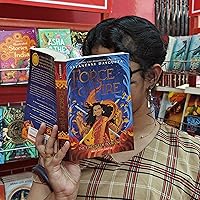
April 28, 2026
This book is an very important read that should be picked up by all, born out of experience and journey of starting and growing to educate girls in a world historically designed for men, the author's work and effort was designed with keeping the out of school and most marginalized girl at the centre because in doing so the curb effect would benefit all. Some books inform us, and some quietly change how we perceive the world. This book does a bit of both. Written by Safeena Husain, the book dives into one of India’s most persistent yet under-discussed challenges that is this country is one of the largest contributors to the global number of our of school girls and the author worked and aims towards getting every girl into school, especially those society has already written off.
What makes this book compelling is its deeply human approach. Rather than being facts centric and thereby building a deeper understanding and connection with the readers moving their hearts. The author shares real stories of the girls from rural areas who are expected to stay home, families who don’t see the value of education for daughters, and communities where gender roles are firmly entrenched but one thing that the author experienced is that every girl she meets wants to go to school and learn. These stories aren’t rare exceptions; they reflect a broader reality that still exists in many parts of the country.
At the center of the book is the idea of the “last girl,” or Antimbala the one who is most excluded and hardest to reach. This book make me realise my privileges which often I take for granted or don't even see as privileges. This book makes me admire the author's work who valiantly argues that if systems are built to include the most marginalized girl, they will naturally work for everyone else too. It’s a simple yet powerful shift in thinking, and one that gives the book its emotional and intellectual core.
The narrative also draws strength from Husain’s own journey and her work with the organization Educate Girls. Through this, readers see how grassroots efforts and how persistent and honest selfless efforts can slowly break barriers that seem immovable. The strength of this book lies in its ability to create emotional impact rather than academic depth. This book is an inspiring and thought-provoking read. It reminds us that education is not just about classrooms and textbooks it’s about giving every girl the chance to be seen, heard, and valued.
What makes this book compelling is its deeply human approach. Rather than being facts centric and thereby building a deeper understanding and connection with the readers moving their hearts. The author shares real stories of the girls from rural areas who are expected to stay home, families who don’t see the value of education for daughters, and communities where gender roles are firmly entrenched but one thing that the author experienced is that every girl she meets wants to go to school and learn. These stories aren’t rare exceptions; they reflect a broader reality that still exists in many parts of the country.
At the center of the book is the idea of the “last girl,” or Antimbala the one who is most excluded and hardest to reach. This book make me realise my privileges which often I take for granted or don't even see as privileges. This book makes me admire the author's work who valiantly argues that if systems are built to include the most marginalized girl, they will naturally work for everyone else too. It’s a simple yet powerful shift in thinking, and one that gives the book its emotional and intellectual core.
The narrative also draws strength from Husain’s own journey and her work with the organization Educate Girls. Through this, readers see how grassroots efforts and how persistent and honest selfless efforts can slowly break barriers that seem immovable. The strength of this book lies in its ability to create emotional impact rather than academic depth. This book is an inspiring and thought-provoking read. It reminds us that education is not just about classrooms and textbooks it’s about giving every girl the chance to be seen, heard, and valued.
March 13, 2026
Some books should be put in the must read category, for the weight of the topic they carry.
Can you imagine how big a heart someone must have to start a movement like this? To go district by district, meeting officials, collecting data on the worst gender-gap districts out of the 600 districts in India, and deciding to work for every little girl there? Did you know that about 7 million girls are still not receiving an education in India as of 2024? Did you know India has one in three of the world's child brides?
Simple put, the book talks about girls getting education. Safeena Husain talks about the 'last girl', who is denied opportunities first due to various reasons, poverty, gender expectations, early marriage or rigid social norms. Through her organisation, the Educate Girls, Safeena helps these girls. She talks about how their lives and those of the people around them can be transformed with education.
This book doesn't feel like a report filled with the work they do. She even talks about feeling disappointed in talking numbers because where we talk numbers, these are the lives of many umber of individuals, how their lives get forgotten only due to the lack of opportunities. Each number is the whole life of a real person. The book is Safeena's life’s work, but it is also the story of every little girl whose life changed because someone decided she deserved to be in a classroom.
Reading this book was also very humbling for me. I got to study as much as I wanted, whatever I wanted. Reading about people for whom even going to school is a privilege made me think about how many of us take education for granted. And then you think about these people working in villages, trying to convince communities rooted in misogyny and patriarchy to send their daughters and daughters in law to school. Imagine how difficult it must be to explain the value of education to people who have been taught for generations that their cattle is more worth than their daughters and investing in a girl’s future is like 'watering someone else's plants'.
I can say with some certainty that after reading this book, the first thing many people will wonder is how they can contribute. Because once you see the scale of the problem and the dedication behind the solution, it becomes impossible to ignore. I've checked, you can contribute through their website.
Can you imagine how big a heart someone must have to start a movement like this? To go district by district, meeting officials, collecting data on the worst gender-gap districts out of the 600 districts in India, and deciding to work for every little girl there? Did you know that about 7 million girls are still not receiving an education in India as of 2024? Did you know India has one in three of the world's child brides?
Simple put, the book talks about girls getting education. Safeena Husain talks about the 'last girl', who is denied opportunities first due to various reasons, poverty, gender expectations, early marriage or rigid social norms. Through her organisation, the Educate Girls, Safeena helps these girls. She talks about how their lives and those of the people around them can be transformed with education.
This book doesn't feel like a report filled with the work they do. She even talks about feeling disappointed in talking numbers because where we talk numbers, these are the lives of many umber of individuals, how their lives get forgotten only due to the lack of opportunities. Each number is the whole life of a real person. The book is Safeena's life’s work, but it is also the story of every little girl whose life changed because someone decided she deserved to be in a classroom.
Reading this book was also very humbling for me. I got to study as much as I wanted, whatever I wanted. Reading about people for whom even going to school is a privilege made me think about how many of us take education for granted. And then you think about these people working in villages, trying to convince communities rooted in misogyny and patriarchy to send their daughters and daughters in law to school. Imagine how difficult it must be to explain the value of education to people who have been taught for generations that their cattle is more worth than their daughters and investing in a girl’s future is like 'watering someone else's plants'.
I can say with some certainty that after reading this book, the first thing many people will wonder is how they can contribute. Because once you see the scale of the problem and the dedication behind the solution, it becomes impossible to ignore. I've checked, you can contribute through their website.
March 16, 2026
Every Last Girl is a nonfiction book about Safeena, who dedicated her life to educating girls. The book focuses on girls from backward rural areas where boys are allowed to go to school, but girls often do not have the freedom or opportunity to study.
Safeena began raising awareness about how important education is, especially for girls. When she started her journey to educate every last girl, she discovered many harsh realities about the lives of girl children and the barriers they face in continuing their education.
As a girl, I have always known how difficult it can be for girls to access education—especially in places where schools are far away. Many girls have to take care of their younger siblings, fetch water from distant places, and manage household responsibilities, which makes going to school even harder.
People often say that your name is your identity, but this book also shows how society sometimes disregards girls even in something as basic as their names. Many girls are given names that reflect neglect or disappointment, revealing how deeply gender bias exists in some communities.
The book also highlights how this journey began and the many difficulties Safeena and her team faced along the way. Despite these challenges, they never lost hope. They remained committed to their goal and continued their work with persistence and belief.
Safeena’s work started in Rajasthan, and over time it expanded to Madhya Pradesh and Uttar Pradesh. Their efforts are not limited to bringing girls back to school. They also focus on building networks of local volunteers, developing leadership within communities, identifying girls who are out of school, and tracking their progress.
This book is truly inspiring. Governments may create policies and facilities for education, but people like Safeena play an important role in ensuring that these opportunities actually reach those who need them.
As a girl, I feel truly grateful for Safeena and her work for girls’ education. She not only helps girls return to school but also ensures they continue their learning journey. Through her grassroots movement, she has helped more than two million girls reconnect with education.
This book is a powerful reminder of how education can transform lives and how one person’s determination can create meaningful change.
Safeena began raising awareness about how important education is, especially for girls. When she started her journey to educate every last girl, she discovered many harsh realities about the lives of girl children and the barriers they face in continuing their education.
As a girl, I have always known how difficult it can be for girls to access education—especially in places where schools are far away. Many girls have to take care of their younger siblings, fetch water from distant places, and manage household responsibilities, which makes going to school even harder.
People often say that your name is your identity, but this book also shows how society sometimes disregards girls even in something as basic as their names. Many girls are given names that reflect neglect or disappointment, revealing how deeply gender bias exists in some communities.
The book also highlights how this journey began and the many difficulties Safeena and her team faced along the way. Despite these challenges, they never lost hope. They remained committed to their goal and continued their work with persistence and belief.
Safeena’s work started in Rajasthan, and over time it expanded to Madhya Pradesh and Uttar Pradesh. Their efforts are not limited to bringing girls back to school. They also focus on building networks of local volunteers, developing leadership within communities, identifying girls who are out of school, and tracking their progress.
This book is truly inspiring. Governments may create policies and facilities for education, but people like Safeena play an important role in ensuring that these opportunities actually reach those who need them.
As a girl, I feel truly grateful for Safeena and her work for girls’ education. She not only helps girls return to school but also ensures they continue their learning journey. Through her grassroots movement, she has helped more than two million girls reconnect with education.
This book is a powerful reminder of how education can transform lives and how one person’s determination can create meaningful change.

March 20, 2026
Book Title: Every Last Girl by Safeena Husain
Rating: 5 stars out of 5
Every Last Girl by Safeena Husain is more than just a memoir documenting the journey of founding and the growth of an organization. It is a profound look at what happens when a society stops overlooking its most vulnerable, at-risk daughters. Husain takes the abstract concept of AntimBala - the "last girl", the one farthest from opportunity - and gives her a name, a face, and a future. Her organisation, Educate Girls, has succeeded in helping these AntimBalas from remote villages and towns become Pratham Balas - the first girls in their families to be educated. By concentrating on these AntimBalas, Educate Girls identifies and removes specific obstacles, such as rigid social norms and safety concerns, that typically serve as the default hurdles for all out-of-school children. This approach demonstrates how the "Curb Cut" effect brings massive benefits to the whole society as a unit. Curb Cut effect, a term coined by Angela Glover Blackwell, an American civil rights advocate, in 2017 shows that when a society builds the ramps necessary for girls to access education, it ultimately streamlines the path to learning for boys and the broader youth population as well.
The author's writing offers a compassionate yet clinical look at the systemic barriers like rigid social norms and early marriage. The narrative is filled with rich anecdotes, weaving vivid stories from India's many remote hamlets. Husain’s own interrupted education has been an important trigger to the birth of her organization Educate Girls. The book excels at showing, not just telling, how local leadership is built. It fills the reader with a quiet hope as one reads about these microrevolutions that happen when a community decides to help these young girls get the education they deserve.
This is an educational and inspiring read for anyone interested in social entrepreneurship and education. It is heartening to know that lasting change does not always come from the top down. Instead, it starts at the margins, one village at a time. After all, education isn't just a classroom; it is the primary tool for breaking cycles of poverty.
Rating: 5 stars out of 5
Every Last Girl by Safeena Husain is more than just a memoir documenting the journey of founding and the growth of an organization. It is a profound look at what happens when a society stops overlooking its most vulnerable, at-risk daughters. Husain takes the abstract concept of AntimBala - the "last girl", the one farthest from opportunity - and gives her a name, a face, and a future. Her organisation, Educate Girls, has succeeded in helping these AntimBalas from remote villages and towns become Pratham Balas - the first girls in their families to be educated. By concentrating on these AntimBalas, Educate Girls identifies and removes specific obstacles, such as rigid social norms and safety concerns, that typically serve as the default hurdles for all out-of-school children. This approach demonstrates how the "Curb Cut" effect brings massive benefits to the whole society as a unit. Curb Cut effect, a term coined by Angela Glover Blackwell, an American civil rights advocate, in 2017 shows that when a society builds the ramps necessary for girls to access education, it ultimately streamlines the path to learning for boys and the broader youth population as well.
The author's writing offers a compassionate yet clinical look at the systemic barriers like rigid social norms and early marriage. The narrative is filled with rich anecdotes, weaving vivid stories from India's many remote hamlets. Husain’s own interrupted education has been an important trigger to the birth of her organization Educate Girls. The book excels at showing, not just telling, how local leadership is built. It fills the reader with a quiet hope as one reads about these microrevolutions that happen when a community decides to help these young girls get the education they deserve.
This is an educational and inspiring read for anyone interested in social entrepreneurship and education. It is heartening to know that lasting change does not always come from the top down. Instead, it starts at the margins, one village at a time. After all, education isn't just a classroom; it is the primary tool for breaking cycles of poverty.
February 15, 2026
This book is a true story about one woman fight to get every Indian village girls into school. It's not a novel,it's real life village tales that show how small changes can transform big problems.
Author starts her group, Educate Girls, back in 2007 in Rajasthan ,a grassroots movement that now extended to more than 30,000 villages and has helped over two million girls return to learning.She trains local people to find these hidden girls, talk to parents, and get them back to class.
Because if girls are not educated, we pay a heavy price with child marriage, child labour, higher rates of domestic violence, trafficking, female labour, vicious cycles of illiteracy and poverty and high rate of female mortality rate.
The book made me think about these:-
🤔In India, "A goat is an asset, a girl is a liability." Parents don't want to invest in a daughter's education, as She'll go to her husband's house to live. What is the point of her learning?
🤔These names makes girls undeserving as their life doesn't matter..I was also shocked to read how anyone can name their daughter as
Aachuki,Nakushi,Faaltu,Manbhaari,
Maafi,Dhaapu, Naraaz,Galla Antimbala..
🤔True story to illustrate the perils of illiteracy
'Ma, Ma, main Ajmer gaya tha!' said Alpesh 'The letter did not say "Aaj mar gaya" it said "Ajmer gaya"! But what she thought her son is dead...so we need our girls to read...
The main barriers driving the mindset behind the dropout or non-enrollment of girls in education are poverty, patriarchy, and the fear that she will elope.
Why people are not considering One girl can really change the village infact women are given more employment opportunities..even government has also started "Beti Bachao , Beti Padhao launched in 2015..to address the declining Child Sex Ratio (CSR) and enhance welfare services for women, with a focus on education.
Why can't we think like this, when girls get educated, they end up earning more, building healthier families, and stepping up to make real decisions that lift everyone around them. It's all about creating that gender equality and stronger communities that's what we all want..isn't 🙏
Author starts her group, Educate Girls, back in 2007 in Rajasthan ,a grassroots movement that now extended to more than 30,000 villages and has helped over two million girls return to learning.She trains local people to find these hidden girls, talk to parents, and get them back to class.
Because if girls are not educated, we pay a heavy price with child marriage, child labour, higher rates of domestic violence, trafficking, female labour, vicious cycles of illiteracy and poverty and high rate of female mortality rate.
The book made me think about these:-
🤔In India, "A goat is an asset, a girl is a liability." Parents don't want to invest in a daughter's education, as She'll go to her husband's house to live. What is the point of her learning?
🤔These names makes girls undeserving as their life doesn't matter..I was also shocked to read how anyone can name their daughter as
Aachuki,Nakushi,Faaltu,Manbhaari,
Maafi,Dhaapu, Naraaz,Galla Antimbala..
🤔True story to illustrate the perils of illiteracy
'Ma, Ma, main Ajmer gaya tha!' said Alpesh 'The letter did not say "Aaj mar gaya" it said "Ajmer gaya"! But what she thought her son is dead...so we need our girls to read...
The main barriers driving the mindset behind the dropout or non-enrollment of girls in education are poverty, patriarchy, and the fear that she will elope.
Why people are not considering One girl can really change the village infact women are given more employment opportunities..even government has also started "Beti Bachao , Beti Padhao launched in 2015..to address the declining Child Sex Ratio (CSR) and enhance welfare services for women, with a focus on education.
Why can't we think like this, when girls get educated, they end up earning more, building healthier families, and stepping up to make real decisions that lift everyone around them. It's all about creating that gender equality and stronger communities that's what we all want..isn't 🙏
March 21, 2026
This book is something more, which delivers a sensitive message about education and its importance. Also, how far we came because of the education. Especially being a woman, getting an education has been off the plate. For a woman to get into school and study, to pursue her university dream, find a job, and do what she really wants, freedom is made possible by so many people out there; one among them is this team, Balika Volunteers. Because of the team effort, we are here.
To begin with, the author shared her own journey in finding every last girl and making sure that she gets an education. On her path she encountered how a girl had been treated right from her birth. In spite of having three girls, they always prefer the boy as the pride of the family, and he deserves to be educated. The three girls at home need to take care of the family chores and do things for their brothers.
Some of the struggles and situations the team faced have been a nudge to start this work are as follows:
In Rajasthan, child marriage is quite common, and so many women died because of early childbirth. Also, to withdraw their money from the bank, these people pay for the educated one to fill out the forms. Due to illiteracy, one woman mistook the letter from her son as him saying he was dead; instead, he sent it saying he got a job and was staying nearby. After some days when he was back, she couldn’t understand and blamed herself for misunderstanding.
After seeing all these things, Team Balika decided to create awareness among the village people by playing dramas and even gathered like-minded people to help them in this journey.
Initially the process seems tough, and keeping the data is a bigger task. As technology grew, they made it by bringing in machine learning and found accurate data. They even started from 2000 to 11000 people stepping in to help them achieve the goal.
From the start to the end, the book takes us on various paths with a single goal: every last girl needs to be educated.
Education is a privilege; make sure to use it wisely and attain the freedom!.
To begin with, the author shared her own journey in finding every last girl and making sure that she gets an education. On her path she encountered how a girl had been treated right from her birth. In spite of having three girls, they always prefer the boy as the pride of the family, and he deserves to be educated. The three girls at home need to take care of the family chores and do things for their brothers.
Some of the struggles and situations the team faced have been a nudge to start this work are as follows:
In Rajasthan, child marriage is quite common, and so many women died because of early childbirth. Also, to withdraw their money from the bank, these people pay for the educated one to fill out the forms. Due to illiteracy, one woman mistook the letter from her son as him saying he was dead; instead, he sent it saying he got a job and was staying nearby. After some days when he was back, she couldn’t understand and blamed herself for misunderstanding.
After seeing all these things, Team Balika decided to create awareness among the village people by playing dramas and even gathered like-minded people to help them in this journey.
Initially the process seems tough, and keeping the data is a bigger task. As technology grew, they made it by bringing in machine learning and found accurate data. They even started from 2000 to 11000 people stepping in to help them achieve the goal.
From the start to the end, the book takes us on various paths with a single goal: every last girl needs to be educated.
Education is a privilege; make sure to use it wisely and attain the freedom!.
Displaying 1 - 30 of 159 reviews