

What do you think?

Virgil Tibbs #1
In the Heat of the Night: The Original Virgil Tibbs Novel
A 50th-anniversary edition of the pioneering novel featuring African American police detective Virgil Tibbs—with a foreword by John Ridley, creator of the TV series American Crime and Oscar-winning screenwriter of 12 Years a Slave
“They call me Mr. Tibbs” was the line immortalized by Sidney Poitier in the 1967 Oscar-winning movie adaptation of In the Heat of the Night, which won the Edgar Award for Best First Novel and the Crime Writers’ Association Gold Dagger Award and was named one of the 100 Favorite Mysteries of the 20th Century by the Independent Mystery Booksellers Association. Now fans of classic crime can rediscover this suspense-filled novel whose hero paved the way for James Patterson’s Alex Cross, George Pelecanos’s Derek Strange, and other African American detectives.
A small southern town in the 1960s. A musician found dead on the highway. It’s no surprise when white detectives arrest a black man for the murder. What is a surprise is that the black man—Virgil Tibbs—is not the killer but a skilled homicide detective, passing through racially tense Wells, South Carolina, on his way back to California. Even more surprising, Wells’s new police chief recruits Tibbs to help with the investigation. But Tibbs’s presence in town rubs some of the locals the wrong way, and it won’t be long before the martial arts–trained detective has to fight not just for justice, but also for his own safety.
For more than sixty-five years, Penguin has been the leading publisher of classic literature in the English-speaking world. With more than 1,500 titles, Penguin Classics represents a global bookshelf of the best works throughout history and across genres and disciplines. Readers trust the series to provide authoritative texts enhanced by introductions and notes by distinguished scholars and contemporary authors, as well as up-to-date translations by award-winning translators.
“They call me Mr. Tibbs” was the line immortalized by Sidney Poitier in the 1967 Oscar-winning movie adaptation of In the Heat of the Night, which won the Edgar Award for Best First Novel and the Crime Writers’ Association Gold Dagger Award and was named one of the 100 Favorite Mysteries of the 20th Century by the Independent Mystery Booksellers Association. Now fans of classic crime can rediscover this suspense-filled novel whose hero paved the way for James Patterson’s Alex Cross, George Pelecanos’s Derek Strange, and other African American detectives.
A small southern town in the 1960s. A musician found dead on the highway. It’s no surprise when white detectives arrest a black man for the murder. What is a surprise is that the black man—Virgil Tibbs—is not the killer but a skilled homicide detective, passing through racially tense Wells, South Carolina, on his way back to California. Even more surprising, Wells’s new police chief recruits Tibbs to help with the investigation. But Tibbs’s presence in town rubs some of the locals the wrong way, and it won’t be long before the martial arts–trained detective has to fight not just for justice, but also for his own safety.
For more than sixty-five years, Penguin has been the leading publisher of classic literature in the English-speaking world. With more than 1,500 titles, Penguin Classics represents a global bookshelf of the best works throughout history and across genres and disciplines. Readers trust the series to provide authoritative texts enhanced by introductions and notes by distinguished scholars and contemporary authors, as well as up-to-date translations by award-winning translators.
176 pages, Paperback
First published January 1, 1965
About the author
John Dudley Ball
88 books40 followersJohn Dudley Ball writing as John Ball, was an American writer best known for mystery novels involving the African-American police detective Virgil Tibbs. He was introduced in the 1965 In the Heat of the Night where he solves a murder in a racist Southern small town. It won the Edgar Award for Best First Novel from the Mystery Writers of America and was made into an Oscar-winning film of the same name starring Sidney Poitier; the film had two sequels, and spawned a television series several decades later, none of which were based on Ball's later Tibbs stories. He also wrote under the name John Ball Jr..
Ball was born in Schenectady, New York, grew up in Milwaukee, Wisconsin, and attended Carroll College in Waukesha, Wisconsin. He wrote for a number of magazines and newspapers, including the Brooklyn Eagle. For a time he worked part-time as a Los Angeles County sheriff's deputy, was trained in martial arts, and was a nudist. In the mid 1980s, he was the book review columnist for Mike Shayne Mystery Magazine. Ball lived in Encino, California, and died there in 1988.
Ball was born in Schenectady, New York, grew up in Milwaukee, Wisconsin, and attended Carroll College in Waukesha, Wisconsin. He wrote for a number of magazines and newspapers, including the Brooklyn Eagle. For a time he worked part-time as a Los Angeles County sheriff's deputy, was trained in martial arts, and was a nudist. In the mid 1980s, he was the book review columnist for Mike Shayne Mystery Magazine. Ball lived in Encino, California, and died there in 1988.
Ratings & Reviews
Friends & Following
Create a free account to discover what your friends think of this book!
Community Reviews
Displaying 1 - 30 of 385 reviews

February 25, 2017
This is the novel upon which the movie In the Heat of the Night was based. Set in a small town in South Carolina in the early 1960s, the book opens with the discovery of a body lying in the highway late one night. The victim is a prominent musician who had been active in organizing a music festival which many hoped would revive the fading fortunes of the town. His death is thus a blow to the hopes of the entire community.
The police chief, a man named Gillespie, is new to the job. Previously a jailer in Texas, he was hired by the town council basically because they could hire him cheap. He's never been a police officer before and has no experience as a homicide investigator, so he's basically clueless here. Not knowing what else to do, he orders his principal deputy to look for anyone attempting to leave town. In checking the train station, the deputy discovers a black man waiting for the next train. The deputy puts the man up against the wall, frisks him, and discovers a wallet full of money.
Looking no further, the deputy takes the man to the station and presents him to the chief as the logical murderer. The chief joins in the assumption, principally because he believes that no black man could have ever honestly earned the amount of money in the wallet. But then it turns out that the suspect, Virgil Tibbs, is, in fact, a police officer from Pasadena, California. He's on his way home after visiting his mother.
The chief calls his counterpart in Pasadena and discovers that Tibbs is not only a police officer, but a skilled homicide investigator. The Pasadena chief offers to loan Virgil's services to Gillespie, if he can be of any help. The notion that he might accept help from a black man is clearly anathema to Gillespie, but he has no idea how to solve this crime on his own and, given the high profile of the victim, Gillespie knows that if the murder is not solved he will most likely be out of a job. Accordingly, he swallows his pride and allows that Virgil might "assist" him in his investigation.
Virgil himself is torn. At one level he simply wants to get out of town as quickly as possible and get back to Pasadena where he doesn't face the kind of prejudice and discrimination that confronts him in South Carolina. On the other hand, though, he's obviously tempted to show up these racists and solve the crime when they will never be able to do so. In the end, he agrees to stay long enough to see the case through, and this book winds up being not nearly as much of a murder mystery as it is an examination of the implications of race in the deep South in the early 1960s. Virgil will suffer repeated insults and will face grave physical danger because of his race, but the dignity and intelligence with which he responds is really a timeless example for people of any race.
Inevitably, the movie takes some liberties with the book, but overall, it's a very good adaptation. Sidney Poitier is brilliant in the role of Virgil Tibbs, but plays the character with a bit more of an edge than the Tibbs of the novel. Rod Steiger is also perfect as Gillespie, and reading the book after seeing the film, it's impossible not to see the two actors when thinking of the characters.
Both the book and the movie move swiftly with no wasted time or space, but one wonders whether it would be possible to publish this book or make this movie in the present day. Would audiences be willing to accept a black character who responds as calmly as Tibbs does to the discrimination that confronts him? Would they not insist that he react much more forcefully against it? Whatever the case, both the book and the movie have held up very well and are still as entertaining and as instructive as they were in the middle 1960s.
The police chief, a man named Gillespie, is new to the job. Previously a jailer in Texas, he was hired by the town council basically because they could hire him cheap. He's never been a police officer before and has no experience as a homicide investigator, so he's basically clueless here. Not knowing what else to do, he orders his principal deputy to look for anyone attempting to leave town. In checking the train station, the deputy discovers a black man waiting for the next train. The deputy puts the man up against the wall, frisks him, and discovers a wallet full of money.
Looking no further, the deputy takes the man to the station and presents him to the chief as the logical murderer. The chief joins in the assumption, principally because he believes that no black man could have ever honestly earned the amount of money in the wallet. But then it turns out that the suspect, Virgil Tibbs, is, in fact, a police officer from Pasadena, California. He's on his way home after visiting his mother.
The chief calls his counterpart in Pasadena and discovers that Tibbs is not only a police officer, but a skilled homicide investigator. The Pasadena chief offers to loan Virgil's services to Gillespie, if he can be of any help. The notion that he might accept help from a black man is clearly anathema to Gillespie, but he has no idea how to solve this crime on his own and, given the high profile of the victim, Gillespie knows that if the murder is not solved he will most likely be out of a job. Accordingly, he swallows his pride and allows that Virgil might "assist" him in his investigation.
Virgil himself is torn. At one level he simply wants to get out of town as quickly as possible and get back to Pasadena where he doesn't face the kind of prejudice and discrimination that confronts him in South Carolina. On the other hand, though, he's obviously tempted to show up these racists and solve the crime when they will never be able to do so. In the end, he agrees to stay long enough to see the case through, and this book winds up being not nearly as much of a murder mystery as it is an examination of the implications of race in the deep South in the early 1960s. Virgil will suffer repeated insults and will face grave physical danger because of his race, but the dignity and intelligence with which he responds is really a timeless example for people of any race.
Inevitably, the movie takes some liberties with the book, but overall, it's a very good adaptation. Sidney Poitier is brilliant in the role of Virgil Tibbs, but plays the character with a bit more of an edge than the Tibbs of the novel. Rod Steiger is also perfect as Gillespie, and reading the book after seeing the film, it's impossible not to see the two actors when thinking of the characters.
Both the book and the movie move swiftly with no wasted time or space, but one wonders whether it would be possible to publish this book or make this movie in the present day. Would audiences be willing to accept a black character who responds as calmly as Tibbs does to the discrimination that confronts him? Would they not insist that he react much more forcefully against it? Whatever the case, both the book and the movie have held up very well and are still as entertaining and as instructive as they were in the middle 1960s.

June 24, 2016
I give 4.5 stars to John Dudley Ball's In the Heat of the Night, which later became a movie starring Sidney Poitier and Rod Steiger and also a tv series. Additionally, this short, classic detective book lead Ball to write a series of cases featuring lead homicide investigator Virgil Tibbs. This original book is highly regarded.
On his usual nightly patrolling, officer Sam Wood discovers a body in the middle of the highway in the heat of the night. Upon calling the case into chief Bill Gillespie, Wood is tasked with finding the murderer and immediately checks the railway depot where he spots Tibbs. Wood arrests Tibbs because Tibbs is colored, yet Tibbs turns out to be a ten year veteran of the Pasadena homicide team. Because rural Wells, South Carolina's police force is largely inexperienced, the wealthy friends and family of victim Maestro Enrico Mantoli insist that Tibbs stay and assist Wood and Gillepsie in solving the case. Despite the cops' misgivings, they allow Tibbs to stay.
The book wasn't so much about the case itself, although I've read many mysteries and this one was excellent. This classic was more about Ball's rap on race in the south immediately post Jim Crow. From the outset, it is obvious that Tibbs is a far superior cop than Wood or Gillepsie yet he is regarded as a lesser individual because of the color of his skin. Even when he made a name for himself with respected individuals in the town, he is not allowed to eat in a diner, use the same restrooms, or sit on the same benches as his white colleagues. Anonymous members of the city council even send Gillepsie a threatening letter that if Tibbs isn't sent out of town immediately, he will pay for it. Despite the prejudice, Tibbs' cool head prevails.
I would hope that Tibbs' insistence on being called Mr. Tibbs from the outset and his professional demeanor in solving the case would enlighten the citizens of Wells about their views on race. Unfortunately, this was not to be as Gillepsie couldn't be brought to shake Tibbs' hand at the book's conclusion. Ball wrote an entire series featuring Tibbs, but the remaining books took place in California rather than South Carolina, where Tibbs points out that he is free to walk down the street. Thus, it appears from this book that even after the passage of the Civil Rights Act, that many southern communities remained antiquated in their ideas.
I thoroughly enjoyed In the Heat of the Night both as an intriguing detective case and as a period piece. I only deducted it from a full five star rating because it is under 200 pages in length and I was left wanting more of Ball's writing. I am looking forward to reading more of Tibbs' cases as well as watching the film version of In the Heat of the Night. A classic detective story, I recommended to all mystery aficionados.
On his usual nightly patrolling, officer Sam Wood discovers a body in the middle of the highway in the heat of the night. Upon calling the case into chief Bill Gillespie, Wood is tasked with finding the murderer and immediately checks the railway depot where he spots Tibbs. Wood arrests Tibbs because Tibbs is colored, yet Tibbs turns out to be a ten year veteran of the Pasadena homicide team. Because rural Wells, South Carolina's police force is largely inexperienced, the wealthy friends and family of victim Maestro Enrico Mantoli insist that Tibbs stay and assist Wood and Gillepsie in solving the case. Despite the cops' misgivings, they allow Tibbs to stay.
The book wasn't so much about the case itself, although I've read many mysteries and this one was excellent. This classic was more about Ball's rap on race in the south immediately post Jim Crow. From the outset, it is obvious that Tibbs is a far superior cop than Wood or Gillepsie yet he is regarded as a lesser individual because of the color of his skin. Even when he made a name for himself with respected individuals in the town, he is not allowed to eat in a diner, use the same restrooms, or sit on the same benches as his white colleagues. Anonymous members of the city council even send Gillepsie a threatening letter that if Tibbs isn't sent out of town immediately, he will pay for it. Despite the prejudice, Tibbs' cool head prevails.
I would hope that Tibbs' insistence on being called Mr. Tibbs from the outset and his professional demeanor in solving the case would enlighten the citizens of Wells about their views on race. Unfortunately, this was not to be as Gillepsie couldn't be brought to shake Tibbs' hand at the book's conclusion. Ball wrote an entire series featuring Tibbs, but the remaining books took place in California rather than South Carolina, where Tibbs points out that he is free to walk down the street. Thus, it appears from this book that even after the passage of the Civil Rights Act, that many southern communities remained antiquated in their ideas.
I thoroughly enjoyed In the Heat of the Night both as an intriguing detective case and as a period piece. I only deducted it from a full five star rating because it is under 200 pages in length and I was left wanting more of Ball's writing. I am looking forward to reading more of Tibbs' cases as well as watching the film version of In the Heat of the Night. A classic detective story, I recommended to all mystery aficionados.

August 28, 2022
"What do they call you around home where you come from?"
"They call me Mr. Tibbs," Virgil answered. pg 32

It was neat to read the original idea that led to the 1967 movie and the TV show that ran from 1988 to 1992. This was an entertaining crime story based in fictional Wells, South Carolina in 1965. The story entwined elements of racism, southern Jim Crow discrimination, and socioeconomic classism centered on solving a murder. Chief Gillespie was the stern and hard man that was accurately portrayed by Rod Steiger in the film and Carroll O'Connor in the television show. Detective Virgil Tibbs (Sidney Poitier/Howard Rollins) was a stoic, by the book, yet patient man determined to find the truth in the face of active discrimination throughout the book. The other characters added to the story. The story was simple and wasn't complex but was entertaining in my opinion.
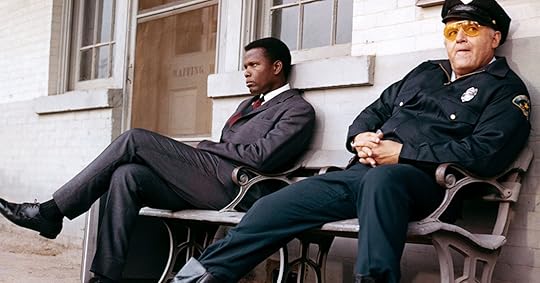
I enjoyed this and I enjoy the movie and the show. My brother and me would watch the show with our father when we were younger at dinner. The theme song still lingers with nostalgia as I read the book. I'd recommend this to crime story fans or fans of the movie/show. Thanks!
"They call me Mr. Tibbs," Virgil answered. pg 32
It was neat to read the original idea that led to the 1967 movie and the TV show that ran from 1988 to 1992. This was an entertaining crime story based in fictional Wells, South Carolina in 1965. The story entwined elements of racism, southern Jim Crow discrimination, and socioeconomic classism centered on solving a murder. Chief Gillespie was the stern and hard man that was accurately portrayed by Rod Steiger in the film and Carroll O'Connor in the television show. Detective Virgil Tibbs (Sidney Poitier/Howard Rollins) was a stoic, by the book, yet patient man determined to find the truth in the face of active discrimination throughout the book. The other characters added to the story. The story was simple and wasn't complex but was entertaining in my opinion.
I enjoyed this and I enjoy the movie and the show. My brother and me would watch the show with our father when we were younger at dinner. The theme song still lingers with nostalgia as I read the book. I'd recommend this to crime story fans or fans of the movie/show. Thanks!

December 15, 2019
One steamy night in 1960's South Carolina, a man is arrested for the crime of sitting and reading while black, though the official charge is suspicion of murder. Turns out, the suspect is actually a police officer who's been visiting his mother, and is now headed back to the far off land of Pasadena, California, a magical place where "Negroes" are treated like human beings, and not animals.
. . .it may be hard for you to believe, but there are places in this country where a colored man, to use your words for it, is simply a human being like everybody else. Not everybody feels that way, but enough do so that at home I can go weeks at a time without anybody reminding me that I'm a Negro. Here I can't go fifteen minutes."
Virgil Tibbs would like nothing more than to get the hell out of that stinking town with its shameful attitudes and prejudices, but when his superior suggests he stay and help with the investigation, he has no choice but to put his keen mind to the task.
"What are you supposed to be doing?"
"They had a murder here this morning. They don't know what to do about it, so they're using me for a fall guy."
A look of heavy suspicion crossed Jess's round black face.
"How you gonna protect yourself?" he asked.
"By catching the murderer," Tibbs answered.
This, of course, does not go over well with the local police department, particularly the newly appointed, and vastly inexperienced chief, who's not thrilled to be shown up by someone he considers to be subhuman. There are others in town, as well, who aren't happy to have a black man involved in local law enforcement and they're making their objections known. Soon the question becomes not only who murdered the victim, but will Tibbs live long enough to solve the case.
It's hard not to like Mr. Tibbs. He's clever, careful with his words, and calm in the face of adversity, though at that time and that place, any other attitude would have gotten him killed. The murder mystery itself is fairly run of the mill, but by using this character, in this particular setting, Ball has crafted a unique and memorable crime novel. I'm definitely tempted to read more in the series.
"My job right now," Tibbs answered evenly, "is to protect him from his own mistakes. After I do that, I will deliver the person who caused all this to him in such a manner that even he will finally know the truth. Then I'm going home, where I have the right to walk down the sidewalk."
. . .it may be hard for you to believe, but there are places in this country where a colored man, to use your words for it, is simply a human being like everybody else. Not everybody feels that way, but enough do so that at home I can go weeks at a time without anybody reminding me that I'm a Negro. Here I can't go fifteen minutes."
Virgil Tibbs would like nothing more than to get the hell out of that stinking town with its shameful attitudes and prejudices, but when his superior suggests he stay and help with the investigation, he has no choice but to put his keen mind to the task.
"What are you supposed to be doing?"
"They had a murder here this morning. They don't know what to do about it, so they're using me for a fall guy."
A look of heavy suspicion crossed Jess's round black face.
"How you gonna protect yourself?" he asked.
"By catching the murderer," Tibbs answered.
This, of course, does not go over well with the local police department, particularly the newly appointed, and vastly inexperienced chief, who's not thrilled to be shown up by someone he considers to be subhuman. There are others in town, as well, who aren't happy to have a black man involved in local law enforcement and they're making their objections known. Soon the question becomes not only who murdered the victim, but will Tibbs live long enough to solve the case.
It's hard not to like Mr. Tibbs. He's clever, careful with his words, and calm in the face of adversity, though at that time and that place, any other attitude would have gotten him killed. The murder mystery itself is fairly run of the mill, but by using this character, in this particular setting, Ball has crafted a unique and memorable crime novel. I'm definitely tempted to read more in the series.
"My job right now," Tibbs answered evenly, "is to protect him from his own mistakes. After I do that, I will deliver the person who caused all this to him in such a manner that even he will finally know the truth. Then I'm going home, where I have the right to walk down the sidewalk."

August 4, 2016
Back during the turbulent days of the Civil Rights movement, John Dudley Ball set out to write a book that was both mystery and social commentary, the latter an attempt to shine a light on the unjust practices of the racism in the American South. Obviously, his book was a success, for it spawned four more Virgil Tibbs books, three movies, three Academy Awards, a soundtrack by Ray Charles, and a long-running television series.

For all that success, though, I was slightly disappointed by the book. Don’t get me wrong. The writing was great, the mystery was pretty good and the racism was pretty despicable. It just seemed to lack a certain something that made the whole theme come alive. I’ve seen the movie several times and will certainly watch it many times more. I feel like the air in between Sidney Poitier and Rod Steiger positively crackles with energy when they go at each other. The same scenes in the book are more sterile, somehow lacking in nuance. Forgive the pun, but Ball’s portrayal of racism is almost too black and white. He seemed too willing to buy into the idea that racism existed only south of the Mason Dixon Line. In one scene Tibbs tells a fellow officer that “at home I can go weeks at a time without anybody reminding me that I’m a Negro. Here I can’t go fifteen minutes.” Even now, fifty years later, I suspect I would be hard-pressed to find a black person who really believes that.
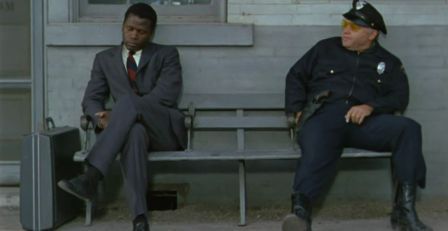
Bottom line: I enjoyed this book and particularly enjoyed discussing it with friends in Goodreads’ On the Southern Literary Trail group. I encourage anyone who has seen the movie to read it and draw your own conclusions. Mine is that I don’t think the book would have withstood the test of time had it not been for the movie. This is ultimately one of those rare cases where the movie is better.
★★★½
FYI: On a 5-point scale I assign stars based on my assessment of what the book needs in the way of improvements:
*5 Stars – Nothing at all. If it ain’t broke, don’t fix it.
*4 Stars – It could stand for a few tweaks here and there but it’s pretty good as it is.
*3 Stars – A solid C grade. Some serious rewriting would be needed in order for this book to be considered great or memorable.
*2 Stars – This book needs a lot of work. A good start would be to change the plot, the character development, the writing style and the ending.
*1 Star - The only thing that would improve this book is a good bonfire.
For all that success, though, I was slightly disappointed by the book. Don’t get me wrong. The writing was great, the mystery was pretty good and the racism was pretty despicable. It just seemed to lack a certain something that made the whole theme come alive. I’ve seen the movie several times and will certainly watch it many times more. I feel like the air in between Sidney Poitier and Rod Steiger positively crackles with energy when they go at each other. The same scenes in the book are more sterile, somehow lacking in nuance. Forgive the pun, but Ball’s portrayal of racism is almost too black and white. He seemed too willing to buy into the idea that racism existed only south of the Mason Dixon Line. In one scene Tibbs tells a fellow officer that “at home I can go weeks at a time without anybody reminding me that I’m a Negro. Here I can’t go fifteen minutes.” Even now, fifty years later, I suspect I would be hard-pressed to find a black person who really believes that.
Bottom line: I enjoyed this book and particularly enjoyed discussing it with friends in Goodreads’ On the Southern Literary Trail group. I encourage anyone who has seen the movie to read it and draw your own conclusions. Mine is that I don’t think the book would have withstood the test of time had it not been for the movie. This is ultimately one of those rare cases where the movie is better.
★★★½
FYI: On a 5-point scale I assign stars based on my assessment of what the book needs in the way of improvements:
*5 Stars – Nothing at all. If it ain’t broke, don’t fix it.
*4 Stars – It could stand for a few tweaks here and there but it’s pretty good as it is.
*3 Stars – A solid C grade. Some serious rewriting would be needed in order for this book to be considered great or memorable.
*2 Stars – This book needs a lot of work. A good start would be to change the plot, the character development, the writing style and the ending.
*1 Star - The only thing that would improve this book is a good bonfire.

July 30, 2016
Penguin released a 50th Anniversary Edition of the police procedural "In the Heat of the Night" last year. It's a good mystery, but it's even better known for its social criticism in a time of racial unrest following the 1964 Civil Rights Act.
A police officer, Sam Woods, finds a body in the road when he's on night patrol in Wells, South Carolina. The new police chief, Bill Gillespie, sends Sam out to find the perpetrator of the crime. He arrests Virgil Tibbs at the train station because he's a black man with a wallet full of cash. Virgil tells the police that he's a police officer, a homicide investigator from Pacadena, just waiting for a train. His credentials are checked out, and the Pasadena chief offers Virgil's services to help solve the crime. The mayor and police chief accept the offer, figuring that Virgil can be the scapegoat if the crime is not solved.
Virgil is smart and educated, in contrast to the poorly trained officers in the small South Carolina town. Wells is segregated with special benches at the train station for blacks. The black restroom at the police station has no soap or towels. The police officers are racist, but they respect Virgil's intelligence. "Smartest black I ever saw," Pete concluded; then he added a remarkable tribute. "He oughta been a white man."
Virgil has amazing self-control in the racist atmosphere, and gives the white officers more credit than they deserve as he solves the crime. Virgil wins the respect of the police chief, but Bill does not offer him a handshake as he drops him off at the train station. Although Virgil is depicted as almost too flawless--intelligent, educated, organized, polite, and handsome--the chief does not want physical contact with a man with dark skin. A movie, starring Sidney Poitier, was based on this book and won an Academy Award.
A police officer, Sam Woods, finds a body in the road when he's on night patrol in Wells, South Carolina. The new police chief, Bill Gillespie, sends Sam out to find the perpetrator of the crime. He arrests Virgil Tibbs at the train station because he's a black man with a wallet full of cash. Virgil tells the police that he's a police officer, a homicide investigator from Pacadena, just waiting for a train. His credentials are checked out, and the Pasadena chief offers Virgil's services to help solve the crime. The mayor and police chief accept the offer, figuring that Virgil can be the scapegoat if the crime is not solved.
Virgil is smart and educated, in contrast to the poorly trained officers in the small South Carolina town. Wells is segregated with special benches at the train station for blacks. The black restroom at the police station has no soap or towels. The police officers are racist, but they respect Virgil's intelligence. "Smartest black I ever saw," Pete concluded; then he added a remarkable tribute. "He oughta been a white man."
Virgil has amazing self-control in the racist atmosphere, and gives the white officers more credit than they deserve as he solves the crime. Virgil wins the respect of the police chief, but Bill does not offer him a handshake as he drops him off at the train station. Although Virgil is depicted as almost too flawless--intelligent, educated, organized, polite, and handsome--the chief does not want physical contact with a man with dark skin. A movie, starring Sidney Poitier, was based on this book and won an Academy Award.

October 8, 2013
The story is good and it’s what the classic film was based on. But the movie with Rod Steiger and Sidney Poitier is so much more. It crackles with electricity and rocks with incredibly strong acting from the two male leads.
The movie came out in 1967 when King was still marching and Malcom X still speaking and it was the summer Detroit was ravaged by five days of rioting triggered by racism. Gordon Lightfoot released a song about that riot in 1968 called Black Day in July. It was banned in thirty states.
The movie came out in 1967 when King was still marching and Malcom X still speaking and it was the summer Detroit was ravaged by five days of rioting triggered by racism. Gordon Lightfoot released a song about that riot in 1968 called Black Day in July. It was banned in thirty states.

August 19, 2021
A quick-paced detective novel from 1965, about a black detective from California trying to solve a murder in a segregated and deeply racist town in the South. There is a lot of racism in this (and some troubling views about women), and it's very much a work of its time, but I was surprised by how much I liked the case. Sadly, the characters were kind of thin and I couldnt get a real read of Virgil either - as a detective he is rather the Sherlock type, a genius who is also great at martial arts and not afraid of all the racists around him calling him slurs - while everyone around him is out their depths and they need him to solve the case even though they hate him. I thought the racial drama was interesting, but it didn't go as deep as I thought it would and it kind of just dissolved at the end. People were rather quick to go from deeply racist to not-so-racist after meeting "one good black person." Maybe I should watch the movie, because I feel the theme might have been better handled there. Still, I found it an interesting book and a suspense-filled crime novel.

December 28, 2021
ELEVEN DAYS AGO
In the Heat of the Night is my favourite Rod Steiger movie, in fierce competition with . . . erm, the other ones, and introduces the sledgehammer talent of Sidney Poitier (still alive, 94), the first African-American to win a Best Actor award. The film is one of the masterpieces of the 1960s, eclipsing the source material with the sticky violence, unbearable tension, and explosive performances in Norman Jewison’s adaptation. Mr. Ball’s novel is a path-breaking detective story that acutely observes the fizzling racial horror of the mid-1960s south, and although firmly in the Agatha Christie school of procedurals as the story rumbles to its climax, the psychological depth of the characters places the novel firmly in the pantheon of the genre greats. (FYI, I noticed Rod Steiger was also in the Y2K Schwarzenegger masterpiece End of Days, so the competition is fiercer than I anticipated).
ELEVEN DAYS LATER
Sidney Poitier is no longer alive. (Watchu lookin' at? I been ill from Covid the whole time).
In the Heat of the Night is my favourite Rod Steiger movie, in fierce competition with . . . erm, the other ones, and introduces the sledgehammer talent of Sidney Poitier (still alive, 94), the first African-American to win a Best Actor award. The film is one of the masterpieces of the 1960s, eclipsing the source material with the sticky violence, unbearable tension, and explosive performances in Norman Jewison’s adaptation. Mr. Ball’s novel is a path-breaking detective story that acutely observes the fizzling racial horror of the mid-1960s south, and although firmly in the Agatha Christie school of procedurals as the story rumbles to its climax, the psychological depth of the characters places the novel firmly in the pantheon of the genre greats. (FYI, I noticed Rod Steiger was also in the Y2K Schwarzenegger masterpiece End of Days, so the competition is fiercer than I anticipated).
ELEVEN DAYS LATER
Sidney Poitier is no longer alive. (Watchu lookin' at? I been ill from Covid the whole time).
December 15, 2019
"They call me Mr. Tibbs."
- Virgil Tibbs
In the celebrated film version the line is delivered with an exclamation point, but in the book Tibbs is less fiery, more matter-of-fact, with keenly developed intellect and, we suspect, a wry sense of humor. Outwitting redneck lawmen and bigoted citizens in 1960s South Carolina isn't enough for Tibbs; he calmly resets racial expectations and attitudes on both sides of the tracks. The mystery plays out differently in the book than in the film, but in both cases it takes a back seat to smartly delivered observations on race relations in the deep South during the Civil Rights era.
- Virgil Tibbs
In the celebrated film version the line is delivered with an exclamation point, but in the book Tibbs is less fiery, more matter-of-fact, with keenly developed intellect and, we suspect, a wry sense of humor. Outwitting redneck lawmen and bigoted citizens in 1960s South Carolina isn't enough for Tibbs; he calmly resets racial expectations and attitudes on both sides of the tracks. The mystery plays out differently in the book than in the film, but in both cases it takes a back seat to smartly delivered observations on race relations in the deep South during the Civil Rights era.

July 26, 2016
Flashback to 1960 and the horrible reality of Jim Crow. The dignity of Mr. Tibbs and the way he handles the slurs and injustice are at the heart of this novel, and Ball makes Tibbs the most intelligent and able character in the book. He goes a little overboard in drawing the distinctions between the Southern characters and Virgil Tibbs, but he has an important point to make and he makes it If you are ever doubting that race relations have made enormous progress in the last 50 years, read this book and feel the knot in your stomach when Mr. Tibbs comes into a diner and is denied a glass of milk. It is difficult to even imagine people actually feeling this way and yet so many did.
It is painful to read this book now but it matters to remember that it was a small book that made a big difference. It exposed us to ourselves, without any place to run and hide. I vaguely remember the furor when Sidney Poitier made Guess Who’s Coming to Dinner. People were outraged. It is the outrage that outrages us now. It is easy to carry the image of Mr. Poitier in my head while reading...who else could be Mr. Tibbs?
It has been decades since I saw the movie and reading the book has made me want to see it again. This was an interesting voyage into the past, a place we wax nostalgic for, but in some ways a place we would never want to occupy again.
It is painful to read this book now but it matters to remember that it was a small book that made a big difference. It exposed us to ourselves, without any place to run and hide. I vaguely remember the furor when Sidney Poitier made Guess Who’s Coming to Dinner. People were outraged. It is the outrage that outrages us now. It is easy to carry the image of Mr. Poitier in my head while reading...who else could be Mr. Tibbs?
It has been decades since I saw the movie and reading the book has made me want to see it again. This was an interesting voyage into the past, a place we wax nostalgic for, but in some ways a place we would never want to occupy again.

May 14, 2019
I've seen several less than positive reviews of this book written by those who were disappointed in the character of Virgil Tibbs after having seen the film. Like my review of the The Choirboys I'll make comparisons between the two towards the end.
This is a great crime novel, more than a crime novel, but a study of human relations in the context of race, an aspect that is handled with poignant delicacy. Unlike the movie, the relationship between African-American detective Tibbs and southern white cop Sam Woods is the primary focus, and that with Sheriff Gillespie is secondary. The novel shows, not tells about the fruitlessness of racial prejudice. A notable feature is the way various points of view are presented in the novel, hard to express in a film. The points of view of the white men in the story are handled with a logical and even-handed manner, detached from prompt condemnation. In this way it is easy to see how the racist beliefs of the characters in the novel arise in the minds of uneducated men, to the point that we pardon them, rather than loath them, quite an achievement for an African-American author. Some of their beliefs are so idiotic, we even feel sorry for them, like when Sam says:
"They don't feel it when they get hit the way you or I would," he explained. "They haven't got the same nervous system...that's how they win fights, why they're not afraid to get into the ring."
Another memorable quote, by a minor character called Pete, is chock full of irony and demonstrates Mr. Ball's style in dealing with prejudice:
"Smartest black I ever saw," Pete concluded; He added a remarkable tribute. "He oughta been a white man."
Some differences with the movie
In the film, Sheriff Gillespie is portrayed as a fairly competent man surrounded by buffoons, including Sam. In the novel, Gillespie is an insecure man with no police experience prior to taking the job (he was a prison guard before). This adds psychological and political elements to the plot.
Tibbs is not a volatile man, not struggling to restrain his near-bursting resentment toward ignorant crackers as in the film, but rather a calm, methodical, patient person who is well aware of the hostile environment he finds himself in. If a white man had slapped him (which happens in the film, but not in the book), he would not have slapped him back, but turn the other cheek and shame the offender for his loss of control. This adds credence to his reputation as an efficient, analytical homicide detective.
Unlike the film, Tibbs is not always the center of attention. In fact, there are parts of the book where we don't know where he is or what he is doing, other than investigating. This adds an air of mystery to the character.
Don't get me wrong, I loved the film, with the riveting performances of Sidney Poitier and Rod Steiger - it's one of my all-time favorites. But compared to the novel, it is a different animal altogether.
This is a great crime novel, more than a crime novel, but a study of human relations in the context of race, an aspect that is handled with poignant delicacy. Unlike the movie, the relationship between African-American detective Tibbs and southern white cop Sam Woods is the primary focus, and that with Sheriff Gillespie is secondary. The novel shows, not tells about the fruitlessness of racial prejudice. A notable feature is the way various points of view are presented in the novel, hard to express in a film. The points of view of the white men in the story are handled with a logical and even-handed manner, detached from prompt condemnation. In this way it is easy to see how the racist beliefs of the characters in the novel arise in the minds of uneducated men, to the point that we pardon them, rather than loath them, quite an achievement for an African-American author. Some of their beliefs are so idiotic, we even feel sorry for them, like when Sam says:
"They don't feel it when they get hit the way you or I would," he explained. "They haven't got the same nervous system...that's how they win fights, why they're not afraid to get into the ring."
Another memorable quote, by a minor character called Pete, is chock full of irony and demonstrates Mr. Ball's style in dealing with prejudice:
"Smartest black I ever saw," Pete concluded; He added a remarkable tribute. "He oughta been a white man."
Some differences with the movie
In the film, Sheriff Gillespie is portrayed as a fairly competent man surrounded by buffoons, including Sam. In the novel, Gillespie is an insecure man with no police experience prior to taking the job (he was a prison guard before). This adds psychological and political elements to the plot.
Tibbs is not a volatile man, not struggling to restrain his near-bursting resentment toward ignorant crackers as in the film, but rather a calm, methodical, patient person who is well aware of the hostile environment he finds himself in. If a white man had slapped him (which happens in the film, but not in the book), he would not have slapped him back, but turn the other cheek and shame the offender for his loss of control. This adds credence to his reputation as an efficient, analytical homicide detective.
Unlike the film, Tibbs is not always the center of attention. In fact, there are parts of the book where we don't know where he is or what he is doing, other than investigating. This adds an air of mystery to the character.
Don't get me wrong, I loved the film, with the riveting performances of Sidney Poitier and Rod Steiger - it's one of my all-time favorites. But compared to the novel, it is a different animal altogether.

June 21, 2021
4.5 + rounded up; more to come shortly but for now:
I went into this novel for the murder mystery, but (and unexpectedly), I came out of it with so much more. The murder investigation actually takes second place to what's going on around it, in the figure of Virgil Tibbs, a black cop from California who must carefully thread his way in a small southern town that is deeply entrenched in bigotry, racial hate and as John Ridley notes in his introduction, "the paternalistically tolerant. " This novel was published in 1965, but in many ways it is sad to realize that some things remain the same today. Very highly recommended.
I'll be back with a full post soon; tonight we'll be watching the original film.

July 12, 2018
The 1967 film version of In The Heat Of The Night has long been a favourite of mine. It spawned two disappointing sequels, but that's often the way with films. There are noticeable differences between the book & the film, but both are equally compelling stories.
John Ball's 1967 novel starts brilliantly & never lets up. It's not only a fine crime story, it says a lot about bigotry & racism in America in the 1960s. There's great dialogue & excellent characterisation throughout. At only 158 pages it shows that you don't need to write a long novel to write a great one.
I was pleasantly surprised to see that Ball had written further novels featuring detective Virgil Tibbs, so my next step is to track some of those down.
John Ball's 1967 novel starts brilliantly & never lets up. It's not only a fine crime story, it says a lot about bigotry & racism in America in the 1960s. There's great dialogue & excellent characterisation throughout. At only 158 pages it shows that you don't need to write a long novel to write a great one.
I was pleasantly surprised to see that Ball had written further novels featuring detective Virgil Tibbs, so my next step is to track some of those down.

August 6, 2021
I can't believe I took so long to read this classic mystery, it was well worth the read. I have not seen the movie or tv series, and not sure I want to after reading the book, it was just that well done. So glad to have read this with the GR On the Southern Literary Trail group read for August.

June 16, 2021
I appreciated learning about this book which spawned the classic movie starring Sidney Poitier because I'm not sure I knew the much loved movie was based on a book. The book was published just one year after the landmark Civil Rights Act of 1964, but as we saw immediately and over the ensuing years, it wasn't like a switch was flipped and the toll of Jim Crow went away immediately. In that light, this was a groundbreaking book that was turned into a groundbreaking movie exposing the consequences of racism in the southern U.S.
Keeping my focus strictly on the book, I thought the story of a well-educated cop from Pasadena, California getting stranded in a small South Carolina town was mostly well-done. Virgil Tibbs, the California cop has just been visiting his mother in a town not too far away from Wells where this story takes place. Virgil in on a layover at the train station in the middle of the night at about the same time that a man is murdered and left lying on the highway that runs through sleepy Wells. Policeman Sam Wood finds the body while making his usual overnight patrol of town. After he calls the crime into Police Chief Bill Gillespie about it, he sets out to find the killer. When he sees Tibbs at the train depot, he "knows" he has his man. This is the jumping off point for the rest of the story which is told in large part through the interior thoughts of Wood and Gillespie as they learn that Tibbs is a homicide cop with experience and know-how they don't have. The revealing of their dilemma - that they need help and that the black man they initially accused is the key to solving the crime - was my favorite part of the book. They need him, but they can't believe that a black man can be so skilled and experienced. As for Tibbs, we don't learn much about what he's thinking and can only judge by his behavior that he just wants to get the hell out of Wells. He sets to work immediately to solving the crime, his behavior neutral as can be so as not to set off any backlash from the local police, especially Gillespie. I think the author was well-versed in Agatha Christie murder mysteries as at the end he has Tibbs tell who the murderer is and how he came to this conclusion to a group of the key players assembled in Gillespie's tiny hot office. This would have gotten more stars from me if it hadn't veered off into stereotypes in the last third, but with that said, Ball has packed a lot of story and even much more meaning into 176 pages.
Ball went on to write six more Tibbs novels; only this one was set in the south. Coincidentally, an article was published in April of this year remembering the author - an excellent read right on the heels of this book. Amazing that this first of the series was turned into the classic movie, my favorite Poitier film. I couldn't help but compare the book to the movie while reading. Poitier was not so polite to Rod Steiger's Chief Gillespie, two outstanding performances. My husband and I both read the book and watched the movie after and agreed that while very different from each other, both were groundbreaking at the time and sadly still relevant to today.
Why I'm reading this: This was nominated for the group read for July for the Mystery, Crime and Thriller group. It was not chosen so I'm doing a buddy read with the person who nominated it, Nancy Oakes, a group moderator.
Keeping my focus strictly on the book, I thought the story of a well-educated cop from Pasadena, California getting stranded in a small South Carolina town was mostly well-done. Virgil Tibbs, the California cop has just been visiting his mother in a town not too far away from Wells where this story takes place. Virgil in on a layover at the train station in the middle of the night at about the same time that a man is murdered and left lying on the highway that runs through sleepy Wells. Policeman Sam Wood finds the body while making his usual overnight patrol of town. After he calls the crime into Police Chief Bill Gillespie about it, he sets out to find the killer. When he sees Tibbs at the train depot, he "knows" he has his man. This is the jumping off point for the rest of the story which is told in large part through the interior thoughts of Wood and Gillespie as they learn that Tibbs is a homicide cop with experience and know-how they don't have. The revealing of their dilemma - that they need help and that the black man they initially accused is the key to solving the crime - was my favorite part of the book. They need him, but they can't believe that a black man can be so skilled and experienced. As for Tibbs, we don't learn much about what he's thinking and can only judge by his behavior that he just wants to get the hell out of Wells. He sets to work immediately to solving the crime, his behavior neutral as can be so as not to set off any backlash from the local police, especially Gillespie. I think the author was well-versed in Agatha Christie murder mysteries as at the end he has Tibbs tell who the murderer is and how he came to this conclusion to a group of the key players assembled in Gillespie's tiny hot office. This would have gotten more stars from me if it hadn't veered off into stereotypes in the last third, but with that said, Ball has packed a lot of story and even much more meaning into 176 pages.
Ball went on to write six more Tibbs novels; only this one was set in the south. Coincidentally, an article was published in April of this year remembering the author - an excellent read right on the heels of this book. Amazing that this first of the series was turned into the classic movie, my favorite Poitier film. I couldn't help but compare the book to the movie while reading. Poitier was not so polite to Rod Steiger's Chief Gillespie, two outstanding performances. My husband and I both read the book and watched the movie after and agreed that while very different from each other, both were groundbreaking at the time and sadly still relevant to today.
Why I'm reading this: This was nominated for the group read for July for the Mystery, Crime and Thriller group. It was not chosen so I'm doing a buddy read with the person who nominated it, Nancy Oakes, a group moderator.

July 29, 2021
There is more than heat in the night air of the small Southern town depicted in “In the Heat of the Night”. Class, racism, and of course murder all form part of the, what one of the police officers here calls, miasma.
Added to this mix is the person of Virgil Tibbs, a black detective from California visiting his mother, but soon unwillingly drafted into a murder investigation. I say unwillingly not in the sense that Tibbs is unwilling to help, he is a consummate professional and more than willing to lend his services. Rather, the local authorities with their firmly entrenched ideas about race find it somewhere between distasteful and abhorrent to work with a black man on any kind of equal footing.
Written in 1965 at the height of the civil rights movement, this book doesn’t try to pretend that deeply entrenched racial hostilities can be easily erased. It does however show that the simple acts of speaking to or being around a person of a different race that segregation tries so hard to prevent, can start to thaw these calcified stereotypes and prejudices we hold about each other.
When Virgil Tibbs leaves town at the end of the novel, the reader cannot say with any certainty that his colleagues will treat people of color on equal footing in the future. We can however see the grudging respect they hold for him and perhaps, just perhaps, that respect will translate into something more down the road.
It is a small step to be sure, but big change always starts with a small step and the characters of Tibbs and his colleagues ultimately leaves us on a hopeful note that real change is closer than we might have previously believed.
Added to this mix is the person of Virgil Tibbs, a black detective from California visiting his mother, but soon unwillingly drafted into a murder investigation. I say unwillingly not in the sense that Tibbs is unwilling to help, he is a consummate professional and more than willing to lend his services. Rather, the local authorities with their firmly entrenched ideas about race find it somewhere between distasteful and abhorrent to work with a black man on any kind of equal footing.
Written in 1965 at the height of the civil rights movement, this book doesn’t try to pretend that deeply entrenched racial hostilities can be easily erased. It does however show that the simple acts of speaking to or being around a person of a different race that segregation tries so hard to prevent, can start to thaw these calcified stereotypes and prejudices we hold about each other.
When Virgil Tibbs leaves town at the end of the novel, the reader cannot say with any certainty that his colleagues will treat people of color on equal footing in the future. We can however see the grudging respect they hold for him and perhaps, just perhaps, that respect will translate into something more down the road.
It is a small step to be sure, but big change always starts with a small step and the characters of Tibbs and his colleagues ultimately leaves us on a hopeful note that real change is closer than we might have previously believed.

October 9, 2019
Ein absoluter Klassiker des Krimigenre, mit fein ziseliertem Plot und hervorragend ausgearbeiteten Charakteren. Der drückende, dumpfe Rassismus der Südstaaten bekommt hier seinen Spiegel vorgehalten. Es bleibt keinen Moment Raum für gefühlsduselige Tara-Romantik, edle Weiße und treu-doofe PoCs. John Ball hat es geschafft, einen bis zum Finale spannenden Krimi mit einer satten Portion Gesellschaftskritik zu verbinden, ohne dass ein Teil leidet oder sich bemüht anfühlt. M.E. ein idealer Roman für den Schulunterricht.

March 28, 2018
Tolle Geschichte über Rassendiskriminierung (und wie!), bei der der eigentliche Mordfall fast in den Hintergrund gerät.

July 27, 2019
“They call me Mr Tibbs.”
When night patrolman Sam Wood finds a dead man in the street, it’s quickly apparent the man has been murdered. It also transpires he’s a prominent person – Maestro Enrico Mantoli, a famous conductor who was organising a music festival in the town. The new police chief, Bill Gillespie, has never run a murder investigation before. In fact, he hasn’t much experiencing of policing at all – he was mainly hired because of his intimidating air of authority and his willingness to uphold this Alabama town’s resistance to change in the face of the Civil Rights movement. He orders Sam to check around for anyone who looks like he might be trying to leave town. When Sam comes across a black man sitting quietly in the Colored waiting room of the train station and discovers he has a sizeable amount of cash in his wallet, it seems the case is closed. Until the black man reveals his identity to Gillespie – Virgil Tibbs, a homicide investigator with the Pasadena police, who’s passing through Wells on his way back north after visiting his mother...
I seem to have spent a lot of time recently reading about the American South around the time of the Civil Rights movement. This book is fundamentally a crime novel with a very good plot and some excellent detection elements. But it’s far more than that – it paints an entirely believable picture of being a black man in a town that’s run by the whites for the whites at a time when segregation and racism were still entirely acceptable. It also takes us into the minds of the white people, though, showing how they are the product of their conditioning, and how they react when they are forced to reassess the things they take for granted about their own racial superiority.
(I do have one niggling reservation, about me rather than the book. It was written by a white man showing the perspective of a black man in the American South, and I am a white Scotswoman, so although it rings wholly true to me, I can’t help feeling I’m not the best person to judge the portrayals of either race in that place and time. That said, on with the review!)
Gillespie is prevailed upon by his superiors to bring Tibbs in on the investigation. He has mixed feelings about it – on the one hand, he doesn’t want to be shown up by a despised black man; on the other hand, if the case isn’t solved, then he can blame Tibbs. Sam Wood ends up as a sort of unofficial partner to Tibbs, and although he’s a much nicer man than Gillespie, he too has to fight his repugnance to treating a black man as in any way equal. There are all sorts of subtle nuances that show how pervasive racism is in this society, like the white people all calling Tibbs Virgil, while he is supposed to refer to them by their title and surname, or like Sam’s unease at Tibbs sitting in the front seat of their car.
In fact, Tibbs is the one who is most at ease with himself and with the situation. He grew up in the South, knows the rules and conforms to them, never arguing about being forced to use the Colored washroom or not being allowed to eat in the diner, nor openly objecting to the overt racist language directed at him. But he’s worked in California, a place where racism still exists for sure, but not in this formalised, legally endorsed way. While the white men think they’re superior to Tibbs because of their race, Tibbs is well aware of his own superiority in training and experience. But he’s human enough to need to prove it, so he’s driven to stay and solve the case rather than taking the easy option of simply getting on the next train out of town.
The plot itself is very good, and the investigation takes us through all the levels in this society from rich to poor, from the cultural leaders involved in setting up the music festival, to the political class, increasingly divided between the socially conservative and the more liberal elements, to the poor people trying to scratch a living in a town that has lost its biggest employer and is struggling to find a new purpose.
But it’s undoubtedly the characterisation that makes this one special. Tibbs himself is likeable, a hero it’s easy to root for. Woods and Gillespie are more complex and they each grow and learn over the course of the investigation, about police-work but also about themselves. It avoids a saccharine wholesale conversion to woolly brotherhood-of-man liberalism on their parts, but gives hope that people and society can change, given patience and the right circumstances.
An excellent book that deserves its status as a classic of the genre – well written and plotted, and insightful about race and class at a moment of change. Highly recommended.
www.fictionfanblog.wordpress.com
When night patrolman Sam Wood finds a dead man in the street, it’s quickly apparent the man has been murdered. It also transpires he’s a prominent person – Maestro Enrico Mantoli, a famous conductor who was organising a music festival in the town. The new police chief, Bill Gillespie, has never run a murder investigation before. In fact, he hasn’t much experiencing of policing at all – he was mainly hired because of his intimidating air of authority and his willingness to uphold this Alabama town’s resistance to change in the face of the Civil Rights movement. He orders Sam to check around for anyone who looks like he might be trying to leave town. When Sam comes across a black man sitting quietly in the Colored waiting room of the train station and discovers he has a sizeable amount of cash in his wallet, it seems the case is closed. Until the black man reveals his identity to Gillespie – Virgil Tibbs, a homicide investigator with the Pasadena police, who’s passing through Wells on his way back north after visiting his mother...
I seem to have spent a lot of time recently reading about the American South around the time of the Civil Rights movement. This book is fundamentally a crime novel with a very good plot and some excellent detection elements. But it’s far more than that – it paints an entirely believable picture of being a black man in a town that’s run by the whites for the whites at a time when segregation and racism were still entirely acceptable. It also takes us into the minds of the white people, though, showing how they are the product of their conditioning, and how they react when they are forced to reassess the things they take for granted about their own racial superiority.
(I do have one niggling reservation, about me rather than the book. It was written by a white man showing the perspective of a black man in the American South, and I am a white Scotswoman, so although it rings wholly true to me, I can’t help feeling I’m not the best person to judge the portrayals of either race in that place and time. That said, on with the review!)
Gillespie is prevailed upon by his superiors to bring Tibbs in on the investigation. He has mixed feelings about it – on the one hand, he doesn’t want to be shown up by a despised black man; on the other hand, if the case isn’t solved, then he can blame Tibbs. Sam Wood ends up as a sort of unofficial partner to Tibbs, and although he’s a much nicer man than Gillespie, he too has to fight his repugnance to treating a black man as in any way equal. There are all sorts of subtle nuances that show how pervasive racism is in this society, like the white people all calling Tibbs Virgil, while he is supposed to refer to them by their title and surname, or like Sam’s unease at Tibbs sitting in the front seat of their car.
In fact, Tibbs is the one who is most at ease with himself and with the situation. He grew up in the South, knows the rules and conforms to them, never arguing about being forced to use the Colored washroom or not being allowed to eat in the diner, nor openly objecting to the overt racist language directed at him. But he’s worked in California, a place where racism still exists for sure, but not in this formalised, legally endorsed way. While the white men think they’re superior to Tibbs because of their race, Tibbs is well aware of his own superiority in training and experience. But he’s human enough to need to prove it, so he’s driven to stay and solve the case rather than taking the easy option of simply getting on the next train out of town.
The plot itself is very good, and the investigation takes us through all the levels in this society from rich to poor, from the cultural leaders involved in setting up the music festival, to the political class, increasingly divided between the socially conservative and the more liberal elements, to the poor people trying to scratch a living in a town that has lost its biggest employer and is struggling to find a new purpose.
But it’s undoubtedly the characterisation that makes this one special. Tibbs himself is likeable, a hero it’s easy to root for. Woods and Gillespie are more complex and they each grow and learn over the course of the investigation, about police-work but also about themselves. It avoids a saccharine wholesale conversion to woolly brotherhood-of-man liberalism on their parts, but gives hope that people and society can change, given patience and the right circumstances.
An excellent book that deserves its status as a classic of the genre – well written and plotted, and insightful about race and class at a moment of change. Highly recommended.
www.fictionfanblog.wordpress.com

May 2, 2024
I loved every minute of this groundbreaking 1965 gem, narrated by the sexy-voiced Dion Graham.
Virgil Tibbs is a first-rate investigator and a class act - even during the cringiest exchanges, he keeps his cool. The mystery is good, too. I picked the wrong person as the killer and Virgil had to explain it to me in the last chapter.
Virgil Tibbs is a first-rate investigator and a class act - even during the cringiest exchanges, he keeps his cool. The mystery is good, too. I picked the wrong person as the killer and Virgil had to explain it to me in the last chapter.

September 29, 2020
Great book which made a great movie. What travails for Virgil Tibbs, but he was a man and a detective in a million. Some of the characters learned a lot, but it's still sickening to realize that our country allowed some of its citizens to be treated that way, and unfortunately still does. There is still a long way to go.


July 3, 2010
It's hard for me to put myself back in 1965 when this novel was first published. Goodreads doesn't even list the edition I checked out of the library, It was published by Harper & Row, a slim 184-page volume (as mysteries were slim back then), covered in finger prints, its binding loose, its back cracked. Obviously a book that has seen many readers. Obviously a book that broke barriers.
I read it out of curiosity, having just re-watched the movie. I wanted to compare. What I found is that the concept of racial confrontation is considerably ramped up in the movie. In the book, Virgil Tibbs is more cerebral, less fiery. Even the famous line "They call me Mr. Tibbs" seems milder, more wry than in your face.
Still, this Tibbs is just as brave. He's also something of a superhero, a black belt in karate and other Japanese gutterals, perfectly capable of fending off, nay, crippling, a batch of redneck night-rider types all by himself, thank you very much.
Most of the narrative burden is carried by Sam Wood, who in the book is more a voice of morality and so much Barney Fife. There is more of his relationship with the black mechanic and his family. Even the location is different; the book takes place in the hills of Carolina, not the cotton-picking Mississippi delta (aka Sparta, Illinois). Tibbs is from Pasadena, not Philadelphia. There is no racist plantation owner.
You see what I'm doing here? This is not a review of the book on its own merits. Impossible now to do that.
As a detective, the bookish Virgil Tibbs is the type that keeps all the information to himself until he can reveal it to an awestruck drawing room audience at the end -- more Lord Peter Wimsey than 87th Precinct. Certainly none of the racial violence of a Dave Robicheaux novel.
The drama really isn't in solving the crime; it's in the interaction of the characters. A good read, but not really a thriller. Good enough for summer escape reading. Good enough that I'll probably explore further in the series. Interesting as historical artifact.
In the several reviews of the several editions listed on Goodreads, the aggregate ratings run from 2.5 to 4. Several people prefer the movie. I think I do, too, but it really is impossible to tell in retrospect. Except for the names and general relationships, the book and the movie tell entirely different stories.
One thing reading the book does -- it reveals just how much the film was intended to be "socially significant" and political. It was a crusading movie. The amazing thing is that it also succeeded so well as a drama, a buddy flick that makes the Lethal Weapon series look silly. In my opinion, the film "In the Heat of the Night" has not turned into a historical artifact. It's still a helluva movie.
I read it out of curiosity, having just re-watched the movie. I wanted to compare. What I found is that the concept of racial confrontation is considerably ramped up in the movie. In the book, Virgil Tibbs is more cerebral, less fiery. Even the famous line "They call me Mr. Tibbs" seems milder, more wry than in your face.
Still, this Tibbs is just as brave. He's also something of a superhero, a black belt in karate and other Japanese gutterals, perfectly capable of fending off, nay, crippling, a batch of redneck night-rider types all by himself, thank you very much.
Most of the narrative burden is carried by Sam Wood, who in the book is more a voice of morality and so much Barney Fife. There is more of his relationship with the black mechanic and his family. Even the location is different; the book takes place in the hills of Carolina, not the cotton-picking Mississippi delta (aka Sparta, Illinois). Tibbs is from Pasadena, not Philadelphia. There is no racist plantation owner.
You see what I'm doing here? This is not a review of the book on its own merits. Impossible now to do that.
As a detective, the bookish Virgil Tibbs is the type that keeps all the information to himself until he can reveal it to an awestruck drawing room audience at the end -- more Lord Peter Wimsey than 87th Precinct. Certainly none of the racial violence of a Dave Robicheaux novel.
The drama really isn't in solving the crime; it's in the interaction of the characters. A good read, but not really a thriller. Good enough for summer escape reading. Good enough that I'll probably explore further in the series. Interesting as historical artifact.
In the several reviews of the several editions listed on Goodreads, the aggregate ratings run from 2.5 to 4. Several people prefer the movie. I think I do, too, but it really is impossible to tell in retrospect. Except for the names and general relationships, the book and the movie tell entirely different stories.
One thing reading the book does -- it reveals just how much the film was intended to be "socially significant" and political. It was a crusading movie. The amazing thing is that it also succeeded so well as a drama, a buddy flick that makes the Lethal Weapon series look silly. In my opinion, the film "In the Heat of the Night" has not turned into a historical artifact. It's still a helluva movie.

August 2, 2016
Looking at this novel from a big picture standpoint, In the Heat of the Night seems to be much less about a murder investigation and mystery, much more about a character who must deal with prejudice and racial unrest in Wells, South Carolina.
The novel begins with an officer finding a man dead on one of the roads in the small Southern town of Wells. Virgil Tibbs, a black police investigator from Pasadena who is waiting for his train at the station, is arrested and accused. After Tibbs eventually clears his name, he is given the opportunity to help solve this case of murder, although he knows well it is just for him to be the fall guy is the case is not solved.
Tibbs is clearly a man who knows his field as an investigator. He’s smart, quick thinking, and covers every angle that needs to be explored. His level of expertise does not sit well with two chief characters, newly appointed Bill Gillespie and Officer Sam Woods. In attempting to solve the case, Tibbs experiences many forms of prejudice and discrimination, not only from the higher ups, but from the community in general. Tibbs, a man of integrity, wants to see this case through, but there is potential danger in staying in Wells to do this. Tibbs is a quite an extraordinary character—intelligent, modest, professional—a man with integrity who handles every struggle that is thrown his way.
Although some aspects of the prejudice theme are handled in a heavy handed, ham-fisted way, I think Ball makes it a bit over the top to make a statement about racial injustice in a general sense, speaking to the time period and setting.
If there is one knock on this read, it is the conclusion, which comes across as a bit too talky, clunky and detailed, handed to us on a silver platter with an ad nauseum explanation.
Most people are probably well aware of the 1967 classic film to this title. In comparing the film and book, they definitely have obvious differences and now that I’ve read Ball’s novel, I think that the book definitely digs a bit deeper into the characters and plot than the film could convey. Still, I couldn’t help but visualize Sidney Pointier as Virgil Tibbs while reading the novel, especially his classic line in the face of Gillespie “They call me Mr. Tibbs.”
The novel begins with an officer finding a man dead on one of the roads in the small Southern town of Wells. Virgil Tibbs, a black police investigator from Pasadena who is waiting for his train at the station, is arrested and accused. After Tibbs eventually clears his name, he is given the opportunity to help solve this case of murder, although he knows well it is just for him to be the fall guy is the case is not solved.
Tibbs is clearly a man who knows his field as an investigator. He’s smart, quick thinking, and covers every angle that needs to be explored. His level of expertise does not sit well with two chief characters, newly appointed Bill Gillespie and Officer Sam Woods. In attempting to solve the case, Tibbs experiences many forms of prejudice and discrimination, not only from the higher ups, but from the community in general. Tibbs, a man of integrity, wants to see this case through, but there is potential danger in staying in Wells to do this. Tibbs is a quite an extraordinary character—intelligent, modest, professional—a man with integrity who handles every struggle that is thrown his way.
Although some aspects of the prejudice theme are handled in a heavy handed, ham-fisted way, I think Ball makes it a bit over the top to make a statement about racial injustice in a general sense, speaking to the time period and setting.
If there is one knock on this read, it is the conclusion, which comes across as a bit too talky, clunky and detailed, handed to us on a silver platter with an ad nauseum explanation.
Most people are probably well aware of the 1967 classic film to this title. In comparing the film and book, they definitely have obvious differences and now that I’ve read Ball’s novel, I think that the book definitely digs a bit deeper into the characters and plot than the film could convey. Still, I couldn’t help but visualize Sidney Pointier as Virgil Tibbs while reading the novel, especially his classic line in the face of Gillespie “They call me Mr. Tibbs.”

September 4, 2014
They call me Mister Tibbs!
In the movie, that line is not only unforgettable, it sums up the entire movie. In the book...it is thrown away. It doesn't even come at the end of a chapter. That being said, the book is nothing to be taken lightly.
Book Virgil isn't as defiant as Movie Virgil, but the way he walks the tightrope between accepted and unaccepted behavior is riveting.
Book Sheriff is less overbearing and more vulnerable than Movie Sheriff, and this can, at times, be a good thing.
Best of all, though is Sam Woods, the officer who found the body. Movie Sam is a bumbling parody of Barney Fife. Book Sam is one of, if not the most important character. He is the one who changes the most. The book is worth the read just for him.
Book Virgil isn't as defiant as Movie Virgil, but the way he walks the tightrope between accepted and unaccepted behavior is riveting.
Book Sheriff is less overbearing and more vulnerable than Movie Sheriff, and this can, at times, be a good thing.
Best of all, though is Sam Woods, the officer who found the body. Movie Sam is a bumbling parody of Barney Fife. Book Sam is one of, if not the most important character. He is the one who changes the most. The book is worth the read just for him.

February 2, 2019
3.5
A classic detective story from the 60's in South US, with the slight twist that the hero is a black man dealing with horrible racism both from his peers and suspects involved. A light and quick read that I'd recommend to any crime fan.
As someone who loves detective stories I really enjoyed this more classical-noir type. The blatant racism is very annoying but it's exactly how it happened back then, unfortunately.
A classic detective story from the 60's in South US, with the slight twist that the hero is a black man dealing with horrible racism both from his peers and suspects involved. A light and quick read that I'd recommend to any crime fan.
As someone who loves detective stories I really enjoyed this more classical-noir type. The blatant racism is very annoying but it's exactly how it happened back then, unfortunately.
December 17, 2016
A great mystery. Wonderful description. A revealing look at the 1960s south. It reads almost like a blend of Harper Lee and Conan Doyle.

May 31, 2022
It's interesting that this book, which was published in 1965, has a very different tone from the 1967 movie based on it. The movie is dark and gritty and sweaty and determined not to let any characters come off looking totally good, not even Virgil Tibbs.
The book takes a different approach, with less overt racial hostility between the black cop and the white police chief he's trying to help solve a murder in the South. The racism here is less loud and obvious than in the movie, but it's also more insidious. Instead of most of the characters instantly jumping to bigoted conclusions about Virgil Tibbs the way they do in the movie, they think they're being very magnanimous and kind and "big" toward him by letting him sit in the front seats of their cars and eat sandwiches in the same room with them. They believe that they're not behaving in a racist way at all toward him, but only because he's special -- he's educated and smart, and not from around there.
Slowly and gradually, both Chief Gillespie and beat cop Sam Wood start to realize that their long-held ideas about black people and white people are getting challenged and need changing. I think this is a really effective approach for the book, because a lot of white readers in 1965 would probably have just put this down after a couple chapters if it had been as swift to make them realize they look bad as they are in the movie. By gradually opening the characters' eyes instead, Ball lets them gently change minds for readers too. The movie could hit harder and faster, because it was made in a time when people HAD to go to the movie theater to see it and would be less likely to walk out of a movie they'd paid money for, rather than put down a book or hurl it across the room.
I think Tibbs gets a better character arc in the movie, as he also learns to let go of some racially-charged opinions, and that doesn't happen so much here. He's also more obviously the main character in that. Here, there's not a clear main character, though my money would probably be on Sam Wood for that, as he has the clearest character arc, and the book begins with him and shares a lot of his thoughts throughout the story.
The book takes a different approach, with less overt racial hostility between the black cop and the white police chief he's trying to help solve a murder in the South. The racism here is less loud and obvious than in the movie, but it's also more insidious. Instead of most of the characters instantly jumping to bigoted conclusions about Virgil Tibbs the way they do in the movie, they think they're being very magnanimous and kind and "big" toward him by letting him sit in the front seats of their cars and eat sandwiches in the same room with them. They believe that they're not behaving in a racist way at all toward him, but only because he's special -- he's educated and smart, and not from around there.
Slowly and gradually, both Chief Gillespie and beat cop Sam Wood start to realize that their long-held ideas about black people and white people are getting challenged and need changing. I think this is a really effective approach for the book, because a lot of white readers in 1965 would probably have just put this down after a couple chapters if it had been as swift to make them realize they look bad as they are in the movie. By gradually opening the characters' eyes instead, Ball lets them gently change minds for readers too. The movie could hit harder and faster, because it was made in a time when people HAD to go to the movie theater to see it and would be less likely to walk out of a movie they'd paid money for, rather than put down a book or hurl it across the room.
I think Tibbs gets a better character arc in the movie, as he also learns to let go of some racially-charged opinions, and that doesn't happen so much here. He's also more obviously the main character in that. Here, there's not a clear main character, though my money would probably be on Sam Wood for that, as he has the clearest character arc, and the book begins with him and shares a lot of his thoughts throughout the story.
Displaying 1 - 30 of 385 reviews