Jump to ratings and reviews
Rate this book

Brian Jones: The Making of the Rolling Stones

Rate this book
“Should be unfailingly interesting to any Stones fan.”—Larry Rhoter, New York Times
 
The Rolling Stones’ rise to fame is one of rock ‘n’ roll’s epic stories. Yet one crucial part of that story has never been fully the role of Brian Jones, the visionary who founded the band and meticulously controlled their early sound, only to be dethroned by Mick Jagger and Keith Richards. Tormented by paranoia and drug problems, Jones drowned at the age of twenty-seven. Drawing on new information and interviews with Richards, Andrew Oldham, and Marianne Faithfull, among dozens of others, Brian Jones lays bare the Rolling Stones’ full story, in all its glory and squalor.

396 pages, Paperback

First published October 9, 2014

33 people are currently reading
730 people want to read

About the author

Paul Trynka

31 books47 followers
Paul Trynka was formerly the editor of Mojo magazine (1996-2003). He has also been the editorial director of Q magazine, launch editor of The Guitar Magazine, and editor-in-chief of New Projects at Emap. He is the author of Iggy Pop (Broadway 2007), Portrait of the Blues, and Denim, a history of the fabric. He lives in London.

Ratings & Reviews

What do you think?
Rate this book

Friends & Following

Create a free account to discover what your friends think of this book!

Community Reviews

5 stars
136 (29%)
4 stars
170 (36%)
3 stars
138 (29%)
2 stars
20 (4%)
1 star
4 (<1%)
Displaying 1 - 30 of 98 reviews
Profile Image for Tosh.
Author 15 books778 followers
August 15, 2014
I'm not a Rolling Stones fan, but more of a Brian Jones obsessive fan. And i do like some Stones recordings after he left/died, but overall when he was in the band, that is when the Stones were super special. First things first, my father knew Brian, and therefore I did an interview for this book, but beyond that this is a very much needed book to balance out the crap being said about Brian Jones over the years, especially by those in the Stones camp. We know the stories because they're told over and over again (mostly by Mick and Keith) that Brian was out-of-it, and therefore not really that important to the band's make-up, etc. Which I think is total bullshit. Brian not only added musical touches to make the songs more magical, but also more likely wore pieces that were credited to Jagger/Richard(s). "Ruby Tuesday" comes to mind. Nevertheless it is not only the music, but the image of the Stones is pretty much in two words: Brian. Jones. Without him there would be no Stones, and second, he gave them that sense of dirty magic funky satanic, etc. and etc. that feeds into the Stones image. Paul Trynka who wrote superb biographies on David Bowie and Iggy Pop, did Brian Jones and his fans a great service. The sad thing is that he died. I for one would have loved to hear a Brian Jones solo album, and the one soundtrack he did, is so frustrating, because one can only hear it in a bit here and there. And yes he has his flaws, but for god sake he's Brian Jones!

Oh, and I read a galley and this book is coming out in October.
Profile Image for Bettie.
9,977 reviews5 followers
November 23, 2015
~12:30

Description: For the first time, the complete story of the enigmatic founder of the Rolling Stones and the early years of the band. Brian Jones was the golden boy of the Rolling Stones—the visionary who gave the band its name and its sound. Yet he was a haunted man, and much of his brief time with the band, before his death in 1969 at the infamous age of twenty-seven, was volatile and tragic. Some of the details of how Jones was dethroned are well known, but the full story of his downfall is still largely untold.

Brian Jones is a forensic, thrilling account of Jones’s life, which for the first time details his pioneering achievements and messy unraveling. With more than 120 new interviews, Trynka offers countless new revelations and sets straight the tall tales that have long marred Jones’s legacy. His story is a gripping battle between creativity and ambition, between self-sabotage and betrayal. It’s all here: the girlfriends, the drugs, and some of the greatest music of all time.


Brian Jones VERY RARE interview 1965

BRIAN JONES "THE END"

Brian Jones - The Death of Brian Jones

Stoned-Brian Jones Story-Full Film

Jumpin' Jack Flash (The Rolling Stones - Introduced by John Lennon in sign language!

The Rolling Stones Play Little Red Rooster 1964

Rolling Stones - The Last Time : This is the first Stones single as we understand the Stones today. Due to Bryan's hospitalisation and generally erratic show-ups and unreliable demeanor, Jagger and Richards took control.

Rolling Stones and Howlin Wolf _1965_ How Many More Years


He died in a pool right next to a Hundred Acre Wood


Rolling Stones - Paint It Black

Brian Jones with Donovan, Ringo, John, Cilla Black, Paul and the band Grapefruit (seated) at Grapefruit's single launch party, 1968
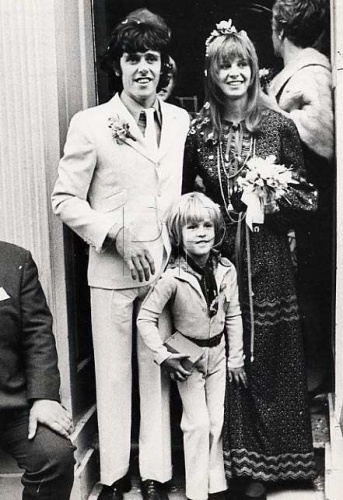
Donovan & Linda Lawrence with her son Julian (her child with Brian Jones)

Profile Image for Denis.
Author 1 book35 followers
February 27, 2019
This was very well done. A story well researched and well told. I was pleased to have all the conflicting rumours mentioned then sorted out to the most plausible based on various statements and opinions made by those who were there during Jones's time. He had always been a mystery to me but now, finally, I feel I have a much better understanding and appreciation for his actual contribution to the monster that has become the Stones.
Profile Image for Iris Dorbian.
Author 5 books313 followers
August 20, 2021
I feel very ambivalent about this book: On one hand, I admire how well written it is as well as the keen interest the author has for his subject, Brian Jones, the tragic founder of The Rolling Stones; on the other hand, this book is so arrogantly and steadfastly biased against Mick Jagger and Keith Richards, that it's hard to take it seriously at times. Not only does Trynka blame the duo, famously dubbed "The Glimmer Twins," for everything that went wrong for Jones, I'm surprised 9/11, the 2007-08 Wall Street meltdown and other modern ills were not factored into the equation.

This isn't to say that Jagger and Richards were not culpable in Jones' downfall. They were to a certain degree; however, much of that was orchestrated by their Machiavellian wunderkind manager Andrew Oldman who felt the sexually androgynous and charismatic frontman Jagger, aided and abetted by old childhood friend and guitarist par excellence Keith Richards, should muscle Jones out of the leadership and main decision-making. No doubt Oldman forcing Jagger and Richards to collaborate as songwriters so they could generate original material and thus be more competitive with rivals like The Beatles, exacerbated the growing power struggle with Jones who didn't write songs (although supposedly he was responsible for helping eke out a few classic tunes like "Ruby Tuesday" but for some reason never got the credit for them). Eventually, Jagger and Richards seized control of the Stones and marginalized Jones, further intensifying the latter's self-destructive tendencies.

By the time June 1969 came around, Jones was a drugged out shell of his former self, a consummate and versatile multi-instrumentalist, who at this juncture, could barely play the guitar, let alone the marimba (which he played in "Under My Thumb") or the accordion (which he played in "Back Street Girl"). Small wonder he was given the heave-ho by the Stones; a month later, he was found dead in his swimming pool under circumstances so murky that even today Rolling Stone biographers, aficionados, aging hangers-on and friends argue whether the drowning was an accident or murder (at the hands of contractor Frank Thorogood or sleazy sometime driver Tom Keylock).

The truth of Jones' death will never be known just as we most likely will never know how much of a role Jagger and Richards played in bringing about the ruin of Brian Jones. Obviously, Jagger's position as Stones' lead singer, the signature big-lipped face of the brand, coupled with his and Richards sharing songwriting duties, elevated and solidified their footing within the group as well as to the public.

Their reported mistreatment of Jones veered into blithe viciousness. Examples included abandoning Jones in a Morocco hospital while they went off galivanting somewhere; and having Jones' musical contributions not recorded in a studio when Jones thought it was. This is terrible but mind you at this point and Trynka cites several sources who allege this, Jones was a blithering drugged-out mess. And, girlfriend Anita Pallenberg leaving him for Richards following the Morocco trip only unhinged the increasingly unstable Jones. Then there were the police raids on his home for drugs and the trials that exacted a damaging psychological toll on his state of mind.

But Jones was hardly free of reproach. He was supposedly violent and abusive toward Pallenberg on that trip. This Trynka does not deny although he does downplay it because it doesn't fit his agenda to demonize Jagger and Richards while portraying Jones as a hapless rock and roll martyr.

To be frank, the real mystery here is how Jones was able to live to 27 considering his massive drug intake and his frail health worsened by an ongoing battle with asthma and mental illness. The author has such an ax to grind against Jagger and Richards that he barely touches upon the latter. Given how he describes Jones' frequent manic mood swings, the dangerously volatile behavior, the unbridled promiscuity (four illegitimate children with four different underaged women before age 21?) and the wanton excesses, I agreed with the bipolar term that Trynka cavalierly tosses in one sentence and bizarrely never mentions again. It probably was the root of much of Jones' problems and it's unfortunate that Jagger and Richards, whom Jones supposedly loved like brothers, the author tells us, didn't extend too much sympathy to their bandmate's issues.

I remember watching a documentary on the Stones in which Jagger discussed Jones' self-destructiveness. To paraphrase him, Jagger said he and Richards took a lot of drugs but at least they could function; Jones could not. That was the bottom line. The Rolling Stones was a business, which Jagger, a former student at the London School of Economics, characterized as such. Jones was becoming the machine's unworkable cog that needed to be removed. Case closed.

Although I enjoyed reading about Jones' background and the genesis of his love of music, especially jazz, I was irritated by Trynka's vendetta against Jagger and Richards and his need to single them both out as the drivers of Jones' disintegration. Yes, they're not blameless here. But the real tragedy is a society and a system that did not view mental illness and drug rehabilitation with the same gravitas and sensitivity that we currently do. If they had, Jones might have licked his addictions, kept the bipolar tendencies under control and maybe started over with a new band. Perhaps that should have been the angle explored by Trynka rather than rehashing an old grievance.
Profile Image for Carol Storm.
Author 28 books240 followers
December 5, 2017
Sensational rock and roll biographies are few and far between -- but this compassionate study of founding Rolling Stone Brian Jones definitely qualifies. Paul Trynka combines meticulous research, a wonderful humanity and sympathy, and a dry English wit to tell the story of a tragic young man who showed more promise than any other young musician of his generation.

Brian Jones' vision of a hardcore blues sound with rock and roll excitement gave birth to the Rolling Stones. But fame and drugs began to destroy Brian Jones almost as soon as the Rolling Stones reached the top of the charts. Paul Trynka interviews dozens of survivors from that turbulent era and captures all of Brian Jones' potential, his overlooked achievements, and the tragedy of his early death. This is one of the best rock biographies I have ever read!

Now I have been listening to the Rolling Stones since 1978. In high school I would save my allowance for weeks to buy one of their original London LP's on vinyl. All of my favorite Stones albums were the ones from the Brian Jones era, especially AFTERMATH and BETWEEN THE BUTTONS. To me he was the hero who made those albums great. He didn't sing or write songs, but like Keith Richards said he played "every instrument there was," guitar, piano, harmonica, dulcimer, sitar, marimbas, sometimes two or three different instruments on the same song. I loved how he was so good-looking and got all the girls (even more so than Mick, some say) but was never afraid of being different and dressing like a hippy or even a girl! Brian Jones was my hero as a teenager and I really survived a lot of pain because of his music.

Having said all that, though, we live in a very different world than we did fifty years ago. I'm willing to accept that the system was out to get Brian Jones because he had long hair and that drugs were only a pretext. But Paul Trynka sidesteps the fact that Brian Jones always reacted to pressure by taking more drugs, drinking more alcohol, and beating up more women. Did you notice how I ended that last sentence? Fifty years ago a young man could be busted by the police and newspapers could call him a disgusting menace because he had a small amount of marijuana or some other drug in his house or in his clothes. But if that same young man sent girls out of his hotel room beat up and bleeding on a regular basis . . . well, that made no headlines. It would seem that none of the men in the police or the press had any problem with that. Towards the end of his life Brian Jones lived in terror of that one, last drug bust that would send him to prison for years -- but evidently he never had to worry about being busted for beating up on his latest girl friend. It's intriguing that Paul Trynka never comments on that aspect of his subject's life and times!

It's strange that Paul Trynka talks vaguely about the "misogyny that surrounded the Stones" but he never gives Brian Jones the credit for setting the pattern and for creating the toxic atmosphere that surrounded the Stones for decades. The abuse of women was at the heart of their understanding of what it meant to be blues men, outlaws and heroes. No comment from Trynka on that. It's also interesting the way race factors into this equation. Ike Turner is remembered today as vicious, repulsive, a subhuman brute. Brian Jones is remembered as tragic, vulnerable, even lovable. But Ike Turner and Brian Jones had the same attitudes towards women and they expressed their sickness in the same way. Why do we see Ike Turner as disgusting and Brian Jones as angelic? They were both pioneers of the electric blues. They both took drugs. They both beat up women and got away with it for years. But Brian Jones had blonde hair and blue eyes!

None of this is to say Trynka is wrong to find the humanity in Brian Jones. Every interview in this book is unbelievably touching and poignant. But there are larger questions he could have asked without attacking Brian Jones personally. And they are questions that our society is only now beginning to examine.
Profile Image for Ken Hohman.
Author 1 book3 followers
February 4, 2016
So, I’ll confess that like millions of other music freaks, I’ve always been obsessed by Brian Jones, the mystery surrounding his death, and his brutal treatment by the self-proclaimed Glimmer Twins. In fact, I was actually holding out hope that this book would confirm my ultimate rock-and-roll conspiracy fantasy by revealing that the long lost scrap of evidence that definitively indicts Jagger and Richards for Jones’s death had been found. Just when they were cementing their revisionist history of the Stones, Mick and Keith would have to creak their old bones down that long dark hall to the gallows singing “Hang Fire” and cursing the day that they kicked Jones out of the band. But sadly, you can’t always get what you want. But if you read “Brian Jones: The Making of the Rolling Stones,” you just might get what you need. Through extensive research, revealing interviews and a reasonably objective viewpoint, Trynka provides the most fully realized portrait of the great musician and his many faults to date (so many faults that even those who deify Jones will find it hard to empathize with his downfall in the end – Brian Jones makes Lou Reed look like a choirboy). This book is as close as you’ll get to understanding the cultural impact that Jones made in the 60s and the twisted group dynamic of the Stones that helped lead to his demise. What Trynka does best is make an excellent case for Jones’s enduring musical legacy; something that Jagger and Richards have spent the past 50 years trying to suppress. For that and a lot more, this is an excellent music biography on par with Nick Tosches’ classic Jerry Lee Lewis biography “Hellfire.”
Profile Image for Gregarious cline.
41 reviews3 followers
January 20, 2015
Excellent, sympathetic, and balanced, Trynka's well researched bio makes it clear how influential Brain Jones was in setting the tone & attitude, the swing and the swagger for the 60's and especially the Rolling Stones. A must-read companion/counterpoint for anyone who has read Keith's Life.
Profile Image for Jamie Barringer (Ravenmount).
1,015 reviews58 followers
February 20, 2015
I was thrilled that one of the first books I won through Goodreads First Reads program was this book, a biography on a musician. I am a music blogger and spent several years heavily immersed in a very active music scene. I rarely read books like this, but I really ought to read more.

Even as a semi-pro music blogger I really didn’t know much about the Rolling Stones before reading this book. I wasn't born yet when the Stones began, so I knew there were scandals involving sex and drugs, and that the Rolling Stones were instrumental in establishing ‘sex, drugs and rock&roll’ as a mantra for touring musicians, and I vaguely knew that the guy who started the band way back when died young. That was about it.

The story of the Rolling Stones is important to understanding the current music world. I have no interest in scandal-mongering, so I was relieved to find that Trynka’s new biography on Brian Jones, the founder of the Stones, is all about Brian’s life, not his death. Even dying so young, it seems a shame that so many people only know about his death, not about the 27 years he was still alive. The presence of other death oriented books on this man is inescapable, and I did find it annoying the by halfway through the story Trynka was already foreshadowing Brian’s tragic end as if Brian would be dying on the next page, or at least by the next chapter. I could have done without much of that, but even so, I get the feeling that this new biography is far more balanced, complete, and respectful towards a sadly underappreciated musical talent whose life ought to have enriched the music world for decades longer.

In Trynka’s new biography, we get a front-row seat for the making of the Stones from its very early days when the lads who became this legendary band were just a bunch of young kids with instruments hanging out and gaping at older musicians at shows. I was strongly reminded in this part of the book of the culture at Hodi’s Halfnote on Monday nights, or of those 4-5 act ‘festivals’ common in Fort Collins where most of the audience plays some sort of instrument, too. And, the tensions that were at play in the early Stones sound very much like those that create many of the band-collapses and line-up changes in bands everywhere. Seeing this human, approachable side of the men who are the Rolling Stones makes me far more interested in their band and their music. I may have to listen to their albums again now to hear them with my newly attuned ears.

Profile Image for James Hold.
Author 153 books42 followers
December 1, 2017
BRIAN JONES, THE MAKING OF THE ROLLING STONES by PAUL TRYNKA is the most worthless excuse for a biography I have ever read. Chiefly because it is not a biography. Instead it is an extended op-ed piece. A piece of rubbish on the author's worship of Brian Jones as a "genuis." (He uses the word "genius" more often than "a", "and", and "the".) It is his opinionated put-down of everything the Stones did as essentially worthless without Brian Jones' contributions. And it is an open display of his contempt and loathing for Mick Jagger and Keith Richards. It is clear from the get-go Trynka had his mind made up before starting the book and the "130 interviews" he conducted did nothing to sway his opinion. Essentially the book is not about Brian Jones. It is all about Paul Trynka.

I admire Brian Jones and the Jones-era Rolling Stones are my favorite. And yes, he did found the band. But he wanted to take it in a different direction. Plus he became unreliable due to his excessive drinking and drug use. Jagger and Richards, after numerous warnings, had to fire him. Sad, yes, and maybe a bit unfair, but he brought it on himself and had plenty of warnings. Jagger and Richard took the band where the fans wanted it to go and had success with it. Is that a problem? Trynka thinks it's damnable.

Trynka's piece on "Under My Thumb" is interesting. "...the band was working on a fairly hackneyed F#m, E, D chord progression, similar to the Animal's Please Don't Let Me Be Misunderstood, Dylan's All Along The Watchtower and a thousand rather more forgettable tunes." (BTW, Trynka doesn't put song titles in quote marks. You'd think punctuation would be one of the first things a "journalist" would learn.) Excuse me but "All Along the Watchtower" is forgettable? In what universe? And hackneyed chord progressions? Chord progressions work based upon music theory. They are only "hackneyed" in the sense that they are effective. Anyhow, the song according to Trynka was nothing until Jones got hold of a marimba and added the key riff, transforming it "from forgettable to unforgettable." (There's also a long passage from somebody going on and on about "tone color" although he never defines the term so you end up with no idea what he's talking about. There are many such sequences in the book.) The up-shot is, according to Trynka, it was the marimba that made the song and without it, it was nothing. WRONG! I assume Trynka never saw them perform live else he'd know they didn't lug a marimba around to their concerts. Bill Wyman played the riff on his bass. And the song worked just as well without it, "hackneyed" as it may be. (Trynka also brings up the equally hackneyed accusation of Mick's sexist put-down lyrics. But if you really listen to the song, and if you ever saw him perform it on TV, you know it's not serious. It's more of a wishful fantasy, especially as he rolls his eyes on camera when singing it.)

More quotes: "Mother's Little Helper is a messy Kinks rip-off, and Satisfaction...a lumpen shuffle." I think that right there disqualifies Trynka from having anything to say about music in general.

This is an awful book. Trynka writes with his nose so high in the air it's a wonder he could see what he was typing. The author's personality dominates the writing and he comes across as an opinionated snob. Brian Jones deserves a good biography. The best I ever read of him was snippets in Bill Wyman's STONE ALONE. This book contributes nothing to Rolling Stones history or Brian Jones' legacy. There are few actual facts here you could not find in a dozen other places. It is garbage of the highest caliber and has no place on anybody's shelf.
Profile Image for Liz Estrada.
502 reviews4 followers
February 27, 2017
For someone who has read almost everything about the Stones, and in particular Brian Jones (my favorite Stones), I found this book to be the first to truly try to delve into the life behind the persona and find the true Brian. So many books just focused on his death and all the conspiracies surrounding it that this was eye opening in many ways. The founder of the "greatest" rock n roll band in the world was a very complex man. A mixture of elfish imp, fairy Pan, insecure paranoid man with streaks of madness and meanness. But what remains is one of the greatest musical geniuses of the late 20th century music scene.
Paul Trynka, you can tell, is an avid Jones fan and puts a lot of blame on his downfall on Mick, Keith and Oldham, but is just as harsh on Jones for his frailty, paranoia and indifference, sparked by his spiraling out of control due to drugs, fame and fortune. But deep down you see just a man who had an amazing talent who was a casualty of that fame, who just wanted to play good blues music and be left alone. Makes me wonder if he would have survived if that were the case. But then again, we wouldn't have The Rolling Stones and all those incredible records,, some of the best in rock. It is a quixotic and sad tale to tell. Recommend to those who want to learn a truer vision of this visionary.
Profile Image for Paul Stevenson.
9 reviews
April 3, 2018
My take on it:
As a Jones fan, I can't say why I did this to myself. I've idolized Jones since literally my prepubescent days and it's mostly info I've already read before from various resources, some written contemporaneously with his lifetime. There are new interviews of many of the same parties who've been interviewed before and it still leaves me frustrated, Brian is still dead all those years ago and Jagger/Richards are still bullshitters when it comes to giving him his due as the guy who taught them how to really play blues/r&b and co-wrote at least some of the best melody lines of some their biggest early hits. The Last Time, Paint It Black, Ruby Tuesday, Lady Jane, Under My Thumb were all working rhythms with no direction until Brian picked up a recorder, a guitar, a sitar, a vibraphone, a dulcimer, sat at the piano, whatever he felt and gave them the melody lines that made them real songs and provided a melody to sing lyrics to. Yet they all bear only the Jagger/Richards brand.
There is a great section at the end revealing all of Trynkas sources and references and if you're young and don't know much about Jones early life as a schoolboy and the real Stones story from the period beginning roughly 1961 thru 1969 then this book is an excellent jumping off point and collects pretty much all of the known info into one readily available volume. Though mostly biased in favor of Jones, it includes commentary by ppl who slag Brian as well as those who praise him, but it also provides some compelling proofs in Jones favor as regarding contradictions. It very plainly avoids falling for any of the murder theories as well, though it does address and dismiss pretty much each one of them in a section at the end. (I'm personally still undecided, there was a lot of money and bad press at stake if he sued for the naming of the band in and of itself after he was booted.) If you're a long term Jones fan it may, as it did for me, provide moments of vindication as reliable witnesses including well known recording engineers and band member Bill Wyman, ppl who were there, give testimony to the genius of the man who formed The Rolling Stones, but ultimately it was a tense reliving of all the frustration and disappointment his sad story already left me with a dozen times before as I turned page by page toward the inevitable, unalterable, sad ending.
27 reviews1 follower
November 17, 2014
Brian Jones does not surface in the minds of most people thinking of the Rolling Stones. What a shame it is that the name has been relegated to history. He founded the iconic rock group that lives on more than a half-century later. Author Paul Trynka guides the reader through this troubled man's short life.

Trynka explores the musical genius who formed the Stones when British musical groups were taking the world by storm. Life was difficult for Jones, who didn't make it any easier on himself by indulgence in heavy drug use. The drugs got him into major trouble with the law on multiple occasions when his physical and emotional stability was at its most fragile state.

In the course of his young adult life, Brian moved from woman to woman and fathered a few children along the way. One can see by the detailed chronology of Brian Jones: The Making of the Rolling Stones that this was a young man who needed intervention. Some people tried to befriend him, but he apparently never came close to the kind of psychological help that he needed. One is left wondering why.

Jones died by drowning in a swimming pool. He was one of the long list of musicians who dropped out by death at the age of 27. The author considers, and dismisses, speculation that Brian was murdered. This was a young star who was simply a victim of his own reckless living. It is a story worth reading. I am grateful to have received my complimentary copy of the book from Goodreads.
Profile Image for Steven Peterson.
Author 19 books325 followers
November 22, 2014
The evolution of the Rolling Stones as a band cannot be understood without a sense of the role of Brian Jones. He was a flawed human being--but someone who had a sense of music that would be critical for this band.

This book provides what the author sees as a "corrective," making sure that Jones' role in the development of the Rolling Stones is credited. At one level, I think that the corrective is a bit overblown. Other authors have spoken of Jones' role--and his subsequent eclipsing as Keith Richards and Mick Jagger took a central role. Still, this volume is quite helpful in providing a greater sense of Jones' life and his role with he band and his decline--as well as his foibles and weaknesses. The work is an honest assessment of Jones.

Brian Jones grew up in a middle class family, but ended up estranged from them. This was not an inconsiderable element in his developing persona. The book does a nice job of describing his efforts to develop a musical career, and his joining--over time--with Jagger and Richards and Charlie Watts and Bill Wyman. The book does a nice job of outlining the internal dysfunctions of the group=--as well as the creative energy and evolution of their oeuvre.

The volume ends with a discussion of the death of Brian Jones, trying to go beyond legend and gossip.

This is, overall, a useful addition to the body of work on the Rolling Stones and provides a framework for understanding the role of Brian Jones.
Profile Image for Randee.
1,090 reviews37 followers
November 12, 2015
I'm glad this book was written about Brian Jones; he was the founder of the Rolling Stones, the most musically gifted and responsible for the type of music they do. His is a heartbreaking and short life. In fact, Brian was the first 'member' of 'Club 27' followed by Jimi Hendrix, Janis Joplin, Jim Morrison, Kurt Cobain, etc.

I think Brian's is the saddest of many other gifted, but lost, souls. There would not be the Rolling Stones if it were not for him but for reasons that only they can know for sure, Jagger and Richards virtually wrested control of the band and pushed him to the sidelines and to this day do not give him his due credit. I have read Keith's autobiography and I've read a couple of books about Mick Jagger, but I am not judge or jury and no one really knows the inner workings except the participants. Nonetheless, it is a shame that Mick and Keith don't give him credit...whatever happened, he made it possible for them to succeed and anyone who is vaguely familiar with the Stones history knows it.

Profile Image for Richard Kearney.
51 reviews1 follower
December 28, 2016
British music writer Paul Trynka is a man on a mission, and his mission is to restore the late Rolling Stones guitarist Brian Jones to what Trynka argues is his proper place in the history of the band. For Trynka, this mission is necessary because over 40 years after Jones' death Mick Jagger and Keith Richards have gradually managed to "airbrush" Jones' role in the making of the Stones from the record, which Trynka describes as "a Stalinesque revision of history." He frequently cites passages from Richards' 2010 autobiography, numerous interviews with Jagger, and other evidence in support of his argument. Trynka couples this evidence with dozens of interviews, seeking at
every turn to identify individuals who might provide first-hand witness to Jones' life without somehow being compromised by some current obligation to the Stones organization.

Trynka's thesis, simply stated, is that Brian Jones was THE essential figure in the forging of the Rolling Stones and its success in bringing rhythm'n'blues music to a much larger mass audience - particularly a younger white audience - than might have been possible otherwise. Jones was a supremely dedicated blues music devotee who spent countless hours mastering the styles he researched on recordings while growing up in the somewhat posh borough of Cheltenham in Gloucestershire, England. Despite a complete lack of support from his family, who frowned on his musical ambitions, and even from his fellow blues enthusiasts, who argued that the music would remain an acquired taste and never find a popular audience, Jones persisted in his vision, spending over three years honing his craft in various musical combos while living in precarious financial circumstances. In 1962 he relocated to London and gravitated to the small but vital rhythm'n'blues community revolving around Alexis Korner's combo Blues Incorporated and impresario/promoter Giorgio Gomelsky's informal and formal blues clubs. There is assembled the musicians who would eventually become the Rolling Stones.

As Trynka argues, Jones' many talents included not only his well-honed musicianship but also his fierce determination, his seemingly effortless ability to cultivate styles and images of the band that were effective in staking out an identity, and his lack of a "purist" sensibility that did not disdain pop music. Throughout his years with the Stones, Jones demonstrated again and again a willingness to try new instruments, new sounds, and new arrangements, and he was constantly curious and willing to learn from other cultures, seeking out traditional musicians in Morocco on several visits. Trynka argues repeatedly that Jones' confidence and authority established him as the undisputed leader of the Stones during at least their first two years as a band.

Nevertheless, as Trynka also details at great length, Jones was also a deeply flawed individual who eventually alienated and repelled many of the people around him, and his weaknesses left him increasingly vulnerable to challenges from Stones manager Andrew Loog Oldham, who sought to ally himself with Jagger and Richards while encouraging them to write original material for the band, freezing Jones out in the process.

Jones' less appealing qualities included moodiness, misogyny, bouts of cruelty toward those close to him, a lack of reliability and responsibility, narcissism, and an often cloying neediness - there are numerous scenes in the book where Jones begs an ever-smaller number of friends and acquaintances to stay with him at night until he falls asleep because he cannot bear to be alone. Jones also suffered from frequent crises of confidence, and at a critical juncture in 1965 this prevented him from leaving the Stones at a point when the humiliations imposed by his manager and band-mates had reached new lows. Trynka attributes some of Jones' problems, particularly his neediness, to the emotional sterility of his childhood, arguing that Jones was always seeking support and approval, leaving the reader to conclude that much of Jones' more outlandish and outrageous behavior was simply a form of acting out.

Eventually, Jones took to heavy drinking and drug consumption to cope with his marginalization within the Stones and his loneliness and isolation. Trynka describes Jones' two-year relationship with Anita Pallenberg as largely toxic in nature, with a kind of sado-masochistic core that led them to egg each other on to excessive behavior. When Pallenberg abruptly left Jones for Stones guitarist Keith Richards in 1967 during a trip to Morocco, Jones was apparently more dismayed by Richards' betrayal than by Pallenberg's. Jones continued to make modest contributions to Stones recordings, but the last 18 months of his life were mostly miserable, as he was also the subject to drug raids by the British police. He was dismissed by the Stones shortly before their 1969 tour, in part because his drug charges made it unlikely he would be issued required travel visas but also because the Stones had finally rendered him useless as their new musical leaders were finally ready to assume full control of the band's musical direction. Jones drowned in his swimming pool just a few weeks after leaving the Stones.

Is Trynka's argument convincing? Certainly he makes a case for Jones' often contradictory nature, amply documents the demons that plagued him, and makes clear how Jones' focus on music to the exclusion or almost all other considerations, including the important work of cultivating strong relationships within the Stones and taking an interest in its business affairs, proved fatal to his position in the group. Trynka is often persuasive in arguing for Jones' visionary and highly ecumenical approach to music and attempts to make a case for Jones as an early advocate for what we today call "world music" (with recordings he arranged during a 1968 trip to Morocco eventually being released in 1971 as "Brian Jones Presents the Pipes of Pan at Joujouka"). He is also unsparing in his accounts of Jones' less appealing qualities, describing how Jones had fathered four children with four different women by the age of 19 but took little or no interest in, and no responsibility for, any of them.

One could also argue the continuities that enable us to speak of the "Rolling Stones" as a single entity over a period of 53 years may be very misleading. Perhaps there was the band as Jones made it, and the one that succeeded him, or a few other subdivisions? But there remain echoes of Jones even in the most recent Stones album, a collection of blues covers that Jones would have had no trouble recognizing or playing on. Despite its blatantly partisan tone, Trynka's book does offer a compelling case for the significance of Jones' leading contributions to rock'n'roll in the 1960s and his lasting impact. A good read, even if you want to argue with it.
Profile Image for Michael Backus.
Author 5 books4 followers
December 17, 2015
Just finished the recent bio on Brian Jones; it's well researched and reasonably written and it's a serious bio (in the sense that the writer has no connection to Jones and no particular theory to promote). There's not a lot new in the larger sense though some of the details were new to me. I didn't know the extent to which Andrew Oldham undercut Jones and promoted Jagger/Richards (Jagger especially), he seemed enamored of making sure all songs were Jagger/Richards compositions no matter the truth, aping Lennon/McCartney, even when the evidence is pretty clear Jones wrote parts of specific songs -- Paint it Black and Under My Thumb, for example -- though Jones never complained or raised a fuss). And if anything, the author makes more of the infamous extra $5 pounds Jones got early on, claiming the rest of the band held it against him to the end. The other big moments in the Jones existential beatdown were the band abandoning him in Marakesh, Richards stealing Anita Pallenberg, and the cops going after him repeatedly. This was probably the stuff I knew least about, I knew English cops had hounded a bunch of rock stars, I didn't know how hard they went after Jones. Like eight raids and at least two cases of planted evidence.

And in the end, that's what you take from the book. He was too sensitive to make it in that world, all this stuff destroyed him. He wasn't tough like Richards or calculating like Jagger, the band was a toxic atmosphere for Jones and he couldn't get past it. The author quotes more than one person who felt Jones could've been a fine songwriter with a supportive partner, and it was true he made friends outside of the band, McCartney, Hendrix, Townsend, Harrison, guys who mostly didn't warm to the rest of the Stones. This is part of the tone I liked least about the book, there's a hint of boosterism running through it all, of course there would be, the writer is upfront in the author's note that he wanted to write this book because of the ways Richards' "Life" and other books pretty much wrote Jones out of the band's history (I have no idea if this is true about the other books, but it is true of "Life."). He makes leaps, going from well researched assertions with interview backup to suppositions about things he was going to do or could have done, but didn't, and a lot of hyperbolic claims about his place in bringing the blues to the world (I'm not arguing against that, just that he argues a bit too much for it, it gets tiresome, like being at a party where someone is describing the movie they want to make). It's hard to get a grasp on exactly what Jones' contribution was because I don't fully trust the writer's impartiality.

A better approach would be to ape Peter Guralnik's first book on Elvis, "Last Train to Memphis," where his meticulously researched re-creations of recording sessions showed how smart and involved in every way Elvis was with his sound; if he could've done some of that with Jones and the mid 60s Stones recordings, that would've helped, but I suspect it wasn't possible because Jone wasn't much involved fairly early on.

And when I reached the end of the book, I felt pretty much the same about Jones and his place, or maybe more accurately, I have no better idea how I should feel about the guy than I did before reading it. The book doesn't shy away from the negatives and makes it clear he was a raging asshole much of the time (there is also a surprising amount of material, with quotes from the sources, about how sweet he was); I mean, Ian Stewart pretty much despised him from the start, and by the end, he literally could not form a chord on the guitar, much less play. So the book leaves you with the feeling that it was Jones' love of the blues that started the band, that he was slowly pushed out in a calculated and often cruel way by a bevy of changing forces, that he fell into a sea of drugs that he couldn't wade out of, became useless, was rightfully jettisoned, and died a couple of months later, which would've been my feeling before reading it and which is the prevailing mythology (is it not?). So I guess I'm saying in the end, the book doesn't add a lot to that conversation, though it undoubtedly fleshes out the story some.
Profile Image for Armand.
210 reviews3 followers
November 19, 2014
Very well researched and detailed biography of the true story of the REAL founder of the Rolling Stones. Illuminating and infuriating, you will never think of Mick and Keith the same way after you read about the shitty way they treated the man who influenced them and created their brand. Some sample passages:
(Describing the legal strategy and the power play between managers Allen Klein and Andrew Loog Oldham after the drug bust at Keith Richards' home at Redlands):
"When the main players convened for a meeting later in February, Klein took charge - the tough guy who would see off the villains. Andrew Oldham, in contrast, could hardly conceal his fear. 'We were told that, after the Stones, the police were gonna go for the suits,' says his Immediate partner Tony Calder. 'And I never saw a man pack his bag so quickly. He was terrified.' Klein seemed to understand Oldham's paranoia and instructed his young, volatile business partner that the only way to avoid further busts, and press intrusion, was to lie low. Gered Mankowitz was by now Oldham's main confidant in the organization. They discussed what was going down, and the instructions Klein had given Oldham: 'Don't hang out with them. Don't communicate with them. And whatever you do, don't talk to the press.' It seems Klein's advice made Oldham more paranoid, not less. He felt he was 'in very dangerous territory', says Mankowitz. 'We were told to keep a low profile and given the impression that we were on very thin ice'.
Klein's words of wisdom meant that Oldham would remain largely absent over the following months. The embattled Stones saw this as cowardice, Oldham deserting his post as the battle intensified; his disappearance became a key factor in his estrangement from the band. This left Klein in sole charge and ultimately ensured he took control of the Stones' Impact Productions catalogue. 'He was always playing a double game,' says Mankowitz. 'Clearly Klein was the most horrible and manipulative person. I can see that now, but could not then.' Oldham's position had become all the more vulnerable because in September 1966, after relinquishing all business management to Klein, he'd handed over press duties to old-hand PR Les Perrin."
Profile Image for Dennis McMahon.
23 reviews7 followers
February 8, 2015
The Rehabilitation of Brian Jones

I was thoroughly enjoying this book until the author started using the pejorative "conspiracy theory" to describe the accounts of those who say that Brian Jones was murdered -- after the author had set up the discussion with mention of 'JFK-like conspiracy theories,' as if the absurd official story of President John F Kennedy's assassination were true. Given his perspective, Trynka's credibility suffered when it came to his analysis of the murder allegations. Indeed, it seems that the author went into that analysis with an all-but-closed mind. (Still, Trynka's tackling of the issue was most welcome.)

In contrast, the author's perspective of Brian Jones as a highly charismatic musician who could upstage Jagger and Richards is totally in sync with my own view. I will never forget a 1965 Stones concert I attended at the old 14th Street Academy of Music in NYC. There was a magic about Brian on stage that you could sense from the audience, and by just standing there and playing guitar, Brian most certainly did outshine both Jagger and Richards.

Trynka's portrayal of the unholy Oldham-Jagger-Richards triumvirate ganging up on the frail Brian also rings true because these three back-stabbing mega-creeps are still ragging on the founder of the Stones to this day, some 45+ years after his death. How low can you go? Recently, I heard Oldham on his Sirius radio show describe the late Keith Relf--the Yardbird lead singer who was electrocuted while playing guitar--as "a grounded Brian Jones." After that most tasteless putdown of Brian, I can no longer tolerate listening to Oldham's show.

Wonderful to have Trynka set the record straight about Brian's song writing ability, but disturbing to read how Jagger and Richards were relentless in their abuse of Brian. Sadly, having gotten to see Jagger and Richards in this light has dulled my appreciation of their music. I couldn't even watch an early Stones Youtube clip that someone sent me the other day--the sight of Jagger mugging for the camera during "Satisfaction" made me sick. But if that's the price I have to pay for witnessing the rehabilitation of Brian Jones, I'll take it. Thank you, Paul Trynka.
Profile Image for Joshua Hair.
Author 1 book106 followers
September 9, 2014
I am one of the lucky few who won this in a Goodreads First Reads contest and had the privilege of reading it well before it comes out (a full month ahead, in fact). As such, I am highly honored to be one of the very first to review the book. Mr. Trynka is known quite well as an incredible biography writer, and this one is no exception. For those who wish to better understand the legacy of the notorious Brian Jones, or for those with little knowledge of Rolling Stones history, this book is an essential guide to all you may need to know.

To the uninitiated, Brian Jones is the man responsible for first putting together the Rolling Stones, giving them their unique flavor and sound, and subsequently (by most accounts, anyhow) nearly ending them before their time. For this reason, he is often regarded as a black sheep in music and therefore is shunned for almost ruining one of the greatest bands of all time.

However, there is much more to told in this story than meets the eye. Thankfully, Mr. Trynka has taken it upon himself to do just that: he lays out all the facts, from the minutest of details to the larger gaps of information that have been wondered upon for years. His research is incredibly extensive, and he managed to interview seemingly every person Mr. Jones came in contact with during his short and tragic lifetime.

I could go on and on about the bountiful facts and information one can learn from reading this biography, but to digress will do no one any good. All I can say is that for those interested at all in the history of Brian Jones or the Rolling Stones, this is THE book to own and cherish. Even for those who consider themselves all-knowing fanatics, I guarantee things will be learned which were never heard of prior. Simply put, buy it, enjoy it, share it, and enjoy it again. I end on this note; although not written during Brian's time with them, these lines from Before They Make Me Run sum up quite nicely the life and times of Mr. Brian Jones: Only a crowd can make you feel so alone and it really hit home. Gonna find my way to heaven, 'cause I did my time in hell.
Profile Image for Ron.
433 reviews2 followers
August 9, 2017
Ouch, the author Paul Trynka, in wanting to tell Brian Jones' side of the story, goes overboard in attacking everybody else. In particular Mick Jagger and Keith Richards. The worst flub is near the end when he accuses them of not mentioning Brian Jones' name at the subsequent Hyde Park concert. Jagger read a poem by Shelley right at the start, as a tribute to Brian! Having said that....

An interesting book, especially in the first half. So entrenched is the Jagger/Richards dynamic that I hadn't realized at first (until being a Rolling Stones fan for awhile) that Brian Jones was integral to their sound. It is made clear that he founded the band, was miles ahead of the rest of them in terms of musical development at the time, and set their early direction. Even as late as the 1967 European tour and records like Between The Buttons and Their Satanic Majesties' Request, Jones was an important contributor. This is spelled out clearly in the book.

I enjoyed reading about his early years, how he changed from a geeky trainspotter into a musicologist overnight. Brian's dark side was never far from the surface, getting himself kicked out of the house, impregnating several young girls with little responsibility, and a general contempt for the rules of civilized society. That's rock & roll they say.

Less interesting are the later years. As in any Stones bio, the tawdriness of their Swingin' London hangers-on and parasites is here in this book. Unreliable witnesses to Jones' descent. Not enough is made of his own self-destructive actions. Sure, Jagger and Richards aren't the nicest of people, but Jones made his own bed too.

Contrary to other bios, Jones was not having a new awakening once he left the Stones. It is sad to read about the two godfathers of English Blues, Alexis Korner and John Mayall trying to stimulate Brian's creative juices. Yet Jones couldn't even play guitar anymore.

Trynka helps rehabilitate Brian Jones. It's a shame he had to overly villify everyone else. In the meantime, do listen to "Little Red Rooster" and "Paint It Black" and enjoy how integral Brian Jones was to the Rolling Stones.
Profile Image for Kip Blount.
5 reviews
October 15, 2016
A missed opportunity.

Brian Jones, guitarist and founding member of The Rolling Stones, has been deceased now for close to 50 years. The first of the infamous 27 club, Jones lived a short but explosive life entrenched in drugs, music, and the swinging London of the 60's.

Unfortunately, since his death in 69, Brian Jones has fallen into the ether of the musical past. While college dorms across the country have walls peppered with images of Jim Morrison, Kurt Cobain, and Jimi Hendrix, Jones has all but been forgotten. This biography, unfortunately, does not do anything but help Jones remain in that obscurity.

Simply, this biography is boring and dull. The author fills up about 75% of the novel telling the reader and telling them again and then again and few 100 times more for good measure that Brian Jones founded the Stones and Keith and Mick were not nice to him. I'm not over exaggerating here, this really is the gist of the book.

Jones was more than a victim of drugs and the bickering that encompassed much of the Stones's existence. This book offers nothing more but a text book reiteration that Richards and Jagger were jealous of Jones and everyone else thought he was the real talent of the band. There are no fun stories of the Stones with Brian, no tales of the tours and the recording sessions that spawned some of the greatest songs in the Stones's canon. The reader will not gain any insight of who Brian Jones was from this biography and that is the real shame here.

As of now, the best book on Brian Jones is Up and Down with The Rolling Stones by Tony Sanchez. Unfortunately, Jones is only in the first 50 pages of the book. However, those few pages give the reader more insight into Brian Jones than the entirety of this biography. Brian Jones deserves much better.
Profile Image for Bill reilly.
663 reviews15 followers
October 29, 2019
Brian Jones was born in 1942 and by the 1950’s became obsessed with Louis Armstrong and other black American music. Due to childhood asthma he was given a clarinet as physical therapy but hearing Leadbelly brought a quick change to the guitar. John Lee Hooker, Elmore James, and Little Richard were the earliest influences on Jones. At sixteen he fathered his first of many illegitimate children; there were four by nineteen; a sure sign of a future rock star. A Robert Johnson album in 1961 changed Brian forever, as it did fellow British musicians Eric Clapton and Keith Richards. The crossroads guitarist was a god to all three. The formation of the Rolling Stones of Jagger, Jones, and Richards in 1962 was an American blues based offshoot. The bands name came from a line from a Muddy Waters song. History is written by its’ victors, and in this case survivors. Keith Richards takes credit as the Stones early leader while others give credit to Jones. He wrote the melodies for “Paint it Black” and “Ruby Tuesday”. The Beatles paved the way for the British invasion of the 1960’s. By 1965, a power struggle within the Stones resulted in a Jagger-Richards triumph. “Satisfaction” was their first hit and many more followed. Jones battled the demons of LSD, Quaaludes, cocaine and alcohol to the point of incoherence and his musical contributions faded into obscurity. His self destructive behavior led to his banishment from the band that he had created. His untimely death at the age of twenty-seven has resulted in almost as many conspiracy theories as the JFK assassination. I highly recommend this book for rock and roll fans.
Profile Image for David Pantano.
Author 8 books9 followers
October 27, 2014
As far as biographies about Rock Stars go, "Brian Jones: The Making of the Rolling Stones" is of a pretty standard fare. We get the requisite account of the history, milestones and relationships that defined his life, however, what is missing from this bio on the Stones late but great guitarist is the quintessence of who he was at his best. The author skirts around the issue by framing Brian in the light of his outward accomplishments: the Cheltenham cat who started the Rolling stones, the visionary who took Blues music mainstream, the multi-instrumentalist musician, the fashion icon, etc. All significant attributes of who Brian Jones was and to a large extent still is, however, he never quite seems to touch on who the real Brian Jones was in the inner sense, the Numen underlying the Persona, the Genial spark that manifested the above mentioned attributes. Rather, after accounting for all of the details about Brian the reader is left with a picture of a defeated man, a terribly narcissistic, insecure, unreliable, lazy, and self destructive individual who let down his band, family and key relationships. A fallen star of dark energy, a burned-out comet that imploded under the pressure of life's majestic procession.
Profile Image for Barbara.
987 reviews10 followers
October 27, 2014
The life of Brian Jones, as told by Paul Trynka in Brian Jones: The Making of the Rolling Stones, is a sad story. Brian Jones was an extra special person who didn’t know how to handle life. From start to finish, people were horrible to him. The fact that his own parents wouldn’t even mark his tombstone with love says it all. Brian Jones was extremely talented. He just wanted to be loved and to follow his passion, music, which he did. He was a great musician, but a tragic young man.

Trynka was definitely sympathetic toward Brian Jones and his challenges in life. The book is filled with stories of Jones’ pain and suffering. It also gives new perspective to Jones and to his relationship with the Rolling Stones. The impact of that relationship and of their exclusion of Jones is explored in depth. While he encountered much sorrow throughout his life, it’s likely that rejection by the Stones caused him the most pain. Brian Jones: The Making of the Rolling Stones is definitely an interesting read. After reading the preview copy from Goodreads, I highly recommend it to fans of Brian Jones and/or the Rolling Stones.
Profile Image for Andrew.
58 reviews
December 27, 2015
I have read many books about the Stones and also every book written about Brian Jones. There is little new in this book but it is well researched and written. Many previous books focus on the so called murder of Jones and refreshingly Trynka doesn't. He presents the facts as known, comments on the claims of others and concludes that Brian drowned in an accident. The best part of the book is the story of the early years when Brian established the band and achieved his aim of promoting the Blues particularly to the USA. Trynka does focus on the triumvirate of Jagger, Richards and Oldham as being the principal catalysts for Brian's fall from band leader to passenger and ultimately being expelled from the band. However, it is the treatment of Brian and the other band members by an allegedly corrupt police force and morally obsessed judicial system that comes across as a major reason for Brian's decline. A good read highly recommended for fans of the Stones and a good place to start. There are more interesting reads about Brian but best to start here before you wade into tales of murder and unreleased recordings etc etc.
673 reviews10 followers
August 30, 2014
I received Brian Jones: The Making of the Rolling Stones as part of a Goodreads giveaway.

Brian Jones was the brooding guitarist of the Rolling Stones and one of the first members of the "27 Club," a group of artists who died at age 27. This biography of his short life offers a glimpse of the man whose moods and actions were notorious, but whose musical sense was pioneering.

Brian Jones is one of those figures who, like John Lennon or Woody Allen, had enormous talent and was a game-changer in his chosen field, but who, to put it frankly, was a pretty shitty human being. So, in many ways, the biography doesn't endear me to Jones (in fairness, Trynka doesn't really try to defend him, either). Still, the behind-the-scenes glimpse at the musical milieu that Jones entered and helped to shape was fascinating, especially as a fan of 60s rock. The Stones are legends, and Jones had his finger on the pulse of the genre and helped to shape the group into the superstars they became. An interesting look at a brilliant but deeply troubled, flawed individual.
Profile Image for Dave.
983 reviews20 followers
December 22, 2014
I really enjoyed Trynka's book on Bowie titled _Star Man_, but after reading this book on Brian Jones I felt a little let down. I was looking for more meat on the bone and I feel there is still information to be had in regards to the guy who started the Rolling Stones.
You can tell Trynka really is on Brian's side if there are sides to be taken in the book since he spends time coming down hard on Mick and Keith.
But the book starts with Brian's upbringing and early years growing up in Cheltenham, England and his love of the blues and playing guitar. He was years ahead of Mick and Keith in this regard.
The formation of the band, Brian's ability to play any instrument from harmonica to sitar on "Paint it Black" and the mirambas on "Under My Thumb" are mentioned.
His death is given a vague gloss at the end of the book with a chapter devoted to all the possible conspiracy theories as to whether it was an accidental death or murder, but I was looking for more details on the albums that came out during Brian's years with the group and perhaps more tour stories.
Profile Image for Rich McAllister.
70 reviews10 followers
January 27, 2015
Happened to pick this up while it was in the house. Very quick read. Moderately interesting, but a bit infuriating as Trynka hits too hard on his hobbyhorse of Jones being the Real Genius behind the Rolling Stones, who was Unappreciated and just too sensitive and geniusy for this world. Particularly irritating is Trynka's habit of quoting someone's reminiscence and pointing out the source is biased or has faulty memory when the quote doesn't support Trynka's position, but blindly accepting as truth statements from the same source when Trynka agrees. I did think the chapter basically debunking the wilder "Brian Jones was Murdered!" theories was useful and sourced about as well as it could be, given the lack of reliable witnesses and the time that has passed.
Profile Image for Wendi Manning.
286 reviews16 followers
March 6, 2015
I've always loved Brian Jones, but always felt that too much emphasis has been put on his death rather than his life. The author agrees with me. I think he actually says it in the book.

This is the book about his life. It's not a pretty book, it's not an easy book, but it's an honest book.

Brian accomplished so much in his short life and did it without a lot of support from anyone. The book shows just how influential Brian was in almost every aspect of his world. The Mick/Keith stories are here, and yeah, they're ugly, but the stories of Brian's issues are here too.

I loved learning things about Brian that I had no idea of and this is one of the most well written biographies I've read about any member of the Stones. It's also now one of my favorite biographies.

Profile Image for Michael Ritchie.
684 reviews17 followers
November 2, 2014
Certainly the legend of Brian Jones deserves a better book than this. The main problem is that the author has an ax to grind--that Jones was ill-treated by Jagger and Richards for years before he was booted from the group, and that the living Stones have never given Jones his due. All that is probably true, but Trynka can't be objective here; about every 10 pages, he blames the Stones for most of Jones' problems and doesn't seem to see that most of what he reports actually supports the opposite view, that Jones was largely the author of his own misfortune. Trynka is sloppy with details here and there, though the last couple of chapters, as Jones' downfall seems inevitable, are well written.
Displaying 1 - 30 of 98 reviews

Can't find what you're looking for?

Get help and learn more about the design.