After a devastating pandemic destroys civilisation, ten-year-old Dallin Smith is left alone in a silent world.
Then, like a lifeline, his long-lost childhood friend Taylor Nielsen arrives. Older, stronger, someone he can trust. Together, they set out across Utah’s desolate red-rock landscape in in search of safety, of answers … of anyone still alive.
At first, Taylor is everything Dallin needs. A voice in the silence. A hand in the dark. But as their journey unfolds, something begins to change. Small things. Subtle shifts. A darker edge creeping in. And as their bond fractures, Dallin is forced to confront a terrifying truth: The people you trust can become the ones you fear the most.
From award-winning Bob Palmer, writing as Jack Wakefield, Shards blends moral complexity with psychological suspense. A story of loss, manipulation, and the fight to hold onto your sanity when everything else has gone.
Perfect for fans of Cormac McCarthy’s The Road, Emily St. John Mandel’s Station Eleven, and Richard Matheson’s I Am Legend.
In a past life, he's been, in chronological order, a construction worker, town planner, rock drummer, graphic designer, adman, entrepreneur, scriptwriter and film producer. He now writes full time.
His favourite theme is the absurdity of life – nothing on the planet is more fascinating than human behaviour. And even after decades creating ads, he still loves a great concept. he usually writes humour/satire novels: Hacking George, Cute.
In his spare time, he's been caught in a desert flash flood, set off the sirens at Area 51, and hikes canyons in the US Southwest searching for ancient ruins and rock art. To share his passion, he created the popular hiking website Red Dirt Blue Skies. He is never bored.
Home is a creaky cottage on the fringe of London which he shares with a black and white cat, rampant woodworm, and his infinitely patient author and cover-designer wife Berni Stevens.
Okay, I think Project Hail Mary raised my standards for all other Sci-fis. This one did not smack as much as I wanted it to.
I went in with raised hopes and I mean extremely high hopes. The last person on earth, family trauma, obsessive best friend... yk... The lot of that, from the blurb. But I was sorely disappointed with undercooked themes. The cherry on top was the abrupt ending.
Dallin is a ten year old boy. And yes, you read that right, HE IS TEN YEARS OLD. HE IS A CHILD. So, i think I pretty reasonably expected some sense of innocence and abruptness to everything. And while that wa true most of the times, his personality usually ping-ponged from a 15 yr old's to a 6 yr old's usually. He's the one making the mature(er) decision or whining for ice cream, and there was no in between.
Taylor is the obsessive best friend. But he's also the only one left with you to navigate this topsy-turvy dystopia. And, in the end, you are left to ask this question, would you really take companionship over reality?
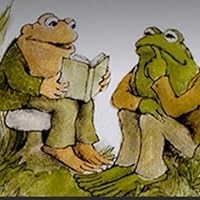
𝕴𝖙'𝖘 𝕿 𝖆𝖓𝖉 𝕯, 𝕯𝖆𝖑. 𝕯𝖔𝖓'𝖙 𝖋𝖔𝖗𝖌𝖊𝖙 𝖙𝖍𝖆𝖙.
And now, ladies and gentlemen and those who identify otherwise, I present to you, the ending :
2.7-last people-on-earth/5
🎞️Credits I would like to thank Netgalley for the advanced copy of the book.
Shards is the third novel by British author, Bob Palmer, this one quite a departure from his usual genre, so written as Jack Wakefield. At almost eleven years old, the very last thing Dallin Smith expects to be doing is walking along the highway with his best friend, Taylor, looking for food, and living adults. A wholesome upbringing as a Mormon boy in the cave his father blasted out of Utah rock, and the complete absence of any media, has not prepared him for the effects of a highly lethal global pandemic. Lockdowns and looting were heard about on his father’s CB radio, but seemed remote, unlike the massacre of his whole family.
Dallin’s motivation is filling his stomach, and finding someone who can take charge, look after him and Taylor. The slightly older boy turned up out of the blue at the hospital where Dallin was recovering from bacterial meningitis, claiming to be distant family. He lived for some two years with Dallin’s family: moms, dad and siblings before suddenly, inexplicably leaving. And now, here he is, just when Dallin needs him; they seem, at first, to have the same agenda.
The boys head to Moab, checking farmhouses on the way, scavenging for food, clothing and other necessities, with little success, until they reach the town proper. What they do find, to their dismay, is many bodies. They seek out a safe place to stay, explore the town and uncover hidden caches that will see them through for a while. But if Taylor is content with, even prefers, their solitary existence, Dallin still longs for the company of an adult who can teach them what they need to know, and care for them if anything happens.
With Taylor reluctantly in tow, they head south on purloined bicycles, finding much the same in Monticello: no food and not a living soul until, just before turning back for Moab, Dallin scans the hills with appropriated binoculars and spots washing flapping on a line near a cabin, and a person. Jacko, when they finally reach him, turns out to be a crusty old recluse, but is the answer to Dal’s prayer, even if Taylor doesn’t agree.
He later observes “I reckoned my dad would have liked him because they had a lot in common – the dislike of authority, the wariness of strangers and the importance of learning practical skills.” In Taylor, he eventually recognises “his cruel streak, his bullying instinct, his ability to push me in directions I’d rather not have gone”, using emotional blackmail on Dal’s insecurity and fear of abandonment.
Palmer gives the reader some solid, likeable characters whose reaction to the challenges they face is credible and realistic. It’s virtually impossible not to hope for Dallin’s survival, not to be grateful that Jacko is the sort of man he needs. On the spectrum between the COVID-ravaged world with which we are now all too familiar, and Stephen King’s The Stand, Palmer’s setting sits closer to the latter. A powerful and moving read, this is Palmer’s best yet. This unbiased review is from an uncorrected proof copy provided by the author.
The fascinating thing about this book is that it was written before COVID. I understand holding back publishing it entirely. It predicts a desolate future after a virus, and human nature, brings civilisation down completely.
While the setting is interesting, it's how the unfortunate surviving child handles this and the progression of their mental health that kept me engaged. The tone seems to grow slightly more mature as the book progresses, and if this is supposed to reflect the character writing it falling in love with the art then it's very impressive.
Ultimately a very solid book, that didn't quite give me the overbearing sense of loneliness and dread that The Road did, but does a good job of making you cling to the hope of survival.
This ARC was provided by the publisher via Netgalley in exchange for an honest review. Thank you to both Netgalley and the publisher for allowing me to read this book prior to its release.
An eleven-year-old boy is forced to fight for survival after a virus devastates the world. Alongside his best friend, Taylor, Dal sets out with two goals: stay alive and find adults who can take care of them. Dal can be frustrating at times, often swinging between moments of surprising common sense and impulsive decisions driven by immediate gratification. Still, given his age, those inconsistencies feel realistic, even if he occasionally underestimates himself.
Taylor’s introduction is a bit abrupt. He’s simply there, with little explanation, and I found myself flipping back to see if I’d missed something. This is partially addressed later, though a clearer introduction would have helped. The pacing is generally strong, but some time jumps pulled me out of the story. While they add context, a bit more mystery might have worked just as well. Where the book truly shines is its world-building. The setting is immersive, and a constant undercurrent of tension keeps the story moving. Dal is a well-written character overall, even when he’s exasperating. I was less enthusiastic about what happens to Rocky, as I have a soft spot for animals, and I would’ve loved to see Dal grow alongside a loyal dog.
Overall, this was an engaging and well-crafted read, and I’d happily recommend it. I’d also be very interested in a follow-up.
This is the third novel I read by this author (he published the two before under his own name, Bob Palmer), and, although it is very different in style and plot from the previous two (that were satirical comedies with a dark undertone), I have enjoyed it as well. Let me start by recommending the author’s note at the end of the book, as it helps understand the reasons why the author decided to use a different name when he published this book, and also to appreciate the circumstances of its publication, because the book was ready 6 years ago, and it was finally published only a few months ago. If the plot might have felt very improbable at the time of writing, that is not the case any longer; quite the opposite. This novel, written in the first person, is a coming-of-age story, but not that of an adolescent who goes through the usual difficulties all youths have to face. Dallin Smith (Dal) is not your usual teenager when we meet him, as he has been brought up in a pretty peculiar family, in a community of survivalists who live quite isolated from the rest of the population. To make matters worse, a pandemic arrives with dire consequences for his family and for humanity at large, and he ends up the lone survivor of the little community. He wants to find an adult to look after him, but that proves complicated, although at least he can count on his friend, Taylor, who is always there in time of need. Together, the duo manages to move away and find food and other necessities, but although Taylor is quite happy with the situation, Dal still wants to find an adult who can take care of them. After several attempts, they meet Jacko, a man much older than his father who seems to have led a pretty isolated life even before the pandemic. Thankfully, he is quite happy to guide Dal and teach him all (or almost all) he needs to know to survive. The plot of the story is not complicated, and it is made up of Dal’s experiences and adventures, first at home with his family (a small section of the book) and then in the post-apocalyptic world (which makes up most of the novel). As you can imagine, this is not a novel with many characters, but it is full of adventures, and Jacko, who loves books, recommends The Swiss Family Robinson, and Robinson Crusoe as readings to both boys, and those seem pretty apt recommendations considering the circumstances. In my case, the story reminded me of a Catalan novel I read in school, called Mecanoscript del segon origen (Typescript of the Second Origin) by Manuel de Pedrolo, which I love. Apart from the adventures and the process of Dal learning everything necessary to survive in this new world order (and that includes reading and writing, apart from some more hands-on stuff), the book also digs deep into Dal’s psychology, his feelings, doubts, and shadows. He is polite, decent, tries to behave according to the rules of morality he was taught, and tries hard to be good, but at times he seems to be easily influenced by Taylor, who isn’t always an upstanding citizen (if there can be such a thing in a post-apocalyptic world). Both Jacko and Taylor try to gain Dal to their way of seeing and doing things, and although he tries to avoid it, Dal knows he might be forced to choose only one. The plot makes it sound like a cut-and-dry story, but the book is not without its surprises, and one of them is pretty major. At least in my case, it took me quite a while to reach the right conclusion, but once I did, thinking back about what had happened, it all made sense. (I won’t go into any more detail to avoid spoilers). I liked most of the characters (Taylor not so much at times), especially Jacko with his love of books, his acceptance of the boys' arrival, and his taking up a paternal role with them. I also loved the descriptions of the different places and the dramatic landscapes, that play a very important part in the story (and were a big inspiration for the author), and after all we have experienced, it is difficult to read this book and not wonder what we would have done in Dal’s situation and worry that perhaps we might not have managed as well as he does (no matter how old we are). Despite all that happens, the novel ends on a pretty hopeful note, and the themes of personal growth, forgiveness, second chances, and acceptance of moral ambiguity play big parts in this novel that demonstrates that Bob Palmer can write compelling and unforgettable characters no matter what genre he chooses. Highly recommended. Thanks to NetGalley and to the author for providing me with an ARC copy of this book, which I freely chose to review.
Shards by Jack Wakefield, Dallon Smith lives with his parents who live off the grid with two other families and has a happy life his dad is a polygamist but that is all Dal knows and his other mothers are very nice. At the age of 8 he gets really sick and has to stay in the hospital with meningitis where he almost dies and where he meets Tyler. When he gets ready to leave the hospital Tyler asked if he could come home with him and when Dal ask his mom Christie she gives him a generic answer and so Tyler goes to live with the family. At first everything is hunky-dory and Tyler really enjoyed himself but soon they start fighting like real brothers and Tyler decides to leave. It isn’t long before Dal‘s dad Al learns on his ham radio that there is a disease called the Armageddon flu that is taking people out but because they live off the grid they decide to pull their provisions with the other families and hold tight until everything is over. The only problem is soon they have gangs of people searching for food and they come up on else compound. despite a good fight the men are outnumbered and when it’s all said and done everyone is dead except for Dal. he is devastated to see his whole family dead and threw the shock he passes out but when he wakes up his friend Tyler is back and wants to partner up to try and survive this apocalypse. Dal was raised to be very polite he’s smart and a kind boy but Tyler isn’t so polite and can be very aggressive this is why all Dal wants to do is find a grown-up because he’s only 10 and Tyler is 11 this takes them on a journey through the seasons although Dal appreciate having Tyler at times he scares him and even has missing time when Tyler has done things he doesn’t agree with. they’re living off the land finding no people alive at all and despite seemingly alone Tyler can still be very possessive but when they find Jacko this is when things immediately get better but slowly takes a turn for the worse. The author’s real name is Bob Palmer and he has this way of glueing me to the pages to where I don’t want to sleep or put the book down until I am finished so when I started this book I was prepared for that, because this book was so good so compelling so absolutely readable I love a book that starts in one place and turns into something absolutely different by the end and trust me when I say this story is a journey I felt so bad for Dow and soon Jacko and despite there’s no happy ending there is a very satisfying one. I love this book love this author and absolutely recommend it.#NetGalley, #TheBlindReviewer, #MyHonestReview
A pandemic destroys a kid's life who quite literally has been living under a rock up until now. Now the almost 11 year old Dal must navigate the empty streets in search of food with his best friend Taylor. There seems to be no one else left alive, but Dal is adamant about finding a grown up to help them survive.
What I liked ‣ world building ‣ well paced ‣ The Stand vibes (Stephen King)
What I disliked ‣ the ending
Review
Overall well written book, although a little confusing at times. I especially liked Jacko as a character.
The ending took me out a little. I think the story would've been better without that aspect, but it also explains some things that didn't maybe add up completely. Or it could've leaned more into it, it was kind of awkward like this.
Thanks NetGalley for the advanced copy! I lived in Moab for eleven years. I was immersed in the story that is loosely based on a polygamist colony that lived in caves half way between Moab and Monticello on the edge of Canyonlands National Park. The 50 mile stretch of highway between the small high desert towns is accurately depicted, including the new development of homes around Wilson Arch and the zany tourist spot called Hole In The Rock. Yes, there is a Wells Fargo on the corner of Center and Main across the street from Pasta Jay’s where I waited tables! Many transients move to Moab to escape the hustle of big cities; there is a leftover toughness from this old mining town that is shown in Dal’s grit. A great, wide, gritty plot that had me read in one sitting. Highly recommend!!
I really enjoyed this book. I was truly not expecting the ending and for things to turn out the way they did. I did not want it to be over!
MINOR SPOILERS AHEAD
Things I liked- - I loved the post apocalyptic setting - I loved the adventures of the boys - How could I not love Jacko? - I thought there eas decent character development
Things I did not like- - I wish the author had spent less time with just the boys and more time with Jacko - I wish the ending had been slightly different. I would have loved to see Dallin meet more people and have a small community of survivors - I would have really like Jacko and Dallin to have had more time together
I received an ARC from Netgalley and did not know what to expect, but I ended up really enjoying it and was totally shocked at the end. I very rarely am that suprised by an author and I enjoyed that little twist.
Asa 10 year old boy Dallin endured a lifetime of experiences and he grew as he aged.
The book did leave me wanting more Jacko in my life ,and people like him. I wish the book spent more time on that relationship. It didn't seem rushed necessarily, just left me wanting more.
I would also just have like a little more information on the rest of the post apopolyptic world.
In equal measure thought provoking, moving and frightening
Extremely well written and paced with an unexpected twist in the final resolution. I was gripped, surprised, moved and most of all thoroughly entertained. Congratulations Jack / Bob on another fantastic literary achievement.
I liked this as a fan of post apocalyptic fiction. this was a unique story from the perspective of a child living through a world changing pandemic. it was very fresh and included plenty of aspects you dont normally see in the genre which I liked. the character voice was very strong and we see so much growth as he comes to terms with a new reality.
This book was a very good surprise and I am glad I gave it a chance. I noticed in the summary it was perfect for fans of Station Eleven, which is one of my favorite dystopian books, and I think it hit the mark for me.
We start with Dallin who grows up in a family where a husband has multiple wives and multiple children, all who live off the grid of society by being self sustaining within their own community. As the world outside of their community falls to a plague, Dallin has to grow up fast in order to survive in a world that is trying to take everything from him.
One of the points which I had to remind myself, was Dallin is only 10 when the book starts. He feels like he's had to mature quickly in his family group so he has some mature thoughts which come across the page as an older person. Once the pandemic hits, Dallin does not fully understand how it's going to effect him until his family is massacred and he has to find the motivation to survive. He is joined by a boy named Taylor who had joined his family for a short period earlier on in the book but left without any explanation. I wasn't certain if I would like Taylor since the beginning parts of the book made him feel unreliable, but ultimately I was incredibly invested in seeing this book through to the end.
I am so glad I picked it up. Though a heavier theme, it was well worth the read. I saw it mentioned somewhere this book was written before the pandemic which actually happened which gives this story an even more ominous tone but I also understand why the author would hold off on publication.
A young boy - Dallin - finds himself almost alone in a post-pandemic world which has seen the population wiped out and all structures of society and civilization cease to work. He's left with his friend Taylor who may or may not be the kind of friend he needs. Together they strike out to try to find adults, adults representing hope, normality, support. Dallin, especially, just wants to be taken care of.
This a quiet and interesting take on the post-apocalyptic genre. Some of the normal tropes are there and while they're used to progress the story, they're not nearly as prevalent as you'd expect and that's a good thing in this novel and this genre. The author evokes an empty yet threatening world very well. It's not as utterly bleak as McCarthy's 'The Road' but for an 11-year-old boy it's as empty and frightening.
I don't want to oversell this comment or put pressure on the author but there's a flavor of Ray Bradbury in the story and the writing - both from his sci-fi/scary stories and his 'Dandelion Wine'-type novels. Quiet, deceptively simple, engaging but powerful.
This was an alright read. It took me a while to get into it (I started and stopped a few times in those first chapters). Once the pandemic happened and it was just Dallin and Taylor I did enjoy it more, but the main character being a 10/almost 11 year old didn't work that well for me. I thought some things that were revealed later were pretty obvious, but I still enjoyed it overall.
Dal is all alone at the end of the world until his bff Taylor shows up. His family was murdered by bad men who came and stole their supplies and he must venture out to find food and water and look for an adult to help him survive. In general I really enjoy these kind of quiet end of the world stories that not just horrible situation after horrible situation trying to survive. This one was not as emotionally engaging as I would have liked, but interesting enough to keep me reading. Overall a good read.
Thanks to NetGalley, the author, and the publisher for a copy of this book
The one you should trust the most may just be the one to fear the most. Watch as the world he knew is no longer recognizable as the world he had lived in. Trust should be easy but that may be the most dangerous thing to do in this new world. See just where it will take him when he meets them I received an advance copy from hidden gems and an intriguing read