

What do you think?

Quaint Folk
The Wicker Man meets The Twisted Ones in Bitter Karella’s Quaint Folk—a queer folk horror novel that peels back the idyllic veneer of a seemingly perfect island town to reveal the rot beneath.
From the outside, it looks like Jessica has the perfect life. She's a stay-at-home mom, married to a man with a respectable job, raising a son they adore. Her family is as wholesome as all-American pie. But deep down, Jessica knows there's something wrong with her; she knows she can't escape her past.
When her husband’s job has them move abroad, Jessica thinks this is her chance for a fresh start. On the remote island of Hasenhurst, the modern world can’t get in. The people there grow their own herbs, make their own jam, and mind their own business. They believe in folk tales and the power of dreams. They tell visitors, we’re a quaint, quiet people. The right sort of family would do well here.
Jessica is determined to be the right kind of person for a family—and a life—like this. But as she tries to befriend the townsfolk and learn their ways, she soon realizes that beneath the town’s cozy idyll, something sickly-sweet and rotten lays buried...
From the outside, it looks like Jessica has the perfect life. She's a stay-at-home mom, married to a man with a respectable job, raising a son they adore. Her family is as wholesome as all-American pie. But deep down, Jessica knows there's something wrong with her; she knows she can't escape her past.
When her husband’s job has them move abroad, Jessica thinks this is her chance for a fresh start. On the remote island of Hasenhurst, the modern world can’t get in. The people there grow their own herbs, make their own jam, and mind their own business. They believe in folk tales and the power of dreams. They tell visitors, we’re a quaint, quiet people. The right sort of family would do well here.
Jessica is determined to be the right kind of person for a family—and a life—like this. But as she tries to befriend the townsfolk and learn their ways, she soon realizes that beneath the town’s cozy idyll, something sickly-sweet and rotten lays buried...
350 pages, Kindle Edition
Published October 6, 2026
Ratings & Reviews
Friends & Following
Create a free account to discover what your friends think of this book!
Community Reviews
Displaying 1 - 30 of 134 reviews
September 10, 2026
What a weird little book with the perfect weird little cover. It's described as "cottage gore" and while I will put that onto the list of my favorite genres immediately, I think that this book left room for improvement in many ways. It's such a weird time and I was completely captivated by that, but things also got a bit convoluted and messy in the end. The story follows a family moving from the US to a remote British island for the summer because the father got work there. He kinda works in tech and it's unclear to everyone what he could possibly be doing on an island where the wi-fi signal isn't just spotty but simply nonexistent. But that's not Jessica's problem. She will be the ever-smiling and caring wife, supporting her husband in every way. She also wants to support their child Sandy, but she is really struggling with understanding their nonbinary and witchy identity lately. The whole family is out of place in the small town of Hasenhurst, where people are really into rabbits, live a modest life and still value the old ways. Long story short: things are just a little weird there. The people look and act like characters in a children's book and everyone has a silly name and often wears cute costumes. They are all really excited for the Tigglestide festival that's just around the corner and everyone makes sure that they are on their best behavior because Round Robin will come to town and he will punish everyone who is out of line. What could possibly go wrong in such a charming place?
The author did a great job with creating an atmosphere of creeping dread. There are only a few visceral scenes in the entire book and the town people are mostly friendly, but I always had the feeling that Jessica and Sandy were in constant danger (I couldn't care less about Greg, the father). It's still more of a weird-horror than a scary-horror book in my opinion. A whole what-the-hell-am-I-reading-here moment. I was quite on board for that, but some things also ended up being unsatisfactory and led nowhere in the end. I still don't understand why Greg would ever be sent to this island in the first place, even though it was revealed what he was working on. I just hated him. Jessica and Sandy were both very over-the-top, but I got a good grasp on their personalities as the story went on. The problem with them was that they had so much going on that their plotlines also ended in unsatisfactory ways and rather abruptly. I also think that the actual message of the book got muddled in between all the weirdness and I'm not sure what I'm supposed to take from this story. Something about the desire to belong? About conformity being an illusion and obedience being a trap? About rabbits being untrustworthy? I don't really know and the ending left many questions unanswered. But I guess it was a weird ending for a weird book and thus fitting. Overall this felt like an old-timey children's book on drugs, and I do mean that as a compliment. 3.5 stars.
Huge thanks to NetGalley and Little, Brown Book Group UK | Run For It for providing a digital arc in exchange for an honest review.
The author did a great job with creating an atmosphere of creeping dread. There are only a few visceral scenes in the entire book and the town people are mostly friendly, but I always had the feeling that Jessica and Sandy were in constant danger (I couldn't care less about Greg, the father). It's still more of a weird-horror than a scary-horror book in my opinion. A whole what-the-hell-am-I-reading-here moment. I was quite on board for that, but some things also ended up being unsatisfactory and led nowhere in the end. I still don't understand why Greg would ever be sent to this island in the first place, even though it was revealed what he was working on. I just hated him. Jessica and Sandy were both very over-the-top, but I got a good grasp on their personalities as the story went on. The problem with them was that they had so much going on that their plotlines also ended in unsatisfactory ways and rather abruptly. I also think that the actual message of the book got muddled in between all the weirdness and I'm not sure what I'm supposed to take from this story. Something about the desire to belong? About conformity being an illusion and obedience being a trap? About rabbits being untrustworthy? I don't really know and the ending left many questions unanswered. But I guess it was a weird ending for a weird book and thus fitting. Overall this felt like an old-timey children's book on drugs, and I do mean that as a compliment. 3.5 stars.
Huge thanks to NetGalley and Little, Brown Book Group UK | Run For It for providing a digital arc in exchange for an honest review.

August 28, 2026
Quaint Folk by Bitter Karella is deeply unsettling folk horror that starts with a charming small-town atmosphere in the small fictional Scottish village of Hasenhurst. The story gradually builds before revealing something much darker underneath. The strange traditions, disturbing behavior, and growing sense that the town itself is watching create a constant feeling of dread. As the story progresses, the line between ordinary life and nightmare becomes increasingly blurred.
Some may take issue with the intentionally ambiguous ending which can make it feel confusing. The central idea is that Hasenhurst’s folklore may not simply be an objectively existing supernatural force. The story suggests that belief, conformity, and collective storytelling give the folklore its power.
The important revelation is that the people of Hasenhurst aren’t simply following an old superstition. The community’s ideas about who is “right” and who is “wrong” become a mechanism for enforcing conformity. People who don’t fit the town’s expectations can effectively become the targets of its mythology. The pressure to conform can survive even after the immediate supernatural threat appears to be over.
I give this one a strong recommendation with 4 stars. The novel will be released October 6, 2026. Thank you to NetGalley for letting me read in advance.
Some may take issue with the intentionally ambiguous ending which can make it feel confusing. The central idea is that Hasenhurst’s folklore may not simply be an objectively existing supernatural force. The story suggests that belief, conformity, and collective storytelling give the folklore its power.
The important revelation is that the people of Hasenhurst aren’t simply following an old superstition. The community’s ideas about who is “right” and who is “wrong” become a mechanism for enforcing conformity. People who don’t fit the town’s expectations can effectively become the targets of its mythology. The pressure to conform can survive even after the immediate supernatural threat appears to be over.
I give this one a strong recommendation with 4 stars. The novel will be released October 6, 2026. Thank you to NetGalley for letting me read in advance.
This entire review has been hidden because of spoilers.

Review of advance copy received from Publisher
Review in the September 2026 issue of Booklist and on the blog: https://raforall.blogspot.com/2026/09... (link line 9/10/29 at 7 am)
Three Words That Describe This Book: great world building, folk horror, tongue in cheek
Other words: fun, witchy, queer norm, of course-- quaint and traditions-- these are words used throughout the story and they begin cozy and slowly and deliberately build to creepy and then terrifying. That was very well done.
This book is fun, original and smart. But the smart, sardonic parts are subversively hidden by the horror fun. Karella understands horror, like really understands the genre. They play with all of it in a way that horror fans will love. Everything is just tongue-in-cheek enough. It never goes too far. And readers could just enjoy the story without engaging in the satire but when you do, it is better.
Now on to the story itself. We have a third person omniscient narration style where the reader is able to be in Jessica's POV and Sandy's. Jessica is the mom, a bit of a ditz, a homemaker with really no identity or personality, married to Greg a VP at a generic internet company that Jessica has no idea what it does. She supports her husband and looks pretty. Is she happy, no? But she really doesn't;t expect to be.
Sandy is the 15 year old nonbinary, purple haired kid in the family. First, I love that Sandy just is non binary. The parents do not care. They correct others as to Sandy's pronouns and everyone is just fine with it. This is always a treat, a story where someone is queer and just existing as queer and the fact that they are queer is not a key part of the story. But Sandy is also an aspiring witch. Their parents think this is a cute hobby, but Sandy is very serious about it. Something readers learn fairly quickly.
The family moves to the British island of Hasenhurst. The dad is sent there over the summer to help move the remote, quaint, and traditional island and its people into the 21st Century with his company's help.
Readers know through Chapter 0 though, even before the family makes the trip, that the house they will be staying in holds secrets and has powers. This allows unease to settle over the story even before readers start hearing about how "quaint" and dedicated to tradition this island is. There is the fog and the moors once they get there to help set the stage, but readers already know not to trust the friendly locals.
This works very well because it allows Karella to double down on the world building of Hasenhurst and push how far they can take it juxtaposing the silly with the horror. In the hands of a less talented author this would have been a mess. Really only Chuck Tingle can do this as well.
The story also has a great frame to increase the pacing, dread, and horror as from the start readers are told everything is unfolding leading up to "Tigglestide." We have these headings even before we arrive in Hasenhurst, way before we all start to learn (along with Jessica, Sandy, and Greg) what it is. The story begins with One Week Till Tigglestide Eve and goes to Tigglestide Day for the ending. This compressed time frame is a great pace increasing device. This is a 300+ page book and there is a lot of world building that has to happen, but the fake days/holidays marking the time before Tigglestide comes are perfect. As we march closer even the names of the days that lead up to Tigglestide get more unsettling.
This is a folk horror that leans in to its folk horror. And I don;t want to say much more than that. You want to enjoy a sold read that doesn't take itself too seriously even though it is consciously constructed with intention and then also makes sure to hide the effort so that readers can enjoy it (but I see you Karella), this is a solid choice.
Also I haven't even mentioned the quotes at the top of the chapters that are from fiction books.Theses add a lot of context to the world and help to ratchet up the unease throughout the story.
A perfect read for fans of Chuck Tingle-- the same vibes-- smart, irreverent, fun, all told with a deep understanding of the genre of horror. But if readers want folk horror that is similar try Slewfoot by Brom or Stay Buried by Jennifer McMahon.
The marketing says Wicker Man meets Twisted Ones (Kingfisher) which works but the comps I have are more precise as to the type of reader who will enjoy this one. The publisher comps are more trying to ride coattails than actually think about the reader.
Three Words That Describe This Book: great world building, folk horror, tongue in cheek
Other words: fun, witchy, queer norm, of course-- quaint and traditions-- these are words used throughout the story and they begin cozy and slowly and deliberately build to creepy and then terrifying. That was very well done.
This book is fun, original and smart. But the smart, sardonic parts are subversively hidden by the horror fun. Karella understands horror, like really understands the genre. They play with all of it in a way that horror fans will love. Everything is just tongue-in-cheek enough. It never goes too far. And readers could just enjoy the story without engaging in the satire but when you do, it is better.
Now on to the story itself. We have a third person omniscient narration style where the reader is able to be in Jessica's POV and Sandy's. Jessica is the mom, a bit of a ditz, a homemaker with really no identity or personality, married to Greg a VP at a generic internet company that Jessica has no idea what it does. She supports her husband and looks pretty. Is she happy, no? But she really doesn't;t expect to be.
Sandy is the 15 year old nonbinary, purple haired kid in the family. First, I love that Sandy just is non binary. The parents do not care. They correct others as to Sandy's pronouns and everyone is just fine with it. This is always a treat, a story where someone is queer and just existing as queer and the fact that they are queer is not a key part of the story. But Sandy is also an aspiring witch. Their parents think this is a cute hobby, but Sandy is very serious about it. Something readers learn fairly quickly.
The family moves to the British island of Hasenhurst. The dad is sent there over the summer to help move the remote, quaint, and traditional island and its people into the 21st Century with his company's help.
Readers know through Chapter 0 though, even before the family makes the trip, that the house they will be staying in holds secrets and has powers. This allows unease to settle over the story even before readers start hearing about how "quaint" and dedicated to tradition this island is. There is the fog and the moors once they get there to help set the stage, but readers already know not to trust the friendly locals.
This works very well because it allows Karella to double down on the world building of Hasenhurst and push how far they can take it juxtaposing the silly with the horror. In the hands of a less talented author this would have been a mess. Really only Chuck Tingle can do this as well.
The story also has a great frame to increase the pacing, dread, and horror as from the start readers are told everything is unfolding leading up to "Tigglestide." We have these headings even before we arrive in Hasenhurst, way before we all start to learn (along with Jessica, Sandy, and Greg) what it is. The story begins with One Week Till Tigglestide Eve and goes to Tigglestide Day for the ending. This compressed time frame is a great pace increasing device. This is a 300+ page book and there is a lot of world building that has to happen, but the fake days/holidays marking the time before Tigglestide comes are perfect. As we march closer even the names of the days that lead up to Tigglestide get more unsettling.
This is a folk horror that leans in to its folk horror. And I don;t want to say much more than that. You want to enjoy a sold read that doesn't take itself too seriously even though it is consciously constructed with intention and then also makes sure to hide the effort so that readers can enjoy it (but I see you Karella), this is a solid choice.
Also I haven't even mentioned the quotes at the top of the chapters that are from fiction books.Theses add a lot of context to the world and help to ratchet up the unease throughout the story.
A perfect read for fans of Chuck Tingle-- the same vibes-- smart, irreverent, fun, all told with a deep understanding of the genre of horror. But if readers want folk horror that is similar try Slewfoot by Brom or Stay Buried by Jennifer McMahon.
The marketing says Wicker Man meets Twisted Ones (Kingfisher) which works but the comps I have are more precise as to the type of reader who will enjoy this one. The publisher comps are more trying to ride coattails than actually think about the reader.
Review of advance copy received from NetGalley
Quaint Folk is the perfect book to read for summerween (even if the story actually takes place more in winter but shhhhh), like if we aren't already adding folk horror to our summerween reading plans, we absolutely should be!
In Quaint Folk we follow Jessica, her husband Greg, and 15 year old child Sandy as they travel to Hasenhurst for Greg's job. At a glance Hasenhurst is an idyllic village to live in, where all the residents are friendly, the children are suspiciously well behaved, and the modern world seems not to have touched the island. However, things are not quite what they seem as the village prepares for the impending holiday of Tigglestide.
While reading this I was fully in love with the aesthetics and the tone of the book. The aesthetics were very Wicker Man (the 1973 movie, not the 2006 Nic Cage remake) with a metric fuckton of rabbits, people in fun, silly costumes, and cute woodland creatures in waistcoats. LOOOOVVVEEE! The tone also did lean more horror comedy than horror which did take me aback initially but once I leaned more into the comedic tone I was back to having a good time. I think the author did a fantastic job of building a sense of creeping dread throughout the book and making you feel like something isn't quite right in Hasenhurst even while you're giggling at the dialogue.
I also really enjoyed following Jessica's and Sandy's journeys throughout this book. Jessica is trying desperately to blend in due to past religious trauma and a previous relationship that ended badly, both of which she's trying to cover up by throwing herself into the town's celebration of Tigglestide. Sandy is Jessica & Greg's kid who is a nonbinary folkloric witch who knows something's up in this village and is doing their best to get to the bottom of it. Jessica and Sandy frequently clash in their ideas of what's going on and this definitely adds to the overall drama of everything else going on. There's also a subplot with Jessica and the lord mayor's wife, Molly, but we can't get into it because of mild spoilers, but Jessica & Molly were some of my favorite parts of the book.
I think what stopped this from being a 5 star read however was there was a lot of stuff going on. There was a trying to get Hasenhurst into the modern age subplot, a Round Robin subplot, Sandy's investigation subplot, Jessica's feelings about her parents, past relationship, Molly, struggling with fully accepting Sandy's identity, and failing marriage with Greg subplot and honestly it was a little too much. Also Jessica is writing a book during all of this too and I thought it was cute but it didn't really go anywhere. There was a point where I thought Jessica being a writer would tie into one of the subplots but it didn't so it ended up being just yet another thing to keep track of. A lot of really amazing ideas that weren't fully developed unfortunately.
Also I'll be the first to say it, I was a little confused by the ending as it was a bit ambiguous but I think a reread when this is published might resolve my confusion. Overall a really good addition in the folk horror genre, Bitter Karella is an author I'd like to keep my eye on to see what they come out with next in the future.
Thanks to NetGalley and the publisher for the opportunity to read an advance DRC and provide an honest review, all opinions are my own.
In Quaint Folk we follow Jessica, her husband Greg, and 15 year old child Sandy as they travel to Hasenhurst for Greg's job. At a glance Hasenhurst is an idyllic village to live in, where all the residents are friendly, the children are suspiciously well behaved, and the modern world seems not to have touched the island. However, things are not quite what they seem as the village prepares for the impending holiday of Tigglestide.
While reading this I was fully in love with the aesthetics and the tone of the book. The aesthetics were very Wicker Man (the 1973 movie, not the 2006 Nic Cage remake) with a metric fuckton of rabbits, people in fun, silly costumes, and cute woodland creatures in waistcoats. LOOOOVVVEEE! The tone also did lean more horror comedy than horror which did take me aback initially but once I leaned more into the comedic tone I was back to having a good time. I think the author did a fantastic job of building a sense of creeping dread throughout the book and making you feel like something isn't quite right in Hasenhurst even while you're giggling at the dialogue.
I also really enjoyed following Jessica's and Sandy's journeys throughout this book. Jessica is trying desperately to blend in due to past religious trauma and a previous relationship that ended badly, both of which she's trying to cover up by throwing herself into the town's celebration of Tigglestide. Sandy is Jessica & Greg's kid who is a nonbinary folkloric witch who knows something's up in this village and is doing their best to get to the bottom of it. Jessica and Sandy frequently clash in their ideas of what's going on and this definitely adds to the overall drama of everything else going on. There's also a subplot with Jessica and the lord mayor's wife, Molly, but we can't get into it because of mild spoilers, but Jessica & Molly were some of my favorite parts of the book.
I think what stopped this from being a 5 star read however was there was a lot of stuff going on. There was a trying to get Hasenhurst into the modern age subplot, a Round Robin subplot, Sandy's investigation subplot, Jessica's feelings about her parents, past relationship, Molly, struggling with fully accepting Sandy's identity, and failing marriage with Greg subplot and honestly it was a little too much. Also Jessica is writing a book during all of this too and I thought it was cute but it didn't really go anywhere. There was a point where I thought Jessica being a writer would tie into one of the subplots but it didn't so it ended up being just yet another thing to keep track of. A lot of really amazing ideas that weren't fully developed unfortunately.
Also I'll be the first to say it, I was a little confused by the ending as it was a bit ambiguous but I think a reread when this is published might resolve my confusion. Overall a really good addition in the folk horror genre, Bitter Karella is an author I'd like to keep my eye on to see what they come out with next in the future.
Thanks to NetGalley and the publisher for the opportunity to read an advance DRC and provide an honest review, all opinions are my own.

September 12, 2026
I received this book as an ARC from NetGalley. Thanks to all involved!
I rated this book 3.5 stars rounded up to 4.
Happy Tigglestide all! This is a folk horror and I saw someone call it “cottage gore” which I thought really summed it up (side note: this book isn’t splatter punk as I’ve seen this authors other books described as which I was happy to see because that’s not my thing- I wondered so I thought I’d mention in case anyone else did). All the characters and places and event in this book seems really idyllic and lovely but you can see the cracks in it all and sense the underlying….wrongness of everything. There are some moments that reallyyyyy were unsettling and just down right made my skin crawl (the return to the last tuppances house, the bar scene with Greg the husband at the end and pretty much anything to do with ole round Robbin) I feel like the characters were all really worked out well and they had flaws but in a way that made them more real.
The only things I’d change about this book is there’s some repetition that I feel could be cut out and maybe trim this down a bit. And I felt it started a little slow and it did take me a little bit to really get into the book but at about half way in I was really invested.
I rated this book 3.5 stars rounded up to 4.
Happy Tigglestide all! This is a folk horror and I saw someone call it “cottage gore” which I thought really summed it up (side note: this book isn’t splatter punk as I’ve seen this authors other books described as which I was happy to see because that’s not my thing- I wondered so I thought I’d mention in case anyone else did). All the characters and places and event in this book seems really idyllic and lovely but you can see the cracks in it all and sense the underlying….wrongness of everything. There are some moments that reallyyyyy were unsettling and just down right made my skin crawl (the return to the last tuppances house, the bar scene with Greg the husband at the end and pretty much anything to do with ole round Robbin) I feel like the characters were all really worked out well and they had flaws but in a way that made them more real.
The only things I’d change about this book is there’s some repetition that I feel could be cut out and maybe trim this down a bit. And I felt it started a little slow and it did take me a little bit to really get into the book but at about half way in I was really invested.
June 5, 2026
Thank you to NetGalley and the author Bitter Karella for an advanced copy in exchange for an honest review.
I am writing this review as someone in their 30’s, living an openly queer life for over a decade.
I finished the book, but ultimately I did not enjoy it due to potent queer-phobic themes. The book is advertised as queer and marketed to a queer audience, and the author as well is queer. There are two queer protagonists — a 15 year old non-binary protagonist, and their closeted lesbian vs bisexual mother who is unhappily married to a man. This much was apparent in the book’s synopsis and I requested the review copy knowing this much. However, the author constantly writes it so that supporting characters criticize the protagonists’ queerness: dredges up Jessica’s homophobic parents in nearly every scene, frequently digs at the non-binary teen’s identity exploration, and is otherwise very heavy-handed on harmful perspectives of queer people while granting grace after grace to the aloof, cisgendered husband, Greg.
Likely it is that the author is writing from personal experience, and this may be why it struck me so heavily. I was expecting horror, I was expecting satire, I was expecting psychological unease… I wasn’t expecting the book to feel so anti-queer, even though it boasted a predominantly queer cast. This absolutely negatively impacted my ability to enjoy the book, and I feel that other readers need to know beforehand. Frankly, this book made me sad.
Strip away these complaints and the book is good and has the potential to be great. Karella is skilled at contrasting a satyrical and over-the-top British town with the uneasy horrors that the night brings — the grotesque, the bitter, the psychologically harrowing. It reads like an adult “A Series of Unfortunate Events.”
I am writing this review as someone in their 30’s, living an openly queer life for over a decade.
I finished the book, but ultimately I did not enjoy it due to potent queer-phobic themes. The book is advertised as queer and marketed to a queer audience, and the author as well is queer. There are two queer protagonists — a 15 year old non-binary protagonist, and their closeted lesbian vs bisexual mother who is unhappily married to a man. This much was apparent in the book’s synopsis and I requested the review copy knowing this much. However, the author constantly writes it so that supporting characters criticize the protagonists’ queerness: dredges up Jessica’s homophobic parents in nearly every scene, frequently digs at the non-binary teen’s identity exploration, and is otherwise very heavy-handed on harmful perspectives of queer people while granting grace after grace to the aloof, cisgendered husband, Greg.
Likely it is that the author is writing from personal experience, and this may be why it struck me so heavily. I was expecting horror, I was expecting satire, I was expecting psychological unease… I wasn’t expecting the book to feel so anti-queer, even though it boasted a predominantly queer cast. This absolutely negatively impacted my ability to enjoy the book, and I feel that other readers need to know beforehand. Frankly, this book made me sad.
Strip away these complaints and the book is good and has the potential to be great. Karella is skilled at contrasting a satyrical and over-the-top British town with the uneasy horrors that the night brings — the grotesque, the bitter, the psychologically harrowing. It reads like an adult “A Series of Unfortunate Events.”
Review of advance copy received from Publisher
*Thank you to Union Square and Orbit for a complimentary arc of Quaint Folk. All opinions expressed are my own.*
The synopsis for Quaint Folk immediately piqued my interest, and while the cover definitely caught my eye, it was the description of “cottage gore” that made me pick it up the second I got my copy. I proceeded to inhale it like there was nothing else on earth I should be doing except disappear into its pages - and what a weird place to disappear into.
The sheer weirdness of this story was enthralling in its own right. The atmospheric dread builds beautifully, and the lore surrounding the island had me completely captivated. There’s something wonderfully unsettling about the world being created here, where even the more ordinary elements carry an undercurrent of unease.
That said, while I loved the story and its entire weird, eccentric vibe, I also found it frequently messy. There were multiple points where things didn’t quite make sense to me, and several plotlines seemed to have so much happening within them that they eventually felt like they weren’t going anywhere, or had me loosing track of where they went. By the time I reached the end, I was left wondering exactly what I was supposed to make of everything I had just experienced. Which felt just as weird as the story, because I had such a good time reading it.
I think Quaint Folk may have peaked a little too early for me. The further I got into the story, the more confused I became in the back of my head, and at times it felt like the book was trying to do a little too much at once. There were so many intriguing ideas that I occasionally wished the story would slow down and give some of them more room to settle into place.
Regardless of the messier elements, though, this is a great horror story. Not necessarily a scary horror, but an excellent weird one. I’m genuinely curious to see whether a reread would make everything click more naturally, because the lore, atmosphere, and eccentric plot were engaging enough that I never wanted to put it down.
If you’re looking for a different kind of horror - one where even the friendliest characters can leave you feeling vaguely uneasy - Quaint Folk is certainly worth wandering into.
The synopsis for Quaint Folk immediately piqued my interest, and while the cover definitely caught my eye, it was the description of “cottage gore” that made me pick it up the second I got my copy. I proceeded to inhale it like there was nothing else on earth I should be doing except disappear into its pages - and what a weird place to disappear into.
The sheer weirdness of this story was enthralling in its own right. The atmospheric dread builds beautifully, and the lore surrounding the island had me completely captivated. There’s something wonderfully unsettling about the world being created here, where even the more ordinary elements carry an undercurrent of unease.
That said, while I loved the story and its entire weird, eccentric vibe, I also found it frequently messy. There were multiple points where things didn’t quite make sense to me, and several plotlines seemed to have so much happening within them that they eventually felt like they weren’t going anywhere, or had me loosing track of where they went. By the time I reached the end, I was left wondering exactly what I was supposed to make of everything I had just experienced. Which felt just as weird as the story, because I had such a good time reading it.
I think Quaint Folk may have peaked a little too early for me. The further I got into the story, the more confused I became in the back of my head, and at times it felt like the book was trying to do a little too much at once. There were so many intriguing ideas that I occasionally wished the story would slow down and give some of them more room to settle into place.
Regardless of the messier elements, though, this is a great horror story. Not necessarily a scary horror, but an excellent weird one. I’m genuinely curious to see whether a reread would make everything click more naturally, because the lore, atmosphere, and eccentric plot were engaging enough that I never wanted to put it down.
If you’re looking for a different kind of horror - one where even the friendliest characters can leave you feeling vaguely uneasy - Quaint Folk is certainly worth wandering into.
Review of advance copy received from Publisher
It’s Tigglestide, folks! You better act right before Round Robin comes and you make him angry….
Quaint Folk follows a family that has been chosen to move abroad for the father’s special work project. They soon arrive at a remote island town that gets by without the use of modern electronics, who firmly believe in fairytales, and only will accept “the right kind of family.”
They try to fit in and embrace traditions as they have arrived during one of the town’s holidays, but something is not right here and although everyone seems overly sweet… the truth is seeping through.
This is a weirddd book but it's my kind of weird. The town has fully been indoctrinated into the belief of what seems to be a fairytale. There are a ton of folky aspects with a sense of creeping dread. The main characters we hear from are Jessica, the mother and Sandy, the child as they try to adapt to this new town and their way of life. Jessica is insufferable and is clearly dealing with massive amounts of internalized homophobia while actively attempting to raise a nonbinary child. Sandy is the only one that knows something fucking whacky is going on but of course no one everrr listens to the non-binary witch with colorful hair and strong opinions.
Quaint Folk follows a family that has been chosen to move abroad for the father’s special work project. They soon arrive at a remote island town that gets by without the use of modern electronics, who firmly believe in fairytales, and only will accept “the right kind of family.”
They try to fit in and embrace traditions as they have arrived during one of the town’s holidays, but something is not right here and although everyone seems overly sweet… the truth is seeping through.
This is a weirddd book but it's my kind of weird. The town has fully been indoctrinated into the belief of what seems to be a fairytale. There are a ton of folky aspects with a sense of creeping dread. The main characters we hear from are Jessica, the mother and Sandy, the child as they try to adapt to this new town and their way of life. Jessica is insufferable and is clearly dealing with massive amounts of internalized homophobia while actively attempting to raise a nonbinary child. Sandy is the only one that knows something fucking whacky is going on but of course no one everrr listens to the non-binary witch with colorful hair and strong opinions.

Review of advance copy received from Publisher
I settled in with my morning coffee and Bitter Karella’s Quaint Folk, thinking a charming little island village sounded like a wonderful place to spend a chilly fall morning. Thank you to Run For It the gifted book.. Why is it that every fictional town promising a peaceful, old-fashioned lifestyle inevitably has something horrifying hiding behind the homemade jam?
This is my first Bitter Karella novel, and what an introduction!
⭐️⭐️⭐️⭐️
Jessica appears to have everything she should want: a respectable husband, a lovely family, and a comfortable life. When her husband Greg accepts a job abroad, the family relocates to Hasenhurst, an isolated island village where technology is practically nonexistent and everyone seems suspiciously cheerful.
The residents make their own preserves, embrace peculiar traditions, and insist they’re simply quaint, quiet people. Naturally, I immediately distrusted every single one of them.
Jessica desperately wants to fit in, but she’s also hiding parts of herself that she’s spent years trying to forget. Meanwhile, her nonbinary teenager, Sandy, has absolutely no interest in pretending to be someone they’re not.
I found Sandy particularly interesting. Their relationship with Jessica brings an emotional layer to a story that could easily have relied entirely on creepy villagers and bizarre rituals. Jessica frustrated me at times, especially when she couldn’t recognize the contradictions in her own behavior.
And then there’s Round Robin. Let’s just say I’ll never look at certain woodland creatures quite the same way again.
What surprised me was the humor. Between the ridiculous village customs, exaggerated British expressions, and increasingly questionable festivities, I found myself laughing when I probably should have been concerned.
Beneath all that wonderfully strange folk horror is a story about identity, religious expectations, repression, and the terrible things people will do to belong.
The ending leaves plenty to think about, although I wouldn’t have complained about a few more answers.
An unusual, unsettling October read that makes small-town living look considerably less appealing.
What’s the creepiest fictional town you’ve ever visited through a book?
#QuaintFolk #BitterKarella #FolkHorror #HorrorBooks #Bookstagram #QueerHorror #HalloweenReads
This is my first Bitter Karella novel, and what an introduction!
⭐️⭐️⭐️⭐️
Jessica appears to have everything she should want: a respectable husband, a lovely family, and a comfortable life. When her husband Greg accepts a job abroad, the family relocates to Hasenhurst, an isolated island village where technology is practically nonexistent and everyone seems suspiciously cheerful.
The residents make their own preserves, embrace peculiar traditions, and insist they’re simply quaint, quiet people. Naturally, I immediately distrusted every single one of them.
Jessica desperately wants to fit in, but she’s also hiding parts of herself that she’s spent years trying to forget. Meanwhile, her nonbinary teenager, Sandy, has absolutely no interest in pretending to be someone they’re not.
I found Sandy particularly interesting. Their relationship with Jessica brings an emotional layer to a story that could easily have relied entirely on creepy villagers and bizarre rituals. Jessica frustrated me at times, especially when she couldn’t recognize the contradictions in her own behavior.
And then there’s Round Robin. Let’s just say I’ll never look at certain woodland creatures quite the same way again.
What surprised me was the humor. Between the ridiculous village customs, exaggerated British expressions, and increasingly questionable festivities, I found myself laughing when I probably should have been concerned.
Beneath all that wonderfully strange folk horror is a story about identity, religious expectations, repression, and the terrible things people will do to belong.
The ending leaves plenty to think about, although I wouldn’t have complained about a few more answers.
An unusual, unsettling October read that makes small-town living look considerably less appealing.
What’s the creepiest fictional town you’ve ever visited through a book?
#QuaintFolk #BitterKarella #FolkHorror #HorrorBooks #Bookstagram #QueerHorror #HalloweenReads

Read
July 5, 2026🌾🩸 Quaint Folk 🩸🌾
📖 Bookish Thoughts
My full review will be shared closer to the publication date.
✨ What to Expect
• Queer Folk Horror
• Creepy Small Town
• Isolated Island
• Family Secrets
• Psychological Horror
_ _ __
📅 Pub Date: October 6, 2026
Thank you to Orbit Books, and NetGalley for the advanced copy.
📖 Bookish Thoughts
My full review will be shared closer to the publication date.
✨ What to Expect
• Queer Folk Horror
• Creepy Small Town
• Isolated Island
• Family Secrets
• Psychological Horror
_ _ __
📅 Pub Date: October 6, 2026
Thank you to Orbit Books, and NetGalley for the advanced copy.

May 27, 2026
Thank you NetGallery for the eARC!
Wow. What a book.
I need like five deep dive video essays, a podcast episode, an author breakdown, and so so much more content for this book. I want to get into it all: the characters, how 2020 affected the youth, closeted marriage, the hare, and ahh!! I don’t know where to start talking about this book and where to end.
If you love fever-dream adjacent, queer bs, cult chaos, this is the one to read.
Just read it. Please.
Wow. What a book.
I need like five deep dive video essays, a podcast episode, an author breakdown, and so so much more content for this book. I want to get into it all: the characters, how 2020 affected the youth, closeted marriage, the hare, and ahh!! I don’t know where to start talking about this book and where to end.
If you love fever-dream adjacent, queer bs, cult chaos, this is the one to read.
Just read it. Please.
September 10, 2026
I’m a bit torn on this one. I wanted to rate it higher, as on paper I should love this. It’s very reminiscent of The Wicker Man, which I love, and it has a great and unique sense of humour that I can fully appreciate. But I just struggled to pick this up and keep it in my hands.
Based on the description, I knew the pacing would be slow, but perhaps it was just a bit too slow for me, and at times the discussion around the characters’ backstories and natures felt a little repetitive. I also would have liked more action and payoff at the end after such a long build up.
I would still highly recommend this to fans of folklore and horror. I imagine I’ll be in the minority here, but I was left wanting a bit more.
Thank you to NetGalley and the publisher for the free ARC provided in exchange for my honest review.
Based on the description, I knew the pacing would be slow, but perhaps it was just a bit too slow for me, and at times the discussion around the characters’ backstories and natures felt a little repetitive. I also would have liked more action and payoff at the end after such a long build up.
I would still highly recommend this to fans of folklore and horror. I imagine I’ll be in the minority here, but I was left wanting a bit more.
Thank you to NetGalley and the publisher for the free ARC provided in exchange for my honest review.

Did Not Finish
September 24, 2026 Review of advanced reader copy received from NetGalley in exchange for an honest review!
Sadly I think this book was just not for me and ended up being a dnf. There are plenty of people out there who I think will enjoy this story and the authors approach, I’m just not one of them.
I tried several times to connect to the story but it just wasn’t happening for me. However the premise and the folklore horror aspect of an isolated town are very intriguing. I liked that the author went outside of American folk horror, which I don’t particularly see a lot of. I will be keeping an eye out for other work from the author in the future as I do enjoy their storytelling and atmosphere building!
Sadly I think this book was just not for me and ended up being a dnf. There are plenty of people out there who I think will enjoy this story and the authors approach, I’m just not one of them.
I tried several times to connect to the story but it just wasn’t happening for me. However the premise and the folklore horror aspect of an isolated town are very intriguing. I liked that the author went outside of American folk horror, which I don’t particularly see a lot of. I will be keeping an eye out for other work from the author in the future as I do enjoy their storytelling and atmosphere building!
Review of advance copy received from NetGalley
This is a story I didn't know I needed until is curled up in my lap and took a nibble at my jugular. This has all the best elements, isolated community, old gods, hyperaware teens, creepy(in the nicest way) townsfolk, and an overburdened and overwhelmed mother who yearns to break her mold. I fell so deeply in love with this book because of the cracks in the facade and the emergence of secrets.
Thank-you, Orbit Books and Bitter Karella, for this complimentary copy. Opinions expressed in this review are entirely my own.
Thank-you, Orbit Books and Bitter Karella, for this complimentary copy. Opinions expressed in this review are entirely my own.

May 21, 2026
4 ⭐️
Thank you NetGalley for providing me with an ARC!
What happens when you decide to go on a business trip with your family to a quirky little British town with weird customs, a famous witchy author, and its own board game?!? You end up being indoctrinated into a cult… or religion… or whatever Tigglestide really is.
I really enjoyed this, it was a cool twist on a weird and isolated town. Unfortunately, the scariest thing about this was there is a chatbot in the town.
Thank you NetGalley for providing me with an ARC!
What happens when you decide to go on a business trip with your family to a quirky little British town with weird customs, a famous witchy author, and its own board game?!? You end up being indoctrinated into a cult… or religion… or whatever Tigglestide really is.
I really enjoyed this, it was a cool twist on a weird and isolated town. Unfortunately, the scariest thing about this was there is a chatbot in the town.

Review of advance copy received from Publisher
There were some things in this book that did not totally make sense, but I sure had fun reading it!

Review of advance copy received from NetGalley
Thank you to Orbit Books, Run For It, and NetGalley for providing me with a digital advanced reading copy.
Unfortunately, I knew this book wasn’t the one for me with this direct quote “Greg says that [technical gibberish], but I say [technical gibberish].”
If the author can not be bothered to do a 1 -2 minute Google search to find ANY term, I don’t even care if it’s made up this is Fiction after all, then why should I be bothered to continue reading? I do not think I have ever come across this in a book and I am not the audience for this type of writing style. Which is a stretch for me to even call it that.
Add that in with the amount of times I read Ungo.com™️ in just the first chapter (13 by my count) , I know myself as a reader well enough to put this book down, it’s not for me.
Unfortunately, I knew this book wasn’t the one for me with this direct quote “Greg says that [technical gibberish], but I say [technical gibberish].”
If the author can not be bothered to do a 1 -2 minute Google search to find ANY term, I don’t even care if it’s made up this is Fiction after all, then why should I be bothered to continue reading? I do not think I have ever come across this in a book and I am not the audience for this type of writing style. Which is a stretch for me to even call it that.
Add that in with the amount of times I read Ungo.com™️ in just the first chapter (13 by my count) , I know myself as a reader well enough to put this book down, it’s not for me.

Review of advance copy received from NetGalley
I received this e-arc from NetGalley in exchange for a fair review.
A scathing take-down of religious indoctrination and repression, Quaint Folk is unsettling yet somehow … fun?
On its front, the book is about an American family travelling to a small rural town in England, and slowly realizing something is off about the town. There’s what appears to be a supernatural element that could also not be supernatural, and part of the horror-fun of the book is trying to figure out whether this is a cult or a monster or what.
But the book has been themes than that- it deals heavily with religious indoctrination regarding gender roles and sexuality. To be clear, I find the trend of calling anything with LGBTQAI+ characters a “queer” story is actually detrimental to normalization, but in this case, queerness and homophobia are major themes and it deserves to be called a queer folk horror.
We have Sandy, a non-binary teen who uses their queerness as a shield, but the focus of the book is actually their mom Jessica, who we learn very early on has actively repressed the queer side of herself. Having nothing to distract herself with in the small town, she is forced to focus on what she’s been repressing for years. The town - in various ways - also makes this part of her resurface. Or, perhaps it’s Round Robin doing so?
The book also calls out the homophobic idea that the cis-centered nuclear family, where the father is the leader, is the “ideal” and does so by having Jessica so indoctrinated with this belief that her sense of self relies heavily on keeping up this facade. Jessica has a very interesting relationship with Sandy. There’s the typical parent/teenager tension, but Jessica also seems to be only performatively accepting of Sandy. The reason is clear - she’s torn: she feels such shame for her own sexuality that she wants to ensure Sandy feels the freedom to explore theirs, but she also internally resents Sandy because Sandy has the freedom Jessica didn’t. She keeps Sandy at a distance because Sandy’s queerness threatens to bring up thoughts of her own. It’s a really well-done dynamic - you never once doubt her love for her child, but there is a strain between them, a distance.
The way her point of view narrative works is fascinating - she “says” stuff that is so harmful or stereotypical, but we, the reader, understand that it’s her internalization. We’re meant to feel sorry for Jessica but also dislike her as a representation of imposed traditional family and gender roles.
The book itself is fast-paced; it takes place over only a few days, but it doesn’t feel rushed. The book is more atmospheric than scary - there wasn’t much that made me creeped out, just unsettled; there’s a great sense of foreboding, even when the side characters are in no way overtly threatening (in fact, they are almost trying to warn the family about how Round Robin expels the “wrong” kind of people, though we’re never explicitly told what that means until later). In this way, it’s very much a folk horror.
It also pokes fun at folk horror, as the town has the most ridiculous, over-the-top British-sounding names for things, like a caricature. There are some aspects of the book that are downright horror-comedy, which was a fun surprise.
The ending is very open-ended. I had to read it twice, and even then I had some questions. There were some other aspects that I could have used a bit more explanation for (some odd things about the town that sort of popped up but never resurfaced). I also think there was a hint about Greg but that might have been me really reading between the lines. And Jessica’s writing of a novel could have had more purpose. It was clearly a cathartic exercise for her regarding her sexuality and true feelings about her life, but it didn’t tie into the overall plot. These are all minor things, as overall, this book was incredibly readable, unsettling, and packed with social commentary.
A scathing take-down of religious indoctrination and repression, Quaint Folk is unsettling yet somehow … fun?
On its front, the book is about an American family travelling to a small rural town in England, and slowly realizing something is off about the town. There’s what appears to be a supernatural element that could also not be supernatural, and part of the horror-fun of the book is trying to figure out whether this is a cult or a monster or what.
But the book has been themes than that- it deals heavily with religious indoctrination regarding gender roles and sexuality. To be clear, I find the trend of calling anything with LGBTQAI+ characters a “queer” story is actually detrimental to normalization, but in this case, queerness and homophobia are major themes and it deserves to be called a queer folk horror.
We have Sandy, a non-binary teen who uses their queerness as a shield, but the focus of the book is actually their mom Jessica, who we learn very early on has actively repressed the queer side of herself. Having nothing to distract herself with in the small town, she is forced to focus on what she’s been repressing for years. The town - in various ways - also makes this part of her resurface. Or, perhaps it’s Round Robin doing so?
The book also calls out the homophobic idea that the cis-centered nuclear family, where the father is the leader, is the “ideal” and does so by having Jessica so indoctrinated with this belief that her sense of self relies heavily on keeping up this facade. Jessica has a very interesting relationship with Sandy. There’s the typical parent/teenager tension, but Jessica also seems to be only performatively accepting of Sandy. The reason is clear - she’s torn: she feels such shame for her own sexuality that she wants to ensure Sandy feels the freedom to explore theirs, but she also internally resents Sandy because Sandy has the freedom Jessica didn’t. She keeps Sandy at a distance because Sandy’s queerness threatens to bring up thoughts of her own. It’s a really well-done dynamic - you never once doubt her love for her child, but there is a strain between them, a distance.
The way her point of view narrative works is fascinating - she “says” stuff that is so harmful or stereotypical, but we, the reader, understand that it’s her internalization. We’re meant to feel sorry for Jessica but also dislike her as a representation of imposed traditional family and gender roles.
The book itself is fast-paced; it takes place over only a few days, but it doesn’t feel rushed. The book is more atmospheric than scary - there wasn’t much that made me creeped out, just unsettled; there’s a great sense of foreboding, even when the side characters are in no way overtly threatening (in fact, they are almost trying to warn the family about how Round Robin expels the “wrong” kind of people, though we’re never explicitly told what that means until later). In this way, it’s very much a folk horror.
It also pokes fun at folk horror, as the town has the most ridiculous, over-the-top British-sounding names for things, like a caricature. There are some aspects of the book that are downright horror-comedy, which was a fun surprise.
The ending is very open-ended. I had to read it twice, and even then I had some questions. There were some other aspects that I could have used a bit more explanation for (some odd things about the town that sort of popped up but never resurfaced). I also think there was a hint about Greg but that might have been me really reading between the lines. And Jessica’s writing of a novel could have had more purpose. It was clearly a cathartic exercise for her regarding her sexuality and true feelings about her life, but it didn’t tie into the overall plot. These are all minor things, as overall, this book was incredibly readable, unsettling, and packed with social commentary.

Review of advance copy received from NetGalley
I read an eARC of this book on NetGalley so thank you to the author and the publisher.
I loved Bitter Karella’s book Moonflow. So from that point I decided I would read anything they write because I knew it would be brilliant. I love that they’ve proved me right.
This is an absolute delight. It’s such a wonderfully weird, fun, horrible novel. A family of three Americans are sent to a tiny island in Great Britain sort of for a holiday, but partly because the Dad is working on an I.T. project there for his company. And isn’t the island just idyllic? Perfect chocolate box village, friendly residents, and how charming that they’ve arrived in the run up to the annual festival of Tigglestide!
It’s such a ridiculously cosy setting you know it’s all going to go horribly wrong! I loved the juxtaposition of quaint and cutesy with atavistic violence. This is extremely stereotyped Britain to a degree that’s almost a parody but it works so well to highlight some of the ridiculousness and hypocrisy the characters carry.
The book is almost quite light-hearted in a way, but there are some pretty dark undercurrents. There’s a whole insidious theme of ‘the right kind of people’ that’s raised. There’s a deep look at the harm that sits behind everything being ‘nice’ and how it’s no so nice for everyone.
I loved how balanced this felt, in everything. None of the characters are purely good or evil. They are complicated. Sandy is progressive but also subject to teenage moodiness and they can be dismissive. Jessica wants to be a good mum but she’s very bothered by appearances to the point that she becomes two-faced. I found Jessica’s inner desires absolutely fascinating. Greg is self-involved and a bit oblivious. Molly is so caring and kind, but then comes out with some troublesome stuff. Everyone is so multi-faceted and I was mesmerised by these characters.
This isn’t a long book, but the world building and character depth is just incredible. The use of folklore was absolutely brilliant. I also really liked the subtle reference to something in Moonflow that was dropped early on. This felt like a fun little Easter egg!
I have tried to keep this spoiler free but I really need someone else to read this so I can talk about some of the other things I haven’t mentioned here! This was a wild, weird, wondrous read and I highly recommend it!
I loved Bitter Karella’s book Moonflow. So from that point I decided I would read anything they write because I knew it would be brilliant. I love that they’ve proved me right.
This is an absolute delight. It’s such a wonderfully weird, fun, horrible novel. A family of three Americans are sent to a tiny island in Great Britain sort of for a holiday, but partly because the Dad is working on an I.T. project there for his company. And isn’t the island just idyllic? Perfect chocolate box village, friendly residents, and how charming that they’ve arrived in the run up to the annual festival of Tigglestide!
It’s such a ridiculously cosy setting you know it’s all going to go horribly wrong! I loved the juxtaposition of quaint and cutesy with atavistic violence. This is extremely stereotyped Britain to a degree that’s almost a parody but it works so well to highlight some of the ridiculousness and hypocrisy the characters carry.
The book is almost quite light-hearted in a way, but there are some pretty dark undercurrents. There’s a whole insidious theme of ‘the right kind of people’ that’s raised. There’s a deep look at the harm that sits behind everything being ‘nice’ and how it’s no so nice for everyone.
I loved how balanced this felt, in everything. None of the characters are purely good or evil. They are complicated. Sandy is progressive but also subject to teenage moodiness and they can be dismissive. Jessica wants to be a good mum but she’s very bothered by appearances to the point that she becomes two-faced. I found Jessica’s inner desires absolutely fascinating. Greg is self-involved and a bit oblivious. Molly is so caring and kind, but then comes out with some troublesome stuff. Everyone is so multi-faceted and I was mesmerised by these characters.
This isn’t a long book, but the world building and character depth is just incredible. The use of folklore was absolutely brilliant. I also really liked the subtle reference to something in Moonflow that was dropped early on. This felt like a fun little Easter egg!
I have tried to keep this spoiler free but I really need someone else to read this so I can talk about some of the other things I haven’t mentioned here! This was a wild, weird, wondrous read and I highly recommend it!
September 25, 2026
Thank you to NetGalley, the publisher, and the author for this free eARC in exchange for an honest review.
Fucking awesome. Gotta love a horror novel that you kind of forget is a horror novel for a while.
The pros: I've been sitting here for a while trying to put my thoughts in order. I just love this whole thing. There's a sense of absurdity throughout the whole novel that prompts so many questions, and I love it. The atmosphere of Hasenhurst, and even the family's life before going there, is so distinct and intense and unique. I really loved the slow discovery of what the fuck was going on, and the descent into madness the family has. Of course, I loved the characters - Jessica and Sandy my beloveds, Molly and George my beloveds - and I really loved the interplay of queerness and religion and what the "right kind" of people are. I found the ending super interesting in that regard, though obviously I won't go into detail. And even though Jessica's book is probably not one I would ever pick up myself, she's the first writer character I've read in a while that I've really liked, and in particular I love the reason behind why she's writing.
The cons: Honestly I don't think I have any. I kind of wish I knew what the other (presumably) holidays in the sections breaks are? I don't think it matters but titling them such piques my interest and none of them are explained. The last chapter is a little confusing, but it's purposefully so, and I didn't mind it, I liked the open-endedness, but I'm sure some people won't like it.
This is probably one of my less followable reviews, but you just gotta believe me man. This fucks and it's not even very long. I am definitely going to look into Moonflow now.
Fucking awesome. Gotta love a horror novel that you kind of forget is a horror novel for a while.
The pros: I've been sitting here for a while trying to put my thoughts in order. I just love this whole thing. There's a sense of absurdity throughout the whole novel that prompts so many questions, and I love it. The atmosphere of Hasenhurst, and even the family's life before going there, is so distinct and intense and unique. I really loved the slow discovery of what the fuck was going on, and the descent into madness the family has. Of course, I loved the characters - Jessica and Sandy my beloveds, Molly and George my beloveds - and I really loved the interplay of queerness and religion and what the "right kind" of people are. I found the ending super interesting in that regard, though obviously I won't go into detail. And even though Jessica's book is probably not one I would ever pick up myself, she's the first writer character I've read in a while that I've really liked, and in particular I love the reason behind why she's writing.
The cons: Honestly I don't think I have any. I kind of wish I knew what the other (presumably) holidays in the sections breaks are? I don't think it matters but titling them such piques my interest and none of them are explained. The last chapter is a little confusing, but it's purposefully so, and I didn't mind it, I liked the open-endedness, but I'm sure some people won't like it.
This is probably one of my less followable reviews, but you just gotta believe me man. This fucks and it's not even very long. I am definitely going to look into Moonflow now.
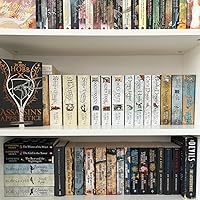
September 27, 2026
Quaint Folk is a ridiculous satirical fever dream of a folk horror that shouldn’t work but just somehow does.
An American family travel to a British island called Hasenhurst where tradition and the need to conform is everything, especially in the run up to the Tigglestide holiday where an ambiguous hare deity called Round Robin will punish anyone who isn’t the ‘right sort’ of person.
The book follows the family as they learn more about this island and its people. The husband Greg was sent there for work and is mostly absent as he works on something suitably mysterious with the mayor, so we mainly follow Jessica and her child Sandy. Sandy is non-binary and a practicing witch and has absolutely zero interest in conforming with the traditions and expectations of the villagers. Jessica on the other hand is obsessed with trying to be the ‘perfect’ wife and mother, and there’s a really effective build up of slow creeping horror as she tries to assimilate herself into the village’s values and traditions, believing that conforming hard enough will ‘fix’ herself and her family.
This book is a really fun time, especially with how playful and satirical it is, and it manages to balance its humour with the ever present dread of wondering what was going to happen to these characters and reading with horror as things get worse and increasingly insane.
I can’t say I knew what I was reading by the end, as the book truly comes to feel like a fever dream, but it ended up working for me and I would recommend it!
Thank you to Netgalley and the publisher Little, Brown Book Group UK for sending me a digital ARC of this book
An American family travel to a British island called Hasenhurst where tradition and the need to conform is everything, especially in the run up to the Tigglestide holiday where an ambiguous hare deity called Round Robin will punish anyone who isn’t the ‘right sort’ of person.
The book follows the family as they learn more about this island and its people. The husband Greg was sent there for work and is mostly absent as he works on something suitably mysterious with the mayor, so we mainly follow Jessica and her child Sandy. Sandy is non-binary and a practicing witch and has absolutely zero interest in conforming with the traditions and expectations of the villagers. Jessica on the other hand is obsessed with trying to be the ‘perfect’ wife and mother, and there’s a really effective build up of slow creeping horror as she tries to assimilate herself into the village’s values and traditions, believing that conforming hard enough will ‘fix’ herself and her family.
This book is a really fun time, especially with how playful and satirical it is, and it manages to balance its humour with the ever present dread of wondering what was going to happen to these characters and reading with horror as things get worse and increasingly insane.
I can’t say I knew what I was reading by the end, as the book truly comes to feel like a fever dream, but it ended up working for me and I would recommend it!
Thank you to Netgalley and the publisher Little, Brown Book Group UK for sending me a digital ARC of this book

October 5, 2026
A Cottage-core Acid Trip From Hell?
Quaint Folk by Bitter Karella is a weird book. It’s a freaky little acid trip trapped within a novel. It feels like someone took a cozy cottage-core village, covered it in homemade jam, floral wallpaper, and aggressively polite smiles, then hid a screaming nightmare underneath it all. When Jessica moves her family to the isolated island town of Hasenhurst, she's desperate to become the "right sort" of wife, mother, and person. Meanwhile, her nonbinary child Sandy immediately realizes something is deeply off about the town's obsession with tradition, conformity, and the upcoming Tigglestide celebration. Sandy also has a minor affinity with hares and witchcraft and as the Tigglestide celebration approaches, things take a turn for the bizarre.
I’ve read both of Bitter Karella’s books now and I have to say that they are strange fiction. Like truly weird, but in a good way! It’s like going to Narnia or Wonderland and taking a bunch of party drugs. However, the terror is pervasive even if the “understanding” isn’t. I don’t fancy myself cool enough to have fully grasped all of the pieces of this story. And it’s almost written in its own language, but I still grasped the cool themes of family, identity, and that sense of being willing to sell your soul to find those things. Bitter Karella balances absurd humor, queer horror, witchcraft, family dysfunction, and social satire in a way that should not work nearly as well as it does. I found myself laughing at one page, feeling deeply uncomfortable on the next, and then immediately needing to know what bizarre thing was going to happen after that. Quaint Folk is folk horror for anyone who's ever looked at a picture-perfect village and thought “this feels off!”
Quaint Folk by Bitter Karella is a weird book. It’s a freaky little acid trip trapped within a novel. It feels like someone took a cozy cottage-core village, covered it in homemade jam, floral wallpaper, and aggressively polite smiles, then hid a screaming nightmare underneath it all. When Jessica moves her family to the isolated island town of Hasenhurst, she's desperate to become the "right sort" of wife, mother, and person. Meanwhile, her nonbinary child Sandy immediately realizes something is deeply off about the town's obsession with tradition, conformity, and the upcoming Tigglestide celebration. Sandy also has a minor affinity with hares and witchcraft and as the Tigglestide celebration approaches, things take a turn for the bizarre.
I’ve read both of Bitter Karella’s books now and I have to say that they are strange fiction. Like truly weird, but in a good way! It’s like going to Narnia or Wonderland and taking a bunch of party drugs. However, the terror is pervasive even if the “understanding” isn’t. I don’t fancy myself cool enough to have fully grasped all of the pieces of this story. And it’s almost written in its own language, but I still grasped the cool themes of family, identity, and that sense of being willing to sell your soul to find those things. Bitter Karella balances absurd humor, queer horror, witchcraft, family dysfunction, and social satire in a way that should not work nearly as well as it does. I found myself laughing at one page, feeling deeply uncomfortable on the next, and then immediately needing to know what bizarre thing was going to happen after that. Quaint Folk is folk horror for anyone who's ever looked at a picture-perfect village and thought “this feels off!”

Review of advance copy received from NetGalley
First thing I would like to compliment the cover. One of the big reasons I wanted to read this was the cover; the second was folk horror. I do find folk horror very interesting. This book follows a less typical nuclear family that travels to a small island off England called Hasenhurst as part of the father, Greg's job at some kind of tech company. Greg is honestly the most nothingburger character in this book, but we don't really see all that much of him so that makes sense. Jessica is the mother, and says she's trying her best, but is she really? We hear a good bit about her past including her feelings on religion and her previous romantic relationship with a woman. This couple has one child, Sandy, a non-binary witch. I think the point is the stereotypes are overexaggerated for all characters: Greg is the absent but affable dad, Jessica is the happy homemaker type with a "dark secret", and Sandy is the rebel child, but the town is also overly exaggerated in their small-town demeanors and traditions. Although I can see the statements trying to be made and some things are meant to give you a chuckle, I found myself wondering when we were going to get to the point. Unfortunately, the point is just a discussion of conformity. Which is fine, but not really what I was looking for in a book like this. I would also like to say I really dislike all the mentions of Molly's appearance. I get it. She's fat. Can we stop now?
I do think there is an audience for this book. I actually think it would be very interesting as a movie.
2.5 stars
*Thank you to Orbit/Run For It and NetGalley for the eARC. All thoughts are my own. Also thank you to Ariel for buddy reading!*
I do think there is an audience for this book. I actually think it would be very interesting as a movie.
2.5 stars
*Thank you to Orbit/Run For It and NetGalley for the eARC. All thoughts are my own. Also thank you to Ariel for buddy reading!*
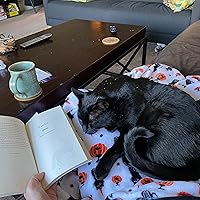
October 2, 2026
This was the perfect read to get me in the spirit for spooky season. I really grooved with Moonflow by the same author, so I was excited for this read! Less splatter punk vibes, more folksy horror for sure.
I enjoyed the slow set up and world building this idyllic tale spins. Jessica is also my name, so I thought it was really funny to read about one with a very different life than me, but seeing some similarity. This Jessica housewife trying her best to fit the mold but is not really feeling it. She is haunted by catholic guilt and failed sapphic dreams. Her perfect family includes husband Greg (what exactly does he do again?) and child Sandy (they/them pronouns and purple hair). They move to a small British town for Greg’s job to a possibly haunted house and super traditional town. Tigglestide festivities commence.
It was thoroughly satirical and tongue in cheek about the perfect nuclear family and “the right sort of people” which ended up giving very creepy vibes, well done.
The horror was less gory than Moonflow, which was perfect for what I was in the mood for. Still, this read gave me some bizarre and interesting dreams since I read it before going to bed. Next time I see a rabbit I’ll give it some right proper courteousness.
I look forward to reading more from Bitter Karella, and can’t wait to see what they put out next.
Thank you to Net Galley and all those involved with this book for the ARC!
I enjoyed the slow set up and world building this idyllic tale spins. Jessica is also my name, so I thought it was really funny to read about one with a very different life than me, but seeing some similarity. This Jessica housewife trying her best to fit the mold but is not really feeling it. She is haunted by catholic guilt and failed sapphic dreams. Her perfect family includes husband Greg (what exactly does he do again?) and child Sandy (they/them pronouns and purple hair). They move to a small British town for Greg’s job to a possibly haunted house and super traditional town. Tigglestide festivities commence.
It was thoroughly satirical and tongue in cheek about the perfect nuclear family and “the right sort of people” which ended up giving very creepy vibes, well done.
The horror was less gory than Moonflow, which was perfect for what I was in the mood for. Still, this read gave me some bizarre and interesting dreams since I read it before going to bed. Next time I see a rabbit I’ll give it some right proper courteousness.
I look forward to reading more from Bitter Karella, and can’t wait to see what they put out next.
Thank you to Net Galley and all those involved with this book for the ARC!
September 13, 2026
folktale horror?? sign me tf up
I absolutely loved the religious trauma aspects. They were done so well—a perfect mix of trying to remove yourself from that religion and feeling so sinful for doing so. I also thought it worked well how Jessica unwillingly began to think like her parents, casting judgement despite her desire not to.
Sandy was great representation of being queer in a small town—particularly non-binary. I really appreciated seeing non-binary representation in a book that wasn't centered completely around queer identity. Although there were a lot of incidents of misgendering, it wasn't in any way that removed from Sandy's identity.
One major ick—there was some weirdly sexual stuff that I really disliked. It felt unnecessary and it threw me out of the story. There was also a particularly weird scene that was frankly disturbing and gross... and not in the good way that the rest of the story is...
Overall I think this was a pretty solid horror with the perfect unsettling atmosphere!
Big thanks to NetGalley and Orbit Books for the ARC copy!
I absolutely loved the religious trauma aspects. They were done so well—a perfect mix of trying to remove yourself from that religion and feeling so sinful for doing so. I also thought it worked well how Jessica unwillingly began to think like her parents, casting judgement despite her desire not to.
Sandy was great representation of being queer in a small town—particularly non-binary. I really appreciated seeing non-binary representation in a book that wasn't centered completely around queer identity. Although there were a lot of incidents of misgendering, it wasn't in any way that removed from Sandy's identity.
One major ick—there was some weirdly sexual stuff that I really disliked. It felt unnecessary and it threw me out of the story. There was also a particularly weird scene that was frankly disturbing and gross... and not in the good way that the rest of the story is...
Overall I think this was a pretty solid horror with the perfect unsettling atmosphere!
Big thanks to NetGalley and Orbit Books for the ARC copy!

Review of advance copy received from NetGalley
I do love a good small-town folk horror, which was exactly why I picked up this book. We follow a family from the US as they vacation in a small remote town in England, and it just so happens that this small town is getting ready for a local holiday that's only been celebrated in this town. There's a mystery surrounding the paranormal entity that is central to this holiday, and we see how the various members of this family interact with the town and also the entity. Overall this feels like a solid weird horror that's more of a character study of Jessica (the mom) and Sandy (the teenager) as they interact with the titular "quaint folk." Personally, I wish there was a bit more of the paranormal entity, and something a little more to the story beyond a commentary about conformity. Nevertheless, I definitely recommend if you're in the mood for a weird folk horror.
A huge thank you to Orbit for the eArc and Colleen for buddy reading this with me!
A huge thank you to Orbit for the eArc and Colleen for buddy reading this with me!
September 30, 2026
I have mixed feelings about Quaint Folk. On one hand, I liked the pacing and it made me laugh a few times in ways that I really appreciated. But on the other hand, I never felt fully interested in what was going on.
I think I’m finding that folk horror isn’t always for me. But if you’re a big fan of it, this is probably worth the read. Thanks very much to Orbit for the ARC!
PS I’m still not entirely sure what Crunkle is. Some kind of meat, but what kind? At one point one of the British people asks if they’d call it a hot dog in America. So I guess they are like hot dogs or sausages? But if that’s the case then who on earth eats them for every meal? It was mentioned so often I thought it would end up being something gross, like people or something. But nah it was just… Crunkle.
I think I’m finding that folk horror isn’t always for me. But if you’re a big fan of it, this is probably worth the read. Thanks very much to Orbit for the ARC!
PS I’m still not entirely sure what Crunkle is. Some kind of meat, but what kind? At one point one of the British people asks if they’d call it a hot dog in America. So I guess they are like hot dogs or sausages? But if that’s the case then who on earth eats them for every meal? It was mentioned so often I thought it would end up being something gross, like people or something. But nah it was just… Crunkle.
Review of advance copy received from Publisher
I love the idea of this book, that folklore gets its power from the community it builds, and the conformity to the tradition. It feels real, and creepy.
What I didn’t love about this book unfortunately was the confusion of the timeline… most of the reveal of what’s unfolding in the town with Hollyoak House and everyone else just doesn’t hold up when you think too deeply about things happening decades ago versus now… maybe I’m missing something but it felt like it just wasn’t fleshed out well.
I did like the ambiguity of the end, and I do think this author is someone I’d pick up again and again.
What I didn’t love about this book unfortunately was the confusion of the timeline… most of the reveal of what’s unfolding in the town with Hollyoak House and everyone else just doesn’t hold up when you think too deeply about things happening decades ago versus now… maybe I’m missing something but it felt like it just wasn’t fleshed out well.
I did like the ambiguity of the end, and I do think this author is someone I’d pick up again and again.
August 24, 2026
Summary: Jessica, her husband Greg, and their nonbinary teenager Sandy move to a small, quaint island village called Hasenhurst for Greg’s job. As they settle into an old manor house formerly owned by renowned children’s author Helena Hollyoak, Jessica hopes to reconnect with her family and make friends with the locals. While getting the lay of the land, Jessica and her family learn about Round Robin and Tigglestide, a spirit in the form of a hare said to keep Hasenhurst full of the “right sort of people” and the holidays around the legend. Soon Jessica and Sandy begin having dreams of flying and being nibbled in the night, leaving them all wondering just how real Round Robin may be.
Thoughts: You had me at queer folk horror. Seriously, I’m almost always sold when that’s the case.
If The Wicker Man and Midsommar had a baby, that baby would be this book. With the isolated island setting during a local festival celebrating tradition it was hard not to draw that comparison, but Quaint Folk is definitely its very own fucked up folk tale. I enjoyed the Round Robin/Helena Hollyoak mythos and I think while it could have been expanded on a little bit, I almost love that I still have so many questions.
Thoughts: You had me at queer folk horror. Seriously, I’m almost always sold when that’s the case.
If The Wicker Man and Midsommar had a baby, that baby would be this book. With the isolated island setting during a local festival celebrating tradition it was hard not to draw that comparison, but Quaint Folk is definitely its very own fucked up folk tale. I enjoyed the Round Robin/Helena Hollyoak mythos and I think while it could have been expanded on a little bit, I almost love that I still have so many questions.
Read
August 27, 2026I am a huge lover of folk horror and this book did not disappoint. I found it fast paced and engaging while doing a very good job setting the scene. I found Jessica and Sandy to be particularly well written.
The book does a good job at taking the bones of folk horror and really using it to highlight current issues like bigotry, religious trauma, and generational trauma. I particularly enjoyed showing that Jessica was trying so hard to be the perfect parent she thought she needed to be, rather than the parent Sandy actually might need and it lead to some really realistic tension between the characters.
The villagers are so creepy in all their quaint old fashion ways. they are so outwardly kind but everything feels just a little off kilter, just a little....Wrong with all of them and it really heightens the foreboding.
Overall, if you are a fan of the genre and enjoy The Wicker Man or the mini series the Red King, you will enjoy this book.
The book does a good job at taking the bones of folk horror and really using it to highlight current issues like bigotry, religious trauma, and generational trauma. I particularly enjoyed showing that Jessica was trying so hard to be the perfect parent she thought she needed to be, rather than the parent Sandy actually might need and it lead to some really realistic tension between the characters.
The villagers are so creepy in all their quaint old fashion ways. they are so outwardly kind but everything feels just a little off kilter, just a little....Wrong with all of them and it really heightens the foreboding.
Overall, if you are a fan of the genre and enjoy The Wicker Man or the mini series the Red King, you will enjoy this book.
Displaying 1 - 30 of 134 reviews