

What do you think?

She Who Devours
21-year old Maya Halili is determined to secure her spot as a full-time faculty member at the National University of the Seven Islands, the most prestigious academic institution in the country. She'll do absolutely anything, including run errands for her beloved adviser, Dr. Manalo, and butt heads with her long-time rival, the aggravating and handsome Aga Kaneko. But with a series of mysterious disappearances plaguing the city of Santa Teresita and the Astyrian forces tightening their grip on her people, Maya's carefully constructed world of academics and ambition crumbles when the spirits of the Seven Islands draw her into a secret society known as The Hand of Kaylahon, a group of shamans that can call down the gods and allow them to use their bodies as vessels - for better or for worse.
When an ancient evil awakens and threatens to plunge their world into eternal darkness, The Hand of Kaylahon desperately tries to convince Maya to accept the spirits' call and fight by their side. Maya must confront the deadly secrets of her past and navigate a treacherous landscape filled with shamans, monsters, and political forces that threaten to engulf the Seven Islands in a war of humans and spirits alike. She must make an impossible choose the quiet, academic life of her dreams or embrace her destiny, join the battle and save the world.
Her decision will not only determine the survival of the Seven Islands, but the future of humanity itself.
When an ancient evil awakens and threatens to plunge their world into eternal darkness, The Hand of Kaylahon desperately tries to convince Maya to accept the spirits' call and fight by their side. Maya must confront the deadly secrets of her past and navigate a treacherous landscape filled with shamans, monsters, and political forces that threaten to engulf the Seven Islands in a war of humans and spirits alike. She must make an impossible choose the quiet, academic life of her dreams or embrace her destiny, join the battle and save the world.
Her decision will not only determine the survival of the Seven Islands, but the future of humanity itself.
252 pages, Kindle Edition
Published January 27, 2026
Ratings & Reviews
Friends & Following
Create a free account to discover what your friends think of this book!
Community Reviews
Displaying 1 - 30 of 52 reviews
March 22, 2026
devoured in 2 hrs!?!? I NEED MORE, MS. BEA!! so good!! the writing and the world building is so easy to follow and definitely a beginner friendly esp. i have no further knowledge about philippine mythology BUT I ENJOYED IT SO MUCH!! PAGE TURNER! 🤩

February 19, 2026
Random find in a Kinokuniya in Bangkok! This isn't even out in the PH yet!!!
I’m not usually a fan of local fiction, but this book completely surprised me. From the very first pages, it had me hooked. The kind of story that grips you so tightly you don’t even realize how quickly time is passing. I genuinely couldn’t put it down. I ended up reading the entire thing in one sitting during a 4-hr flight.
What stood out most to me were the powerful themes surrounding colonialism, coming from the Philiplines (enough said) not just the historical reality of it, but the complicated ways people respond to it: accepting, rejecting, resisting, and sometimes even internalizing it. The book does such an effective job of showing how colonization doesn’t only take land, but also slowly erases culture, beliefs, and identity.
One of the most striking ideas was how much we, especially those of us in the cities and mainlands, have forgotten our own roots. Meanwhile, the communities in far-flung provinces seem to hold on more closely to traditions and ways of life that connect them to our true ancestors. That contrast felt both sobering and deeply meaningful.
Looking forward to the next book!!!
I’m not usually a fan of local fiction, but this book completely surprised me. From the very first pages, it had me hooked. The kind of story that grips you so tightly you don’t even realize how quickly time is passing. I genuinely couldn’t put it down. I ended up reading the entire thing in one sitting during a 4-hr flight.
What stood out most to me were the powerful themes surrounding colonialism, coming from the Philiplines (enough said) not just the historical reality of it, but the complicated ways people respond to it: accepting, rejecting, resisting, and sometimes even internalizing it. The book does such an effective job of showing how colonization doesn’t only take land, but also slowly erases culture, beliefs, and identity.
One of the most striking ideas was how much we, especially those of us in the cities and mainlands, have forgotten our own roots. Meanwhile, the communities in far-flung provinces seem to hold on more closely to traditions and ways of life that connect them to our true ancestors. That contrast felt both sobering and deeply meaningful.
Looking forward to the next book!!!
April 22, 2026
Nice effort. I can see the potential and the vision of the author, but I can't help but notice the inconsistencies in how she used and played with the languages. The personalities of the characters also feel a bit underdeveloped, which made it hard for me to feel fully invested in them or care about what happens next.
The way Philippine folklore is incorporated also feels forced at times. Instead of blending naturally into the story, it reads more like it was inserted to check a box rather than to deepen the world or the themes. And what's the obsession with a foreigner leading man? We want a moreno boy.
P.S. I hate the word "tak." It's distracting.
The way Philippine folklore is incorporated also feels forced at times. Instead of blending naturally into the story, it reads more like it was inserted to check a box rather than to deepen the world or the themes. And what's the obsession with a foreigner leading man? We want a moreno boy.
P.S. I hate the word "tak." It's distracting.

June 22, 2026
(4.5) this book was so hard to put down! i loved the philippine folklore and mythology references, and how the diversity of our country’s 100+ languages is incorporated into the story. you also see pockets of colonial mentality reflected in some of the characters which was very representative of how a good chunk of our nation still behaves today. the main characters are well fleshed out and i’m looking forward to seeing the other characters’ stories unfold in the sequel.
my only comment is that i wish the book was longer! it would’ve been nice to see more of maya and aga’s university life, more of their jobs as part-time lecturers, maya’s previous role as a writer for The Archipelago Press, etc. to really feel the gravity of what maya was letting go of in exchange for her role as part of The Hand. and i think the plot twist would’ve hit a lot harder if we saw more of dr manalo’s dynamic with maya as well. i love the fantasy genre because of all the world building that typically comes with the first book of a series, and so i hope that the next book (if there is one! hopefully!) continues to build on this beautiful universe that is the Seven Islands 🫶🏻
my only comment is that i wish the book was longer! it would’ve been nice to see more of maya and aga’s university life, more of their jobs as part-time lecturers, maya’s previous role as a writer for The Archipelago Press, etc. to really feel the gravity of what maya was letting go of in exchange for her role as part of The Hand. and i think the plot twist would’ve hit a lot harder if we saw more of dr manalo’s dynamic with maya as well. i love the fantasy genre because of all the world building that typically comes with the first book of a series, and so i hope that the next book (if there is one! hopefully!) continues to build on this beautiful universe that is the Seven Islands 🫶🏻
This entire review has been hidden because of spoilers.

April 9, 2026
2.5 🌟
This was a hard read for me.
For the first half of the book, the story and pacing are good. I loved the Filipino folklore and how it was incorporated into the story. Maybe I would have loved this more if it was written in Filipino.
For the latter half, the pacing is too fast for me that it affects the development of the story. I think the story tries to achieve a lot in a short amount of time.
But what really made me rate this low is the main character. I was so annoyed with her to the point that I wanted to DNF this book but I wanted to give it a chance and I don't want to waste more money buying this book. I also don't like the MMC because he reminds me of the traitors in Philippine history.
Even though I love books with Filipino folklore, this book was not for me due to its main characters.
This was a hard read for me.
For the first half of the book, the story and pacing are good. I loved the Filipino folklore and how it was incorporated into the story. Maybe I would have loved this more if it was written in Filipino.
For the latter half, the pacing is too fast for me that it affects the development of the story. I think the story tries to achieve a lot in a short amount of time.
But what really made me rate this low is the main character. I was so annoyed with her to the point that I wanted to DNF this book but I wanted to give it a chance and I don't want to waste more money buying this book. I also don't like the MMC because he reminds me of the traitors in Philippine history.
Even though I love books with Filipino folklore, this book was not for me due to its main characters.
This entire review has been hidden because of spoilers.
Read
August 21, 2026effectively and excitingly fast-paced for a fantasy adventure although an extra 50-100 pages would've been of benefit. main character maya's conflict as the chosen one is her reluctance to leave her academic life but we weren't given enough exposure to why she loves the career so much, especially with what happened to her mentor figure (which they quickly move on about). her acad background on the history of the islands barely came into play as she mostly relied on her mother's bedtime stories in facing the supernatural. this was also marketed as an academic rivals to lovers romance but the couple was already clearly on the 'lovers' side only around 1/5 of the way through. info-dumpy dialogue on the first parts.
still, bustamante knows how to build horror-esque tension and danger. every bit of magic usage is consequential which made the stakes dire. the aspect of the colonialists being peskier antagonists than the bakunawa and her dark forces is so interesting. would love to follow where the story goes!
still, bustamante knows how to build horror-esque tension and danger. every bit of magic usage is consequential which made the stakes dire. the aspect of the colonialists being peskier antagonists than the bakunawa and her dark forces is so interesting. would love to follow where the story goes!

October 10, 2026
I definitely see the story's potential and the author's vision. However, this novel still felt a little undercooked. It didn't feel like a complete and satisfying story.
Even if the author intends to write more books in this series, I wish the first book still had a more complete ending that only teases a bigger world. Instead, it felt like it was just setting up a more interesting story to come...
Even if the author intends to write more books in this series, I wish the first book still had a more complete ending that only teases a bigger world. Instead, it felt like it was just setting up a more interesting story to come...

Read
March 20, 2026Posting my review soon! Patiently waiting for the second book!!


October 10, 2026
Overall Impression
I’m sorry, someone has to say it: this book sucks on so many levels. Like fundamental levels. The entire book reads like a rough draft that someone decided to publish. Seriously, did this even go through editing? A shame since I was so excited to read a Filipino author published by Penguin SEA. And the price is not a joke— it’s expensive for what readers have gotten here.
Now, I want to preface this by saying that I did appreciate the potential the book has. I liked some aspects of it. Like how the babaylans are represented as conduits of the gods. But no matter how creative the worldbuilding, the failure of its execution outweighed the possible potential it presents.
Like I said, it sucked on fundamental levels. And I’m not kidding.
1. Grammatical Errors
For a book that costs almost a thousand peso and has been published by a reputable publisher, you’d expect quality. But no. This book is plagued with grammatical errors. And no, I’m not exaggerating. It didn’t happen just once or twice but a lot of times.
Here are some of the examples:
1. “It felt like time had stopped as they watched in horror at the nurse, her laugh transforming into a frenzied cackle that got louder with every second that passed.”
— p. 71
Really? Watched in horror at the nurse?! Or watched the nurse in horror?
2. “Maya stared at him, completely dumbfounded. This was the same Aga Kaneko who she traded barbed words with, the same Aga Kaneko who had tormented for the past five years.”
— p. 102
Anything missing? Yeah, the word “her.” …the same Aga Kaneko who had tormented her for the past five years.
3. “Brigham hummed. “Don’t look like nothing to me.” He let go of her chin and grabbed her by the arm, pulling her body flush against him. “Looks like someone who isn’t getting on that ferry.”
— p. 203
Looks like someone who isn’t getting on that ferry? Or someone isn’t getting on that ferry?
Those are just some examples of grammatical slips. If that’s not a big deal to you, then go! Read ahead. But I don’t think that I’m getting my money’s worth if simple things like that get past an editor. It should have been polished! For God’s sake, it could have been detected had you made the effort to copypaste the manuscript to a grammar checking software.
2. Expositions, expositions, and more expositions!
If the grammatical errors are not enough to turn you off, then this might. The story relies heavily on exposition dumps which creates systemic narrative issues that undermine tension, impact, and immersion.
In other words, it’s boring as fuck.
The author just reports everything she sees instead of immersing us into the world. The story’s momentum sometimes stops to catch you up with narrative dumps of backstory or worldbuilding. It’s a frustrating flaw because the world has its potential but I just got bored because it was handed to you like a report rather than an experience.
Even the characters are not developed because the author just hands you their CV instead of giving them a characterizing moment that shows you their core traits.
Take for example our introduction to Maya— our protagonist:
“After graduating at the top of her class last year, Maya’s time at the National University of the Seven Islands was now split balancing her one Islandic History lecture and impossibly long hours at the university library, gathering resources and doing supplementary research for her mentor, Dr. Manalo. She took pride in the fact that she was the youngest lecturer to ever be accepted at NUSI.”
—page 4
Instead of making Maya relatable through her actions and immediate desires, the opening relies on the heavy black of back-story resumes. The book tries to establish Maya’s brilliance by dumping achievements on the readers all at once rather than using a characterizing moment (shown, not told). It creates a distance between the story and the readers who now feel like they’re reading a CV rather than reading about a breathing, living human being.
And again, the author repeats this a lot throughout the story. Here’s another example on how we were introduced to Aga Kaneko, the protagonist’s rival-turned-love interest:
“Aga’s eyes had nearly fallen off their sockets when the university’s longest tenured professor and leading expert on Island linguistics shuffled to the front of his classroom on his first day of class as a student, and a confusing mix of awe and terror took hold of him. He had jumped at the chance to be the old man’s student assistant, despite knowing he would have to fight off a hundred other Linguistics programme students for the highly coveted position. Perhaps he did have to spend most of his time poring over ancient texts in long-dead languages to keep up with his professor, but it was worth it.”
—Page 9-10
Just like Maya in the first chapter, Aga’s intro is padded with an academic resume and explanation of how “special” and hard-working he is. Again, it skips the hard work of character building by handing the readers its characters’ CV. Because of that both Maya and Aga read like Mary Sue/Gary Stu types. Instead of earning our admiration through grit, competence, and vulnerability through having them make active choices, the author just writes expository backstories.
3. Stupid characters to drive idiot plots
So, the author handed you her main characters’ resume. She said they’re smart. They’re brilliant. They’re amazing!
But their action says otherwise.
I freaking hate Maya. She’s the epitome of a Mary Sue. She’s pretty but doesn’t know it. She’s smart but her decisions are not. And she has a courageous mouth that puts everyone around her in danger.
But no, she doesn’t fix her own mess. She’s always being saved. People catch bullets for her even though it was her fault for not following their instructions.
Yet everyone protects her because she’s the chosen one. And don’t be mad at her! She has a tragic back story. Boo-hoo.
News flash: your tragic backstory can’t excuse today's stupidity.
In chapter 21, when the babaylans said they needed to bring Maya to Sagiganun to keep her safe and to start the ritual, she threw a fit. When they tried to explain that it was the only way, resorted to this:
“I don’t have any reason to trust any of you!” She took a step back. “I’m leaving. I don’t understand what’s going on but I’m sure the police will.”
— P. 152
Mind you, it was the second time that Maxim had saved Maya. Yet she has the audacity to question their motive. She was not only endangering her life at the moment— she was risking all their lives.
Furthermore, her threat to report to the police—whom I assume were Astyrians—contradicts her character, especially right after a lengthy backstory detailing how deeply traumatized she was by her mother's potential death at their hands.
This was uncharacteristic of her. A contrived reaction to force conflict and prolong the book.
Maya was also shown to be impulsive. Reckless, even. I guess that would have been okay had she had nothing to lose but her own life. But again, she puts everyone else in danger.
In Chapters 25-26, the group of babaylans were on their way to Saginanun, boarding a ferry. Maya realized that she hadn't brought her residence card with her— a stupid mistake most especially since it was established in the earlier chapters that Maya was aware of how brutal and cruel the Astyrians can be for the simplest things.
When the Astyrians came to do a check on the passengers, Maxim repeatedly urged everyone to keep their heads down and their mouths shut. Yet even that, Maya can’t do. She kept badmouthing the Astyrians within their earshots.
Like what the hell. We know the author wanted to position Maya as a rebel. Someone who stands up for her belief. But it was the wrong moment! Considering that Maya can’t even save herself even when her life depends on it, this action just makes Maya appear a consistent pain-in-the-ass!
Maya fails as a compelling protagonist due to her complete passivity. She rarely makes proactive decisions, and her survival stems not from her own skills or agency, but from external intervention.
4. Pacing
The pacing suffers immensely due to heavy exposition. In fact, the protagonist doesn't even encounter a single threat or high-stakes situation until Chapter 8, leaving the entire first section bogged down by unnecessary backstory.
5. Clunky Writing
And finally, what I hated the most was the clunky writing. This happened due to several aspects:
A. The “As you know, Bob” moments
The narrative relies heavily on 'As you know, Bob' exposition. Characters frequently reiterate recent plot developments to one another as if summarizing the previous chapter. The author seems so distrustful of the reader's memory that she bogs the story down with a constant echo effect—treating the audience less like engaged readers and more like children watching Dora the Explorer.
B. Chronic filtering
The book uses a lot of filtering verbs that reminds readers they’re reading someone’s experience rather than immersing themselves in it. She realized, she saw, she knew. They interrupt the flow and make the sentence less immediate and boring.
Some examples:
“She also knew what word the city folk used around her. She looked too native in their eyes…”
—p. 37
“Hanan felt the heat filling her cheeks as Anton Ortiguera smiled at her…”
—p. 43
“She realized that she was on the clinic bed…”
—p.63
Every scene feels like a narrator reading a report about a character who is observing an event. This middle-man verbs just breaks the chance for the audience to truly immerse themselves in the story. This is one of the first things that should have been addressed in professional editing. It’s called tightening your prose.
C. Stilted Dialogues
Every character speaks in whole sentences which is not how real people speak! They’re so formal, and there are so many words! Things are overexplained to the point of repetition:
“I’m already feeling well enough that I can manage it back home by myself.”
—p. 69
You won’t hear anyone speaking like that in real life. Why not just make it, “I’m feeling well, I can’t take it from here?”
This happens over and over again in the story. Here are other examples of unnatural dialogues:
“I don’t even need to know what you’re about to say to know that I already believe you. Just tell me.”
—p. 82
The sentence just stumbles over itself. Stacking four verbs of communication/knowledge in a single two-sentence line makes the cadence stutter awkwardly.
“Anyway, as I was saying,” Maxim cleared their throat, “we’ve been waiting for you for a long time. I for one am grateful for the spirits for finally reaching you, because they could not have picked a better time.”
—86
Look at the word traffic in the second half: "grateful for the spirits for finally reaching you, because..." Repeating "for... for..." back-to-back creates a literal verbal speed-bump when spoken aloud. Nobody talks like this naturally.
D. Word traffic/Redundancy/Uneconomical Sentences
There are times when the author can communicate her points using fewer words. The verbiage disrupts the natural flow of the story. Sentences are too long but says too little:
“It felt like time had stopped as they watched in horror at the nurse, her laugh transforming into a frenzied cackle that got louder with every second that passed.”
—p.71
Not only does this sentence contain prepositional mismatch, it also uses too many words to get across a simple point. That “…with every second that passed" is eight words of pure filler. We already know time is passing; stating "that passed" adds unnecessary bulk.
Another example:
“It was all too familiar and convenient for it to be merely a coincidence.”
— p. 83
This construction uses four low-impact filler words where a simpler connector would do. It forces the reader through a wordy grammatical hurdle just to reach the main point: coincidence. It just can be written as “to be a coincidence.” It creates word traffic that delays payoff.
Another:
“That startled Maya out of her shock.”
—p. 85
This one trips the brain. Startled and shocked are synonyms! If a character is already in a state of shock, a sudden noise or event usually snaps, jolts, or drags them back to reality rather than "startling" them.
Next:
“I was just about to tell you about all those poor kids that disappeared. I finally have news to share with you.”
—p. 109
Saying "I finally have news to share with you" right after stating "I was just about to tell you..." repeats the exact same premise twice in two sentences.
Next:
“Maya edged herself further to the right, closer towards the exit door. Her eyes darted to the right to gauge the distance.”
—p. 114
The text repeats the word "right" in two consecutive sentences. Additionally, "closer towards" is redundant—"closer to" or simply "toward" conveys the spatial movement without doubling the prepositions.
There are many more examples that I can just pluck up by opening the book. But these are just some of them. Imagine the torture of going through the entirety of it.
6. Adverbs here, adverbs there, adverbs everywhere
Was it Stephen King who said that the road in hell is paved with adverbs? If so, then this book is the highway to hell!
Overuse of adverbs is a symptom of a bad prose— because that means the story is mostly telling rather than showing. Adverbs act as shortcuts that rob readers of vividly imagining a scene.
When you rely on adverbs, you have the tendency to describe the emotion or action in abstract rather than using sensory details and behavior. You don’t get to work around subtext, thus, denying the readers to do the work of interpreting the world you serve before them.
Verdict
I hope I presented my case well here. I wanted to read Philippine Mythology that is executed well. But this was not it.
I’m sorry, someone has to say it: this book sucks on so many levels. Like fundamental levels. The entire book reads like a rough draft that someone decided to publish. Seriously, did this even go through editing? A shame since I was so excited to read a Filipino author published by Penguin SEA. And the price is not a joke— it’s expensive for what readers have gotten here.
Now, I want to preface this by saying that I did appreciate the potential the book has. I liked some aspects of it. Like how the babaylans are represented as conduits of the gods. But no matter how creative the worldbuilding, the failure of its execution outweighed the possible potential it presents.
Like I said, it sucked on fundamental levels. And I’m not kidding.
1. Grammatical Errors
For a book that costs almost a thousand peso and has been published by a reputable publisher, you’d expect quality. But no. This book is plagued with grammatical errors. And no, I’m not exaggerating. It didn’t happen just once or twice but a lot of times.
Here are some of the examples:
1. “It felt like time had stopped as they watched in horror at the nurse, her laugh transforming into a frenzied cackle that got louder with every second that passed.”
— p. 71
Really? Watched in horror at the nurse?! Or watched the nurse in horror?
2. “Maya stared at him, completely dumbfounded. This was the same Aga Kaneko who she traded barbed words with, the same Aga Kaneko who had tormented for the past five years.”
— p. 102
Anything missing? Yeah, the word “her.” …the same Aga Kaneko who had tormented her for the past five years.
3. “Brigham hummed. “Don’t look like nothing to me.” He let go of her chin and grabbed her by the arm, pulling her body flush against him. “Looks like someone who isn’t getting on that ferry.”
— p. 203
Looks like someone who isn’t getting on that ferry? Or someone isn’t getting on that ferry?
Those are just some examples of grammatical slips. If that’s not a big deal to you, then go! Read ahead. But I don’t think that I’m getting my money’s worth if simple things like that get past an editor. It should have been polished! For God’s sake, it could have been detected had you made the effort to copypaste the manuscript to a grammar checking software.
2. Expositions, expositions, and more expositions!
If the grammatical errors are not enough to turn you off, then this might. The story relies heavily on exposition dumps which creates systemic narrative issues that undermine tension, impact, and immersion.
In other words, it’s boring as fuck.
The author just reports everything she sees instead of immersing us into the world. The story’s momentum sometimes stops to catch you up with narrative dumps of backstory or worldbuilding. It’s a frustrating flaw because the world has its potential but I just got bored because it was handed to you like a report rather than an experience.
Even the characters are not developed because the author just hands you their CV instead of giving them a characterizing moment that shows you their core traits.
Take for example our introduction to Maya— our protagonist:
“After graduating at the top of her class last year, Maya’s time at the National University of the Seven Islands was now split balancing her one Islandic History lecture and impossibly long hours at the university library, gathering resources and doing supplementary research for her mentor, Dr. Manalo. She took pride in the fact that she was the youngest lecturer to ever be accepted at NUSI.”
—page 4
Instead of making Maya relatable through her actions and immediate desires, the opening relies on the heavy black of back-story resumes. The book tries to establish Maya’s brilliance by dumping achievements on the readers all at once rather than using a characterizing moment (shown, not told). It creates a distance between the story and the readers who now feel like they’re reading a CV rather than reading about a breathing, living human being.
And again, the author repeats this a lot throughout the story. Here’s another example on how we were introduced to Aga Kaneko, the protagonist’s rival-turned-love interest:
“Aga’s eyes had nearly fallen off their sockets when the university’s longest tenured professor and leading expert on Island linguistics shuffled to the front of his classroom on his first day of class as a student, and a confusing mix of awe and terror took hold of him. He had jumped at the chance to be the old man’s student assistant, despite knowing he would have to fight off a hundred other Linguistics programme students for the highly coveted position. Perhaps he did have to spend most of his time poring over ancient texts in long-dead languages to keep up with his professor, but it was worth it.”
—Page 9-10
Just like Maya in the first chapter, Aga’s intro is padded with an academic resume and explanation of how “special” and hard-working he is. Again, it skips the hard work of character building by handing the readers its characters’ CV. Because of that both Maya and Aga read like Mary Sue/Gary Stu types. Instead of earning our admiration through grit, competence, and vulnerability through having them make active choices, the author just writes expository backstories.
3. Stupid characters to drive idiot plots
So, the author handed you her main characters’ resume. She said they’re smart. They’re brilliant. They’re amazing!
But their action says otherwise.
I freaking hate Maya. She’s the epitome of a Mary Sue. She’s pretty but doesn’t know it. She’s smart but her decisions are not. And she has a courageous mouth that puts everyone around her in danger.
But no, she doesn’t fix her own mess. She’s always being saved. People catch bullets for her even though it was her fault for not following their instructions.
Yet everyone protects her because she’s the chosen one. And don’t be mad at her! She has a tragic back story. Boo-hoo.
News flash: your tragic backstory can’t excuse today's stupidity.
In chapter 21, when the babaylans said they needed to bring Maya to Sagiganun to keep her safe and to start the ritual, she threw a fit. When they tried to explain that it was the only way, resorted to this:
“I don’t have any reason to trust any of you!” She took a step back. “I’m leaving. I don’t understand what’s going on but I’m sure the police will.”
— P. 152
Mind you, it was the second time that Maxim had saved Maya. Yet she has the audacity to question their motive. She was not only endangering her life at the moment— she was risking all their lives.
Furthermore, her threat to report to the police—whom I assume were Astyrians—contradicts her character, especially right after a lengthy backstory detailing how deeply traumatized she was by her mother's potential death at their hands.
This was uncharacteristic of her. A contrived reaction to force conflict and prolong the book.
Maya was also shown to be impulsive. Reckless, even. I guess that would have been okay had she had nothing to lose but her own life. But again, she puts everyone else in danger.
In Chapters 25-26, the group of babaylans were on their way to Saginanun, boarding a ferry. Maya realized that she hadn't brought her residence card with her— a stupid mistake most especially since it was established in the earlier chapters that Maya was aware of how brutal and cruel the Astyrians can be for the simplest things.
When the Astyrians came to do a check on the passengers, Maxim repeatedly urged everyone to keep their heads down and their mouths shut. Yet even that, Maya can’t do. She kept badmouthing the Astyrians within their earshots.
“Maya scoffed quietly beside Aga. “ Safe isn’t the word I’d use.”
Aga’s eyes darted nervously towards her. “Not the kind of joke you should be making right now.” “Who said it was a joke?”
“Maya,” Maxim whispered through clenched teeth, “for god’s sake, shut up.”
—p. 203
Like what the hell. We know the author wanted to position Maya as a rebel. Someone who stands up for her belief. But it was the wrong moment! Considering that Maya can’t even save herself even when her life depends on it, this action just makes Maya appear a consistent pain-in-the-ass!
Maya fails as a compelling protagonist due to her complete passivity. She rarely makes proactive decisions, and her survival stems not from her own skills or agency, but from external intervention.
4. Pacing
The pacing suffers immensely due to heavy exposition. In fact, the protagonist doesn't even encounter a single threat or high-stakes situation until Chapter 8, leaving the entire first section bogged down by unnecessary backstory.
5. Clunky Writing
And finally, what I hated the most was the clunky writing. This happened due to several aspects:
A. The “As you know, Bob” moments
The narrative relies heavily on 'As you know, Bob' exposition. Characters frequently reiterate recent plot developments to one another as if summarizing the previous chapter. The author seems so distrustful of the reader's memory that she bogs the story down with a constant echo effect—treating the audience less like engaged readers and more like children watching Dora the Explorer.
B. Chronic filtering
The book uses a lot of filtering verbs that reminds readers they’re reading someone’s experience rather than immersing themselves in it. She realized, she saw, she knew. They interrupt the flow and make the sentence less immediate and boring.
Some examples:
“She also knew what word the city folk used around her. She looked too native in their eyes…”
—p. 37
“Hanan felt the heat filling her cheeks as Anton Ortiguera smiled at her…”
—p. 43
“She realized that she was on the clinic bed…”
—p.63
Every scene feels like a narrator reading a report about a character who is observing an event. This middle-man verbs just breaks the chance for the audience to truly immerse themselves in the story. This is one of the first things that should have been addressed in professional editing. It’s called tightening your prose.
C. Stilted Dialogues
Every character speaks in whole sentences which is not how real people speak! They’re so formal, and there are so many words! Things are overexplained to the point of repetition:
“I’m already feeling well enough that I can manage it back home by myself.”
—p. 69
You won’t hear anyone speaking like that in real life. Why not just make it, “I’m feeling well, I can’t take it from here?”
This happens over and over again in the story. Here are other examples of unnatural dialogues:
“I don’t even need to know what you’re about to say to know that I already believe you. Just tell me.”
—p. 82
The sentence just stumbles over itself. Stacking four verbs of communication/knowledge in a single two-sentence line makes the cadence stutter awkwardly.
“Anyway, as I was saying,” Maxim cleared their throat, “we’ve been waiting for you for a long time. I for one am grateful for the spirits for finally reaching you, because they could not have picked a better time.”
—86
Look at the word traffic in the second half: "grateful for the spirits for finally reaching you, because..." Repeating "for... for..." back-to-back creates a literal verbal speed-bump when spoken aloud. Nobody talks like this naturally.
D. Word traffic/Redundancy/Uneconomical Sentences
There are times when the author can communicate her points using fewer words. The verbiage disrupts the natural flow of the story. Sentences are too long but says too little:
“It felt like time had stopped as they watched in horror at the nurse, her laugh transforming into a frenzied cackle that got louder with every second that passed.”
—p.71
Not only does this sentence contain prepositional mismatch, it also uses too many words to get across a simple point. That “…with every second that passed" is eight words of pure filler. We already know time is passing; stating "that passed" adds unnecessary bulk.
Another example:
“It was all too familiar and convenient for it to be merely a coincidence.”
— p. 83
This construction uses four low-impact filler words where a simpler connector would do. It forces the reader through a wordy grammatical hurdle just to reach the main point: coincidence. It just can be written as “to be a coincidence.” It creates word traffic that delays payoff.
Another:
“That startled Maya out of her shock.”
—p. 85
This one trips the brain. Startled and shocked are synonyms! If a character is already in a state of shock, a sudden noise or event usually snaps, jolts, or drags them back to reality rather than "startling" them.
Next:
“I was just about to tell you about all those poor kids that disappeared. I finally have news to share with you.”
—p. 109
Saying "I finally have news to share with you" right after stating "I was just about to tell you..." repeats the exact same premise twice in two sentences.
Next:
“Maya edged herself further to the right, closer towards the exit door. Her eyes darted to the right to gauge the distance.”
—p. 114
The text repeats the word "right" in two consecutive sentences. Additionally, "closer towards" is redundant—"closer to" or simply "toward" conveys the spatial movement without doubling the prepositions.
There are many more examples that I can just pluck up by opening the book. But these are just some of them. Imagine the torture of going through the entirety of it.
6. Adverbs here, adverbs there, adverbs everywhere
Was it Stephen King who said that the road in hell is paved with adverbs? If so, then this book is the highway to hell!
Overuse of adverbs is a symptom of a bad prose— because that means the story is mostly telling rather than showing. Adverbs act as shortcuts that rob readers of vividly imagining a scene.
When you rely on adverbs, you have the tendency to describe the emotion or action in abstract rather than using sensory details and behavior. You don’t get to work around subtext, thus, denying the readers to do the work of interpreting the world you serve before them.
Verdict
I hope I presented my case well here. I wanted to read Philippine Mythology that is executed well. But this was not it.
This entire review has been hidden because of spoilers.

April 9, 2026
Bea Bustamante was successful in creating a fantasy world that feels so whole, rich, and real. She Who Devours is a romance fantasy novel that’s heavily inspired by Filipino folklore and myths and, surprisingly, Filipino history. It’s a new (and good) experience to finally read a fantasy book where I don’t need to do additional research on the canon, since I’m already familiar with some of the references.
Maya might be one of the most annoying Chosen Ones I’ve ever encountered (or maybe I’m not just used to the reluctant chosen one trope) but the world and character building more than made up for it. I’m curious to read a prequel set during when Maya’s mom was Kaylahon’s ward or Maxim’s tragic romance with Ipo. I also would like to praise how well-written the horror and gore in this book! It’s really visceral and I could really imagine the slime and blood in my mind’s eye. It was one of the things I really enjoyed and I wish the book would amp up the horror even more next time!
I went in expecting this was a standalone fantasy so the ending wasn’t as satisfying as I would have liked it to be. Still, it’s a good start to a series, I have a long wishlist on what I would like to see in the next books. (A love triangle or a second lead, for one. There’s nothing more Pinoy than a love triangle!!!!)
Overall, I enjoyed reading this book and it’s an easy read too—I finished it in a few days. Looking forward to how this series would progress! 3.75/5
Maya might be one of the most annoying Chosen Ones I’ve ever encountered (or maybe I’m not just used to the reluctant chosen one trope) but the world and character building more than made up for it. I’m curious to read a prequel set during when Maya’s mom was Kaylahon’s ward or Maxim’s tragic romance with Ipo. I also would like to praise how well-written the horror and gore in this book! It’s really visceral and I could really imagine the slime and blood in my mind’s eye. It was one of the things I really enjoyed and I wish the book would amp up the horror even more next time!
I went in expecting this was a standalone fantasy so the ending wasn’t as satisfying as I would have liked it to be. Still, it’s a good start to a series, I have a long wishlist on what I would like to see in the next books. (A love triangle or a second lead, for one. There’s nothing more Pinoy than a love triangle!!!!)
Overall, I enjoyed reading this book and it’s an easy read too—I finished it in a few days. Looking forward to how this series would progress! 3.75/5
August 13, 2026
Actual rating: 3.5 ⭐
Lined this up for my Akdang Pinoy Readathon 2026 Paraluman prompt as my first PH mythology, folklore, and culture book, and it also doubles as Book and Bloom Club's Sabayang Pagbasa entry.
For me, the highlight of She Who Devours would be Bea Bustamante's passion for exploring Philippine mythology, folklore, and culture, along with her original ideas—from the plot and characters to the attempt of introducing linguistics that is woven into the book. The blurb and the world I imagined while reading pulled me into a kind of Filipino fantasy that is completely foreign for me. I could feel her love for the genre in every page, and in a way, I got attached to some of the characters I knew I'd be with until the very end... in a sense that I got into reading this with a pre-existing belief that it will be a standalone--but I think I am mistaken due to how it ended.
On the other hand, one thing I didn't love about this book is that some parts of the story—plot-wise and character-wise—felt a bit underdeveloped. She Who Devours has that real potential to be an amazing introductory book that dives in deeper into its scenes, its core characters, its linguistics, and many aspects of the story. However, with the way it was written, I wasn't able to fully immerse myself in the characters' backstories, and a few areas of the story felt thin—this is where I felt the book could improve most. Still, I believe in Bea Bustamante's potential and commitment to delve deeper, especially given how immersive the book already is—how it pulls you in as a reader and lets you explore alongside the characters. But for an introductory book, and her first published novel, this is already quite a good start.
Lined this up for my Akdang Pinoy Readathon 2026 Paraluman prompt as my first PH mythology, folklore, and culture book, and it also doubles as Book and Bloom Club's Sabayang Pagbasa entry.
For me, the highlight of She Who Devours would be Bea Bustamante's passion for exploring Philippine mythology, folklore, and culture, along with her original ideas—from the plot and characters to the attempt of introducing linguistics that is woven into the book. The blurb and the world I imagined while reading pulled me into a kind of Filipino fantasy that is completely foreign for me. I could feel her love for the genre in every page, and in a way, I got attached to some of the characters I knew I'd be with until the very end... in a sense that I got into reading this with a pre-existing belief that it will be a standalone--but I think I am mistaken due to how it ended.
On the other hand, one thing I didn't love about this book is that some parts of the story—plot-wise and character-wise—felt a bit underdeveloped. She Who Devours has that real potential to be an amazing introductory book that dives in deeper into its scenes, its core characters, its linguistics, and many aspects of the story. However, with the way it was written, I wasn't able to fully immerse myself in the characters' backstories, and a few areas of the story felt thin—this is where I felt the book could improve most. Still, I believe in Bea Bustamante's potential and commitment to delve deeper, especially given how immersive the book already is—how it pulls you in as a reader and lets you explore alongside the characters. But for an introductory book, and her first published novel, this is already quite a good start.

August 29, 2026
Plot — ⭐️⭐️⭐️⭐️
One of my favorite things about this book is how it takes Filipino mythology & reimagines it within a modern fantasy setting. The idea of babaylans serving as vessels for gods, alongside the political conflict & colonial undertones, created a world that felt distinctly Filipino while still having the sweeping scale of a fantasy adventure.
The novel also explores questions about identity, culture, & colonialism.. particularly what it means for a people to reclaim their history & understand who they are after generations of outside influence. I appreciated that these themes weren’t simply background decoration but they were connected to the larger conflict & FMC’s own journey.
That said, I felt that the world building could have gone deeper. There were so many fascinating elements: the Seven Islands, the gods, the babaylans, the political forces, the monsters.. that I sometimes wished the story had slowed down & given us more time to understand them.
The latter part of the book also felt somewhat rushed. Some developments happened so quickly that I was left wanting more explanation & more time with certain characters and plot points.
Still, the story kept me curious. I found myself forming theories & trying to figure out where everything was heading, which made it difficult to put the book down.
Characters — ⭐️⭐️⭐️⭐️
Maya is an interesting protagonist because she is ambitious, intelligent, & determined, but she can also be frustrating🥹 I appreciated that she wasn’t written as a perfectly agreeable heroine.. her flaws made her feel more human.. but there were definitely moments when I wanted to tell her to please just calm down first & think? 😂
I especially enjoyed Hanan, who became one of my favorite characters. She carries herself with a maturity that often contrasts with Maya, & I found myself appreciating her perspective whenever she was around.
And then there’s Aga Kaneko… ✨
The enemies-to-(hopefully)-lovers tension 🥹 was definitely one of the unexpected pleasures of the book. Their banter had me entertained, especially with lines like:
“It almost sounds like you enjoy competing with me.”
“It’s not a competition if someone clearly is in the lead.”
Their relationship has plenty of potential, although I’m still not completely sold on the romance because some of Aga’s actions made it difficult for me to see him as a romantic interest just yet. But the yearning? The tension? The insufferable smirk?😂
I also loved Maxim & Hawk. Maxim’s leadership & Hawi’s warmth made them characters I wanted to spend more time with. Honestly, several of the babaylans felt like they had enough potential to carry stories of their own, & I hope we get to explore more of them.
Writing Style — ⭐️⭐️⭐️⭐️
The writing is accessible & immersive, & the mythology gives the story a strong sense of identity. I particularly liked how the book balanced fantasy elements with recognizable Filipino cultural & political themes.
There are also moments where the writing really makes you pause. One of the lines that stayed with me was:
“They were people before they were monsters.”
That idea becomes particularly interesting because the book doesn’t simply ask us to identify the monsters… it asks us to question how someone becomes one in the first place.
“Why had they allowed themselves to become these monsters?
Did they choose this life, or was it chosen for them?”
Those questions added another layer to the story for me. The monsters aren’t simply something Maya has to fight; they become part of a larger conversation about choice, circumstance, & humanity.
Emotional Impact — ⭐️⭐️⭐️⭐️
What surprised me most was how much the book made me think about the things we choose versus the things chosen for us.
Maya wants a quiet academic life. She has a plan for herself, a career she wants, & a future she can imagine. Then suddenly, she’s being told that she has a much bigger role to play.
And I think that’s where the story resonated with me most.
Sometimes, we construct an identity around the life we think we want, only to discover that there are parts of ourselves we’ve been ignoring.
I also appreciated the quieter moments of vulnerability, especially:
“I don’t know, it’s so noisy in my head. I just wish I could just turn it all off.”
It felt like such a simple line, but one that captured the overwhelming feeling of having too many thoughts, expectations, & decisions competing for space in your head.
—
Overall, She Who Devours was an adventure I genuinely enjoyed. It has an exciting premise, Filipino mythology at its heart, interesting political & cultural themes, & characters with plenty of room to grow.
I do think the world-building and character development could have benefited from more depth, & the ending felt a little rushed for me. But despite those criticisms, I was invested enough to keep theorizing, questioning, & wanting to know what would happen next. ✨
One of my favorite things about this book is how it takes Filipino mythology & reimagines it within a modern fantasy setting. The idea of babaylans serving as vessels for gods, alongside the political conflict & colonial undertones, created a world that felt distinctly Filipino while still having the sweeping scale of a fantasy adventure.
The novel also explores questions about identity, culture, & colonialism.. particularly what it means for a people to reclaim their history & understand who they are after generations of outside influence. I appreciated that these themes weren’t simply background decoration but they were connected to the larger conflict & FMC’s own journey.
That said, I felt that the world building could have gone deeper. There were so many fascinating elements: the Seven Islands, the gods, the babaylans, the political forces, the monsters.. that I sometimes wished the story had slowed down & given us more time to understand them.
The latter part of the book also felt somewhat rushed. Some developments happened so quickly that I was left wanting more explanation & more time with certain characters and plot points.
Still, the story kept me curious. I found myself forming theories & trying to figure out where everything was heading, which made it difficult to put the book down.
Characters — ⭐️⭐️⭐️⭐️
Maya is an interesting protagonist because she is ambitious, intelligent, & determined, but she can also be frustrating🥹 I appreciated that she wasn’t written as a perfectly agreeable heroine.. her flaws made her feel more human.. but there were definitely moments when I wanted to tell her to please just calm down first & think? 😂
I especially enjoyed Hanan, who became one of my favorite characters. She carries herself with a maturity that often contrasts with Maya, & I found myself appreciating her perspective whenever she was around.
And then there’s Aga Kaneko… ✨
The enemies-to-(hopefully)-lovers tension 🥹 was definitely one of the unexpected pleasures of the book. Their banter had me entertained, especially with lines like:
“It almost sounds like you enjoy competing with me.”
“It’s not a competition if someone clearly is in the lead.”
Their relationship has plenty of potential, although I’m still not completely sold on the romance because some of Aga’s actions made it difficult for me to see him as a romantic interest just yet. But the yearning? The tension? The insufferable smirk?😂
I also loved Maxim & Hawk. Maxim’s leadership & Hawi’s warmth made them characters I wanted to spend more time with. Honestly, several of the babaylans felt like they had enough potential to carry stories of their own, & I hope we get to explore more of them.
Writing Style — ⭐️⭐️⭐️⭐️
The writing is accessible & immersive, & the mythology gives the story a strong sense of identity. I particularly liked how the book balanced fantasy elements with recognizable Filipino cultural & political themes.
There are also moments where the writing really makes you pause. One of the lines that stayed with me was:
“They were people before they were monsters.”
That idea becomes particularly interesting because the book doesn’t simply ask us to identify the monsters… it asks us to question how someone becomes one in the first place.
“Why had they allowed themselves to become these monsters?
Did they choose this life, or was it chosen for them?”
Those questions added another layer to the story for me. The monsters aren’t simply something Maya has to fight; they become part of a larger conversation about choice, circumstance, & humanity.
Emotional Impact — ⭐️⭐️⭐️⭐️
What surprised me most was how much the book made me think about the things we choose versus the things chosen for us.
Maya wants a quiet academic life. She has a plan for herself, a career she wants, & a future she can imagine. Then suddenly, she’s being told that she has a much bigger role to play.
And I think that’s where the story resonated with me most.
Sometimes, we construct an identity around the life we think we want, only to discover that there are parts of ourselves we’ve been ignoring.
I also appreciated the quieter moments of vulnerability, especially:
“I don’t know, it’s so noisy in my head. I just wish I could just turn it all off.”
It felt like such a simple line, but one that captured the overwhelming feeling of having too many thoughts, expectations, & decisions competing for space in your head.
—
Overall, She Who Devours was an adventure I genuinely enjoyed. It has an exciting premise, Filipino mythology at its heart, interesting political & cultural themes, & characters with plenty of room to grow.
I do think the world-building and character development could have benefited from more depth, & the ending felt a little rushed for me. But despite those criticisms, I was invested enough to keep theorizing, questioning, & wanting to know what would happen next. ✨
This entire review has been hidden because of spoilers.

October 1, 2026
I.DEVOURED.THIS.BOOK. In two days. 🥰❤️💯
Immediately pulled in from the very first page, and what a page-turner! What a ride! Below are three things that stood out for me.
A fantasy world that feels like home
From academia to a magical island, every setting and scene felt purposeful, immersive, and distinct. Such a great reimagining of the Philippines as a colony, with its diversity of places and languages given so much space.This is balanced so vividly with modernity, with the National University of the Seven Islands standing as a symbol of progress and development.
As the lore deepens, we get so many interesting details, both familiar and new. It feels so close to home, like it deepens my ties to my roots. You can tell the world was well-researched and creatively built into a whole. I totally didn’t expect the horror elements— spirits and creatures that scared me as a child made several appearances. A lot of scenes were very atmospheric, which I always love in books. There is already so much presented here, and there’s a sense that we’re just scratching the surface. I would love to see this world expand even more.
One more chapter… until I’ve read the whole thing
So hard to put down! The short chapters are such a delight to get through and kept me anticipating the next scene. So much action and so many revelations. Some came sooner than I expected, but I am not complaining because things are taking some very interesting turns!
I had a great time flying through the story. AND I also had to pause every now and then to take things in… to imagine the bigger picture.
Plot-wise, this is such a compelling start to a series. There’s a lot of foreshadowing and little eggs dropped throughout that I’m sure we’ll be coming back to in future books. So yes, I am seateddddd…!
Came for the chemistry, stayed for all of ’em
Maya and Aga, I’m here waiting to see what the future has in store for you. I’m invested!
The chemistry was on point from the beginning, and Bea writes banter so, so well! I wish there was more!
Being in their early 20s, I can understand just how much adulting these two are still figuring out. Their decisions and actions sometimes frustrated me, but I’m also happy to journey with them and see where their character development takes them.
And the other characters! Hanan and the babaylans especially. So intrigued. I love the part where each of the Babaylan gets introduced, and how distinct they all are. I want to see so much more of them. Can’t wait to see where all their stories go!
And you bet I’m eagerly anticipating the future books in this Philippine myth-inspired romantasy. Congratulations, @beabustawrites on this debut 🥳🎉❤️
Happy to be touring this book along with my fellow @booklovertitas ! I’ve had this since the book launch last March, and its finally the perfect time to read it. I’ve read and loved a few books that also delve into Philippine myths and folklore, and this one brings something uniquely its own. Definitely worth diving into! Consider adding this to your spooktober reads ❤️❤️❤️
Immediately pulled in from the very first page, and what a page-turner! What a ride! Below are three things that stood out for me.
A fantasy world that feels like home
From academia to a magical island, every setting and scene felt purposeful, immersive, and distinct. Such a great reimagining of the Philippines as a colony, with its diversity of places and languages given so much space.This is balanced so vividly with modernity, with the National University of the Seven Islands standing as a symbol of progress and development.
As the lore deepens, we get so many interesting details, both familiar and new. It feels so close to home, like it deepens my ties to my roots. You can tell the world was well-researched and creatively built into a whole. I totally didn’t expect the horror elements— spirits and creatures that scared me as a child made several appearances. A lot of scenes were very atmospheric, which I always love in books. There is already so much presented here, and there’s a sense that we’re just scratching the surface. I would love to see this world expand even more.
One more chapter… until I’ve read the whole thing
So hard to put down! The short chapters are such a delight to get through and kept me anticipating the next scene. So much action and so many revelations. Some came sooner than I expected, but I am not complaining because things are taking some very interesting turns!
I had a great time flying through the story. AND I also had to pause every now and then to take things in… to imagine the bigger picture.
Plot-wise, this is such a compelling start to a series. There’s a lot of foreshadowing and little eggs dropped throughout that I’m sure we’ll be coming back to in future books. So yes, I am seateddddd…!
Came for the chemistry, stayed for all of ’em
Maya and Aga, I’m here waiting to see what the future has in store for you. I’m invested!
The chemistry was on point from the beginning, and Bea writes banter so, so well! I wish there was more!
Being in their early 20s, I can understand just how much adulting these two are still figuring out. Their decisions and actions sometimes frustrated me, but I’m also happy to journey with them and see where their character development takes them.
And the other characters! Hanan and the babaylans especially. So intrigued. I love the part where each of the Babaylan gets introduced, and how distinct they all are. I want to see so much more of them. Can’t wait to see where all their stories go!
And you bet I’m eagerly anticipating the future books in this Philippine myth-inspired romantasy. Congratulations, @beabustawrites on this debut 🥳🎉❤️
Happy to be touring this book along with my fellow @booklovertitas ! I’ve had this since the book launch last March, and its finally the perfect time to read it. I’ve read and loved a few books that also delve into Philippine myths and folklore, and this one brings something uniquely its own. Definitely worth diving into! Consider adding this to your spooktober reads ❤️❤️❤️
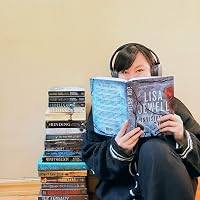
October 6, 2026
This was honestly such a good read! It’s fast-paced, easy to get into, and the writing style makes it so easy to just keep reading. As a Filipino, I especially loved seeing our mythical creatures, folktales, language, and culture woven into a fantasy story. It feels like such a great way to introduce Filipino mythology and folklore to readers who may not be familiar with them.
I also really enjoyed the world-building. Beyond the fantasy elements, I loved how the story incorporated pieces of Philippine history, particularly colonialism and how our country slowly changed and adapted to the colonizers’ way of life. The idea of being forced to forget our old beliefs while being taught to revere the colonizers as powerful or almost godlike was especially interesting. At the same time, I loved that there were still far-off islands and communities that held on to the “Old World,” much like how some remote parts of the Philippines still preserve traditions and beliefs that have been passed down for generations.
And I loved the little details that made the Filipino culture feel so present: the language, the way children respect their parents and grandparents, and the richness of our traditions and beliefs. As a Filipino reader, those details made the story feel especially meaningful to me.
My only real wish is that the characters, especially the Babaylan, had a little more individuality beyond their different powers. I wanted them to have more distinct personalities, quirks, and voices so that I could connect with them as individual characters rather than primarily through what they could do.
That said, I have a feeling there’s still A LOT more to come. This book definitely feels like the beginning of something bigger, with the real war seemingly only about to start. And that cliffhanger?? Excuse me??? 😭
Overall, I really enjoyed this. Fast-paced, easy to read, rich in Filipino culture and mythology, and definitely a story that left me wanting to know what happens next. 4.5⭐
I also really enjoyed the world-building. Beyond the fantasy elements, I loved how the story incorporated pieces of Philippine history, particularly colonialism and how our country slowly changed and adapted to the colonizers’ way of life. The idea of being forced to forget our old beliefs while being taught to revere the colonizers as powerful or almost godlike was especially interesting. At the same time, I loved that there were still far-off islands and communities that held on to the “Old World,” much like how some remote parts of the Philippines still preserve traditions and beliefs that have been passed down for generations.
And I loved the little details that made the Filipino culture feel so present: the language, the way children respect their parents and grandparents, and the richness of our traditions and beliefs. As a Filipino reader, those details made the story feel especially meaningful to me.
My only real wish is that the characters, especially the Babaylan, had a little more individuality beyond their different powers. I wanted them to have more distinct personalities, quirks, and voices so that I could connect with them as individual characters rather than primarily through what they could do.
That said, I have a feeling there’s still A LOT more to come. This book definitely feels like the beginning of something bigger, with the real war seemingly only about to start. And that cliffhanger?? Excuse me??? 😭
Overall, I really enjoyed this. Fast-paced, easy to read, rich in Filipino culture and mythology, and definitely a story that left me wanting to know what happens next. 4.5⭐

March 28, 2026
What the Tak talaga... How do I even start?
No right amount of words could encapsulate how I felt reading this book. I'm not really a big fan of reading fantasy fiction, but I was intrigued by the concept of Philippine mythology so much that I have decided to give it a try. And I can just say, it was all takking worth it.
She Who Devours is a book that reels you deep into the Seven Islands; if you look at my copy, I think you'll see the marks of me going back-and-forth to look at the map just so that I could understand how far each Islands are from each other. This book is my first read this year, and I would never EVER wish to have any other.
My favorite part of it all is probably the real-life parallels that I kept on seeing as I flip through each page. Despite the book being fictional, it tackled a lot of societal problems that we are still dealing with today—and I am a sucker for that. The characters were also well developed, especially Maya, although I hope to see more of Aga's development. In terms of the concept, this book got me HOOKED on Philippine mythology. I had to rant to my sister, who's a Philippine mythology enthusiast, about everything that was happening, and she just laughs every single time I was mindblown by the twists of this masterpiece.
Basta, I can't wait for the next one! My thoughts are all over the place, and I think I need to zone out and make up scenarios inside my head in order to move on from that epilogue, but one thing's for sure—this book is a MUST READ!! I am soooo so proud of you, Miss B! You never fail to amaze me < 3
No right amount of words could encapsulate how I felt reading this book. I'm not really a big fan of reading fantasy fiction, but I was intrigued by the concept of Philippine mythology so much that I have decided to give it a try. And I can just say, it was all takking worth it.
She Who Devours is a book that reels you deep into the Seven Islands; if you look at my copy, I think you'll see the marks of me going back-and-forth to look at the map just so that I could understand how far each Islands are from each other. This book is my first read this year, and I would never EVER wish to have any other.
My favorite part of it all is probably the real-life parallels that I kept on seeing as I flip through each page. Despite the book being fictional, it tackled a lot of societal problems that we are still dealing with today—and I am a sucker for that. The characters were also well developed, especially Maya, although I hope to see more of Aga's development. In terms of the concept, this book got me HOOKED on Philippine mythology. I had to rant to my sister, who's a Philippine mythology enthusiast, about everything that was happening, and she just laughs every single time I was mindblown by the twists of this masterpiece.
Basta, I can't wait for the next one! My thoughts are all over the place, and I think I need to zone out and make up scenarios inside my head in order to move on from that epilogue, but one thing's for sure—this book is a MUST READ!! I am soooo so proud of you, Miss B! You never fail to amaze me < 3

March 29, 2026
As a fantasy girly, I’ve always wanted a story that really showcases Philippine mythology and folklore. And finally, we have one.
This was such a fast-paced and entertaining read. I was instantly immersed. What made it even more special was how familiar everything felt. Even though it’s set in an imaginative version of the Philippines, called the Seven Islands, there’s this strong sense of nostalgia while reading. The way the story weaves in Philippine history, culture, and the diversity of dialects across the islands made the world feel alive and close to home.
The characters also felt real. Maya, our FMC, can be frustrating at times, but she’s young, and her decisions reflect that. It actually made her more believable and human.
I just wished the book was longer. While I enjoyed the fast pace, the shorter length made some scenes, character moments, and overall world-building feel a bit limited. There’s so much potential here, and I would’ve loved to see everything more fleshed out and given more depth.
Overall, I really enjoyed this and I’m excited for the next book. There’s a lot more to explore in this world, and I’m looking forward to seeing it expand even further.
Rating: 3.75 ⭐
This was such a fast-paced and entertaining read. I was instantly immersed. What made it even more special was how familiar everything felt. Even though it’s set in an imaginative version of the Philippines, called the Seven Islands, there’s this strong sense of nostalgia while reading. The way the story weaves in Philippine history, culture, and the diversity of dialects across the islands made the world feel alive and close to home.
The characters also felt real. Maya, our FMC, can be frustrating at times, but she’s young, and her decisions reflect that. It actually made her more believable and human.
I just wished the book was longer. While I enjoyed the fast pace, the shorter length made some scenes, character moments, and overall world-building feel a bit limited. There’s so much potential here, and I would’ve loved to see everything more fleshed out and given more depth.
Overall, I really enjoyed this and I’m excited for the next book. There’s a lot more to explore in this world, and I’m looking forward to seeing it expand even further.
Rating: 3.75 ⭐

April 5, 2026
What the tak?! I devoured this. No crumbs left. 😮🔥
She Who Devours follows Maya Halili, a driven academic aiming for a full-time post at the National University of the Seven Islands, whose life takes a dark turn when she’s pulled into a hidden world of spirits and ancient power. As mysterious disappearances rise, she becomes entangled with The Hand of Kaylahon, a secret society of shamans who channel gods at a dangerous cost—forcing her to choose between the life she’s built and a destiny that could consume her.
This is undeniably a strong debut by Bea Bustamante 🙌 It’s fast-paced, addictive, and incredibly easy to binge. I kept saying “one more chapter”… until I was suddenly at the end. What stood out most to me was how richly it weaves in Philippine folklore and cultural elements. From the babaylan to the manananggal and aswang, and many others, it feels both familiar and refreshingly reimagined. There’s something special, and honestly, pride-inducing, about seeing our own myths take center stage in such a gripping story.
If I had one small wish, it would be for more breathing room. I wanted extra time with the characters and key moments, as some scenes felt like they passed too quickly when they could have fleshed out more and hit even deeper.
But that ending?! Absolute cliffhanger. 😭 I need book 2 in my hands ASAP! I can’t stop thinking about what happens next for Maya and how everything will unfold from here.
She Who Devours follows Maya Halili, a driven academic aiming for a full-time post at the National University of the Seven Islands, whose life takes a dark turn when she’s pulled into a hidden world of spirits and ancient power. As mysterious disappearances rise, she becomes entangled with The Hand of Kaylahon, a secret society of shamans who channel gods at a dangerous cost—forcing her to choose between the life she’s built and a destiny that could consume her.
This is undeniably a strong debut by Bea Bustamante 🙌 It’s fast-paced, addictive, and incredibly easy to binge. I kept saying “one more chapter”… until I was suddenly at the end. What stood out most to me was how richly it weaves in Philippine folklore and cultural elements. From the babaylan to the manananggal and aswang, and many others, it feels both familiar and refreshingly reimagined. There’s something special, and honestly, pride-inducing, about seeing our own myths take center stage in such a gripping story.
If I had one small wish, it would be for more breathing room. I wanted extra time with the characters and key moments, as some scenes felt like they passed too quickly when they could have fleshed out more and hit even deeper.
But that ending?! Absolute cliffhanger. 😭 I need book 2 in my hands ASAP! I can’t stop thinking about what happens next for Maya and how everything will unfold from here.

August 15, 2026
The book follows Maya Halili, a young academic trying to secure a permanent faculty position while dealing with her demanding adviser and her academic rival, Aga Kaneko. But her ordinary problems quickly become much bigger when mysterious disappearances begin happening across Santa Teresita and Maya becomes involved with the Hand of Kaylahon, a secret society of shamans capable of summoning gods and becoming their vessels.
I really wanted to love this because the concept sounded so unique. The combination of academia, political conflict, Philippine mythology and fantasy horror is something I haven't come across often. However, I think one of the biggest obstacles for me was that I'm not familiar with Philippine folklore or its mythology at all. Because of that, I found it difficult to form some connection with some of the creatures, gods and folklore elements that I think someone more familiar with them might have. The worldbuilding itself was definitely ambitious, but at times there was a lot of information to take in. With so many names, concepts, mythology and political elements being introduced, I occasionally felt lost. But I did read till the end of the book.
I enjoyed Maya as a main character that is so ambitious and determined. I also liked the academic setting in the beginning and honestly wish this book explore more of it. Her rivalry with Aga was quite entertaining, their banter and differences makes the book much better. This book has intriguing concept and an incredibly unique setting but unfortunately it was not for me, as I struggled to connect with the mysterious folklore and lost in the heavy concept. Thank you Penguin Book Sea for sending me this copy in exchange for an honest review.
I really wanted to love this because the concept sounded so unique. The combination of academia, political conflict, Philippine mythology and fantasy horror is something I haven't come across often. However, I think one of the biggest obstacles for me was that I'm not familiar with Philippine folklore or its mythology at all. Because of that, I found it difficult to form some connection with some of the creatures, gods and folklore elements that I think someone more familiar with them might have. The worldbuilding itself was definitely ambitious, but at times there was a lot of information to take in. With so many names, concepts, mythology and political elements being introduced, I occasionally felt lost. But I did read till the end of the book.
I enjoyed Maya as a main character that is so ambitious and determined. I also liked the academic setting in the beginning and honestly wish this book explore more of it. Her rivalry with Aga was quite entertaining, their banter and differences makes the book much better. This book has intriguing concept and an incredibly unique setting but unfortunately it was not for me, as I struggled to connect with the mysterious folklore and lost in the heavy concept. Thank you Penguin Book Sea for sending me this copy in exchange for an honest review.

March 16, 2026
I will eat anything up as long as it’s Filipino mythology, and this book did not disappoint.
She Who Devours follows Maya as she gets pulled into a world filled with gods, goddesses, and mythical creatures across the Seven Islands. What starts as a strange encounter quickly spirals into something bigger, hinting at powers, secrets, and a destiny that’s much larger than she expected.
What I really liked about this book is how simple and easy the writing is to follow. The pacing was great and I honestly couldn’t put it down. There’s also a bit of tension between Maya and Aga that had me giggling at times.
The book ends with a major cliffhanger, which left me wanting more. It really feels like this story is setting up the world of the Seven Islands—almost like an introduction to what’s coming next.
We’re introduced to a lot of gods, goddesses, and creatures, and I’m excited to see their stories explored more in the next books.
There are still so many things I want answers to, so I’m definitely looking forward to the sequel.
She Who Devours follows Maya as she gets pulled into a world filled with gods, goddesses, and mythical creatures across the Seven Islands. What starts as a strange encounter quickly spirals into something bigger, hinting at powers, secrets, and a destiny that’s much larger than she expected.
What I really liked about this book is how simple and easy the writing is to follow. The pacing was great and I honestly couldn’t put it down. There’s also a bit of tension between Maya and Aga that had me giggling at times.
The book ends with a major cliffhanger, which left me wanting more. It really feels like this story is setting up the world of the Seven Islands—almost like an introduction to what’s coming next.
We’re introduced to a lot of gods, goddesses, and creatures, and I’m excited to see their stories explored more in the next books.
There are still so many things I want answers to, so I’m definitely looking forward to the sequel.

September 9, 2026
3.5!
Fun book. Brought me back to the days when I would dream of the handsome protagonist outside of reading haha. In all seriousness, it was a lovely read! Maybe I'm biased because I have notes from her MRWF 2026 panel in my journal, but I think her love for the stories she grew up with shines through.
I think the characters could've been developed more, especially with their motivations. I feel like Maya was written to follow a certain path – like there's no tension because we know what she's going to choose. I'd love a little more playing around with the lore and how it can weave into the deeper character wants more so its existence posits more than just a nostalgic callback!
All in all, it was grounding for its setting and themes but also fresh in modernizing these old tales. I really hope a sequel is in the works!
"You are blessed beyond measure, Maya, and you will have the sky, the stars, and the spirits of our ancestors one day if you are willing to accept them."
Fun book. Brought me back to the days when I would dream of the handsome protagonist outside of reading haha. In all seriousness, it was a lovely read! Maybe I'm biased because I have notes from her MRWF 2026 panel in my journal, but I think her love for the stories she grew up with shines through.
I think the characters could've been developed more, especially with their motivations. I feel like Maya was written to follow a certain path – like there's no tension because we know what she's going to choose. I'd love a little more playing around with the lore and how it can weave into the deeper character wants more so its existence posits more than just a nostalgic callback!
All in all, it was grounding for its setting and themes but also fresh in modernizing these old tales. I really hope a sequel is in the works!

September 29, 2026
Maya’s life takes a difficult turn when she uncovers a hidden truth about who she really is. As she learns about her identity and the destiny waiting for her, she’s pulled into a world deeply rooted in the legends she heard as a child—where, of course, not everything is as it seems.
I really enjoyed this fast-paced, mythology-inspired Filipino fantasy! 🇵🇭🐉 As someone who grew up hearing Filipino legends and myths, there was something so familiar—and nostalgic—about it. That childhood feeling of folklore being fascinating, mysterious, and just a little terrifying...
The setting also caught my attention. I loved the blend of modern-day life and the Philippines’ historical past, particularly during the time when the islands were under foreign occupation. Such an interesting backdrop for a fantasy story!
The fantasy itself.. it's easy to follow and not overly complicated, but still enough to keep me turning the pages. The vibe is chilling and suspenseful, but there was one chapter that surprised me with a softer moment—a beautiful glimpse beyond the darkness and a hope for what might await beyond this life.
And now I’m left with SO many questions because this is only the beginning. Maya has only started discovering who she is and accepting the destiny unfolding before her. There’s clearly so much more to uncover.
And of course… WHAT ABOUT AGA KANEKO?! He's quoted mysterious and I need to know where this budding romance with Maya is headed! I’m also already curious about all the characters introduced and can’t wait to learn more about them.
For a debut, She Who Devours definitely shows promise. I love seeing Filipino mythology, history, and fantasy come together in a story that’s worth devouring.
Kudos to Bea for bringing this story into the world, especially for Filipino readers. 🇵🇭📚 I’m definitely curious to see what comes next for Maya!
I really enjoyed this fast-paced, mythology-inspired Filipino fantasy! 🇵🇭🐉 As someone who grew up hearing Filipino legends and myths, there was something so familiar—and nostalgic—about it. That childhood feeling of folklore being fascinating, mysterious, and just a little terrifying...
The setting also caught my attention. I loved the blend of modern-day life and the Philippines’ historical past, particularly during the time when the islands were under foreign occupation. Such an interesting backdrop for a fantasy story!
The fantasy itself.. it's easy to follow and not overly complicated, but still enough to keep me turning the pages. The vibe is chilling and suspenseful, but there was one chapter that surprised me with a softer moment—a beautiful glimpse beyond the darkness and a hope for what might await beyond this life.
And now I’m left with SO many questions because this is only the beginning. Maya has only started discovering who she is and accepting the destiny unfolding before her. There’s clearly so much more to uncover.
And of course… WHAT ABOUT AGA KANEKO?! He's quoted mysterious and I need to know where this budding romance with Maya is headed! I’m also already curious about all the characters introduced and can’t wait to learn more about them.
For a debut, She Who Devours definitely shows promise. I love seeing Filipino mythology, history, and fantasy come together in a story that’s worth devouring.
Kudos to Bea for bringing this story into the world, especially for Filipino readers. 🇵🇭📚 I’m definitely curious to see what comes next for Maya!

August 7, 2026
wow.
that was definitely an adventure.
a beautifully-written adventure at that. this novel is a refreshing retelling of philippine mythology as it’s more attuned to modern times.
i didn’t expect that there would be romance, enemies-to-(hopefully)lovers at that 🤭, but i am SO LIVING FOR IT.
i devoured (ba dum tss) this in a day—well, if you’d count the hours i actually read it instead of the amount of days 🤪. i couldn’t let go of the book cuz i was really hooked and i was curious on what was gonna happen next. i even had theories and hunches while reading it (and i can’t believe i was right about dr. manalo and hanan)
i love how this book delves into issues that are still prevalent here in the philippines. it talks about topics that revolve around our country’s identity and culture—which is honestly vital since as a colonized nation, we have yet to fully claim who we truly are.
i’m excited to see what’s in store for maya, aga, and the babaylans!!!
so glad i picked this up back in march~
that was definitely an adventure.
a beautifully-written adventure at that. this novel is a refreshing retelling of philippine mythology as it’s more attuned to modern times.
i didn’t expect that there would be romance, enemies-to-(hopefully)lovers at that 🤭, but i am SO LIVING FOR IT.
i devoured (ba dum tss) this in a day—well, if you’d count the hours i actually read it instead of the amount of days 🤪. i couldn’t let go of the book cuz i was really hooked and i was curious on what was gonna happen next. i even had theories and hunches while reading it (and i can’t believe i was right about dr. manalo and hanan)
i love how this book delves into issues that are still prevalent here in the philippines. it talks about topics that revolve around our country’s identity and culture—which is honestly vital since as a colonized nation, we have yet to fully claim who we truly are.
i’m excited to see what’s in store for maya, aga, and the babaylans!!!
so glad i picked this up back in march~
This entire review has been hidden because of spoilers.

March 8, 2026
she indeed, devoured this book.
what the tak? this was impossible to put down ‼️
❣️highly recommend for people who live and breathe: academic rivalries, “chosen one” trope, ancient magic, philippine folklore and mythology, and political fantasy
besides the character diversity (both humans and mythical creatures), there are also strong references to colonialism, political tension, internal battles between your plans vs destiny, and the search for one’s personal identity.
filipinos may find these all too familiar, making it an even more insightful experience to read through the lens of people with different opinions at various stages of acceptance.
greek mythology has always taken center stage in my brain, but here’s another story thats helping philippine mythology take its well-deserved crown.
what the tak? this was impossible to put down ‼️
❣️highly recommend for people who live and breathe: academic rivalries, “chosen one” trope, ancient magic, philippine folklore and mythology, and political fantasy
besides the character diversity (both humans and mythical creatures), there are also strong references to colonialism, political tension, internal battles between your plans vs destiny, and the search for one’s personal identity.
filipinos may find these all too familiar, making it an even more insightful experience to read through the lens of people with different opinions at various stages of acceptance.
greek mythology has always taken center stage in my brain, but here’s another story thats helping philippine mythology take its well-deserved crown.

March 31, 2026
I couldn’t help but wonder—is this going to be a series? If it is, then I’ll gladly forgive the unanswered questions and unfinished adventures, and I might even change my rating. But since it doesn’t say so, I felt a bit let down by the loose ends.
For now, my rating reflects that many threads were left hanging and some scenes felt a little forced. I truly appreciate the inclusion of local folklore—being a fan of Filipino myths and legends, that part was a delight. I just wish the main female lead had been written with more logic and depth, because her arc felt a bit lacking compared to the richness of the folklore.
Overall, it’s a story with potential, and if a sequel is on the horizon, I’d be excited to see how the author ties everything together.
For now, my rating reflects that many threads were left hanging and some scenes felt a little forced. I truly appreciate the inclusion of local folklore—being a fan of Filipino myths and legends, that part was a delight. I just wish the main female lead had been written with more logic and depth, because her arc felt a bit lacking compared to the richness of the folklore.
Overall, it’s a story with potential, and if a sequel is on the horizon, I’d be excited to see how the author ties everything together.
May 20, 2026
I finally finished this book after two months of procrastinating! When I picked it up again, I finished the whole thing in like four days. The prose is fantastic and the characters are really compelling and well-written. But I think the biggest thing for me is the Filipino mythology infused into the worldbuilding. It's in everything, from the gods, to the way people speak, to the places they live. And for the story to deal so directly with the Philippines's history of colonialism erasing native cultures and folklore gave the book's themes such bite. I will say that the book felt a bit short, and I definitely expected a bit more past the ending of this book - though the ending twist, of course, was great!
April 8, 2026
I absolutely loved this book. It is a fantasy story rooted in Philippine mythology, which made it feel fresh and exciting from the very first page. I really enjoyed the writing style. It was engaging and easy to follow, and the pacing kept me hooked the entire time.
What stood out to me the most was how well researched everything felt, especially the way Philippine myths were woven into the story. It added so much depth and authenticity. Even if you are not Filipino, I truly believe you will still enjoy and appreciate this book.
I am already looking forward to book two. I highly, highly recommend it.
What stood out to me the most was how well researched everything felt, especially the way Philippine myths were woven into the story. It added so much depth and authenticity. Even if you are not Filipino, I truly believe you will still enjoy and appreciate this book.
I am already looking forward to book two. I highly, highly recommend it.

August 29, 2026
4/5 ⭐️
Really enjoyed this! I didn’t know it was Book 1, so I spent the last few chapters anxiously waiting for the Bakunawa fight, only to realize it was mostly setting up the story.
I understand that this book is mostly focused on world-building, but I actually really enjoyed the way it was done. Instead of giving us pages and pages of information like a lecture, the author lets us discover the world naturally through the actual story and the characters. It made the world-building feel much easier to follow and, honestly, more immersive for me.
My only frustration was how indecisive the FMC could be at times. Hopefully that’s something that develops in the next book because I’d love to see her become more decisive and confident.
Overall, definitely excited to continue!
Really enjoyed this! I didn’t know it was Book 1, so I spent the last few chapters anxiously waiting for the Bakunawa fight, only to realize it was mostly setting up the story.
I understand that this book is mostly focused on world-building, but I actually really enjoyed the way it was done. Instead of giving us pages and pages of information like a lecture, the author lets us discover the world naturally through the actual story and the characters. It made the world-building feel much easier to follow and, honestly, more immersive for me.
My only frustration was how indecisive the FMC could be at times. Hopefully that’s something that develops in the next book because I’d love to see her become more decisive and confident.
Overall, definitely excited to continue!
March 8, 2026
OVERALL RATING:
⭐⭐⭐🍪
Three stars and one cookie!
Spoiler-free review: For a debut novel, this is honestly a huge first step into a world with massive potential. You can already feel the scaffolding of a much larger mythology waiting underneath the surface.
However, I also need to mention that I put this off for nearly a month because I genuinely could not tell who the intended audience was supposed to be at first glance. The premise sounded very YA fantasy, but the actual execution leans far more into that whimsical, straightforward storytelling style often found in middle-grade adventures or older children's fantasy novels. The prose is simple, the worldbuilding is introduced rather broadly, and the emotional beats arrive without too much ornamentation.
Normally, that would not entirely work for me, especially with a premise that carries so much political and mythological potential, but there is a charm to it all. That straightforwardness makes it a very breezy "palate cleanser" read.
"Spoilerful" review: If I were to recommend this book to a friend, the first thing I would say is "it actually reminded me of PJO!"
Which is a compliment I do NOT give lightly. The overall structure honestly reminded me a little of Percy Jackson & the Olympians, particularly in the sense that this feels like the beginning of a much larger "person discovers their connection to gods and ancient forces" narrative. That comparison is not necessarily about tone, because this book carries a distinctly Filipino cultural identity that separates it from Western mythological fantasy, though more about the way the first installment functions as an entry point into a larger mythos.
Bustamante is really, really good at building atmospheric tension. I especially liked the portrayal of Astyria as this vaguely hostile foreign power. The way the story frames it through rumor, fear, and political distance made the world feel larger than the immediate plot. It left me wondering whether the narrative is deliberately hiding another side to the conflict.
The pacing does drag a bit in the middle, especially after There is a stretch where the story pauses repeatedly to explain lore, lineage, and destiny, and while some of that information is necessary, the momentum noticeably slows down. That said, I started appreciating the worldbuilding far more. The world of the Seven Islands suddenly feel wider, stranger, and more textured, like the novel finally opens the gate it had been circling around for two hundred pages.
I do wish the academic portions of the story lasted longer because Aga and Maya's rivalry banter was genuinely one of the highlights of the book for me. Their dynamic has that chaotic "academic rivals-to-lovers" energy where half their conversations feel like arguments disguised as flirting. I honestly would have happily sat through several more chapters of them doing just that lol.
Now for the characters...
Maya herself is a decent protagonist. I liked the angle, and I appreciate that the novel allows her to be stubborn, ambitious, and occasionally reckless without flattening her into a generic fantasy heroine. Her determination comes through very clearly in her internal narration. At the same time, the moments where she abruptly gets distracted thinking about Aga made me CACKLE.
Aga, meanwhile, felt kinda passive for a large portion of the story, almost like a guy being unwillingly dragged through everyone else's destiny. I wasn't fully sold on him at first because he spends so much of the novel reacting rather than acting. However, I do think the later chapters improve his characterization significantly. The conversation with his tado-oya added emotional weight to him, and
I also think the book would have benefited from including an index or glossary for the terminology. There are many cultural and world-specific terms introduced rapidly, and while I appreciate that the novel does not over-explain itself, there were moments where I had to pause and mentally reconstruct what certain titles or concepts meant. The pacing can also feel uneven in places (I wouldn't call it outright messy, but the sudden flashbacks sometimes arrive so abruptly that they interrupt scenes right when tension is building?)
Nonetheless, I absolutely LOVED the integration of Filipino mythology. The bakunawa being positioned as the centerpiece of the novel was such a strong choice, and the inclusion of creatures like manananggals never felt awkward or forced into the narrative. A lot of fantasy novels that incorporate mythology can sometimes read like a checklist of references, but here the creatures feel naturally embedded into the world's logic, history, and fears.
To conclude: I'm crossing my fingers that the next installment leans harder My jaw literally DROPPED.
Bea Bustamante is a very promising author, and despite my gripes with the simplicity of the prose and some uneven pacing, I am fully seated for the sequel. 💝
Three stars and one cookie!
Spoiler-free review: For a debut novel, this is honestly a huge first step into a world with massive potential. You can already feel the scaffolding of a much larger mythology waiting underneath the surface.
However, I also need to mention that I put this off for nearly a month because I genuinely could not tell who the intended audience was supposed to be at first glance. The premise sounded very YA fantasy, but the actual execution leans far more into that whimsical, straightforward storytelling style often found in middle-grade adventures or older children's fantasy novels. The prose is simple, the worldbuilding is introduced rather broadly, and the emotional beats arrive without too much ornamentation.
Normally, that would not entirely work for me, especially with a premise that carries so much political and mythological potential, but there is a charm to it all. That straightforwardness makes it a very breezy "palate cleanser" read.
"Spoilerful" review: If I were to recommend this book to a friend, the first thing I would say is "it actually reminded me of PJO!"
Which is a compliment I do NOT give lightly. The overall structure honestly reminded me a little of Percy Jackson & the Olympians, particularly in the sense that this feels like the beginning of a much larger "person discovers their connection to gods and ancient forces" narrative. That comparison is not necessarily about tone, because this book carries a distinctly Filipino cultural identity that separates it from Western mythological fantasy, though more about the way the first installment functions as an entry point into a larger mythos.
Bustamante is really, really good at building atmospheric tension. I especially liked the portrayal of Astyria as this vaguely hostile foreign power. The way the story frames it through rumor, fear, and political distance made the world feel larger than the immediate plot. It left me wondering whether the narrative is deliberately hiding another side to the conflict.
The pacing does drag a bit in the middle, especially after There is a stretch where the story pauses repeatedly to explain lore, lineage, and destiny, and while some of that information is necessary, the momentum noticeably slows down. That said, I started appreciating the worldbuilding far more. The world of the Seven Islands suddenly feel wider, stranger, and more textured, like the novel finally opens the gate it had been circling around for two hundred pages.
I do wish the academic portions of the story lasted longer because Aga and Maya's rivalry banter was genuinely one of the highlights of the book for me. Their dynamic has that chaotic "academic rivals-to-lovers" energy where half their conversations feel like arguments disguised as flirting. I honestly would have happily sat through several more chapters of them doing just that lol.
Now for the characters...
Maya herself is a decent protagonist. I liked the angle, and I appreciate that the novel allows her to be stubborn, ambitious, and occasionally reckless without flattening her into a generic fantasy heroine. Her determination comes through very clearly in her internal narration. At the same time, the moments where she abruptly gets distracted thinking about Aga made me CACKLE.
Aga, meanwhile, felt kinda passive for a large portion of the story, almost like a guy being unwillingly dragged through everyone else's destiny. I wasn't fully sold on him at first because he spends so much of the novel reacting rather than acting. However, I do think the later chapters improve his characterization significantly. The conversation with his tado-oya added emotional weight to him, and
I also think the book would have benefited from including an index or glossary for the terminology. There are many cultural and world-specific terms introduced rapidly, and while I appreciate that the novel does not over-explain itself, there were moments where I had to pause and mentally reconstruct what certain titles or concepts meant. The pacing can also feel uneven in places (I wouldn't call it outright messy, but the sudden flashbacks sometimes arrive so abruptly that they interrupt scenes right when tension is building?)
Nonetheless, I absolutely LOVED the integration of Filipino mythology. The bakunawa being positioned as the centerpiece of the novel was such a strong choice, and the inclusion of creatures like manananggals never felt awkward or forced into the narrative. A lot of fantasy novels that incorporate mythology can sometimes read like a checklist of references, but here the creatures feel naturally embedded into the world's logic, history, and fears.
To conclude: I'm crossing my fingers that the next installment leans harder My jaw literally DROPPED.
Bea Bustamante is a very promising author, and despite my gripes with the simplicity of the prose and some uneven pacing, I am fully seated for the sequel. 💝
April 26, 2026
Cliffhanger after cliffhanger after cliffhanger. I need the next book 😭
I’ve been eyeing this book ever since I saw it bookstagram and I’m so glad I finally had the chance to read it. As a big fantasy girlie, I’ve always wanted to read a fantasy book based on the Filipino mythology and folklore and this book definitely did not disappoint! It actually kind of reminded me of Legendborn, with the vessels and all, but made more Filipino hahaha. I can’t wait to read more on where Maya’s story will take us.
I’ve been eyeing this book ever since I saw it bookstagram and I’m so glad I finally had the chance to read it. As a big fantasy girlie, I’ve always wanted to read a fantasy book based on the Filipino mythology and folklore and this book definitely did not disappoint! It actually kind of reminded me of Legendborn, with the vessels and all, but made more Filipino hahaha. I can’t wait to read more on where Maya’s story will take us.
Displaying 1 - 30 of 52 reviews