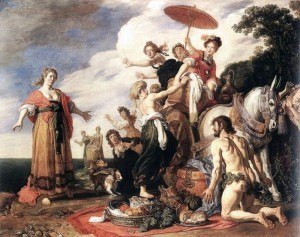
In Homer's Daughter, Robert Graves takes up Samuel Butler's argument that it wasn't blind old Homer who wrote The Odyssey, but a young woman from Sicily. Her name was Nausicaa, says Graves, and she wrote the epic poem in the tradition of the singing poets called Homer's Sons, based on her own life experiences. Nausicaa, the princess who does the washing in The Odyssey, who saves Odysseus when he is shipwrecked on the island where she lives, who gives him some of the laundry to wear and helps him on his way back to Ithaca. In Graves's version, Penelope's lovers are in fact Nausicaa's suitors, and the scene of the archery contest is the palace of Nausicaa's father, the King of the Elymans in Drepanum, Sicily. In return for saving the life of Phemius the singer during the final battle, Nausicaa makes him promise to sing and circulate her epic poem.
The Iliad, which I admire, is devised by a man for men; this epic, the Odyssey, will be devised by a woman for women. Understand that I am Homer’s latest-born child, a daughter; and listen attentively. When I have finished the poem, and written it out in cuttlefish ink on sheepskin, you must memorize it, and, if necessary, improve the language where it halts or flags.
Well, and even if it's not true, then it is at least a very, very good story. I loved it!