

What do you think?

The Vanishing Family: Love, Fate, and the Quest to End Dementia
Not yet published
Expected 29 Sep 26From the #1 New York Times bestselling author of Hidden Valley Road comes the heart-wrenching journey of a family facing a tragic genetic destiny, set against the scientific search for hope for all of us who fear losing our selves to dementia
In the idyllic American town of Pleasant Hills, Pennsylvania, lived a family with nine siblings, the youngest a girl named Barb. As the older children headed off to college and started their lives, only Barb was home to see their beautiful, still-young mother fall under a gothic spell, changed into someone they don’t withdrawn, neglectful, uncaring.
Thus begins The Vanishing Family, journalist Robert Kolker’s stunning follow-up to Hidden Valley Road (“Deeply compassionate and chilling”, Washington Post). The family, we learn, has a gene mutation for dementia, but with a special cruel twist. As early as their forties, formerly loving parents and hard driving executives will lose their jobs, have affairs, take up drinking—shed all inhibitions and sense of responsibility, and become people their families hardly know. And there is a 50/50 chance that it will happen to their children, too.
Kolker follows the family over years as they realize that what happened to their mother is happening to first one, then two, three, four, and more begin to change. The Vanishing Family unfolds like a heartbreaking thriller, as the siblings struggle to cope with terrifying fates. Sue, the black sheep of the family, finds a calling in caring for the others. And Barb sets out to find a cure. She learns that their mutation for a rare form of FTD (frontotemporal dementia) might help scientists understand and cure all dementia, including the scourge of Alzheimer’s disease.
Moving, intimate, hopeful, redemptive— The Vanishing Family is a medical detective story about an unforgettable family that speaks to all of us who wonder how our own stories will end.
In the idyllic American town of Pleasant Hills, Pennsylvania, lived a family with nine siblings, the youngest a girl named Barb. As the older children headed off to college and started their lives, only Barb was home to see their beautiful, still-young mother fall under a gothic spell, changed into someone they don’t withdrawn, neglectful, uncaring.
Thus begins The Vanishing Family, journalist Robert Kolker’s stunning follow-up to Hidden Valley Road (“Deeply compassionate and chilling”, Washington Post). The family, we learn, has a gene mutation for dementia, but with a special cruel twist. As early as their forties, formerly loving parents and hard driving executives will lose their jobs, have affairs, take up drinking—shed all inhibitions and sense of responsibility, and become people their families hardly know. And there is a 50/50 chance that it will happen to their children, too.
Kolker follows the family over years as they realize that what happened to their mother is happening to first one, then two, three, four, and more begin to change. The Vanishing Family unfolds like a heartbreaking thriller, as the siblings struggle to cope with terrifying fates. Sue, the black sheep of the family, finds a calling in caring for the others. And Barb sets out to find a cure. She learns that their mutation for a rare form of FTD (frontotemporal dementia) might help scientists understand and cure all dementia, including the scourge of Alzheimer’s disease.
Moving, intimate, hopeful, redemptive— The Vanishing Family is a medical detective story about an unforgettable family that speaks to all of us who wonder how our own stories will end.
368 pages, Hardcover
Expected publication September 29, 2026
About the author
Robert Kolker
3 books1,113 followersI'm the author of Hidden Valley Road: Inside the Mind of an American Family (Doubleday, 2020) and Lost Girls: An American Mystery (Harper, 2013). My latest book, The Vanishing Family: Love, Fate, and the Quest to End Dementia, is on sale 9/29/26.
Ratings & Reviews
Friends & Following
Create a free account to discover what your friends think of this book!
Community Reviews
Displaying 1 - 30 of 67 reviews
Want to Read
June 7, 2026Very excited to read Kolker's latest, which takes on dementia where his last book (Hidden Valley Road: Inside the Mind of an American Family) featured a family afflicted by schizophrenia. Perhaps if I review this one on my channel, I can be spared a repeat of last time and NOT get verbally accosted by one of the subjects of the book in my comments section.
The stories I have after over a decade on YouTube, I swear. 😶
Click here to hear more about this book and my other anticipated releases of the upcoming quarter over on my Booktube channel, abookolive!
The stories I have after over a decade on YouTube, I swear. 😶
Click here to hear more about this book and my other anticipated releases of the upcoming quarter over on my Booktube channel, abookolive!

August 12, 2026
LWe follow a family with nine children as the mom’s symptoms of a specific type of dementia, FTD, takes over. She becomes someone entirely different. People with this gene mutation begin making decisions that are in no way aligned with who they are, from affairs to not showering. They lose all sense of responsibility or inhibition as early as 40 years old. A cruel twist to an already devastating diagnosis. This gene mutation is hereditary and there is a 50/50 chance that children of someone with FTD will also get. This family has nine children, and one by one, more start to show symptoms. We follow both the family and the progression of the science. These two things converge as science begins to offer testing for the mutation. The nine children and THEIR children have a choice to make…should I get tested? If I know that in a decade or so, I will no longer be myself, how will that affect the decade before it happens? Will I live better or will be drowning in sorrow in a way that ruins this last good decade too?
It’s a lot. I held my breathe while reading. And yes there’s a bit of “mystery” here, but that’s not what took me most be surprise. I did expect to be so utterly moved by the way these siblings cared for each other. Nor did I expect to be moved by the language, but I was. Kolker took great care in both his research and the way he told this story. It doesn’t seem like he was able to take his heart out of this, and I’m glad for that. I recommend checking this out when it publishes September 29th. Thank you @doubleday for this reminder that your life is the time that you have, a statement true for all of us, but never in the same way
It’s a lot. I held my breathe while reading. And yes there’s a bit of “mystery” here, but that’s not what took me most be surprise. I did expect to be so utterly moved by the way these siblings cared for each other. Nor did I expect to be moved by the language, but I was. Kolker took great care in both his research and the way he told this story. It doesn’t seem like he was able to take his heart out of this, and I’m glad for that. I recommend checking this out when it publishes September 29th. Thank you @doubleday for this reminder that your life is the time that you have, a statement true for all of us, but never in the same way

August 28, 2026
Thank you @netgalley and @doubledaybooks for this advance copy.
Robert Kolker, author of Oprah Book Club pick Hidden Valley Road, is back with the heart wrenching story of a family with nine children who discover they have a 50% chance of carrying a genetic mutation that causes FTD, a progressively debilitating dementia with onset in the mid forties to sixties.
Kolker presents well researched information about the history and science of FTD, but the story shines in his narrative of the siblings as they grow up and navigate their lives with an ever changing reality. There is so much to unpack and endless discussion topics, but I hesitate to bring them up here so you can experience it all for yourself as the reader. Don’t miss this one if you are a fan of narrative nonfiction.
Robert Kolker, author of Oprah Book Club pick Hidden Valley Road, is back with the heart wrenching story of a family with nine children who discover they have a 50% chance of carrying a genetic mutation that causes FTD, a progressively debilitating dementia with onset in the mid forties to sixties.
Kolker presents well researched information about the history and science of FTD, but the story shines in his narrative of the siblings as they grow up and navigate their lives with an ever changing reality. There is so much to unpack and endless discussion topics, but I hesitate to bring them up here so you can experience it all for yourself as the reader. Don’t miss this one if you are a fan of narrative nonfiction.

July 29, 2026
The Vanishing Family: Love, Fate, and the Quest to End Dementia by Robert Kolker follows one family’s multigenerational experience with hereditary frontotemporal dementia (FTD) while also tracing the scientific effort to understand the disease. The book combines the family’s personal history with the medical history of FTD, explaining how researchers gradually distinguished it from Alzheimer’s disease and eventually identified the genetic mutation connected to the family’s illness.
I thought the strongest part of the book was its focus on the family and the caregivers rather than the disease itself. While the science and genetics were informative, I found myself more interested in how the diagnosis affected spouses, siblings, children, and other family members. The book also does a good job exploring the difficult choices surrounding genetic testing and the uncertainty that comes with knowing or not knowing your risk.
I also enjoyed the historical chapters, which explained how the understanding of dementia evolved over time and helped provide context for why the family struggled for years to receive accurate diagnoses. The only aspect that occasionally slowed me down was the large number of family members introduced throughout the book, although the family trees helped make those transitions easier to follow.
This is a thoughtful look at hereditary dementia and the impact it has on an entire family, not just the person diagnosed.
Thanks to NetGalley and Doubleday Books for providing an advance copy.
I thought the strongest part of the book was its focus on the family and the caregivers rather than the disease itself. While the science and genetics were informative, I found myself more interested in how the diagnosis affected spouses, siblings, children, and other family members. The book also does a good job exploring the difficult choices surrounding genetic testing and the uncertainty that comes with knowing or not knowing your risk.
I also enjoyed the historical chapters, which explained how the understanding of dementia evolved over time and helped provide context for why the family struggled for years to receive accurate diagnoses. The only aspect that occasionally slowed me down was the large number of family members introduced throughout the book, although the family trees helped make those transitions easier to follow.
This is a thoughtful look at hereditary dementia and the impact it has on an entire family, not just the person diagnosed.
Thanks to NetGalley and Doubleday Books for providing an advance copy.
September 12, 2026
First off, thank you to NetGalley and Doubleday for an ARC of this book!
The Vanishing Family tells the tragic story of one family and their struggle with a rare genetic mutation that causes early-onset dementia. The author excels at balancing the family story with the neuroscience. The overall narrative never gets derailed or bogged down by the science. He also writes about the complicated family dynamics in a respectful and compassionate way.
This was an incredibly evocative book. My emotions ran the gamut from anxiety, to sadness, to grief, and back over again. I kept wondering what I would do if I were in this family’s position. Not the most FUN mental exercise lol
My only complaint is the lack of visuals in the book. Since this is such a large family, it would have been helpful to have a more detailed family tree to refer to at times. Maybe even some DNA diagrams, etc., to illustrate the scientific side a bit better as well. But this is definitely more of a personal preference than a critique of the book.
Overall, this was an intriguing, heartbreaking story that was extremely well-written. I definitely recommend it to anyone interested in medical mysteries, neuroscience, complex family dynamics, or just narrative nonfiction in general.
The Vanishing Family tells the tragic story of one family and their struggle with a rare genetic mutation that causes early-onset dementia. The author excels at balancing the family story with the neuroscience. The overall narrative never gets derailed or bogged down by the science. He also writes about the complicated family dynamics in a respectful and compassionate way.
This was an incredibly evocative book. My emotions ran the gamut from anxiety, to sadness, to grief, and back over again. I kept wondering what I would do if I were in this family’s position. Not the most FUN mental exercise lol
My only complaint is the lack of visuals in the book. Since this is such a large family, it would have been helpful to have a more detailed family tree to refer to at times. Maybe even some DNA diagrams, etc., to illustrate the scientific side a bit better as well. But this is definitely more of a personal preference than a critique of the book.
Overall, this was an intriguing, heartbreaking story that was extremely well-written. I definitely recommend it to anyone interested in medical mysteries, neuroscience, complex family dynamics, or just narrative nonfiction in general.
Review of advance copy received from NetGalley
PHENOMENAL — and yes, the capital letters are intentional. I want to emphasise just how important and brilliant this book is. This author has become an automatic read for me: he writes it, and I read it. People often say they’d happily read an author’s shopping list; I feel even more devoted than that, though I’m not sure how to express it without sounding overly dramatic.
The stories he investigates are extraordinary. He brings together humanity and science with such clarity. Weaving personal details with medical insight, case notes with lived experience. He finds the most compelling subjects and then treats them with absolute care. He makes the medical and data‑driven elements not only accessible but genuinely fascinating. He deserves to be far more widely read and recognised.
I also need to add a personal note: my mum recently died from dementia, so of course this book felt deeply relatable. It helped me better understand how this disease leaves both the person and the family with so little control. In many ways, it was a real comfort.
If I’m writing in capitals, know that I mean it (but still sorry to have been so aggressively shouting about this book). This is an incredible book.
The stories he investigates are extraordinary. He brings together humanity and science with such clarity. Weaving personal details with medical insight, case notes with lived experience. He finds the most compelling subjects and then treats them with absolute care. He makes the medical and data‑driven elements not only accessible but genuinely fascinating. He deserves to be far more widely read and recognised.
I also need to add a personal note: my mum recently died from dementia, so of course this book felt deeply relatable. It helped me better understand how this disease leaves both the person and the family with so little control. In many ways, it was a real comfort.
If I’m writing in capitals, know that I mean it (but still sorry to have been so aggressively shouting about this book). This is an incredible book.

August 28, 2026
Thank you to NetGalley and Doubleday Books for an advance copy of this book.
5/5 stars
Plot: Non-fiction following a family on the frontlines of frontotemporal dementia research and treatment as more and more family members are diagnosed.
Impression: I was thrilled for the chance to read this book as I enjoyed Hidden Valley Road! I am familiar with FTD and even Pick’s Disease from my work in hospice- but learned a lot. I’ve already recommended this book to others before finishing. Robert Kolker perfectly balances science and research with the human interest story, writing emotionally and at a level that is understandable and engaging. Hopefully with more awareness will come more testing and research and eventually, a cure.
5/5 stars
Plot: Non-fiction following a family on the frontlines of frontotemporal dementia research and treatment as more and more family members are diagnosed.
Impression: I was thrilled for the chance to read this book as I enjoyed Hidden Valley Road! I am familiar with FTD and even Pick’s Disease from my work in hospice- but learned a lot. I’ve already recommended this book to others before finishing. Robert Kolker perfectly balances science and research with the human interest story, writing emotionally and at a level that is understandable and engaging. Hopefully with more awareness will come more testing and research and eventually, a cure.

Review of advance copy received from Publisher
3.5

Review of advance copy received from NetGalley
I previously read journalist Robert Kolker's book Hidden Valley Road: Inside the Mind of an American Family, about the Galvin family of Colorado Springs, Colorado. Six sons (out of twelve children) were diagnosed with schizophrenia, and Kolker tells the Galvins' story, including the search for genetic markers for the disease, and the family's contribution to the study of mental illness.

The Galvin family
In 'The Vanishing Family', Kolker relates the story of another family that carries the gene for a hereditary illness, in this case frontotemporal dementia. It took decades for the clan to understand their plight, and Kolker relates their tale step by harrowing step.
For privacy, Kolker uses only first names.
Irish-Catholic couple Ollie and Jean were born in the late 1920s, married in 1950, and settled in a Missouri suburb called Webster Groves. Over the next 15 years, Jean became the stay-at-home mom of seven children, and Ollie worked at a series of engineering jobs, hoping to start his own business some day.
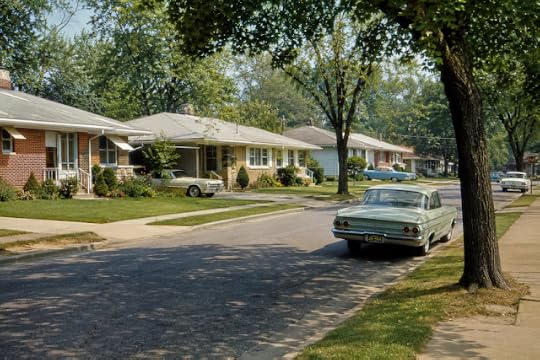
By 1967, financial difficulties and job opportunities led Ollie and Jean to settle in Pleasant Hills, Pennsylvania, and they eventually had a total of nine children: Kathy, Christy, Sue, Dutch, Mary, Peggy, Scott, Jenny, and Barb.
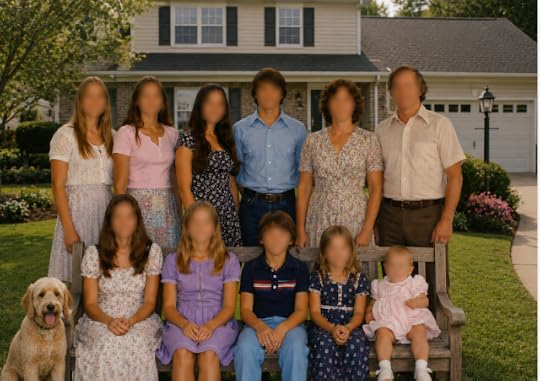
Kolker writes, "Jean was something of a wonder, filled with optimism and energy, reading, gardening, and playing bridge with Ollie and their friends. She shopped for the food on a strict budget, making the calculations and lists in her head, and cooked everything for the family. She made her own donuts and pizza from scratch, and served up enchiladas when they were still considered an exotic foreign dish."

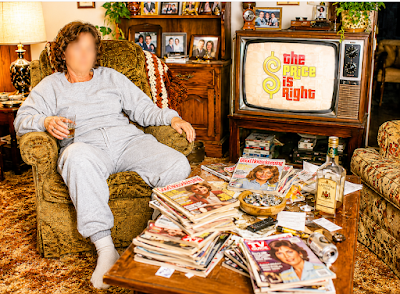
By her late forties, however, Jean became increasingly withdrawn and depressed. As time passed, Jean stopped dressing up every day like she used to to; quit going to the hair salon; neglected her hygiene; became silent; drank heavily; didn't pay bills; played solitaire and watched game shows all day; paid little attention to the children; said yes to every sales call, resulting in multiple subscriptions to the same magazines; and generally made poor decisions.
The changes were obvious to Ollie, the children, and the neighbors, who usually attributed Jean's behavior to Ollie's flagrant cheating.
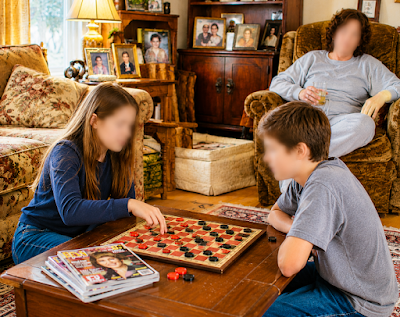
Jean continued to decline for two decades, until she neglected her breast cancer for so long she couldn't be successfully treated. Jean died in 1990.
As it turns out, Jean was the first victim (in the immediate family) of frontotemporal dementia. This wasn't diagnosed until the late 1990s, however, after Ollie and Jean's daughter Christy developed symptoms similar to those of her mother. Christy was a successful marketing executive, wife, and mother before she fell ill, but her life fell apart afterwards.
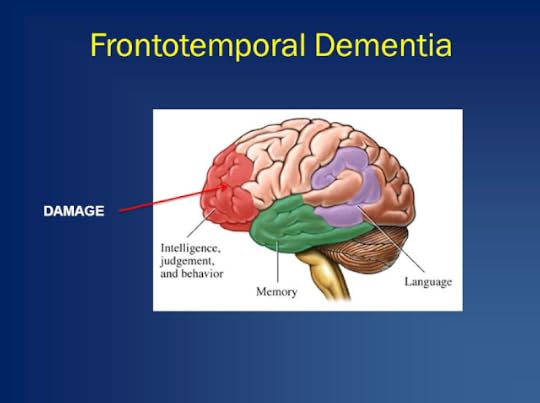
Frontotemporal dementia (FTD) is an illness in which the brain's frontal and temporal lobes gradually degenerate, causing people to lose their personality, judgment, language, and self-control. Symptoms usually begin in a victim's forties, and unlike 'old-age' dementia, patients don't lose their memories.
Over time, five of Ollie and Jean's nine children developed FTD. Some family members submitted blood/saliva samples for genetic testing, and researchers found their FTD resulted from an autosomal dominant gene called V337M, which causes tau mutations (tangles) in brain proteins. An autosomal dominant gene means there's a 50:50 chance a victim will pass the gene to their children.
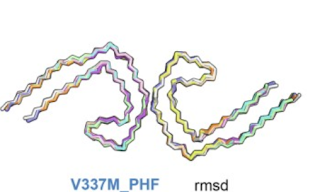
Tau mutations caused by V337M
In Ollie and Jean's clan, Jean had the genetic defect, which she passed to five of her children, who then passed it to some of their offspring. The exact number of victims isn't known, since some family members haven't been tested (by their own choice).
Kolker provides mini-biographies of all nine siblings, most of whom went on to college; got married and had children; and had successful careers. The victims who developed FTD couldn't work (or lost their jobs) after they fell ill, and were unable to take care of themselves. Sibling Sue, who remained healthy, stepped up and took care of some family members, especially Christy.
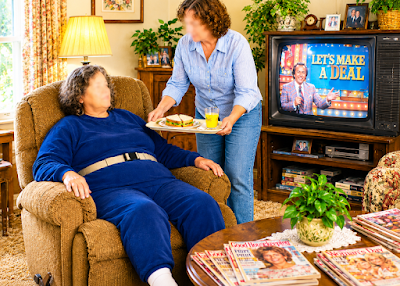
Kolker describes a typical day for Sue and Christy in their later years. 'Sue helps Christy with everything, coaxing her to the toilet and then the shower. Laundry is a constant. Christy wears adult diapers, but has accidents that call for a change of clothes, about five or six changes a day. Christy's favorite spot in the house is an easy chair in the TV area. The chair has a big leather belt, to keep Christy from roaming when Sue isn't watching. Because of Christy's compulsive overeating, Sue has to padlock the refrigerator, lock the pantry, and make all the meals. Sue is on constant alert, whether she and Christy are inside the house, outside taking a walk, or doing other things.
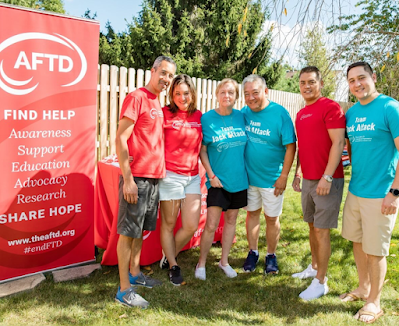
There's no cure for FTD, and until recently, minimal research about the condition. Kolker describes the formation of 'The Association for Frontotemporal Degeneration' (AFTD), whose members - including youngest sibling Barb - lobby politicians, scientists, pharmaceutical companies, etc. to support studies of FTD, with the aim of finding a treatment or cure.
In addition to telling the story of Ollie and Jean's family, Kolker writes about doctors and scientists who added to our knowledge of the brain, and provided information about the causes of psychiatric syndromes and dementia.
Examples include:
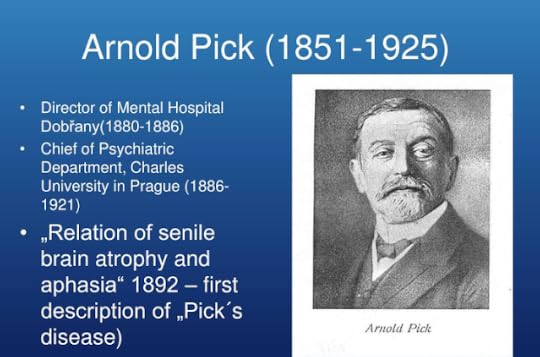
➽ Dr. Arnold Pick - In the early 20th century, Pick was the director of the psychiatric hospital at the University of Prague in Czechoslovakia. During autopsies of patients with language and/or behavior problems, Pick observed atrophy of the brain's frontal and temporal lobes. For many years, this was called Pick's disease. It's now known to be a type of FTD (but not the kind in Ollie and Jean's family).
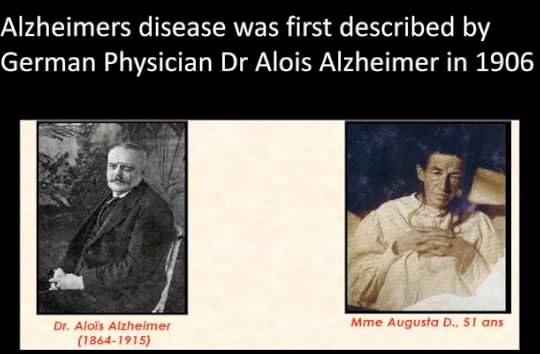
➽ Dr. Alois Alzheimer - Also in the early 20th century, Alzheimer was a German psychiatrist and brain researcher. Alzheimer had the opportunity to study the brain of Auguste D., a woman who lost her memory, forgot her way around her apartment, thought someone was trying to kill her, and descended into total delirium. When Auguste D. died, Alzheimer found 'plaques and tangles' in her brain, and this type of dementia was named Alzheimer's disease.
➽ Sir John Hardy - Hardy is a British neurogeneticist, currently at the National Institutes of Health. Hardy identified a mutation associated with Alzheimer's disease.

Sir John Hardy
Kolker also provides anecdotes about unusual neurological cases. One of the most famous is Phineas Gage. In 1848, at the age of 25, Gage was a dependable construction foreman working on a job site. After an explosion, a long iron rod sliced through Gage's brain, and he became impulsive, profane, unreliable, and unable to plan ahead. The brain injury changed Gage's personality, and showed that specific parts of the brain control behavior.
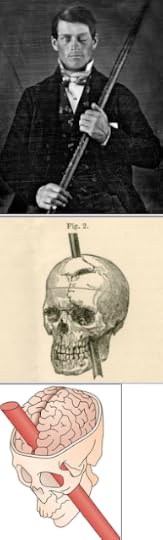
Phineas Gage
The book is informative, interesting, and draws attention to an illness that might be treatable with a DNA tweak. Highly recommended.
Thanks to Netgalley, Robert Kolker, and Doubleday for an ARC of the book.
You can follow my reviews at https://reviewsbybarbsaffer.blogspot.com

Review of advance copy received from NetGalley
The Vanishing Family by Robert Kolker is a very highly recommended intimate family drama as it presents an account of a family's experiences with a hereditary illness alternating with a medical detective/research story. This represents exceptional nonfiction.
Journalist Robert Kolker follows a family with nine siblings in Pleasant Hills, Pennsylvania. When their mother, Jean, began to change into a different person while in her forties, the youngest child, Barb, was the only one still at home to witness the change in her mother as she began drinking, her personality changed, and she became withdrawn, neglectful, and uncaring. This begins the realization that something is wrong. Then some of their siblings begin to fall into the same pattern while still young, in their middle age, while another sibling, Sue, devotes her life to caring for the inflicted. The support among family members is admirable.
This is a very intimate and heartbreaking story following a real family as they learn there is a fifty percent chance they will also succumb to the genetic disorder. Koler follows the journey of the family while five of the nine siblings are eventually diagnosed, as well as, later, some of their children. Alongside the very personal story, Kolker also follows the scientific research into dementia. There is a family tree at the opening of the novel (no last names and some first names are changed) to help you follow their story. Additionally, Notes and a Bibliography are included at the end of the text.
It is determined that the family has a rare inherited form of FTD, frontotemporal dementia, a devastating neurodegenerative disorder that "attacks the part of the brain responsible for planning, organizing, expressing language, understanding social cues, and exercising judgment.” The genetic mutation, V337M, has a fifty percent chance of being passed on to progeny. Those inflicted gradually have their personality, judgment, and language erode. It is thought that this family’s flawed genetic code and rare form of FTD might lead to a breakthrough in the prevention and treatment of all dementia, including Alzheimer’s disease. There is a discussion how gene-editing (CRISPR) and IVF genetic screening that may offer hope, but this also brings up ethical questions.
One of the big questions family members face as others succumb to FTD, is "Do I get tested? Do I want to know?" This is an age of genetic prognostication, of noting and discovering future biomarkers of illness, but do you want to know? FTD is emotionally devastating for those around you, as you become someone they don't know. For many people, as you are giving your family's medical history, you are listing off a series of symptoms and illnesses without much thought, but with some diseases, like dementia, it is different, as it is for anything with serious repercussions that can be passed on genetically to your children. Kolker handles both the deeply emotional and personal account and the scientific research background equally well.
The Vanishing Family is an excellent choice for everyone who appreciates a well written and considered account of a family and a devastating genetic disorder. as well as those who read Kolker's book Hidden Valley Road. Thanks to Knopf Doubleday for providing me with an advance reader's copy via NetGalley. My review is voluntary and expresses my honest opinion.
http://www.shetreadssoftly.com/2026/0...
Journalist Robert Kolker follows a family with nine siblings in Pleasant Hills, Pennsylvania. When their mother, Jean, began to change into a different person while in her forties, the youngest child, Barb, was the only one still at home to witness the change in her mother as she began drinking, her personality changed, and she became withdrawn, neglectful, and uncaring. This begins the realization that something is wrong. Then some of their siblings begin to fall into the same pattern while still young, in their middle age, while another sibling, Sue, devotes her life to caring for the inflicted. The support among family members is admirable.
This is a very intimate and heartbreaking story following a real family as they learn there is a fifty percent chance they will also succumb to the genetic disorder. Koler follows the journey of the family while five of the nine siblings are eventually diagnosed, as well as, later, some of their children. Alongside the very personal story, Kolker also follows the scientific research into dementia. There is a family tree at the opening of the novel (no last names and some first names are changed) to help you follow their story. Additionally, Notes and a Bibliography are included at the end of the text.
It is determined that the family has a rare inherited form of FTD, frontotemporal dementia, a devastating neurodegenerative disorder that "attacks the part of the brain responsible for planning, organizing, expressing language, understanding social cues, and exercising judgment.” The genetic mutation, V337M, has a fifty percent chance of being passed on to progeny. Those inflicted gradually have their personality, judgment, and language erode. It is thought that this family’s flawed genetic code and rare form of FTD might lead to a breakthrough in the prevention and treatment of all dementia, including Alzheimer’s disease. There is a discussion how gene-editing (CRISPR) and IVF genetic screening that may offer hope, but this also brings up ethical questions.
One of the big questions family members face as others succumb to FTD, is "Do I get tested? Do I want to know?" This is an age of genetic prognostication, of noting and discovering future biomarkers of illness, but do you want to know? FTD is emotionally devastating for those around you, as you become someone they don't know. For many people, as you are giving your family's medical history, you are listing off a series of symptoms and illnesses without much thought, but with some diseases, like dementia, it is different, as it is for anything with serious repercussions that can be passed on genetically to your children. Kolker handles both the deeply emotional and personal account and the scientific research background equally well.
The Vanishing Family is an excellent choice for everyone who appreciates a well written and considered account of a family and a devastating genetic disorder. as well as those who read Kolker's book Hidden Valley Road. Thanks to Knopf Doubleday for providing me with an advance reader's copy via NetGalley. My review is voluntary and expresses my honest opinion.
http://www.shetreadssoftly.com/2026/0...

Review of advance copy received from NetGalley
The Vanishing Family by Robert Kolker is a remarkable and deeply affecting work of narrative nonfiction that chronicles the lives of a family with nine children whose mother carried a rare genetic variant of frontotemporal dementia (FTD), a devastating neurodegenerative disease that gave each child a fifty-percent chance of inheriting the mutation. Kolker deftly weaves together scientific inquiry, medical history, and intimate family portraiture, rendering complex neurological research accessible without sacrificing its nuance or significance.
One of the book’s greatest strengths lies in its exploration of how FTD gradually transforms the very essence of a person. Unlike diseases that primarily erode memory, frontotemporal dementia often attacks the regions of the brain responsible for judgment, impulse control, empathy, and social behavior. As Kolker follows the lives of the affected siblings, readers witness the unsettling and heartbreaking process by which familiar personalities begin to disappear. Loving spouses become emotionally distant; responsible adults engage in reckless behavior; once-compassionate individuals lose the capacity to understand the feelings of those around them. The disease does not simply alter cognition—it reshapes identity itself, creating the painful sensation that family members are living with someone who is simultaneously present and absent.
Kolker offers a profoundly human lens into the emotional wreckage these personality changes leave behind. Relationships fracture under the strain of inexplicable behaviors, marriages are tested, and siblings grapple with the anguish of watching one another slowly become strangers. The uncertainty surrounding who may be next to develop symptoms casts a shadow over every life decision, making the burden of genetic inheritance almost as cruel as the disease itself.
Yet amid the sorrow, the book is also a testament to resilience, loyalty, and familial devotion. The unwavering support that family members extend to one another is both moving and admirable. Their commitment to caregiving, advocacy, and participation in research reflects a quiet courage that permeates the narrative and provides moments of hope within an otherwise tragic story.
While I found The Vanishing Family somewhat less compelling than Kolker’s extraordinary earlier work, Hidden Valley Road, I was nonetheless completely absorbed by this account. The family’s struggle is emotionally devastating, and Kolker succeeds in making readers feel the weight of a genetic fate that hangs over every generation. The book also serves as a powerful reminder of the importance of sustained medical research. At a time when scientific funding faces increasing pressures, the story underscores how urgently families confronting diseases like FTD depend upon continued investment in research, treatment, and hope. By the final page, one is left not only saddened by the immense burden borne by this family, but also inspired by their determination to confront an illness that threatens to erase the very traits that make us who we are.
Thank you to NetGalley and the publisher for an ARC in return for an honest review
One of the book’s greatest strengths lies in its exploration of how FTD gradually transforms the very essence of a person. Unlike diseases that primarily erode memory, frontotemporal dementia often attacks the regions of the brain responsible for judgment, impulse control, empathy, and social behavior. As Kolker follows the lives of the affected siblings, readers witness the unsettling and heartbreaking process by which familiar personalities begin to disappear. Loving spouses become emotionally distant; responsible adults engage in reckless behavior; once-compassionate individuals lose the capacity to understand the feelings of those around them. The disease does not simply alter cognition—it reshapes identity itself, creating the painful sensation that family members are living with someone who is simultaneously present and absent.
Kolker offers a profoundly human lens into the emotional wreckage these personality changes leave behind. Relationships fracture under the strain of inexplicable behaviors, marriages are tested, and siblings grapple with the anguish of watching one another slowly become strangers. The uncertainty surrounding who may be next to develop symptoms casts a shadow over every life decision, making the burden of genetic inheritance almost as cruel as the disease itself.
Yet amid the sorrow, the book is also a testament to resilience, loyalty, and familial devotion. The unwavering support that family members extend to one another is both moving and admirable. Their commitment to caregiving, advocacy, and participation in research reflects a quiet courage that permeates the narrative and provides moments of hope within an otherwise tragic story.
While I found The Vanishing Family somewhat less compelling than Kolker’s extraordinary earlier work, Hidden Valley Road, I was nonetheless completely absorbed by this account. The family’s struggle is emotionally devastating, and Kolker succeeds in making readers feel the weight of a genetic fate that hangs over every generation. The book also serves as a powerful reminder of the importance of sustained medical research. At a time when scientific funding faces increasing pressures, the story underscores how urgently families confronting diseases like FTD depend upon continued investment in research, treatment, and hope. By the final page, one is left not only saddened by the immense burden borne by this family, but also inspired by their determination to confront an illness that threatens to erase the very traits that make us who we are.
Thank you to NetGalley and the publisher for an ARC in return for an honest review

Review of advance copy received from NetGalley
This book touched me and made me reflect on human nature and the meaning of family in ways I did not anticipate. I chose to read it because dementia impacted my grandmother and five of her sisters. I didn’t know what frontal temporal dementia was but surely it had to be similar. Not at all! FTD impacts a person early in life and it leaves every descendent with a 50% chance of inheriting the condition, which leads to change in behavior, personality and language.
The book, so well written by Robert Kolker (I very much enjoyed his book Hidden Valley Road), follows a family of nine siblings who are confronted with this disease. Very early on we realize the mother of the nine suffered from a condition (beyond the breast cancer she ignored) that led to her death at age 62. The siblings, spouses and offspring live normal lives, until they don’t.
Robert Kolker does a fantastic job of explaining the science behind the brain, personality and then the decline of the person. The reader is given insight into the relevance of aging and the loss of personality. We follow the understanding of how a brain works, or doesn’t work, and how “better understanding the mind - a bridge between neurology and psychiatry and philosophy” can impact our futures. The focus is on frontal temporal dementia but Kolker also leads us through the research into rare diseases that are understudied and underfunded.
All the science is intertwined with the family (no last name given) as they navigate their exposure to and understanding of FTD. Each sibling is different, not only in that some have the inherited gene, some do not, and some never get tested. The feelings and emotions that the reader develops with the family is extraordinary. You feel for them as they, some better than others, deal with the diagnosis of a beloved sibling, or their own diagnosis.
Then, and this is the part that really opened my heart and mind, there are the children. When your parent has a genetic disease and you know you have a 50% chance of also having it, at what point in your life do you get tested? And if tested, can you handle the results? Do you get married? Do you have children? Do you pay huge sums of money for selective embryo transfer? I was profoundly touched by the individuals that shared with the author, their openness, their vulnerability.
I chose this book to be educated about dementia. What I got from this book was the deep and complex human emotions of how to handle, or not, a diagnosis of early onset dementia, and how to, or not, plan for what is to come. I am in awe of the humans Mr. Kolker so vividly depicted in this deeply moving book.
I received an advanced reader copy from NetGalley but all opinions are mine alone.
The book, so well written by Robert Kolker (I very much enjoyed his book Hidden Valley Road), follows a family of nine siblings who are confronted with this disease. Very early on we realize the mother of the nine suffered from a condition (beyond the breast cancer she ignored) that led to her death at age 62. The siblings, spouses and offspring live normal lives, until they don’t.
Robert Kolker does a fantastic job of explaining the science behind the brain, personality and then the decline of the person. The reader is given insight into the relevance of aging and the loss of personality. We follow the understanding of how a brain works, or doesn’t work, and how “better understanding the mind - a bridge between neurology and psychiatry and philosophy” can impact our futures. The focus is on frontal temporal dementia but Kolker also leads us through the research into rare diseases that are understudied and underfunded.
All the science is intertwined with the family (no last name given) as they navigate their exposure to and understanding of FTD. Each sibling is different, not only in that some have the inherited gene, some do not, and some never get tested. The feelings and emotions that the reader develops with the family is extraordinary. You feel for them as they, some better than others, deal with the diagnosis of a beloved sibling, or their own diagnosis.
Then, and this is the part that really opened my heart and mind, there are the children. When your parent has a genetic disease and you know you have a 50% chance of also having it, at what point in your life do you get tested? And if tested, can you handle the results? Do you get married? Do you have children? Do you pay huge sums of money for selective embryo transfer? I was profoundly touched by the individuals that shared with the author, their openness, their vulnerability.
I chose this book to be educated about dementia. What I got from this book was the deep and complex human emotions of how to handle, or not, a diagnosis of early onset dementia, and how to, or not, plan for what is to come. I am in awe of the humans Mr. Kolker so vividly depicted in this deeply moving book.
I received an advanced reader copy from NetGalley but all opinions are mine alone.

Review of advance copy received from NetGalley
Robert Kolker's "Hidden Valley Road" was one of the best medical nonfiction books I've yet to read, so I jumped at the chance for an early peek into his newest work. True to form, "The Vanishing Family" examines one debilitating disorder - frontotemporal dementia (FTD) - and its lifelong impacts on one family.
Centered in this piece are the family started by father Ollie and mother Jean, who settle into the typical storyline of the American Dream in a suburban neighborhood in Pleasantville, Pennsylvania to raise their 9 children. From the eldest child and daughter, Kathy, to the youngest (and unexpected) child Barb, they appear to have their lives set for them - until Jean begins displaying unexpected changes in behavior and personality, beginning to drink and smoke excessively and showing no response to her family's actions, including her husband's extramarital affair, and the family slowly starts to crumble. It isn't until her children begin to show similar symptoms in their middle age that the family is able to uncover the truth - they have frontotemporal dementia, a brain disorder that is eventually linked to a genetic mutation that is passed down hereditarily.
Kolker does an incredible job as medical journalist, not only laying out the underlying science and medical history and breakthroughs related to FTD, but also in painting the dynamic of the family and the individual personalities and characters. The extent of research, tracing the lineages, amassing the stories and anecdotes, and describing each member is no small feat, and I appreciated how he devoted significant time in the backstories and descriptions of each person. We come to see how the siblings, many of whom are high-achieving and ambitious, come to deal with the disease in their own ways, and how their relationships with each other impact what happens in the years to come - to which siblings eventually become caregivers, which ones detach themselves from the family completely, and which ones become champions for the cause, lobbying scientists and pharmaceutical companies to devote resources towards finding a cure. It is inspiring but also depressing, and certainly leads to larger questions: How can you love someone who transforms into someone completely else? How much of one's identity is attributed to who they are before or after a disease? And what is someone willing to sacrifice to provide the care and resources necessary for someone they no longer recognize?
One of the best reads of the year for me so far, and one that I would recommend to anyone when "The Vanishing Family" is published in September 2026!
Centered in this piece are the family started by father Ollie and mother Jean, who settle into the typical storyline of the American Dream in a suburban neighborhood in Pleasantville, Pennsylvania to raise their 9 children. From the eldest child and daughter, Kathy, to the youngest (and unexpected) child Barb, they appear to have their lives set for them - until Jean begins displaying unexpected changes in behavior and personality, beginning to drink and smoke excessively and showing no response to her family's actions, including her husband's extramarital affair, and the family slowly starts to crumble. It isn't until her children begin to show similar symptoms in their middle age that the family is able to uncover the truth - they have frontotemporal dementia, a brain disorder that is eventually linked to a genetic mutation that is passed down hereditarily.
Kolker does an incredible job as medical journalist, not only laying out the underlying science and medical history and breakthroughs related to FTD, but also in painting the dynamic of the family and the individual personalities and characters. The extent of research, tracing the lineages, amassing the stories and anecdotes, and describing each member is no small feat, and I appreciated how he devoted significant time in the backstories and descriptions of each person. We come to see how the siblings, many of whom are high-achieving and ambitious, come to deal with the disease in their own ways, and how their relationships with each other impact what happens in the years to come - to which siblings eventually become caregivers, which ones detach themselves from the family completely, and which ones become champions for the cause, lobbying scientists and pharmaceutical companies to devote resources towards finding a cure. It is inspiring but also depressing, and certainly leads to larger questions: How can you love someone who transforms into someone completely else? How much of one's identity is attributed to who they are before or after a disease? And what is someone willing to sacrifice to provide the care and resources necessary for someone they no longer recognize?
One of the best reads of the year for me so far, and one that I would recommend to anyone when "The Vanishing Family" is published in September 2026!

Review of advance copy received from NetGalley
I think this book honestly wrecked me in a really quiet, lingering way.
As someone who has had multiple family members go through dementia and Alzheimer’s, this didn’t feel like just a book I was reading, but it felt way too familiar. Almost uncomfortably so. The way Kolker describes the slow loss of self, the personality changes, the confusion… I’ve seen that up close. And reading it laid out like this brought all of that back in a way I wasn’t fully prepared for.
What really got me was the love in this family. It’s devastating, but it’s also what drives everything. They’re not just dealing with illness; they’re actively searching for answers, for a cure, for anything that could stop what they’re watching happen over and over again. That kind of devotion, that refusal to just accept it, is honestly what makes the book so hard and so meaningful at the same time.
And then there’s that horrifying realization that what happened to their mother starts showing up in the siblings too. That part is genuinely terrifying. Because I don’t have to imagine that fear... I already carry it. That constant wondering in the back of your mind, like is this going to be me someday? Is there anything I can do? Or is it just waiting?
That’s what makes this book so heavy. It’s not distant or clinical but it feels immediate. Like I am watching something unfold in real time that I already know too well.
But even with how devastating it is, there’s something really important underneath all of it. The science, the research, the decades of trying to understand this disease are what REALLY matters. And this family’s story shows exactly why it matters so much. If there’s even a chance that studying something like this can lead to answers for dementia or Alzheimer’s in general, then it has to be pursued. There’s a fragile kind of hope in that, even when everything else feels really bleak.
This book is heartbreaking, but it also feels necessary. It is definitely going to stay with me. And for anyone who has lived even a small version of this kind of loss, it hits even deeper than you expect it to.
Thank you to NetGalley, Robert Kolker, and Doubleday for the eARC of this book.
As someone who has had multiple family members go through dementia and Alzheimer’s, this didn’t feel like just a book I was reading, but it felt way too familiar. Almost uncomfortably so. The way Kolker describes the slow loss of self, the personality changes, the confusion… I’ve seen that up close. And reading it laid out like this brought all of that back in a way I wasn’t fully prepared for.
What really got me was the love in this family. It’s devastating, but it’s also what drives everything. They’re not just dealing with illness; they’re actively searching for answers, for a cure, for anything that could stop what they’re watching happen over and over again. That kind of devotion, that refusal to just accept it, is honestly what makes the book so hard and so meaningful at the same time.
And then there’s that horrifying realization that what happened to their mother starts showing up in the siblings too. That part is genuinely terrifying. Because I don’t have to imagine that fear... I already carry it. That constant wondering in the back of your mind, like is this going to be me someday? Is there anything I can do? Or is it just waiting?
That’s what makes this book so heavy. It’s not distant or clinical but it feels immediate. Like I am watching something unfold in real time that I already know too well.
But even with how devastating it is, there’s something really important underneath all of it. The science, the research, the decades of trying to understand this disease are what REALLY matters. And this family’s story shows exactly why it matters so much. If there’s even a chance that studying something like this can lead to answers for dementia or Alzheimer’s in general, then it has to be pursued. There’s a fragile kind of hope in that, even when everything else feels really bleak.
This book is heartbreaking, but it also feels necessary. It is definitely going to stay with me. And for anyone who has lived even a small version of this kind of loss, it hits even deeper than you expect it to.
Thank you to NetGalley, Robert Kolker, and Doubleday for the eARC of this book.
Review of advance copy received from Publisher
We invite disaster into our lives simply by being alive. from The Vanishing Family by Robert Kolker
We evolved to be a communal species, Kolker states. We make the appropriate response to other’s suffering, needs, joys, and success. If we are indifferent, disconnected, we are considered rude, callus, uncaring. But it is that ability to connect that is destroyed with frontotemporal dementia (FTD). This genetic disease manifests in middle age, altering beloved family members into strangers.
This form of dementia runs in families. A parent with FTD has a fifty percent change of passing it to their children, who have a fifty percent chance of passing it to their children.
In The Vanishing Family, Robert Kolker shares the story of one multigenerational family’s struggle with FTD and it will break your heart. As sibling after sibling alter, you will keep turning pages. After the condition is identified, each lives with knowledge that they could be next. Some test, some elect not to.
Reading about these nine siblings of great intelligence and drive losing themselves is horrifying. With FDT they make bad choices but are unable to recognize their decline. The ones unaffected, because of age or hitting the genetic jackpot, must step up to care for the others. A sister sacrifices her life to care for the oldest sibling, a story of true love.
Alzheimer’s is the most familiar and well studied form of dementia. We hardly know anything about what causes it. The history and progress of research into dementia has its own drama as our understanding of dementia progresses with new technologies and insights. There is hope of slowing FTD’s progression, if not a cure.
We most profoundly lose ourselves, it seems, when we can no longer see, feel, or touch the minds and hearts of others. from The Vanishing Family by Robert Kolker
I enjoyed this as much as I did Hidden Valley Road.
Thanks to Doubleday for a free book.
We evolved to be a communal species, Kolker states. We make the appropriate response to other’s suffering, needs, joys, and success. If we are indifferent, disconnected, we are considered rude, callus, uncaring. But it is that ability to connect that is destroyed with frontotemporal dementia (FTD). This genetic disease manifests in middle age, altering beloved family members into strangers.
This form of dementia runs in families. A parent with FTD has a fifty percent change of passing it to their children, who have a fifty percent chance of passing it to their children.
In The Vanishing Family, Robert Kolker shares the story of one multigenerational family’s struggle with FTD and it will break your heart. As sibling after sibling alter, you will keep turning pages. After the condition is identified, each lives with knowledge that they could be next. Some test, some elect not to.
Reading about these nine siblings of great intelligence and drive losing themselves is horrifying. With FDT they make bad choices but are unable to recognize their decline. The ones unaffected, because of age or hitting the genetic jackpot, must step up to care for the others. A sister sacrifices her life to care for the oldest sibling, a story of true love.
Alzheimer’s is the most familiar and well studied form of dementia. We hardly know anything about what causes it. The history and progress of research into dementia has its own drama as our understanding of dementia progresses with new technologies and insights. There is hope of slowing FTD’s progression, if not a cure.
We most profoundly lose ourselves, it seems, when we can no longer see, feel, or touch the minds and hearts of others. from The Vanishing Family by Robert Kolker
I enjoyed this as much as I did Hidden Valley Road.
Thanks to Doubleday for a free book.

Review of advance copy received from NetGalley
I really enjoyed Hidden Valley Road and was looking forward to reading this one, since in a previous life I worked in regulatory health policy at a pharmaceutical company and was part of an Alzheimer's disease drug development program. While all dementia is not the same, of course, it did spark a life-long interest in the way the brain can deteriorate and I was curious to see Kolker's attentions turned to this topic.
While I found the concept interesting, I must confess that I felt like I was reading HVR again albeit with a different familial disease focus this time around. That's not a bad thing necessarily - I can appreciate that large families with genetic disease will likely have at least some similarities in the way those diseases affect family dynamics - but it did feel repetitive and like I had read aspects of the story before. The interplay between parents and siblings and the dysfunction that arose from that just didn't hold my attention the same way this time.
Oddly enough, neither did the science - which really surprised me. While I didn't have the same "been there before" feeling in this aspect of the book, it just didn't grab my attention the way the schizophrenia research did in the earlier book. I'm not sure why that is...
I felt like I might have just encountered the two books too closely together in time, so double-checked when I finished HVR. Turns out that was six years ago, so perhaps this isn't about proximity in time and is about the way the stories tied together in my mind. Regardless, I enjoyed this one well enough but didn't find it as compelling as the earlier read.
Thanks to NetGalley and the publisher for my obligation-free review copy.
While I found the concept interesting, I must confess that I felt like I was reading HVR again albeit with a different familial disease focus this time around. That's not a bad thing necessarily - I can appreciate that large families with genetic disease will likely have at least some similarities in the way those diseases affect family dynamics - but it did feel repetitive and like I had read aspects of the story before. The interplay between parents and siblings and the dysfunction that arose from that just didn't hold my attention the same way this time.
Oddly enough, neither did the science - which really surprised me. While I didn't have the same "been there before" feeling in this aspect of the book, it just didn't grab my attention the way the schizophrenia research did in the earlier book. I'm not sure why that is...
I felt like I might have just encountered the two books too closely together in time, so double-checked when I finished HVR. Turns out that was six years ago, so perhaps this isn't about proximity in time and is about the way the stories tied together in my mind. Regardless, I enjoyed this one well enough but didn't find it as compelling as the earlier read.
Thanks to NetGalley and the publisher for my obligation-free review copy.

Review of advance copy received from Publisher
I am not going to lie to you. The Vanishing Family by Robert Kolker is going to crush your soul. It's about a specific type of dementia which destroys an entire family. You're going to cry. Your heart will break. However, there is hope. More importantly, there are people who stare this tragedy in the face and somehow persevere. Yes, this is sad, but I didn't finish this book feeling defeated.
The book follows a particular family which has a specific type of dementia which is early onset and genetically passed down. In pure numbers, if one of your parents has it, you have a 50/50 chance of getting it. If you have it, sometime around your 40s you will slowly stop being yourself. You will act out and say inappropriate things. You will be unable to empathize with people around you and yet you will still be able to drive, read, and live a relatively normal life for a time. Kolker tells the story mainly through the lives of the nine (!!!) children in one family, although the next generation is documented later in the book. Kolker is an excellent writer, but there is a specific trick he uses which is ingenious when dealing with so many characters. Every chapter about a family member has a list of the children in birth order with the focus of the chapter highlighted. Don't remember which one Barb is? Well, the first page will show she is the youngest and let you know she is the focus. There is another detail I won't spoil, but...well, it becomes obvious very quickly.
Kolker also intersperses chapters dealing with the science behind dementia and what medicine is doing to try and cure it. I am not a science nerd, but these chapters are wonderfully to the point and explained so well that even I understood them.
However, Kolker never loses sight of the fact that the family is the story. I found myself profoundly taken with each of the characters, hoping beyond hope that the 50/50 chance of them getting dementia was wildly exaggerated. It's not. In fact, one could say it was too optimistic. I know there is a horror genre in books and TV, but nothing I have ever read or seen compares to the dread of starting each chapter only to read the telltale signs that another family member is showing symptoms.
All that said, there is reason for hope. Science is making inroads. Medications and gene therapy offer a possible cure. However, the real hope in this book is how the family comes together when everything is falling apart. Obviously, I think this is a must-read. Just make sure to keep the tissues handy.
(This book was provided as a review copy by Doubleday Books.)
The book follows a particular family which has a specific type of dementia which is early onset and genetically passed down. In pure numbers, if one of your parents has it, you have a 50/50 chance of getting it. If you have it, sometime around your 40s you will slowly stop being yourself. You will act out and say inappropriate things. You will be unable to empathize with people around you and yet you will still be able to drive, read, and live a relatively normal life for a time. Kolker tells the story mainly through the lives of the nine (!!!) children in one family, although the next generation is documented later in the book. Kolker is an excellent writer, but there is a specific trick he uses which is ingenious when dealing with so many characters. Every chapter about a family member has a list of the children in birth order with the focus of the chapter highlighted. Don't remember which one Barb is? Well, the first page will show she is the youngest and let you know she is the focus. There is another detail I won't spoil, but...well, it becomes obvious very quickly.
Kolker also intersperses chapters dealing with the science behind dementia and what medicine is doing to try and cure it. I am not a science nerd, but these chapters are wonderfully to the point and explained so well that even I understood them.
However, Kolker never loses sight of the fact that the family is the story. I found myself profoundly taken with each of the characters, hoping beyond hope that the 50/50 chance of them getting dementia was wildly exaggerated. It's not. In fact, one could say it was too optimistic. I know there is a horror genre in books and TV, but nothing I have ever read or seen compares to the dread of starting each chapter only to read the telltale signs that another family member is showing symptoms.
All that said, there is reason for hope. Science is making inroads. Medications and gene therapy offer a possible cure. However, the real hope in this book is how the family comes together when everything is falling apart. Obviously, I think this is a must-read. Just make sure to keep the tissues handy.
(This book was provided as a review copy by Doubleday Books.)

Review of advance copy received from NetGalley
A compassionate and thorough look into the impact of a little known disease on a family of 9 brothers and sisters. Frontotemporal Dementia (FTD) is a devastating disease in many ways but two seem the most cruel to me…the patient has a 50/50 chance of passing it onto their children and psychologically changes start to appear in their 40’s. .Like other dementia-related diseases, FTD doesn’t impact the patient’s physical health so that he/she may live a normal life span but slowly descend into their own world for decades. They require care and supervision that is often provided by a loved one because long term institutional care is so expensive. Barb, the youngest child, is still living at home and has a first hand view into her mother’s profound personality changes She sees the same changes start to appear in 5 of her siblings as they age into their 40s and tries to find out what is really going on? How can so many of them follow the same behavior patterns and not have a disease that is diagnosable and genetic? In interspersed chapters, Kolker tells the fascinating detective story of how the advances of medicine once that last 100 years gains the technology to identify and test for the gene that causes the disease. But the real story is told through individual family members’ experiences and those of their loved ones as the patient’s behavior becomes unrecognizable and they start to do things that they would never have normally done They lose empathy and inhibitions and ultimately all contact with reality. This books turns the story of a complicated disease and dry science and makes is real and relatable.

July 11, 2026
“The Vanishing Family: Love, Fate, and the Quest to End Dementia” is the heart-wrenching story of a family with a hereditary dementia interspersed with the scientific efforts to describe the various forms of dementia and search for a possible cure.
Google describes dementia as “an umbrella term for a decline in cognitive abilities severe enough to interfere with daily life.” Dementia impacts memory, thinking, and behavior. Most people have heard of Alzheimer’s Disease, and, from my reading various medical newsletters, it is the focus of most current research.
Frontotemporal Dementia, which is the focus of the book, damages the frontal and temporal lobes, and as opposed to Alzheimer’s Disease that affects older adults, strikes younger adults between the ages of forty-five and sixty-five.
The book alternates between the medical history of dementia, starting with Alos Alzheimer's seminal work interspersed with the harrowing experience of a family as they watch their mother and siblings fall one by one to dementia. As someone who appreciates medical history, I really liked the presentation of the history and current theories of dementia with an eye on future cures.
While there is currently nothing that can be done to stem the ravages of dementia, once a test determines if someone has the disease, the question becomes, does one take the test? After all, there is no cure for the disease.
Another consideration is whether to have children knowing that they can inherit an incurable disease?
I was reminded of Nancy Wexler, who played a key part with the research team that discovered the gene that caused Huntington’s Disease, an incurable neurodegenerative disease. Her mother was affected by Huntington’s Disease, but she opted not to take the test.
It’s a difficult dilemma—take a test to determine one’s chance of developing an incurable disease or to go through life wondering about one’s fate.
This is a difficult book to read. As I mentioned above, “The Vanishing Family: Love, Fate, and the Quest to End Dementia” takes the reader through the family’s agonizing journey with watching their loved ones succumb to the ravages of frontotemporal dementia.
Nonetheless, the author does give the reader hope with youngest daughter Barb’s work with her organization Cure MAPT FTD (Microtubule-Associated Protein Tau Frontotemporal Dementia) http://curemapftd.org.
If you are interested in dementia or medical history, this is a book that you want to read. However, keep in mind that it’s an emotional read that is well written but, at times, tragic.
5/5
[Thank you to NetGalley and the author for the advanced ebook copy in exchange for my honest and objective opinion, which I have given here.]
Google describes dementia as “an umbrella term for a decline in cognitive abilities severe enough to interfere with daily life.” Dementia impacts memory, thinking, and behavior. Most people have heard of Alzheimer’s Disease, and, from my reading various medical newsletters, it is the focus of most current research.
Frontotemporal Dementia, which is the focus of the book, damages the frontal and temporal lobes, and as opposed to Alzheimer’s Disease that affects older adults, strikes younger adults between the ages of forty-five and sixty-five.
The book alternates between the medical history of dementia, starting with Alos Alzheimer's seminal work interspersed with the harrowing experience of a family as they watch their mother and siblings fall one by one to dementia. As someone who appreciates medical history, I really liked the presentation of the history and current theories of dementia with an eye on future cures.
While there is currently nothing that can be done to stem the ravages of dementia, once a test determines if someone has the disease, the question becomes, does one take the test? After all, there is no cure for the disease.
Another consideration is whether to have children knowing that they can inherit an incurable disease?
I was reminded of Nancy Wexler, who played a key part with the research team that discovered the gene that caused Huntington’s Disease, an incurable neurodegenerative disease. Her mother was affected by Huntington’s Disease, but she opted not to take the test.
It’s a difficult dilemma—take a test to determine one’s chance of developing an incurable disease or to go through life wondering about one’s fate.
This is a difficult book to read. As I mentioned above, “The Vanishing Family: Love, Fate, and the Quest to End Dementia” takes the reader through the family’s agonizing journey with watching their loved ones succumb to the ravages of frontotemporal dementia.
Nonetheless, the author does give the reader hope with youngest daughter Barb’s work with her organization Cure MAPT FTD (Microtubule-Associated Protein Tau Frontotemporal Dementia) http://curemapftd.org.
If you are interested in dementia or medical history, this is a book that you want to read. However, keep in mind that it’s an emotional read that is well written but, at times, tragic.
5/5
[Thank you to NetGalley and the author for the advanced ebook copy in exchange for my honest and objective opinion, which I have given here.]

Review of advance copy received from NetGalley
This book intrigued me for two reasons: 1.) I lost my grandma a few years ago to Alzheimer’s and constantly wondering if this fate is hereditary lingers in the back of my mind like an itch I cannot scratch. 2.) My family is also plagued by a devastating genetic defect: the BRCA gene which highly increases your risk of developing breast and/or ovarian cancer. My own mother passed away from Ovarian cancer and just this year, two more cousins of mine have found out they’re BRCA positive and are currently fighting cancer - one ovarian and one inflammatory breast cancer.
Though very different defects, I related to the story so much in a variety of ways: hopelessness, fear, guilt, sadness, devastation, anger, and a sense of urgency for science to figure out a way to stop this painful realization from stealing more and more of my family members. It’s like living in a constant state of agitation to hear the news, once again, that someone near and dear to you is fighting for their lives.
Books like this are so important bc they raise awareness. If more people are aware of the medical advances there are, they are more likely and able to make preventative decisions to help safeguard their futures. This book is well-researched and one of the things I loved the most about it was how the family continually rallied around each other and fought to take care of the siblings themselves. It was the definition of love and it was beautiful to read about - even when the reasons for that unconditional care was so heartbreaking.
Though very different defects, I related to the story so much in a variety of ways: hopelessness, fear, guilt, sadness, devastation, anger, and a sense of urgency for science to figure out a way to stop this painful realization from stealing more and more of my family members. It’s like living in a constant state of agitation to hear the news, once again, that someone near and dear to you is fighting for their lives.
Books like this are so important bc they raise awareness. If more people are aware of the medical advances there are, they are more likely and able to make preventative decisions to help safeguard their futures. This book is well-researched and one of the things I loved the most about it was how the family continually rallied around each other and fought to take care of the siblings themselves. It was the definition of love and it was beautiful to read about - even when the reasons for that unconditional care was so heartbreaking.

June 25, 2026
Every bit as good as Hidden Valley Road. This follows a family of 8 siblings born between 1951 and 1966 - oh and a bonus baby 10 years later, for a total of 9 - as they navigate the effects of a rare genetic mutation in their family. While no last name is given, and some first names have been changed, their story is 100% true, and backed up by the author’s interviews with extended family, medical providers and relevant others.
The mutation is classified in the same area as dementia, but has its own unique characteristics, including age at onset and how (and how long) one can live and function after diagnosis. The author has researched the development of the disease over decades, along with the medical studies of its origins and potential for treating or eliminating it through new technologies.
Most of the book is very experience-based, describing how the various family members are affected by the discovery (or refusal to test for the discovery) of the mutation. But there’s enough actual hard science interspersed to remind you that you’re reading a non-fiction account of a family’s actual experiences with a very real genetic condition.
I thought this was a very informative and compassionate treatment of one family’s experiences with a rare genetic mutation, and found it very intriguing, yet tastefully presented. I hope it receives lots of love when it’s published in September.
The mutation is classified in the same area as dementia, but has its own unique characteristics, including age at onset and how (and how long) one can live and function after diagnosis. The author has researched the development of the disease over decades, along with the medical studies of its origins and potential for treating or eliminating it through new technologies.
Most of the book is very experience-based, describing how the various family members are affected by the discovery (or refusal to test for the discovery) of the mutation. But there’s enough actual hard science interspersed to remind you that you’re reading a non-fiction account of a family’s actual experiences with a very real genetic condition.
I thought this was a very informative and compassionate treatment of one family’s experiences with a rare genetic mutation, and found it very intriguing, yet tastefully presented. I hope it receives lots of love when it’s published in September.
Review of advance copy received from NetGalley
This a review of an advance reader copy from NetGalley.
I requested this book as my sister in law has dementia and I wanted to learn more about this disease. This book taught me so much more about life and who or what makes up a person.
This is a personal recounting of a family of 9 children whose mother has a rare form of dementia -FTD. You will learn what this disease is and how it impacts this family. You learn the stories of each of the children coming to terms with the decline of their mother, the slow learning what the disease was and whether or not to get tested.
Interspersed with this family’s story is a history of how the medical field first identified this particular disease. The painfully slow progress in researching this disease and where we stand today. It was fascinating to follow the research over the decades of neurological research which is not a sentence I thought I’d ever write.
Along the way I found myself reflecting on the way families can work together to support each other through very difficult situations. Who are you over a lifetime and if your behavior changes because of disease are you in fact the same person or a new person. The pain of deciding to know or not know if you are a carrier. Not only do these families have to deal with such an awful disease they have to deal with the uncertainty as to when and if they may start their own decline and if they would even realize their own decline.
I finished the book feeling hopeful for this family and the progress that is being made toward finding a cure.
I requested this book as my sister in law has dementia and I wanted to learn more about this disease. This book taught me so much more about life and who or what makes up a person.
This is a personal recounting of a family of 9 children whose mother has a rare form of dementia -FTD. You will learn what this disease is and how it impacts this family. You learn the stories of each of the children coming to terms with the decline of their mother, the slow learning what the disease was and whether or not to get tested.
Interspersed with this family’s story is a history of how the medical field first identified this particular disease. The painfully slow progress in researching this disease and where we stand today. It was fascinating to follow the research over the decades of neurological research which is not a sentence I thought I’d ever write.
Along the way I found myself reflecting on the way families can work together to support each other through very difficult situations. Who are you over a lifetime and if your behavior changes because of disease are you in fact the same person or a new person. The pain of deciding to know or not know if you are a carrier. Not only do these families have to deal with such an awful disease they have to deal with the uncertainty as to when and if they may start their own decline and if they would even realize their own decline.
I finished the book feeling hopeful for this family and the progress that is being made toward finding a cure.

Review of advance copy received from NetGalley
Thank you to NetGalley, Robert Kolker, and Doubleday Publishing for allowing me to read a free ebook in exchange for my honest opinion.
Like his previous book, Hidden Valley Road, Robert Kolker has taken on a terrible disease of the mind that is inherited and used his advanced skills of narrative storytelling to present the tragedy that this particular type of dementia causes for one family in particular. Interspersed between the chapters about the family's struggles with all aspects of losing themselves or loved ones to this terrible disease are summaries of the scientific research ongoing in this and related fields. It is vanishingly rare that a book on an important nonfiction topic is this compelling. Robert Kolker takes the reader from having a remote idea of what dementia might be like and brings us along on his interviews with this family so that we, as readers, also mourn the loss of the affected family members' personalities, and the share the grief of a twenty-something year old family member discovering that they have the mutation and will probably not be in control of their lives in 20 years. This book is important even if you don't have personal experience with this rare type of dementia because the research into the v337M mutation may provide the answer to many types of diseases of the mind including Alzheimer's and schizophrenia. This book is an absolutely fabulous dive into a terrible subject. I highly recommend it.
Like his previous book, Hidden Valley Road, Robert Kolker has taken on a terrible disease of the mind that is inherited and used his advanced skills of narrative storytelling to present the tragedy that this particular type of dementia causes for one family in particular. Interspersed between the chapters about the family's struggles with all aspects of losing themselves or loved ones to this terrible disease are summaries of the scientific research ongoing in this and related fields. It is vanishingly rare that a book on an important nonfiction topic is this compelling. Robert Kolker takes the reader from having a remote idea of what dementia might be like and brings us along on his interviews with this family so that we, as readers, also mourn the loss of the affected family members' personalities, and the share the grief of a twenty-something year old family member discovering that they have the mutation and will probably not be in control of their lives in 20 years. This book is important even if you don't have personal experience with this rare type of dementia because the research into the v337M mutation may provide the answer to many types of diseases of the mind including Alzheimer's and schizophrenia. This book is an absolutely fabulous dive into a terrible subject. I highly recommend it.
Review of advance copy received from NetGalley
A large, typical American family is slowly replaced with unselfconscious, uninhibited strangers as those that remain look for a cure to their inherited plight.
Sound dramatic? Because it was. This is... cinematic. Emotionally charged. Devastating while also beautiful in that it shows the depths of familial love. This is Kolker's best work yet. I couldn't put it down.
We follow nine siblings as they come of age, simultaneously finding out that their parents' marriage is less than perfect and their mother is mysteriously deteriorating. Even worse, they come to see these odd changes later amongst themselves as they welcome the next generation of potential victims to their familial curse. We face important ethical and emotional qualms — would you have kids if they were at a high risk of inheriting an early-onset dementia? How much of your life do you sacrifice to care for your loved ones? Would you want to know if your independence and sense of self had an expiration?
Excerpt w/out spoilers: She was left searching for flickers of self-awareness in them, any recognition that they were changing. And after so much time alone with them, she did find that, in certain rare moments, they would say as much: “Don’t you think I know there’s something wrong with me?” Haunting.
I received my copy from Netgalley.
Sound dramatic? Because it was. This is... cinematic. Emotionally charged. Devastating while also beautiful in that it shows the depths of familial love. This is Kolker's best work yet. I couldn't put it down.
We follow nine siblings as they come of age, simultaneously finding out that their parents' marriage is less than perfect and their mother is mysteriously deteriorating. Even worse, they come to see these odd changes later amongst themselves as they welcome the next generation of potential victims to their familial curse. We face important ethical and emotional qualms — would you have kids if they were at a high risk of inheriting an early-onset dementia? How much of your life do you sacrifice to care for your loved ones? Would you want to know if your independence and sense of self had an expiration?
Excerpt w/out spoilers: She was left searching for flickers of self-awareness in them, any recognition that they were changing. And after so much time alone with them, she did find that, in certain rare moments, they would say as much: “Don’t you think I know there’s something wrong with me?” Haunting.
I received my copy from Netgalley.
Review of advance copy received from NetGalley
Many thanks to NetGalley and the publisher for inviting me to read and review this book. The opinions expressed are strictly my own.
Somehow between the reading invitation and actually getting around to reading the book, I forgot that it is a true story. The dementia described is very difficult to read. Members of my own family have suffered from dementia, albeit not the disease described in this book, and quite frankly I won't be reading any more books that feature dementia, either true or fictional. It's just too close a subject, and like a couple of the characters in this book, I just don't want to know.
Two features explain the 3 stars (rather than 5). One is the sheer number of characters in the book, and I found it difficult (and sometimes impossible) to remember who was who. The other feature is the sheer amount of medical explanations stuffed into the narrative. I just skimmed over these sections. Perhaps a lot of that information would have do better if it were described in an afterword, as opposed to the middle of the story. Then again, it could be just me who finds the book to be difficult reading with all that shoved medical text into the middle of the narrative.
All that said... I sincerely hope that an effective treatment for this horrible disease will be found. Soon.
Somehow between the reading invitation and actually getting around to reading the book, I forgot that it is a true story. The dementia described is very difficult to read. Members of my own family have suffered from dementia, albeit not the disease described in this book, and quite frankly I won't be reading any more books that feature dementia, either true or fictional. It's just too close a subject, and like a couple of the characters in this book, I just don't want to know.
Two features explain the 3 stars (rather than 5). One is the sheer number of characters in the book, and I found it difficult (and sometimes impossible) to remember who was who. The other feature is the sheer amount of medical explanations stuffed into the narrative. I just skimmed over these sections. Perhaps a lot of that information would have do better if it were described in an afterword, as opposed to the middle of the story. Then again, it could be just me who finds the book to be difficult reading with all that shoved medical text into the middle of the narrative.
All that said... I sincerely hope that an effective treatment for this horrible disease will be found. Soon.

Review of advance copy received from NetGalley
Thank you to Doubleday and Netgalley for the ARC of this book. I read it in a day. Kolker writes non fiction in such a compelling way. I really empathized with Barb, the sister that is heavily discussed in the book. I appreciated learning about a rare form of dementia caused by a genetic mutation, known as FTD. I never knew about that before and the science behind it was fascinating, but at times, the alternating chapters of the family in the story and the discussion of dementia, the history of dementia research, and the scientific progress that has been made (or not made) in the field got a bit dry for me. I kept wanting to speed through to the parts about the family.
Kolker mentions Oliver Sacks at one point and I thought about all of his books, as he was a favorite of mine. Because Sacks was an actual scientist, I think he could get away with describing the more technical aspects of his cases. Though he tried to make it engaging, I think Kolker's strengths are really in telling the story of the family afflicted with the FTD gene mutation. I simply could not put the book down. I love Kolker's work and I will read anything he writes. I appreciated having access to this book early. It will be a purchase for our library for sure.
Kolker mentions Oliver Sacks at one point and I thought about all of his books, as he was a favorite of mine. Because Sacks was an actual scientist, I think he could get away with describing the more technical aspects of his cases. Though he tried to make it engaging, I think Kolker's strengths are really in telling the story of the family afflicted with the FTD gene mutation. I simply could not put the book down. I love Kolker's work and I will read anything he writes. I appreciated having access to this book early. It will be a purchase for our library for sure.
Review of advance copy received from NetGalley
Where is our personality? And what can be done when a person's personality changes? There is so much talk about Alzheimer's, people disappearing as their memory fades. But there are forms of dementia where memory is retained, but personality and social norms fade away. As the caboose in a family of 9 children, Barb watched as her mother changed. The put-together woman that socialized with neighbors disappeared. The family thought it was just a drinking problem. After their mother passed, the Barb and Sue noticed changes in another sister. At first given a diagnosis of Pick's disease, they kept digging and digging, hoping to get to the root cause. The discovery of a gene mutation that causes frontaltemporal dementia, FTD, leads to years of testing and watching as more of the siblings discover they carry the gene.
This book was fascinating. We all think we know what dementia is, forgetting things and declining health. But FTD acts so differently. The members of the family remembered so many things but slipped further and further away from societal norms and lost their inhibitions. And declining health was a ways off, diagnosed in their 40s but living 30+ more years.
Thanks to Netgalley and the publishers for the ARC of this book.
This book was fascinating. We all think we know what dementia is, forgetting things and declining health. But FTD acts so differently. The members of the family remembered so many things but slipped further and further away from societal norms and lost their inhibitions. And declining health was a ways off, diagnosed in their 40s but living 30+ more years.
Thanks to Netgalley and the publishers for the ARC of this book.
June 8, 2026
Robert Kolker weaves together an intimate portrait of a large Pennsylvania family with scientific inquiry surrounding the neuropsychology behind neurodegenerative disorders. The interspersing of scientific findings about inhibition, personality, and cognitive decline with the lifetime of a family trying to understand what they are suffering from allows the reader to form connections and a better understanding of frontotemporal dementia (FTD).
Kolker raises plenty of thought-provoking questions throughout the book including if you could find out whether you had a neurodegenerative disease, would you? If you chose yes and tested positive, would you share the results with your loved ones? Would you continue to live life as normal?
As I neared the end of the book, I began to wonder more about the family discussed. I went into this read with very little background knowledge on dementia and came out of it with a new understanding of the various diagnoses one can receive and the intricate human emotions that came with said diagnoses or caring for a loved one as they navigate their new normal.
Overall, an exceptionally written book that I’d highly recommend.
Kolker raises plenty of thought-provoking questions throughout the book including if you could find out whether you had a neurodegenerative disease, would you? If you chose yes and tested positive, would you share the results with your loved ones? Would you continue to live life as normal?
As I neared the end of the book, I began to wonder more about the family discussed. I went into this read with very little background knowledge on dementia and came out of it with a new understanding of the various diagnoses one can receive and the intricate human emotions that came with said diagnoses or caring for a loved one as they navigate their new normal.
Overall, an exceptionally written book that I’d highly recommend.
Review of advance copy received from Publisher
this is a heartbreaking real life reality for a family that has fought a long fight with FTD - frontotemporal dementia. In a picturesque town in Pennsylvania a family of 11 is feeling the effects of the mothers quirks. What they don't realize is that this is about to be something that is greater than they could have ever imagined. Barb the youngest is witnessing the deterioration of her mother. What soon follows is heartbreaking. One by one her sisters and a brother slowly begin to change. With a blend of the family's own stories and very detailed heavily researched research you learn so much about FTD and how it affects the person. The most impactful part of this whole book is how each individual began to have symptoms, how the caretakers coped with it all and how it drastically changed the worlds of nearly all of the siblings and their children. The deep heartbreak when sibling after sibling was diagnosed and the quiet relief when one didn't. This is a story that everyone should read it's so insightful and really shows how the disease has developed over the years and the understanding behind it all. Another amazing one from Kolker.
Review of advance copy received from NetGalley
The Vanishing Family
By Robert Kolker
This is the true and horrifying story of a family of parents and nine children and their struggle to cope with a rare form of Frontotemporal Dementia (FTD). First Jean, the mom in her forties, begins to act more and more bizarrely. By the time of her death from cancer, all of her family has been impacted. But little did they know, this was only the beginning.
This rare form of FTD has a genetic marker – and each one of these children (and their progeny as well) has a 50/50 chance of carrying that marker and may take this terrible curse from middle age until their deaths, losing themselves in the process. As they all must tread this path – as either patients or caregivers – the heartbreak is palpable. There is no effective treatment or cure as of now.
But this book also contains the stories of the doctors and scientists who study families like this one, striving to understand how the brain works in order to come up with a cure in the future. Each horror story like this may bring them one step closer. The message here is that there may be hope for future generations.
Thanks to the publisher and NetGalley for this ARC.
By Robert Kolker
This is the true and horrifying story of a family of parents and nine children and their struggle to cope with a rare form of Frontotemporal Dementia (FTD). First Jean, the mom in her forties, begins to act more and more bizarrely. By the time of her death from cancer, all of her family has been impacted. But little did they know, this was only the beginning.
This rare form of FTD has a genetic marker – and each one of these children (and their progeny as well) has a 50/50 chance of carrying that marker and may take this terrible curse from middle age until their deaths, losing themselves in the process. As they all must tread this path – as either patients or caregivers – the heartbreak is palpable. There is no effective treatment or cure as of now.
But this book also contains the stories of the doctors and scientists who study families like this one, striving to understand how the brain works in order to come up with a cure in the future. Each horror story like this may bring them one step closer. The message here is that there may be hope for future generations.
Thanks to the publisher and NetGalley for this ARC.
Displaying 1 - 30 of 67 reviews