

What do you think?

Everything Happened At Once
THE NEW NOVEL FROM THE RECORD-BREAKING AUTHOR OF HUNGER
How do you find a way forward in in a world turned upside down?
A mutant virus has swept half of the world's population overnight. The known world has collapsed. The new world is a lawless place where children's livers are believed to provide immunity.
In one residential block, a gang of Seoulians break out of quarantine in a stolen lorry and brave their way through the remnants of a world once teeming with colour into the achingly empty terrains of Siberia.
The desolate road ahead is signposted with fellow defectors and fragile souls. A former travel agent. A divorcee exploring her sexuality. A deaf girl traversing a frozen continent barefoot.
An awe-inspiring, soul-stirring novella about the indomitable human spirit's burning will to live and love, Untitled charts the innermost landscapes of ordinary people making liferafts out of desire, memory, and the small rituals of everyday.
How do you find a way forward in in a world turned upside down?
A mutant virus has swept half of the world's population overnight. The known world has collapsed. The new world is a lawless place where children's livers are believed to provide immunity.
In one residential block, a gang of Seoulians break out of quarantine in a stolen lorry and brave their way through the remnants of a world once teeming with colour into the achingly empty terrains of Siberia.
The desolate road ahead is signposted with fellow defectors and fragile souls. A former travel agent. A divorcee exploring her sexuality. A deaf girl traversing a frozen continent barefoot.
An awe-inspiring, soul-stirring novella about the indomitable human spirit's burning will to live and love, Untitled charts the innermost landscapes of ordinary people making liferafts out of desire, memory, and the small rituals of everyday.
208 pages, Paperback
First published June 30, 2017
About the author
Choi Jin-young
21 books77 followersChoi Jin-young began writing twenty years ago. She is now one of Korea’s foremost novelists, having amassed several prestigious prizes, including the Yi Sang Literary Award, Hankyoreh Literary Award and Shin Dong-yup Literary Prize.
Her record-breaking novella, Hunger, has sold half a million copies and been translated into 10 languages.
Her record-breaking novella, Hunger, has sold half a million copies and been translated into 10 languages.
Ratings & Reviews
Friends & Following
Create a free account to discover what your friends think of this book!
Community Reviews
Displaying 1 - 30 of 176 reviews

Currently Reading
September 23, 2026I saw this book advertised as a "cult classic" and thought that rings a bell. Then I checked the book format and have the urged to verify the author to confirm my suspicion. And here it is. I didn't enjoy Hunger but let's see what this one brings to the table.

April 25, 2021
A truly gorgeous cover encapsulates a quite traditional end of the world story (think of Mad Max in the snowy tundra) that takes long strides to arrive at the conclusion that love can even withstand the end of the world
The story of To the Warm Horizon is in a way similar to The New Wilderness, The Road, The Stand, More Than This, Station Eleven, Oryx and Crake and many other dystopian/post apocalyptic tales. A virus leads to the collapse of society (Covid-19 got nothing on this virus, moving from 100.000 to 500.000 deads in a day in South Korea) and a family flees Korea in two trucks (I’m not sure how they’d end up in Russia with the military zone between the South and North). How Jina manages to to push her child into Dori in such grim circumstances is also a bit unclear, and them meeting again later while one is on foot and another is traveling per truck (with gasoline not being a major issue after the breakdown of civilization?) through giant Russia is a mystery.
The prose in general is light on details of the new world and the sketchy details provided raise a lot of questions how well thought out and realistic Jin-Young Choi tries to be. Like somewhere 1/3 in, everyone blames Dori, new to a group and it’s just a bit lazy storytelling in my view, unexplained and posited as a fact, and later I was just baffled how does Dori ends up having a gun all of the sudden.
There are some claustrophobic scenes at the end that are very like The Testaments stadium scenes, and I feel overall this is the problem with this book: this kind of story has been done before, and it has been done better, and I felt that the characters could and should have been much more fleshed out to have an emotional impact.
The story of To the Warm Horizon is in a way similar to The New Wilderness, The Road, The Stand, More Than This, Station Eleven, Oryx and Crake and many other dystopian/post apocalyptic tales. A virus leads to the collapse of society (Covid-19 got nothing on this virus, moving from 100.000 to 500.000 deads in a day in South Korea) and a family flees Korea in two trucks (I’m not sure how they’d end up in Russia with the military zone between the South and North). How Jina manages to to push her child into Dori in such grim circumstances is also a bit unclear, and them meeting again later while one is on foot and another is traveling per truck (with gasoline not being a major issue after the breakdown of civilization?) through giant Russia is a mystery.
The prose in general is light on details of the new world and the sketchy details provided raise a lot of questions how well thought out and realistic Jin-Young Choi tries to be. Like somewhere 1/3 in, everyone blames Dori, new to a group and it’s just a bit lazy storytelling in my view, unexplained and posited as a fact, and later I was just baffled how does Dori ends up having a gun all of the sudden.
There are some claustrophobic scenes at the end that are very like The Testaments stadium scenes, and I feel overall this is the problem with this book: this kind of story has been done before, and it has been done better, and I felt that the characters could and should have been much more fleshed out to have an emotional impact.

April 18, 2021
우리는 어디로 가?
우리는…… 여름을 찾아서.
여름은 어디에 있는데?
나는 손가락으로 태양을 가리켰다.
저기, 해가 지는 곳에.
미소는 혀로 사탕을 굴리며 내 손을 꼭 잡았다.
Where are we going?
We’re … looking for summer
Where’s summer
I pointed to the sun
There, over the horizon. Where the sun sets.
Rolling the candy in her mouth, Joy held my hand.
To the Warm Horizon is Soje’s translation of the Korean original 해가 지는 곳으로 by 최진영 (Jin-Young Choi), with the cover designed by Choi Jaehoon/werkgraphic.com.
It is published by Honford Star - see below for more on the publisher.
To the Warm Horizon is a post-apocalyptic novel as well as a love story between two women, quite consciously (see the interview below) The Road but with female characters and queer romance at its heart. Although a more direct influence is Christophe Bataille’s Annam, which is read by two of the characters in this book.
In the novel’s prologue - playing the part of a voiceover in a movie - one of the characters, Ryu, writing 40 years later recalls when she first heard on the news that a strange virus was spreading in a different country, that the virus would mutate with every new vaccine. At first life carries on as normal and people aren’t that concerned. But this is much worse than Covid-19 (the original novel was written before this in 2017, although after the much-more-deadly but more-controllable MERS outbreak in Korea).
Soon 100,000 people die in Korea in one day, and more the next. Public order and society largely collapses, causing worse effects than the virus itself, including a strong belief that eating the liver of a young child may provide immunity.
The novel’s characters are all from South Korea but have fled the country to Siberia and are now, initially separately, travelling across Russia trying to find shelter and food and supplies that haven’t already been looted. One recalls that however troubled and basic her life was before:
We had a heated floor that kept us warm and a roof that sheltered us from rain and snow. If I felt scared and repulsed by the world, I could close my bedroom door and hide under my desk and listen to music. Water and kimchi were in the fridge, rice in the rice cooker, and instant ramen in the cupboard. I could turn on the light.
Dori and Joy are sisters who lost their parents to the virus, and the Dori, in her early twenties is looking after her younger sister, who is deaf and mute.
Jina is a young woman travelling with her gradually depleted extended family, of mixed race although this (as well as Joy’s deafness and Dori’s sexuality) isn’t particularly commented on by the characters in the novel, but simply who they are (see the translator interview below).
Gunji is a teenage boy, who was bullied both at home, by his father, and at school. He lived near Jina in Korea, and has tagged along with her family, although not to all of their liking.
Ryu is a middle aged woman, whose school-age daughter was lost to the virus, now travelling with her husband and son.
Incidentally Joy is called 미소 in the original which was Romanized as Miso in the first version of the translation, but 미소 literally means Smile, and Joy does seem a better choice (and Miso in English carries some unintended meaning, whereas in Korean the equivalent dish is 된장, doenjang).
Jina first meets Dori when Jina’s extended family find an abandoned house where the two sisters are already sheltering. The exchange that follows has the translator (as with Cursed Bunny by the same publisher) doing a great job in rendering Korean-accented English in English:
Jina did not put up her guard with me.
—You’re from Korea, right?
I, on the other hand, did not let my guard down. Jina scratched her cheek, looking at me as I said nothing in response.
—A-im peurom Koria.(*)
Out of the blue, she spoke English.
—Wheo al yu peurom?
I sensed a slight Gyeongsang dialect.
—Naiseu tu mit yu.
She took another step toward me and extended her hand.
—If it’s not this either . . . Hajimemashite.
After greeting me in Japanese, Jina quietly gazed at me for a moment, fixed her fur hat, and switched back to Korean.
—Don’t worry. We’re not bad people. No one’s infected, and we don’t eat kid liver. We’re going to spend the night right out there and leave in the morning . . . But still, I won’t tell anyone that I saw you here.
* I would imagine the original Korean was 아임 프롬 코리아
This instead a story for much world building - the characters themselves have little idea what is going on in the wider world - but rather mostly at a personal level. The experience of the five is brutal - much like war, the virus seems a good ‘excuse’ for widespread rape, and even for the five it can be a kill-or-be-killed world - but also poignant, particularly in the strong relationships between the characters, all of whom narrate chapters in the first person.
Overall - a thoughtful novel and one I'd recommend to others, but one that didn’t completely grab me. 3.5 stars
Notes and sources
Translation pitch from the Smoking Tigers collective:
https://smokingtigers.com/to-the-warm...
An extract from the original translation (as noted the young girl is called Miso here):
https://www.wordswithoutborders.org/a...
A discussion between author and translator:
https://www.wordswithoutborders.org/d... - and the original Korean discussion https://www.wordswithoutborders.org/d...
Translator: In past interviews, you’ve cited Christophe Bataille’s Annam and Cormac McCarthy’s The Road as inspirations for Horizon. Could you give a brief introduction?
Author: Annam is about French Dominican missionaries who go to Vietnam. The novel is fast-paced and very beautiful. The characters are beautiful and noble, even under miserable circumstances. As you turn the pages, drunk on the sentences and the story and the vibe, what remains is the love of two people who you didn’t expect to fall in love. I wanted that love, what you can call the core of that novel, in my novel as well. With The Road, I borrowed what I wanted in my own apocalyptic narrative. Since The Road is, after all, about a father and his son, I was curious what would happen if the protagonists were women.
...
Translator: Something I’ve been curious about is that Jina has red hair and gray eyes. Much later in the novel, Dori wonders why Jina’s hair is red, but it goes unanswered, right? How did it happen? Is it dyed? Is she not Korean?
Author: I intended her to be mixed race. One of Jina’s grandparents or ancestors was a foreigner, but I didn’t explain that [in the novel]. The reason is . . . You know, there’s not a single person who thinks it’s weird for Jina and Dori to love each other. They just accept it. In the way that I simply presented queerness, I wanted to do the same for mixed-race identity and disability. I thought that the idea that this requires some kind of explanation was absurd.
See here - https://modernpoetryintranslation.com... - for an essay by the translator where they discuss the use of the term 언니.
Honford Star
Honford Star’s mission is to publish the best literature from East Asia, be it classic or contemporary ... By working with talented translators and exciting local artists, we hope to see more bookshelves containing beautiful editions of the East Asian literature we love.
Until this year their Korean literature had been classic literature from the 1st half of the 20th century:
Sweet Potato: Collected Short Stories by Kim Tongin, translated by Grace Jung:
https://www.goodreads.com/review/show...
Endless Blue Sky by Lee Hyoseok, translated by Steven Capener:
https://www.goodreads.com/review/show...
The Underground Village by Kang Kyeong-ae, translated by Anton Hur
https://www.goodreads.com/review/show...
But for 2021, their K-lit focus turns to the contemporary, in terms of authors, and the future in terms of subject matter.
Tower, translated by Sang Ryu from the original 타워 by 배명훈 (Bae Myung-hoon) - https://www.goodreads.com/review/show...
Cursed Bunny translated by Anton Hur from 저주토끼 by 정보라 (Bora Chung) - https://www.goodreads.com/review/show...
And this novel
To the Warm Horizon translated by Soje from 해가 지는 곳으로 by 최진영 (Jin-Young Choi) -
https://www.goodreads.com/review/show...
Honford Star’s mission statement refers to talented local artists, and the cover work is alway stunning. See here for the press's general approach: https://booksandbao.com/asian-cover-a....
It is also great to see the translators named on the front cover, and the Korean title and author’s name, written in 한글 (hangeul) on the flaps.
우리는…… 여름을 찾아서.
여름은 어디에 있는데?
나는 손가락으로 태양을 가리켰다.
저기, 해가 지는 곳에.
미소는 혀로 사탕을 굴리며 내 손을 꼭 잡았다.
Where are we going?
We’re … looking for summer
Where’s summer
I pointed to the sun
There, over the horizon. Where the sun sets.
Rolling the candy in her mouth, Joy held my hand.
To the Warm Horizon is Soje’s translation of the Korean original 해가 지는 곳으로 by 최진영 (Jin-Young Choi), with the cover designed by Choi Jaehoon/werkgraphic.com.
It is published by Honford Star - see below for more on the publisher.
To the Warm Horizon is a post-apocalyptic novel as well as a love story between two women, quite consciously (see the interview below) The Road but with female characters and queer romance at its heart. Although a more direct influence is Christophe Bataille’s Annam, which is read by two of the characters in this book.
In the novel’s prologue - playing the part of a voiceover in a movie - one of the characters, Ryu, writing 40 years later recalls when she first heard on the news that a strange virus was spreading in a different country, that the virus would mutate with every new vaccine. At first life carries on as normal and people aren’t that concerned. But this is much worse than Covid-19 (the original novel was written before this in 2017, although after the much-more-deadly but more-controllable MERS outbreak in Korea).
Soon 100,000 people die in Korea in one day, and more the next. Public order and society largely collapses, causing worse effects than the virus itself, including a strong belief that eating the liver of a young child may provide immunity.
The novel’s characters are all from South Korea but have fled the country to Siberia and are now, initially separately, travelling across Russia trying to find shelter and food and supplies that haven’t already been looted. One recalls that however troubled and basic her life was before:
We had a heated floor that kept us warm and a roof that sheltered us from rain and snow. If I felt scared and repulsed by the world, I could close my bedroom door and hide under my desk and listen to music. Water and kimchi were in the fridge, rice in the rice cooker, and instant ramen in the cupboard. I could turn on the light.
Dori and Joy are sisters who lost their parents to the virus, and the Dori, in her early twenties is looking after her younger sister, who is deaf and mute.
Jina is a young woman travelling with her gradually depleted extended family, of mixed race although this (as well as Joy’s deafness and Dori’s sexuality) isn’t particularly commented on by the characters in the novel, but simply who they are (see the translator interview below).
Gunji is a teenage boy, who was bullied both at home, by his father, and at school. He lived near Jina in Korea, and has tagged along with her family, although not to all of their liking.
Ryu is a middle aged woman, whose school-age daughter was lost to the virus, now travelling with her husband and son.
Incidentally Joy is called 미소 in the original which was Romanized as Miso in the first version of the translation, but 미소 literally means Smile, and Joy does seem a better choice (and Miso in English carries some unintended meaning, whereas in Korean the equivalent dish is 된장, doenjang).
Jina first meets Dori when Jina’s extended family find an abandoned house where the two sisters are already sheltering. The exchange that follows has the translator (as with Cursed Bunny by the same publisher) doing a great job in rendering Korean-accented English in English:
Jina did not put up her guard with me.
—You’re from Korea, right?
I, on the other hand, did not let my guard down. Jina scratched her cheek, looking at me as I said nothing in response.
—A-im peurom Koria.(*)
Out of the blue, she spoke English.
—Wheo al yu peurom?
I sensed a slight Gyeongsang dialect.
—Naiseu tu mit yu.
She took another step toward me and extended her hand.
—If it’s not this either . . . Hajimemashite.
After greeting me in Japanese, Jina quietly gazed at me for a moment, fixed her fur hat, and switched back to Korean.
—Don’t worry. We’re not bad people. No one’s infected, and we don’t eat kid liver. We’re going to spend the night right out there and leave in the morning . . . But still, I won’t tell anyone that I saw you here.
* I would imagine the original Korean was 아임 프롬 코리아
This instead a story for much world building - the characters themselves have little idea what is going on in the wider world - but rather mostly at a personal level. The experience of the five is brutal - much like war, the virus seems a good ‘excuse’ for widespread rape, and even for the five it can be a kill-or-be-killed world - but also poignant, particularly in the strong relationships between the characters, all of whom narrate chapters in the first person.
Overall - a thoughtful novel and one I'd recommend to others, but one that didn’t completely grab me. 3.5 stars
Notes and sources
Translation pitch from the Smoking Tigers collective:
https://smokingtigers.com/to-the-warm...
An extract from the original translation (as noted the young girl is called Miso here):
https://www.wordswithoutborders.org/a...
A discussion between author and translator:
https://www.wordswithoutborders.org/d... - and the original Korean discussion https://www.wordswithoutborders.org/d...
Translator: In past interviews, you’ve cited Christophe Bataille’s Annam and Cormac McCarthy’s The Road as inspirations for Horizon. Could you give a brief introduction?
Author: Annam is about French Dominican missionaries who go to Vietnam. The novel is fast-paced and very beautiful. The characters are beautiful and noble, even under miserable circumstances. As you turn the pages, drunk on the sentences and the story and the vibe, what remains is the love of two people who you didn’t expect to fall in love. I wanted that love, what you can call the core of that novel, in my novel as well. With The Road, I borrowed what I wanted in my own apocalyptic narrative. Since The Road is, after all, about a father and his son, I was curious what would happen if the protagonists were women.
...
Translator: Something I’ve been curious about is that Jina has red hair and gray eyes. Much later in the novel, Dori wonders why Jina’s hair is red, but it goes unanswered, right? How did it happen? Is it dyed? Is she not Korean?
Author: I intended her to be mixed race. One of Jina’s grandparents or ancestors was a foreigner, but I didn’t explain that [in the novel]. The reason is . . . You know, there’s not a single person who thinks it’s weird for Jina and Dori to love each other. They just accept it. In the way that I simply presented queerness, I wanted to do the same for mixed-race identity and disability. I thought that the idea that this requires some kind of explanation was absurd.
See here - https://modernpoetryintranslation.com... - for an essay by the translator where they discuss the use of the term 언니.
Honford Star
Honford Star’s mission is to publish the best literature from East Asia, be it classic or contemporary ... By working with talented translators and exciting local artists, we hope to see more bookshelves containing beautiful editions of the East Asian literature we love.
Until this year their Korean literature had been classic literature from the 1st half of the 20th century:
Sweet Potato: Collected Short Stories by Kim Tongin, translated by Grace Jung:
https://www.goodreads.com/review/show...
Endless Blue Sky by Lee Hyoseok, translated by Steven Capener:
https://www.goodreads.com/review/show...
The Underground Village by Kang Kyeong-ae, translated by Anton Hur
https://www.goodreads.com/review/show...
But for 2021, their K-lit focus turns to the contemporary, in terms of authors, and the future in terms of subject matter.
Tower, translated by Sang Ryu from the original 타워 by 배명훈 (Bae Myung-hoon) - https://www.goodreads.com/review/show...
Cursed Bunny translated by Anton Hur from 저주토끼 by 정보라 (Bora Chung) - https://www.goodreads.com/review/show...
And this novel
To the Warm Horizon translated by Soje from 해가 지는 곳으로 by 최진영 (Jin-Young Choi) -
https://www.goodreads.com/review/show...
Honford Star’s mission statement refers to talented local artists, and the cover work is alway stunning. See here for the press's general approach: https://booksandbao.com/asian-cover-a....
It is also great to see the translators named on the front cover, and the Korean title and author’s name, written in 한글 (hangeul) on the flaps.

August 16, 2025
me ha gustado mucho!!! como amante de las historias apocalípticas esta es mi movida total 🩷 me encanta cuando q el virus quede en un segundo plano y que en realidad hable d personaa y sus inquietudes, q van más allá de vivir o morir. No le pongo 5 estrellas porque en cierto sentido me ha resultado que iba un poco a trompicones en la narración !! pero os lo recomiendo :))

Read
June 15, 2021I genuinely don't know how to rate this, it was the most depressing thing I've ever read and the super-high-mortality virus that brought about this dystopian world was the least depressing part of it.
I read this because it was sapphic and i liked that it was a look at a post apocalyptic world through a female lense and it chose to center the love between two women as its only hopeful point. But that felt so marginal in the face of every single POV woman getting raped and going through the worst type of violence that i don't know if this left me with any hope. I feel like i am walking away from this book with an even worse opinion of humanity than i did before reading it, and my opinion of humanity wasn't high to begin with.
On the other hand, it was well written (and well translated), and i can't say that i didn't, if not exactly enjoy it because enjoyment would be the most misplaced word to use here, at the very least like reading this. I also don't know anything about the fiction situation in Korea and have no means to judge whether this was just another dystopian-novel-but-queer or if this is groundbreaking and the first book of its kind published in Korea, and i feel like that would make it easier to form an opinion on this.
TWs: deadly virus pandemic, typical post apocalyptic conditions (violence, gun violence, war), rape and attempted rape, mention of suicide and suicidal ideations, mention of self harm, concentration camps, and probably a lot more... basically prepare for everything
I read this because it was sapphic and i liked that it was a look at a post apocalyptic world through a female lense and it chose to center the love between two women as its only hopeful point. But that felt so marginal in the face of every single POV woman getting raped and going through the worst type of violence that i don't know if this left me with any hope. I feel like i am walking away from this book with an even worse opinion of humanity than i did before reading it, and my opinion of humanity wasn't high to begin with.
On the other hand, it was well written (and well translated), and i can't say that i didn't, if not exactly enjoy it because enjoyment would be the most misplaced word to use here, at the very least like reading this. I also don't know anything about the fiction situation in Korea and have no means to judge whether this was just another dystopian-novel-but-queer or if this is groundbreaking and the first book of its kind published in Korea, and i feel like that would make it easier to form an opinion on this.
TWs: deadly virus pandemic, typical post apocalyptic conditions (violence, gun violence, war), rape and attempted rape, mention of suicide and suicidal ideations, mention of self harm, concentration camps, and probably a lot more... basically prepare for everything

May 16, 2021
I, who is in the biggest reading slump, read this in one sitting!
To the Warm Horizon is a dystopian, post-apocalyptic novel originally written in Korean and the first queer novel to be translated into English. A pandemic has erupted overnight. In Korea, there are 100,000 deaths in one day and 500,000 the next, with the virus mutating with every new vaccine. The world as we know it has collapsed. And this new world is dangerous, bleak, and illogical—with some people even believing that eating the livers of children will provide immunity.
We meet four characters as they make their way across Russia in the winter—Ryu, Dori, Jina, and Gunji. Told in alternating POVs, as a reader, we are mostly left in the same dilemma as these characters—uniformed and disoriented. We only see small glimpses into their past lives and left with their present but fragile mindset as they remember, regret, analyze, plan, and live through this nightmare. We are never given the full picture of how they get to Russia or what their lives were truly like before the pandemic. We only experience the terror, violence, and grief of their new world.
And while I can see how this may be a bother for some readers, it had the opposite effect on me. I was both too frightened and captivated to look away. Frightened by the unknown and ugliness of humanity, but captivated by the grit and love of these characters. The author’s decision to strip the story of plot explanations felt purposeful and ultimately impactful for me as a reader. I felt the same foreboding as the characters and therefore wished for Dori and Jina to make it. Their love story isn’t an epic, but when set against the end of the world we are reminded that love is both delicate and resilient, just like human life. But more than the love story, this novel introduces marginalized characters in Korean society—queer, mixed-race, and disabled.
Reminiscent of Cormac McCarthy’s The Road, this one is grim and bleak. But, it reminds us that people, whatever they look like or whoever they are, will find a way to exist and love.
CW: gun violence, violence, rape (off page), misogyny, war, death
To the Warm Horizon is a dystopian, post-apocalyptic novel originally written in Korean and the first queer novel to be translated into English. A pandemic has erupted overnight. In Korea, there are 100,000 deaths in one day and 500,000 the next, with the virus mutating with every new vaccine. The world as we know it has collapsed. And this new world is dangerous, bleak, and illogical—with some people even believing that eating the livers of children will provide immunity.
We meet four characters as they make their way across Russia in the winter—Ryu, Dori, Jina, and Gunji. Told in alternating POVs, as a reader, we are mostly left in the same dilemma as these characters—uniformed and disoriented. We only see small glimpses into their past lives and left with their present but fragile mindset as they remember, regret, analyze, plan, and live through this nightmare. We are never given the full picture of how they get to Russia or what their lives were truly like before the pandemic. We only experience the terror, violence, and grief of their new world.
And while I can see how this may be a bother for some readers, it had the opposite effect on me. I was both too frightened and captivated to look away. Frightened by the unknown and ugliness of humanity, but captivated by the grit and love of these characters. The author’s decision to strip the story of plot explanations felt purposeful and ultimately impactful for me as a reader. I felt the same foreboding as the characters and therefore wished for Dori and Jina to make it. Their love story isn’t an epic, but when set against the end of the world we are reminded that love is both delicate and resilient, just like human life. But more than the love story, this novel introduces marginalized characters in Korean society—queer, mixed-race, and disabled.
Reminiscent of Cormac McCarthy’s The Road, this one is grim and bleak. But, it reminds us that people, whatever they look like or whoever they are, will find a way to exist and love.
CW: gun violence, violence, rape (off page), misogyny, war, death

July 3, 2025
Nunca pensé que una distopía, una historia post apocalíptica y con ciencia ficción podría tener luminosidad y amor.
Hay citas hermosas que se adaptan a los tiempos actuales aún ¿sin estar viviendo el fin del mundo?
Hay citas hermosas que se adaptan a los tiempos actuales aún ¿sin estar viviendo el fin del mundo?

October 15, 2025
En un mundo arrasado por una pandemia, un grupo de supervivientes emprende un viaje hacia el oeste, buscando un lugar donde el frío y la desesperanza no los alcancen. En ese paisaje devastado, donde la humanidad parece haberse borrado, surge entre los personajes un vínculo inesperado que les devuelve algo de calor en medio del caos. Sin entrar en detalles, la novela nos sitúa en una travesía tanto física como emocional, donde cada paso se convierte en una forma de resistencia ante la extinción.
La historia está llena de símbolos que apuntan a esa lucha por conservar lo humano cuando todo parece perdido. El horizonte cálido que buscan las protagonistas encarna la idea de un refugio, de un lugar (real o imaginario) hacia el que avanzar para no rendirse. Los pequeños objetos cotidianos, como un pintalabios o una postal navideña, adquieren un valor enorme porque conectan a los personajes con el pasado, con lo que eran antes del desastre. En medio de la nieve y la violencia, esos gestos mínimos (una sonrisa, un abrigo compartido, un recuerdo) se transforman en símbolos de esperanza, de una dignidad que se niega a desaparecer.
El estilo narrativo de Choi Jin-young es directo y sobrio, pero lleno de sensibilidad. Alterna las voces de varios personajes, permitiendo entender la historia desde distintos ángulos sin perder la tensión ni la intimidad. Su prosa no necesita adornos: transmite las emociones con una claridad que resulta casi dolorosa. El tono fluctúa entre la dureza más cruda y la ternura más inesperada, consiguiendo que incluso los momentos de horror estén atravesados por una cierta luz. Hay una belleza contenida en su manera de narrar, una voz que confía en nuestra empatía y en la fuerza de los silencios.
Leída hoy, después de haber vivido una pandemia real, la novela resuena de forma inevitable. Aunque fue escrita años antes del Covid, su visión del colapso global y del miedo al otro parece premonitoria. Jin-young no busca recrear la catástrofe en clave científica, sino explorar lo que queda de la moral y del amor cuando el mundo se derrumba. Tal vez por eso su historia resulta tan inquietante y tan humana a la vez: porque no habla solo del fin del mundo, sino del modo en que intentamos seguir siendo personas dentro de él.
Me ha conmovido profundamente, sobretodo porque me ha recordado a La carretera, de Cormac McCarthy, por esa mezcla de devastación y ternura que ambos autores logran transmitir. Hay escenas que se quedan grabadas por su sencillez, por lo que sugieren más que por lo que muestran. Sin embargo, me ha faltado cierta resolución: esa sensación de cierre que una historia tan intensa parece prometer y que la autora prefiere dejar suspendida en el aire. Aun así, la lectura me ha dejado una huella fuerte, como un eco que persiste. Es un libro que me ha hecho sentir y pensar a partes iguales.
A nivel editorial, de Shiro libros solo echo en falta las solapas que den rigidez a la cubierta, sin estas tiene un aspecto "barato" que para nada hace justicia al interior del libro, que es impecable.
La historia está llena de símbolos que apuntan a esa lucha por conservar lo humano cuando todo parece perdido. El horizonte cálido que buscan las protagonistas encarna la idea de un refugio, de un lugar (real o imaginario) hacia el que avanzar para no rendirse. Los pequeños objetos cotidianos, como un pintalabios o una postal navideña, adquieren un valor enorme porque conectan a los personajes con el pasado, con lo que eran antes del desastre. En medio de la nieve y la violencia, esos gestos mínimos (una sonrisa, un abrigo compartido, un recuerdo) se transforman en símbolos de esperanza, de una dignidad que se niega a desaparecer.
El estilo narrativo de Choi Jin-young es directo y sobrio, pero lleno de sensibilidad. Alterna las voces de varios personajes, permitiendo entender la historia desde distintos ángulos sin perder la tensión ni la intimidad. Su prosa no necesita adornos: transmite las emociones con una claridad que resulta casi dolorosa. El tono fluctúa entre la dureza más cruda y la ternura más inesperada, consiguiendo que incluso los momentos de horror estén atravesados por una cierta luz. Hay una belleza contenida en su manera de narrar, una voz que confía en nuestra empatía y en la fuerza de los silencios.
Leída hoy, después de haber vivido una pandemia real, la novela resuena de forma inevitable. Aunque fue escrita años antes del Covid, su visión del colapso global y del miedo al otro parece premonitoria. Jin-young no busca recrear la catástrofe en clave científica, sino explorar lo que queda de la moral y del amor cuando el mundo se derrumba. Tal vez por eso su historia resulta tan inquietante y tan humana a la vez: porque no habla solo del fin del mundo, sino del modo en que intentamos seguir siendo personas dentro de él.
Me ha conmovido profundamente, sobretodo porque me ha recordado a La carretera, de Cormac McCarthy, por esa mezcla de devastación y ternura que ambos autores logran transmitir. Hay escenas que se quedan grabadas por su sencillez, por lo que sugieren más que por lo que muestran. Sin embargo, me ha faltado cierta resolución: esa sensación de cierre que una historia tan intensa parece prometer y que la autora prefiere dejar suspendida en el aire. Aun así, la lectura me ha dejado una huella fuerte, como un eco que persiste. Es un libro que me ha hecho sentir y pensar a partes iguales.
A nivel editorial, de Shiro libros solo echo en falta las solapas que den rigidez a la cubierta, sin estas tiene un aspecto "barato" que para nada hace justicia al interior del libro, que es impecable.

July 18, 2026
Un final duro y vacío que siento que a muchos podría causarles inconformidad. Aún así disfrute mucho esta novela polifonica postapocaliptica donde la supervivencia hace despertar el lado más macabro y vil del ser humano. Y donde el amor es el sentimiento que permanece en la adversidad. También es uno de los pocos libros que tiene representación lésbica y ciencia ficción.
Aquí les dejo mi opinión más amplia de esta obra:
https://youtu.be/-M5--YMDfcI?si=N31tD...
Aquí les dejo mi opinión más amplia de esta obra:
https://youtu.be/-M5--YMDfcI?si=N31tD...

August 7, 2026
‘Alternating between these tasks, I was gradually forgetting how to think. Memories blurred. Emotions dulled. Past events felt like dreams— not that the present felt real either. People didn’t seem like people, and I didn’t feel like a person—Maybe we each have a person—someone to remember as a proper noun, not in relation to something else. Some people join the road but pass by in an instant. Others appear as naturally as the landscape we notice after having grown numb to it—I promised to survive.’
rtc later . I don't know if I like this more or less than I do Hunger , but both are fucking brilliant (undoubtedly) .
‘If I name the singer, people will go listen to that version, and that version will become the definitive song. I’d like everyone to have their own version. That way, the (characters) in everyone’s imaginations can be different.’ — Choi Jin-young
February 18, 2023
I’m going to survive very quietly. I’ll protect good things until I die.
Oooof. This was very bleak, but it has to be one of my favourite pieces of translated fiction I've ever consumed, just in terms of the writing. The plot concerns a near future dystopia, where the world has fallen to pieces after a global pandemic (this was written in 2017; yikes!) Everything is anarchy, and we're following various characters as they flee Korea and travel around Europe and try to survive. I don't think this is spectacularly written or anything (in fact, it has quite a lot of my formatting nitpicks and I'm surprised I was able to even read it) but something about the way the author phrased certain ideas or came at a concept very simply would often really get to me. In some ways, you could tell it was translated, because things would sometimes be phrased in a really specific way that I've never seen before? And idk, I love stuff like that.
Fearing separation, we embraced to become one, as if to show each other our bare hearts, as if to check what this was before naming it. As if sharing each other in this way was our only hope brushing past us.
The narrative is very disjointed; you don't get a very concrete sense of time, and we jump from different POVs without any real order to it. That did fit the mood though, with all the chaos and the pain. There's a really wonderful f/f love story in here, and I'm also weak for narratives about finding love in bleak situations. So many horrible things happened, and it was written about so starkly, but Dori and Jina's story really touched me. I also adored the sisterly bonds in here, as well as Ryu ruminating about her life as a wife and mother. So many great little gems of writing contained in this little book. (Also, now I'm super curious to read 'Annam'.) I'm glad I'm in a place now where I can read this kind of dark pandemic fiction; this was pretty special. Kudos to the translation for keeping the nuance of what I'm sure was already a very skilfully written book in the original Korean. I don't know if I can really recommend this for the plot (the timeline and the way things fell out didn't seem the most plausible) but I just really liked the writing.
Content warnings:
What could I ask of Joy in my dying moment? I love you. I will ask her to look after love.
Read
April 15, 2025Además de que las historias de supervivencia y apocalipsis tengan un huequito cálido en mi corazón siempre, este libro hace una cosa muy tierna y concreta a la que le tengo un cariño especial, que, además, me hace pensar mucho en la posibilidad del afecto incluso en los terrenos más hostiles, en los restos de la humanidad y la capacidad de vislumbrar la belleza en los peores escenarios, dentro de la violencia y el dolor, dentro del horror del que uno mismo es capaz.
Llegó a mí en un buen momento, en el que estaba (y sigo estando) especialmente sensible hacia la amabilidad del mundo, dispuesta a recibirla, a apreciarla y a agradecerla. Espero y deseo de corazón que mucha gente lea esto y lo mire con el mismo cariño.
Llegó a mí en un buen momento, en el que estaba (y sigo estando) especialmente sensible hacia la amabilidad del mundo, dispuesta a recibirla, a apreciarla y a agradecerla. Espero y deseo de corazón que mucha gente lea esto y lo mire con el mismo cariño.

March 6, 2022
I had high expectations for this one (I blame the gorgeous cover), but it felt sort of pointless? It was very but not really character-focused, yet I did not understand anybody's goals, strategies, or logic.
I felt Choi did not give us a good enough description of the dystopian scene either - it felt they all needed to be desperate, but why? The main character had the chance to get food and only grabbed a couple of cans, I guess food is not an issue. There is a virus killing everyone, but there's no information about the symptoms nor how people get it. I don't get why people were leaving their countries, I don't get why people moved in groups, I don't get the new "international conflict" that is mentioned at the end, etc. I felt this lacked world-building and otherwise if this had had a desperate landscape or a proper explanation about what was happening in the world (rather than just a paragraph that had no logic, in my personal opinion), this would be really good.
Before I leave this sad review here, I just want to mention the translator Soje is awesome and she has this really cool e-zine named Chogwa that y'all should check out. It has Korean-to-English translators doing their own take at the same poem/work, and it's super interesting how the way they interpret it impacts the words they pick. I really wanted to love this because I think Soje is such a cool individual, but I hope the next work I choose (translated by her) rocks my world.
Trigger warnings:
I felt Choi did not give us a good enough description of the dystopian scene either - it felt they all needed to be desperate, but why? The main character had the chance to get food and only grabbed a couple of cans, I guess food is not an issue. There is a virus killing everyone, but there's no information about the symptoms nor how people get it. I don't get why people were leaving their countries, I don't get why people moved in groups, I don't get the new "international conflict" that is mentioned at the end, etc. I felt this lacked world-building and otherwise if this had had a desperate landscape or a proper explanation about what was happening in the world (rather than just a paragraph that had no logic, in my personal opinion), this would be really good.
Before I leave this sad review here, I just want to mention the translator Soje is awesome and she has this really cool e-zine named Chogwa that y'all should check out. It has Korean-to-English translators doing their own take at the same poem/work, and it's super interesting how the way they interpret it impacts the words they pick. I really wanted to love this because I think Soje is such a cool individual, but I hope the next work I choose (translated by her) rocks my world.
Trigger warnings:

August 27, 2026
“𝘛𝘩𝘦𝘳𝘦 𝘢𝘳𝘦 𝘴𝘰 𝘮𝘢𝘯𝘺 𝘮𝘦𝘮𝘰𝘳𝘪𝘦𝘴 𝘢𝘯𝘥 𝘵𝘩𝘰𝘶𝘨𝘩𝘵𝘴 𝘐 𝘯𝘦𝘷𝘦𝘳 𝘵𝘰𝘭𝘥 𝘢𝘯𝘺𝘰𝘯𝘦. 𝘐 𝘱𝘳𝘢𝘤𝘵𝘪𝘤𝘦𝘥 𝘤𝘶𝘵𝘵𝘪𝘯𝘨 𝘵𝘩𝘦𝘮 𝘥𝘰𝘸𝘯 𝘵𝘰 𝘷𝘦𝘳𝘺 𝘴𝘩𝘰𝘳𝘵 𝘴𝘦𝘯𝘵𝘦𝘯𝘤𝘦𝘴 𝘴𝘰 𝘐 𝘸𝘰𝘶𝘭𝘥𝘯’𝘵 𝘧𝘰𝘳𝘨𝘦𝘵. 𝘓𝘰𝘯𝘨, 𝘸𝘢𝘯𝘥𝘦𝘳𝘪𝘯𝘨 𝘴𝘵𝘰𝘳𝘪𝘦𝘴 𝘨𝘰𝘵 𝘴𝘩𝘰𝘳𝘵𝘦𝘳 𝘭𝘪𝘬𝘦 𝘭𝘪𝘧𝘦 𝘪𝘵𝘴𝘦𝘭𝘧, 𝘶𝘯𝘵𝘪𝘭 𝘵𝘩𝘦𝘺 𝘣𝘦𝘤𝘢𝘮𝘦 𝘢 𝘴𝘪𝘯𝘨𝘭𝘦 𝘸𝘰𝘳𝘥 𝘴𝘵𝘶𝘤𝘬 𝘪𝘯 𝘮𝘺 𝘩𝘦𝘢𝘳𝘵.”
Let down by this one as it’s mostly a pandemic book that chooses to follow the same paths of any other pandemic narrative about finding the self and psyche amidst societal collapse and saphic love.
What I liked so much about Hunger was how swift it was in pursuits of twentysomething ennui. And though the same reverberations echo here, I found them to be too pithy with its length. Hunger works because it’s shots fired in sparks. But here, it remains a bit flat, unable to reach its emotional goal posts. Speculative fiction works in strong characters and worldbuilding, and this chooses to swim in passion for too long. I think format-wise, this would perhaps work a lot better for the screen than on the page.
Let down by this one as it’s mostly a pandemic book that chooses to follow the same paths of any other pandemic narrative about finding the self and psyche amidst societal collapse and saphic love.
What I liked so much about Hunger was how swift it was in pursuits of twentysomething ennui. And though the same reverberations echo here, I found them to be too pithy with its length. Hunger works because it’s shots fired in sparks. But here, it remains a bit flat, unable to reach its emotional goal posts. Speculative fiction works in strong characters and worldbuilding, and this chooses to swim in passion for too long. I think format-wise, this would perhaps work a lot better for the screen than on the page.
April 18, 2021
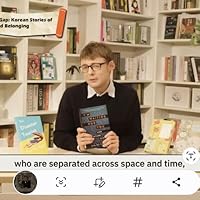
KBS Korea 24 @KBSKorea24
“On #KoreaBookClub, @BarryPWelsh shares #ChoiJinyoung's '#TotheWarmHorizon,' a #queer #lovestory "set against the backdrop of a #dystopian, #postapocalyptic world." Originally published in 2017, the gripping story takes place after humanity is devastated by a deadly #pandemic. The English @honfordstar version was translated by #literarytranslator @sojeflux, and Barry also talks about an interview with Choi and Soje that delves into the inspirations behind the #novel. Tune in”
19:10-20:00 KST, Mon-Fri on KBS WORLD Radio.
Download the KBS Kong / KBS WORLD Radio Mobile apps or subscribe to the Korea 24 podcast for your daily updates!
#KBSWORLDRadio #KBS월드라디오 #Korea24 #코리아24 #책스타그램 #북스타그램 #bookstagram #book #reading #최진영 #해가지는곳으로 #Koreanliterature #queerliterature #KoreanLiterature
(http://world.kbs.co.kr/service/progra...)
“On #KoreaBookClub, @BarryPWelsh shares #ChoiJinyoung's '#TotheWarmHorizon,' a #queer #lovestory "set against the backdrop of a #dystopian, #postapocalyptic world." Originally published in 2017, the gripping story takes place after humanity is devastated by a deadly #pandemic. The English @honfordstar version was translated by #literarytranslator @sojeflux, and Barry also talks about an interview with Choi and Soje that delves into the inspirations behind the #novel. Tune in”
19:10-20:00 KST, Mon-Fri on KBS WORLD Radio.
Download the KBS Kong / KBS WORLD Radio Mobile apps or subscribe to the Korea 24 podcast for your daily updates!
#KBSWORLDRadio #KBS월드라디오 #Korea24 #코리아24 #책스타그램 #북스타그램 #bookstagram #book #reading #최진영 #해가지는곳으로 #Koreanliterature #queerliterature #KoreanLiterature
(http://world.kbs.co.kr/service/progra...)

June 28, 2022
Rep: Korean cast, sapphic mcs
CWs: rape, violence
CWs: rape, violence
July 17, 2026
me han gustado muchas cosas del libro pero también se me ha hecho muy corto, siento que con otro estilo de narración habría podido disfrutar aún más de la historia

June 28, 2025
A: ¿Cuántas veces has pensado en lo que harías si colapsara el mundo, si pareciera que ha llegado el fin?
Conforme acompañas a las protagonistas de esta novela distópica —unas hermanas, un matrimonio, una chica de pelo rojo y su familia— aceptas con naturalidad la verosimilitud de los hechos, crece la tensión y la intriga, sientes miedo ante lo realista y cercano que es lo que se narra. Y eso último es para mí su gran acierto: es realista porque es humano, porque en mitad del caos nos está hablando de lo que somos, de los momentos que nos componen, de lo que es estar vivo. La disección de Choi Jin-young es precisa y nos reconocemos en ella.
Conforme acompañas a las protagonistas de esta novela distópica —unas hermanas, un matrimonio, una chica de pelo rojo y su familia— aceptas con naturalidad la verosimilitud de los hechos, crece la tensión y la intriga, sientes miedo ante lo realista y cercano que es lo que se narra. Y eso último es para mí su gran acierto: es realista porque es humano, porque en mitad del caos nos está hablando de lo que somos, de los momentos que nos componen, de lo que es estar vivo. La disección de Choi Jin-young es precisa y nos reconocemos en ella.

September 5, 2026
I picked Everything Happened At Once from the library's new acquisitions shelf as Korean sci-fi is always worth a try. In this case, a sapphic love story blooms amid a post-apocalyptic setting. Originally published in South Korea in 2017, the novel opens after a global pandemic has swiftly killed many millions and caused total panic and socioeconomic collapse. The main characters, all Korean, have fled to Russia. I found this location selection extraordinary. In a scenario where people were turning on one another and literally fighting for survival everywhere, with no functioning government remaining, I would want to be somewhere with minimal gun ownership and nuclear waste. The reader is more or less left to assume that Russia was the only place the main characters could reach, as surely it cannot have been their first choice! Bad things certainly happen to them there.
The depiction of human behaviour during an apocalyptic disaster here is distinctly pessimistic. People turn upon anyone not seen as part of their (pseudo-)family; more cruelty and violence than solidarity and co-operation occurs. There is a distinctly gendered structure to this. The five narrators of the story are all notable for trying to remain kind and humanitarian in a terrible situation. Four of them are women or girls. This all reminded me of The Road, although Jin-young depicts a social rather than environmental catastrophe.
The edition of Everything Happened at Once that I read includes an interview between the author and translator. I found this both interesting and rather surprising, as it describes the novel as hopeful. Insofar as not everyone is dead by the end, maybe, but the characters remain in a very dangerous situation after suffering horrific trauma. The sweet romance certainly contrasts strongly with the bleak setting, presumably with the aim of demonstrating that love can survive in even the grimmest, most genocidal contexts. Yet that wasn't enough for me to consider the book hopeful; it certainly did not take an optimistic view of male behaviour during disasters (or in general). From what I understand of South Korean gender relations, there are societal reasons for such a depiction. Nonetheless, I did not find the love story particularly vivid in comparison to the stark horror of everything else happening. The ensemble narration is an intriguing choice yet creates a rather too scattered effect for a novel of less than 180 pages. Thus Everything Happened at Once did not move me as I'd hoped it would.
The depiction of human behaviour during an apocalyptic disaster here is distinctly pessimistic. People turn upon anyone not seen as part of their (pseudo-)family; more cruelty and violence than solidarity and co-operation occurs. There is a distinctly gendered structure to this. The five narrators of the story are all notable for trying to remain kind and humanitarian in a terrible situation. Four of them are women or girls. This all reminded me of The Road, although Jin-young depicts a social rather than environmental catastrophe.
The edition of Everything Happened at Once that I read includes an interview between the author and translator. I found this both interesting and rather surprising, as it describes the novel as hopeful. Insofar as not everyone is dead by the end, maybe, but the characters remain in a very dangerous situation after suffering horrific trauma. The sweet romance certainly contrasts strongly with the bleak setting, presumably with the aim of demonstrating that love can survive in even the grimmest, most genocidal contexts. Yet that wasn't enough for me to consider the book hopeful; it certainly did not take an optimistic view of male behaviour during disasters (or in general). From what I understand of South Korean gender relations, there are societal reasons for such a depiction. Nonetheless, I did not find the love story particularly vivid in comparison to the stark horror of everything else happening. The ensemble narration is an intriguing choice yet creates a rather too scattered effect for a novel of less than 180 pages. Thus Everything Happened at Once did not move me as I'd hoped it would.

April 18, 2021
When strangers meet on the road, on the run from a disease, a lot can happen. While some are able to salvage what’s left of their humanity, others play the game of survival in hopes of a better future. The further the story progresses, the more you and some of the characters in the book wonder if there is no other way. It’s interesting to see what such a harsh situation does to one’s character, morals and dreams. You can’t follow the transformations in full detail, the book is too short for that, but you can compare the different outcomes.
Most characters mourn their lost lives, but some suddenly feel alive and kicking because they escaped a miserable situation at home. Those who stick to their dreams draw strength from that and follow their own path. The newfound simplicity gives them a sense of relief and they find that they are now able to pay attention to their loved ones. Others are absorbed in the status quo and do what everyone else does to survive. None of the main characters reaches the end of the book without a scratch.
To a Better Place
The story is slow-paced. The characters keep heading for a “better place” during a Russian winter. No one ages and time does not pass in increments of days and years. The idea of a dystopian world struck by disease is not a new concept and has been done many times before. It was up to the characters to make it a gripping story, but it took them quite a while to reach me. By the time they did, near the epilogue, it was too late. That epilogue, however, was very good.
Prolong their suffering?
The middle of the story was weaker. I liked the voices of Ryu, Joy and Gunji more than Dori and Jina. When Dori was drawn to Jina at the beginning of the book, it was a bit sudden because you had only just met her without knowing much about her. Jina’s attraction to Dori was easier to accept because it was stated more explicitly. I think the book was too short for their story and they needed more words to properly share their feelings with the reader. Gunji’s account of what happened to Dori should not have hit me harder than Jina’s or Dori’s.
To the Warm Horizon is a good example of a book whose ending you don’t really want to get to because the hardships get worse with each page. But as long as some people have dreams and are able to love, there is hope. If I ever find myself in a situation like this, I think I’ll just stay home instead of hiking into Russia.
Conclusion
To the Warm Horizon was a little disappointing for me. If Ryu or Joy had been the narrator of the entire book, I would have liked it better because I was more interested in what they had to say.
Most characters mourn their lost lives, but some suddenly feel alive and kicking because they escaped a miserable situation at home. Those who stick to their dreams draw strength from that and follow their own path. The newfound simplicity gives them a sense of relief and they find that they are now able to pay attention to their loved ones. Others are absorbed in the status quo and do what everyone else does to survive. None of the main characters reaches the end of the book without a scratch.
To a Better Place
The story is slow-paced. The characters keep heading for a “better place” during a Russian winter. No one ages and time does not pass in increments of days and years. The idea of a dystopian world struck by disease is not a new concept and has been done many times before. It was up to the characters to make it a gripping story, but it took them quite a while to reach me. By the time they did, near the epilogue, it was too late. That epilogue, however, was very good.
Prolong their suffering?
The middle of the story was weaker. I liked the voices of Ryu, Joy and Gunji more than Dori and Jina. When Dori was drawn to Jina at the beginning of the book, it was a bit sudden because you had only just met her without knowing much about her. Jina’s attraction to Dori was easier to accept because it was stated more explicitly. I think the book was too short for their story and they needed more words to properly share their feelings with the reader. Gunji’s account of what happened to Dori should not have hit me harder than Jina’s or Dori’s.
To the Warm Horizon is a good example of a book whose ending you don’t really want to get to because the hardships get worse with each page. But as long as some people have dreams and are able to love, there is hope. If I ever find myself in a situation like this, I think I’ll just stay home instead of hiking into Russia.
Conclusion
To the Warm Horizon was a little disappointing for me. If Ryu or Joy had been the narrator of the entire book, I would have liked it better because I was more interested in what they had to say.
June 6, 2021
I’m not a fan of dystopian novels, so I was surprised that I enjoyed this novel.
Fleeing S. Korea, after a swift moving pandemic turns civilization into a Mad Max style survival of the fittest and most brutal, are Dori, hardened after losing both parents, and traveling alone with her beloved young sister Joy, stealing, even killing to keep herself and Joy alive; Ryu, a jaded, harried working mother who drives out of Korea with her husband and young son, after burying their daughter; Jina, traveling with her tyrannical, ruthless father and what remains of their extended family, and Gunji, the bullied boy from school that Jina begs her father to allow in the box trucks loaded with food, water, gasoline and guns as they all travel in search of safety, not knowing if or where they might find it.
This is the first LGBTQ novel translated from Korean and the heart of the novel is the love between Jina and Dori. The story is well written and well paced as the groups each face their own struggles to survive and to find direction, but what drives the stories of each group are not the expected skirmishes for food, fuel, and shelter, but the battles for love: Jina’s fierce battle to maintain her belief in the goodness of people, especially her father, Dori’s struggle to allow herself to love Jina, Gunji’s need to love himself, and Ryu finding that after losing her home, job, security, and daughter, that there is something more important than life and death: it’s making sure her son and husband know that she loves them.
It’s probably more of a 3.5 novel, but for me to enjoy a post-apocalyptic, dystopian novel it has to be good, so I rounded up to a 4 and can honestly recommend it.
Fleeing S. Korea, after a swift moving pandemic turns civilization into a Mad Max style survival of the fittest and most brutal, are Dori, hardened after losing both parents, and traveling alone with her beloved young sister Joy, stealing, even killing to keep herself and Joy alive; Ryu, a jaded, harried working mother who drives out of Korea with her husband and young son, after burying their daughter; Jina, traveling with her tyrannical, ruthless father and what remains of their extended family, and Gunji, the bullied boy from school that Jina begs her father to allow in the box trucks loaded with food, water, gasoline and guns as they all travel in search of safety, not knowing if or where they might find it.
This is the first LGBTQ novel translated from Korean and the heart of the novel is the love between Jina and Dori. The story is well written and well paced as the groups each face their own struggles to survive and to find direction, but what drives the stories of each group are not the expected skirmishes for food, fuel, and shelter, but the battles for love: Jina’s fierce battle to maintain her belief in the goodness of people, especially her father, Dori’s struggle to allow herself to love Jina, Gunji’s need to love himself, and Ryu finding that after losing her home, job, security, and daughter, that there is something more important than life and death: it’s making sure her son and husband know that she loves them.
It’s probably more of a 3.5 novel, but for me to enjoy a post-apocalyptic, dystopian novel it has to be good, so I rounded up to a 4 and can honestly recommend it.
May 18, 2025
Distopía asiática con ecos de "The last of us" y "Soy leyenda", un virus letal mutante que está aniquilando a la humanidad, una cruel lucha por la supervivencia... son algunas de las cosas que habían dicho de este libro. Yo obviamente me tiré de cabeza, y más viniendo de @shirolibros que ya sabemos que es calidad, y sí, creo que es una descripción bastante acertada, aunque desde luego es mucho, muchísimo más que eso.
A través de las voces de algunos personajes que se van alternando asistimos a este fin apocalíptico en el que los pocos supervivientes a la enfermedad inician un viaje de huida, en busca de la salvación o de un lugar seguro. Durante el camino, y a través de todas las situaciones que viven, se pone de manifiesto el cómo reaccionamos los seres humanos ante la desesperación y cómo se activa el instinto de supervivencia sobre todo lo demás. Hay violencia, miedo, desconfianza y egoísmo. Pero también quedan algunos resquicios de bondad y generosidad.
Para mí el punto fuerte, sin duda, son los personajes, su evolución, los vínculos que se crean y la forma en que se van transformando, sus luces y sombras, las dudas, los sueños y promesas, las cargas y heridas que les acompañan o forman parte de ellos, su pasado y tal vez un posible futuro... Son de esos que se quedan dentro y no olvidas. La narración es tan dura y desoladora como cercana y bella, cada diálogo, cada reflexión me ha conquistado. Ha sido como encontrar una pequeña joya inesperada, ¡ojalá lo leáis!
A través de las voces de algunos personajes que se van alternando asistimos a este fin apocalíptico en el que los pocos supervivientes a la enfermedad inician un viaje de huida, en busca de la salvación o de un lugar seguro. Durante el camino, y a través de todas las situaciones que viven, se pone de manifiesto el cómo reaccionamos los seres humanos ante la desesperación y cómo se activa el instinto de supervivencia sobre todo lo demás. Hay violencia, miedo, desconfianza y egoísmo. Pero también quedan algunos resquicios de bondad y generosidad.
Para mí el punto fuerte, sin duda, son los personajes, su evolución, los vínculos que se crean y la forma en que se van transformando, sus luces y sombras, las dudas, los sueños y promesas, las cargas y heridas que les acompañan o forman parte de ellos, su pasado y tal vez un posible futuro... Son de esos que se quedan dentro y no olvidas. La narración es tan dura y desoladora como cercana y bella, cada diálogo, cada reflexión me ha conquistado. Ha sido como encontrar una pequeña joya inesperada, ¡ojalá lo leáis!
June 14, 2024
Absolutely devastating...I loved it.
August 26, 2026
Acabo de terminarlo y no puedo parar de llorar. En este libro se mantiene la esperanza aún teniéndolo todo en contra. Mañana cuando me despierte ya se me habrá olvidado otra vez, pero todo lo que tenemos es el ahora y hay que aferrarse a eso, decir todo lo bueno y bonito que tengamos que decir... Y sentir, sin miedo. De un momento a otro todo puede cambiar, y puede ser tarde.
Este libro es ternura y calidez, pero también tiene lo contrario, aquí podemos encontrar lo más repugnante del ser humano, y eso es muy duro.
Me quedo con la luminosidad que me han aportado Jina, Dori, Geonji, Ryu y Haemin. Me quedo con Miso 💜
"Sobreviviré con mucha calma. Protegeré lo bueno hasta el día de mi muerte. Las cosas buenas son las más preciadas. Las que guardo en mi centro de gravedad."
"Sólo cuando has recorrido el camino más largo y te has vuelto indiferente a todo, llegan a ti algunas personas tan naturalmente como un paisaje que estaba ahí esperando. Para encontrar tu milagro, tienes que ir hasta allí. No podía alejarme y vivir anhelándolo."
También las palabras de la autora del final del libro han sido preciosas:
"Incluso en el día en que se extinga la humanidad y todo lo que los humanos hemos creado vuelva a ser ceniza, las personas, tú, nosotros nos querremos. Las palabras de amor dejadas por tanta gente vagarán como espectros, como el viento, por la tierra silenciosa. El amor permanece. Cómo el universo que sigue aquí por mucho que desaparezca."
Simplemente, leedlo.
Este libro es ternura y calidez, pero también tiene lo contrario, aquí podemos encontrar lo más repugnante del ser humano, y eso es muy duro.
Me quedo con la luminosidad que me han aportado Jina, Dori, Geonji, Ryu y Haemin. Me quedo con Miso 💜
"Sobreviviré con mucha calma. Protegeré lo bueno hasta el día de mi muerte. Las cosas buenas son las más preciadas. Las que guardo en mi centro de gravedad."
"Sólo cuando has recorrido el camino más largo y te has vuelto indiferente a todo, llegan a ti algunas personas tan naturalmente como un paisaje que estaba ahí esperando. Para encontrar tu milagro, tienes que ir hasta allí. No podía alejarme y vivir anhelándolo."
También las palabras de la autora del final del libro han sido preciosas:
"Incluso en el día en que se extinga la humanidad y todo lo que los humanos hemos creado vuelva a ser ceniza, las personas, tú, nosotros nos querremos. Las palabras de amor dejadas por tanta gente vagarán como espectros, como el viento, por la tierra silenciosa. El amor permanece. Cómo el universo que sigue aquí por mucho que desaparezca."
Simplemente, leedlo.

August 11, 2021
I liked how there's no neat resolution for any of the characters in this story. It's a fairly standard take, but with compelling, mainly young, main characters, on the post-apocalyptic genre, and your enjoyment of it might depend on how much patience you have for that fact. I'm not very invested in genre, especially science fiction, anymore, so one thought that kept striking me was that something like this doesn't feel as vital or urgent as the dystopias or novels of collapse written when these things hadn't become tropes. Books like JG Ballard's early novels. At this point, over a century of genre fiction has failed to prepare us in any meaningful way for an age of climate catastrophe and a raging pandemic, so I'm inclined to take a novel like this a lot less seriously than I once did. There's a lot about love towards the end, but at least it's mostly balanced out by lack of clear happy-ever-afters. The translation felt clunky at times, rendered in an unlovely and very American English, but there are nuances of human insight in the original that shine through in places, suggesting an author with a subtle intelligence to go with her imagination.

August 28, 2022
This was so beautifully written I didn't mind anymore reading an apocalyptic book (I thought it would be a fluffy read - that's what you get for not reading synopses).
The characters were endearing always thinking about their situation, life before and what it meant to be alive. There were the cruelties you come to expect from apocalyptic writing, but it was just mentioned and not drawn out in long detailed descriptions, which I clearly appreciated.
The characters were endearing always thinking about their situation, life before and what it meant to be alive. There were the cruelties you come to expect from apocalyptic writing, but it was just mentioned and not drawn out in long detailed descriptions, which I clearly appreciated.

February 15, 2024
I can’t overstate how disappointed I am in this book. It has an absolutely killer premise: a post-apocalyptic sapphic love story where two women come together despite the horrors of a desperate humanity. But the world made no sense, with each new detail creating more questions. I won’t list all of my questions to avoid being tedious but the virus apocalypse and it’s aftermath made no sense, and the human behavior in this story made no sense. People did things for absolutely no reason for 170 pages and then it ended.
So maybe it wasn’t supposed to make sense? Maybe it was all a metaphor for the chaos of the human existence as a backdrop to a queer couple finding strength in each other? If that was the case you’d think the relationship would be more developed, but it was extremely simplistic. Girl meets girl, girl protects girl, girl gives nice gifts to girl, girls are separated, girls are later reunited, the end. It was cute, I’ll give it that, but I gained nothing.
Also this book is less than 200 pages and alternates between five different perspectives. Also the prose is clinical and removed. Also these Korean characters keep meeting other Korean people in the post-apocalyptic Russian countryside and that doesn’t make any sense. Also people keep getting raped for no reason.
I didn’t like this book.
So maybe it wasn’t supposed to make sense? Maybe it was all a metaphor for the chaos of the human existence as a backdrop to a queer couple finding strength in each other? If that was the case you’d think the relationship would be more developed, but it was extremely simplistic. Girl meets girl, girl protects girl, girl gives nice gifts to girl, girls are separated, girls are later reunited, the end. It was cute, I’ll give it that, but I gained nothing.
Also this book is less than 200 pages and alternates between five different perspectives. Also the prose is clinical and removed. Also these Korean characters keep meeting other Korean people in the post-apocalyptic Russian countryside and that doesn’t make any sense. Also people keep getting raped for no reason.
I didn’t like this book.
May 28, 2026
3.5 stars
qué final más bonito. me entusiasma el concepto de este libro, y no me ha decepcionado en absoluto. sí es cierto que esperaba un poco más de contenido post-apocalíptico como buen fan que soy del género. aún así estoy muy satisfecha con el libro: nada espectacular ni sensacional, sencillo y ligeramente lírico, con una estructura tierna y una prosa melancólica. me ha gustado mucho.
qué final más bonito. me entusiasma el concepto de este libro, y no me ha decepcionado en absoluto. sí es cierto que esperaba un poco más de contenido post-apocalíptico como buen fan que soy del género. aún así estoy muy satisfecha con el libro: nada espectacular ni sensacional, sencillo y ligeramente lírico, con una estructura tierna y una prosa melancólica. me ha gustado mucho.

May 31, 2025
książka o najgorszych instynktach, które budzą się w ludziach w sytuacjach skrajnego zagrożenia życia i o poszukiwaniu nadziei w tym ciężkim czasie
jej bezpośredniość boli, ale też uświadamia wiele rzeczy
4/5, bo myślę, że w dłuższej formie ta historia mogłaby wybrzmieć jeszcze lepiej
jej bezpośredniość boli, ale też uświadamia wiele rzeczy
4/5, bo myślę, że w dłuższej formie ta historia mogłaby wybrzmieć jeszcze lepiej
Read
March 21, 2025this was different than what i was expecting, but still fun and interesting
Displaying 1 - 30 of 176 reviews