Williston Walker (1860 – 1922) was an eminent American Church historian.This classic includes the following I. From the Beginnings to the Gnostic CrisisSection I. The General SituationSection II. The Jewish BackgroundSection III. Jesus and the DisciplesSection IV. The Palestinian Christian CommunitiesSection V. Paul and Gentile ChristianitySection VII. The Interpretation of JesusSection VIII. Gentile Christianity of the Second CenturySection IX. Christian OrganizationSection X. Relations of Christianity to the Roman GovernmentSection XI. The ApologistsPeriod II. From the Gnostic Crisis to ConstantineSection II. MarcionSection III. MontanismSection IV. The Catholic ChurchSection V. The Growing Importance of RomeSection VI. IRENiEusSection VII. Tertullian and CyprianSection VIII. The Triumph of the Logos Christology in the WestSection IX. The Alexandrian SchoolSection X. Church and State From 180 To 260Section XI. The Constitutional Development of the ChurchSection XII. Public Worship and Sacred SeasonsSection XIII. BaptismSection XIV. The Lord’S SupperSection XV. Forgiveness of SinsSection XVI. The Composition of the Church and the Higher and Lower MoralitySection XVII. Rest and Growth, 260-303Section XVIII. Rival Religious ForcesSection XIX. The Final StrugglePeriod III. The Imperial State ChurchSection I. The Changed SituationSection II. The Arian Controversy to the Death of ConstantineSection III. Controversy Under Constantine’S SonsSection IV. The Later Nicene StruggleSection V. Akian Missions and the Germanic InvasionsSection VI. The Growth of the PapacySection VII. MonasticismSection VIII. Ambrose and ChrysostomSection IX. The Christological ControversiesSection X. The East DividedSection XI. Catastrophes and Further Controversies in the EastSection XII. The Constitutional Development of the ChurchSection XIII. Public Worship and Sacred SeasonsSection XIV. Lower ChristianitySection XV. Some Western CharacteristicsSection XVI. JeromeSection XVII. AugustineSection XVIII. The Pelagian ControversySection XIX. Semi-PelagianismSection XX. Gregory the GreatPeriod IV. The Middle Ages to the Close of the Investiture ControversySection I. Missions in the British IslandsSection II. Continental Missions and Papal GrowthSection III. The Franks and the PapacySection IV. CharlemagneSection V. Ecclesiastical InstitutionsSection VI. Collapsing Empire and Rising PapacySection VII. Papal Decline and Renewal by the Revived EmpireSection VIII. Reform MovementsSection IX. The Reform Party Secures the PapacySection X. The Papacy Breaks With the EmpireSection XI. Hildebrand and Henry IvSection XII. The Struggle Ends in CompromiseSection XIII. The Greek Church After the Picture ControversySection XIV. The Spread of the ChurchPeriod V. The Later Middle AgesSection I. The CrusadesSection II. New Religious MovementsSection III. Antichurchly Sects. Cathari and Wal-Denses. The InquisitionSection IV. The Dominicans and FranciscansSection V. Early ScholasticismSection VI. The UniversitiesSection VII. High Scholasticism and Its TheologySection VIII. The MysticsSection IX. Missions and DefeatsSection X.
One of my brothers worked for a "great books" college where no history to speak of is taught. The students work solely with original texts, delving deeply into some seminal issues, but have little sense of how they fit together. Unless they do the contextual study themselves and get a sense of human history and its dynamics, they end up with too much appreciation of the Platonic notion that somehow ideas are superior to and independent of their instantiations, that thinkers are superior to and independent of their material roots, that they are participating in some grand dialog transcending space and time.
This criticism can be applied to myself by means of an analogy. Just as it is misleading to think, say, that you can read and understand Plato without knowing the history surrounding the Peloponnesian Wars, so it is naive to believe that you can understand another culture without knowing its language(s). Although I started thinking myself an historian as a high school freshman, I've never been good at the memorization required for learning foreign languages and, so, have never really acquired any except, perhaps, American Sign Language--and that was picked up at home by using it more than by classwork.
Viewed from the outside, many of the dogmas and doctrines of the Christian churches seem psychotic, divorced from reality. Viewed contextually in their historical context they begin to make sense. One of my complaints about an otherwise fine school is that Union Theological Seminary did not have us do our three semesters of required Church History courses at the very outset, but allowed me to wait until I was already well into the M.Div. program. A lot of the philosophy/theology coursework would have been easier, would have made more sense, if I had read Walker's History of the Christian Church or Kelly's History of Dogma beforehand or alongside the foundational texts.
One of the fun things about general histories, particularly those which treat of matters never studied systematically before, is that you discover so much which is familiar. It's like looking up a word you've seen, even uncertainly employed, over the years and finally discovering its etymology and range of meanings. You have that pleasant "Aha!" experience which encourages the faith that this big wide world of ours actually might make sense given enough effort. It certainly appears richer, pregnant with signification and meaning.
David Lotz, teacher of the second of our required Church History courses, the one on the late Middle Ages and the Reformation, was one of the contributors to Walker's amended text. Although neither a colorful individual nor particularly entertaining lecturer, rather a dry expositer of facts and rather exacting examiner, I very much enjoyed his class because the combination of his demands and the great mass of material we were forced to face led to a semester of discovery upon discovery.
I still think a lot of religious dogma and doctrine is weird, but Walker and Lotz have greatly contributed to a faith that, with effort, it can all make sense.
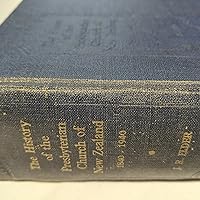
This was the text book for a class on Church History while I was in college. Most of my text books I chose to sell back to the school or to other students, but this one I gladly kept. It is a wonderful book written on the history of religion and then men who shaped the religions of the world.
I can't say I have any hope of remembering much of the names and dates of this history but I'm glad I read it. It did help to clear up the sequence of events that I was unsure of. If I can retain any of it, that is. The main insight I gained was a depressing realization that 'christian' men have done more to confuse the ways of Christ for the rest of the world than any of His enemies could ever hope to.
Like many Christians, I feel as if I know far too little about the history and development of my own faith tradition. Thus, I was looking for an overview of Christian history, and this seemed to be one of the more authoritative and definitive texts. It has been around for a while and I know a number of pastors and theologians who have it on their shelves as a core text. The plethora of authors on the front cover will tell you how old it is and how often it has been expanded and revised. The edition I read was copyright 1985, but the original author died in 1922.
Given the immense scope of what the book covers, it is remarkably lucid and readable. Walker and his collaborators describe the historical events of the Christian faith as well as the political, social and economic events that affected the development of that faith into an organized religion and church. They start with the Apostles and move through the early church years to the Roman Catholic Empire / Roman Catholic Church and on to the Reformation and Protestantism. Given the length of the book (just over 700 pages), it is impossible for too much detail to be offered, but the key dates, events and personages are given thumbnail sketches and the major inflection points, controversies and schisms are all covered.
At times, I was a little frustrated because the book would jump backwards or forwards in time to pick up another angle on a particular era (e.g. "while this was going on in Rome, this was happening in Africa.") Because I read the book in small chunks, it became harder to sync up certain actions, events and players - especially when juxtaposing theological controversies with political actions. There is just too much content and remembering each name, place and incidence becomes challenging, if not impossible.
I was struck by a couple of things while reading this. One was that there has long been a huge messy intertwining of temporal and spiritual power in the history of religion (Christian or otherwise). We still wrestle with this topic today, especially in the US, as political candidates and business leaders are sometimes judged on their faith and values. Some feel that it is good to know what a politician or businessperson believes about God while others think that such disclosures have no place in public life. But our conversations and conflicts around faith in the public sphere are nothing like the outright wars of the Middle Ages as popes and kings went into battle to seize or retain power.
The other thing that struck me was how much things remain the same. Some of the theological arguments of the early years of the faith - the nature of the Trinity, our understanding of the nature of Christ, the exact mechanism of atonement - are still being argued today, 2000 years later. What disheartens me is that many of my fellow believers have no idea that the conversations we're having now aren't original and that there are ideas to call on from earlier eras.
So, for anyone who wants to better understand the history of this messy, sometimes sad, beautiful, frustrating and inspiring thing called the Christian church, Walker's book may be a good place to start. It's a bit dry and it is certainly written at a 30,000 foot level. But it provides the reader with the overview needed to have a general working knowledge and perhaps to begin deeper study.
I read to p. 279, which is the end of Period IV and the end of my required reading for the St. Stephen's course. While it's full of information, this book is very dense and slow-reading, and the author at times seems to assume a lot about the background knowledge of the reader. Let's just say I'm glad to be moving on.
As a brief, single volume survey of the entirety of church history, Walker’s A History of the Christian Church is superb. It’s difficult to confine 2,000 years of salient history into a 700 page book without excluding all the necessary factors and details that led to the Christendom of today, yet that’s exactly what Walker does.
I have to express some criticism and disappointment in his treatment of the 19th and 20th centuries (though his editors/coauthors for this later addition are presumably responsible for much of it), for it seems that many insignificant movements are treated as though they are the solution to the problems of factious Christendom today, while many arguably critical persons and groups and hardly given a sentence of mention. Granted, nobody can keep a history objective once encroaching on their own era and “camp” of Christianity, but with only 83 pages devoted to these centuries, I would still recommend this book as a resource for giving a general overview of church history.
Cool quotes:
“The word “church” continued to denote primarily the assembly of Christians in a particular place—that is, in practice, a particular polis with its urban center and rural hinterland. Such “cities,” however, varied greatly in size, from cosmopolitan centers like Rome, Alexandria, or Antioch, to what were by modern standards no more than small towns, and the size and complexity of Christian congregations varied accordingly.” -Williston Walker, A History of the Christian Church, pp. 98, commenting on the word “church” in the third century
“The soul, he (Johannes Eckhart) taught, has within it a special structure—what he variously called the “spark” (scintilla, Fünklein) or the “ground” (Grund) of the soul—which is the very likeness of God and where God dwells totally…Only by withdrawing from all objects of sense, thought, and will, by retreating into its “ground,” can the soul experience the birth of the Word (Son) of God within itself and attain mystical union with God.” - Williston Walker, The History of the Christian Church, pp. 360, on Johannes “Meister” Eckhart (1260?-1327 or 28)
The vital relationship between the believer and God which Luther had taught had been replaced very largely by a faith which consisted in the acceptance of a dogmatic whole. The laity’s role was largely passive: to except the dogmas on the assurance that they were pure, to listen to their exposition from the pulpit, to partake of the sacrament and share the ordinances of the church—these were the practical sum of the Christian life. Some evidences of deeper piety existed, of which the hymns of the age are ample proof, and doubtless many individual examples of real inward religious life where to be found, but the general tendency was external and dogmatic. - Walker, A History of the Christian Church, pp 587
This was required reading for my Church History Class.
It provides an interesting look at Church History, and he offers a reasonable and surprisingly sacramental look at early Christianity and its development through the centuries for a Protestant Historian. For one volume, it contains an incredible amount of information and is incredibly useful for anyone seeking to understand many eras in the history of Christianity.
Suffers the fault of many such books in seeing the work of humanity rather than God. A good enough academic survey but not outstanding or modern (which may be a good thing)
The author writing style is to use 25 words when three or four would be clearer. It contains a lot of information, but it's tedious to read. The book will be a good reference.
A tremendous and thorough history of Christianity from its founding up to the early 20th century (it was written in 1918). The author covers not only the major and minor personages but also, sometimes in depth, the theological issues and conflicts of given eras. Even though the author (who was a professor at Yale) seems a bit too conciliatory towards the progressive, less-than-orthodox views (he never uses the word "liberal") of certain movers and institutions of the 1850-1918 period, the book in total is both exhaustive and enthralling. Highly recommended.
A single volume history of the church, Walker’s work provides a great introductory resource for the student and pastor. In-depth and very readable, Walker divides the books by period into short, easy-reference chapters. While chronological (spanning from the NT-era to the mid-20th century – thus missing some more recent developments), each chapter is either personality or issue driven, thus making the book a good resource for review of specific issues and events in church history. A
To give you an idea of how old this book is, when he retired from Yale as Titus Street Professor of Ecclesiastical History Williston Walker was replaced by Roland Bainton. Bainton was replaced in 1962 by Jaroslav Pelikan, who just passed away in 2006. This book is well written, full of information,but just a tad dry. Use it as a supplement to other books.
This book is a tremendous reference for Christian history. It's incredibly detailed but since such a large span of time is being covered Walker is still constrained on skimming over events. A good overview from the apostles to neo-orthodoxy. A difficult read at times.
The standard history of the Christian Church, only readable if your really interested or a history buff, once you get into it a lot of neat stuff, the book written more from a scholarly point of view than a Christian one. Probably the best generic Christian History Volume.
The standard history of the Christian Church, only readable if your really interested or a history buff, once you get into it a lot of neat stuff, the book written more from a scholarly point of view than a Christian one. Probably the best generic Christian History Volume.