Highly anticipated translation of this Norwegian cult classic long salivated-over by readers of blogs like The Untranslated, where language-locked books torment those of us who lack the time to learn rural Scandinavian dialects.
Even with the new English description from publisher And Other Stories, it's hard to capture succinctly what this book is really all about. Let me get some name-droppy referential stuff out of the way first for the highly-literate customer looking for a one liner: Think Thomas Bernhard or Dag Solstad, the Cormac McCarthy of Child of God, the freewheeling unpredictability of Cesar Aira, and the morbid, scathing humor of Lars Von Trier.
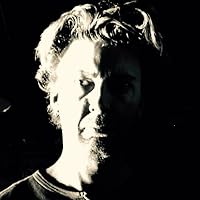
Even with this vague mood board in mind, expect the unexpected. Like fellow countryman and fan Karl Ove Knausgård, Lund appears to allow his stories to drive themselves, tanked up with Lund's sheer potent aura (check pics of author), and exclusively on back roads, free from guardrails and local authorities. At some point you'll realize that this story might go anywhere or take any form, but namby-pamby surrealist reverie it is not--more a rocket whose thrust equation was written in ransom-note collage letters. There's an obsession at the heart of the novel with authenticity—a bulls-eye or holy grail which requires Lund to overstep boundaries (of style, of taste, of subject) in order to continue chasing, like a Wile E. Coyote painting traversible cliffside murals in literature's Monument Valley.
Much of the novel is a rant, a by-turns bitter and disillusioned tirade against modern life and modern society, but free from any known -isms, an untutored folk-rant that develops spontaneously, in contradictory 'progressive' and 'reactionary' modes mixed with a retrospective narrative, the absurd ups and downs (or, really downs and downs) of which produce reconfigurations and fresh insights in the very fried mind of one Thomas Olsen Myrbråten. Yet, to use small words description, this isn't Big Words Novel, at least mostly, or as much as one can say about a novel that frequently morphs, though it is often Long Sentence Novel. Myrbråten's "fresh insights", as I've come so soon to regret describing them, are kind of hare-brained, if honest attempts at cutting through all the confusing, contradictory bullshit in the world through greater force rather than a sharper blade.
If you haven't caught it already--and it's easy given the amount of steel-bending required to describe such a unique novel--this is a comedy. Look through the dank lit-bro descriptions I've offered you and know that The Mystery of What Befell in the Ditch is a dark, ludicrous comedy about the psychic dissonance reverberating between urban and rural poles, between, say, the paranoid and racist 'simple living' of Varg Vikernes and the urbane, open-market cosmopolitanism of Jens Stoltenberg--a quintessentially Norwegian dissonance, perhaps, but ah, no, we have that here too, don't we? And times about 62 according to the latest census records! And wherever you are too, I bet! That makes Mystery truly prophetic—a rangy misfit of a novel that's emerged from the woods at the crucial moment, like a hermit with a dire, incoherent warning.