"You can be right or you can be published."
This is advice I was given years ago. Sometimes, things you like about your story don't work. Things you love that, before sending it to an editor, need to be changed. And you can change them, or you can not get your book/comic/etc published.
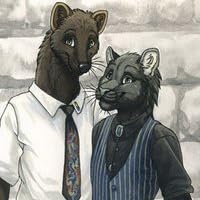
"Circles" started as a comic, with the entire story mapped out and (according to author notes) written in advance before the first issue even released. Now, that's great. I's a solid way to make sure your comic series is well-paced and comes to a satisfying conclusion, especially when that story is meant to be 13 issues. We'll be coming back to this point.
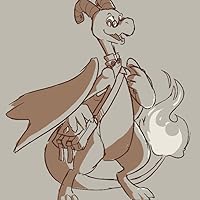
Now, what might happen if, say, after 8 issues, the artist can no longer continue with the series? Well, you find a different artist. What if the author/creator thinks that there's no series without the original artist? Well, you can be right or you can be published. However, no one on the publisher's/editor's side told the author that, so instead, "issues" 9-13 were published as short novel, with an occasional illustration by the artist of issues 1-8.
Finishing a comic series in a different medium (and it is a different medium, despite the illustrations) isn't the worst idea. Many other projects have done that. However, we come to one of the major issues with the novel. A note before we read a single word of prose states that the author never "saw" the characters as anthropomorphic animals, and therefore refuses to describe them as such. This would be like continuing a superhero comic as a novel and saying "you never saw them as superheroes" and refusing to describe superpowers or costumes. Without the furry salsa (sorry for the visual image there) sprinkled on top of this story, a salsa that was there before, the story comes off as simultaneously bland and distracting. There are also numerous spelling and grammatical errors.
"You can be right or you can be published," unless your editor/publisher would rather have any conclusion than no conclusion at all. I suppose if everyone in the process fails to put a foot down, no one has to cave.
Is the conclusion of the story satisfying? Absolutely, if you can slog through several more issues of Sad Gay Background Bingo. "Circles" has seemed determined to use every possible trope or cliche for the background of its LGBT cast, and I suppose it's a sign of the times that we have so much representation now that they feel cliche. The first book felt old-fashioned when I read it in 2007. This final book, set now even further in the past, feels even older.
Is the book worth reading? I feel if you had hope for "Circles" to finally finish, then you probably already own this. I read the entire second half of this particular volume in one sitting, with a glass of wine and the music that inspired the series playing in the background (the author helpfully includes the names of every song where chapter titles were cribbed from). The second half was worth the initial slog.
Would it be worth reading if I hadn't waited almost a decade to finally be able to sit down and finish one of the first furry stories I ever liked? I honestly don't know.