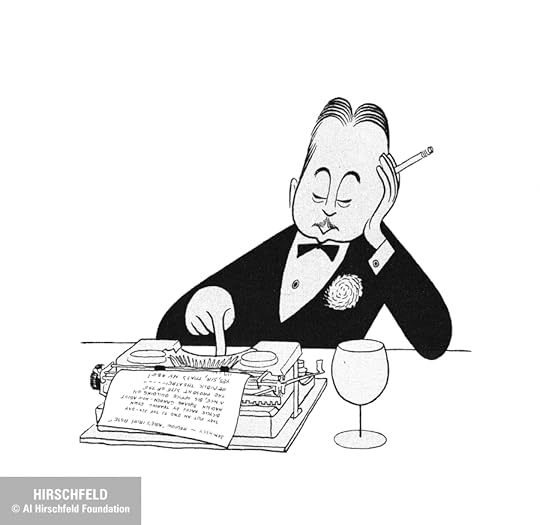
Works, including How to Sleep, the film of 1935, and My Ten Years in a Quandary, the book of 1936, of Robert Charles Benchley, humorist, critic, and actor, often pitted an average American against the complexities of modern life.
People best knew Robert Charles Benchley as a newspaper columnist. He began at the Lampoon and meanwhile attended Harvard University and wrote many essays and articles for Vanity Fair and The New Yorker. From New York City and his peers at the Algonquin Round Table, short style brought acclaim, respect, and success to Benchley to contemporaries in the burgeoning industry.
Benchley contributed best remembered influential topical or absurdist essays to The New Yorker. He also made a name in Hollywood, when his popular success won best short subject at the academy awards of 1935, and his many memorable appearances in such as Foreign Correspondent of Alfred Joseph Hitchcock and a dramatic turn in Nice Girl?. He wrote his legacy in numerous short appearances.
For the last ten years or so, when I think of writers who are important to me, as a writer, I think of Robert Benchley. Which may be an odd choice, but the reasons why I like him are very sane to me. I have to presume that Benchley had to write his essays/reviews regularly and all due to the deadline. I sense that is what inspired his work (and his paycheck) and opened up his imagination. He also writes about everything under the sun and stars. Social manners, theater, eating, family life, and so on. His topics are vast, yet, he covers it all with his 'character,' and that's important for a writer to have a certain amount of character when one writes. I learned from his books.
And even more critical, Benchley is a great prose writer as well as a fantastic wit. I'm a fan of literature that was written in the 1920s/1930s that come off charming, but I damn know well that things were for sure not charming outside Benchley's world or mind. Yet, he made a choice to write about his subject matters with a strong subjective point-of-view that doesn't show him being smarty-pants, but one with an intense curiosity of how things work. I think of him often when I type on a blank screen or a pen on paper. If he can come up with the goods, then so can I!
I read a lot of Robert Benchley when I was in high school. He was a 20th-century humorist who is now lost to the ages. I don't recall if he was part of the Algonquin Round Table, but he was at least on the periphery. This is a book of humorous essays of his, now in the public domain, and well worth a read if you have the free time.
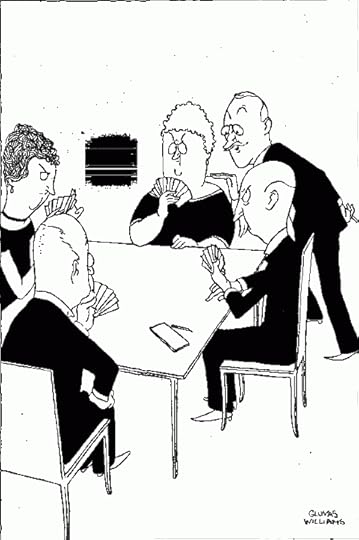
Robert Benchley was a very dry comedic writer from the 1930s and 40s...but as much as I like his prose, I like the line drawings of Gluyas Williams that would accompany Benchley's columns. None were included in the free Kindle version from Amazon.
Have you ever looked in a store window reflection and wondered who that unpleasant man is? Robert Benchley has!
A great essay on how to be a spectator on the sport of playing bridge.
He has a great essay called, "The tooth, the whole tooth and nothing but the tooth" which describes how I make appointments for the dentist!
So far, as usual, I'm reading a collection of essays that makes me feel as though I'm living in the wrong era. Humor so dry it blisters, sometimes now completely anachronistic, still relatable for me. At times it's less funny due to obvious effort, but not often enough to spoil the buffet.
A collection of essays and columns printed in 1922 covering everything from Baseball to opera plots to (then) current political situations. Sure some of it is now dated, but some is still quite funny. When it isn't quite funny anymore, you can still admire the quality of the writing.
I read this book while reading Emily Posts etiquette in Society. Everything that Benchley wrote comically about was exactly the subject of Post's disdain. It took me a while to figure out why this book is called "Love Conquers All". There wasn't really any stories of Love, nor of it conquering anything. My only guess is that the answer to all of these stories of social ungraces, personal faults, and seeming rudeness is that "Love Conquers All". If not, none of these stories would seem funny. They would be sad and hateful. It's a quick read. I especially liked all of the guides to proper way to watch Bridge and Chess and the like. Really funny stuff.
This is a copious potpourri of unrelated subjects. Robert Benchley published Love Conquers All in 1922 and opens his world of humor (proving that some things never change). Few novels cause me to laugh out loud but this is one of them. He has, in my opinion, reached the heights of Joseph Heller in Catch 22 and instantly made me a fan. The fact that this was published ninety years ago one would think that an additional exegesis would be necessary but this is not the case, weather the subject is sports, marriage, children or pets, it applies to those things even today. Love Conquers All is a “must read” book for everyone of all ages. I gave it five stars because I could give it ten!
The essays in Benchley's first book, from 1922, already mark him as a very funny stylist and observer of life. (The title, like ones to follow, gives no hint of its contents.) "Love Conquers All" has the added bonus of a long section of his literary pieces, many of them very loose reviews of books nobody else would review, one of them a complaint that he can't find any bookcases for sale without glass fronts.
I thoroughly enjoyed reading this book. Most of it had me smiling, and some of it had me laughing out loud. There are also 2 or 3 essays that are serious and still pertinent. I got it on Amazon as a free, public domain download.
Amazing book, I listened to the audiobook version on YouTube. I will leave the link below so that everyone can enjoy it! https://www.youtube.com/watch?v=_gHb3...
I'm pretty sure I read this years ago during my Benchley phase, but I got hold of another copy after reading a review by H.L. Mencken in The Smart Set denouncing it. The problem apparently was that Benchley made fun, in one of the pieces reprinted here, of James Cabell Branch, a writer of medieval fantasy novels that Mencken adored. The word "puerile" may have been used in the course of the review; in any case, Mencken was so irritated that he called Benchley's entire book mediocre. Not HLM's finest hour.
(I have to plug S.T. Joshi's Mencken collections, where that review appears. They're being published as the copyrights on the original articles expire. The series is a bonanza for Mencken fans, even though it sometimes shows him at his most, well, puerile.)
"Love Conquers All" turns out to be terrific collection of articles from just after WWI, judging from some of the topics. Maybe five or six of them are grade B Benchley, but the rest are hilarious. A little more than a third of it consists of book reviews - something I don't remember Benchley including in his later collections - and they're as funny as anything else he wrote. (If you haven't read his theater reviews, press criticism and other "straight" journalism, do it now.)
I was pleased to learn that "The Psychic Life of Insects" by Prof. E.L. Bouvier, criticized in an essay titled "Do Insects Think?" for ignoring findings from "my treatise 'Do Larvae Laugh,' " is a real book you can still buy. The actual book reviews aren't limited to literary fiction, either - Benchley tackles "Bricklaying in Modern Practice" by Stewart Scrimshaw and H. Colin Campbell's "How to Use Cement for Concrete Construction" with excellent results.* I remember the piles of unread review copies that littered places I've worked, and hope modern critics can learn something from him.
* One of Mencken's hobbies was bricklaying, believe it or not, but I guess he loved prurient, overwritten fantasy tales even more than he did putting up walls in his backyard.
Benchley may seem outdated at first, but by the end of this book of his columns, I was a fan. The man was a keen observer of humanity and incredibly incisive.
An excellent collection of essays by arguably the best writer that ever put pen to paper…or finger to typewriter key…or dictated to a stenographer…or, well you get the idea.