The Blood of the Vampire is a Gothic novel by Florence Marryat, published in 1897. The protagonist, Harriet Brandt, is a mixed-race psychic vampire who kills unintentionally. The novel follows Harriet after she leaves a Jamaican convent for Europe, and her ill-fated attempts to integrate with Victorian society. One contemporary reviewer scathed the novel, comparing it unfavourably to Marryat's previous works and another vampire text published in the same year—Bram Stoker's Dracula . Although The Blood of the Vampire is still relatively unknown, it has received increased critical coverage since the end of the twentieth century. Academics highlight the novel's treatment of race, eugenics, and social class. Marryat's conception of vampires as medical rather than supernatural has also elicited interest, and critics frequently compare it both to Dracula and Sheridan Le Fanu's Carmilla (1872) The novel opens in Heyst, Belgium, where 21-year-old Harriet Brandt meets two English women, Margaret and Elinor. Harriet reveals that she was raised in a Jamaican convent, following the death of her parents ten years prior. When she came of age, she used her inheritance to move to Europe to start a new life. Although one of the women finds Harriet distasteful, Margaret Pullen likes Harriet. Harriet is fond of Margaret's young child, but Margaret is cautious about letting Harriet hold her. Harriet reminisces about her childhood on a plantation, saying that she misses its overseer because he let her whip the slaves when they were lazy. After Harriet touches her, Margaret suddenly feels drained and begs Harriet to let her go. After finding out that she is wealthy, a local aristocrat, the Baroness Gobelli, invites Harriet back to England. Harriet spends more time with Margaret's child, who becomes severely ill. A medical professional—Doctor Phillips—is summoned. He does not know what is wrong with the child, but recognises her surname because he knew her father. The baby grows ill and dies. Harriet travels to England, and Harriet begins spending many hours with the Baroness' young son, Bobby. She also meets and falls in love with a socialist, Anthony Pennell. Bobby also becomes ill, and the Baroness accuses her of being cursed with both "black blood" and "vampire blood". Harriet, frightened, returns to Doctor Phillips, who tells her about her family history. Her father was a doctor who performed experiments on his plantation's slaves until they revolted and killed him, and her mother was the daughter of a slave of the Judge of Barbados. He advises Harriet that she should never marry, and instead withdraw from society. Shortly thereafter, Bobby dies. Harriet returns to Anthony, who tells her that Dr Phillips' theory is ridiculous, and that they should ignore him and marry. For their honeymoon, they travel to Nice. The next morning, Harriet wakes to find Anthony dead beside her. She leaves a written will bequeathing her possessions to Margaret Pullen, and then kills herself by taking chloral.
British author and actress, daughter of author Capt. Frederick Marryat (Children of the The New Forest), particularly known for her sensational novels and her involvement with several celebrated spiritual mediums of the late nineteenth century. Her works include There is No Death (1891) and The Spirit World (1894).
Marryat's parents separated when she was young; her childhood was divided between her parents' residences, where she was privately educated. Shortly before her 21st birthday, she wed Thomas Ross Church, an officer in the Madras staff corps of the British Army in India; they spent the first seven years of their married life traveling India extensively before she returned to England in 1860. They had eight children but divorced in 1879; later that year, Marryat wed Colonel Francis Lean.
At the age of 43, Marryat entered the stage, taking a role in a drama she had written, Her World Against a Lie, in 1881.
It just goes to show -- sometimes we all ought to go into our books with zero expectations.
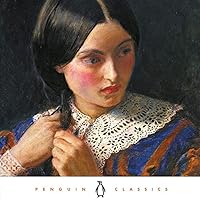
I started this one looking at that interesting cover and looking at that interesting title and heard things like sexual mores and seduction and when it became clear that this was the OTHER vampire novel that came out the same year as Dracula (and fifty years after Varney the Vampire popularized the hell out of the meme) I kinda expected something sensational and daring and shocking for all those ladies with their swooning couches.
INSTEAD, we get something like a cross between Jane Eyre (quality as well, mind you,) and Charlotte Perkins Gilman's The Yellow Wallpaper, but set as something like a psychological and even broad-scientific rebuttal to Gilman's story's theme.
Say, huh?
The main character, a fish out of water, exploring her budding sexuality and feeling out of sorts with the stifling Victorian society, blames herself for all the strange tragedies going on around her. She takes it on herself, believing herself to be some kind of monster. A vampire.
We get an interesting mix of reasoning around genetics, social mores, psychological damage, expectations, and even a rather destructive and reactionary take on women's rights -- if we read rather deeper into the tale.
All those Freudian neuroses. This is a novel about turning the blame upon oneself. And it does a rather good job of convincing the reader, too.
For that, it's pretty scary. But while it DOES take on so many of the similar kinds of issues of the day, of the OTHER, of sexuality, like Dracula, it keeps the tale much closer to home and perhaps, for that reason, it might have been a bit more disturbing. Still, it is its own tale. :)
This is NOT something I'd recommend for, say, Spooktober.
Well. This was ... different. 1897 was a good year for one of our favourite monsters: vampires. Along with THE most well-known book about them, Bram Stoker's Dracula, this book was published. The author is a woman and so is the main character which might, in part, account for it having been less popular. Harriet Brandt being a different kind of vampire, if at all, might be the other reason (and at least for me the stronger one).
The book starts with us readers meeting a group of people who have travelled to Heyst, a seaside resort in Belgium. One, Elinor, is a lady so prim and proper that she doesn't even tell of her engagement for fear of gossip, the other is Margaret, her much more approachable friend / soon to be sister-in-law with her baby Ethel. Yet another is the Baroness Gobelli, who is a bully (not even her timid husband and pathetic son are safe from her awfulness). Then there is Elinor's womanizer fiancé as well as a novelist and a Dr. Phillips, who knew the MC's parents. There is a lot of gossip going back and forth between the people, even more so once Harriet arrives. Harriet is from Jamaica, the daughter of a white scientist and a Creole madwoman (herself the daughter of a white man and a black slave). The father was experimenting on natives while her mother was supposedly bitten by a vampire bat while being pregnant. So when the natives rose up and killed her parents, Harriet fled the convent she grew up in to spend the money she inherited by travelling Europe in desperate search for affection. According to Dr. Phillips, however, there is no escaping her degenerate heritage (hence the title).
Interestingly, the doctor immediately tells everyone what Harriet supposedly is. There is no element of surprise, no creepy exploration of her actions for us readers. That was the first highly unusual thing in this tale. What follows is an interesting take on vampirism. You see, there is no bloodsucking here. Sorry if that disappoints you and yes, I was also somewhat let down by that fact. Instead, we get an unsurprising story that is more an exploration of Harriet's mind and soul than anything else. Her need for closeness and affection is sucking the others dry so to speak. But is this REALLY killing them? Or are the alternatives suggested by the author the real cause and entirely natural?
I think one of the book's main weaknesses, for me at least, was the lack of suspense. We are always shown and told everything immediately. Nevertheless, there was some tension and I liked a different approach to the vampire tale, not to mention the implications her innocence would have (racism, social prejudice). I also enjoyed the author's exploration of nature vs. nurture as well as women's place in society.
Why am I going into detail about a book that hasn't rocked my world? Because I still think it's an interesting and important piece of the time, especially in comparison to the big names (like Bram Stoker). Not least because the author had quite a remarkable life: she wrote scores of popular novels, worked as an actress, edited a successful literary magazine, ran a school for would-be journalists, divorced two husbands, gave birth to eight children, and eventually lived with a much younger man and actively promoted spiritualism. All of which must have been quite scandalous at the time.
In light of the author's own adventurous life, I'm actually surprised she wrote a main character as "chaste" as Harriet. *lol*
It's hard to say who this book is for and to recommend it to a specific type of reader. I'd say it's interesting in historical and social context and as something a little different. As a creepy tale for Spooktober, it sadly isn't gonna satisfy you though, I think.
No, no y no! Empiezo diciendo que esto no es TERROR, es una novela victoriana, dramática, romántica y con un ligero toque vampírico. Con eso ya te lo he dicho todo. Que esta novela fuese publicada el mismo año que Drácula de Bram Stoker , no os confunda, sus similitudes son las mismas que la de un huevo 🥚 y una castaña 🌰. NINGUNA. ¿Esperáis sangre? Pues esperad sentados.
Una última apreciación: ¡por qué chillan todo el rato! ¡No lo sé! ¡Dios qué desatino!. Esta forma será la que utilicen normalmente para comunicarse entre sí los diferentes personajes. Puede emplearse para decir que las gambas son muy ricas, para qué nariz aguileña tiene aquella mujer, y para qué divertido es todo.
No, no me ha gustado.
—————
No, no and no! This is not HORROR, this is a Victorian, dramatic, romantic story with a gentle vampiric touch. Nothing compares to Bram Stoker’s novel Dracula, don’t be fooled!
i wish my hold for florence marryat's the blood of the vampire had arrived during spooky season, but this gothic novel sounds so good that i don't care! this is a book i wish we read in our gothic classics in college rather than dracula....
4.5 rounded up to a 5. Another excellent Valancourt reprint -- I've been so lucky in my choices with this publisher that I shouldn't be amazed, but I am every time I pick up one their books.
To say I was mildly surprised and very pleased with this book is an understatement. Although it came out in the same year that Stoker published his novel Dracula, the titular vampire in this story doesn't bite anyone in the neck, nor is there any bloodletting or bloodsucking here. As I generally do with any new author (or at least anyone new to me), I went into this novel with zero expectations and quickly realized that while there are definitely commonalities between the two, Marryat's book is vastly different. And it's really, really good, feeding my need for that perfect blending of truly dark and literary fiction that I crave. It's also another one of those books about which dissertations might be written because of what's going on underneath the surface. In short, it's probably not for everyone, but it's right up my alley.
I will say that it's not the sort of thing I'd recommend to someone who wants the standard sort of vampire-horror novel. Au contraire, it's something I'd definitely recommend to anyone like me who is fascinated by Victorian society and how it is captured in literature, most especially by women of the time. There are plenty of online reviews & dissections of this novel, but do read it first.
for plot, etc. (without spoilers, I promise), you can click here to get to my reading journal.
Lovely book -- sending me after more of Marryat's work.
I am actually torn by this book. On one hand, it is a novel that is ahead of its time. It features themes of otherness, racism, genetic inheritance, loneliness, and sexism to name a few ideas. On the other hand, it is not daring enough, and its conclusion punishes and sacrifices a supposed "bad' girl to make some purportedly "poor but more deserving " good girl rich. To put it concisely, this book is about slut-shaming more than anything else.
I know that today we have discovered that sociopathy is inheritable, but the main character is not a sociopath. She is not a rabid killer who wants blood and drains people to keep living. She wants love which is seen as unnatural in the story even for an orphan who was walled up in a nunnery for ten years. Her passionate and blooming sexual nature, which would be considered demure these days, is vilified (as are all displays of affection).
The main character is as unaware of her power of attraction as she is of her parentage. The type of persecution she suffers at the hands of the Doctor underlies every form of racism, sexism, homophobia and so on. This book promotes the idea of bad blood. A person may not mean to be bad. They just are born that way. We are right to not pity them and to stay away from them at all costs because look what happens when you befriend strangers who are not exactly like you: people start to die.
The only guy who is sympathetic to the cause of the poor and wants all people to be treated equally gets his for believing in human kind. He wanted a passionate woman like himself, and got punished for it. Stay with the boring waters you are familiar with, this novel says. Marry boring girls without passion who treat you coldly and prudishly because they are safe. And for the girls, marry handsome, vain, flirty guys who have wandering eyes because one day they will learn to appreciate you (Sure they will).
This book feels like an even more xenophobic rendition of "Jane Eyre." The Victorian women must have been terrified when foreign ladies showed up full of exotic passion. They felt so threatened by their ability to emote and be sexual they had to write many novels vilifying them and elevating themselves.
This story was a trail breaker at its time for women authors, but I am not liking where the trail is leading. It crushes one type of woman to raise up another. There seems to be good reasons for this book no longer being popular. Maybe there is a reason it should fade away into the past and not be read anymore except by scholars who can recognize and analyze the depth and destructiveness of its message.
To quote one of my favorite vampires of all time, Spike from Buffy: Is everyone here very stoned?
Florence Marryat was apparently a very popular 19th century author, one who, like most popular writers of fiction, has nearly been swallowed by the sands of time. Penguin Classics just did a splashy rerelease of this 1897 novel -- the same year as Dracula -- heavily promoting it as a bisexual, biracial, feminist vampire novel: a rediscovered progressive classic!
This is either a genius marketing move but a lie, or everyone has lost the capacity for basic reading comprehension. Because on what planet is this novel any of those things?
Okay: there is a vampire. Debatably.
All right, one at a time: is the bisexuality in the room with us? Or did I blink and miss it? If it's purely a matter of Harriet, our maybe-vamp, being desperate for affection and companionship of any kind -- well, yeah. She's an orphan who grew up in a convent and is finally experiencing the world for the first time. If it's seeing a sexual undertone to a vampire's feeding -- yes, often, but in this particular case her first victim is , so I'm gonna call bullshit.
Second: yes, Harriet is biracial. However, this is explicitly presented as a bad thing -- a taint -- by the narrative. That's the whole point of the book. Harriet's deceased parents were both awful people, which, in the case of her biracial mother, is specifically tied to her Blackness, as is her "vampirism." Remember, the vampires in this novel are of the energy-sucking variety -- they don't drink blood -- so what do you think the title is referring to? It's Harriet's bloodline, which Marryat is arguing makes her unfit for English society, and most especially, unfit to marry a (white) Englishman and bear him more vampiric (read: mixed race) children. Now, Marryat is not entirely unsympathetic to Harriet's plight -- she writes her as engaging and curious, an unwilling predator (if she indeed is one at all). But that's mostly to set up the pins of her various tragedies so she can bowl them all down. I can see why Marryat was a popular author of melodrama in her day -- she's not unskilled at this! But her message is odious: the only way a woman like Harriet can redeem herself is either to spend her life alone, or . Progressive!
And you can see these same themes echoed in the character of the Baroness, a white social climber who's married "above her station" and thus is a grotesque figure, groping the fine china with her fat fingers (psst, kids! the china is a metaphor!). Blood will tell, amirite?
There are lots of other things too -- so much Christianity of the type where grieving mothers are told not to carry on too much because not only is it unseemly, but also, their children are better off in heaven anyway. Enthusiastic endorsement of colonialism (just don't fuck the locals!). The waste of, honestly, a pretty adeptly walked line between a supernatural explanation for the plot and a realistic one -- like, Marryat honestly executes this quite well. But it's all in service of a novel's whose message is, at its core, anti-miscegenation.
We need to be better at reading than this, kids! Kids and...employees of Penguin Classics. Yeesh.
Ok so this is the other 'vampire' book published the same year as Dracula. However ignore that cover, this is not a horror tale or even a thriller. It has more in common with the more drama based X-Men stories than Dracula.
But its a really intersting drama. I did keep thinking it might slip into thriller territory as the main character is a little bit of a psycho stalker, but only a wee bit. The writing is not fantastic but the cast is different enough, lot of female characters. Its written NOTHING like dracula, and feels more like it was published in the 1920s/1930s than 1890s.
I have no idea which characters i was supposed to like or dislike. There's quite a bit of racism from good and bad characters, but also the reverse. Some people will probably hate how characters came and went from the plot, and it seemed like the story was falling apart near the middle but thats actually part of the best element.
I was completely unable to predict where the story was going next, combined with as i said being unsure who i was even supposed to be rooting for, led to an engaging reading experience.
Note: While he doesn't play as prominent a role there's a doctor character functionally similar to Van Helsing. Given this came out the same year as dracula that was a odd coincidence. Until i remembered that the older pennydreadful Varney the Vampire had such a character, so presumably both books copied that guy.
Το βιβλίο της Φλόρενς Μάριατ ήταν ένα από αυτά που περίμενα εδώ και καιρό να κυκλοφορήσουν στα ελληνικά, έτσι μόλις έσκασε μύτη στα βιβλιοπωλεία το τσίμπησα, παρά την ομολογουμένως τσουχτερή τιμή του. Πρόκειται για ένα κλασικό έργο της Βικτωριανής Εποχής -με τα υπέρ και τα κατά που έχουν συνήθως αυτά τα βιβλία-, το οποίο προσωπικά ευχαριστήθηκα σε μεγάλο βαθμό, έστω και αν βέβαια δεν άναψαν τα αίματα, όπως είχε συμβεί με τον Δράκουλα του Μπραμ Στόουκερ, έργο που κυκλοφόρησε την ίδια χρονιά με το "Το αίμα του βαμπίρ". Εδώ που τα λέμε, όσοι περιμένουν ατμοσφαιρικό τρόμο και σκηνές που ανατριχιάζουν, καλύτερα να διαβάσουν άλλο βιβλίο, μιας και εδώ το... βαμπίρ της υπόθεσης, η όμορφη και εξωτική Χάριετ Μπραντ, δεν πίνει καν αίμα, αλλά απλώς απομυζεί τη ζωτική δύναμη των θυμάτων της. Θα έλεγα ότι το συγκεκριμένο μυθιστόρημα είναι ένα οξυδερκές κοινωνικό δράμα με αχνά στοιχεία παραφυσικού τρόμου, το οποίο μεταξύ άλλων αγγίζει και θέματα όπως η φυλετική καταγωγή, η κληρονομικότητα, η γυναικεία χειραφέτηση και ο αποκρυφισμός (που εκείνη την εποχή ήταν στο ζενίθ του), με το ενδιαφέρον στοιχείο να είναι φυσικά ότι το βιβλίο είναι γραμμένο από γυναίκα και ότι τρόπον τινά αποτελεί ένα ντοκουμέντο για τα ήθη και τις συνήθειες των αστικών οικογενειών της εποχής. Όσον αφορά τη γραφή, οφείλω να παραδεχτώ ότι μου άρεσε, ότι με κράτησε από την αρχή μέχρι το τέλος με τις περιγραφές και τους διαλόγους, έστω και αν σε διάφορα σημεία έτεινε λίγο προς το μελόδραμα, που η αλήθεια είναι ότι δεν συμπαθώ ιδιαίτερα. Ναι, γενικά πέρασα πολύ καλά, σίγουρα το απόλαυσα, αλλά, είπαμε, δεν είναι για όλα τα γούστα.
Where to begin? Maybe with Rachel Stewart's introduction, which trumpets "a vampire novel that, despite being written in another century, features a protagonist more diverse than many of our current offerings of vampire literature: a biracial, bisexual, feminist young woman named Harriet Brandt", and suggests that the main reason for the eclipse of Marryat's popularity, vast in her own time*, was that she was ahead of her time and too popular with the wrong sort of people, ie the poor. Now, in other respects Stewart does fall prey to the problem of introducing classics, giving away chunks of the plot. True, you could say that the initial twist had been lost when the book was titled Blood Of The Vampire, but we might not have guessed that Harriet isn't draining anyone's blood at all; rather, she's an energy vampire, albeit one far more attractive and less deliberate than Colin Robinson. Simply being in her presence is enervating, though at first it's unclear any supernatural mechanism is needed to explain this, so breathlessly excited is she by the world, so in the face of each new friend. Not implausibly – she's freshly released from the stifling convent where she was raised after the death of her parents. But I still spent a while wondering if the book couldn't have instead been called The Extrovert: A Horror Story.
Except, turns out there are surprises Stewart has left entirely unspoiled. Having heard from her about Marryat being the victim of a snobbish literary establishment, I certainly wasn't expecting her only significant working class character here to be the grotesque Baroness Gobelli who, despite her ill-gotten title, you can tell is common from her large hands and coarse hair, even before she opens her mouth to bully, lie and insinuate with not an H undropped. And having been told how progressive and sympathetic a character Harriet is, I really wasn't ready for her to enthusiastically reminisce about when she was growing up in Jamaica and the overseer would sometimes let her whip the little N-words as a treat. Except she doesn't edit N-words. She repeatedly, enthusiastically, and with keen use of further descriptive detail says it in full. And if you'd asked me ahead of reading this I'd have said, of course we shouldn't alter old books to suit modern sensibilities, at least not ones for adult readers. But I was thinking of the flinch when an otherwise heroic character uses an unfortunate phrase involving woodpiles, or well-intentioned but clumsy stereotyping, not this level of awfulness. And yes, obviously, depiction isn't endorsement, but this all feeds into something that is not a character detail, rather a fact of the world the book delineates, which is that on account of her heredity, Harriet was damned before she was born, and can only ever bring destruction. The characters who say so, even when told they're being too harsh, are consistently proven correct; the more forgiving and sympathetic ones are quixotic and doomed by their willingness to associate with a living toxin. True, even within such a construction, a character can end up with an anti-heroic grandeur; just look at Harriet's contemporary Dracula, or the whole lineage back through Milton's Satan. But I really didn't get that from Harriet, who, even safely on the other side of a page, is mainly just exhausting, and who even if she can't be blamed for the destruction she causes, still tends to be unappealingly blasé about it.
Except when she isn't. Because this is the other problem: it's not just that some of Marryat's language and worldbuilding have aged poorly, it's that I think she's a fairly dire writer beyond that. Characters have one or maybe two personality traits, almost all tiresome (the closest I came to sympathising with Harriet is when she nearly nicks the fiancé of the unspeakably priggish Elinor Leyton), but these can suddenly flip if a redemptive moment is needed. What initially seems like a tic of Harriet's speech, the tendency to begin every sentence with 'O!' and then end with another exclamation mark, pretty much permeates the whole cast, leaving it feeling a bit Young Visiters – but only while they're all at the Belgian seaside (which, to be fair, must be pretty exciting), fading out once they reconvene in London. Similarly, there's that very Victorian padding where, if the reader and character A learn some new information together, that's no reason not to repeat it verbatim when A tells B, and sometimes even when C turns up late and must be told too, all without the sort of small variation that in more accomplished hands might have elucidated character or created interesting information gaps. Late in proceedings, Harriet notices a hole in the plot, someone who was safe in her company for ages, and it looks like maybe, despite being both a vampire and, in that obsessively quantified terminology of the time a 'quadroon', she can find happiness after all. Except then the matter is left unexplained after all, and everything ends as badly as the doomsayers said it would, but it's OK because as per repeated cloying homilies, Harriet is now with Jesus, the one place where tainted heredity doesn't matter. Stewart offers the one size fits all explanation for the fading of Marryat's popularity (that dratted patriarchy!), but having read this, and mainly through car-crash fascination finished it, I think there may be one or two other and more specific reasons.
*Of course, her father Captain Frederick Marryat isn't the force he once was either; you used to see copies knocking around when I was a kid, but even as the sort who was reading Biggles and H Rider Haggard by choice, I always thought he looked thoroughly old hat.
"Todavía había en ellos la inocencia de la ignorancia, pero el fuego adormecido en sus profundidades demostraba de lo que sería capaz su naturaleza cuando se le diera la oportunidad de manifestarse. Tenía un temperamento apasionado, deseoso de expresarse, anhelante del amor que nunca había conocido."
Aquella mujer me había apabullado. Entró por la vista desde que la vi. No era una belleza de las que atrae a la primera, era de las que se amplían cuando comienzas a entablar una conversación con ellas. Es un magnetismo de los que se amplifican con las sonrisas, con las agudas conversaciones, con las traviesas y divertidas insinuaciones. Me tendría que hacer sentir mejor que nunca, sin embargo, cada vez me sentía con menos fuerzas. Según aumentaba mi dependencia y mis ganas de estar con ella me sentía más enfermo hasta el punto de que puede que esto que escriba sea lo último que haga en la vida...
Sentimientos encontrados con esta novela. Es cierto que es una obra totalmente adelantada a su tiempo. La escritora, Florence Marryat, fue una de tantas que decidieron alzar la voz en los estertores del esplendor de la época victoriana. Una escritora valiente que abordó de frente y sin miedo temas que en esos tiempos no se podían abordar abiertamente, y menos por parte de una mujer. Esta es la faceta más brillante de esta historia. La denuncia al racismo, el clasismo, el materialismo y todos los -ismos nocivos desde una perspectiva lúcida y por momentos aguda.
También es muy brillante el desarrollo psicológico de la protagonista ya que por la particularidad del vampirismo que practica, alejado de los cánones clásicos, la escritora entra en un juego muy interesante que si descubrís a tiempo sin duda disfrutaréis, si no lo hacéis, una segunda lectura dotará de una dimensión diferente a la obra.
La sangre del vampiro es una de esas novelas que tienen el mérito de intentar entrar en terrenos oscuros desde la luz, sin entrar en atmósferas góticas, tenebrosas, nauseabundas o recargadas propias del gótico. Introduce lo extraño en el día a día y es un primer paso a los renovadores posteriores que nos introducen el terror en lo cotidiano.
He leído muchas comparaciones haciendo analogías entre esta obra y el Drácula de Bram Sotker. La única coincidencia entre ambas obras es la fecha de publicación. En todo lo demás son antagónicas. Si Stoker es visual, excesivo, recargado, oscuro, y romántico Marryat es psicológica, comedida, pragmática, luminosa y deseperanzada. Por favor, editores, no juguéis con esos trucos con los lectores y no nos toméis el pelo con las expectativas porque puede volverse en vuestra contra.
Para ser la primera obra publicada por el joven sello Beetruvian la edición es correcta. Es cierto que contiene algunos errores (hay concretamente una incorrección en el uso del verbo haber y hallar que merece cárcel) pero el papel es de calidad, la fuente es de buen tamaño y los márgenes generosos. Además cuenta con algunos extras al final de la lectura que ayudan a contextualizar y
En definitiva, una obra que podréis disfrutar como folletín, muy recomendable desde ese punto de vista, pero más cercano a una obra de Jane Austen, sin que esto sea despectivo, que a una de LeFanu o Bram Stoker.
Abgebrochen. Dieses Buch wurde mir empfohlen als -- Vampirroman, gleichzeitig mit Dracula erschienen, aber von einer Frau und deshalb wenig(er) beachtet. Wie viel, teils auch grafisch beschriebener, Rassismus in dem Buch ist, davon war nicht die Rede. Ja ja, das Buch ist in seiner Zeit entstanden und so, das heißt aber nicht, dass ich so was jetzt noch lesen will oder die entsprechenden Stellen "überlesen" und des Rest genießen könnte. Bye.
"Por otro lado, hay quienes beben del prójimo; a veces requieren de grandes cantidades de la vitalidad de sus semejantes, les consumen la fuerza física y se alimentan de ellos hasta que los dejan completamente agotados e incapaces de resistir las enfermedades. Esta propensión se ha comparado con la del murciélago vampiro, del que se dice que absorbe el aliento de sus víctimas."
Novel·la publicada l'any 1897, el mateix any en que es va publicar el famós Dràcula, de Bram Stoker. Però poc que hi té a veure, o més aviat res. La novel·la de Florence Marryat ens parla d'un altre tipus de vampir, d'una vampira psíquica concretament. M'ha semblat molt original i al mateix temps un pretext victorià perfecte per parlar sobre herència genètica, racisme, feminisme i normes socials. I és que més enllà de l'habilitat de la protagonista, la novel·la és, també, un deliciós passeig per les xafarderies victorianes d'un grupet de gent que coincideixen de vacances en un hotel vora el mar. L'he gaudit moltíssim, tan de bo en fessin una serie <3
"¡Los hombres son criaturas volubles, querida! Todavía hará falta algún tiempo para despojarlos de la idea de que las mujeres fuimos creadas para su beneficio."
It's fascinating to me that this vampire book was published the same year as Bram Stoker's Dracula, yet it remains largely unheard of.
The vampire in this one is more of an energy vampire than a bloodsucking one (I'm looking at you, Colin Robinson), so it makes for an interesting historical juxtaposition.
Maravilla. Eso me he encontrado en esta original y curiosa novela que supuso la entrada en escena de la editorial @beetruvian; y es que La sangre del vampiro, como su título bien indica, es una novela de vampiros, vampiresas en este caso, pero para nada una novela al uso.
Ambientada en un pequeño hotel costero belga y en la ciudad de Londres, en un contexto casi costumbrista donde conocemos a la alta sociedad inglesa, Harriet Brandt, acaba de llegar de Jamaica tras una vida insulsa recluida en un internado. El descubrimiento de la vida, la alegría y la gente, vendrá de la mano turbios acontecimientos que desestabilizarán todo su entorno.
Tras una premisa bastante convencional, la originalidad de esta novela estriba en que la vampiresa de nuestra historia no es diabólica ni perversa, si no que rezuma dulzura e inocencia. No ataca a sus víctimas y los vacía de sangre, Harriet se alimenta de la fuerza vital, arranca la vida poco a poco sin ni siquiera ser consciente a veces de ello. ¿A qué tipo de vida desesperada estás abocado siendo culpable del daño que haces a tus seres más queridos? ¿El ostracismo total? ¿La absoluta soledad? ¿La vida sin vida?
Publicada el mismo año que el Drácula de Stoker y además por una mano femenina, La sangre del vampiro estuvo desde el principio condenada al olvido. Una historia con una narrativa excepcional, con tintes góticos y victorianos y una trama bien hilada que acompaña al lector de forma sosegada, incluso agradable. Sobresaliente también, la intensa crítica social a la superficialidad de la sociedad inglesa del momento que deja caer entre líneas.
Una novela recomendadísima para los amantes del género, pero también para los que sean un poco aprensivos, su terror estriba en los sentimientos que provoca, no esperéis grandes sustos ni pasar un mal rato, pero sí contad con una sensación de desasosiego y pesar que os seguirá acompañando tras cerrar sus páginas. Al final, el mayor terror no tiene la forma de ningún monstruo, si no la de la soledad y tristeza más absoluta.
Extrapolando un poco esta historia, podemos incluso hacerla muy actual, ¿quién no conoce a algún vampiro o vampiresa de esta índole? #Haberlashailas.
One of the more interesting vampire books out there. I'm not sure of the author's intentions with the themes she includes, but it's a fascinating use of vampirism to talk about deeply ingrained racism, classism, and eugenics in the late Victorian era. I'm still thinking about how surprisingly complex the story is and how much it feels like a very early ancestor to today's socially conscious "elevated' horror. Content warning in the book, however, for anti-Black racism and pretty horrid racist language at times as well as for suicide.
I will not praise this book for being “interesting,” and I’m definitely not praising it for being written by a woman. Neither of those things earns it anything.
This is a novel where the one character openly disparaging Black people—casually using the N-word with a hard R—is a mixed-race girl written to see herself as fully English because she’s technically a subject of the crown in Jamaica. That might almost be interesting if it was explored or discussed beyond gossipy fancy ladies being mean, but it isn’t. Also, she was raised in a convent, she’s completely sheltered, and somehow the only childhood memory she recalls fondly is whipping enslaved people? (Which she recounts with disturbing glee.) She remembers that, but nothing about her parents?
This approach might work to keep her a mystery to everyone in the book but it also a convenient way to make her foreign, unlikable, and unsympathetic from page one. Harriet is weird, annoying, constantly oversteps boundaries, and has gross eating habits that are never explained. It feels like the author is trying to tear down her own character or harbors some secret hatred for her. It’s like she found the subject of mixed-raced people compelling enough for a novel but couldn’t get over being repulsed at the thought and you can tell by her tone and treatment of Harriet. I can’t give any accolades for that kind of tiresome exploitation.
Also no, I’m not giving this a pass as a “product of its time.” Plenty of writers in this period managed to engage with slavery, race, and womanhood without going all in on the idea that Blackness itself is some kind of inherent corruption. It’s not subtle, and it’s not thoughtful—it’s just the premise that again exploits and endorses the dominant ideas about black people in that era without offering any meaningful comment.
I also don’t really buy into the idea that this is some overlooked gem. It came out the same year as Dracula, and the comparison to that or LeFanu’s Carmilla doesn’t do it any favors. Bram Stoker gave us a fully realized mythology; LeFanu gave us sensuality, agency, and fear… this gives us vague psychic energy draining that never really justifies the word “vampire” in the title. If you’re going to invoke blood AND vampirism, I expect more than that.
So as horror, it just doesn’t land. Maybe this read as shocking to a Victorian audience, but now it feels more like sexist, racist melodrama rather than unsettling or scary. There’s a lot of pearl-clutching energy and not much dread. Plus, Harriet isn’t even intentionally harming anyone do she becomes pathetic and self-pitying eventually. The only thing to fear here is the unknown which is so basic and boring.
Honestly, not every forgotten book is secretly great. Some things fall out of circulation or were never popular for a reason. Maybe some women writers were overlooked unfairly. The oversight here, sadly, was well-deserved.
I don't know how to feel about this book because while it was a quick, enjoyable read (though not overly exciting), for me, most of the story doesnt work anymore due to a shift in attitudes towards the "scandelous" heiritage. Of all the numerous things that might affect Harriet's reputation, only one is still valid today and even that would earn her more pity than scorn, so there aren't many characters that don't seem incredibly cruel to a modern reader. In a lot of cases, that wouldnt hinder my enjoyment, but here the story lost its tragedy and meaning, I also just didn't love some of the elements to the story. The way Bobby was treated made me uncomfortable and Ralph's change of heart shouldnt have happened off page. The writing still was nice. I had expected more like a gothic vibe, but it was closer to a drama or sensation novel. While the length of the book didn't allow for much depth of characters, they were pretty well characterized and I did feel for their various issues. Not a must read by any means but still interesting if you enjoy reading about Victorian morality.
This vampire book was published the same year as Bram Stoker’s Dracula, but Marryat’s vampire story is very different. There is no blood sucking, no undead creature morphing into a wolf, bats, or smoke, no howling wolves and races through the forests of Transylvania to Dracula’s castle, no suspense even, but there is a lot simmering beneath the surface of this rather placid novel.
I read the Valancourt Classics edition, but I wish I had known about the edition published by Victorian Secrets which includes, “critical introduction, further reading, Florence Marryat chronology, explanatory notes, appendices including contextual material on female sexuality, pathologicalisation of female behavior and hysteria, race, eugenics, and the occult,” all of which would make this story much richer.
This is not a page turner, but as a study of Victorian era attitudes to all of the above it is interesting. There is a lot to unpack and would give a book group much to discuss.
An interesting foray into old gothic literature and the history of how the vampire theme was approached by authors before Bram Stocker and other classics.
It's also interesting in light of the pervasive casual racism to be encountered both in the characters (including the internalized kind) and in the author herself. It's sadly explainable considering the times it was written in, and interesting on an anthropological note, but it makes the novel a bit unpleasant to read.
Beyond the eye-rolls though, it's a well-paced story and it's sad that the author was not more promoted and recognized in her own time (at least compared to male authors who were her peers).
Oh god this is so excellent. I was expecting this to be really bad and/or poorly-written, but it's really worth the read if you're into vampires/Victorian ladies, as I am. Granted, Marryat has her moments when the prose isn't sparkling ("'The what,' said Elinor Leyton ungrammatically" springs to mind in particular), but it's an intriguing tale with a very interesting lead female character, and I don't know why more people haven't read this book. Please check it out!
„The cursed child” ❤️🏴🚢🧛🏻♂️🏨🌊🏖️👩🏼🍼💀 I’ll continue with another must read for my course in university. This one is like the following part for Stoker’s Dracula, but it’s a completely different vibe. We have Harriet, who is this unprepared girl (not even a real woman yet I would say) who has to deal with society and life all by herself. Her whole background makes her seem different and unfitting, especially when it comes to unite her with the English community of their time. The poor girl, who never really experienced love in any way, wishes nothing more, but even this natural needed feeling will be not granted. We have gossipy scenes which surprised me, but overall it was very slow. And I would have loved to know more about the Baronesses doings in her secret room. But regarding the need for me to read it, it was rather good. :)
The whole thing centers more in the human side of things. The "vampire" is not really a vampire per se, but has an unvoluntary energy vampirism, which devoid the use of vampirism as a literary resource.
As a vampire story, is terrible. As a gothic novel, is slightly better. Shallow, racist and a bit boring, its best feature is the way its characters are written.
Great melodrama. Harriet is an orphan, who is desparate for friendship and affection. She has an insensitive , sensual, selfish, greedy and needy nature. Early in the book, there is a description of her eating so greedily in a restaurant, that one character describes her as "Feeding like a cormorant." She is immodest, careless, thoughtless. She is blessed with great physical beauty and plenty of money. There are some descriptions of her background and early life which might seem racist, Harriet is pretty brutal in her own descriptions, and really shocks other people. It is not the races that are the problems, but what the individuals actually do that is the problem. As the story progresses, racial things are not as important to the main characters. It is the supposed hereditary behavior which is the big problem. Is Harriet a psychological vampire with fatal effects? Or just a really high maintenance friend and girlfriend? Is the trail of fatalities she leaves in her wake a series of unfortunate coincidence or a sign of her literally fatal attraction?
I strongly recommend that a person ignore the introduction by Brenda Hammock until AFTER reading the novel. The intro is full of psychology, feminist theory and such. Fine reading for additional ideas, but way too much input before reading this story for the first time. Treat Ms. Hammocks treatise on the book as an AFTERWARD, not an introduction. Just enjoy the novel first.
Came across this while doing my research paper on gothic literature and national identity and was intrigued by the conflict of a mixed race vampire. However this was…icky. It explores internalized racism on some level but this is also very clearly a white woman’s point of view on racial identity and the so called “hereditary curse.” Academia wise, a lot of texts pull from this. Reading wise, was unpleasant without any payoff.
Çok etkilendim ve başarılı buldum. O dönem için mazur görülebilecek tekrarlar,işaretlemeler var. Fakat özellikle dönemin kadınlarını, statülerini, yaşam standartlarını, erkeklerin akıl tutulmalarını bir enerji vampirliği ile, yaklaşık 320 sayfalık bir romanla bir araya getirmek; büyük iş! Gotik, 18. Yüzyıl dönem edebiyatını sevenlerin severek okuyacağını düşünüyorum.
After a re-read I’m bumping this up to 4 stars for its interesting social critique and engagement with contemporaneous Victorian debates surrounding disability, class, and race.
Podría decirse que el blurb no le hace ningún favor a la obra, en el sentido de que la pinta como «una obra de vampiros que se publicó justo antes que Drácula»; lo que puede proyectar una imagen engañosa. Por ello, si se lee la novela sin ningún enfoque comparativo, por lo que es y ofrece, considero que gana mucho y resulta atrevida y original, aunque no por un terror sangriento o un misterio constante, sino por un terror psicológico y social. En esta historia de vampiros no hay ni una gota de rojo, tampoco ataques ni persecuciones ni escenas de acción. Hay una mujer que no encaja en el mundo que la rodea.
Marryat logra un relato en el que toma un tema y le da la vuelta; lo incrusta en otro género y lo despoja de las expectativas de aquel en el cual se origina (al estilo de Henry James). Aquí, el vampirismo es solo una metáfora para hablar de temas muy relevantes en la época, como la sexualidad, el papel de la mujer, la herencia racial, la eugenesia, el colonialismo y los prejuicios de la propia sociedad victoriana, entre otros. Aunque debo admitir que la cháchara y los enredos de amoríos o amistades y enemistades no son demasiado de mi agrado, el enfoque de la obra y su desarrollo es ciertamente de admirar. Rara vez me sucede que, aunque me gusta mucho el tema y poco el desarrollo, mi opinión de la obra es mucho más positiva que negativa; no obstante, La sangre del vampiro merece ser la excepción a la regla.