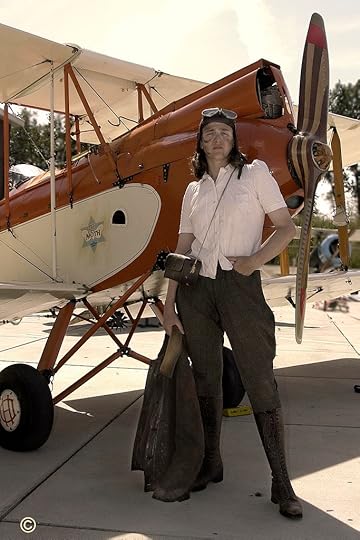
„Afrika... Za moju majku bila je to reč koju je izgovarala bez tračka nelagode – kao da je bila njeno vlasništvo, kao da živi sjedinjena s njom. A ja sam znao da bi trebalo da se i ja s njom osećam podjednako lagodno i prirodno. Na kraju krajeva, nije li upravo to ljubav? Umesto toga, osećanje koje sam gajio prema njoj bilo je suviše vrelo, neuravnoteženo i grozničavo, kao napad malarije. Osećao sam da bi reči ’ljubav’ trebalo pristupiti veoma obazrivo, posebno onda kad se dovodi u vezu s Afrikom – i sve vreme motriti na remen s pištoljem – pošto je ta reč često označavala neku vrstu ubistva.“ Smešten u vremenski okvir druge polovine dvadesetog veka, roman Ljubavnici moje majke je povest o jednom čoveku, jednoj ženi i, povrh svega, jednom kontinentu, ispričana iz vizure mladića koji odrasta kraj nedokučive i gorostasne majke. Ona veći deo njegovog detinjstva provodi u lovu na bufale i slonove, pilotiranju lakim avionima iznad Zanzibara, Kaira ili Johanesburga ili posvećeno štrikajući... Iako ženstvena na način koji bi se teško mogao uklopiti u stereotipno poimanje te reči – autor je poredi sa okeanima, zemljotresima i plimskim talasima – ona poput magneta privlači rojeve neobičnih muškaraca. U pokušaju da razume šta za njegovu majku znači ljubav, Aleksander zapravo traži svoj put kući i mir sa gradom koji, poput nje, počiva na suprotnostima. S trezvenim i demistifikatorskim odnosom prema istoriji i realnosti, služeći se živopisnim i nesvakidašnjim likovima, pisac nas provodi kroz mračne tunele afričkih rasnih sukoba, lažne revolucije, njenih privremenih pobednika i večitih gubitnika. Iako nas na ovom putu sve vreme drži za ruku, njegov stisak je čvrst, a sve što nam govori duhovito je, promišljeno i – direktno! Iako Afrika deluje nepremostivo daleko, čitaoci će s lakoćom i uživanjem prepoznati slike iz života u svetu koji je u isto vreme pun nežnosti i nasilja, šarma i tegobe, bola i ljubavi, a u tom prepoznavanju otkriti i autorovo uverenje da nam je potreba da budemo voljeni i da negde i nekome pripadamo, svima zajednička, ma kako različiti bili.
He studied at universities of Witwatersrand and Natal. He is an author of poems and novels, also published autobiography, biography of Robert Mugabe, dictator of Zimbabwe, and travel book Moscow! Moscow!, which he got prestige PEN Award. Debut novel A Separate Development (1981), satire on apartheid system, forbidden in South Africa, got the David Higham Prize for Fiction.
Meh... This book has no real plot- it's merely a long set of character developments. And yet, I felt that none of the characters were all that well developed or engaging.
I picked this up almost 12 years ago when Borders was going out of business in the UK. My nearest branch was having an 'everything must go' sort of sale and I swept the store and got something like 40 books for £100. It was quite the day.
Anyway, over a decade later I'm still enjoying the spoils of that shopping spree and this book is one of them. At the time I picked this up I was looking for travel-inspired memoirs and fiction so this: a tale of a young South African man travelling the country first with, and later, for, his mother was a natural choice. Unfortunately I find the narrative voice terribly dull. Reading it back now and looking for quotes to illustrate this I can't really pin anything down so maybe it's not entirely narrative but also the structure of each chapter. They essentially all go the same way:
1) I recall my mother doing something 2) Very descriptive outline of her behaviour 3) Instance of that behaviour
So in Chapter 1 it's that her mother sleeps with a lot of random men, mostly the spiritual or 'expat' kind, in Chapter 2 it's that she is a pioneer, from flying to boxing with Hemingway to opening a lion game site in South Africa. In Chapter 3, it's about the history of dynamite in Johannesburg, and in Chapter 4 it's the Boer War. Chapter 5 was interesting, in which the mother teaches a Lebalola queen to knit, and CHapter 6 is about her plane again.
It sounds interesting when I write it out like this but I truly got bored even skimming the pages here. I think that the problem is there is no plot here (yet) and that the writing isn't becuatiful or evocative enough to hold its own in this series of episodes. So, I'm stopping here. Not a bad book, certainly, but one I couldn't get into. DNF'd at page 75.
I randomly saw this book at the campus bookstore, not really knowing what it was about. Having completed it, I am still not sure what it is about. The basic premise is of a man from South Africa whose mother was to say the least an interesting woman. She flew around Africa in her plane, interacted with many native people and took many lovers, one of whom was the protagonist's father, whom she did now know which of her lovers was his father. He has lived abroad for many years and basically returning to South Africa when he is informed that his elderly mother is dying. Along the way we meet many different characters of all races represented in South Africa. The portrait of South Africa painted by this novel is one of great natural beauty but of extreme corruption, crime, and AIDS. This may in fact be an accurate portrayal but one can't know from the book. To fully appreciate this work one should have a basic knowledge of South African history from the arrival of Boers in the 1600's to modern times.
The reason I give the book only three stars is that one begins to loose interest in the story around the midway point and seems somewhat repetitive in the story of distributing the assets and things of his late mother. The musing of his friend that he meets on living in South Africa become a little repetitive as well. Would be interested to hear from current South Africans who have read this book as to their thoughts on this book.
To me it was a sad read. Not only because the main character sounds depressed and unhappy with his life, but also they way it was written. If it is a story about Africa then it's horrific. Probably true, but horrific. For Polish readers: prawdopodobnie tłumaczenie daje efekt powtarzalności i nie lekkości czytania.
Alexander Healey is a ghost in this book. His mother, Kathleen, is a wonderful, exotic, eccentric woman and her son literally wilts as he watches her live. The book really should have been about her. Alexander, who has an obsession with air!, bores one to tears. My Mother’s Lovers is littered with the most colourful, eccentric characters one could wish to find. Bamadodi, the rain queen, and her daughters stays with one long after the book ends. The problem is that there were too many people, and while one understand that Hope is trying to show the strong, larger than life Kathleen as a citizen of the world, it does not work. Too much of the time is spent in her son’s / Hope’s head, where it would have been better spent showing Kathleen and her friends and lovers interacting. Hope’s love hate relationship with Africa, and South Africa in particular, clouds the story. One is left with the sense that Hope’s own prejudices and obsessive thoughts drip, unwanted, onto the pages. When Kathleen dies one has no interest in reading to the end.
An interesting novel addressing white people's perspectives of Africa through the eyes of a son running away from his larger than life mother. Aspects of Africa are highlighted in the characters of the protagonist's mother's lovers focussing on 20th century history of whites in the "dark continent" and brought up to date by dealing with 21st century concerns including what it is to be African whatever your race. I felt it had echoes of Illywhacker in the conclusion as the characters' roles / expectations were altered and almost reversed by the experience of living in South Africa post apartheid. Thought provoking.
Oddly enough I didn't finish this book, although the beginning was so promising. The characters sucked me into the Africa of times past and I loved it. But then there were children to dress, dinners to cook, magazines to read, and when I took it up again, I realised nut much had happened since, but/ and the book has lost its charm. I'm afraid this tells you more about my current life, and less about the book. Having said that, my life's too short to beat around the bush/book. I've brought it back to the library and have taken up reading short stories.
I lived in South Africa as a Peace Corps Volunteer and found this book intriguing in framing and reframing my experience. The author is from SA and has lived through a variety of shifts in the country's life.
A bit of Hemingway, a dollop of colonialism, a history book, a psychology book - I appreciated what the author captures about the role of Africa in the lives of those who almost belong.
I would enjoy hearing from others with SA experience after they have read the book.
The narrator in this book attempts to relate the whole history of South Africa through the life of his mother and the men who loved her. . .and the people that were affected by her. He remains distant from her--and part of his distance if from Africa itself. His transformation at the end of the novel from wanderer to gardener is somewhat unbelievable since little has happened to explain the transformation fully.
While I liked the characters, it just wasn't strong enough to keep my attention with so little plot. Also, i got a little lost in the allusions to SAfrican history -- my own ignorance to blame there. (Now I'm motivated to get a good book on that!)
Anyway, I actually didn't finish this book, which is rare
Interesting story about Africa and the many types of people who live there under some of the harshest situations ever: There was more about Africa that about the main character of whom the book was written about. That said, it showed a woman who was unique and followed her own heart and mind.
This is a biting story of Africa and the astonishing people that people it. A truly unique voice to counter all the sentimentality that pervades so much writing about that continent.
It is an extremely long book with some great history regarding south africa. Very wordy book. Would not necessarily recommend unless you are into a fictional about south africa.
I bought this because it's set in South Africa. Based on the reviews, I'll likely not finish it. No, I didn't read but ten or so pages. I had not realized it is fiction.