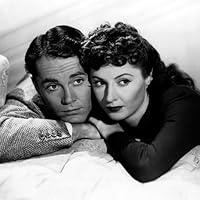
Garbo and Crawford. Ava, Hedy, Judy, Liz epitomized Hollywood's golden era. With a trembling lip or sultry eye, with a tear or song or husky whisper, these women held moviegoers across America in their sway from the hard times of the 1930s through the booming postwar years to the early sixties. They were royalty and box office, and led pampered public lives—furs, jewels, designer gowns; limousines, flash bulbs, handsome escorts—that captured the national imagination. They also signed seven-year contracts with a morals clause, and the more they slipped, the more the secret abortions, efficient cover-ups, legal legerdemain, and dropped charges bound them to the wizard in their Oz, Louis B. Mayer. The slips are here along with the successes. Here, too, are the Blonde Bombshell Jean Harlow, Million-Dollar Mermaid Esther Williams, Sweater Girl Lana Turner, and bad girl Ava Gardner ("She can't act. She can't talk. She's terrific," declared Mayer after her screen test). From Jeanette MacDonald and Norma Shearer to Princess Grace and Dame Elizabeth Taylor, the sixteen portraits in this lively, photograph-filled volume, each accompanied by the star's filmography, tell the tales that have long lay hidden behind the gossip and the glories of Metro-Goldwyn-Mayer's glamorous golden girls.
Enjoyable? Yes. Poorly written? Quite. Salacious? Oh hells yes. This was like reading a gossip column where the writer is out to make moral judgements on everyone - not overtly, but insidiously through constantly using every negative woman stereotype. Does the author even like her subjects? Why did she write this book? I’m not even sure.
And yet it still sparks! I read most of the book in one sitting because it just appeals to the part of you that wants to KNOW even if you doubt the truth of what you’re reading.
So while I don’t trust anything in this book, it was still a fun read and valuable for the little nuggets you hope are true - particularly all the mentions of friendships between some of these ladies scattered throughout!
I'm just a little skeptical about some of the content in this book because it is quite a rollercoaster of juiciness -- with short chapters on each of the actors whose lives it narrates, there's not much downtime between scandals -- and because I notice that Wayne is pretty careful what she says about then still-living characters Elizabeth Taylor, Katharine Hepburn and Debbie Reynolds. Nevertheless what I do know about MGM and its galaxy of stars lines up pretty well with what's here, and I did have a total blast reading it. What I actually like best about the mini-biography structure is the way that certain events and characters in Metro's history, like Irving Thalberg's life and death and John Huston reading The Night Before Christmas to the cast and crew of Mogambo, spring up multiple times in different chapters, so you get the sense of watching events unfold from various perspectives. And Wayne, who knew Joan Crawford briefly and almost knew Greta Garbo (she ran into her shopping in NYC once, which is a lot closer than I will ever come to knowing Garbo), always lines herself up with compassion for her subjects, though she's a little harsh on Judy Garland. The most heartbreaking chapter for me was Grace Kelly's; I'm a fan but I just never fully realized how much royalty derailed her life, though I shouldn't be surprised.
I kid myself and say that it's the movies and not the salacious biographical tidbits I care about when it comes to classic Hollywood. This isn't a piece of film criticism, nor does it wrestle with the studio system's place in American art and culture, something I think we won't fully understand for a long time. I do really think that part of the fascination, now as ever, for movie fans is all this gossiping around. I do get awfully engrossed in it while reading something like this. But it all goes away when I watch one of these actresses actually working, which I think is as it should be.
Hedy Lamaar really gets short shrift in this: her chapter, which is about three pages, is basically "well, she had multiple affairs with women and enjoyed group sex and invented the internet, but she's just not that interesting compared to Liz Taylor." What!?
I wanted so much to like this book, which I thought would be a one-stop shop for background on many of my favorite Hollywood starlets. I shrugged off the lackluster writing, the cliches, the choppiness of the sections. Then, I started noticing glaring errors-- misattributed quotes, misspelled actors' names, or incorrect references (Jean Harlow was not in Grand Hotel, and there is no pier in Pasadena!).
After doing a little digging, I read that apparently this book is full of word-for-word chunks from previous books, and that there is serious contention over how much of her inside knowledge is even true. I'm not naive enough to think that the stars of the silver screen didn't have affairs or abortions, so, unlike some who can't bear to think of their screen idol as being less-than-pure, I don't object to the content. I was willing to overlook Ms. Wayne's poor writing because the stories were so fascinating. As I spotted error after error, I lost all trust in the author. If I want fiction, I'll stick to the movies.
The book is sloppy, error-ridden, and poorly organized (there are identical paragraphs for Norma Shearer and Joan Crawford's sections!). If I can't trust Ms. Wayne to get the known facts straight, how can I trust her about the juicy gossip? Never mind that the book misses a huge opportunity to really analyze the MGM era, and its impacts on, say, the film industry, pop culture, or female identity. Skip this one, and go check out Mick Lasalle's Complicated Woman instead.
This is quite possibly the worst book I've ever written. I wasn't aware that you could pass off gossip and rumors as nonfiction. The writing sucks, too. The subject of this book has some wonderful potential, but the lousy writing, the lack of any real sources, and the fabricated dialogue kill it off. Too bad someone else didn't take this subject and write a book that had an ounce of truth to it. The Garbo section even quotes the Barry Paris book as a source, rather than taking the effort to find an original source. Terrible, terrible, terrible. I couldn't even make it through this book because the image of these actresses rolling over in their graves after this book was published has been stuck in my head ever since I started reading it.
The MGM Studios boasted that they had "More Stars Than There Are in Heaven". With female stars such as Jeanette MacDonald, Greta Garbo, Joan Crawford, Judy Garland, and many more during the Golden Age of Cinema, it wasn't an idle boast.
These women were at the mercy of Louis B. Mayer, a man with the ability to recognize talent, but who also controlled everything in their lives. Nothing was done without his permission, from dating to marriage to divorce. He would even force them to get abortions, whether the actress was married or not, if it interfered with production.
The studios owned Los Angeles, including the police and the courts. No matter what the scandal or the crime, the studio fixer would make it go away.
Wayne has done a remarkable job of filling in scads of biographical history into each star's chapter, brutally honest about the good and the bad. But she also reveals glimpses into how the studio system contributed to their inability to think for themselves once they either left the management of the studio or after Mayer was forced out.
I was surprised by the number of typos and missing or incorrect words throughout the book. Of course, by the book's copyright date of 2002, most publishers had fired the majority of proofreaders. Pity that even major publishers like Carroll & Graf Publishers let their standards down so badly.
I loved this book! Even the small font used couldn't put me off. I believe the author has a companion book for the leading men of MGM. I shall definitely look into finding it to read as well. All in all, this was a smart buy at the Melbourne Beach Library Book Sale. 5 out of 5.
This book is about the stable of girls that MGM had. Greta, Joan, Lana, Judy, Ava, Grace, etc. The thing is the public believed the persona of these actresses based on the roles that they played. But these ladies were regular humans just like the rest of us and they had messy lives. That does take away from their talent. In those days all this stuff got covered up to protect the MGM brand.
An okay read if you are in the mood for torrid gossip. This is filled with all the naughty Hollywood dish. Many of the stories have been proved false, but still interesting to read them. The reader just must bear in mind that it’s meant to be overblown scandal.
Though this book was jam packed with gossip and scandal, it left a lot to be desired. The timeline was everywhere, with a lot of information being jammed into the last paragraph of each section. Making the writing very lopsided.
I guess it is reality, but these stars lived lives that a just a bit too graphic for me. I would rather think of them as they looked on the screen, wholsome and pure.
Overall: There's a reason for introductions. The amount of knowledge I didn't know I learned on the first page of the introduction alone is enough to make you think hard about the hardships female stars especially faced in this era. As much of this is supposed to be about the women, the men of course played a large role in the decisions of the ladies (it was the times yada yada). A lot of these stories likely are falsified, and I'm sure this book has taken a lot of stories that were passed around and used without finding the legitimate truth. Other reviewers have mentioned misattributed quotes, so I will be fact-checking while reading. Edit after finishing: I felt like i had to fact check every sentence in the book. Did not enjoy. intro: Louis B. Mayer was protective of the images of his signed stars, and had to approve marriages of his female stars. Wayne (author) says we were naive as a society to place these girls on a pedestal, the perfect vision of womanhood. Who every woman wanted to look like and every man wanted to be with. These girls were under strict contract to remain as clean-cut and heavenly. "Oz was Hollywood and Louis B Mayer was the Wizard" (pg xi). The intro also name drops Mickey Rooney, who romantically got around with multiple MGM girls, much to Mayer's chagrin. 1. Jeanette MacDonald: 2. Norma Shearer: 3. Greta Garbo: 4. Jean Harlow: mentioned in the introduction as the "predecessor" to a certain Marilyn Monroe, as the head of MGM, Louis B Mayer, considered Monroe a "cheap copy" of Harlow. Mayer clearly regards Harlow very highly, as he would not have Harlow share the spotlight with Monroe and refused to sign her, despite her being granted a few roles in their films. Hence, 20th Century Fox signed Marilyn. 5. Joan Crawford: for whom the book is dedicated, known for never leaving the house unless she looked the part-an utterly gorgeous angel. 6. Lana Turner: troubled, and her behavior at first was off-putting for the studio, however it seems she was able to convince Mayer to lighten up with her sensitive character. I'm not super familiar with her work. A story mentioned in the intro says that during her affair with Clark Gable, Gable's wife was staring Turner down, causing Turner a meltdown. 7. Judy Garland: 8. Ava Gardner: Married to Mickey Rooney, but he wasn't the sweet angelic son of Judge Hardy he was known for portraying on screen. Married to Frank Sinatra, who was a chronic gambler. They accidentally got pregnant, so Gardner told the studio and they got her an abortion (unknown to Sinatra), which were not uncommon for the MGM girls, or any studio of the time. She was also a democrat, who supported desegregation for African Americans, and was unabashedly unreligious. 9. Grace Kelly: a lover girl, 10. Elizabeth Taylor: her status as an iconic LGBT+ ally is given a brief introduction, with her background in working with and being associated as the beard for several gay actors. (this is absolutely no shade, she is an absolute legend) 11. a) Hedy Lamarr: a reluctant hire on Mayer's part due to her background in a foreign film that bared her tush to the world. 11. b) Katharine Hepburn: 11. c) Esther Williams 11. d) Debbie Reynolds 11. e) June Allyson 11. f) other mentioned actresses
This book is a fascinating look at the lives and careers of seven of the most iconic actresses of Hollywood's Golden Age.
The book is full of revealing anecdotes and insights, and it's a must-read for any fan of classic cinema.
The author does an excellent job of capturing the unique personalities of each actress, and he provides a nuanced understanding of the challenges they faced as women in a male-dominated industry.
One of the things I found most interesting about the book was the way it explored the relationships between the actresses. These women were often fierce rivals, but they also had a deep respect for each other's talent.
Spada does a great job of showing the complex dynamics between these women, and he provides a fascinating glimpse into the inner workings of Hollywood's studio system.
Overall, I highly recommend this book to any fan of classic cinema. It's a well-written, informative, and entertaining book that provides a unique insight into the lives and careers of seven of Hollywood's most iconic actresses.
Is it badly written? Quite often, yes. Is it mostly comprised of salacious gossip with zero references? Also yes. Did I look forward to getting a 30 minute hit of these glamorous lies on my lunch break? Of course I did.
Golden Girls reads like a gossip magazine’s year end review and is certainly better read as a piece of quasi-historical fiction, but something within these lurid tales is mildly fascinating. I can’t, in good faith, state my belief in the validity of Wayne’s writing, and I also can’t say that the mythology she clumsily weaves around each star has any meaningful takeaways. However, if read like a teleplay about a series of fictional public personas, I can’t say it isn’t entertaining.
Gossipy read about the women who were under contract for MGM. The book was published in the early 2000s, so some of the subjects were still alive - - they are now all gone. I noted in the brief chapter on Katharine Hepburn that Spencer Tracy is described as a womanizer - - he had affairs with almost all of his leading ladies - - which contradicts Scotty Bowers contention that Tracy was gay. (I have issues with the veracity of Scotty Bowers). One glaring mistake in the same chapter is that Leland Hayward is mentioned as leaving Hepburn to marry actress Maureen Sullivan, huh? He married Margaret Sullavan, one of the most famous natives of Norfolk, Virginia!
You could sum this book up in one sentence - everyone was having sex with Clark Gable. A great intro to the biggest studio during Hollywood's golden age. I never know how much of these stories are true, or verifiable in any way, but the only ones who know the truth are the women themselves, and they ain't talking! Either way, this is a great book if you want to dip your toe into some of the stories of the great actresses, and they even have their filmography at the end of each section so you can watch some of their films. There are a few typos and a couple of bits that needed an editor's eye, but this was a fun book to read.
Badly written, full of factual errors, pointless repetitions and inconsistencies, not to mention Ms Wayne’s terrible habit of reimagining (ie: inventing) dialogue and scenes as if they actually happened. As fiction it’s corny, as fact it’s laughable.
This is a bad book. Although it says its is about the women who worked at the MGM studio, the book tells you next to nothing about the studio system. Most of the material you could get by reading Wikipedia. It is a po0rly written book of gossip with no analysis.
Besides the fact that the author seems hell bent on making sure her audience thinks that Norma Shearer is ugly, it’s so poorly edited that by the time I got to Jean Harlow’s section I started skimming.
As a long-time movie buff, I really wanted to like this book. Unfortunately, the author's writing, research, attribution, thoroughness and penchant for salacious content got in the way.
The golden girls of MGM. The two things that I enjoyed were the cover and the choices of the women that the author made. I’d say skip this one. There are better books out there on this subject.
An enjoyable and fascinating read of the lives of the American actresses of the golden age of Hollywood. Garbo and Crawford. Ava, Hedy, Judy, Liz epitomized Hollywood's golden era. With a trembling lip or sultry eye, with a tear or song or husky whisper, these women held moviegoers across America in their sway from the hard times of the 1930s through the booming post-war years to the early sixties. They were royalty and box office, and led pampered public lives-furs, jewels, designer gowns; limousines, flash bulbs, handsome escorts-that captured the national imagination. They also signed seven-year contracts with a morals clause, and the more they slipped, the more the secret abortions, efficient cover-ups, legal legerdemain, and dropped charges bound them to the wizard in their Oz, Louis B. Mayer. The slips are here along with the successes. Here, too, are the Blonde Bombshell Jean Harlow, Million-Dollar Mermaid Esther Williams, Sweater Girl Lana Turner, and bad girl Ava Gardner ("She can't act. She can't talk. She's terrific," declared Mayer after her screen test). From Jeanette MacDonald and Norma Shearer to Princess Grace and Dame Elizabeth Taylor, the sixteen portraits in this lively, photograph-filled volume, each accompanied by the star's filmography, tell the tales that have long lay hidden behind the gossip and the glories of Metro-Goldwyn-Mayer's glamorous golden girls.
Filled with behind-the-scenes information on our favorite Golden Girls, I have to admit I was shocked by this book!!! I feel slightly jaded, but wiser, though I haven't quite figured out if that's good thing yet. Ignorance really was bliss.
A plethora of all the down and dirty details, this book divulges secrets, affairs, and a lot of naughtiness. I kept trying to put it down,( because really I like my Classic Hollywood stars prim, proper and capable of immaculate conception)...I don't really want to learn they're human and capable of cheating on their husbands, friends, or introducing their kids to members of the mob.
I gave this book 5 stars, because if you know anything about Classic Hollywood, you know it wasn't really different from that trashy stuff we have in Hollywood today. The big difference? These esteemed actresses never went outside without their faces on and were under the thumb of very tyrannical , yet sometimes smart studio systems. Extremely well written, and insightful. Must Read.
The book contains 10 chapters with vignettes on different golden girls of MGM and at the end had a chapter with shorter vignettes on ones who were famous but not so naughty. The chapters started with something about how they were famous or a famous event or such. Then it would go back and say where they were born, a bit about their childhood, and then how they came to hollywood. Followed with how they became part of MGM, what they did for the system, who they married and such, then how it all ended for them.
I enjoyed reading about each of the different actresses (Jeanette MacDonald, Norma Shearer, Greta Garbo, Jean Harlow, Joan Crawford, Lana Turner, Judy Garland, Ava Gardner, Grace Kelly, Elizabeth Taylor, and the smaller ones on Heddy Lamar, Katharine Hepburn, Ester Williams, Debbie Reynolds, and June Allyson) and really they made me want to read more about them.
I really enjoyed Wayne's previous biographies on actress so was really excited to read her newest two books based on men and women actors in the golden age of Hollywood. Her writing does focus a bit more on the scandalous side so it is more entertaining than strict facts. It is a great introduction to different actors.
I always used to think that I missed the golden age of Hollywood. Reading this book made me realize that the so called "Golden Age" was like that for a reason. Every aspect of ones life in hollywood was controlled to make it seem that way. To make you want to be like your favorite movie star. Some of what these ladies had to go through and how they were treated was a little hard to read. Now I'm not so sad that I missed this era.
Salacious hogwash. As others have said this is poorly written, badly researched with glaring errors for the simplest of facts and unfounded claims of scandalous behavior with no supporting references given. The worst may be the invented private conversations, always featuring the most unbelievable claims in the book, that no one but the long dead participants could have been privy to. There are many thorough, informative books on all these women, this is vulgar trash. Skip it!
Like the companion book on the male stars of MGM, this book is to be read with a grain of salt. The author shows her preferences and biases regarding certain stars.
Even so, it's interesting to catch a glimpse of the female stars of the golden era at MGM.
Wishing she'd added a few more: Cyd Charisse, Jane Powell, Kathryn Grayson, Leslie Caron...to name a few.
As Bree said, HORRIBLE writiting, the exact same formula for every chapter, just change the name of the actress, all the men are the same. Makes all the women sound naive and ignorant, no just plain stupid. There were no original sources listed although she mentions speaking with Joan Crawford several times. I love old movies but this was just malicious gossip