Jump to ratings and reviews
Rate this book

Raggi di luna

Rate this book
Sposi per un anno. Questo è il patto che Nick e Susy Lansing hanno stipulato: rimanere uniti nella buona sorte fino a quando il denaro dei regali di nozze e l'ospitalità degli amici consentirà loro di continuare la luna di miele. Poi, se una migliore occasione si presenterà a uno di loro, l'altro acconsentirà a lasciarlo libero. Lo scenario dei primi mesi di questa anomala unione è idilliaco: una romantica villa sulle sponde del lago di Como, un palazzo patrizio a Venezia, passeggiate nelle calli ombrose, chiari di luna, amici spensierati sempre pronti ad assecondare i due novelli sposi. Eppure, fin dall'inizio, la macchina perfetta del matrimonio concordato si inceppa, incalzata da un elemento imprevisto: l'amore. Capriccioso, incoerente, poco incline a compromessi e a sfumature, l'amore si insinua nella mente ordinata e onesta di Nick, che ha idealizzato la moglie al punto di non poterle perdonare nessuno sbaglio, nessuna leggerezza, e in quella di Susy, incapace di rinunciare ai suoi sogni di grandezza se non per il marito, ma così spaventata da questa scoperta da non riuscire a dirglielo, anche quando sarebbe l'unico modo per trattenerlo. E allora, di nuovo soli, "liberi", come amavano dire prima di sposarsi, Nick e Susy cercano ognuno la propria occasione lontano dall'altro, lui sul panfilo di ricchi amici, lei nientemeno che con un lord. Ma l'amore che paradossalmente li ha separati, si è talmente insinuato nel loro cuore da ricongiungerli.

270 pages, Paperback

First published January 1, 1922

448 people are currently reading
9065 people want to read

About the author

Edith Wharton

1,427 books5,243 followers
Edith Wharton emerged as one of America’s most insightful novelists, deftly exposing the tensions between societal expectation and personal desire through her vivid portrayals of upper-class life. Drawing from her deep familiarity with New York’s privileged “aristocracy,” she offered readers a keenly observed and piercingly honest vision of Gilded Age society.

Her work reached a milestone when she became the first woman to receive the Pulitzer Prize for Fiction, awarded for The Age of Innocence. This novel highlights the constraining rituals of 1870s New York society and remains a defining portrait of elegance laced with regret.

Wharton’s literary achievements span a wide canvas. The House of Mirth presents a tragic, vividly drawn character study of Lily Bart, navigating social expectations and the perils of genteel poverty in 1890s New York. In Ethan Frome, she explores rural hardship and emotional repression, contrasting sharply with her urban social dramas.

Her novella collection Old New York revisits the moral terrain of upper-class society, spanning decades and combining character studies with social commentary. Through these stories, she inevitably points back to themes and settings familiar from The Age of Innocence. Continuing her exploration of class and desire, The Glimpses of the Moon addresses marriage and social mobility in early 20th-century America. And in Summer, Wharton challenges societal norms with its rural setting and themes of sexual awakening and social inequality.

Beyond fiction, Wharton contributed compelling nonfiction and travel writing. The Decoration of Houses reflects her eye for design and architecture; Fighting France: From Dunkerque to Belfort presents a compelling account of her wartime observations. As editor of The Book of the Homeless, she curated a moving, international collaboration in support of war refugees.

Wharton’s influence extended beyond writing. She designed her own country estate, The Mount, a testament to her architectural sensibility and aesthetic vision. The Mount now stands as an educational museum celebrating her legacy.

Throughout her career, Wharton maintained friendships and artistic exchanges with luminaries such as Henry James, Sinclair Lewis, Jean Cocteau, André Gide, and Theodore Roosevelt—reflecting her status as a respected and connected cultural figure.
Her literary legacy also includes multiple Nobel Prize nominations, underscoring her international recognition. She was nominated for the Nobel Prize in Literature more than once.

In sum, Edith Wharton remains celebrated for her unflinching, elegant prose, her psychological acuity, and her capacity to illuminate the unspoken constraints of society—from the glittering ballrooms of New York to quieter, more remote settings. Her wide-ranging work—novels, novellas, short stories, poetry, travel writing, essays—offers cultural insight, enduring emotional depth, and a piercing critique of the customs she both inhabited and dissected.

Ratings & Reviews

What do you think?
Rate this book

Friends & Following

Create a free account to discover what your friends think of this book!

Community Reviews

5 stars
1,150 (23%)
4 stars
2,178 (44%)
3 stars
1,223 (25%)
2 stars
267 (5%)
1 star
47 (<1%)
Displaying 1 - 30 of 612 reviews
Profile Image for Lisa.
1,108 reviews3,290 followers
June 18, 2021
So this is the life of Lily Bart as a comedy rather than a tragedy?

Susy Lansing does all the things I hoped Lily would do, but couldn't bring herself to: she marries whom she loves and renounces a life of luxury to be with the person she really wants to be with.

Why am I still feeling so sad and frustrated after closing the book? Is it because I don't approve of Susy's husband Nick and his glib and hypocritical double standards for men and women? I honestly don't know why that should bother me more in him than in all the other characters? And also, wasn't the whole point of the novel that the heroine should choose for herself, and not be pushed to a decision by society - or the implicit and partial reader, as the case may be?

I think my sadness is for Streff - who was the most honest character in the novel and who phrased openly what others wouldn't admit: human love and especially human passion is ephemere and fleeting, and no institution can change that fact. No wealth can buy you eternal happiness and love and belonging, no pleasure makes up for time's passing ans feelings' changing. Marriage is as useless as all other inventions that human "civilisation" has come up with.

Susy and Nick were granted time by the generous author in the end. But time's not standing still, and it will catch up with them again...

At least they had a few glimpses of the moon, like the title quote from Hamlet indicates.

Alas, Yorick, humankind's of infinite jest!
Profile Image for Tatiana.
1,506 reviews11.2k followers
October 24, 2023
I really love romances. The disdain I have shown over the years towards romance novels might conflict with this statement, but I truly adore a good love story. But why do I never find well-written, logical! (is that too much to ask?) but smutty romances? Why aren't there any novels as superbly written and plotted as The Glimpses of the Moon, but with some sexy in them?

So, The Glimpses of the Moon. Nick and Susy are a part of 1920th American high society, but they are penniless. They have no means of earning and supporting themselves financially, so they remain in the society thanks to patronage and assistance from their wealthy friends. Nick and Susy's only way to independence is to marry someone rich. When their paths cross and they find themselves attracted to each other, they devise a plan that is supposed to kill two birds with one stone. The couple would marry and mooch off of their wealthy acquaintances for a year or so, while they are honeymooning (because rich people are very generous towards newlyweds, showering them with money gifts and free villa rentals), and then, when they find better marriage options, they would free each other with no hard feelings. After a few months of happy honeymooning Nick and Susy have their first big fight, and instead of working things out, they both take it as a sign that it is time for them to part and seek other partners. Will they find the prosperity they crave? Or is there something between them that is worth more than titles and jewels?

Wharton's novels do not always translate well to present time. The sensibilities have changed. It is hard to imagine now people being unable to marry because there is no way for them to earn money. But there is an aspect of The Glimpses of the Moon that is as current now as it was a thousand years ago and. It is this - lack of communication in relationships, lack of desire to put effort into resolving conflicts.

This issue always finds a very strong response in me. Be that in On Chesil Beach or on Kourtney and Kim Take New York . There is just something truly heartbreaking about couples losing each other because they are afraid to expose themselves emotionally, to humble themselves, to be vulnerable, to commit to a relationship, to put their best effort into it. It is so much easier to just walk away from problems and focus on something easier and shinier.

Same applies to Susy and Nick, who cannot find courage to say what they feel and ask for what they really want. Instead, they assume things of each other, they make a huge deal out of an argument that can be easily smoothed out. They almost lose the sight of what is truly important in life - companionship, love, trust. Not money. It is maybe a too romantic of a notion, but I believe in it.

I enjoyed The Glimpses of the Moon. I enjoyed it so much more because, unlike the majority of Edith Wharton's works, it does not end depressingly. If only there was some schmexing in it...
Profile Image for Olive Fellows (abookolive).
800 reviews6,393 followers
January 26, 2025
Reading a book I'm crazy about I swear feels like falling in love.

Susy Branch and Nick Lansing strike a bargain. Neither of them have money, even though they hang with a wealthy crowd, so in order to keep up with their peers, they need their rich friends to pay for things. But if the two of them got married (which is more or less fake to them, but real on paper and to the world), they'd be able to live off the gifts of the well-off people around them for at least a calendar year until the two of them figured something else out. In the marriage, they're both free to seek other marriage prospects (people with money who could represent more permanent solutions for either or both of them), but there's one small problem: Nick and Susy seem to love one another.

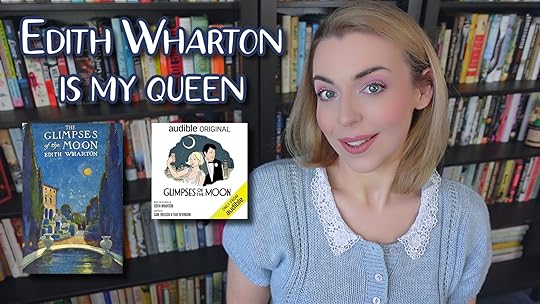
Click here to hear more of my thoughts on this novel (and a short Audible original based on it) over on my Booktube channel, abookolive!

abookolive
Profile Image for Christmas Carol ꧁꧂ .
963 reviews835 followers
November 13, 2019
Not one of her best, but reading a Wharton novel has never been a waste of time for me. I love her way with words and the world of the idle rich - a world that feckless couple Nick and Susy Lansing hang on to by their fingernails - is well realised. Beautiful evocative descriptions of some of my favourite places in Europe, Como, Venice, Paris...

I did have to re-calibrate my imagination part way through as this book is set in the 1920s.

I had problems with two things.

This is a romance based on The Big (or in this case Almost Endless) Misunderstanding I'm pretty much over this trope, even in the hands of a literary genius.

The other is the character (although that seems too strong a word) of Nick. Nick seems happy to be a human sponge, yet cavils at the way Susy "manages." Apparently the whole of High Society should be glad to support the two of them for the pleasure of their company!

As ridiculous as Nick's views are, they are sincere. When he is when the book starts to go down hill and I finished it with some impatience. A judicious pruning could have turned it into an excellent novella.


https://wordpress.com/view/carolshess...
Profile Image for Sara.
Author 1 book935 followers
March 21, 2018
It’s only a paper moon
Hanging over a cardboard sea,
But it wouldn’t be make believe
If you believed in me.
It’s a Barnum and Bailey world
Just as phony as it can be
But it wouldn’t be make believe
If you believed in me.

**************************

Say you don’t need no diamond rings
And I’ll be satisfied,
Tell me that you want the kind of things
That money just can’t buy.
I don’t care too much for money, money can’t buy me love.


This is the story of Suzy and Nick Lansing, two newly-weds who hang with the rich and famous, but have no money of their own. Their attempts to live in this world of pseudo-friendship and obligation takes its toll on them and their marriage, and the line that separates morality from indebtedness wears them thin.

I spent much of this novel thinking of Scarlett and Rhett, when they are both thinking they would like to make it up to one another but neither is willing to make the first move. I anguished over the pride and misunderstanding that seems to push these characters apart at every turn, and the influences of the so-called friends who are too shallow or self-interested to consider what they might be doing to a marriage of love.

She felt as though she were on the point of losing some new-found treasure, a treasure precious only to herself, but beside which all he offered her was nothing, the triumph of her wounded pride nothing, the security of her future nothing.

And, what we see here, among the fakes and pretenders, is real love. The kind a smart person would perish for; a meeting of the souls and the minds.

It was odd-once upon a time she had known exactly what to say to the man of the moment, whoever he was, and whatever kind of talk he required...But since then she had spoken the language of real love, looked with its eyes, embraced with its hands; and now the other trumpery art had failed her, and she was conscious of bungling and groping like a beginner…

I adored this lesser known but brilliant story by one of my favorite authors, Edith Wharton. Wharton is always able to cut to the essence of what ails the monied society, but she also knows what it is to be on the fringe of it and to want desperately to be included. All that glitters is not gold, but when you are standing at a certain distance, it might seem to be.

This is a short book, more a novelette than a novel, so there is no excuse--Read It!
Profile Image for Julie.
561 reviews310 followers
Read
April 25, 2018
7.5/10 🌟

I begin my re-reading of Wharton mid-way through her career with this novel. While it provided a pleasant dalliance with post-WWI society, it shows a few signs of moral tiredness, as if Wharton couldn't quite get up steam on this one.

Both Nick Lansing and Susy Branch, the main players, are more than a little world weary, and it shows in their actions: deciding too swiftly on marriage and even more swiftly, almost whimsically, on divorce. Why they are married is a mystery, as it hardly begins as one of the great romances; why they decide to divorce is equally a mystery, given the tangential evidence of "moral failure". Nick is more than a bit of an ass, and he rides his horse's ass very high, giving Susy barely a chance to explain her actions. They drift apart, and back into their meaningless existences, playing on the edges of a society for which they both have contempt, but which they need to survive.

[It's a very Gatsby-esque setting and sentiment; if it were the work of the same writer, one could almost call this a draft copy for Gatsby. There is a disturbing prescience in the appearance of young Clarissa, an 8 year old daughter of one of the society women, who announces she much prefers jewellery to books, when offered a choice. It immediately brought Daisy Buchanan to mind: a perfect portrait of how the Clarissas of the world grow up to be the Daisys, setting their eyes vacuously on bright flashy things.]

Wharton pulls the story along at a good pace with her skillful prose, but it lacked a bit of heart, somewhere in the centre. An enjoyable, entertaining read nonetheless.

Profile Image for Duane Parker.
828 reviews499 followers
January 5, 2016
The Glimpses of the Moon has been compared to Wharton's great classic, The House of Mirth, and it's protagonist Susy Lansing to the tragic Lily Bart, and while similarities do exist, Glimpses falls short of House of Mirth. The Glimpses of the Moon was published in 1922, 17 years after The House of Mirth, and one year after The Age of Innocence, so Wharton was at the peak of her writing ability, but Glimpses falls just short of the greatness of the aforementioned novels. It's still good, worth reading, and very much Edith Wharton, so I give it 3.5 stars.
Profile Image for Christine PNW.
856 reviews216 followers
August 10, 2017
Published in 1922, this was Wharton's last completed novel. It is also my fifth Wharton - I've previously read The Age of Innocence, The House of Mirth, The Custom of the Country and Summer.

There is something about Wharton that pierces me to my very soul. Glimpses of the Moon was no exception to that effect. No one wrote arid wealth and the oppressive customs of society better than Wharton - she explores the impact of narrow convention on characters at the same time that she ignored those conventions in her real life.

In some ways, this is the culmination of the stories that she has been telling her readers. Nick and Susy Lansing, young, beautiful and impoverished, marry against all good sense, with every intention of abandoning each other when someone new offers them a life of ease and fortune. We see each of them, for the first time, take on jobs as a gesture in the direction of self-sufficiency. If Lily Bart had been as intrepid as Susy Lansing, she might have had a happy ending. What a difference a couple of decades can make.

I read that Glimpses influenced Fitzgerald's The Great Gatsby, and I can understand the connection between these two books, but I am personally no fan of Fitzgerald's brittle characterizations. Not widely considered one of Wharton's finest efforts, I enjoyed it immensely.

And someone needs to adapt this for the small screen yesterday. It would be beyond gorgeous.
Profile Image for Chrissie.
2,811 reviews1,421 followers
November 24, 2018
This is a romance set among the wealthy residing in Europe. Two Americans without money but desiring the life of the rich make a deal--they will get married and live off the wedding gifts for a year. They are given gifts and money and dozens of invitations to come and spend their honeymoon abroad, with their wealthy friends, just as planned. Food and housing and parties and dinners out, all on someone else’s money. It was agreed that when better marriage opportunities arose for either, each would be free to go; the marriage would be dissolved without acrimony. That is the agreement. All goes according to plan, at least in the beginning.

I thought I knew how it would end, but there seemed to me to be an error in my reasoning. Usually, Wharton’s books do not have happy endings. How will this be resolved? I had to read to find out.

The writing is excellent, as the writing in Wharton ‘s books usually is. One marvels at her ability to draw situations, express emotions and capture people’s behavior. She had a remarkable talent with words; she knew exactly which word to use when and where. She expertly draws the views of the wealthy and those of high social standing. She adeptly draws the fallacies of such thinking and mode of life. She also throws in humor.

The book ends up but not unrealistic.

The audiobook is narrated by Anna Fields. Her intonations are perfect for each and everyone of the characters—the young and the old, men and women. I have chosen to give the narration four stars rather than five because I wish she had spoken a little bit slower; I wanted time to bask in the beauty and cleverness of Wharton’s lines.

I prefer books that are , but I enjoyed the prose and I have to admit it did leave me .


*****************************

The Old Maid: The 'Fifties 5 stars
Bunner Sisters 4 stars
False Dawn 4 stars
Summer 4 stars
The Shadow of a Doubt: A Play in Three Acts 4 stars
The Reef 3 stars
The Glimpses of the Moon 3 stars
Xingu 3 stars
The House of Mirth 3 stars
The Eyes 2 stars
The Age of Innocence 1 star
Ethan Frome 1 star

Coming Home TBR
The Marne TBR
Edith Wharton TBR
Profile Image for JimZ.
1,297 reviews757 followers
June 15, 2022
I thought this novel was just OK. I liked her more well-known books ‘The House of Mirth’ (I gave it 4 stars) and ‘The Age of Innocence’ (3.5 stars) better than this one. I don’t know if there was some sort of need to make this a long novel (it was serialized in a magazine prior to publication in 1922), but I felt it could have been considerably shorter. I did care what happened to the two major protagonists in the novel, the married-but-not-really married couple, Susy Branch and Nick Lansing. They had gotten married on somewhat of a whim/a lark.... they wanted to get married because they had a lot of friends and acquaintances who were much richer than they who would gladly let them have use of one of their many homes to honeymoon in. An extended honeymoon in which they were trying to stretch things out to a year. But they had agreed that if one of them met somebody that they really liked or that they thought they could derive more benefits from, they would call the marriage off (they would get a quickie divorce).

Things don’t go as planned. And that is what makes up a large part of the novel. I thought the ending was bit abrupt.

Notes
• Wharton started work on the novel in 1916 (at least that is when she informed Charles Scribner she had started on it). She was still working on it in 1919 but put it aside to write ‘The Age of Innocence’. In September 1921, she finishes ‘The Glimpses of the Moon’, and it is first serialized in The Pictorial Review and then in August 1922 it is published by Appleton and sells more than 100,000 copies in America and Britain in 6 months, earning her $60,000 from various rights and royalties. It seems to have done as well if not better than ‘The Custom of the Country’ and ‘The Age of Innocence’ (1920) in initial sales, but her earlier work, The House of Mirth, sold 140,000 in just 3 months in 1905. It was made into a movie with dialogue titles by F. Scott Fitzgerald in 1923.

Reviews:
https://heavenali.wordpress.com/2013/...
http://booknaround.blogspot.com/2010/...
• Definitely do not read this review until you finish reading the novel...it has a chapter-by-chapter summary! https://mantex.co.uk/the-glimpses-of-...
Profile Image for Roman Clodia.
2,897 reviews4,650 followers
November 20, 2019
If you've ever wished that The House of Mirth were a comedy , that Lily Bart might be matched with a loving but penniless man, and that lovers' misunderstandings might be eventually ironed out, then this is your book. It's lightweight Wharton, for sure, but the leads are an attractive pair who are genuinely in love, the portrait of louche affairs quite shocking for the times, and Wharton's sharp eye for the ethics of money as acute as ever.
Profile Image for Connie  G.
2,143 reviews709 followers
August 19, 2024
"It rose for them--their honey-moon--over the waters so famed as the scene of romantic raptures that they were rather proud of not having been afraid to choose it as the setting of their own."

Suzy Branch and Nick Lansing came from prominent families who no longer had money. They were both attractive people and good conversationalists who were welcomed into the homes of the wealthy. Suzy and Nick decided to marry, and figured that they should be able to live well for a yearlong honeymoon using their wedding checks and the loans of the villas of friends who owned multiple homes. Their agreement was to last one year, at which time either one of them would be free to leave if they found someone else who could give them greater social advantage (wealth). But their friend's loan of a villa came at a moral price, and Nick was upset at the minor deception that Suzy used as "payment" for their friend's generosity.

Author Edith Wharton lived at the edge of high society, and was a close observer of that type of life. The book is a sharp satire of the lives of the rich with their conspicuous consumption and superficial attitudes.

I felt that Nick displayed strong moral scruples for some things, but not others, so the book was not always believable. However, the novel was witty and thoughtful with important messages about money, marriage, and the ability to communicate. One cannot put a price on love, warm companionship, and trust.
Profile Image for Daniel Villines.
478 reviews98 followers
October 13, 2021
The Glimpses of the Moon is set in that magical time of the roaring '20s. Books from this time period always seem to be saturated in the exuberance of the era. The wealthy lived their lives like there was no conceivable end to their money, and everybody seemed to be reveling in the relief that the Great War had come to an end. The Glimpses of the Moon is steeped in this atmosphere.

As for the main storyline, the book is about the fragility of the love that is developed and shared between the two main characters. It illustrates how love can become diminished when our individual notions for a perfect world are in opposition to those of the ones we love. Additionally, Wharton explores some of the side effects of all that 1920s exuberance. The book contemplates the value of living by one’s own wits and means. The book also looks at the hangers-on, or the entourage, who always seem to collect around the wealthy and it questions whether their dignity can be preserved while also performing sometimes unsavory favors for their patrons.

While all of these themes make this a potentially wonderful book, the brevity of the book’s content obscures them. Wharton never dives very deeply into the hearts of her characters. As a result, the key transitions in their feelings and attitudes are inadequately defined, and at times, changes of the heart appear to happen abruptly. It's unfortunate that a novel so filled with the possibility to explore the human soul could not deliver fully on its potential.
Profile Image for Elizabeth.
1,576 reviews182 followers
February 18, 2025
Loved this! Can’t wait to talk about the end with Melissa, Susan, and Jen!
Profile Image for Anne.
502 reviews609 followers
July 6, 2018
This was a very interesting, highly introspective read set in the glittering world of the 1920's in Europe, with people so far removed from our own reality in thoughts and manners as would make it impossible to relate to anything, were it not for its universal themes coupled with Wharton's astute study of character and perception of the human mind.

When two young penniless elite Americans decide to join forces and get married in order to better encroach on their rich friends, theirs is a union supposedly based purely on practical reasons - a contract that would unite them for the time being with the mutual agreement to release the other should a better opportunity arise for either of them.

Course, that's complete bullshit as both fail to realize how their budding attraction blossoming into love under moonlit scenes will bind them more strongly than all the money they could ever possess, all the fineries they could ever flaunt, all the luxury they could ever have. Both hail from the same background, but a fundamental difference exists between Nick and Susy, one they both obliviously gloss over until it's too late: Nick, poor as he is, would never stoop so low as to accept invitations from friends in exchange for "favours". Susy, on the other hand, doesn't always show such scruples...

The Glimpses of the Moon is a beautifully descriptive, highly entertaining if highly predictable journey into a newlywed's honeymoon and its subsequent rude awakening to reality. Filled with exquisite villas, sparkling jewelry, fur coats, and ladies with lovely names such as Ellie Vanderlyn and Violet Melrose, this novel was a fascinating portrait of married life and finding the true meaning of love.

My only personal drawback was that I didn't become particularly attached to any of the characters (an absolute must for rating a book five stars and making it earn a place on my "favourites" shelf!). They were all interesting for what they represented, but failed to draw me in and actively make me feel for them. I like it when book characters become my friends, which wasn't the case here.

Nevertheless, a wonderful little book by the inimitable Wharton, which I enjoyed much better than the last one I read ;)

Profile Image for Post Scriptum.
422 reviews120 followers
November 4, 2020
Con tutto il rispetto, mi chiedo se il traduttore abbia riletto, o se lo abbia fatto un editor. So benissimo che ci sono scadenze talvolta insostenibili per entrambe le figure, però così è troppo. A partire dall'incipit:

"Si levava per loro – la loro luna di miele – sopra le acque di un lago talmente famoso come scenario di passioni romantiche da renderli piuttosto orgogliosi di non aver avuto paura di sceglierlo come ambiente della loro."

E quelle frasi che fanno scattare il: Ma davvero?

... quattro soldi, di cui aveva speso una parte discretamente eccessiva...

... Lo sapevo che sarebbe venuto a Ruan settimana prossima!

... Le schioccò uno sguardo allibito.


E i refusi, e gli errori. Tanti, troppi.

Cara Edith, già erano irritanti l'odiosetta e il suo consorte, ma così non ce la fo. Ho cercato di resistere, al ventesimo capitolo ho optato per il lancio.
Bye bye!
Profile Image for Laurel Hicks.
1,163 reviews123 followers
September 26, 2013
I'm so glad I read this book! "It's not House of Mirth," the reviews kept saying. "Well, neither is Anna Karenina War and Peace," I answered, and kept on reading.

A marriage of two penniless socialites begins with a business bargain and ends. Or does it?
Profile Image for Mighty Aphrodite.
604 reviews58 followers
October 31, 2025
Susy e Nick sono quelli che – almeno all’apparenza – potremmo definire parassiti. Gravitanti da sempre nell’orbita dell’alta società newyorchese, non possono davvero fare a meno del lusso, delle cene fastose, delle conoscenze altolocate. Questo desiderio pressante di appartenere al bel mondo, però, li spinge sempre più spesso a barattare la propria libertà con i favori di amici e conoscenti, decisi a tiranneggiarli.

Susy, soprattutto, vive della carità delle tante amiche americane, che la vedono come una ragazza triste e povera, di cui circondarsi quando c’è bisogno di lei e da dimenticare quando non è più utile ai loro scopi. Susy è completamente immersa in questo mondo sfavillante, ma sa di non appartenervi, di aggirarsi ai margini della ricchezza, di godere dei regali di donne che non si interessano davvero di lei, ma che ripagano con gioielli o vestiti smessi i suoi servigi.

Quando incontra Nick – scrittore spiantato – una scintilla sembra accendersi tra loro, un’affinità profonda e immediata li avvince e un piano ingegnoso prende forma nella mente di Susy. La giovane, infatti, vuole convincere Nick a sposarla e a vivere un lungo anno di luna di miele alle spalle di amici e conoscenti, sempre desiderosi di fare regali agli sposi novelli o di proporre ai due piccioncini le loro case in giro per il mondo per ospitarli nei primi mesi di idillio. Susy e Nick stringono dunque un accordo, che li vedrà sposati, ma liberi di cercare nuove strade più lucrose una volta affievolitasi la novità del loro matrimonio.

continua a leggere qui: https://parlaredilibri.wordpress.com/...
Profile Image for Olivia.
458 reviews112 followers
November 21, 2022
ME: The thing about fake dating –
WHARTON: say less


Who is this literal rom-com writer, and what has she done with my jaded pillar of Gilded Age ennui? Whither the Epicurean nihilism we all associate with Edith? Whither anything more acerbic than Austen or Gaskell? They’re nowhere to be found in two hundred and ninety-seven whole pages. Instead, in their absence, we're treated to an absolutely delicious “comedy of eros,” as the cover blurb so adeptly describes it: a love story so outrageously delightful that it could singlehandedly bring the entire period drama fanbase to its knees were it put to the silver screen.


A not-so-platonic marriage of convenience between two grifters who probably could have mentored Sophie Devereaux; a generous sprinkling of such crowd-pleasing tropes as friends-to-lovers, mutual pining, and Rain Scenes™; an absolute Brick™ playing third wheel; humor that made me giggle like a schoolgirl (“Nick, should you hate me dreadfully if I had no clothes?” “But, my dear, have I ever shown the slightest symptom – ?”); actual Character Development™; and just the right amount of introspection to keep things equal parts entertaining and edifying? Sounds like a winner to me.

“It would have been easy enough, wouldn’t it,” he rejoined, “if we’d been as detachable as all that? As it is, it’s going to hurt horribly. But talking it over won’t help. You were right just now when you asked how else we were going to live. We’re born parasites, both, I suppose, or we’d have found out some way long ago. But I find there are things I might put up with for myself, at a pinch – and should, probably, in time – that I can’t let you put up with for me . . . ever.”



Alexa, play “cowboy like me” by Taylor Swift
Profile Image for Christina Dudley.
Author 28 books265 followers
June 26, 2012
Champagne Taste on a Beer Budget--

Imagine if Lily Bart and Lawrence Selden from Wharton's THE HOUSE OF MIRTH had given it a go and gotten together--this might have been the result. Nick Lansing and wife Susy have nothing between them but social popularity and an ability to live off the generosity of others. In a moment of "madness," they decide to get married, figuring they have a year before the money is gone and they may have to give each other up.

Although Nick reminded me (not in pleasant ways) of Angel Clare in Thomas Hardy's TESS OF THE D'URBERVILLES--principled, at the expense of kindness and grace--Susy proved more capable of self-reflection and growth than either Lily Bart or Tess Durbeyfield. Rather than passively sink lower and lower, she makes choices and makes the best of those choices.

Wharton is always great for a page-turner, and THE GLIMPSES OF THE MOON is no exception. Highly recommend!

Profile Image for Bob.
739 reviews58 followers
June 2, 2020
4-1/2 Stars

Edith Wharton was a master at keeping the reader on the edge of their seat. Will the ending be happy or sad, will the lovers end up together of apart? These questions are not answered until the end. But Wharton doesn’t leave it simple. The reader, based on their own romantic concept of happiness is left to decide, does the couple live happily ever after? Or does the need for material things hinder their future. Me, I'll go with happily ever after.
Profile Image for Cynthia.
633 reviews42 followers
January 13, 2010
Susy and her beau Nick have both grown up around rich people though their own families have lost their fortunes. Susy makes her way in the world flitting from invitation to invitation acting as an unpaid but rewarded assistant to her rich friends. Nick has dreams of making a living by his writing. They meet and fall in love but one rich matron from Susy's circle tells her, in effect, hands off of Nick because she has designs on him. Susy tells Nick they have to part and why but by then they've fallen too deeply for one another. They decide take a risk and get married with the caveat that if either of them has a chance to form a more remunerative partnership the other would agree to a divorce. By the 1920's divorce has become somewhat common place in their set. First though they promise one another a lovely wedding and at least a year of one another's company. They set out on their European honeymoon staying in first one rich friend's palazzo and then another's chateau having an exquisite time spending their wedding cheques.

As their mutual feelings deepen they both want to give the other more. But they can't. In her trying, Susy begins to seem grasping and amoral to Nick and he in turn feels ashamed he can't give her more either. He hates seeing her manipulate situations and people to try and get the best for him. Things completely fall apart when he catches her obligingly covering up their hostess's illicit affair. He means to leave for a few days to clear his head but in the mean time they both hear rumors about one another, add 2 and 2 and get 19. (Too bad they couldn't do this type of math with their fortunes!) I don't want to give too much away so I'll stop here. I love how Wharton keeps you guessing the outcome right up to the end.

If, like me, you've never heard of this title it's a shame because Wharton did a LOT of lovely writing beyond her better known classics such as "Age of Innocence", "House of Mirth", and "Ethan Fromm". In fact this and others of her books, "A Mother's Recompense" comes to mind, are even subtler and I want to even say more adult than her better known works.

Some quotes:

".....at each step they took, their heavy feet dragged a great load of bliss."
------------------------
"At first she could not make out what mysterious change had come over him, and why it was that in looking at him she seemed to be looking at a stranger; then she perceived that his voice sounded as it used to sound when he was talking to other people; and she said to herself, with a sick shiver of understanding, that she had become an 'other person' to him."
-------------------------
""My poor Coral, of what use can I ever be to you? What you need is to be loved."

She drew back and gave him one of her straight strong glances: "No," she said gallantly, "but just to love.""


Profile Image for Bec.
301 reviews
May 14, 2024
Despite this having the happiest ending of the EW novels I’ve read, it still ends on a bit of a bittersweet note for Susy. It was definitely an Edith Wharton version of a romance.

It was fun to have a marriage of convenience trope in an older/classic novel, but the strong miscommunication was at times exhausting. Also, despite you feeling relieved that the two characters found their way back to each other, the last page makes you entirely rethink their relationship and wonder if it would’ve been better for Susy to have had a different ending.
Profile Image for Plateresca.
448 reviews91 followers
December 21, 2020
'There is probably no point on which the average man has more definite views than on the uselessness of writing a letter that is hard to write.'
Cleverly written, poignant romantic story. I loved the dreamy quality of it, the discreet sense of humour and the fairy-tale ending some critics find implausible :)
Thank you, Lisa, for recommending it - quite an enjoyable read :)
Profile Image for Sarah.
Author 7 books164 followers
February 9, 2023
If you're comfortable dealing with the assumptions Edith Wharton makes about money and the classes who have it (basically the assumption that the green stuff is worth writing about, thinking about, being torn about, etc etc) then her often painful observations are beyond brilliant. And what carries you through those observations is this exquisite sense of longing and desire that permeates each page. At the beginning it's more of a longing to escape, but in her later novels it's distinctly sexual and romantic--possibly related to the eye-opening affair she had in Paris.

As I've started delving deeper into her ouvre, I've noticed a lot of things changed from the House of Mirth onward. Her sense that the social order will be victorious doesn't change, but becomes less fatalistic and more bitter. There's a hint of rebelliousness. Such is the case with "The Glimpses of the Moon" a simple, less plotted but very compelling romance between two characters who, as many have said, have a resemblance to Lily and Lawrence of the House of Mirth. Suzy is a fine person who has been dulled by having to charm and sneak her way through life, living on the kindness of richer friends. Nick is a detached observer who is nonetheless uninterested in directly challenging the social set he sponges off. Attracted to each other and chummy, they make a pact to get married and have a one-year period of paradise, drifting from big European house to big house, counting on the kindness given to honeymooners. If either comes across a more advantageous match, they agree to break things off amicably.

At first their plan works out beautifully, but then they each face a crisis of conscience as the cost of living off a system of lies becomes clear. Meanwhile, the kind of moneyed-matches that might rid them of their mooching habits forever begin to appear.

SPOILERS

While the book is lighter in some ways than her other books, even the "happy ending" has a note of compromise and tragedy to it.

END SPOILERS

But it's a beautiful little book with some wonderful truisms about trying to live a somewhat moral life in the midst of a society that seeks to corrupt you at every turn. Wharton sweeps you along with her strong characterizations and sense of dread and desire even with very few twists and turns. A great read for those who like drawing-room stories or novels of manners.
Profile Image for Celia.
1,437 reviews245 followers
September 9, 2021
The Glimpses of the Moon is a 1922 novel by Edith Wharton. It was made into a silent film of the same name in 1923, but this is now lost. The title comes from Hamlet .

The first sentence of this book drew me in immediately.

"IT rose for them—their honey-moon—over the waters of a lake so famed as the scene of romantic raptures that they were rather proud of not having been afraid to choose it as the setting of their own."

Two newlyweds, Susy and Nick Lansing, are the 'them' in this introduction.

From the Simon & Schuster website:
Set in the 1920s, The Glimpses of the Moon details the romantic misadventures of Nick Lansing and Susy Branch, a couple with the right connections but not much in the way of funds. They devise a shrewd bargain: they'll marry and spend a year or so sponging off their wealthy friends, honeymooning in their mansions and villas. As Susy explains, "We should really, in a way, help more than hamper each other. We both know the ropes so well; what one of us didn't see the other might -- in the way of opportunities, I mean." The other part of the plan states that if either one of them meets someone who can advance them socially, they're each free to dissolve the marriage. How their plan unfolds is a comedy of eros that will charm all fans of Wharton's work.

I was not that charmed. I found both Susy and Nick dysfunctional, at best. Both very poor at communication and both very good at being dishonest with themselves.

Still, Wharton did charm me with her writing.

3.5 stars

Profile Image for Joy D.
3,131 reviews329 followers
December 14, 2024
Published in 1922, this novel centers on the relationship between Susy Branch and Nick Lansing, two socially ambitious Americans, who marry for convenience, agreeing to live off the largesse of their friends. They embark on what they expect to be a year-long honeymoon, traveling to Italy and France, to stay at their wealthy friends’ properties. When Nick has a crisis of conscience, it leads the couple to quarrel. The storyline follows Susy and Nick as they grapple with their desire for luxury and a growing awareness of its cost to their self-respect.

It is written with empathy for its flawed characters. The tone shifts from light-hearted and humorous in its early chapters to more introspective as the characters’ moral dilemmas become more prominent. The novel suggests that true fulfillment comes from authenticity rather than external validation. I tend to avoid romances, so I was surprised to enjoy it as much as I did. Perhaps I should call it a love story than a romance since the characters spend much of the book apart. It certainly would have been progressive for its time.
Displaying 1 - 30 of 612 reviews

Can't find what you're looking for?

Get help and learn more about the design.