The first-ever popular history of the RAND Corporation, written with full access to its archives, Soldiers of Reason is a page-turning chronicle of the rise of the secretive think tank that has been the driving force behind American government for sixty years.
Born in the wake of World War II as an idea factory to advise the air force on how to wage and win wars, RAND quickly became the creator of America’s anti-Soviet nuclear strategy. A magnet for the best and the brightest, its ranks included Cold War luminaries such as Albert Wohlstetter, Bernard Brodie, and Herman Kahn, who arguably saved us from nuclear annihilation and unquestionably created Eisenhower’s “military-industrial complex.”
In the Kennedy era, RAND analysts became McNamara’s Whiz Kids and their theories of rational warfare steered our conduct in Vietnam. Those same theories drove our invasion of Iraq forty-five years later, championed by RAND affiliated actors such as Paul Wolfowitz, Donald Rumsfeld, and Zalmay Khalilzad. But RAND’s greatest contribution might be its least known: rational choice theory, a model explaining all human behavior through self-interest. Through it RAND sparked the Reagan-led transformation of our social and economic system but also unleashed a resurgence of precisely the forces whose existence it denied— religion, patriotism, tribalism.
With Soldiers of Reason, Alex Abella has rewritten the history of America’s last half century and cast a new light on our problematic present.
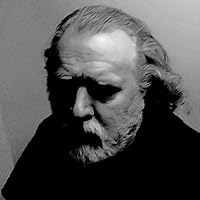
But I am a writer--journalist, novelist, playwright, screenwriter, news writer. I've tried practically everything that can be done with words upon a page, screen, or any medium, in all genres except poetry.
So far.
The first time I ever wrote anything for publication--or so I thought--I was eight years old. Like many boys who want to be writers, I wrote an adventure story, about knights in armor, if I recall correctly. I thought someone somewhere would publish it but, alas, I had no agent so...
But seriously...the next time I pursued my writing obsession was during high school in New York, when I was determined to break into The New Yorker. I sent the magazine a host of stories--none of which, mercifully, were published, or survived.
Finally, success! I began writing film reviews for my school newspaper, The Columbia Spectator, then, after graduation, became a writer for a small publication in New York.
Moving to California, I joined The San Francisco Chronicle, but was fired the day after I wrote practically the entire front page. You need more ground strokes, said my editor.
So I went to play for the electronic bullpen, becoming a reporter/news writer/producer at KTVU-TV in the San Francisco Bay Area. While there I won an Emmy (group) for newswriting, was nominated for another Emmy for reporting, worked as a foreign correspondent in Central America, wrote a cookbook on bananas, drank too much, partied too much and was thoroughly miserable.
I realized if I stayed a journalist I'd either burn out or commit suicide by age 50. So I quit the daily grind and moved to Hollywood. Since I speak fluent Spanish (I was born in Cuba, remember?) I became a court interpreter in Los Angeles and in the process founded a labor union for interpreters.
Based on my experiences in Los Angeles Superior Court, I wrote a thriller, "The Killing of the Saints," which, to my surprise, became a New York Times Notable Book. I did the movie adaptation for Paramount, then wrote something totally different, "The Great American," a historical novel based on the true story of William Morgan, an Ohio-born American who became one of the leaders of the Cuban Revolution of 1959.
I wrote two follow-ups to Saints, "Dead of Night," and 'Final Acts," then, shaken up by the tragedy of 9/11, I returned to journalism. My research on terrorism led me to co-write "Shadow Enemies: Hitler's Secret Terrorist Plot against the United States," about a band of saboteurs Germany sent by U-boat to the U.S. in 1941.
Then, wanting to explore how the U.S. had become Imperial Rome, I wrote "Soldiers of Reason: The Rand Corporation and the Rise of the American Empire," a study of the world's most influential think tank, which laid the intellectual foundation for the modern world we live in.
I wrote two novels in between: "More Than A Woman," a romance set in California's wine country, and "Shanghai," a hardboiled detective story set in Havana in the dangerous interval between the death of a tyranny and the birth of another.
My latest book is "Mission Churchill," a historical thriller set in 1930s Cuba and in London during the Blitz, featuring a revenge driven IRA assassin determined to terminate the Prime Minister, and have Hitler win the war.
Oh, and since I do have a life, in between books and jobs and sundry obsessions, I married a lovely (and very patient) woman, Armeen, whom I met at KTVU. We have three great kids. For now I split my time between lovely Solana Beach and the new Athens of the Western World, Los Angeles.
The RAND Corporation was always one of those things on the periphery that you knew of (maybe) and why they existed (again, maybe). If you were an investigative sort or a politico-policy junkie of the last 60 years you definitely knew who they were and that they were originally set up to consult for the Air Force. "Soldiers of Reason" lets everyone learn about the formation, operation and effects of this ground-breaking organization.
As a history of the RAND corporation I found the book to be well-conceived, written, and researched. The initial impetus for it's formation at the close of World War II and how it derived naturally from institutions/groups that preceded it are very well described. Then it proceeds step-by-step, decade-by-decade how it's analysts, planners and personalities created systems of thinking and acting that influenced the official and unofficial policies of the US Government and groups of powerful individuals. Taken solely as a tale of power and changing the government, it is a fascinating and for some possibly unsettling. There is fodder for conspiracy theorists here but it is facts, not conjecture that are presented. How you interpret those facts is up to the individual reader. I found myself wondering about the author while finishing up the book: is he pro- or contra- on RAND and its history? (Neutral isn't a real option, as that is tacit approval.)
Mr. Arbella skillfully takes what could have been a dry and "monotone" text and spices it up with the personalities and personal stories of many of RAND's key (and publicly seen) leaders, analysts, and former employees who were high-level government officials. The list of people who interned at, worked for before (and often after) government service or even elected office is quite large. And there is an even larger list of those who worked with such individuals on committees or in groups with specific aims in changing the nature and direction of the US and its official policies. Starting in the mid-1950s there were several high profile RANDites that showed up in popular news and cultural channels. One of the best-known derivatives was Stanley Kubrick's movie, "Dr. Strangelove..." in which nuclear controls, weapons, and a "doomsday machine" are parodied. The movie also parodies Henry Kissinger who was at the time (1961-1969) a RAND consultant. Kissinger is the only "RANDite" who received a Nobel prize in something other than a hard science; most were mathematics or physics.
I heard of this book a while ago and was looking forward to reading it. I didn't have any preconceived notions of what would be in it. I liked reading it and learned a lot from this book; mostly who the specific individuals were and the role RAND played in many key decisions. Even if I had a deeper pre-knowledge of who and what the organization was, I would have enjoyed this book. It is concise, but not too concise, well-written and moves along at a good pace. There is a naturally greater weighting of the earlier decades of the organization. I say "naturally" because this is when it helped to re-shape the government (military and non-military), crafted nuclear strategies and force deployments, and released the first wave of RAND-influenced technocrats. I don't think that the later years are slighted; perhaps there could have been more details included, but there is plenty of content, opinion, and conjecture for even the most recent years covered.
Where one might want the author to expand on the material (or perhaps take a stand) is in the "evil" things that were done by these individuals or by their plans during the organization's existence. But what is "evil"? That's a personal question and one that liberals, "true" conservatives, neo-conservatives, and libertarians will also answer differently. More importantly it becomes a personal question of what is ethical or moral. Is the ability to garner information more important than how a prisoner is treated, for example. Although there are a few passages where these type of issues are presented, for the most part the author leaves these questions un-asked and un-commented on. But where he does is interesting and it leads to my earlier statement: is he for or against the way in which things developed? Despite these issues, I think the book deserves at least a "3.5" and that's why I am rating it as a "4". Perhaps another author will take up the challenge, but will they get RAND's cooperation like this author did?
If the RAND Corporation was a fictional company created by a great author, it's hard to imagine how they could have created it with a greater ability to shape the US and by extension the world. Or, how it could be seen both as a positive entity that saved the world many times from nuclear destruction or as an unaccountable (and essentially secret) entity that brought us to the brink of war and ultimately to a world that is highly polarized without a Soviet Union. But it's not fiction: it is the story of an organization that did and still does directly and indirectly shape the world we live in and will in the future. Even if you don't care about the past, you might want to read this to know how potentially world-changing decisions are made. I don't think you will be disappointed.
When I googled RAND a minute ago to get an image for this article, one of the automatic suggests was "Does the RAND corporation still exist?" And to a paraphrase a certain Dark Lord of the Sith, this think tank is still fully operational. Abella traces the history of the RAND corporation from the years immediately after WW2 through the contemporary Bush administration War on Terror. It's a fascinating story about people, ideas, and empire, which unfortunately does not quite come together.
Chain Reaction, a sculpture by political cartoonist Paul Conrad which the city of Santa Monica put up across the street from RAND headquarters
RAND was born out of operational research in the Second World War, and the general melding of scientific expertise and air power. Every bomber wing had an attached operations research team, helping to find efficient solutions to logistical problems, and more broadly science had culminated in victory and the mushroom clouds over Hiroshima and Nagasaki. With the post-war drawdown, the Army Air Corps, soon to be elevated as the separate United States Air Force, looked for an institutional scientific advising agency to preserve some of the talent that had helped it win the war. Douglas Aircraft executive Franklin R. Collbohm spun off RAND as that advisory body, and served as president for the next 20 years.
So first, the people. RAND was envisioned as a 'college without students', and snatched up a diverse collection of quantitative scholars. People associated with RAND have gone on to be awarded 32 individual Nobel prizes, mostly in physics and economics. Flush with government contracts, RANDites were cultured avante-garde gourmands, enjoying the best of midcentury modernism while fighting arcane intellectual battles with outsiders and each other. Albert Wohlstetter gets most of the attention, like due to the accessibility of his family, but Daniel Ellsberg, the once-golden child turned turned traitor, also gets plenty of space. While there is a lot on the stereotype of RAND's numerical expertise, as well as colorful portraits of people like Herman Kahn and Bernard Brodie, these sketches lack the rich detail of Lepore's If/Then.
Second were the ideas. RAND introduced major advances in systems analysis, a comprehensive extension of operations research statistical methods to map out the total cost of programs and their ability to meet policy objectives. Systems analysis has become the one way the complex programs are managed, with RAND's Air Force procurement and basing studies the origins of a approach to project management that is both data-driven, and embeds assumptions around the world. RAND also served as the genesis of the nuclear strategy that drove the Cold War, clarifying the options around mutually assured destruction, counter-force targeting, and second strike capabilities. and finally, RAND analyst Kenneth Arrow developed rational choice theory, the theory that everybody is a rational utility maximizing entity with no emotional or ideological commitments, and that government is best served by providing options to let individuals maximize their choices. Abella argues that rational choice theory is the capitalist antithesis to Marxist dialectical materialism, an idea which conquered the world because it works well-enough, but which fails because we know that we ourselves are not rational.
And finally, there's the moral dimension, the way that RAND has been intimately involved in American Empire. RAND is an ardently Cold War organization, and many of it leading lights not only thought that a nuclear war could be won, but that it should be fought as soon as possible, before the Soviets got more bombs. RAND analyst Herman Kahn (Thinking the Unthinkable) served as the inspiration for many of the characters in Kubrick's Dr Strangelove. On balance, even if the RAND analysts weighing of global thermonuclear war was horrific, as guardians of the ultimate weapon they prevented that final war. RAND's forays into limited war were far less successful. RAND research proved Vietnam would be far more difficult than the administration wanted, and was ignored by the White House. Ellsberg's leak of the The Pentagon Papers is a wound which has not yet healed. Neoconservatives incubated at RAND lead the Bush administration's invasion of Iraq. RAND's domestic policy research is a mixed bag (they invented the health insurance copay), though austerity neoliberalism is positively fuzzy compared to resurgent neofascism. Abella concludes by noting that while RAND has often proposed horrific things, they do so in "our" name, giving the rest of us license to live in the thinkable, knowing that hard truths are stored in an anodyne office in Santa Monica for when they're needed.
Soldier's of Reason is fast and readable, but it needs MORE, to go deeper into the intellectual history, or at least into the weirder personal proclivities of these mid-century mandarins.
I have to admit to being biased, but I've had many friends and colleagues at RAND for over 30 years, and I've known and do know many more. I have a great deal of respect for many there, for many of their studies, their research, etc. As it always been pragmatic or even metaphorically sane? Doubt it. But they've consistently done groundbreaking work there, have expanded their scope and research interests exponentially over the years, and they produce some great research. This book felt more like a combination of well known facts and/or easily guessed or discussed facts/rumors/info, bordering on National Enquirer standards, and I also questioned some of the "facts" presented, or at least how they were framed. But again, I'm biased. Take this short paragraph however you wish. I do have other books on RAND and that combined with my concerns about this one lead me to state I do not recommend it.
Alex Abella’s Soldiers of Reason: The RAND Corporation and the Rise of the American Empire (2008) offers a penetrating and often unsettling examination of one of the most influential yet secretive institutions in modern American history. Combining investigative journalism, intellectual history, and political critique, Abella traces the evolution of the RAND Corporation from its origins as a post–World War II think tank serving the U.S. Air Force to its emergence as a central node in the architecture of American power. The book’s subtitle—and the Rise of the American Empire—captures both its empirical scope and moral ambition: Abella situates RAND not merely as a research institution, but as a driving intellectual force behind the militarization of American policy and the global projection of U.S. hegemony during the Cold War and beyond.
The central thesis of Soldiers of Reason is that RAND served as the intellectual engine of the American national security state, translating abstract theories into strategies of domination and control. Abella argues that RAND’s mathematicians, economists, and strategists—“soldiers of reason”—were the architects of a technocratic worldview that privileged rational choice, quantification, and systems analysis over humanistic and moral considerations. Through this lens, war, deterrence, and governance became matters of strategic calculation rather than political or ethical judgment. The consequence, Abella contends, was the institutionalization of a form of “rationalized militarism,” in which technological mastery and policy modeling supplanted democratic debate as the basis of national decision-making.
The book is structured chronologically, beginning with RAND’s founding in 1946 as a project of the Douglas Aircraft Company under Air Force contract, and following its ascent through the Cold War, the Vietnam conflict, and the post–9/11 “war on terror.” Abella weaves together biographical sketches of key figures—such as Albert Wohlstetter, Herman Kahn, and Daniel Ellsberg—with analysis of RAND’s theoretical innovations in game theory, systems analysis, and nuclear deterrence. He shows how RAND’s intellectual culture—an amalgam of mathematical rigor, corporate efficiency, and ideological anti-communism—shaped doctrines such as “mutual assured destruction” and the “winnable nuclear war.” These doctrines, though presented as scientific, rested on deeply political assumptions about rationality, human behavior, and the nature of global order.
One of the book’s major contributions lies in its portrayal of RAND as both a think tank and a culture. Abella vividly depicts the institution’s unique ethos: a blend of academic freedom and bureaucratic discipline that attracted some of the most brilliant minds in mathematics, economics, and the social sciences. Within this environment, rationalism became not merely a method but an ideology—what Abella calls “the religion of reason.” RAND’s analysts, often insulated from public accountability, came to see themselves as the rational stewards of American global power. Yet, as the Vietnam War demonstrated, the same analytic tools that promised objective clarity often produced strategic delusion, as abstract models failed to capture the realities of political resistance and human suffering.
Abella’s account also highlights the continuities between RAND’s Cold War intellectual paradigms and the technocratic rationality that underpins contemporary U.S. policy. The book traces how RAND’s influence extended beyond defense strategy into economics, urban planning, and social policy, contributing to the broader rise of systems analysis and neoliberal governance. By the twenty-first century, RAND had become a central node in the “revolving door” between academia, the military, and government, exemplifying the fusion of knowledge production and power characteristic of what C. Wright Mills earlier termed the “power elite.” Abella’s argument thus situates RAND within the larger trajectory of American empire, where expertise functions as a mode of control and rationalization for global dominance.
From a methodological standpoint, Soldiers of Reason is more journalistic than strictly academic, yet it is grounded in extensive archival research and interviews with former RAND employees. Abella combines narrative storytelling with intellectual synthesis, making the complex ideas developed at RAND—game theory, deterrence logic, systems modeling—accessible to general readers while preserving analytical depth. His critique is not conspiratorial but structural: RAND is portrayed not as an omnipotent puppet-master but as a symptom of a broader historical transformation in which the technocratic management of power supplanted the democratic deliberation of policy.
Critics of Abella’s work have noted that its sweeping scope sometimes comes at the expense of theoretical precision. The book occasionally overstates RAND’s autonomy and influence, underplaying the reciprocal relationship between the think tank and the state apparatus it served. Moreover, while Abella’s narrative is compellingly critical, it occasionally lapses into moral dichotomies that simplify the intellectual complexity of RAND’s internal debates—particularly those involving figures like Ellsberg, who later became a critic of the very system he helped build. Nonetheless, these limitations do little to diminish the book’s value as a critical and accessible synthesis of an institution whose influence has often eluded public scrutiny.
Stylistically, Soldiers of Reason is lucid, vivid, and morally charged. Abella’s prose conveys both admiration for the intellectual brilliance of RAND’s thinkers and alarm at their detachment from ethical and political consequences. His writing evokes the tone of Cold War critiques by figures such as Hannah Arendt and C. Wright Mills, combining sociological insight with a humanistic warning about the perils of technocratic rationality. In doing so, Abella situates RAND within a broader critique of modernity itself—of the tendency for reason, when divorced from moral restraint, to become an instrument of domination.
Soldiers of Reason is a significant contribution to the study of American power, technocracy, and the military-industrial complex. It complements and extends the critical tradition of works such as Mills’s The Power Elite, Chalmers Johnson’s The Sorrows of Empire, and Annie Jacobsen’s The Pentagon’s Brain. Abella’s central insight—that RAND’s intellectual legacy reflects the fusion of knowledge and power at the heart of the American empire—remains both timely and unsettling. By exposing how ideas of rationality and efficiency were harnessed to the project of global dominance, Soldiers of Reason compels readers to confront the moral paradox of modern empire: that the pursuit of reason, when subordinated to power, may become the most dangerous irrationality of all.
I have long been fascinated by the RAND Corporation. I have lived for many years near its headquarters in Santa Monica and watched with interest as its old buildings sandwiched between Santa Monica City Hall and the beach were demolished and replaced a decade ago. I have sometimes thought that I might have worked there in the late 70s and early 80s as a Sovietologist after having studied Russian language, literature and history at Harvard, but I never wanted to work for The Man, and, for better or worse, the main defining characteristic of the RAND Corp has always been that they are the lackeys of The Man. This book starts and ends with a discussion of the social and moral implications of the company's position as a lackey of the establishment, but it's principal focus is more on the company's extreme position as a champion of reason to the exclusion of non-rational aspects of human behavior and society, so that RAND has achieved much but its fatal flaw has been hubris associated with excessive faith in reason as the single answer to all problems.
RAND has been an incubator for an incredible number of brilliant thinkers. Thirty two Nobel laureates have worked at RAND. The long list of influential scholars, diplomats and high government officials who worked there is awesome. It was the birthplace of nearly every important Ameican military strategy since its founding in the 40s, particularly with respect to nuclear weapons strategy and the adoption of modern technology by American armed forces. The ideas that have come out of RAND have taken us more than once to the brink of nuclear destruction but have managed also to save us more than once and have kept us from falling over the edge into nuclear obliteration. But perhaps the two most powerful ideas that have come out of RAND, which have had repercussions far beyond the military, are rational choice theory and systems analysis. There is no question that these are powerful tools that can provide deep insights when used properly, but when used blindly without a leavening of humanity they are beyond toxic.
One of the weaknesses of this book is its lack of personal color. The only one of the RANDians who shines forth with a personality is Alfred Wohlstetter. Even in his case, a clearly fascinating personality is overshadowed in the presentation of this book by his role in policy matters. And most of the rest of the RAND characters are given to us more as names, numbers and policies than as individuals. In this regard, the book was a missed opportunity, because I am certain that many of these people were fun, interesting and idiosyncratic. More stories and personal anecdotes would have made the book more enjoyable and would have served the underlying theme of the book by showing the irony of a company filled with interesting people that was unable to appreciate the human factor.
Generally I don't do much non-fiction, but I enjoyed reading this book for the most part. I chose it while applying for jobs at two different FFRDCs (federally funded research and development centers); Soldiers of Reason is a historic account of the RAND Corporation and in its early days Aerospace was its arch nemesis, competing for Air Force funding. The middle portion sounded a lot like my Poli Sci classes at the University of Wisconsin - nuclear deterrence, game theory, first strike, Mutually Assured Destruction (MAD), Strategic Arms Limitation Talks (SALT), and made me a little sleepy. I learned a lot about RAND's part in some of America's most humbling and tragic chapters, like Vietnam and Watergate and the prelude to Desert Storm in Afghanistan. I wouldn't say I'm a fan of Alex Abella's writing style perse, but I think he did a thorough job of chronicling RAND the secretive think tank (my soon-to-be employer!) and its founders.
A frustrating book. RAND clearly deserves a history and a cold war post mortem but this book isn't it. It reads a bit like a summary of interviews strung together with a muddled view of history and context. One would have hoped the text could have sorted through the hype, spin and fact of who this firm was and their impact on U.S. policy. Instead we get random vignettes of some of the more colorful personalities with no real insight. Hopefully someone will do a better job.
There are 3 points to read in this book. They are the game theory, birthplace of IT,basis of medical expenses borne in this book. and they are only important points. This book is described the overall superficial to RAND, and it is boring ,boring, boring,etc............ This book does not need to read.
The Rand Corp has such a mysterious reputation for an organization that now does a lot of social policy research. Can it really be as bad as they say? It seems that they created a lot of cold war military theory and masterminded the idea of operations research and preemptive strikes (ie. the Iraq war). I thought this was sort of dry, but a fascinating account of how military theory is created. Especially the section on the pentagon papers, and their relationship to Watergate. The book made me afraid of people who think too rationally, basing all their decisions on the numbers. Ultimately, you need a little humility and morality to avoid making huge mistakes in this respect. However, following the Pentagon papers, the RAND corporation seems less powerful, mainly doing research projects for hire. Their legacy continues in the actions of people influenced by their theories such a Condelezza, Paul Wolfovitz. etc.
Good history of a organization unknown to most people.
I spent a good part of my 20 years in the Army dealing with the emergency action system for nuclear release and on nuclear targeting. Never knew the thinking behind a lot of things we did. I also participated in the First Gulf War (deserts shield and storm) with the G3 of 101st Airborne Division as a fire support office. From reading the book the strategy behind th operation Is no clearer than it was at the time.
An excellent high-level history of the RAND corporation from inception to the start of the ‘War on Terror’. The book mostly follows the history and influences of the first few cohorts of RAND led by Albert Wollstetter in the first decade or so of the organization’s existence. This extended group can be labeled as ‘the class that the stars fell’. They include Bernard Brodie, Alain Enthoven, Kenneth Arrow, George Dantzig, Andy Marshall, Thomas Schelling, and many others (many either as accomplished or even more so in some cases). Within these names are the founders of early game theory, linear programming, key contributors to early artificial intelligence, developers of nuclear weapons, foundational members of the neoclassical school of economics, and deft practitioners of all of the above towards the analytic study of nuclear war (e.g. Alain Enthoven).
In fact much of this group’s core mission was to understand how the United States could wage a nuclear war, or barring that possibility (because it was impossible in any meaningful way), how might the United States craft weapons procurement policy and deployment schedules of those weapons to ‘incentivize’ the USSR to not attempt the all-important (and world ending) first strike on the United States. To approach this problem economist attempted to model the Soviet decision making calculus by building a simulacrum of the politburo and it’s adjacent members, and then using utility theory, understand how various decision making members could possibly interpret various scenarios that may arise that pitted US/Soviet forces against each other, and how they may adjudicate that information and thus act.
Having some background and understanding in utility theory (from basic graduate school exposure to it), I fail to see how the intelligence community could have constructed such a utility curve via the standard revealed preferences framework. Utility theory, as commonly understood, is a tool to understand ‘characteristic’ individuals (e.g. the characteristics of consumers for a particular market etc.). As far as I understand, fundamentally, for this theory to have any meaning to the real world, this ‘characteristic’ agent has to be linked to a statistical definition of individuals in that population. Given politburo members are such a small population of individuals, and with so little data observing their actions, I fail to see what the RAND researchers could have been doing in those projects. It may be just as well that the bastardized version of this craft “Kremlinology” ended up being nothing more sophisticated than the Gossip Column in “People Magazine” for Soviet bureaucrats written and consumed by our intelligence apparatus.
Still, the more broad analysis of Soviet/US decision making within the context of nuclear war is better founded in reality since these problems could be contextualized as a mix of operations research and game theory. What I found interesting was that the founder of the Strategic Air Command (SAC), Curtis LeMay didn’t seem to find much value in the analysis produced by RAND for deployment, as he argued that his intelligence could know whether Soviets were about to “do something” and could act accordingly by that information. This kind of dismissal from the brass vis-a-vis the egg-heads would come ahead during the 60s as RAND and McNamara’s “whiz kids” adapted the applied systems analysis to inform policy decisions, decisions that often would go contrary to DoD’s own assessments of what ought to be done. The book accounts how this would lead to a schism, and the eventual desire for the military to build a parallel capacity to do this analysis in-house, so that they could challenge findings from external agencies like RAND. For those who have some exposure in this world, this is the origin of having groups like the Office of Net Assessments (ONET) , as well as the large cadre of ‘technicians’ within DoD that to this day also accompany consulting engagements with external vendors as a kind of pitbull to ensure whatever it is those contractors are saying “jives” with the assessments of the house.
Interestingly enough, analysts/researchers in RAND like Bodie were also responsible for trying to build processes/theories within the nuclear war plans that could be used to ‘stop’ a nuclear conflict from escalating. Despite the reputation, men like RAND researcher Herman Khan (the inspiration for Dr. Strangelove) had with the public, internally the researchers understood that some kind of off-ramp must be considered to ensure that the cost of such a conflict would not go too beyond the cost of the instigating event e.g. a Soviet missile vessel is sunk by a NATO missile vessel, killing 50 lives, a bunch of things happen, and 100 nuclear missiles are exchanged between NATO and the Soviet Union killing 300 million lives and significant infrastructure. By the time Kennedy became president, this issue was also being reassessed, and McNamara and company were charged with developing an alternative ‘targeting’ protocol, the so called “Single Integrated Operational Plan” (SIOP), which was designed to provide the president with multiple different options when engaged in nuclear war, that would hopefully allow flexibility between both the US and the USSR to prevent total annihilation once the war began.
The book covers a good deal of the above material, as well as other elements of RANDs research outside of just nuclear warfare, including its influence on the intervention in Vietnam, as well as some failed healthcare reform projects for the city of New York. It finally ends just after the ‘victory’ in Iraq and the aftermath. Many internally at RAND would wash their hands of Iraq, instead blaming “neoconservatives'' as being too ideological and not analytic enough in their decision making. This despite the fact that much of the rank-and-file of the neoconservative movement either worked directly at RAND at one point or had significant dealings with the organization, including both the recently deceased Don Rumsfeld, Richard Pearl, and Paul Wolfitwiz, the troika that helmed the planning for the 2nd Iraq War.
The book does a good job of not just outlining the history of RAND, but also highlighting key figures within this history, vignettes abound and it allows one to get a feel for the group historically. Although not a proper academic history of the organization, this is a good start. It would be of interest to anyone who is either interested in US policy in the early 21st century, and the origins of the failures of the W. Bush administration, or more broadly, as a supporting document to understand US Cold War policy (from the ‘academic’ standpoint). Recommended.
There were important and useful insights in this work, and the author’s access to internal documents was valuable. But the work is rife with errors, especially with respect to the positions held by individuals within the US Government.
Soldiers of Reason details the history of RAND, from its inception to modern times (well, 2008, when the book was published). Abella discusses and details both the important periods of time/events RAND was involved in (Cold War, Vietnam War, Gulf War, Iraq War, Watergate, Cuban Missile Crisis, etc.), as well as the notable people involved (Henry Kissinger, Paul Wolfowitz and others) and the role they played in guiding both the organization itself and the government (exclusively the U.S., up until the 2000's) it served.
RAND, standing for Research ANd Development, was established to assist the U.S. Air Force in various research capacities. It attracted a wide-range of academics, from physicists to social scientists and everyone in between. Nuclear war was the primary focus in the early stages of RAND, where the researchers asked questions about preemptive strikes, strategic locations of munitions and vehicles, and the status of the Soviet's nuclear program. Game theory was researched by John Von Neumann (arguably the greatest polymath of all-time) and others to be applied to the Soviet threat.
During the Vietnam War, RAND analysts participated by interviewing North Vietnamese prisoners-of-war to learn about their motivation. After finding out that the Vietcong "described themselves as patriots leading a war of national liberation", the analysts realized the war would be a lot more difficult than initially anticipated. However, it was not their place to decide what was right or wrong, difficult or easy: their job was to synthesize the data and report it. Like America at the time, a large rift was created between RAND employees: pro-war and anti-war. Daniel Ellsberg, part of the anti-war faction, was the RAND employee who leaked what is known as the Pentagon Papers, documents detailing the truth on what the U.S. government was really doing in Vietnam.
In addition to international assignments, RAND also accepted commissions concerning domestic matters, such as one from New York City's mayor John Lindsay to study reformation of the city's unpopular government. Other federal entities, such as the Department of Housing and Urban Development (HUD), have also sought RAND's abilities in improving their methods.
The book's last few chapters discuss terrorism and RAND's role in working with and assisting the U.S. government in combating it.
RAND is still alive and well today (rand.org). Their website details all of their research areas and divisions, the reports they publish, the experts they employ, and their abilities. They even have a graduate school for public policy.
Despite being mostly in the shadows, RAND has and will continue to play a large (the importance is subjective) role in shaping and guiding U.S. policy for the foreseeable future.
Overall, a run-of-the-mill nonfiction book detailing the history of a company. Definitely boring at times, but interesting at others.
A good book, providing a history of the RAND Corporation and its influence on late 20th century government actions. The author, American journalist Alex Abella, gives a detailed and unbiased assessment of RAND’s direct support to the U.S. military in the Cold War and its influence on late 20th century political economics. The book generally follows a topical narrative, which results in a sometimes confusing set of chronological jumps. The chapter topics roughly correspond to the subject areas most influenced by RAND, to include strategic nuclear theory, systems analysis, and analytic support of the Vietnam War. This is a people-centric narrative, with the different chapters focusing on the one or two key individuals, either directly employed by RAND or closely associated with the firm, who most influenced the particular topic. The close association between RAND and government leaders, with all the positive and negative results this enabled, is the overriding theme. The author is duly appreciative of the intellectual progress attributed to RAND, but doesn’t hesitate to call out its many misuses for the sake of policy initiatives. A great book for understanding the intellectual progress fueled by the Cold War. Highly recommended for anyone wanting to better appreciate the relationship between government and government-sponsored think tanks.
Over 300 pages and not much to say. The book traces the RAND Corporation and its major personalities from its foundation during the Cold War to the Iraq War, but despite the author's free access to RAND's archives, there's very little insight here beyond the surface-level "simple rational choice models don't really describe reality well" and "smart people make stupid, possibly evil decisions", which hopefully we knew by now. Towards the end the book even becomes uncomfortably nostalgic for the days of nuclear theorists Albert Wohlstetter and Herman Kahn, who are seen as more honorable than their intellectual heirs, the neocons of the Bush administration. But then in the concluding chapter the book does another about-face, ending with the limp conclusion that RAND's facilitation of empire perhaps wasn't the greatest thing, and -- I'm paraphrasing only slightly here -- that "RAND was all of us all along".
A balanced presentation of the Rand Corporation’s rise in political influence. It includes the story of individuals who influenced the rand policy. One of the Rand’s basic approach was its “Rational Choice Theory”. A concept that holds that self interest, unbiased by collective concerns, such as religion, patriotism etc is the hallmark of the modern world. An abstract academic and analytic approach to international politics. Rand policies certainly influenced our response in the Vietnam war, but the book continues on to include Rands influence from the 50’s through the 80’s and our policies in Iraq. It stayed a little high level, but certainly worth reading if you’re interested in American international politics or why we spent 20 years in Vietnam.
Although full of details, this book can be difficult to follow. RAND (Research and Development) Corporation is a think tank that has considerable influence on the government. Former RAND employees have worked directly and indirectly with Presidents since after WWII.
The basic tenet is to analyze estimated data numerically and theoretically, excluding opinion-based decisions from the results. However, one has to question how much opinion was used to create estimates. The book points out where the estimates missed their mark.
Comments on the Vietnam War are interesting. The RAND Corporation analysis determined that the war was unwinnable in 1967, which proved correct.
I have known the name, RAND Corporation for a very long time and never really knew anything about them. The most impressive thing I learned is that employees and consultants who spent time at RAND picked up 27 Nobel Prizes over their careers. That would certainly suggest that the firm indeed was involved in some very important work by some very impressive people. That being said the book was just too dull to keep my interest. That may not be the authors problem, perhaps I am to blame, but reader beware
A history of the RAND corporation and as such it is bound to shed light on American foreign policy since 1945. I found the description of nuclear policy through to Vietnam helped make sense of why we experienced such a terrifying period. The description of the rise of neoconservatism was also helpful. I suspect he gave RAND too great a role in shaping and directing American policy but have no evidence. But after spending most of my working life in staff positions I’ve never seen staff set direction.
Expected more of an academic history but got something a little more pop and light. Kind of a nice surprise, but the book seriously runs aground when it tries to cover terrorism in a chapter near the end. Plus there’s the omnipresent problem in stuff like this where they can’t cover large chunks of the story because it’s still classified.
Still, when the book is churning, it’s a wonderful look at the rise of the national security state towards the beginning of the Cold War.
Book Club choice.... I was very hesitant because I tend to not enjoy non-fiction -- but this book is facinating -- I am learning so much about the time just before and while I was growing up... and things have not changed much! I am about 1/2 way through this book as of 12/27.
ok - I finished this book on 1/11/11 - I will re-read this book, and I never re-read books (or very seldom) - I learned sooo much but know that i missed a lot... best thing is the book encouraged me to read more non-fiction (I am so a fiction junky)... I am currently listening to a book on the cold war (The Cold War, by John L:ewis Gaddis) which dovetails neatly into the book on RAND...
To paraphrase an early character within this history: the atom bomb changed the nature of conflict among nations so much that our goal is no longer to wage war, but to prevent it. Another interesting individual these pages profile is the guy Dr. Strangelove was based on.
Told from the perspective of an author who, without reasoning too deeply about it, participated in a party tossing rudimentary Molotov cocktails at a building suspected of being a headquarters of RAND during the Vietnam war, the book is not entirely an apologia.
"'Gentlemen, you don't have a war plan, you have a war-gasm!'" (quoting Herman Kahn on SAC war plans, 90)
"Like his future Pentagon colleague [Alain Enthoven], the twenty-seven-year-old Ellsberg was so convinced of the possibility of a nuclear war that he declined to enroll in RAND's pension plan, seeing no future in it." (138)
"He [Helmy Khalilzad] borrowed his colleague's copy of French Marxist philosopher Alexandre Kojeve's Lectures on Hegel and returned it to her with one sentence underlined, 'The bourgeois intellectual neither fights nor works.'" (283)
RAND... IS ARGUABLY THE GRANDEST EXPERIMENT EVER UNDERTAKEN TO TEST THE IDEA THAT EVEN MAN KIND'S MOST PRESSING PROBLEMS CAN BE SOLVED.
I BELIEVE-I WITNESSED BIGGEST INTELLECTUAL POWER HOUSE EVER IN ALL HUMAN CIVILIZATION. OH MY RAND!!!!!! MOST OF THE MATERIALS ARE STILL MARKED AS TOP SECRET, DEALING WITH DEVELOPMENT OF NUCLEAR POWERS OR NANO-TECHS. RAND IS ALWAYS ALL ABOUT IDEAS, ABOUT WHAT-IFS, ABOUT PIES IN THE SKY.