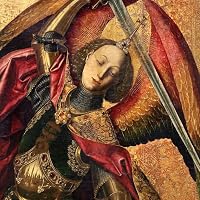
The story of Medea, a maligned and misunderstood woman of Greek mythology, from one of Britain’s foremost classicists
Mothers who kill their children are universally abhorred but perennially fascinating. In this book, the award-winning scholar Edith Hall explores the possibility that Medea, mythology’s archetypal murderous mother, could be based on a historical figure who migrated to Greece in the late Bronze Age.
Medea has appeared in countless works of art—plays, operas, musicals, ballets, movies, poems, paintings, sculptures, and novels—but until now no one has written a biography of her. Through meticulous research and fast-paced narrative, Hall brings new life to Medea’s story, from her lonely childhood on the shores of the Black Sea through her dramatic escape with Jason and the Argonauts, the murders and attempted palace coup in Thessaly, her deadly revenge in Corinth, and her final exile in Athens.
In reframing a figure long reduced to villainy, Hall restores Medea’s humanity, illuminating a woman pushed to extremes by betrayal and displacement—a brilliant, embattled outsider navigating the violent patriarchies of the ancient Mediterranean.
The love scene between Medea and Jason at the temple of Hecate in chapter two has both “she was quivering with desire” and “she needed him to prove that they were a couple in physical reality rather than on the strength of a vague promise of future nuptials couched in the conditional” in the same sentence. Rarely have I seen a book so clearly lay out its most fundamental problem.
This book is trying to be two things at once: a “biography” of Medea and a novel in the same vein as all the feminist Greek myth retellings that have been filling the historical fiction shelves for years. As a biography, especially an introductory one, it undercuts its premise by omitting some stories about Medea that conflict with Hall’s presentation of her. She frequently embellishes or invents episodes while hiding it in novelistic prose and vague footnotes, so a reader unfamiliar with the texts she’s drawing from (primarily Euripides and Apollonius) will have a hard time sorting out her version from the source material; they’d be better off reading the “notes on sources” section than the actual notes. Although the summary promises to explore the idea that Medea’s story has some historical basis, which would have given the academics something to chew on, this is limited to a brief part of the introduction, which brings up no evidence beyond Strabo believing that it did.
The novel part, meanwhile, suffers from Hall wanting to give it historical value, with the quotations/paraphrases from ancient sources not fitting with her own dialogue and slightly narrativized non-fiction prose slowing the pacing down, not to mention making some scenes under-described and thus emotionally distant (the info dump about Jason that Orpheus gives Medea and the scene where Medea dreams of her father chastising her are good examples). Neither part is helped by the generally colloquial writing style, which Hall justifies as an echo of Euripides’ colloquial language in his own Medea play. True as that may be, contemporary ancient Greek and contemporary English are not the same type of language– was the book really enhanced by having Medea say “gold is a girl’s best friend”? Hall's inability to juggle everything she was doing was especially disappointing because I actually did find her version of Medea compelling.
Hall wraps up her rendition of Medea’s life with two chapters giving an admittedly selective summary of her reception from antiquity to modernity. These chapters, I feel, are the strongest in the book, and are to be especially commended for giving non-Anglophone works attention. I will admit, though, that I was a bit troubled by the chapter on Medea’s feminist reception, namely because of how Hall seems to support and agree with reclamations of her as an icon of wronged womanhood, which usually ignore, downplay, or exonerate/justify her crimes; it’s worth noting that Hall’s own portrayal of Medea’s motivations for killing her children have more in common with filicidal men wanting to spite their partners than the desperate and marginalized mothers she is often used to represent. I also would have liked it if Hall discussed why Medea’s other murders are so often eclipsed in her legend.
Ultimately, some readers might learn a bit more about Medea and her afterlife from this book, but Hall really should have just written a novel– or, barring that, she could’ve made her non-fiction book more straightforward, instead of trying to do it all at once.
I didn't love this book as much as I hoped, although that's more to do with my own disconnect with the style rather than the flaw of the author. For me, Hall's "biography" of a mythical figure fell awkwardly between two stools: not fluid enough to be a novelisation (no novel would have dialogue so clunky, one would hope) but not contextualised enough for a historical retelling. Plus, of course, how do you write a "factual" biography of a character whose life included centaurs and nymphs?
The second half - which, annoyingly in the hardback edition I read shrinks the font size - was far more fascinating. A look at Medea's cultural impact followed by a dissection of the sources Hall used to craft the narrative and how many of them differ in their telling of what Medea did - even whether she killed her children.
Loved this account of the ancient story of Medea. It is written partly as a biography in a story form, pulling together the evidence gleaned from the ancient sources. But them, it also examines the impact of the story of Medea in plays, books, films and even 20th century court cases of women driven by the behaviour of men to do dreadful things.
Comprehensive and accessible account of an amzing woman, who cause sus to think 2,500 (or more) years later.
Ultimately, I was quite disappointed with this book. The most interesting parts about the transmission, adaptation and interpretation of Medea’s story (what I thought the whole book would be about, based on the synopsis) is crammed into the final chapter, which itself is only 23 pages long.