

What do you think?

Romance of the Grail: The Magic and Mystery of Arthurian Myth
The first collection of Joseph Campbell’s writings and lectures on the Arthurian romances of the Middle Ages, a central focus of his celebrated scholarship, edited and introduced by Arthurian scholar Evans Lansing Smith, PhD, the chair of Mythological Studies at Pacifica Graduate Institute.
Throughout his life, Joseph Campbell was deeply engaged in the study of the Grail Quests and Arthurian legends of the European Middle Ages. In this new volume of the Collected Works of Joseph Campbell, editor Evans Lansing Smith collects Campbell’s writings and lectures on Arthurian legends, including his never-before-published master’s thesis on Arthurian myth, “A Study of the Dolorous Stroke.” Campbell’s writing captures the incredible stories of such figures as Merlin, Gawain, and Guinevere as well as the larger patterns and meanings revealed in these myths. Merlin’s death and Arthur receiving Excalibur from the Lady of the Lake, for example, are not just vibrant stories but also central to the mythologist’s thinking.
The Arthurian myths opened the world of comparative mythology to Campbell, turning his attention to the Near and Far Eastern roots of myth. Calling the Arthurian romances the world’s first “secular mythology,” Campbell found metaphors in them for human stages of growth, development, and psychology. The myths exemplify the kind of love Campbell called amor, in which individuals become more fully themselves through connection. Campbell’s infectious delight in his discoveries makes this volume essential for anyone intrigued by the stories we tell—and the stories behind them.
Throughout his life, Joseph Campbell was deeply engaged in the study of the Grail Quests and Arthurian legends of the European Middle Ages. In this new volume of the Collected Works of Joseph Campbell, editor Evans Lansing Smith collects Campbell’s writings and lectures on Arthurian legends, including his never-before-published master’s thesis on Arthurian myth, “A Study of the Dolorous Stroke.” Campbell’s writing captures the incredible stories of such figures as Merlin, Gawain, and Guinevere as well as the larger patterns and meanings revealed in these myths. Merlin’s death and Arthur receiving Excalibur from the Lady of the Lake, for example, are not just vibrant stories but also central to the mythologist’s thinking.
The Arthurian myths opened the world of comparative mythology to Campbell, turning his attention to the Near and Far Eastern roots of myth. Calling the Arthurian romances the world’s first “secular mythology,” Campbell found metaphors in them for human stages of growth, development, and psychology. The myths exemplify the kind of love Campbell called amor, in which individuals become more fully themselves through connection. Campbell’s infectious delight in his discoveries makes this volume essential for anyone intrigued by the stories we tell—and the stories behind them.
282 pages, Hardcover
First published October 13, 2015
About the author
Joseph Campbell
380 books6,441 followersJoseph Campbell was an American author and teacher best known for his work in the field of comparative mythology. He was born in New York City in 1904, and from early childhood he became interested in mythology. He loved to read books about American Indian cultures, and frequently visited the American Museum of Natural History in New York, where he was fascinated by the museum's collection of totem poles.
Campbell was educated at Columbia University, where he specialized in medieval literature, and continued his studies at universities in Paris and Munich. While abroad he was influenced by the art of Pablo Picasso and Henri Matisse, the novels of James Joyce and Thomas Mann, and the psychological studies of Sigmund Freud and Carl Jung. These encounters led to Campbell's theory that all myths and epics are linked in the human psyche, and that they are cultural manifestations of the universal need to explain social, cosmological, and spiritual realities.
After a period in California, where he encountered John Steinbeck and the biologist Ed Ricketts, he taught at the Canterbury School, and then, in 1934, joined the literature department at Sarah Lawrence College, a post he retained for many years. During the 40s and '50s, he helped Swami Nikhilananda to translate the Upanishads and The Gospel of Sri Ramakrishna. He also edited works by the German scholar Heinrich Zimmer on Indian art, myths, and philosophy. In 1944, with Henry Morton Robinson, Campbell published A Skeleton Key to Finnegans Wake. His first original work, The Hero with a Thousand Faces, came out in 1949 and was immediately well received; in time, it became acclaimed as a classic. In this study of the "myth of the hero," Campbell asserted that there is a single pattern of heroic journey and that all cultures share this essential pattern in their various heroic myths. In his book he also outlined the basic conditions, stages, and results of the archetypal hero's journey.
Throughout his life, he traveled extensively and wrote prolifically, authoring many books, including the four-volume series The Masks of God, Myths to Live By, The Inner Reaches of Outer Space and The Historical Atlas of World Mythology. Joseph Campbell died in 1987. In 1988, a series of television interviews with Bill Moyers, The Power of Myth, introduced Campbell's views to millions of people.
Campbell was educated at Columbia University, where he specialized in medieval literature, and continued his studies at universities in Paris and Munich. While abroad he was influenced by the art of Pablo Picasso and Henri Matisse, the novels of James Joyce and Thomas Mann, and the psychological studies of Sigmund Freud and Carl Jung. These encounters led to Campbell's theory that all myths and epics are linked in the human psyche, and that they are cultural manifestations of the universal need to explain social, cosmological, and spiritual realities.
After a period in California, where he encountered John Steinbeck and the biologist Ed Ricketts, he taught at the Canterbury School, and then, in 1934, joined the literature department at Sarah Lawrence College, a post he retained for many years. During the 40s and '50s, he helped Swami Nikhilananda to translate the Upanishads and The Gospel of Sri Ramakrishna. He also edited works by the German scholar Heinrich Zimmer on Indian art, myths, and philosophy. In 1944, with Henry Morton Robinson, Campbell published A Skeleton Key to Finnegans Wake. His first original work, The Hero with a Thousand Faces, came out in 1949 and was immediately well received; in time, it became acclaimed as a classic. In this study of the "myth of the hero," Campbell asserted that there is a single pattern of heroic journey and that all cultures share this essential pattern in their various heroic myths. In his book he also outlined the basic conditions, stages, and results of the archetypal hero's journey.
Throughout his life, he traveled extensively and wrote prolifically, authoring many books, including the four-volume series The Masks of God, Myths to Live By, The Inner Reaches of Outer Space and The Historical Atlas of World Mythology. Joseph Campbell died in 1987. In 1988, a series of television interviews with Bill Moyers, The Power of Myth, introduced Campbell's views to millions of people.
Ratings & Reviews
Friends & Following
Create a free account to discover what your friends think of this book!
Community Reviews
Displaying 1 - 30 of 53 reviews

December 19, 2018
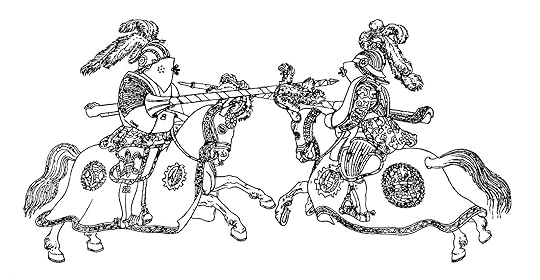
I first encountered the ‘Knights of the Round Table’ in – believe it or not – a Walt Disney comic book. It was about “King Mickey and the Knights of the Round Table”, a delightfully juvenile version of the great British legend. But it piqued my interest and I started reading up on anything and everything connected with knights, as well as watching movies containing medieval themes. I loved those guys, running into one another, lances at ready till – wham! – one of them is unseated and thrown from the horse. As I grew older, I learned to appreciate the idea of chivalry; and Percival, Galahad, Lancelot, and all those “parfit gentil knights” became the idols of a hopelessly romantic youth.
Joseph Campbell came into my life much later – during my early twenties. However, it was only later, as I heard his lectures in 2005 (it was freely available on the Joseph Campbell Foundation in those days) about the Grail Quest that I realised the mythical depth of these stories. Ever since then, I have been on the lookout for a more detailed analysis – which this book provides. It collects matter from those lectures, plus additional material, and lays out a fairly comprehensive review of the literature about the Grail Quest.
The stories of King Arthur, most familiar to us, are presented by Thomas Malory in Le Morte d'Arthur: King Arthur and the Legends of the Round Table. But we have a large compendium of grail lore apart from that – Wolfram von Eschenbach ’s Parzival, Gottfried von Strassburg’s Tristan and Iseult, and countless other, Christianised versions. Over a period, the Grail Quest has undergone countless variations, passed through the hands of countless poets and has apparently inspired countless people.
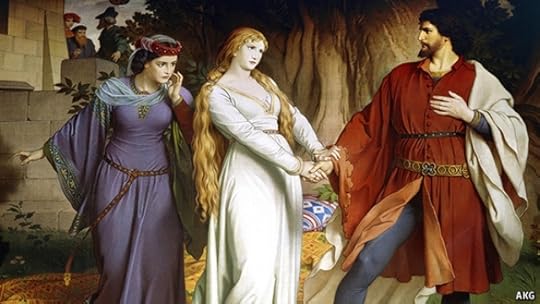
Rather than giving a synopsis of this book – which would prove an enormous task, and is sure not to do it justice – I will try to summarise my reading experience by analysing the themes.
Unlike the Orient, where the individual is just a cog in the cosmic wheel, and the Levant, where he is only a plaything in the hands of an omnipotent God, in the Occident he is everything. The whole ethos of Western culture is built on the cult of the individual. Joe Campbell sees the mythology of the Greeks driving the Western individual, rather than the religion of Christianity which he professes.
The most potent image of the Grail Quest is the Waste Land – a country which has been laid to ruins because the king is sick, typically castrated by a poisoned wound to the groin. The task of the hero is to heal the king, by asking the right question: “What ails thee?” But the hero, uninitiated and unenlightened, does not do that and for that reason has to go in quest of the Grail.
Please bear in mind that this is the legendary Fisher King; the Christ (or the Bodhisattva too, according to Campbell) who is a “fisher of men” – offering himself as bait to men who have been alienated from God.
And the Waste Land?
The most important thing about the Grail quest is that it is different for everyone. Every knight must enter the forest at a different place, where there is no beaten path, because “Every human being is unique, and must find his or her adventure by entering the forest where there is no way or path.” This journey, taken in earnest, brings the adventurer to the “Land of Enchantment” which he must disenchant, for his quest to be successful.
This whole cycle of adventurous tales might have roots in a primitive ritual, something which is analysed at length in J. G. Frazer’s The Golden Bough. This is “the Bronze Age mythological cycle of the dead and resurrected deity, whose death and rebirth, ever recurring, was solemnly—and dreadfully—enacted in rites of lavish human sacrifice throughout the archaic world.” The ritual concerned a priest king who is married to the queen, and who looks after a sacred grove. As the king grows old and loses his prowess, he is killed by a challenger who takes upon the role. The nephew in love with the wife of the maternal uncle, as in the case of Tristan, is a common motif.
Another motif was derived from the Iron Age, which in the British Isles commenced roughly with the entry of the Celtic tribes.
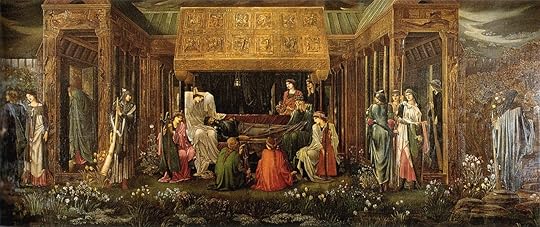
To summarise: this book is a wonderful introduction to the world of knightly valour. Damn it, now I have to read all those adventures in the original! My TBR pile keeps growing!
Joseph Campbell came into my life much later – during my early twenties. However, it was only later, as I heard his lectures in 2005 (it was freely available on the Joseph Campbell Foundation in those days) about the Grail Quest that I realised the mythical depth of these stories. Ever since then, I have been on the lookout for a more detailed analysis – which this book provides. It collects matter from those lectures, plus additional material, and lays out a fairly comprehensive review of the literature about the Grail Quest.
The stories of King Arthur, most familiar to us, are presented by Thomas Malory in Le Morte d'Arthur: King Arthur and the Legends of the Round Table. But we have a large compendium of grail lore apart from that – Wolfram von Eschenbach ’s Parzival, Gottfried von Strassburg’s Tristan and Iseult, and countless other, Christianised versions. Over a period, the Grail Quest has undergone countless variations, passed through the hands of countless poets and has apparently inspired countless people.
Rather than giving a synopsis of this book – which would prove an enormous task, and is sure not to do it justice – I will try to summarise my reading experience by analysing the themes.
Unlike the Orient, where the individual is just a cog in the cosmic wheel, and the Levant, where he is only a plaything in the hands of an omnipotent God, in the Occident he is everything. The whole ethos of Western culture is built on the cult of the individual. Joe Campbell sees the mythology of the Greeks driving the Western individual, rather than the religion of Christianity which he professes.
In the Orient, the ways of initiation are mapped out—you know what stage you’re in, you find your guru, you submit to the guru, you do not criticize, you do what he tells you, and he leads you to your own experience. Not so in this European quest. In Parzival, you are to follow your own nature, your own inspiration; following someone else will lead you only to ruin. That is the sense of Parzival’s journey, and that is the sense you get, briefly, here, as the knights set out on the quest for the Holy Grail.The thing about myth is that it is timeless. It is always present in the here and the now: yet it all happened during some period when even time was not born. As Joe says
For in India, whether in its Hindu or its Buddhist teachings, the accent is again on the mystical side. It is not on the importance of historical events that may or may not have taken place, but on the requirement that something should happen, here and now, in one’s mind and will. And this brings me to what is a crucial, if not the crucial problem of this whole subject, namely, that of the radical distinction between the esoteric (mystical) and exoteric (historical) ways of reading mythological symbols: as references, on the one hand, to powers operative in the human heart as agents of transformation, and, on the other, to actual or imagined historical events.The Church, however, froze the myth in historical time – Christ became an actual person, dead and resurrected to atone for historical sins of the forefathers of the human race. Instead of searching for the Kingdom of the Father (which is “spread over the earth”, as the Gnostic Jesus said) within oneself, the spiritual journey becomes simply one of accepting Christ as the role of the redeemer. This enfeebles the whole quest – and it was partially in rebellion to this, that the tale of the Holy Grail was born (which, however, was later appropriated by Christianity).
The most potent image of the Grail Quest is the Waste Land – a country which has been laid to ruins because the king is sick, typically castrated by a poisoned wound to the groin. The task of the hero is to heal the king, by asking the right question: “What ails thee?” But the hero, uninitiated and unenlightened, does not do that and for that reason has to go in quest of the Grail.
Please bear in mind that this is the legendary Fisher King; the Christ (or the Bodhisattva too, according to Campbell) who is a “fisher of men” – offering himself as bait to men who have been alienated from God.
And the Waste Land?
The Waste Land, then, is the land of people living inauthentic lives, doing what they think they must do to live, not spontaneously in the affirmation of life, but dutifully, obediently, and even grudgingly, because that is the way people are living.This is the graveyard of the spirit – and the Grail here is the philosopher’s stone which will put it back to rights.
The most important thing about the Grail quest is that it is different for everyone. Every knight must enter the forest at a different place, where there is no beaten path, because “Every human being is unique, and must find his or her adventure by entering the forest where there is no way or path.” This journey, taken in earnest, brings the adventurer to the “Land of Enchantment” which he must disenchant, for his quest to be successful.
The idea of enchantment and disenchantment is that people at a certain time and place are forced to perceive the world in a way that is inadequate or improper to its character. This makes me think of the Gnostic aphorism in the Gospel according to Thomas in which Christ is asked when the Kingdom will come. And Christ says, “It will not come by expectation. It is here now. The Kingdom of the Father is spread over the earth and men do not see it.” Men do not see it because of an enchantment. In these legends the savior who is to disenchant the world is the equivalent of Christ, the Savior who opens men’s eyes.One other persistent motif in the knightly sagas is adulterous love – like that between Guinevere, Arthur’s queen and Lancelot, or that between Tristan and Isolde, his uncle Mark’s wife. This also signifies a rebellion: in an age where marriage was one of convenience and love was frowned upon, adultery was one way of asserting the individuals right. But this adulterous love was not eros (sexual attraction) or agape (platonic love) – rather it was amor, romantic love, where the loved object is loved for her essential nature.
In Oriental love, the woman becomes the vessel of a supernatural power of a transcendent energy, whereas in the European cult she is adored for herself, not as a symbol of anything.This is the essence of the romance of Tristan and Isolde, that of the doomed romantic lovers who however attain the godhead through the depth of their passion (this motif is analysed at length in Campbell’s The Masks of God, Volume 4: Creative Mythology).
This whole cycle of adventurous tales might have roots in a primitive ritual, something which is analysed at length in J. G. Frazer’s The Golden Bough. This is “the Bronze Age mythological cycle of the dead and resurrected deity, whose death and rebirth, ever recurring, was solemnly—and dreadfully—enacted in rites of lavish human sacrifice throughout the archaic world.” The ritual concerned a priest king who is married to the queen, and who looks after a sacred grove. As the king grows old and loses his prowess, he is killed by a challenger who takes upon the role. The nephew in love with the wife of the maternal uncle, as in the case of Tristan, is a common motif.
Another motif was derived from the Iron Age, which in the British Isles commenced roughly with the entry of the Celtic tribes.
...And the emphasis here was not on the generative powers of the earth, the heavens, and the waters beneath the earth, the female principle of nature’s spontaneity as symbolized in the Magna Mater, but on the war craft and shaping power of the male, as represented chiefly by a type of brilliant hero, very much like the Homeric hero, supported by the deities of an emphatically patriarchal, thunder-hurling pantheon. The characteristic myth concerns the conquest of a monster of some kind, usually of a serpentine, dragonlike form, who, in fact, in the earlier mythology had been the son-husband of Mother Earth (as, for instance, Typhon had been of Gaia). The dragon now is interpreted as the negative, binding, sterile aspect of the masculine principle, and the victory of the hero as the release of life (the gold, the maiden) from its hold. Typical in the Greek context were the deeds of Apollo against the great Python of the Delphic Oracle, of Perseus rescuing Andromeda from the sea beast, and of Theseus overcoming the Minotaur.This, probably, is where the knight rescuing the damsel from the dragon comes from.
To summarise: this book is a wonderful introduction to the world of knightly valour. Damn it, now I have to read all those adventures in the original! My TBR pile keeps growing!

May 23, 2022
A book by Joseph Campbell on the Arthurian myths. Therefore, it's learned, authoritative, and riveting to read as Campbell brings together myths from Wales, Ireland, the European continent, the Middle East, and even further afield to support the explanation of the tales featured in the book.
The book starts with explanations of the Neolithic, Celtic, Roman, and German backgrounds for the myths. Then the voyages of St Brendan are explained and the life of St Patrick as well as the roles of troubadours and Minnesingers in the Middle Ages.
There are in-depth studies of Wolfram von Eschenbach's Parzival, Gottfried von Strassburg's Tristan and Iseult and the Knights of the Round Table as well as good analysis of the Waste Land, The Fisher King, The Grail, and Avalon.
Finally, in Appendix A is a study of The Dolorous Stroke where a knight called Balin strikes King Pellean through both thighs with a lance in an act of self-defence. Balin had already killed Pellean's brother Garlon who'd been identified by Merlin as the murderer of two of Balin's escorts. When Balin leaves what remains of Pellean's castle, he sees The Waste Land that his dolorous stroke had caused.
The book starts with explanations of the Neolithic, Celtic, Roman, and German backgrounds for the myths. Then the voyages of St Brendan are explained and the life of St Patrick as well as the roles of troubadours and Minnesingers in the Middle Ages.
There are in-depth studies of Wolfram von Eschenbach's Parzival, Gottfried von Strassburg's Tristan and Iseult and the Knights of the Round Table as well as good analysis of the Waste Land, The Fisher King, The Grail, and Avalon.
Finally, in Appendix A is a study of The Dolorous Stroke where a knight called Balin strikes King Pellean through both thighs with a lance in an act of self-defence. Balin had already killed Pellean's brother Garlon who'd been identified by Merlin as the murderer of two of Balin's escorts. When Balin leaves what remains of Pellean's castle, he sees The Waste Land that his dolorous stroke had caused.

November 14, 2019
A perfect gem of a book for Arthuriana nerds. Anyone with a love of heroism would enjoy it, I'm sure. Campbell does some neat and entertaining recaps of the myths he discusses, and the discussions are entertaining. This is a collection of talks and essays collected together after his death, so the tone ranges from the witty and conversational to dense academese.
There are certainly moments that get deep into the nitty-gritty of divine and mythical genealogies, which will only satisfy the dedicated fan. Is King Pellean a version of earlier fertility gods, the Zeus's of Northern pantheons? Is Pellinore a different version of the same god? Are Galahad and his companions echoes of the children Tuireann? Perhaps you don't care about this sort of thing, but I don't see how anyone can avoid being fascinated by the way the spear and cup in the Grail Castle echo the lightning spear of storm gods and the everlasting cauldron of Celtic myth, and also the yoni and lingam symbolism of fertility gods, and finally the Christian spear that pierced Christ's side, and the cup that he drank from at the last supper. Did the monks know the pagan and sexual origins of these symbols when they wrote their versions?
This is all very interesting, but what I found even more fascinating was Campbell's ideas about Christianity, the Western mind, and the Knights of the Round Table, not least because I've just finished Dominion: How the Christian Revolution Remade the World, which brushes against some of the same issues. Campbell says that the Grail mythos flourished in the age of Cathedrals between 1150 and 1250, as the West finally recovered from the 500 years darkness that followed Roman withdrawal. This mythos was an attempt to reconcile Christian theology with the Western temperament. Christianity is a sort of mystery cult, founded and formed in the Levant and Middle East, holding certain doctrines that didn't sit well with Western traditions. It's no co-incidence that the Pelagian heresy came from Ireland, claiming that there was no such thing as original sin, since the idea that one can inherit the blame for the actions of another doesn't fit with Western individualism. The Westerner also chafes at the idea that salvation required only submission, or that marriage could be both a political bargain and a sacrament, or that priests could be such terrible people themselves and yet spiritual authorities and the dispensers of sacraments.
Out of these contradictions comes the Grail mythos of Knights who, while professing Christianity, still find their own path, follow their true nature, and are loyal to their true love. Their salvation depends on their own character and integrity, and they cannot be swayed by social pressure, base desires, or spiritual authorities. In the end the Grail is in the keep of a King, carried by a maiden, discovered by a married man - not a monk, priest, or church in sight. It's no co-incidence that the Grail Mythos dropped off as the inquisition picked up. It's was a direct threat to the spiritual authority of the church.
Of all the versions of the Quest, Campbell likes Wolfram von Eschenbach's Parzifel best, because it best demonstrates his theory of the Grail quest as opposed to the Church: 'If Innocent [III, instigator of the Albifensian Crusade] was not his model for the malignant, castrated magicina of the Waste Land, Clinschor, I have missed my guess'. His recap is wonderful and includes multiple Knights who refuse an inheritance, preferring to earn their own lives, Parzifel as a family man who is loyally married to his true love, Princesses who refuse to marry for anything except true love (not accepting the current custom in troubadour poetry of marriage followed by adultery), Parzifel's loss of faith and regaining thereof on his own terms in making a confession to an unordained man, Muslim and Christian Knights as equals - in a very interesting scene the Muslim Knight is willing to submit to baptism because of his love for a Christian woman, but interestingly is baptised not in holy water, but in the water of the philosopher's stone, at which point an inscription appears on the Grail: Any Templar appointed by God's hand to be master over a foreign folk must forbid the asking of his name or race and help them to their rights. A declaration of universal human rights in the 12th century!
Reading along with Campbell's interpretations of these great myths is really good fun, it makes me want to go back and read them all over again. And especially pick up Wolfram von Eschenbach. It's been so long since I've read these stories, I don't even know what version I read, it was probably Roger Lancelyn Green. Time to get down to the source!
There are certainly moments that get deep into the nitty-gritty of divine and mythical genealogies, which will only satisfy the dedicated fan. Is King Pellean a version of earlier fertility gods, the Zeus's of Northern pantheons? Is Pellinore a different version of the same god? Are Galahad and his companions echoes of the children Tuireann? Perhaps you don't care about this sort of thing, but I don't see how anyone can avoid being fascinated by the way the spear and cup in the Grail Castle echo the lightning spear of storm gods and the everlasting cauldron of Celtic myth, and also the yoni and lingam symbolism of fertility gods, and finally the Christian spear that pierced Christ's side, and the cup that he drank from at the last supper. Did the monks know the pagan and sexual origins of these symbols when they wrote their versions?
This is all very interesting, but what I found even more fascinating was Campbell's ideas about Christianity, the Western mind, and the Knights of the Round Table, not least because I've just finished Dominion: How the Christian Revolution Remade the World, which brushes against some of the same issues. Campbell says that the Grail mythos flourished in the age of Cathedrals between 1150 and 1250, as the West finally recovered from the 500 years darkness that followed Roman withdrawal. This mythos was an attempt to reconcile Christian theology with the Western temperament. Christianity is a sort of mystery cult, founded and formed in the Levant and Middle East, holding certain doctrines that didn't sit well with Western traditions. It's no co-incidence that the Pelagian heresy came from Ireland, claiming that there was no such thing as original sin, since the idea that one can inherit the blame for the actions of another doesn't fit with Western individualism. The Westerner also chafes at the idea that salvation required only submission, or that marriage could be both a political bargain and a sacrament, or that priests could be such terrible people themselves and yet spiritual authorities and the dispensers of sacraments.
Out of these contradictions comes the Grail mythos of Knights who, while professing Christianity, still find their own path, follow their true nature, and are loyal to their true love. Their salvation depends on their own character and integrity, and they cannot be swayed by social pressure, base desires, or spiritual authorities. In the end the Grail is in the keep of a King, carried by a maiden, discovered by a married man - not a monk, priest, or church in sight. It's no co-incidence that the Grail Mythos dropped off as the inquisition picked up. It's was a direct threat to the spiritual authority of the church.
Of all the versions of the Quest, Campbell likes Wolfram von Eschenbach's Parzifel best, because it best demonstrates his theory of the Grail quest as opposed to the Church: 'If Innocent [III, instigator of the Albifensian Crusade] was not his model for the malignant, castrated magicina of the Waste Land, Clinschor, I have missed my guess'. His recap is wonderful and includes multiple Knights who refuse an inheritance, preferring to earn their own lives, Parzifel as a family man who is loyally married to his true love, Princesses who refuse to marry for anything except true love (not accepting the current custom in troubadour poetry of marriage followed by adultery), Parzifel's loss of faith and regaining thereof on his own terms in making a confession to an unordained man, Muslim and Christian Knights as equals - in a very interesting scene the Muslim Knight is willing to submit to baptism because of his love for a Christian woman, but interestingly is baptised not in holy water, but in the water of the philosopher's stone, at which point an inscription appears on the Grail: Any Templar appointed by God's hand to be master over a foreign folk must forbid the asking of his name or race and help them to their rights. A declaration of universal human rights in the 12th century!
Reading along with Campbell's interpretations of these great myths is really good fun, it makes me want to go back and read them all over again. And especially pick up Wolfram von Eschenbach. It's been so long since I've read these stories, I don't even know what version I read, it was probably Roger Lancelyn Green. Time to get down to the source!

July 3, 2016
Mind...blown... I have to take Joseph Campbell's work in small doses; it is so dense and packed with revelations that to take the book at a sitting or two would be absolutely overwhelming. I loved how he traced the origins of the Arthurian myths back to Neolithic, Celtic, Roman, and German and even Asian backgrounds.
I was stunned by his revelation that 432 (the year of St. Patrick's mission) is a mythological number tying to the Indian Puranas "Great Cycle" ("the world's creation, flowering, and dissolution") which is 4, 320,000 years...which represents the "Day of Brahma" and which is followed by an identical "Night of Brahma"...the two of which add up to 8,640,000. And then, as only Joseph Campbell can do, tying it back to the physical: a heart rate of about 60 beats per minute equals 86,400 beats per day. ("So our little human days and nights are the miniatures of the Great Days and Nights of Brahma...the beating of our hearts, meanwhile, remains in accord with the pulse of creation."--which means at equinox, our heart will beat 43,200 in the day; 43,200 in the night.) Just wow.
And this is just at the beginning of the text. I'll never look at the King Arthur, Merlin, Gawain, or any of the other legends the same again.
I was stunned by his revelation that 432 (the year of St. Patrick's mission) is a mythological number tying to the Indian Puranas "Great Cycle" ("the world's creation, flowering, and dissolution") which is 4, 320,000 years...which represents the "Day of Brahma" and which is followed by an identical "Night of Brahma"...the two of which add up to 8,640,000. And then, as only Joseph Campbell can do, tying it back to the physical: a heart rate of about 60 beats per minute equals 86,400 beats per day. ("So our little human days and nights are the miniatures of the Great Days and Nights of Brahma...the beating of our hearts, meanwhile, remains in accord with the pulse of creation."--which means at equinox, our heart will beat 43,200 in the day; 43,200 in the night.) Just wow.
And this is just at the beginning of the text. I'll never look at the King Arthur, Merlin, Gawain, or any of the other legends the same again.

January 1, 2016
I have read and appreciated Arthurian Legend for decades...but not as a scholar. Mythology is not my field but Campbell's scholarship and philosophy has become a very important part of my spiritual outlook. I have always been inspired and intrigued by the deeds and lessons of the Arthurian tales. They always resonated with truths that I could use to interpret, evaluate, and/or guide my life. This book is yet another facet of Cambell's work that will impress you with it's ingenuity, depth and frame of reference, and accessibility. From there do with it what thou wilt.

February 2, 2025
I want to put Joseph Campbell and Jordan Peterson in a cold room and see what happens

October 7, 2016
I thought the well of unpublished Campbell lectures & essays may be dry after "Goddesses," so "Romance of the Grail" is a great surprise. I'm enjoying these reflections on individualism and love in the Middle Ages. I hope there are more books yet to come in the Collected Works...

June 6, 2025
Romance of the Grail distills the lifelong work of Joseph Campbell into a sharp and essential study of Arthurian mythology. This volume, edited by Evans Lansing Smith, contains Campbell’s lectures, essays, and his 1927 master’s thesis titled A Study of the Dolorous Stroke, which explores the roots of the Grail myth through Celtic, Christian, and Eastern sources. Campbell does not treat these legends as distant medieval tales but as symbolic instructions for the soul's journey. For him, the Grail is not an external object to be idolized but an inner fire to be reclaimed. These myths reveal deep structures within human consciousness and offer a path toward spiritual restoration. This is the second book I have read by Campbell. The first was The Hero with a Thousand Faces, a deep and long read that required a sharp and focused mind to stay with it. That book demanded full attention to avoid drifting. With that said, I felt that of the two works I have read from Campbell, both good in their own right, Romance of the Grail was the better of the two in my personal opinion.
Rather than glorify the surface of knighthood, Campbell exposes the internal warfare embedded in the Grail stories. The knight is not a hero by birthright but by initiation. Parzival, Gawain, and Galahad each represent stages in the evolution of the individual who must confront the broken landscape within. The Waste Land is the mirror of a psyche stripped of its sacred connection. The Fisher King represents the wounded masculine, suspended in suffering and longing for redemption. Campbell’s analysis is not decorative. It is surgical. He shows how the mythological blueprint is not locked in the past but coded into the human experience itself.
This book is a tool of initiation for those on the path of self-mastery. Campbell identifies Arthurian mythology as the first secular scripture of the West, a system that cloaks ancient wisdom in the form of story. These myths are weapons in the war against inner ignorance. They demand discipline, purity, and the courage to seek truth beyond dogma. Romance of the Grail is not just a scholarly volume. It is a call to awaken the dormant knight within. I highly recommend this book, and if you are new to Campbell’s work, read this first. The Hero with a Thousand Faces is overrated, while Romance of the Grail is deeply underrated.
Rather than glorify the surface of knighthood, Campbell exposes the internal warfare embedded in the Grail stories. The knight is not a hero by birthright but by initiation. Parzival, Gawain, and Galahad each represent stages in the evolution of the individual who must confront the broken landscape within. The Waste Land is the mirror of a psyche stripped of its sacred connection. The Fisher King represents the wounded masculine, suspended in suffering and longing for redemption. Campbell’s analysis is not decorative. It is surgical. He shows how the mythological blueprint is not locked in the past but coded into the human experience itself.
This book is a tool of initiation for those on the path of self-mastery. Campbell identifies Arthurian mythology as the first secular scripture of the West, a system that cloaks ancient wisdom in the form of story. These myths are weapons in the war against inner ignorance. They demand discipline, purity, and the courage to seek truth beyond dogma. Romance of the Grail is not just a scholarly volume. It is a call to awaken the dormant knight within. I highly recommend this book, and if you are new to Campbell’s work, read this first. The Hero with a Thousand Faces is overrated, while Romance of the Grail is deeply underrated.

September 30, 2015
I have loved Arthurian legends since I took a course on Medieval Literature in my junior year of high school. The romantic stories of brave knights in shining armor accomplishing great deeds in the name of God, king, and love thrilled me. I loved to imagine myself as a knight errant in these tales. My particular favorite Arthurian story was that of Yvain by the French poet Chretien de Troyes. It told the personal transformation of a knight who must win back the love of his wife. He does this by traveling throughout the land with a lion and accomplishing many great deeds. Finally, she takes him back and they live happily ever after. I loved this story because it shows how one man realized that he needs to be a better man so he can win his wife back. He turns his life around after a profound mental breakdown only to build himself into the perfect knight.
Romance of the Grail is the first scholarly work I have read to treat the Arthurian tales. I am greatly indebted to Joseph Campbell. His work on mythology has changed my life and how I view the world and our inherited myths. Romance of the Grail continues the great series of Campbell’s collected works.
Many of my favorite essays Joseph Campbell has written were about Arthurian subjects and I have gotten a great deal of insight out of them. This lectures on the third DVD volume of Mythos contains two on Arthurian subjects. It was just great to finally read a work devoted to the subject. The work itself is not narrative, but consists of a series of essays on the major works and themes found in Arthurian legend. Campbell argues that the stories of King Arthur and his knights were the world’s first secular mythology, without religious connotations or dogma. Instead these stories were about “amor”. “Amor”, as defined by Campbell, was the connection between other people that would lead a person to become a more complete human being. Knights in these stories are defined by their relationships to the men they fought with and the women they loved. In the Middle Ages, the central conflict of the characters in the stories of Arthurian Romances is about Honor and Love and which does one choose.
Parzival is one of the great masterpieces of High Medieval culture, but it is not as well known to people as Malory’s Le Morte d’Arthur or Dante’s Divine Comedy. It is a shame because this is a work that can transform the lives of those who read it. I myself read it one summer and I feel that my life is better for it. To make an incredibly long story short, Parzival is the story of a young, innocent fool who goes questing to become a knight at King Arthur’s court and has many marvelous and terrifying adventures. The heart of the story revolves around Parzival at the Castle of the Grail. The grail appears in this story not as a cup, but as a stone that fell from Heaven. It’s special power derives from the fact that it can both provide food and keep all those who posses it eternally young. The King of the Grail, Amfortas, is wounded in a joust, and because of that the land begins to wither but not die. The only way he can be cured is if a stranger comes to the castle of the Grail and asks a particular question. Only then can the king and the land be healed. The Grail is tied directly with the abundance and success of the land. The Grail is the bringer of life. In Campbell’s mind, Amfortas was wounded in battle because he fought for love and not for God as a king should do. Parzival however, fails to ask the question and so must begin the adventure all over again. Finally after years of travel and adventure, Parzival is mature enough to return to the Castle of the Grail and ask the question. Amfortas is healed and Parzival becomes the new king.
Campbell’s essay compares Parzival’s journey with the Buddha as he goes out into the world to discover spiritual enlightenment. The Buddha wishes to understand why do we suffer and what he can do to solve it. After his meditation for forty days and forty nights under a bodhi tree, he discovers the “Middle Path”. Parzival’s name in French means “through the middle”. He tries to incorporate both pairs of opposites, the black and the white. That, for Campbell, is the theme of the story of Parzival, understanding both the positive and negative aspects of life but without committing to one or the other side. Parzival’s story speaks to me because we all are on a journey in life. We meet people who will touch and change our lives that we never thought possible.
Chapter Five looks at the tragic tale of Tristan and Isolde, the Romeo and Juliet of the Arthurian story. These stories focused on romantic love. In the Middle Ages, people of high birth were in arranged marriages. As the saying went back then, first comes marriage, then comes love. In Tristan and Isolde, however, we have a pair of lovers who choose love over marriage. Their love is adulterous. Tristan is the nephew of King Mark of Cornwall and Isolde is an Irish princess married to Mark.
To love is to feel pain, and Tristan and Isolde feel great pain in their love for one another. In Campbell’s view, the story of Tristan and Isolde show what happens when a knight chooses love over honor. He must go to great lengths to conceal his adulterous love with the woman he loves. Campbell told this story with such passion in the book that I felt the pain of love that Tristan and Isolde shared for one another. It is the love stories where the lovers can never truly be together that really stand the test of time.
Romance of the Grail was simply a joy to read from cover to cover. If I ever get the chance to teach Medieval Literature, I will be sure to use this book in class. Maybe I can reach a student who feels the same way I do about these tales and their importance in our world.
Romance of the Grail is the first scholarly work I have read to treat the Arthurian tales. I am greatly indebted to Joseph Campbell. His work on mythology has changed my life and how I view the world and our inherited myths. Romance of the Grail continues the great series of Campbell’s collected works.
Many of my favorite essays Joseph Campbell has written were about Arthurian subjects and I have gotten a great deal of insight out of them. This lectures on the third DVD volume of Mythos contains two on Arthurian subjects. It was just great to finally read a work devoted to the subject. The work itself is not narrative, but consists of a series of essays on the major works and themes found in Arthurian legend. Campbell argues that the stories of King Arthur and his knights were the world’s first secular mythology, without religious connotations or dogma. Instead these stories were about “amor”. “Amor”, as defined by Campbell, was the connection between other people that would lead a person to become a more complete human being. Knights in these stories are defined by their relationships to the men they fought with and the women they loved. In the Middle Ages, the central conflict of the characters in the stories of Arthurian Romances is about Honor and Love and which does one choose.
Parzival is one of the great masterpieces of High Medieval culture, but it is not as well known to people as Malory’s Le Morte d’Arthur or Dante’s Divine Comedy. It is a shame because this is a work that can transform the lives of those who read it. I myself read it one summer and I feel that my life is better for it. To make an incredibly long story short, Parzival is the story of a young, innocent fool who goes questing to become a knight at King Arthur’s court and has many marvelous and terrifying adventures. The heart of the story revolves around Parzival at the Castle of the Grail. The grail appears in this story not as a cup, but as a stone that fell from Heaven. It’s special power derives from the fact that it can both provide food and keep all those who posses it eternally young. The King of the Grail, Amfortas, is wounded in a joust, and because of that the land begins to wither but not die. The only way he can be cured is if a stranger comes to the castle of the Grail and asks a particular question. Only then can the king and the land be healed. The Grail is tied directly with the abundance and success of the land. The Grail is the bringer of life. In Campbell’s mind, Amfortas was wounded in battle because he fought for love and not for God as a king should do. Parzival however, fails to ask the question and so must begin the adventure all over again. Finally after years of travel and adventure, Parzival is mature enough to return to the Castle of the Grail and ask the question. Amfortas is healed and Parzival becomes the new king.
Campbell’s essay compares Parzival’s journey with the Buddha as he goes out into the world to discover spiritual enlightenment. The Buddha wishes to understand why do we suffer and what he can do to solve it. After his meditation for forty days and forty nights under a bodhi tree, he discovers the “Middle Path”. Parzival’s name in French means “through the middle”. He tries to incorporate both pairs of opposites, the black and the white. That, for Campbell, is the theme of the story of Parzival, understanding both the positive and negative aspects of life but without committing to one or the other side. Parzival’s story speaks to me because we all are on a journey in life. We meet people who will touch and change our lives that we never thought possible.
Chapter Five looks at the tragic tale of Tristan and Isolde, the Romeo and Juliet of the Arthurian story. These stories focused on romantic love. In the Middle Ages, people of high birth were in arranged marriages. As the saying went back then, first comes marriage, then comes love. In Tristan and Isolde, however, we have a pair of lovers who choose love over marriage. Their love is adulterous. Tristan is the nephew of King Mark of Cornwall and Isolde is an Irish princess married to Mark.
To love is to feel pain, and Tristan and Isolde feel great pain in their love for one another. In Campbell’s view, the story of Tristan and Isolde show what happens when a knight chooses love over honor. He must go to great lengths to conceal his adulterous love with the woman he loves. Campbell told this story with such passion in the book that I felt the pain of love that Tristan and Isolde shared for one another. It is the love stories where the lovers can never truly be together that really stand the test of time.
Romance of the Grail was simply a joy to read from cover to cover. If I ever get the chance to teach Medieval Literature, I will be sure to use this book in class. Maybe I can reach a student who feels the same way I do about these tales and their importance in our world.

November 27, 2015
Because of the PBS shows I will always see and hear this man when I read his books. Nor a bad thing.

March 13, 2023
Hasta ahora lo mejor que he leído en el año, "La historia del Grial, Magia y misterio del mito artúrico" de Joseph Campbell, totalmente recomendado. 🖤

December 20, 2021
Este libro es producto de la recopilación del trabajo realizado por Joseph Campbell a lo largo de su vida en torno al mito Artúrico. No lo califico con 5 estrellas pues al ser una recopilación de varios trabajos, carece de una progresión temática y desarrollo central de ideas, sin embargo es un privilegio poder tenerlo en nuestras manos en forma de un solo tomo.
La importancia de la Leyenda del Grial para Campbell consiste en que lo define como El Gran Mito secular del mundo moderno europeo. A partir de las historial sobre el Grial, Campbell traza sus orígenes simbólicos hasta civilizaciones primitivas, además encuentra claras correspondencias de motivos de mitologías orientales. Las leyendas del Grial que actualmente ligamos con el mundo cristiano, se originaron más bien en una historia que reivindicaba valores que se oponían bastante las imposiciones sociales de la sociedad de la época.
Es demasiado interesante todo lo expuesto por Campbell, pero no es un libro fluido ni fácil de leer. Más bien es un texto para estudiar, repasar y tomar notas. En algunos momentos es complicado trazar todas las relaciones que nos expone.
En resumen es un trabajo muy interesante, que nos muestra las influencias y los simbolismos subyacentes en los relatos del Grial. Pura arqueología literaria.
La importancia de la Leyenda del Grial para Campbell consiste en que lo define como El Gran Mito secular del mundo moderno europeo. A partir de las historial sobre el Grial, Campbell traza sus orígenes simbólicos hasta civilizaciones primitivas, además encuentra claras correspondencias de motivos de mitologías orientales. Las leyendas del Grial que actualmente ligamos con el mundo cristiano, se originaron más bien en una historia que reivindicaba valores que se oponían bastante las imposiciones sociales de la sociedad de la época.
Es demasiado interesante todo lo expuesto por Campbell, pero no es un libro fluido ni fácil de leer. Más bien es un texto para estudiar, repasar y tomar notas. En algunos momentos es complicado trazar todas las relaciones que nos expone.
En resumen es un trabajo muy interesante, que nos muestra las influencias y los simbolismos subyacentes en los relatos del Grial. Pura arqueología literaria.

Read
December 8, 2018The layers and variations of the Grail unfold masterfully in Campbell's hands. His analysis's of the Grail's origins is also fascinating, but his exploration of the Grail as the world's first secular mythology -- a mythology concerned with the development of the self throughout the adventure of life -- is a lightning rod of insight. I am particularly fond of the connection Campbell makes between Parzival's failure and success at the Grail and the Buddha's final temptation, dharma, resisting doing what other people expect of you.

May 8, 2016
This volume has been long anticipated. Campbell's foundational scholarship was on the grail stories. Much of this material has been previously unavailable. These chapters are rare gems that provide personal illumination for the reader. It is well researched, and well written, and sheds light on why the myth of Arthur resonates with everyone and explains the reason the myth came to be. If you're an Arthurian lover and a fan of Joseph Campbell I highly recommend this book for you.

January 5, 2016
Excellent! New World Library has been cranking out these wonderful collections for nearly two decades now and this one is top notch. This is also an important collection of Campbell's work because it is where he started in academia. And, the bonus included in the book is Campbell's Columbia University thesis, A Study of the Dolorous Stroke. I will be reading this a few more times.

Read
January 10, 2016Campbell ties all of the world's myths of the wounded king, the Fisher King, the grail, and knightly romance together in one neat package. Good reading, good research.

March 10, 2023
En sí mismo, este no es un libro escrito por Joseph Campbell, su amigo y discípulo Evan Lansing Smith, a la muerte del mitógrafo, recurrió a los archivos de la Fundación Joseph Campbell y vació las investigaciones con las que Campbell preparaba sus conferencias. Cuando joven el mitógrafo tuvo predilección por las leyendas artúricas, ya que había estudiado Mitología comparada. Empezó leyendo el Perceval de Chrétien de Troyes, el que le pareció superficial y sin un final. Un amigo alemán le regaló la versión posterior de Schröder y la versión de Wolfram von Eschenbach sobre el Perzivalfrage,l que le parecieron profundos y llenos de misticismo. Es obvio que quiso leerlos en el idioma original, es decir, alemán antiguo.
Como se trata de mitos comparados, Campbell encuentra paralelismos con mitos paleolíticos eritreos, egipcios, bretones y nórdicos artúricos, como los temas del viaje nocturno por mar, el renacimiento, el golpe doloroso y la lanza sangrante; mitos del regicidio ritual investigado en el libro de J. Frazer La Rama Dorada, en donde aclara que los dioses mueren y resucitan como los ciclos agrícolas; la batalla con el dragón y de las batallas del rey Pescador. También halla ese paralelismo con los mitos de la edad de Bronce: la versión greco-romana, la celta, hindú budista, y la que todos conocemos, el mito cristiano con una buena carga de hermetismo, platonismo y gnosticismo. Lo que se nota en este trabajo es que el rey Arturo sirve para nada y solo para reunir a los caballeros de la Mesa Redonda, quienes son los que llevan a cabo las aventura, tales como Parceval, Gawain y Galahad entre un mundo de malandros. A Lanzarote du Lac apenas lo menciona porque corresponde a tiempos más modernos. Es un libro muy instructivo.
Como se trata de mitos comparados, Campbell encuentra paralelismos con mitos paleolíticos eritreos, egipcios, bretones y nórdicos artúricos, como los temas del viaje nocturno por mar, el renacimiento, el golpe doloroso y la lanza sangrante; mitos del regicidio ritual investigado en el libro de J. Frazer La Rama Dorada, en donde aclara que los dioses mueren y resucitan como los ciclos agrícolas; la batalla con el dragón y de las batallas del rey Pescador. También halla ese paralelismo con los mitos de la edad de Bronce: la versión greco-romana, la celta, hindú budista, y la que todos conocemos, el mito cristiano con una buena carga de hermetismo, platonismo y gnosticismo. Lo que se nota en este trabajo es que el rey Arturo sirve para nada y solo para reunir a los caballeros de la Mesa Redonda, quienes son los que llevan a cabo las aventura, tales como Parceval, Gawain y Galahad entre un mundo de malandros. A Lanzarote du Lac apenas lo menciona porque corresponde a tiempos más modernos. Es un libro muy instructivo.

May 4, 2020
Joseph Campbell's Romance of the Grail: The Magic and Mystery of Arthurian Myth helps bring order to a confusing series of sources that began as legitimate folklore only to be hijacked by monastic writers who imposed a Christian structure on the myth. Campbell is particularly helpful dealing with the myth of Tristan and Iseult, Parzival as seen by Eschenbach, and the elements of the Grail myth, the Fisher King, and the Waste Land.
In addition, there is a long appendix on the Dolorous Stroke (which wounds the Fisher King) which is taken from the author's 1927 Master's Thesis and which does not meet the standard of the earlier chapters, being excessively dry and scholastic.
In addition, there is a long appendix on the Dolorous Stroke (which wounds the Fisher King) which is taken from the author's 1927 Master's Thesis and which does not meet the standard of the earlier chapters, being excessively dry and scholastic.
March 12, 2026
What ails thee?
The idea that a whole society can be wounded because people stop living from the inside out sits deep within the heart of every story.
Packed with so much lore that I wished Campbell slowed down a bit till I could chew on one analogy before racing to the next, which was overwhelming despite the easy to read language usage.
Worth a note-taking study
The idea that a whole society can be wounded because people stop living from the inside out sits deep within the heart of every story.
Packed with so much lore that I wished Campbell slowed down a bit till I could chew on one analogy before racing to the next, which was overwhelming despite the easy to read language usage.
Worth a note-taking study

February 8, 2020
Having previously read Joseph Campbell's most notable book, “The Hero with a Thousand Faces”, I felt the unprepared reader can come away despondent, believing the interesting works of Campbell would be beyond reach given the numerous references to varying cultures and their mythologies, much of which are not well known to the typical western reader. This is probably less true for Campbell’s “Romance of the Grail”, a critical analysis of the Grail Mythos, accomplished much in the same way as Campbell’s “Hero’s”.
Like that book, the implicit thesis of “Romance” is that when doing deep comparative analysis across any two (or more) mythos of a region, one will find surprising similarities in narrative structure, story-content, and message. These similarities stem from two broad sources according to Campbell. The first is that there was some kind of “knowledge” transfer that followed the path of human migrations, and across the (relatively) long span of human history (and prehistory), seemingly disparate cultures were able to share information, and this shared information eventually formed a kind of shared-heritage across those cultures. The second source of similarity is probably close to what Carl Jung many have referred to as the 'collective unconscious’ of humanity. That in some (nebulous) way, humans across space & time, despite having different cultures/experiences, are somehow ‘pre-programmed’ or predisposed to tell similar kinds of stories, and to have a similar set of morals that are often conveyed in their respective mythos.
Campbell makes some use of the first source in “Romance of the Grail” at the beginning of the book, positing that certain phenomena, especially numbers of dates, that show up in the Grail/Arthur mythos are too strongly coincidental to numbers/dates that also show up in various Hindu-Aryan mythos to be by chance, and that this suggest a shared lineage (with the Hindu-Aryan mythos taking precedence). This notion is not as far-fetched given that we know a vector of conveyance had already occured with respect to language, so it’s not difficult to see that other things like stories/mythos/ideas were also transferred along with that language. Still, it’s not very convincing in itself.
More convincing in this vein of thought is Campbells supposition that many of the characters in the Arthur story are actually the transfigured gods of old Celtic mythos. This makes sense, as Campbell points out many of the tales recounted within the mythos, especially those of Tristin and Parsival, are clearly allegory. To take them literally would be to entertain the notion that these characters lived in a surreal world that clearly doesn’t coincide with common notions of reality, and contradicts historical facts. These are especially true with the accounts dealing with the quest knights entry into “the forest” in search of the grail-castle, a place that can only be seen whence the knight is ready/worthy to see it, and whose creation is said to have been made by the “risen” Christ (as opposed to the historical one). When one approaches these stories as allegory, however, their meaning is clear, at least in modern eyes, as a story of self-discovery and of self-fortitude, themes that would have been well-known to monastic scholars who would have scribed these tales.
Beside the myth themselves, Campbell dedicates a lot of time analyzing the path of transcription, and what was lost of the whole mythos when Thomaos Mallory’s Le Morte became the primary source of the legends, and how this impacts the mainline interpretation of the stories.
As someone who’s first exposure to the Arthur story the 1981 film Excalibur, reading this has made me appreciate that film’s fidelity towards the ‘spirit’ of the mythos, a level of faithfulness no other film I’ve seen on the topic has ever matched or exceeded. Though it was not literally faithful, combining many characters like the “Fisher King” and “King Arthur” with respect to the story of a king’s connection to his land (“You and the land are one”), the style and narrative of Excalibur is exceptionally true, and is definitely superior to 2004’s “King Arthur” or Disney’s “Sword and the Stone” which takes heavily from T.H. White’s retelling of the story. A retelling which put primacy on the Lancelot/Guinevere “romances” (using the modern usage of the word to ‘love’) as opposed to the “romances” or Parsival and Tristine (leveraging the original meaning of the term, referring more to the mystery of an event, namely the quest for the sangreal). This later work is not mentioned by Camppbell, but I suspect he probably didn’t appreciate the conversion of this deep mythos into a facsimile of the fantasy-lands from the Lord of the Rings, with talking animals etc.
This is a must read for any true or amatuer scholars of the Arthurian and/or Grail myths, and probably would serve as great preparatory reading to Le Morte to provide context for that story, and to ensure that the reader knows that Le Morte was a highly streamlined and biased by the purviews of the Cisterian orders. Highly recommended for both Joseph Campbell enthusiast as well as those who are looking to delve deeper into the the history of the Grail myths.
Like that book, the implicit thesis of “Romance” is that when doing deep comparative analysis across any two (or more) mythos of a region, one will find surprising similarities in narrative structure, story-content, and message. These similarities stem from two broad sources according to Campbell. The first is that there was some kind of “knowledge” transfer that followed the path of human migrations, and across the (relatively) long span of human history (and prehistory), seemingly disparate cultures were able to share information, and this shared information eventually formed a kind of shared-heritage across those cultures. The second source of similarity is probably close to what Carl Jung many have referred to as the 'collective unconscious’ of humanity. That in some (nebulous) way, humans across space & time, despite having different cultures/experiences, are somehow ‘pre-programmed’ or predisposed to tell similar kinds of stories, and to have a similar set of morals that are often conveyed in their respective mythos.
Campbell makes some use of the first source in “Romance of the Grail” at the beginning of the book, positing that certain phenomena, especially numbers of dates, that show up in the Grail/Arthur mythos are too strongly coincidental to numbers/dates that also show up in various Hindu-Aryan mythos to be by chance, and that this suggest a shared lineage (with the Hindu-Aryan mythos taking precedence). This notion is not as far-fetched given that we know a vector of conveyance had already occured with respect to language, so it’s not difficult to see that other things like stories/mythos/ideas were also transferred along with that language. Still, it’s not very convincing in itself.
More convincing in this vein of thought is Campbells supposition that many of the characters in the Arthur story are actually the transfigured gods of old Celtic mythos. This makes sense, as Campbell points out many of the tales recounted within the mythos, especially those of Tristin and Parsival, are clearly allegory. To take them literally would be to entertain the notion that these characters lived in a surreal world that clearly doesn’t coincide with common notions of reality, and contradicts historical facts. These are especially true with the accounts dealing with the quest knights entry into “the forest” in search of the grail-castle, a place that can only be seen whence the knight is ready/worthy to see it, and whose creation is said to have been made by the “risen” Christ (as opposed to the historical one). When one approaches these stories as allegory, however, their meaning is clear, at least in modern eyes, as a story of self-discovery and of self-fortitude, themes that would have been well-known to monastic scholars who would have scribed these tales.
Beside the myth themselves, Campbell dedicates a lot of time analyzing the path of transcription, and what was lost of the whole mythos when Thomaos Mallory’s Le Morte became the primary source of the legends, and how this impacts the mainline interpretation of the stories.
As someone who’s first exposure to the Arthur story the 1981 film Excalibur, reading this has made me appreciate that film’s fidelity towards the ‘spirit’ of the mythos, a level of faithfulness no other film I’ve seen on the topic has ever matched or exceeded. Though it was not literally faithful, combining many characters like the “Fisher King” and “King Arthur” with respect to the story of a king’s connection to his land (“You and the land are one”), the style and narrative of Excalibur is exceptionally true, and is definitely superior to 2004’s “King Arthur” or Disney’s “Sword and the Stone” which takes heavily from T.H. White’s retelling of the story. A retelling which put primacy on the Lancelot/Guinevere “romances” (using the modern usage of the word to ‘love’) as opposed to the “romances” or Parsival and Tristine (leveraging the original meaning of the term, referring more to the mystery of an event, namely the quest for the sangreal). This later work is not mentioned by Camppbell, but I suspect he probably didn’t appreciate the conversion of this deep mythos into a facsimile of the fantasy-lands from the Lord of the Rings, with talking animals etc.
This is a must read for any true or amatuer scholars of the Arthurian and/or Grail myths, and probably would serve as great preparatory reading to Le Morte to provide context for that story, and to ensure that the reader knows that Le Morte was a highly streamlined and biased by the purviews of the Cisterian orders. Highly recommended for both Joseph Campbell enthusiast as well as those who are looking to delve deeper into the the history of the Grail myths.

September 4, 2018
This is a book that you will probably have to sit and read, with a nice cup of tea. It's all about learning. Learning where the origins of a lot of the most famous stories even come from. Tracing the origins of the Arthurian myths back to Neolithic, Celtic, Roman, and German and even Asian backgrounds. Being a big "fan" of the Arthurian stories, I will probably never be able to look at these well-known characters the same ever again.
I enjoyed the stories of cultures and background I never even knew existed and find out all about. It was perfect.
Just a reminder although this book has stories in it, it is mainly a non fiction book. Which is why I suggest reading it in blocks, instead of reading it all in one go.
I enjoyed the stories of cultures and background I never even knew existed and find out all about. It was perfect.
Just a reminder although this book has stories in it, it is mainly a non fiction book. Which is why I suggest reading it in blocks, instead of reading it all in one go.
Read
November 21, 2015Pretty academic. Interesting if you are deep into studying European medieval literature.

Read
March 12, 2016My review of this book is now live on Spiral Nature: http://www.spiralnature.com/reviews/r...

May 15, 2021
El período culminante de los relatos artúricos coincide exactamente con el de la construcción de las catedrales, el maravilloso siglo que va desde 1150 hasta 1250. A mi juicio, este período –la época gótica– es el correlato del período homérico. Tenemos dos grandes Europas: la Europa de Grecia y Roma y la Europa de los celtas y los germanos. El énfasis recae en el individuo, no como súbdito sino como ciudadano del Estado, un Estado que es vehículo de la voluntad del individuo. Se trata de una mentalidad propiamente europea.
En algunos momentos de la historia, sobre la pequeña península de la consciencia europea, en el campo de la gran masa planetaria euroasiático-africana, el individuo ha dado un paso adelante. En la interpretación griega de lo ocurrido en Maratón y las Termópilas vemos ya que los griegos se consideran muy distintos de todo Oriente. Sentían un enorme respeto por los egipcios, pero éstos eran orientales, y en Oriente no hay individuos sino gente de ciertos tipos, de ciertos grupos, de ciertas razas, de ciertos estratos de la sociedad. El principio del dharma y de lo que Yeats llamó la máscara primordial, colocada sobre nuestros rostros por la sociedad, liberan al individuo de toda responsabilidad personal.
***
Entre los diversos pueblos y grupos indoeuropeos que se desplazaron desde esos centros, uno de los más importantes para Occidente fue la comunidad celta. La zona original de su constelación fue la Europa del sudeste, concretamente el área de Baviera y Austria. En aquel lugar y en aquella época (1000 a.C.) formaban parte de lo que se denomina la cultura de Hallstatt, con sus pesados carros, muy similares a los carros Conestoga que cruzaron las llanuras norteamericanas en el siglo xix. Cuando los celtas llegaron a Francia occidental, surgió la esplendorosa cultura de La Tène. Encontramos pruebas de la existencia de estos brillantes carros de guerreros en su maravilloso trabajo en oro y sus diseños limpios y elegantes; eran un grupo de bárbaros implacables, pero contaban con extraordinarios artistas del metal. Un grupo de esa gente se trasladó en varias oleadas hasta las islas Británicas e Irlanda.
En algunos momentos de la historia, sobre la pequeña península de la consciencia europea, en el campo de la gran masa planetaria euroasiático-africana, el individuo ha dado un paso adelante. En la interpretación griega de lo ocurrido en Maratón y las Termópilas vemos ya que los griegos se consideran muy distintos de todo Oriente. Sentían un enorme respeto por los egipcios, pero éstos eran orientales, y en Oriente no hay individuos sino gente de ciertos tipos, de ciertos grupos, de ciertas razas, de ciertos estratos de la sociedad. El principio del dharma y de lo que Yeats llamó la máscara primordial, colocada sobre nuestros rostros por la sociedad, liberan al individuo de toda responsabilidad personal.
***
Entre los diversos pueblos y grupos indoeuropeos que se desplazaron desde esos centros, uno de los más importantes para Occidente fue la comunidad celta. La zona original de su constelación fue la Europa del sudeste, concretamente el área de Baviera y Austria. En aquel lugar y en aquella época (1000 a.C.) formaban parte de lo que se denomina la cultura de Hallstatt, con sus pesados carros, muy similares a los carros Conestoga que cruzaron las llanuras norteamericanas en el siglo xix. Cuando los celtas llegaron a Francia occidental, surgió la esplendorosa cultura de La Tène. Encontramos pruebas de la existencia de estos brillantes carros de guerreros en su maravilloso trabajo en oro y sus diseños limpios y elegantes; eran un grupo de bárbaros implacables, pero contaban con extraordinarios artistas del metal. Un grupo de esa gente se trasladó en varias oleadas hasta las islas Británicas e Irlanda.

June 25, 2026
Wait Avalon means apple isle - that makes Applegard significant - the place Merlin lives in the Mary Stewart series…
Parsifal - Tristan & Iseult - Gawain - Balin - Percival
so wait up: this German poet [wolfram von eschenbach] paraphrases the big rights of man part of the Magna Carta - ten years before it was written? hmmm - I wonder if one baron was a fan? could be, eh? or it was just an idea that was making the rounds…
I had to stop as I was walking when he laid into Christianity, which he stated “destroyed the roman empire; ate it out from inside like WOODWORM - like communism ate the Russian empire” blinks - I guess?
So often these tales are taken from so many other cultures and repeated with minor changes across the spectrum. His example is the dolorous stroke - its repeated in like six different places - a leader at feast interrupted by young man with grievance who grabs a weapon hung in the hall as decoration and stabs the king with it; affecting both him and his kingdom badly. In the worst case, (Balin) the whole castle falls down and kills half of the people there.
What was I listening to lately - ah, it was Be the serpent podcast - they were talking about this myth - a king’s fertility and health relate to or influence the kingdom - but they had a Greek word for it… makros kosmos? something like that… The king is either wounded or castrated or both. In the Irish version he lost an eye, and that was enough to make him not fit to rule.
I always end up hearing the Excalibur movie intonation: you and the land are one… insert orchestral theme here… might be time for a re-watch, eh?
Campbell references: the Golden Bough, Parsifal poems in German, Jessie Laidlay Weston’s From Ritual to Romance and T.S. Eliot’s Wasteland… (Need to re-read that, too; to the library!)
so, there were a lot of pings for me - ooh I read that. I love this stuff
4 stars
update: ah - heard the Serpents refer to it again
Hieros gamos (Ancient Greek: ἱερὸς γάμος) translates to "sacred marriage" or "holy wedlock". It refers to the ritualistic or mythological union of two deities, or the symbolic union of opposing principles (such as heaven and earth, or the masculine and feminine divine) to ensure fertility and cosmic harmony.
Parsifal - Tristan & Iseult - Gawain - Balin - Percival
so wait up: this German poet [wolfram von eschenbach] paraphrases the big rights of man part of the Magna Carta - ten years before it was written? hmmm - I wonder if one baron was a fan? could be, eh? or it was just an idea that was making the rounds…
I had to stop as I was walking when he laid into Christianity, which he stated “destroyed the roman empire; ate it out from inside like WOODWORM - like communism ate the Russian empire” blinks - I guess?
So often these tales are taken from so many other cultures and repeated with minor changes across the spectrum. His example is the dolorous stroke - its repeated in like six different places - a leader at feast interrupted by young man with grievance who grabs a weapon hung in the hall as decoration and stabs the king with it; affecting both him and his kingdom badly. In the worst case, (Balin) the whole castle falls down and kills half of the people there.
What was I listening to lately - ah, it was Be the serpent podcast - they were talking about this myth - a king’s fertility and health relate to or influence the kingdom - but they had a Greek word for it… makros kosmos? something like that… The king is either wounded or castrated or both. In the Irish version he lost an eye, and that was enough to make him not fit to rule.
I always end up hearing the Excalibur movie intonation: you and the land are one… insert orchestral theme here… might be time for a re-watch, eh?
Campbell references: the Golden Bough, Parsifal poems in German, Jessie Laidlay Weston’s From Ritual to Romance and T.S. Eliot’s Wasteland… (Need to re-read that, too; to the library!)
so, there were a lot of pings for me - ooh I read that. I love this stuff
4 stars
update: ah - heard the Serpents refer to it again
Hieros gamos (Ancient Greek: ἱερὸς γάμος) translates to "sacred marriage" or "holy wedlock". It refers to the ritualistic or mythological union of two deities, or the symbolic union of opposing principles (such as heaven and earth, or the masculine and feminine divine) to ensure fertility and cosmic harmony.
May 17, 2026
I'd fortgotten what an old fraud Joseph Campbell was. This book is worse than The Hero with a Thousand Faces by some way. It's full of inaccuracies and wild statements, unsupported by any evidence, all delivered in a tone of self-aggrandising assurance.
Most forgivably, some of this just reflects the absurdities of scholarship of the time, where mythical heroes were always gods and gods were always metaphors for nature, but in far too many instances, there seems to be a lazy unwillingness to check facts, and there are times when he just seems to be making it up.
Behind all this, there is a frankly ludicrous idea that Europe somehow has an innate culture of individuality (obviously a "good thing") by comparison with the conformist cultures of the "Orient", which, as usual with this kind of stereotype, stretches from Egypt to Japan. A very short reflection on the history of the 20th century is all that is needed to dispel this notion and it's completely out of place when thinking about the Middle Ages.
In Campbell's world the Grail legends spring from the tension between this European individuality and the alien Christianity imported from the East. By the time the Grail legends were written, France had been Christian for at least 600 years, and Germany for maybe 400. There may be hints of the old paganism in the margins, but Europe was deeply Christian by this time and indeed, this is fundamental to all versions of the Grail story.
Most forgivably, some of this just reflects the absurdities of scholarship of the time, where mythical heroes were always gods and gods were always metaphors for nature, but in far too many instances, there seems to be a lazy unwillingness to check facts, and there are times when he just seems to be making it up.
Behind all this, there is a frankly ludicrous idea that Europe somehow has an innate culture of individuality (obviously a "good thing") by comparison with the conformist cultures of the "Orient", which, as usual with this kind of stereotype, stretches from Egypt to Japan. A very short reflection on the history of the 20th century is all that is needed to dispel this notion and it's completely out of place when thinking about the Middle Ages.
In Campbell's world the Grail legends spring from the tension between this European individuality and the alien Christianity imported from the East. By the time the Grail legends were written, France had been Christian for at least 600 years, and Germany for maybe 400. There may be hints of the old paganism in the margins, but Europe was deeply Christian by this time and indeed, this is fundamental to all versions of the Grail story.

January 21, 2025
As I was looking for books about comparative mythology, this book that my library owns popped up, which was ideal since this was research for a book I'm writing that involves comparative mythology as well as elements of Arthurian myths. The first couple of chapters were very readable. Then came a very long section summarizing Parzival and his grail quest. The last parts of the book compared this quest to other grail quests, such as that of Balin which appeared in Le Mort D'Arthur. Without knowing any of the source materials, I still found the comparisons and changes interesting, along with the author's contention that the lance used in the Parzival quest and the sword used in the Balin quest both represented a masculine fertility god, with the grail (a bowl or cup) representing the female, and how it was later co-opted by Christians and changed to mirror their beliefs. These last chapters seemed to take the form of a paper or thesis that seemed separate from the other chapters.

September 11, 2022
Joseph Campbell was a professor of literature at Sarah Lawrence College, and wrote extensively about comparative mythology. His "hero's journey" theory has been extremely influential.
This book is a collection of his lectures and writings on the Arthurian adventures and Grail Quests of the Middle Ages, specifically the "Matter of Britain" stories of the 12th and 13th centuries. These are the stories, or the basis of the stories, of Arthur's court and its knights and ladies that we are most familiar with, and have nothing to do with the probable historical Arthur figure of the late 5th/early 6th centuries who may have led the Celtic Britons in resistance against the invading Saxons. If the historical Arthur existed, Arthur would have most likely been a nickname or title, not his name.
And that's not the Arthur Campbell was interested in. He was in it for the mythology, the fantastical adventures, the stories of the Grail, the Fisher King, the Dolorous Stroke, Tristan and Isolde. He makes it fascinating.
In these lectures, essays, and his previously unpublished master's thesis, "A Study of the Dolorous Stroke," he traces the origins of these myths and legends, the sources in Celtic mythology, influences from Greek, Islamic, and Indian myths and poetry, and the transition from originally religious mythology to perhaps the first secular mythology, influencing and influenced by the emerging customs of courtly love.
That Greek mythology would have influenced European poetry and story-telling is of course just a given. Islamic influence is also not very surprising, given that much of Spain was occupied by Muslims who had conquered the territory. I was initially quite startled by the idea of Indian influence. That seemed a reach--until I reminded myself of the Silk Road and the trade and communication between Muslims in Europe and the Middle East, and Muslims in India. The contributions to one of the most popular, influential, and lasting story cycles of Europe was truly not just international, but from the entire Eurasian world. That's part of why we see repeated themes told differently, including the "dolorous stroke" that wounded the Fisher King and made his kingdom a wasteland until the true and proper knight arrived to set things right, occurring several different times, with kings of different names. And while the "dolorous stroke" is most often from a spear, sometimes it's a sword.
There are even echoes of some of the Arthurian themes in African stories from cultures distant enough to wonder if this is influence, or an underlying theme arising in more than one culture.
It's interesting, complex, not always an easy read, but well worth the time and the effort. Highly recommended.
I received a copy of this book as a gift, and am reviewing it voluntarily.
This book is a collection of his lectures and writings on the Arthurian adventures and Grail Quests of the Middle Ages, specifically the "Matter of Britain" stories of the 12th and 13th centuries. These are the stories, or the basis of the stories, of Arthur's court and its knights and ladies that we are most familiar with, and have nothing to do with the probable historical Arthur figure of the late 5th/early 6th centuries who may have led the Celtic Britons in resistance against the invading Saxons. If the historical Arthur existed, Arthur would have most likely been a nickname or title, not his name.
And that's not the Arthur Campbell was interested in. He was in it for the mythology, the fantastical adventures, the stories of the Grail, the Fisher King, the Dolorous Stroke, Tristan and Isolde. He makes it fascinating.
In these lectures, essays, and his previously unpublished master's thesis, "A Study of the Dolorous Stroke," he traces the origins of these myths and legends, the sources in Celtic mythology, influences from Greek, Islamic, and Indian myths and poetry, and the transition from originally religious mythology to perhaps the first secular mythology, influencing and influenced by the emerging customs of courtly love.
That Greek mythology would have influenced European poetry and story-telling is of course just a given. Islamic influence is also not very surprising, given that much of Spain was occupied by Muslims who had conquered the territory. I was initially quite startled by the idea of Indian influence. That seemed a reach--until I reminded myself of the Silk Road and the trade and communication between Muslims in Europe and the Middle East, and Muslims in India. The contributions to one of the most popular, influential, and lasting story cycles of Europe was truly not just international, but from the entire Eurasian world. That's part of why we see repeated themes told differently, including the "dolorous stroke" that wounded the Fisher King and made his kingdom a wasteland until the true and proper knight arrived to set things right, occurring several different times, with kings of different names. And while the "dolorous stroke" is most often from a spear, sometimes it's a sword.
There are even echoes of some of the Arthurian themes in African stories from cultures distant enough to wonder if this is influence, or an underlying theme arising in more than one culture.
It's interesting, complex, not always an easy read, but well worth the time and the effort. Highly recommended.
I received a copy of this book as a gift, and am reviewing it voluntarily.

December 27, 2022
We read to know we are not alone. ~ C.S. Lewis
Joseph Campbell lives again in his collected works.
jcf.org keeps Joseph Campbell alive in our thoughts with new material that supports a great worldview through understanding myths. Editor Evans Lansing Smith, Ph.D. helps make that a reality.
I was overjoyed to find this book. And am not finished yet. But I can tell you that there is a lot more to the book than the title implies.
After reading the book cover to cover go back to Appendix B; it alone can lead you to a lifetime of reading.
What I like about Campbell is he is so pragmatic and makes following your bliss life fun. You could call it applied mythology.
I hope this is not the last book.
Joseph Campbell lives again in his collected works.
jcf.org keeps Joseph Campbell alive in our thoughts with new material that supports a great worldview through understanding myths. Editor Evans Lansing Smith, Ph.D. helps make that a reality.
I was overjoyed to find this book. And am not finished yet. But I can tell you that there is a lot more to the book than the title implies.
After reading the book cover to cover go back to Appendix B; it alone can lead you to a lifetime of reading.
What I like about Campbell is he is so pragmatic and makes following your bliss life fun. You could call it applied mythology.
I hope this is not the last book.
July 13, 2026
This book offered a fresh insightful analysis of the Arthurian mythology, and how it is interwoven with world mythology, even Southeast Asian and Far Eastern mythologies. Fascinating!
For me, the other thing was how confusing the literature is of the period. The myths and stories that were told of Arthur were reinterpreted and embellished by many many people, and so became convoluted and, in some cases, contradictory.
It is interesting to note that the infertility of the king is linked to the aridity of his kingdom, and once the king is healed, the land is restored.
Lastly, it is interesting to see how these older mythologies are transformed by the Christian faiths as they spread throughout Europe and recorded them in monasteries and other locations.
Just fascinating!
For me, the other thing was how confusing the literature is of the period. The myths and stories that were told of Arthur were reinterpreted and embellished by many many people, and so became convoluted and, in some cases, contradictory.
It is interesting to note that the infertility of the king is linked to the aridity of his kingdom, and once the king is healed, the land is restored.
Lastly, it is interesting to see how these older mythologies are transformed by the Christian faiths as they spread throughout Europe and recorded them in monasteries and other locations.
Just fascinating!
Displaying 1 - 30 of 53 reviews