Note: The decision was made to consolidate all Disney publications under the name Walt Disney Company. This profile is for Walt Disney, the characters he created, and the company he founded. Any questions, please ask in the Librarian's Group.
Walter Elias “Walt” Disney (December 5, 1901 – December 15, 1966) was an American film producer, director, screenwriter, voice actor, animator, entrepreneur, entertainer, international icon, and philanthropist. Disney is famous for his influence in the field of entertainment during the 20th century. As the co-founder (with his brother Roy O. Disney) of Walt Disney Productions, Disney became one of the best-known motion picture producers in the world. The corporation he co-founded, now known as The Walt Disney Company, today has annual revenues of approximately U.S. $35 billion.
Disney is particularly noted for being a film producer and a popular showman, as well as an innovator in animation and theme park design. He and his staff created some of the world's most famous fictional characters including Mickey Mouse, a character for which Disney himself was the original voice. He has been awarded four honorary Academy Awards and has won twenty-two competitive Academy Awards out of fifty-nine nominations, including a record four in one year, giving him more awards and nominations than any other individual. He also won seven Emmy Awards. He is the namesake for Disneyland and Walt Disney World Resort theme parks in the United States, as well as the international resorts Tokyo Disney, Disneyland Paris, and Disneyland Hong Kong.
Disney died of lung cancer in Burbank, California, on December 15, 1966. The following year, construction began on Walt Disney World Resort in Florida. His brother Roy Disney inaugurated the Magic Kingdom on October 1, 1971.
The Walt Disney Company (NYSE: DIS) (commonly referred to as Disney) is the largest media and entertainment conglomerate in the world in terms of revenue. Founded on October 16, 1923, by brothers Walt Disney and Roy Disney as the Disney Brothers Cartoon Studio, the company was reincorporated as Walt Disney Productions in 1929. Walt Disney Productions established itself as a leader in the American animation industry before diversifying into live-action film production, television, and travel. Taking on its current name in 1986, The Walt Disney Company expanded its existing operations and also started divisions focused upon theatre, radio, publishing, and online media. In addition, it has created new divisions of the company in order to market more mature content than it typically associates with its flagship family-oriented brands.
The company is best known for the products of its film studio, the Walt Disney Motion Pictures Group, today one of the largest and best-known studios in Hollywood. Disney also owns and operates the ABC broadcast television network; cable television networks such as Disney Channel, ESPN, and ABC Family; publishing, merchandising, and theatre divisions; and owns and licenses 11 theme parks around the world. On January 23, 2006, it was announced that Disney would purchase Pixar in an all-stock transaction worth $7.4 billion. The deal was finalized on May 5. On December 31, 2009, Disney Company acquired the Marvel Entertainment, Inc. for $4.24 billion. The company has been a component of the Dow Jones Industrial Average since May 6, 1991. An early and well-known cartoon creation of the company, Mickey Mouse, is the official mascot of The Walt Disney Company.
Su cinque storie, tre fanno parte di contenitori che si ripetono da anni, sempre uguali a se stessi: storie fotocopia, prive di idee e senza alcuna evoluzione. C’è una storia con Topolino che riesce nell’impresa di essere noiosa e soporifera, completamente priva di una trama degna di questo nome. E poi c’è la storia osannata, quella che non c’entra nulla con Topolino, con disegni stravolti e confusionari e una trama totalmente fuori contesto Disney. Come se non bastasse, Atlantide ce la vogliono propinare per un mese intero.
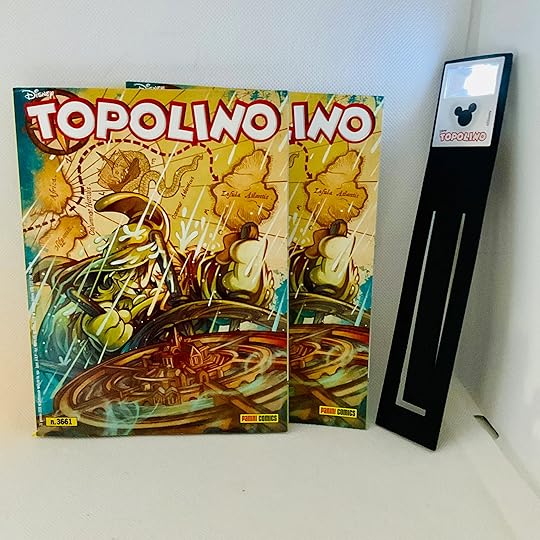
1 PAPERONE IN ATLANTIDE Storia e disegni di: Fabio Celoni
Tutto già visto e stravisto. Paperone parte per un viaggio, i nipoti lo vanno a cercare e questa dovrebbe essere la “grande storia osannata”? Atlantide è già stata affrontata in passato, eppure continuano a riproporre le stesse cose, sempre più noiose e fuori dalla logica del giornale. Si arriva perfino a una pagina che tenta goffamente di essere tragica, con tutti che affondano. Ovviamente segue l’articolo su Atlantide, come se ce ne fregasse qualcosa.
2 TOPOLINO E IL MISTERO DEL FONDATORE Storia di: Francesco Vacca Disegni di: Marco Mazzarello
Mi chiedo come riescano a essere così noiosi. Forse è davvero il caso di cambiare sceneggiatori. Scavi a Topolinia, fondatori, metropolitana: una sfilza di dialoghi interminabili, pseudo-scoperte e tentativi disperati di creare una trama quando le idee non ci sono. Ovviamente tutti felici per la metropolitana e, naturalmente, articolo sugli scavi cittadini. Ma è possibile fare storie senza articoli? Perché questi sono più noiosi delle storie stesse.
3 FILO, PAPEROGA & IL GOMITO DEL TENNISTA Storia di: Marco Bosco Disegni di: Francesco Guerrini
Ennesimo contenitore già visto e già dimenticato. Paperoga e Filo fanno un lavoretto, in questo caso consegnano una statua a un museo. Fine. La trama non esiste.
4 GAMBADILEGNO & SGRINFIA NEL GIARDINO D’INVERNO Storia di: Tito Faraci Disegni di: Davide Percoco
Altro contenitore stanco: Gambadilegno e Sgrinfia tentano un colpo tra battutine e confusione. A un certo punto sembra addirittura che si finisca in un’altra dimensione senza alcuna spiegazione logica. Solo caos, gag e zero trama.
5 PAPERINO PAPEROTTO E LA STELLA D’ARGENTO Storia di: Bruno Enna Disegni di: Federico Butticè
Uno dei contenitori più ridicoli e patetici che segnano la deriva di Topolino. Paperino Paperotto è Paperino bambino alle elementari, circondato da amici sbruffoni, insopportabili e brutti da vedere, che sanno sempre tutto loro. Gli adulti vengono sistematicamente dipinti come idioti, mentre questi piccoli “geni” risolvono casi improbabili. Storia infantile, ripetitiva, senza contenuti, adatta a lettori di tre anni.
Topolino ha persino lanciato “Il mio primo Topolino”: questa roba mettetela lì, e magari imparate finalmente a scrivere trame originali.
* Paperone in Atlantide Io purtroppo vendutissima già al solo concept perché ADORO il racconto su Atlantide di Platone, è uno di quelli che preferisco di più in assoluto del filosofo, quindi già partiamo con un grosso interesse. Devo dire che l’idea di base non è male e la storia ha ingranato da subito, l’unica pecca i colori che proprio non mi fanno impazzire ma non importa perché sono curiosa di vedere cosa succederà nella seconda parte.
* Topolino e il mistero del fondatore Molto carina la storia della fondazione di Topolinia ( se ne avevano già parlato in passato io di ricordi non ne ho ) e di come, ancora una volta, sia tutto stato risolto da Pippo e i suoi bis-bis!
* Filo, Paperoga e il gomito del tennista Filo e Paperoga fanno un danno dei loro e devono risolverlo, niente di innovativo ma almeno è corta.
* Gambadilegno & Sgrinfia e il giardino di inverno Se fosse stata più lunga e ci fosse stata una spiegazione per l’ipotetico viaggio spazio temporale avrei apprezzato sicuramente di più ma nel complesso fa il suo senza eccedere.
* Paperino Paperotto e la stella d’argento Io adoro Paperino, è il mio secondo personaggio preferito in assoluto ma la sua versione bambina mi risulta indigesta a livelli che non credevo possibile. Qui la maestra assegna loro un tema sul lavoro che vorrebbero svolgere da grandi e Paperino Paperotto si ritrova insieme allo sceriffo Marble a cercare di aiutarlo a superare il test delle stelle d’argento. Un susseguirsi di interventi da parte di tutta la banda, fraintendimenti e alla fine Paperino giunge alla conclusione che da grande non vuole lavorare. Beh, almeno è rimasto coerente.