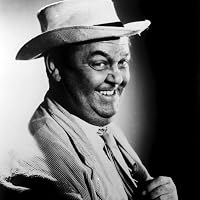
To the general public he is most known for the hit single "Ballad of the green berets"
After his musical career he decided to write a series of novels centered around the character "Casca Rufio Longinius" Who is cursed for piercing Jesus on the crucifix with a spear and is forced to forever remain a soldier until the Second Coming of Jesus Christ.
In the mid 1980s Sadler moved to Guatemala City where he was shot in the head one night in a taxi. He spent 7 months in a coma and died more than a year later.
What starts as a Casca adventure devolves into a history lesson on Attila the Hun which I ended up enjoying immensely. Very well written with enough action, intrigue, and exciting history to keep you turning the pages wanting to know more.
This one covers a lot of ground to have such a small page count.
Leaving Persia, Casca wants only to return to his native Rome. Christianity is now in vogue and the gladiatorial games have deteriorated into a spectacle of pain, misery, and depravity. Sick to his soul, Casca seeks refuge in his homestead in Germany. With the intervening years, everyone he knew is gone like so much dust. He freefalls into a primal state. But the outside world doesn't rest, and the Huns are on the move. Their leader, Attila, wants to carve up the rotten carcass that Rome has become.
Pain, depression, and madness. Living forever would take it's toll, Casca is still a human being.
Where will Casca go now?
Recommended!
P.S. Chapter breaks without being marked or properly spaced jars the pacing of the story.
So you just a soldier doing your job. You shove a spear tip into the side of this supposed messiah, except he is the real thing. He curses you to wander the earth till his return. Not bad right, immortality and all. Oh but he also curses you to be a soldier forever at war, never to know peace. This is the story of Casca the Roman legionnaire that stabbed Christ. Forever wandering the earth fighting one war after another. Great adventure series. Very recommended
There is a scene in this book where Attila the Hun and Aetius, the Roman commander, meet to parlay on the battlefield before the great battle of the book. Here Aetius taunts Attila with a vial of urine. This causes Attila to rage, which results in him making several mistakes on the battlefield. It is a great scene that ratchets up the tension and drama before the great battle. The only that is missing in this scene is Casca. He is not present in this scene. Throughout this book, we see a lot of major historical events happen and Casca is barely present. Casca tends to take a back seat to much of the action.
This book begins with Casca leaving Persia and the kingdom of Shapur II. Casca feels lost and has nowhere to go. He heads back to the Roman Empire, which at this point is on the verge of collapse with weak leaders and a lack of classical Roman virtues to hold things together. This historical period is the one of the most tremulous times in history as Alaric of the Visigoths attacks and sacks Rome. It breezes through this historical period and reads almost like an encyclopedia article. Where is Casca? He is a guard for Honorius the Roman Emperor and acts an observer during these historical events.
After Alaric the book focuses on Attila the Hun and his Chinese advisor Ch’ing Li. I kept wondering if there was some secret to this character. However, there wasn’t much of a payoff. The great battle in this book has Attila facing off against Aetius. Once again this is very well written section where we see Casca offer tactical advice.
I still enjoyed the book despite the lack of Casca and the breezy nature it goes through Roman history. What kept me interested was reading about the time period it took place. This book missed a great opportunity to have Casca do more to influence this historical period.
In The Damned, the year is 451 A.D., and the world is going clean to total hell. A terrifying fella named Attila the Hun—they call him the "Scourge of God"—is leading a massive, roaring swarm of barbarians straight into Europe, trampling everything in their path. Rome is weak, corrupt, and shaking in its sandals. So, who do they call to stiffen their spine? Our boy Casca. Casca hooks up with the brilliant Roman general Flavius Aetius, and they patch together a ragged army of Romans and Visigoths to make a final stand. They meet Attila's horde at the massive, bloody Battle of the Catalaunian Plains. Let me tell you, Sadler writes this clash so raw and heavy you can practically feel the ground shaking under your porch. It is shields splintering, horses screaming, and axes biting into bone. Casca is right in the thick of it, turning bad guys into mincemeat. But fighting the Huns is just the warm-up. A few years later, in 455 A.D., a nasty bunch called the Vandals roll right up to the gates of Rome itself. Casca is there for the legendary Sack of Rome, and it is a pure nightmare. The city is looted, the streets run red with blood, and Casca gets caught right in the gears of history crumbling to dust. What makes this book so good is the sheer tragedy of it. Casca remembers when Rome was the biggest, baddest empire on the block. Watching it get ripped apart by savages leaves him feeling empty, hollow, and more "damned" than ever before. It is a massive, epic historical smash-up that shows even the greatest empires eventually end up in the scrap heap.
In this seventh book in the series, Casca ends up losing himself for a while in a dark depression that sees him revisit the site of a previous book, Helsfjord, where he was lord of the keep and lived with a long time love, Lida. While there, Casca goes wild, but comes around when a young, wounded man asks for the ancient rites of hospitality. Casca rejoins the world of the living and seeing the threat that the Huns poses, ends up fighting for Rome again.
This book was a bit of a departure for others, in that Casca has no real love interest. Instead, he focuses on the war with the Huns and gives some advice from his time in Chin that helps win a great victory.
Succumbing briefly to the Plagie, Casca is brought back to the living snd his presence, a bit convenient for the writer, convinces Attila that if the Pope can bring dead men back to life, then he can't win, so he leaves Italy. At the end of the days, Attia's Chinese adviser, Ch'ing Li, ends up poisoning Attila, but is in turned killed as an offering to his spirit by the Hun leader's son.
This book flowed fairly well and didn't seem as rife with the editing errors that plagued (pun intended) previous Casca books.
As I said before, these are a great timewaster series that you can read at your leisure over a few days while doing other stuff. Goes elsewhere for intellectual stimulation if that is your main reason for reading.
I don't know if it was the Kindle version or if this occurs in all versions, but there were a lot of typographical errors. This did not take away from the story. I enjoyed it. Casca has an adventure that includes service in the Roman Legions, and he strategizes against the Huns led by Attila. There is not a lot of uniqueness to the story. Casca uses his vast experience and healing powers to his advantage as a soldier, protecting the people of Italy. Interesting is the character Ching Li who has a copy of Sun Tzu's The Art of War and advises Attila, bringing him much success...when he actually chooses to take the advice. Unfortunately, however, Attila's lust for victory leads to his demise when he fails to follow all of Ching Li's counsel. He overextends his troops and is later poisoned by his disappointed adviser. I think a rating of 2.5 stars is warranted, but awarding 3 stars is too much for the mediocre quality of writing along with the many typos.
In “Casca 07: The Damned,” Casca Rufio Longinus joins Attila the Hun’s army as they invade Europe in the 5th century AD. He meets Ching Li, a Chinese advisor who possesses a scroll with Sun Tzu’s “The Art of War”.
The book is an action-packed adventure that blends historical facts with fiction. The author portrays Casca as a cynical and weary warrior who seeks death but cannot find it. He also shows Attila as a ruthless and ambitious leader who wants to conquer the world. The book explores themes such as loyalty, betrayal, love, war and destiny.
This book is a good addition to the original 22+ books in the series (plus many more, so far a total of 57 written mostly by Tony Roberts), which follow Casca’s life from ancient times to modern days. It can be read as a standalone novel or in chronological order. Fans of historical fiction and military fiction may enjoy this book.
I found the book just as entertaining as the previous ones.
I had hoped to read this series in order, but the books are proving too difficult to find and are often crazy priced when I did find them in used book stores. So I decided to just read the two books I've been sitting on for a few years. Ok, having said that... The book was quite interesting, it read like a historical account for many chapters and was fairly accurate in many aspects. This particular book focusing on the late Western Roman Empire's slow death by barbarian invasions and inner rot. With special guests such as Alaric, Attila, Aetius and more! My favorite parts of this book and probably will be for others as well are the aspects around Cascas' immortality and his bouncing thru history as a soldier cursed to suffer forever in war. 3.25/5.
This is an interesting Casca book in the saga. It takes place right after the Persian when Casca ended with being burned to "death." While healing, he heads back towards Rome. One of the key events in this book is the meeting between Leo the Great and Attila. No one knows how Leo was able to turn the victorious Attila and his hordes back. Sadler gives a wonderful rationale!
Well . . . if you read my review of the last one, you'll remember I mentioned a discernible template in use by the author for these stories. Of course I did, because otherwise, this one wouldn't move away from that template.
In The Damned, the author moves away from the template *significantly*. It's not just Casca starts out low after his last adventure, Casca rises to prominence within the domain of a powerful figure, Casca falls in love again, Casca has to leave.
No, in this one, Casca (for a small part of the book) faces the isolation and madness that such an immortal is bound to face at one point or another. A large portion of the book is also about a different character completely, with much time spent on that character's trials and machinations. But more than anything, Casca is almost of secondary importance in this one, coming in behind the surprisingly accurate history lesson that ranges from Alaric to Attila.
It's an interesting read, and a nice change of pace from the author's standard story structure.
I learnt a bit of history from this such as when the Roman empire fell into decline and when Attilla the Hun rose to power, who the Gaul's were and other bits and bobs but the story itself was pretty middling and similar to all of the others so far. I expect the whole series is pretty much the same but I'll continue on with them regardless in the hope they get more exciting or interesting.