Old Earth is gone. Humanity has been scattered to the stars. Some left their dying planet in spaceship arks, in search of new worlds to inhabit. Others, nanoengineered for near-immortality, explore the far reaches of interstellar space in gargantuan macrolife mobiles.
An earth-like human society endures on the environmentally volatile planet of Tau Ceti IV—a rigid community of the faithful that has declared evil the science that caused the homeworld’s destruction. The Church is the absolute power here; obedience and belief the rule. But His Holiness Peter III, the New Vatican’s most powerful figure, himself harbors doubts, engendered by his love for his unacknowledged and illegitimate rebel daughter Josepha. And suddenly there is another assault on his tottering faith—and on the sacred traditions he has devoted his life to uphold. For an emissary, Voss Rhazes, has arrived from one of old Earth’s journeying mobiles—the first off-planet human visitor ever to Tau Ceti—bearing remarkable hated technology that could shred the fragile emotional fabric of a family . . . and bring devastating chaos to their world.
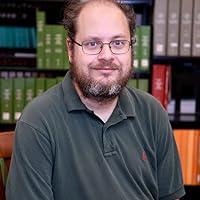
George Zebrowski was an American science fiction writer and editor who wrote and edited a number of books, and was a former editor of The Bulletin of the Science Fiction Writers of America. He lived with author Pamela Sargent, with whom he co-wrote a number of novels, including Star Trek novels. Zebrowski won the John W. Campbell Memorial Award in 1999 for his novel Brute Orbits. Three of his short stories, "Heathen God," "The Eichmann Variations," and "Wound the Wind," were nominated for the Nebula Award, and "The Idea Trap" was nominated for the Theodore Sturgeon Award.
I first encountered George Zebrowski last year in his 1975 novel *The Star Web*. It was published as a part of Harlequin's Laser Books line and wasn't very good, but I thought that was because it was only Zebrowski's second novel and could've been vandalized by Laser Books' editors to boot. Sadly, after reading this 1999 outing from him (which I picked up from the Midwest's science fiction Mecca because someone whose tastes I respect liked this book quite a bit and its aesthetic made me think it was going to be this cool, flavorful space opera thing that's write up my alley), I'm starting to think that Zebrowski just may not have been a very good novelist; *Cave of Stars* stitches too sets of themes together with inconsistent characters and just fell flat for me in pretty much every way. Your mileage may vary (some people who've read a lot more science fiction than I have still really like this book), but for me, well... let me tell you what it's really about before I complain.
*Cave of Stars* opens on Tau Ceti IV, where a human civilization stuck at an early-1900s level of technology exists under the rule of the church. We're quickly introduced to young Ondro, a failed revolutionary who, along with his brother Jason, has been exiled to an island with a bunch of other prisoners where the powers-that-be hope a tropical storm will raze them off the land and take care of their problem. One of their fellow revolutionaries, Josepha, was spared exile because her father - unbeknownst to her for most of her life - is His Holiness Peter III, who along with Prime Minister Paul Anselle, leads their little civilization and stops new technology from developing in fear that Tau Ceti IV will follow the same self-destructive course that Earth charted before Tau Ceti IV's settling. We come to find out that both Peter III and Paul have a lot of doubt about their faith, but they're both too afraid to tell others about it. We get a lot of tedious internal musings on the role of faith and some crap like that throughout this first part, which is for a moment only exemplified by the arrival of a mysterious celestial object: a macrolife mobile, a star-faring habitat with more inhabitable space than that of a planet, charted by humans who descended from some other macrolife mobile. They've arrived to offboard some societal outcasts and get other people resources so they can make their own separate mobile, but Peter III is only really interested in one of their offerings: ...
I love a good exploration of religion in a science fictional context, but I find it hard for writers - especially more liberal writers focused on science - to really grapple with religion in an earnest way without waving it off as stupid superstition that people should know better than to follow. Personally, while I'm agnostic, I don't believe that humanity would've gotten to where it is today without religion, and I still find that the moral underpinnings and sense of community that it provides is essential to how human society works. That's a view I don't know if I've ever seen portrayed in science fiction, but Zebrowski does actually make use of it a few time here, which was really nice to see. But - that being said - the way that he displayed this argument was weak and unconvincing because he doesn't have a single character who believes the religion that they preach. Both of our establishment characters - Peter III and Voss - are full of doubt and guilt, and there's just no counterpoint (whether that'd be an everyday person or a true member of the clergy) to make the arguments engaging. Not to mention the fact that whatever good and earnest points Peter III and Voss brought up in their heads were surrounded by a bunch of other mental junk that was repeated over and over again about guilt and the suppression of technology for centuries... this is not an equal debate over the merits of religion, and even to call it a debate instead of an overwrought lecture would be generous. But, in the name of getting on with it, I digress...
After ...
To keep things spoiler-free, this book's plot changes pretty severely about halfway through when a tedious exploration of religion becomes a slightly less tedious disaster/survival/culture clash story. It reminds me a lot of the James P. Hogan novel *Cradle of Saturn* in that way, which started off with earthbound humans meeting their cosmic descendants for the first time before the entire Earth gets destroyed in some ridiculous scenarios. *Cave of Stars* is better written than that one, but it still suffers from the same fundamental whiplash. I mean, I wasn't sad to be rid of the hand-wringing exposes on the nature of Tau Ceti IV faith, but when the plot changed, Zebrowski really lost any grip on his characters that he'd had before. It was really hard to find and care about their motivations, especially Josepha's, who despite filling the role of the book's main character, had a fuzziness and film of unreality about her actions and undiscernible relationships with men that made it hard to root for her. Somehow, I think that Paul and Jason had the best arcs in the book... at least they had endings which aligned with their respective sense of duty. I just... wasn't impressed by much of anything on this front.
At the end of the day, I think this book's biggest crime is its lack of flavor. I've found a lot of books this year that have a strong sense of flavor, like Lavie Tidhar's *Central Station*, and I'm starting to think that a sense of flavor is had when a story's characters and its plot only make sense within the world that the author creates and the prose style that they use. This doesn't mean that no one else could possibly write *Central Station*, but that it has a sense of originality and a sense of wonder to it that sets it apart from the vast majority of other SF novels I've read. Cut me a little bit of slack on that explanation - this is my first time explaining it - but I suppose I bring it up because I don't believe that *Cave of Stars* has flavor. It's set on an alien world which seems to lack any native flora or fauna worth mentioning, and the herky-jerky plot and character arcs that happen inside of it seem like they could've been a part of any late 90s science fiction novel without a clear sense of self. The macrolife mobile could've been really cool and original, but beyond tropes like and the generically named "Link," he really only paid lip service to a couple of genetically engineered strains of humans before moving on with dull passages about futuristic humans acting just like people did in the 90s who show no visual response to the mind-altering things that occur. It's just routine and unexciting. Zebrowski is a fine writer who can write a nice sentence and flow some ideas together in cool ways, but his technical proficiency is really just the standard of the 90s, and nothing worth praising him too much about. Fine, even good writing, but with no standout foundation to stake his half-formed ideas on; that's my judgement of *Cave of Stars*, and I can only hope that the rest of his oeuvre isn't as uninspiring.
I will give Zebrowski a few more tries - *Macrolife* (which takes place hundreds of years before *Cave of Stars*), *Brute Orbits*, and *The Killing Star* all seem worth a while - but *Cave of Stars* is going to join *The Star Web* in my list of disappointments as I only find less and less good things to say about it the further out I get from reading it. Because Zebrowski is a fine writer and brings some interesting sentiment about religion's usefulness to light I'm giving him a high 5/10, but otherwise I'm feeling a bit brutal about it this morning, so... there you go. I'm sure I'll meet Zebrowski again, but it might take more than a year for me to get back to him after this one because I was so excited for it beforehand (if I went in without expectations it probably would've made it out with a 5.5/10). Thanks for listening to me complain, and here's hoping that the next time our paths meet, I bring tidings with more joy...
When the human diaspora left a dying Earth it went in two ways, using giant modified asteroids as habitats, run by an AI Link, the combination known as Macrolife; and as settlement ships, designed to reach a habitable planet and land there. When a Macrolife orbital reaches the settled planet Ceti IV after three centuries, they are keen to make contact but do not fully comprehend the consternation their visit has caused. Ruled by a Catholic-based religious hierarchy, the discovery that the residents of the orbital ship are extremely long-lived due to medical technology, causes a crisis of conscience with the aging Pontiff, who must weigh his afterlife soul with continued wordly existence. A crisis he fails, and in his humiliation he lashes out with a centuries-old weapon lying dormant on the starship they used to reach Ceti IV, still in orbit. When the Macrolife orbital takes the old starship on board, the Pontiff triggers the weapon, destroying most of the orbital, and putting it into a collision course with the planet. The orbital is a hundred kilometres long and a strike would be an extinction-level-event for both Ceti IV and the Macrolife orbital. George Zebrowski examines the power of jealousy and hate in this entertaining, if rather depressing book. The struggle to avoid impact and the preparations for what happens after is the core of the tale.
I read this because I was interested in an advanced civilzation encountering one struggling to develop. The other plus was a how a theocracy keeps the lights turned down. I did not think Zebrowski analyzed the religious themes as well as he could and the clash of cultures didn't really happen because the the story only delt with main characters not your average citizen.
It is a book of two halves and I will not spoil why. Suffice to say there is a disaster on the habitat that brought the advanced humans to the backward world. The book then devotes much of it effort to dealing with how the survivors cope. Less so on adavanced people dealing with the people from the planet in arrested development that make it on board the visitors ships.
Clever writing at times and some excellent prose but it misses the opportunity to be very good with a wandering plot.
The first hundred pages of this book are a bit slow, but shortly after that there’s a stunning plot twist, and the rest of the book is far more exciting.
A utopian Mobile habitat contacts a backwards planet-bound theocracy with world shattering results in the exciting sequel to Macrolife. Top notch Space Opera.
I'd hoped for a thoughtful consideration of science and religion, of divergent societies meeting and inherent conflict, but instead I got a boneheaded plot twist and a lot of disaster porn. No sir.
This book started out a little slow, but really picked up steam toward the middle. Be forewarned...the atheism vs. religion is pretty thick, and you can quickly tell which side of the fence the author lies on. However, I thought most of the arguments were valid, and the conflict was presented in such a light as to make it plausible. There isn't a ton of character development, but they are consistent with themselves and believable as well.