

What do you think?

Redneck Apocalypse #1
Halo Bound
Alternate cover edition of ASIN B00IJJBHDI
The holy champion chosen to save the world is enslaved to a sadistic fallen angel and losing the battle for his sanity.
The guy chosen to save the holy champion is his binge-drinking redneck brother.
So, basically, the world is screwed.
Meet the Whitney boys:
Colt—a mentally unstable holy soldier with a rapidly deteriorating hold on reality. His last plan to rid the world of evil either failed horribly or went off without a hitch. With the constant torture and brainwashing, it's getting hard to be sure of anything but the sick attachment he's developing to his beautiful tormentor.
Tough—a smart-mouthed honky-tonk hero trying to drown his problems in music, women, and good times. He hasn't spoken to Colt in five years—not since their disagreement over a nymphomaniac vampire turned into a drunken slugfest—but they're still brothers. Tough knows he can't leave Colt fighting for his life and his sanity alone. The question is whether Tough can fight off his personal demons long enough to save Colt from the literal ones.
The holy champion chosen to save the world is enslaved to a sadistic fallen angel and losing the battle for his sanity.
The guy chosen to save the holy champion is his binge-drinking redneck brother.
So, basically, the world is screwed.
Meet the Whitney boys:
Colt—a mentally unstable holy soldier with a rapidly deteriorating hold on reality. His last plan to rid the world of evil either failed horribly or went off without a hitch. With the constant torture and brainwashing, it's getting hard to be sure of anything but the sick attachment he's developing to his beautiful tormentor.
Tough—a smart-mouthed honky-tonk hero trying to drown his problems in music, women, and good times. He hasn't spoken to Colt in five years—not since their disagreement over a nymphomaniac vampire turned into a drunken slugfest—but they're still brothers. Tough knows he can't leave Colt fighting for his life and his sanity alone. The question is whether Tough can fight off his personal demons long enough to save Colt from the literal ones.
345 pages, Kindle Edition
First published February 19, 2014
About the author
Eden Hudson
55 books325 followersI am being forced against my will by Goodreads to have a capital E at the beginning of my name, even though the correct spelling is "eden." So there's that.
But also . . .
I am invincible. I am a mutant. I have 3 hearts and was born with no eyes. I had eyes implanted later. I didn't have hands, either, just stumps. When my eyes were implanted they asked if I would like hands as well and I said, "Yes, I'll take those," and pointed with my stump. But sometimes I'm a hellbender peeking out from under a rock. When it rains, I live in a music box.
But I'm also a tattoo addict, coffee junkie, drummer, and aspiring skateboarder. Jesus actually is my homeboy.
But also . . .
I am invincible. I am a mutant. I have 3 hearts and was born with no eyes. I had eyes implanted later. I didn't have hands, either, just stumps. When my eyes were implanted they asked if I would like hands as well and I said, "Yes, I'll take those," and pointed with my stump. But sometimes I'm a hellbender peeking out from under a rock. When it rains, I live in a music box.
But I'm also a tattoo addict, coffee junkie, drummer, and aspiring skateboarder. Jesus actually is my homeboy.
Ratings & Reviews
Friends & Following
Create a free account to discover what your friends think of this book!
Community Reviews
Displaying 1 - 30 of 53 reviews

November 8, 2014
A writer is onto something when they put out work that is so specifically to their personal taste, sensibility, tone and style that only they could have written it. Well, here it is. Out of all of the people in the history of the damn world, only eden Hudson could have written this book.
I've read a lot of books. I've never read anything like this.
It's distinct. It's engrossing. It's genuinely strange (in the haunting, striking good way.) Many times I felt like I could feel the force, the sheer desperation with which this was imagined. Under the surface, there is such intensity, angst and anguish.
This universe is unique, and it's all rendered so vividly that I was bewildered at times, especially as I eased into things. And I mean bewildered as a compliment. This author has such a weird, dark world living in her head. There's enough storytelling ambition here to border on intimidating.
Speaking of the opening, I wouldn't call it slow, but I can imagine some readers could find it jarring. This is a new flavor, an acquired taste that takes a few chapters to really understand and appreciate. Keep going. It keeps getting better and better throughout, and the final 60 pages are a hell ride where all of the storytelling pieces click into place in a way that's equal parts stimulating and satisfying.
But perhaps I've made it all sound too serious in a way. Is it serious? Yes. It's not some wish fulfillment crap story. There are ugly moments and painful ones. But it has fun and funny scenes, too.
The plot careens in directions no one could have guessed at the outset, and these events are executed in interesting ways. In fact, my favorite part of the book is just after a major twist around the halfway point. A new deadpan viewpoint character takes on a bigger role as we see the first consequences of a life-altering choice unfold, and for some reason that chunk fully locked in my affection for this weird universe. Bringing in that detached voice right at that dramatic moment was just awesome.
But when I think back on the book, I think first of the vulnerability and grief of the main characters, each damaged in their own way, for their own reasons. I think of the violent desperation the whole thing reeks of, this balance of fragility and darkness that keeps bubbling up between the lines. It's something special.
Hudson's confidence will only grow from here. Her assurance in her work will only strengthen as she realizes what she has. And I'm excited to read more and more.
I've read a lot of books. I've never read anything like this.
It's distinct. It's engrossing. It's genuinely strange (in the haunting, striking good way.) Many times I felt like I could feel the force, the sheer desperation with which this was imagined. Under the surface, there is such intensity, angst and anguish.
This universe is unique, and it's all rendered so vividly that I was bewildered at times, especially as I eased into things. And I mean bewildered as a compliment. This author has such a weird, dark world living in her head. There's enough storytelling ambition here to border on intimidating.
Speaking of the opening, I wouldn't call it slow, but I can imagine some readers could find it jarring. This is a new flavor, an acquired taste that takes a few chapters to really understand and appreciate. Keep going. It keeps getting better and better throughout, and the final 60 pages are a hell ride where all of the storytelling pieces click into place in a way that's equal parts stimulating and satisfying.
But perhaps I've made it all sound too serious in a way. Is it serious? Yes. It's not some wish fulfillment crap story. There are ugly moments and painful ones. But it has fun and funny scenes, too.
The plot careens in directions no one could have guessed at the outset, and these events are executed in interesting ways. In fact, my favorite part of the book is just after a major twist around the halfway point. A new deadpan viewpoint character takes on a bigger role as we see the first consequences of a life-altering choice unfold, and for some reason that chunk fully locked in my affection for this weird universe. Bringing in that detached voice right at that dramatic moment was just awesome.
But when I think back on the book, I think first of the vulnerability and grief of the main characters, each damaged in their own way, for their own reasons. I think of the violent desperation the whole thing reeks of, this balance of fragility and darkness that keeps bubbling up between the lines. It's something special.
Hudson's confidence will only grow from here. Her assurance in her work will only strengthen as she realizes what she has. And I'm excited to read more and more.

September 6, 2020
I just popped my eden Hudson cherry.
I was going to leave my review at that, because it looked cool enough as is. But I shall continue!....
I just popped my eden Hudson cherry, and not one single regret. DAMN! Why did it take me so long to pick up an eden Hudson novel? I have enough of them.
I was easily caught up in the world. A very dark, urban fantasy world. The characters were fantastic, especially Colt. He had layers of personality that became easily to get absorbed in. I especially loved the darkness in the characters. And there's no denying the feeling of hopelessness, even when the characters are trying for the best, their personalities are too dark to stay on the happily ever after track.
Addictive, enslaving, and dark read. This urban fantasy packed a solid punch.

March 1, 2015
I seriously considered creating a new bookshelf to classify this entertaining odd-ball read. An epic battle between good and evil has the forces of good dependent on Tough, a mute vocalist and a self-proclaimed screw-up; his seriously whacked older brother Colt; and a painfully introverted geek, Desty.
Fast paced with occasionally jolting shifts in perspective, Halo Bound careens from suspense (who are the people and what is going on?) to romance between Desty & Tough, to action complete with fallen angels and flaming swords. When I wasn't grinning at the funny bits, I was riveted by the story progress.
I will definitely read the sequel.
Fast paced with occasionally jolting shifts in perspective, Halo Bound careens from suspense (who are the people and what is going on?) to romance between Desty & Tough, to action complete with fallen angels and flaming swords. When I wasn't grinning at the funny bits, I was riveted by the story progress.
I will definitely read the sequel.
January 7, 2015
I want more please

January 10, 2015
What the hell did I just read?! This book is crazy in the best possible way! and I was expecting a typical quick and easy read :-) silly girl.

January 30, 2015
I feel as though I've just read the script for a Vampire Diaries episode, guest-written by Poppy Z Brite. Hudson nails down the frenetic 20-something vibe, and the setting is undeniably rural and southern (having grown up in Texas, I can vouch). Pain, violence and anguish are as deftly delineated as new love, foolish hope and stupid stubbornness. The main characters are well-rounded, and even when (especially when?) they make stupid, stupid choices, you're rooting for them to somehow make it through to the other side, relatively intact.
Hudson also showed some guts in a couple of technical aspects: First, she drops you right into the middle of both the plot and the setting, and while she offers enough breadcrumbs along the way to get you caught up if you pay attention, it was a bold choice to trust her readers to be intelligent and patient enough to do so. It was a choice that I appreciated, and it added to my enjoyment of the book. Second, she tells her story from multiple first person points of view. Frankly, many people hate first person, and many more hate shifting POVs. Hudson did it her way, and in my opinion, it worked.
There is no such thing as a perfect book. This one is not perfect. Mid-book, the plot got a bit saggy for me, and there were a few plot points that were a little tired and foreseeable. But on the whole, this book was refreshing both in tone and content, and I'd be happy to recommend it.

January 18, 2015
This is such a weird novel, but it was wonderful. Tough might be my favorite character ever. I don't know why, but I loved everything about him. Even when he made bad choices or fucked up, I still loved him, and that he couldn't talk made everything better, I think.
The names were weird without everything being a big deal, and the whole fallen angels (and vampires and sirens) thing was done pretty casually. The author didn't go to great lengths to info dump the whole situation in the first chapter, but instead revealed it all at a natural pace.
The plot and information is really deeply woven. There's a lot going on.
I HATE religious themed things or anything that has anything to do with religion. I had to put down a book about fallen angels and stuff that had good reviews for that reason, because it was so heavy on the god stuff. This book somehow doesn't come off that way to me. God was more of a plot device than someone shoving religion at you, which is how it should read when writing non-religious fiction.
It's a cliff-hanger. *pouts* Not that I won't be happy to buy it. I'd have bought the paperback version of this one if it was available (and if I had any money).
Like I said, the author doesn't rush to explain everything. I think this might throw off a lot of readers, but in the end, the book was still fabulous.
The names were weird without everything being a big deal, and the whole fallen angels (and vampires and sirens) thing was done pretty casually. The author didn't go to great lengths to info dump the whole situation in the first chapter, but instead revealed it all at a natural pace.
The plot and information is really deeply woven. There's a lot going on.
I HATE religious themed things or anything that has anything to do with religion. I had to put down a book about fallen angels and stuff that had good reviews for that reason, because it was so heavy on the god stuff. This book somehow doesn't come off that way to me. God was more of a plot device than someone shoving religion at you, which is how it should read when writing non-religious fiction.
It's a cliff-hanger. *pouts* Not that I won't be happy to buy it. I'd have bought the paperback version of this one if it was available (and if I had any money).
Like I said, the author doesn't rush to explain everything. I think this might throw off a lot of readers, but in the end, the book was still fabulous.

March 2, 2015
Deep breath in...... and out, I just need to take a brief moment to slow my brain activity down, I have just dragged myself out of this sometimes frantic, fast paced ride that took some twisted paths whilst also mainting a constant torchlight of hope amidst the dark. Babbling are we Lou?, YES I think I might be, you see my brain feels slightly scrambled but in a delicious "these are the best eggs" kinda way.
To translate for those that don't speak babble - this book was bloody awesome!
There are a few different elements of this book that, added all together, gave me a reading experience that I am not quite sure I have had before, and I read quite alot.
eden Hudson's style is, different and not a bad different. The changes in POVs and the 'flow' of the book felt alien to start with (not uncomfortable at all just not your typical flavour!) but I was soon settled into the enjoyable rhythm and felt easy with it, somewhere between 30% and 40% of the way in the story really hits it's pace and I had trouble putting it down.
Add too that Tough has to be my favourite anti hero ever! Even when he is being a git. If Desty goes to Kathan I will kick her fictional backside! Every character has really taken shape in my head, they had voices that came through the page at me and I love it when that happens!
I hope the next in the series is more of the same.
To translate for those that don't speak babble - this book was bloody awesome!
There are a few different elements of this book that, added all together, gave me a reading experience that I am not quite sure I have had before, and I read quite alot.
eden Hudson's style is, different and not a bad different. The changes in POVs and the 'flow' of the book felt alien to start with (not uncomfortable at all just not your typical flavour!) but I was soon settled into the enjoyable rhythm and felt easy with it, somewhere between 30% and 40% of the way in the story really hits it's pace and I had trouble putting it down.
Add too that Tough has to be my favourite anti hero ever! Even when he is being a git. If Desty goes to Kathan I will kick her fictional backside! Every character has really taken shape in my head, they had voices that came through the page at me and I love it when that happens!
I hope the next in the series is more of the same.

December 11, 2014
I have to say that this book has been in my TBR list for a while and I was surprised of how good it is. At the beginning I felt it off with so many POV that I thought it was going to be a mess. Imagine my surprise when I just kept going and everything started to make sense. I really enjoy how the author was able to tell a story from the perspective of all the characters without being repetitive. They continue where the other one left and it added a lot to the story. So many things are happening that are related in some way that it feels right to read it from all.
I was wishing it'd end here, but I knew that another books was needed. I'm really looking forward to know what's going to happen and eve when Tough is a DB, I want him happy. I want Colt to find peace with himself, Tiffani comfort and Desty, well I want her happy even when she got on my nerves some times.
Really good book if you're into crazy paranormal stories that start making no sense but being awesome once you give it a chance.
I was wishing it'd end here, but I knew that another books was needed. I'm really looking forward to know what's going to happen and eve when Tough is a DB, I want him happy. I want Colt to find peace with himself, Tiffani comfort and Desty, well I want her happy even when she got on my nerves some times.
Really good book if you're into crazy paranormal stories that start making no sense but being awesome once you give it a chance.
June 29, 2014
As to avoid being all spoilery I shall be brief.
This was an entertaining read. I laughed (even though he can't speak, Tough is one funny bastard), I fumed (mostly at Desty, I hope in book 2 she'll grow a set of balls), and I generally felt a connection with the characters. As a series there's more than enough foundation for the next books to be even better than HTKYST... And I really enjoyed book 1 so that's a ringing endorsement.
Besides, with a name like The Red Neck Apolcalypse, what's not to love?
Overall I say- Go forth and read!
(It's free on kindle- what is there to lose! ?)
This was an entertaining read. I laughed (even though he can't speak, Tough is one funny bastard), I fumed (mostly at Desty, I hope in book 2 she'll grow a set of balls), and I generally felt a connection with the characters. As a series there's more than enough foundation for the next books to be even better than HTKYST... And I really enjoyed book 1 so that's a ringing endorsement.
Besides, with a name like The Red Neck Apolcalypse, what's not to love?
Overall I say- Go forth and read!
(It's free on kindle- what is there to lose! ?)

January 16, 2015
WOW
This book is so unique and weird, in a good way, it absolutely held my interest. This story is set in a sort of parallel universe that includes the NP's or, Non People such as fallen angels, vampires, witches, etc and of course, People. What goes on in this universe is fascinating and mind boggling that I won't even try to explain what the story is about. It took some adjustments in my mind to follow the first few chapters but once I made the adjustments, I went on an amazing ride! At the end of the book I was left spent, and wanting more, please, more!
This book is so unique and weird, in a good way, it absolutely held my interest. This story is set in a sort of parallel universe that includes the NP's or, Non People such as fallen angels, vampires, witches, etc and of course, People. What goes on in this universe is fascinating and mind boggling that I won't even try to explain what the story is about. It took some adjustments in my mind to follow the first few chapters but once I made the adjustments, I went on an amazing ride! At the end of the book I was left spent, and wanting more, please, more!

March 26, 2018
Publishing Date: February 2014
Publisher: The River Pirate Alliance
ASIN: B00IJJBHDI
Genre: Fantasy
Rating: 4.6/5
Publishers Description: The holy champion chosen to save the world is enslaved to a sadistic fallen angel and losing the battle for his sanity. The guy chosen to save the holy champion is his binge-drinking redneck brother. Meet the Whitney boys: Colt—a mentally unstable holy soldier with a rapidly deteriorating hold on reality. Tough—a smart-mouthed honky-tonk hero trying to drown his problems in music, women, and good times.
Review: You never know what you are going to get with this author. Stunted exchanges limping along a wilted story line or fleeting brilliance that dazzles in creative splendor. Take for instance the Jubal Van Zandt series. The first novel was really good and imparted this dry wit that was clever at every turn. Then this slow slide into a boring character that was no longer funny whom began to reek of disappointment and patterned motives.
In Halo Bound, this novel starts off with a bang and never stops the roller coaster ride of creative inventiveness coupled with sublime world building and grand characterization. At times, this novel wallowed in the morass that is YA, but was rendered palatable by scenes that shifted away from the usual romance tropes and into varied individual character development with chapters covering their points of view. Really brilliant writing.
So here is to Eden and a spectacular start to a series with two others rounding it out. I have not read them yet but hopefully Eden will send me the free links once my nose leaves her butt.
You can read my other reviews, HERE
Publisher: The River Pirate Alliance
ASIN: B00IJJBHDI
Genre: Fantasy
Rating: 4.6/5
Publishers Description: The holy champion chosen to save the world is enslaved to a sadistic fallen angel and losing the battle for his sanity. The guy chosen to save the holy champion is his binge-drinking redneck brother. Meet the Whitney boys: Colt—a mentally unstable holy soldier with a rapidly deteriorating hold on reality. Tough—a smart-mouthed honky-tonk hero trying to drown his problems in music, women, and good times.
Review: You never know what you are going to get with this author. Stunted exchanges limping along a wilted story line or fleeting brilliance that dazzles in creative splendor. Take for instance the Jubal Van Zandt series. The first novel was really good and imparted this dry wit that was clever at every turn. Then this slow slide into a boring character that was no longer funny whom began to reek of disappointment and patterned motives.
In Halo Bound, this novel starts off with a bang and never stops the roller coaster ride of creative inventiveness coupled with sublime world building and grand characterization. At times, this novel wallowed in the morass that is YA, but was rendered palatable by scenes that shifted away from the usual romance tropes and into varied individual character development with chapters covering their points of view. Really brilliant writing.
So here is to Eden and a spectacular start to a series with two others rounding it out. I have not read them yet but hopefully Eden will send me the free links once my nose leaves her butt.
You can read my other reviews, HERE
February 24, 2015
This review can also be found on my blog.
Side Note: I read the Kindle version (How to Kill Yourself in a Small Town), but plan on buying the hardback (Halo Bound) as soon as my paycheck hits my pockets.
Review:
a.) Characters: 5/5 score. If I could describe these characters any better, I would, but the synopsis does a damn good job. I was absolutely blown away by every character that was in this book. There was minimal explaining, no info dumping. They just WERE. And it was amazing. You get a peek inside a couple of different character’s heads, and I found Tough to be one of my favorite. But if I am to be honest, it’s hard to pick a favorite with such a wonderfully written characters.
b.) Plot: 4/5 score. When I first started reading, I thought I may have jumped in the middle of the series. This concerned me. I almost planned on putting it back and picking something else to read. Once it was confirmed that I was indeed reading the first book (I sent the author a DM on Twitter), I tore through it. It was fresh, and dark, and twisted, and it was believable. I believed this world she weaved, how it ended up where it began, and where she left it off.
c.) Writing style: 5/5 score. I have to say, I found nothing about her writing style that upset me. Normally there is always something that catches my attention or something I pick up that will irritate me. Call it my inner editor or critic or demon, but sometimes the simplest things will have me turning my nose up. I am pleased to say, I simply melted into this story and didn’t surface until I realized HOLY SHIT IT’S A SERIES THERE IS A SECOND ONE OMG WHEN I NEED IT NOW!
Rating: 14/15 total
Star System:
13-15 score = 5 Stars
10-12 score = 4 Stars
7-9 score = 3 Stars
4-6 score = 2 Stars
1-3 score = 1 Stars
No score = No Stars
Side Note: I read the Kindle version (How to Kill Yourself in a Small Town), but plan on buying the hardback (Halo Bound) as soon as my paycheck hits my pockets.
Review:
a.) Characters: 5/5 score. If I could describe these characters any better, I would, but the synopsis does a damn good job. I was absolutely blown away by every character that was in this book. There was minimal explaining, no info dumping. They just WERE. And it was amazing. You get a peek inside a couple of different character’s heads, and I found Tough to be one of my favorite. But if I am to be honest, it’s hard to pick a favorite with such a wonderfully written characters.
b.) Plot: 4/5 score. When I first started reading, I thought I may have jumped in the middle of the series. This concerned me. I almost planned on putting it back and picking something else to read. Once it was confirmed that I was indeed reading the first book (I sent the author a DM on Twitter), I tore through it. It was fresh, and dark, and twisted, and it was believable. I believed this world she weaved, how it ended up where it began, and where she left it off.
c.) Writing style: 5/5 score. I have to say, I found nothing about her writing style that upset me. Normally there is always something that catches my attention or something I pick up that will irritate me. Call it my inner editor or critic or demon, but sometimes the simplest things will have me turning my nose up. I am pleased to say, I simply melted into this story and didn’t surface until I realized HOLY SHIT IT’S A SERIES THERE IS A SECOND ONE OMG WHEN I NEED IT NOW!
Rating: 14/15 total
Star System:
13-15 score = 5 Stars
10-12 score = 4 Stars
7-9 score = 3 Stars
4-6 score = 2 Stars
1-3 score = 1 Stars
No score = No Stars

January 29, 2015
Wow.. this book was super hard to put down. I’m pretty sure my kids had to pry it from my hands in order for me to make dinner.
At first I was confused but intrigued so I pushed on and the whole wonderful dark story unfolds. Even though I say its dark and honestly gruesome at some points there was some great lighthearted funny parts that bring some light into the serious stuff.
It was told from many points of view but done so in a way that just seemed to make the story so much better. The characters were wonderfully flawed and you couldn’t help but like Tough. I couldn’t help liking Mikil for how horrible and twisted she is.
There so much into this crazy story and it all just comes together so wonderfully. Great twists and action. The setting seems like any small town except with paranormal and the paranormals don’t even stand out they’re just there ( not sure if that made sense but it does to me).
This is a book that has me kind of at a lost for words trying to tell you how much I enjoyed it. I just want to be like YES, you should read this crazy awesomeness and just read it because I found it amazing, but don’t read it if you’re looking for ‘drool worthy’ vampires or other ’swoon worthy’ paranormal characters. These vampires are cruel even when the don’t want to be,The holy warriors are damaged possibly beyond repair and the fallen angels are vile but they are just perfect for this story. This isn’t a story that leaves you with a ‘awww how sweet’ feeling at the end it left me with a “holy sh*t! what? Why did it end? I want more!”.
Its a crazy page turning thrill ride. With the twists, action and characters you can’t help but keep reading and being excited for what might happen next.
At first I was confused but intrigued so I pushed on and the whole wonderful dark story unfolds. Even though I say its dark and honestly gruesome at some points there was some great lighthearted funny parts that bring some light into the serious stuff.
It was told from many points of view but done so in a way that just seemed to make the story so much better. The characters were wonderfully flawed and you couldn’t help but like Tough. I couldn’t help liking Mikil for how horrible and twisted she is.
There so much into this crazy story and it all just comes together so wonderfully. Great twists and action. The setting seems like any small town except with paranormal and the paranormals don’t even stand out they’re just there ( not sure if that made sense but it does to me).
This is a book that has me kind of at a lost for words trying to tell you how much I enjoyed it. I just want to be like YES, you should read this crazy awesomeness and just read it because I found it amazing, but don’t read it if you’re looking for ‘drool worthy’ vampires or other ’swoon worthy’ paranormal characters. These vampires are cruel even when the don’t want to be,The holy warriors are damaged possibly beyond repair and the fallen angels are vile but they are just perfect for this story. This isn’t a story that leaves you with a ‘awww how sweet’ feeling at the end it left me with a “holy sh*t! what? Why did it end? I want more!”.
Its a crazy page turning thrill ride. With the twists, action and characters you can’t help but keep reading and being excited for what might happen next.

February 19, 2015
A story isn't worth writing about unless it destroys characters, gives unpredictable outcomes, and causes troubled emotion in the reader. This did that.
Halo Bound takes place in an alternate universe, in a small redneck town, called Halo, populated by humans and mythical creatures, or non-persons (NPs). It pieces together a devastating history about a war on Earth that started with fallen angels and its aftermath.
One law of the town is people in Halo cannot leave. Another law is humans have to be assigned to a NP and do whatever they say. (So, they're slaves. I don't think that's ever stated so plainly though.) In return the humans (if not slaves, I loosely consider them pets) are protected by whichever NP they are assigned to.
So, there are angels in Halo and they're evil, over-consuming, relentless dictators that will stop at nothing to make the lives of a chosen few literally a living hell. These chosen few are a religious family called the Whitneys. The current Whitney generation (what's left of them) were trained by their father, a preacher, to fight these angels at a young age. BTW, Hudson did an amazing job describing the fight scenes.
My ramble:
I would love to see different reactions of people who saw an angel for the first time and then discover they're just evil. I wonder what zombies need from their person. Are there werewolves? They were mentioned a few times. What are the habits of a fairy? Do you know how a vampire is made? I mean really made. If you're thinking of Twilight, I feel sorry for you. In Halo Bound, the real method and result of making a vampire is explained and completely new to me. It's not pretty.
Halo Bound takes place in an alternate universe, in a small redneck town, called Halo, populated by humans and mythical creatures, or non-persons (NPs). It pieces together a devastating history about a war on Earth that started with fallen angels and its aftermath.
One law of the town is people in Halo cannot leave. Another law is humans have to be assigned to a NP and do whatever they say. (So, they're slaves. I don't think that's ever stated so plainly though.) In return the humans (if not slaves, I loosely consider them pets) are protected by whichever NP they are assigned to.
So, there are angels in Halo and they're evil, over-consuming, relentless dictators that will stop at nothing to make the lives of a chosen few literally a living hell. These chosen few are a religious family called the Whitneys. The current Whitney generation (what's left of them) were trained by their father, a preacher, to fight these angels at a young age. BTW, Hudson did an amazing job describing the fight scenes.
My ramble:
I would love to see different reactions of people who saw an angel for the first time and then discover they're just evil. I wonder what zombies need from their person. Are there werewolves? They were mentioned a few times. What are the habits of a fairy? Do you know how a vampire is made? I mean really made. If you're thinking of Twilight, I feel sorry for you. In Halo Bound, the real method and result of making a vampire is explained and completely new to me. It's not pretty.
March 24, 2015
Too much POVs. At first it's super confusing and I thought about not finishing it. But, if you get past that, it's not bad.
I loved Jax... so one of the missing stars of my rating is because eden Hudson decided to (SPOILER HERE) kill him. NOT COOL, EDEN!
I think I'm going to stick with this saga, but just for Colt. He's so messed up that it's really interesting his story. Tough is cute too, but I had to roll my eyes at some of his decisions. So, all in all, I hope to get my hands on the next installment :)
I loved Jax... so one of the missing stars of my rating is because eden Hudson decided to (SPOILER HERE) kill him. NOT COOL, EDEN!
I think I'm going to stick with this saga, but just for Colt. He's so messed up that it's really interesting his story. Tough is cute too, but I had to roll my eyes at some of his decisions. So, all in all, I hope to get my hands on the next installment :)
May 7, 2015
Rednecks Vs Fallen Angels
I am fascinated about this story. I do wish there had been a prequel to set up what was going on. Although I did get most of my questions answered by reading the story.
The characters are raw, hurting and strangely loyal to each other. This is a series and this story doesn't end with a cliffhanger, but it does leave everything and everyone at a crossroad.
Really looking forward to what the redneck Whitney boys are going to do to the fallen angels.
I am fascinated about this story. I do wish there had been a prequel to set up what was going on. Although I did get most of my questions answered by reading the story.
The characters are raw, hurting and strangely loyal to each other. This is a series and this story doesn't end with a cliffhanger, but it does leave everything and everyone at a crossroad.
Really looking forward to what the redneck Whitney boys are going to do to the fallen angels.
May 14, 2015
Just freaking imaginative
How could you not give this five stars?? In a world who is. Stuck in paranormal books, I've never seen this particular type of plot. Never, and ill I can do is read nowadays. Excellent imagination by the author. Could use a little polish, but hello. I'm giving it five just cuz I've never seen this plot befor
How could you not give this five stars?? In a world who is. Stuck in paranormal books, I've never seen this particular type of plot. Never, and ill I can do is read nowadays. Excellent imagination by the author. Could use a little polish, but hello. I'm giving it five just cuz I've never seen this plot befor

October 23, 2018
I really wasn't sure about getting this book at first. I wasn't sure if I was the target audience. And you know what, I'm probably not. I'm an unromantic 30 year old British man. Romance to me is tickling somebody until they kick me in the face. I refuse to watch Twilight, and I couldn't even get through more than a few episodes of True Blood (which I really did want to love). All that must surely count to at least a few strikes against me.
So why did I buy it? Thankfully there was no half-naked man on the front cover. Also I like rednecks and I like apocalypses. I love dark, weird, irreverent small-town stuff. I am iffy about supernatural stuff, depending on the presentation. Vampires - a not insignificant part of Halo Bound - can be all over the place. Twilight no, Blade yes. The only romantic vampire film I can think of that I enjoy is Only Lovers Left Alive.
The back cover made it sound fun, though, and so I gave it a go. After all, if handled right, supernatural southern small-town mad drama with vampires and rednecks and sadistic fallen angels could really make for a good story.
So was it handled right?
Hell yes it was.
It succeeds on so many fronts that I'm gonna have difficulty organising my thoughts on this (I'm also years out of practice writing an Amazon review). I guess, most of all, Eden can WRITE. And I don't mean that it's poetic, or flamboyant, or uniquely bizarre, or there's any breathtaking sentences that stop you in your tracks. I mean she is beyond all that frippery; the writing is simply too confident for that. It's the sort of writing you get when a writer is self-assured, when the craft has been practised and understood and lived-in and the author is long past any overeager need to prove themselves to the reader.
It's lean, fervent, charismatic, quick. There's little to no fluff, or non-essential asides. No window dressing. It's about two things: plot and character. The world-building is not thrust on us, but develops entirely by way of these previous two focal points. We are fed it on a drip, an unconscious process.
If you force yourself to stop and think about it while reading, it's rather fascinating to acknowledge what the casual, straightforward, humanistic style is doing, and how it's doing it. So rare for these kinds of books, there are simply no exposition dumps. No tedious and lengthy backstory spelled out to us. Eden is too good for that, too naturalistic a writer. All the information we need, all the details, come out naturally, in dialogue, or inner thoughts, in snatches of memory.
At the start of the book, we're put slap bang in the middle of... something?... but we don't know what's going on. There's numerous things - little and big - we don't understand, but it's never put to us in a frustrating 'what's going on?' way. The writing is too effective for that, leading us on this gradual-yet-brisk, clear, bright path through the novel and, by extension, the world it exists in. Along the sides of this path, as we pay closer attention, we see things, flora and fauna and all the subtle signs, and we nod and go 'ah!' and 'so that's what that was all about'. This story-and-world-telling dripfeed doesn't just give up halfway through, it's present from beginning to the very end.
In short, while it might not be apparent to the casual reader who rushes through the book, Eden is a true master of the writer's adage: "Show, don't tell." She doesn't tell. She doesn't pander to her audience. She has faith in the reader that it'll make sense. And the writing seems effortless.
Another indication of the writing confidence on display is the idea that the principal character is MUTE. That's right, "Tough" doesn't speak. Think that through. Think how any other writer could have fumbled that, could have made the novel difficult and the character hard to enjoy, the interactions with other characters awkward and repetitive. No, Eden has a firm hold on this. To make that highly unorthodox decision shows a writer adept at what she's doing. Again, just like the casual drip-feed of important plot and character details, and the remarkable (yet completely effective and illustrative) fact there is a different POV each chapter, it reads as though the process was not ungainly and confused and a chore to write, but effortless.
There is one scene mid-book, involving a vampire and a bathroom, that is told so well that you don't really consider how little detail is fleshing out the scene - your imagination is doing most of the work, Eden's words only propelling you along. As in much of the rest of the book, you don't need to be told what someone is looking like at that moment, you don't need to have it spelled out how angry or sad they are or how much they are hurting - it's delivered contextually. Eden strips scenes like this to the bare bones, encouraging us to visualise it, and while that could be bad in a less accomplished author's hands, in this book the approach achieves a kind of cinematic excellence, and keeps the book whipping along through the plot and the tortured lives of its characters.
Okay, enough about the style. How's the book in other terms? Well, the characters are good - although one thinks they are going to really come into their own in the next book, and the plot - well, I want to tell you not to think you have this book sussed out. The book ISN'T going to be what you expect. It won't go how you think it will, and you won't predict it's end. Hell, you won't predict its middle.
The back cover blurb makes it sound like it's going to be a somewhat jaunty, irreverent, supernatural black comedy. That's there, in parts, but it's so much more than that. It can be funny, but it's also deeply, deeply tragic. And dark. Oh boy does it get dark. The brisk, almost breezy tone it takes earlier on in the book makes you think this is going to all resolve itself nicely and happily, just a temporary walk in the dark for our characters, but the tone belies the content.
This is an ugly world, and these characters lead tragic, fatalistic, sad, struggling lives. You want them to succeed (well, two or three of the main ones at least - the others I'm not so sure of!), because all they want is to survive, and if not be happy (a concept that seems alien to them), then at least live without further suffering. The characters are charming, charismatic, funny, broken, miserable, smart and stupid equally, angry, desperate, lovable, and so very flawed. You get outright mean, screwed-up characters who are on the side of "good", and smiling, encouraging, passionate, commanding, "loving", gorgeous characters who are the antagonists.
Eden's unique take on urban fantasy is another big draw to this book. This absolutely isn't Twilight - but it's not Blade or Dracula or Underworld, either. It steps aside to let all those tired supernatural cliches pass by, and Eden tells the myths - not myths, but very real - how she wants to tell them. This is a world that despite the vampires and the (nicely understated and underplayed) magic and other strange things, feels grounded and real. This is a world as mundane as it is fierce, as functional as it is unfair and unjust; this is a world both sexual and ugly - and sometimes both at once. A world where faery dust is bought and sold like cocaine, where fallen angels are as much the desperate-and-tormenting-stuff-of-erotic-fantasies as succubi/incubi, where the way vampires heal themselves is a process as horribly painful as it is grotesque, where the human residents are required to become subservient to the supernatural creatures so the latter don't prey on tourists, and if they escape they get hunted down by the zombie "Tracker." As bizarre as it all is, it feels like how it would actually come to pass, if all this stuff appeared in our world. Things WOULD get corrupted, and dirty. Humans and monsters both WOULD get exploited. There WOULD be a war... And those "terrorists" who refused to give up the war, even after it ended...
What else to mention? There's a little bit of Christian faith in this book, and Tough is clearly a firm believer; now often this would put me off, but here it is no different than Constantine being a Christian. It works in the context. In fact, there's a late scene of a miraculous sort that reminds me a lot of a late scene in the Constantine movie (yes I know it's not like the comics!). There's nothing in this book to proselytize or anything close - in fact there's as much that seems screwed up about that side of things, character-wise, in the book as there is the reverse.
As for the romance I was dreading, it's there, but it's fine and doesn't detract from the plot, but necessarily intertwines with and propels it. I'd say I'm still probably not quite the audience in that regard but - well, if you want romance from a book like this, supernatural or otherwise, I'd say you're in luck, and you will certainly root for it, and if romance is putting you off reading it, I'd say you're also in luck, and damn right you should still read it. Again, this is nothing like Twilight, the romance isn't sparkly or "oh, he's just so misunderstood", it's not fanciful, vampires and other creatures are not presented in the usual simpering idealised heartthrob way, the principal female character isn't a blank slate... Basically it's the youthful romantic-meets-decidedly-unromantic-drama that inevitably comes into play in any (damaged) real-life situation. Except, y'know, with vampires and dark angels.
Oh, and as for the redneck angle, which I know will be a real on/off switch for a lot of people looking at getting this book... I'm not sure how to put this, except that if you like that idea - a countryfried guy being both the general lead (though not the only lead) and the object of affection, then you'll love it, but also if the term "redneck" is putting you off, don't let it, because it doesn't really read that way either. The blurb on the back - "Binge drinking redneck brother" made me think of a lout with beer dribbling down his stained wifebeater, crunching cans and burping in werewolves' faces. But Tough - as he's called - is not like that at all, so it's a kinda misleading description (even if technically correct). Tough is not only good-looking, young, charming (in a mute way - I wonder if Eden has ever watched the 2011 movie Drive?) and, *ahem*, virile, but he's also as sweet and well-meaning and plain soft-hearted as he is prone to aggression, depression, and dumb, spontaneous decisions. He's both selfish and unselfish, mannered and unmannered, chivalrous and a slight pushover at times; he's damaged, he's brash and stubborn, he's a force in all kinds of directions, and he just wants to do good at whatever cost. Unlike some other protagonists in similar fiction I could name, you never get the impression he's anything but the good-guy desperately trying to keep doing good.
It's just a shame the rest of the world is so determined to send him to Hell.
P.S. Last thing - I've got a real eye for mistakes in books, indie and major publishers both, and almost always find them in every book. I was pleased to not find a single one. This book is perfectly edited and it's not often I can say that. I also bought the paperback, as I don't like e-books, and can tell anyone looking to get the paperback that that too, unlike many books around, is of a good quality that you will be pleased to have on your bookshelf.
So why did I buy it? Thankfully there was no half-naked man on the front cover. Also I like rednecks and I like apocalypses. I love dark, weird, irreverent small-town stuff. I am iffy about supernatural stuff, depending on the presentation. Vampires - a not insignificant part of Halo Bound - can be all over the place. Twilight no, Blade yes. The only romantic vampire film I can think of that I enjoy is Only Lovers Left Alive.
The back cover made it sound fun, though, and so I gave it a go. After all, if handled right, supernatural southern small-town mad drama with vampires and rednecks and sadistic fallen angels could really make for a good story.
So was it handled right?
Hell yes it was.
It succeeds on so many fronts that I'm gonna have difficulty organising my thoughts on this (I'm also years out of practice writing an Amazon review). I guess, most of all, Eden can WRITE. And I don't mean that it's poetic, or flamboyant, or uniquely bizarre, or there's any breathtaking sentences that stop you in your tracks. I mean she is beyond all that frippery; the writing is simply too confident for that. It's the sort of writing you get when a writer is self-assured, when the craft has been practised and understood and lived-in and the author is long past any overeager need to prove themselves to the reader.
It's lean, fervent, charismatic, quick. There's little to no fluff, or non-essential asides. No window dressing. It's about two things: plot and character. The world-building is not thrust on us, but develops entirely by way of these previous two focal points. We are fed it on a drip, an unconscious process.
If you force yourself to stop and think about it while reading, it's rather fascinating to acknowledge what the casual, straightforward, humanistic style is doing, and how it's doing it. So rare for these kinds of books, there are simply no exposition dumps. No tedious and lengthy backstory spelled out to us. Eden is too good for that, too naturalistic a writer. All the information we need, all the details, come out naturally, in dialogue, or inner thoughts, in snatches of memory.
At the start of the book, we're put slap bang in the middle of... something?... but we don't know what's going on. There's numerous things - little and big - we don't understand, but it's never put to us in a frustrating 'what's going on?' way. The writing is too effective for that, leading us on this gradual-yet-brisk, clear, bright path through the novel and, by extension, the world it exists in. Along the sides of this path, as we pay closer attention, we see things, flora and fauna and all the subtle signs, and we nod and go 'ah!' and 'so that's what that was all about'. This story-and-world-telling dripfeed doesn't just give up halfway through, it's present from beginning to the very end.
In short, while it might not be apparent to the casual reader who rushes through the book, Eden is a true master of the writer's adage: "Show, don't tell." She doesn't tell. She doesn't pander to her audience. She has faith in the reader that it'll make sense. And the writing seems effortless.
Another indication of the writing confidence on display is the idea that the principal character is MUTE. That's right, "Tough" doesn't speak. Think that through. Think how any other writer could have fumbled that, could have made the novel difficult and the character hard to enjoy, the interactions with other characters awkward and repetitive. No, Eden has a firm hold on this. To make that highly unorthodox decision shows a writer adept at what she's doing. Again, just like the casual drip-feed of important plot and character details, and the remarkable (yet completely effective and illustrative) fact there is a different POV each chapter, it reads as though the process was not ungainly and confused and a chore to write, but effortless.
There is one scene mid-book, involving a vampire and a bathroom, that is told so well that you don't really consider how little detail is fleshing out the scene - your imagination is doing most of the work, Eden's words only propelling you along. As in much of the rest of the book, you don't need to be told what someone is looking like at that moment, you don't need to have it spelled out how angry or sad they are or how much they are hurting - it's delivered contextually. Eden strips scenes like this to the bare bones, encouraging us to visualise it, and while that could be bad in a less accomplished author's hands, in this book the approach achieves a kind of cinematic excellence, and keeps the book whipping along through the plot and the tortured lives of its characters.
Okay, enough about the style. How's the book in other terms? Well, the characters are good - although one thinks they are going to really come into their own in the next book, and the plot - well, I want to tell you not to think you have this book sussed out. The book ISN'T going to be what you expect. It won't go how you think it will, and you won't predict it's end. Hell, you won't predict its middle.
The back cover blurb makes it sound like it's going to be a somewhat jaunty, irreverent, supernatural black comedy. That's there, in parts, but it's so much more than that. It can be funny, but it's also deeply, deeply tragic. And dark. Oh boy does it get dark. The brisk, almost breezy tone it takes earlier on in the book makes you think this is going to all resolve itself nicely and happily, just a temporary walk in the dark for our characters, but the tone belies the content.
This is an ugly world, and these characters lead tragic, fatalistic, sad, struggling lives. You want them to succeed (well, two or three of the main ones at least - the others I'm not so sure of!), because all they want is to survive, and if not be happy (a concept that seems alien to them), then at least live without further suffering. The characters are charming, charismatic, funny, broken, miserable, smart and stupid equally, angry, desperate, lovable, and so very flawed. You get outright mean, screwed-up characters who are on the side of "good", and smiling, encouraging, passionate, commanding, "loving", gorgeous characters who are the antagonists.
Eden's unique take on urban fantasy is another big draw to this book. This absolutely isn't Twilight - but it's not Blade or Dracula or Underworld, either. It steps aside to let all those tired supernatural cliches pass by, and Eden tells the myths - not myths, but very real - how she wants to tell them. This is a world that despite the vampires and the (nicely understated and underplayed) magic and other strange things, feels grounded and real. This is a world as mundane as it is fierce, as functional as it is unfair and unjust; this is a world both sexual and ugly - and sometimes both at once. A world where faery dust is bought and sold like cocaine, where fallen angels are as much the desperate-and-tormenting-stuff-of-erotic-fantasies as succubi/incubi, where the way vampires heal themselves is a process as horribly painful as it is grotesque, where the human residents are required to become subservient to the supernatural creatures so the latter don't prey on tourists, and if they escape they get hunted down by the zombie "Tracker." As bizarre as it all is, it feels like how it would actually come to pass, if all this stuff appeared in our world. Things WOULD get corrupted, and dirty. Humans and monsters both WOULD get exploited. There WOULD be a war... And those "terrorists" who refused to give up the war, even after it ended...
What else to mention? There's a little bit of Christian faith in this book, and Tough is clearly a firm believer; now often this would put me off, but here it is no different than Constantine being a Christian. It works in the context. In fact, there's a late scene of a miraculous sort that reminds me a lot of a late scene in the Constantine movie (yes I know it's not like the comics!). There's nothing in this book to proselytize or anything close - in fact there's as much that seems screwed up about that side of things, character-wise, in the book as there is the reverse.
As for the romance I was dreading, it's there, but it's fine and doesn't detract from the plot, but necessarily intertwines with and propels it. I'd say I'm still probably not quite the audience in that regard but - well, if you want romance from a book like this, supernatural or otherwise, I'd say you're in luck, and you will certainly root for it, and if romance is putting you off reading it, I'd say you're also in luck, and damn right you should still read it. Again, this is nothing like Twilight, the romance isn't sparkly or "oh, he's just so misunderstood", it's not fanciful, vampires and other creatures are not presented in the usual simpering idealised heartthrob way, the principal female character isn't a blank slate... Basically it's the youthful romantic-meets-decidedly-unromantic-drama that inevitably comes into play in any (damaged) real-life situation. Except, y'know, with vampires and dark angels.
Oh, and as for the redneck angle, which I know will be a real on/off switch for a lot of people looking at getting this book... I'm not sure how to put this, except that if you like that idea - a countryfried guy being both the general lead (though not the only lead) and the object of affection, then you'll love it, but also if the term "redneck" is putting you off, don't let it, because it doesn't really read that way either. The blurb on the back - "Binge drinking redneck brother" made me think of a lout with beer dribbling down his stained wifebeater, crunching cans and burping in werewolves' faces. But Tough - as he's called - is not like that at all, so it's a kinda misleading description (even if technically correct). Tough is not only good-looking, young, charming (in a mute way - I wonder if Eden has ever watched the 2011 movie Drive?) and, *ahem*, virile, but he's also as sweet and well-meaning and plain soft-hearted as he is prone to aggression, depression, and dumb, spontaneous decisions. He's both selfish and unselfish, mannered and unmannered, chivalrous and a slight pushover at times; he's damaged, he's brash and stubborn, he's a force in all kinds of directions, and he just wants to do good at whatever cost. Unlike some other protagonists in similar fiction I could name, you never get the impression he's anything but the good-guy desperately trying to keep doing good.
It's just a shame the rest of the world is so determined to send him to Hell.
P.S. Last thing - I've got a real eye for mistakes in books, indie and major publishers both, and almost always find them in every book. I was pleased to not find a single one. This book is perfectly edited and it's not often I can say that. I also bought the paperback, as I don't like e-books, and can tell anyone looking to get the paperback that that too, unlike many books around, is of a good quality that you will be pleased to have on your bookshelf.

April 3, 2020
A dark, gritty "rural fantasy" as I would put it. You've got you're vampires, fallen angels, and other creatures. Well-paced, with well-drawn-out characters. Loved it!

July 22, 2020
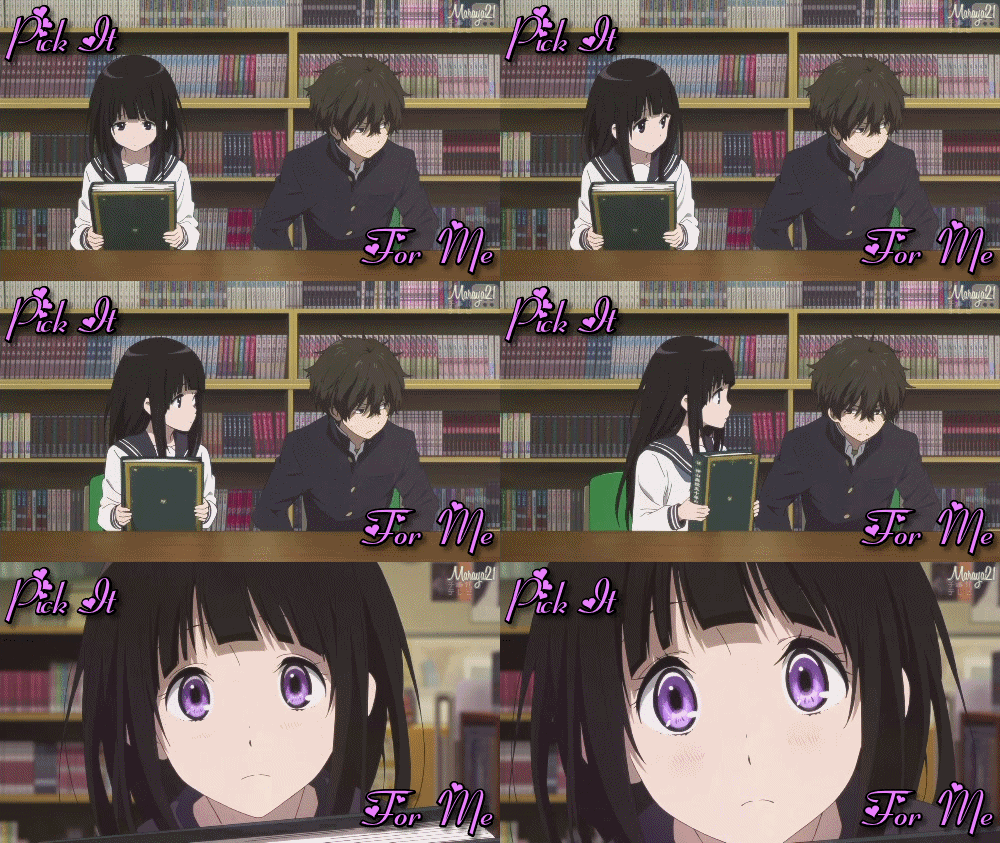
🎀 Chosen for me book for the Pick It For Me Vol.1 (June/August 2019) challenge by Eleni over at Maraya's Cave Of Freaking Wonders 🎀
Irony.
This was the book that brought Hudson to my attention. I added this on my TBR and then I saw her Jubal Van Zandt series and I jumped into that.
I loved the first two books of that series so when I started this I was revved up on enthusiasm to over 9000, only to be bored out of my mind.
Well written but I was just B O R E D.
Oh well. There's always Jubal! (ヅ)
Quotes:
DNF @ Page 289 (72%)
“It’s not always like that, though,” I said. “With siblings, I mean.”
Jax smiled. “You do realize you’re the girl whose sister punched her in the face, right?”
“For all I know that was Kathan’s idea.”
“For all you know denial is just a baseless psychological theory in Egypt.”
I laughed.
Page 150 @38% [Desty POV Chapter]
Irony.
This was the book that brought Hudson to my attention. I added this on my TBR and then I saw her Jubal Van Zandt series and I jumped into that.
I loved the first two books of that series so when I started this I was revved up on enthusiasm to over 9000, only to be bored out of my mind.
Well written but I was just B O R E D.
Oh well. There's always Jubal! (ヅ)
Quotes:

July 27, 2015
Review originally posted at http://kimheniadis.com
I need to start reading chapter titles. The last few books I’ve read had a different character’s name for the title, and I just haven’t paid attention. I would have been able to follow along better if I had.
And I thought Mikal was a man at first. My bad to assume. And it was amusing, because eden Hudson even mentioned later on something about one of the characters thinking Mikal was a guy. Alright, enough of that little side note.
I thoroughly enjoyed this book. Even though I live in a very northern state, and this takes place in the South (Missouri), I felt as if I have known people like this when I was in my twenties. I guess Redneck is Redneck, and it doesn’t matter what state you’re in.
And when I say know people, I mean binge drinkers, alcoholics, overly aggressive females, gamer guys who really don’t want to do more with their lives. Not fallen angels who keep sex slaves. Or people with enough hardware in their shed to take down an army.
Although I do live in Wisconsin, and we’ve had people like Gacy and Dahmer living here, so one never really knows.
Although there is plenty of action in this book, it’s more character driven. Hudson does an excellent job of developing them. She writes from three characters points of view.
Colt, the middle brother who tried a last ditch attempt to save the world after his parents and two siblings were killed by an army of fallen angels. And then ends up becoming a sex slave to the main angels right hand woman.
Tough, the youngest brother who ran off after his family got killed, but was forced to come back to Halo. Even though he knows his brother is behind enemy lines, he’s too drunk and depressed to do much about it.
Modesty, aka Desty, who comes to Halo looking for her twin, and ends up finding Tough. Love ensues, but will it be enough to overcome the messed up situation in Halo.
This book focused more on Tough and Desty, but the next book, Hell Bent, will be focusing more on Colt, who hears voices and is slowly going crazy…. or is he?
I can’t wait to read it and find out!
I need to start reading chapter titles. The last few books I’ve read had a different character’s name for the title, and I just haven’t paid attention. I would have been able to follow along better if I had.
And I thought Mikal was a man at first. My bad to assume. And it was amusing, because eden Hudson even mentioned later on something about one of the characters thinking Mikal was a guy. Alright, enough of that little side note.
I thoroughly enjoyed this book. Even though I live in a very northern state, and this takes place in the South (Missouri), I felt as if I have known people like this when I was in my twenties. I guess Redneck is Redneck, and it doesn’t matter what state you’re in.
And when I say know people, I mean binge drinkers, alcoholics, overly aggressive females, gamer guys who really don’t want to do more with their lives. Not fallen angels who keep sex slaves. Or people with enough hardware in their shed to take down an army.
Although I do live in Wisconsin, and we’ve had people like Gacy and Dahmer living here, so one never really knows.
Although there is plenty of action in this book, it’s more character driven. Hudson does an excellent job of developing them. She writes from three characters points of view.
Colt, the middle brother who tried a last ditch attempt to save the world after his parents and two siblings were killed by an army of fallen angels. And then ends up becoming a sex slave to the main angels right hand woman.
Tough, the youngest brother who ran off after his family got killed, but was forced to come back to Halo. Even though he knows his brother is behind enemy lines, he’s too drunk and depressed to do much about it.
Modesty, aka Desty, who comes to Halo looking for her twin, and ends up finding Tough. Love ensues, but will it be enough to overcome the messed up situation in Halo.
This book focused more on Tough and Desty, but the next book, Hell Bent, will be focusing more on Colt, who hears voices and is slowly going crazy…. or is he?
I can’t wait to read it and find out!
March 10, 2017
I read Halo Bound from 'cover to cover' in one sitting, couldn't put it down. Eden is unique in her writing style - I laughed out loud, had my heart broken, developed a taste and then a craving for red neck bars and voiceless singers - what a trip! I can't remember an author who last painted such vivid imagery in my mind. Eden doesn't write a story, she crafts a tale and then draws you in, buttercream smooth - well, for the most part. Some bits are dark and rocky enough that I experienced actual trepidation at what I might find, but by that point I had come to trust the author so let her lead the way as I bounced behind her like a can on a string - we got through it.
Everything about this story is unique - the characters are alive, most of them, or at least some of them. 'Alive' might be the wrong word here. But truly, the characters are vibrant, sinister, super sexy, funny and intelligent beneath all that dust and blood. The plot is unique as it manages to be both irreverent and deeply respectful of all things God and religion, heaven and hell, angels as demons, loss and grieving. It's a strange world where love and hate can share adjectives. I have it in my head that the song In Chains by Shamans Harvest is how Tough and his music would sound if he had a voice, by the way.
I've read the entire series a couple of times - it just gets better.
Now I'm waiting on more from Jubal. . . . Eden.
Everything about this story is unique - the characters are alive, most of them, or at least some of them. 'Alive' might be the wrong word here. But truly, the characters are vibrant, sinister, super sexy, funny and intelligent beneath all that dust and blood. The plot is unique as it manages to be both irreverent and deeply respectful of all things God and religion, heaven and hell, angels as demons, loss and grieving. It's a strange world where love and hate can share adjectives. I have it in my head that the song In Chains by Shamans Harvest is how Tough and his music would sound if he had a voice, by the way.
I've read the entire series a couple of times - it just gets better.
Now I'm waiting on more from Jubal. . . . Eden.

March 27, 2019
Good enough that I immediately bought book two. (And when you have thousands of ebooks on your reader, buying a new one to continue a series is a big compliment to the author.)
It started out quite rough. It's set several years after a big human/fallen angel war and you definitely feel like you're missing a little something...and like people are just getting on with the new normal a little too easily. There's no sense of it the new laws are only in effect in Halo or in the rest of the world too.
Also, the characters are meant to be in there twenties, but they feel very much more like teens. Take the sex out and this could easily be a YA book. I do wish they felt a little older. Lastly, the naming convention for women is a mess. Honestly, Mitzy, Tiffani, Sissy, Tempie and Desty? (I'll add a post-read edit to mention book two has a Candi too!)
But despite those two real complaints, the book is dark, funny and plot is an interesting one. It grapples with some heavy themes that I appreciate. All in all, worth the read. I'm glad I took a chance on it.
Be warned however, it's a cliffhanger. And not the 'some threads wrap up, while others are left open' cliffy. The sort where the plot just stops because the book is the prescribed length and the story needs to be broken into a series.
It started out quite rough. It's set several years after a big human/fallen angel war and you definitely feel like you're missing a little something...and like people are just getting on with the new normal a little too easily. There's no sense of it the new laws are only in effect in Halo or in the rest of the world too.
Also, the characters are meant to be in there twenties, but they feel very much more like teens. Take the sex out and this could easily be a YA book. I do wish they felt a little older. Lastly, the naming convention for women is a mess. Honestly, Mitzy, Tiffani, Sissy, Tempie and Desty? (I'll add a post-read edit to mention book two has a Candi too!)
But despite those two real complaints, the book is dark, funny and plot is an interesting one. It grapples with some heavy themes that I appreciate. All in all, worth the read. I'm glad I took a chance on it.
Be warned however, it's a cliffhanger. And not the 'some threads wrap up, while others are left open' cliffy. The sort where the plot just stops because the book is the prescribed length and the story needs to be broken into a series.
August 1, 2015
It's a little bit Supernatural, and a little bit Country.
Halo bound has the best bits of Supernatural, the Dukes of Hazzard, and Hatfields and McCoys rolled into a neatly bound package. It's not a cheerful place; people's lives, reputations, self-esteem, and livelihoods are constantly getting trashed, the characters live in a discriminatory environment more akin to a prison than a town, and the world is at the tipping point between what was and will be with bodies stacked to the bridles in between.
But they're deep, interesting characters whose scars, tats, and broken bones mesh to form an odd kind of pre-apocalyptic beauty, and the plotline - though secondary to the drama between the citizens - manages to surprise more than once. And sure, there's sex, car chases, explosions, a little swordplay, and a couple cat-fights to keep things moving along too.
The technical execution of the writing was flawless, I didn't notice what I was reading because I was too busy living the story, though I did have to read the first few pages a couple times before I caught up to what was going on (it was worth it).
Overall, a very satisfying read, 5/5 would flip off a fallen-angel motorcycle-cop again.
Halo bound has the best bits of Supernatural, the Dukes of Hazzard, and Hatfields and McCoys rolled into a neatly bound package. It's not a cheerful place; people's lives, reputations, self-esteem, and livelihoods are constantly getting trashed, the characters live in a discriminatory environment more akin to a prison than a town, and the world is at the tipping point between what was and will be with bodies stacked to the bridles in between.
But they're deep, interesting characters whose scars, tats, and broken bones mesh to form an odd kind of pre-apocalyptic beauty, and the plotline - though secondary to the drama between the citizens - manages to surprise more than once. And sure, there's sex, car chases, explosions, a little swordplay, and a couple cat-fights to keep things moving along too.
The technical execution of the writing was flawless, I didn't notice what I was reading because I was too busy living the story, though I did have to read the first few pages a couple times before I caught up to what was going on (it was worth it).
Overall, a very satisfying read, 5/5 would flip off a fallen-angel motorcycle-cop again.

January 7, 2015
Twin Peaks meets Supernatural meets American Horror Story
To my way of thinking a Supernatural or horror story works best when it blends seamlessly into the fabric of our own reality. Rather than being an obtrusive element, the horrific thing is seen as part of everyday life. Your neighbor on the right, oh he's a banker and a Presbyterian. The neighbor on your left, a mailman and a staunch democrat. That guy walking his dog, works at the factory on the night shift and is a vampire. The story world of this book is so complete and the characters so well drawn that you don't bat an eye that the town is filled with mythical creatures. Throw in blood, death, deviance, darkness, and innocent people caught in the middle and you have an engrossing journey into macabre. When I got to the end, I panicked cause I wanted more. More is promised, but the wait will feel too long. Good book!
To my way of thinking a Supernatural or horror story works best when it blends seamlessly into the fabric of our own reality. Rather than being an obtrusive element, the horrific thing is seen as part of everyday life. Your neighbor on the right, oh he's a banker and a Presbyterian. The neighbor on your left, a mailman and a staunch democrat. That guy walking his dog, works at the factory on the night shift and is a vampire. The story world of this book is so complete and the characters so well drawn that you don't bat an eye that the town is filled with mythical creatures. Throw in blood, death, deviance, darkness, and innocent people caught in the middle and you have an engrossing journey into macabre. When I got to the end, I panicked cause I wanted more. More is promised, but the wait will feel too long. Good book!

December 1, 2014
A fantastic book, with an incredible amount of world-building. Set in an undiclosed time in the future, fallen angels and monsters live all around us. Set in the small town of Halo our story follows the last Whitney brothers, Tough a voiceless redneck prone to bouts of rage and Colt an enthralled slave to a sadistic fallen angel. These are the last two Holy soldiers in a war long thought lost. Switching perspective between them, Desty, a lost girl seeking her twin sister, and Tiffani, the local bakery owner, who happens to be a vampire, we get a well rounded portrayal of the events as they are occurring. A great read, a Southern Fried dystopian story of Armageddon if ever I read one.
June 20, 2015
Fascinated
I fall in love with these book. I love the characters especially with Tough. I still can believe what his own friend did to him. I was surprise to out and probably I will had done the same as him. I can't wait to read the rest of the series. These book had vampires and angels I love to read about the two species. I highly recommend these book. You won't regret purchasing the book.
I fall in love with these book. I love the characters especially with Tough. I still can believe what his own friend did to him. I was surprise to out and probably I will had done the same as him. I can't wait to read the rest of the series. These book had vampires and angels I love to read about the two species. I highly recommend these book. You won't regret purchasing the book.

October 19, 2014
I was initially thrown by the names of the characters and stumbled a bit by what was going on between them; but the story quickly took hold and it quickly became a book I couldn't get back to each time I had to put it down. I look forward to further stories of Tough, Colt and the rest of the oddly named characters.

February 6, 2015
Crazy. Weird. Messed up. Nicely brought together. Damn cliff hanger.
Haha
At first did not like the different point of views...took me awhile to catch on, was frustrating. However!! When every thing clicked in my pea brain...OH MY, I didn't want to put it down and had to know what was gonna happen next.
Can't wait for the next part!
Haha
At first did not like the different point of views...took me awhile to catch on, was frustrating. However!! When every thing clicked in my pea brain...OH MY, I didn't want to put it down and had to know what was gonna happen next.
Can't wait for the next part!
Displaying 1 - 30 of 53 reviews