Palestine! And Palestine!
Who tells the story of Gaza, if not herself?
In her book Justice for Some: Law and the Question of Palestine Erakat* argues that the law is like a boat’s sail, it provides motion but cannot choose the destination. In other words, it is a tool and means to an end not an end itself. She goes on in that book to argue that Zionists and Zionism have used the law in that manner not only to take land, but to expand its colonial settler regime. That book was written before Gaza, and bad as the situation might have been we have had the horrors of the invasion and atrocities of the occupation since.
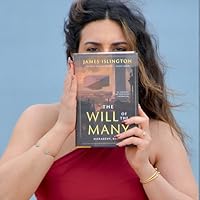
In this book, Rad argues very much the same argument, very much. Except, instead of the law, it is for the media. She puts forth the argument that media in the west are repeating and amplifying the Zionist narrative in the language they employ to, as justice has been constructed, construct the truth. It’s an old story, isn’t it? What’s new here is the context: genocide.
Widely known as the “Palestine headline fixer” Rad has been frequently featured in non-mainstream media outlets in the past few years on issues related to the Middle East. An activist, and historian of the modern Middle East, this is her second book and one on an issue for which she is regarded and sought as an expert. She’s been cited, particularly within the context of the war on Gaza, as an authority on the outright bias of mainstream media, especially in the west, when it comes to the Palestinian issue.
Rad breaks down headlines and media coverage and treatment to show how editorial decisions espouse and uphold a certain world-view, to the exclusion of another, oftentimes in grotesquely (even obscenely) unjust ways, and irrefutably purposeful. From using words like “died,” to bury facts like “slaughtered” to reporting misinformation and omitting mention of perpetrators and covering-up clear culpability to using objectivity itself, out-and-out, to favor one narrative over another.
I thought it was surprisingly well cited, even though we all know those media figures, outlets and articles. Books that have a political slant, as this does, typically are by nature a one-time read, but this here is one I may read several times. I am a journalist by background, academically and otherwise. I’d be interested in the media bias regardless, but this was actually really really good and offered an often overlooked, if apparently consequential, regardless of how unheeded a perspective.
I would even argue that the book is a good check on how bias filters into language itself in general, and may have value for writers if for no other reason than to show how word-choice is more revealing than writers may imagine it to be to readers.
Really appreciated the context which doesn't seem needed but will prove insightful in hindsight, particularly for posterity readers. There are details here that I already seem to have disburdened my memory of and the book helped remind me of. Gaza is such a milestone that it seems to require a guidebook to help make sense of the world after it. This is that manual.
I feel like books written before Gaza and after should be different, an this is the book that would be missing.
Because after genocide, what do we say?
Exceptional. If for no other reason than as a survey of a global historical, hard, moment. People around the world saw. We all saw. And know.
And if Gaza didn’t already do it, perhaps this will finally, FINALLY, break your fidelity to the received narrative, blow away the smoke and unveil the mirrors.
*Erakat has a book coming out next month “Confronting Zionism” co-authored with John Reynolds.