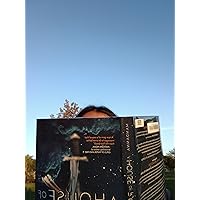
The first major work of Yoruba mythology, retelling hundreds of traditional tales of the Orisa, Yoruba Heroes, and Ijapa from West Africa, Cuba, and Brazil.Yoruba mythology is sacred to the religion and culture of the Yoruba people. A primarily oral tradition, its stories revolve around Olodumare, the Supreme Being, and a vast number of divinities or orisa, who govern all aspects of human life and nature.Yoruba Mythology is, to date, the most comprehensive published collection of more than 300 myths of this ancient, profound, and beautiful storytelling tradition. Authors Ayodeji Ogunnaike and Oludamini Ogunnaike are uniquely qualified to impart these stories, having spent decades learning, collecting, and studying them. Many are remembered from their own childhood, while many more are the result of yearslong research and encounters with practitioners and elders in and from Nigeria, Cuba, and Brazil.Alongside the myths of the orisa, the Ogunnaikes also include dozens of mythos of more cultural significant, such as the founding of Yoruba kingdoms, stories of heroes and other powerful beings, and classic fables. The final section is dedicated to the beloved Ijapa, the Yoruba trickster tortoise whose cunning and greed always land him trouble, but whose stories impart valuable lessons about honesty, perseverance, and character.The book is made complete with stunning art by Data Oruwari, whose work brings the myths and characters to life in a manner that evokes traditional depictions of the orisa in West Africa and the diaspora.A gift to both those familiar with Yoruba culture and religion and those who are encountering them for the first time, Yoruba Mythology is an important and long-awaited contribution to the mythological canon.
Yoruba Mythology: Stories of the Orisa from West Africa and the Diaspora by Ayodeji Ogunnaike, Ph.D., is an extraordinary tour de force that deserves every accolade it has garnered. As someone with limited prior knowledge of Yoruba culture, I approached this book with curiosity and a desire to connect more deeply with my roots. What I found was a dense, thorough, and beautifully crafted compendium that illuminates the richness, complexity, and sacredness of Yoruba mythology like never before.
From the very first page, it’s clear that Ogunnaike has invested decades of meticulous research and personal exploration into this project. The book is remarkably detailed and precise, capturing hundreds of traditional tales from West Africa, Cuba, and Brazil, and presenting them with reverence and scholarly rigor. The illustrations throughout add a visual vibrancy that complements the storytelling, making each myth come alive in a vivid tapestry of images and words.
What sets this book apart is its commitment to authenticity and depth. It’s not a superficial retelling but a comprehensive, almost encyclopedic, rendering of Yoruba myths—covering creation stories, divine personalities like Olodumare, Obatala, Sango, Oya, Esu, and others—each imbued with cultural significance and spiritual depth. I appreciated how the stories are woven with important details that often get lost in simpler retellings, making this perfect for readers who seek a genuine understanding of the tradition’s nuances.
The book feels like a sacred gift—an accessible yet profound bridge for those unfamiliar with Yoruba mythology and a treasure trove for practitioners and enthusiasts alike. It celebrates the oral tradition’s richness, capturing the essence of a community of over 100 million practitioners worldwide. The inclusion of stories from the diaspora in Cuba and Brazil further highlights the enduring power and adaptability of these myths across generations and continents.
For anyone interested in mythology, African culture, or spiritual traditions, this book is an essential addition. It’s intense in information, beautifully detailed, and thoughtfully curated. I highly recommend it to anyone eager to deepen their knowledge or reconnect with their heritage. Ogunnaike’s work is a monumental contribution to mythological literature—an inspiring, enlightening, and thoroughly rewarding read.
Yoruba Mythology by Ayodeji Ogunnaike is an insightful and engaging introduction to the rich traditions, stories, and spiritual foundations of Yoruba culture. Combining scholarship with accessible storytelling, Ogunnaike provides readers with a deeper understanding of the myths, deities, and philosophical ideas that have shaped one of the world's most influential spiritual traditions.
One of the book's greatest strengths is its balance between academic depth and readability. Ogunnaike presents complex cultural and religious concepts in a clear, approachable way, making the material accessible to newcomers while still offering valuable insights for readers already familiar with the subject. The discussions of the Orishas, creation stories, and the symbolic meanings behind key myths are particularly compelling.
The author's respect for the tradition is evident throughout the book. Rather than treating mythology as mere folklore, he explores its enduring relevance, cultural significance, and spiritual teachings. This approach adds depth and context, helping readers appreciate the wisdom embedded within the stories.
At times, some sections feel more academic than narrative, which may slow the pace for readers looking primarily for myth retellings. Additionally, certain topics could have benefited from more detailed exploration given the richness of the tradition.
Overall, Yoruba Mythology is a thoughtful and informative read that sheds light on a vibrant and influential cultural heritage. Well-researched, accessible, and intellectually engaging, it earns a solid four-star rating and serves as an excellent starting point for anyone interested in mythology, religion, African history, or cultural studies.
This is such an impressive book. It is stunningly beautiful, encyclopedic, and still incredibly clear and readable. I have always wanted to know more about Yoruba mythology, and this book truly acts as a reference piece.
A casual reader could read a bit at a time, or someone could attempt to read it as one single piece (like I did). I believe I will reread it again in smaller pieces in the future in order to savor the text more completely. I felt I was getting a welcomed lesson about culture, history, and storytelling that I am eager to relive.
The artwork on the page is gorgeous and truly brings the stories to life even further.
This would be a great gift for so many. The book has a glossary in the back and a full index of every story. This is a book one should really spend a good amount of time on.
Thanks to NetGalley, Black Dog & Leventhal Publishers, and the author for the ARC!
A mythology collection curated to uplift the forgotten voices of West Africa and the Diaspora. Yoruba Mythology is more than just a story, it is history, it is context, and it understands ancestral connections. Ayodeji curates myriad stories within the Yoruba tradition that will be new to those familiar and an expansive collection for those newly interested. This is a must-read collection that documents various stories and collects the history as one complete collection. An absolute pleasure to be able to read this as an ARC. If that does not invite you to read this – then come stay for the art. The art is beautiful and you will really want to soak in the details associated with the various stories and history here.
Thank you to NetGalley and the publisher for this Advance Readers Copy
I knew absolutely nothing about Yoruba mythology, so I was very excited to dive in and I was not disappointed! The book itself is full of gorgeous art and I really enjoyed how it was laid out. This is more than just a collection of myths. It goes into historical and cultural context in a way that is easy to understand and follow and doesn't shy away from the fact that because there and contradictions or alternative versions of the same story, based on who is telling it.
So much great information! As anytime one is important a lot knowledge, there were times that it felt extremely dry. However, expected byproduct of this book. It may be difficult to find the right audience for this book as I don’t foresee it being everyone’s cup of tea. But for those interested in West African culture or anthropology or mythology, this book would be a welcome addition to any library