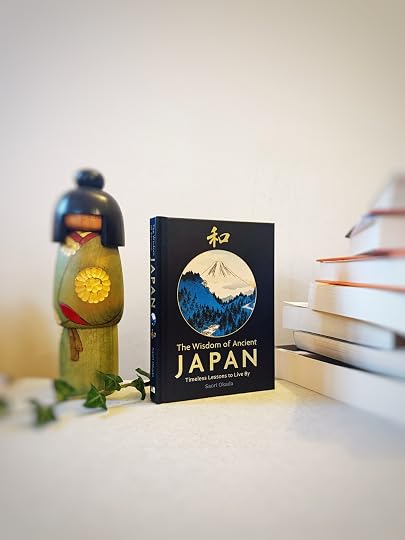
Discover your sense of purpose, foster gratitude, and learn to live in the moment. A beautiful celebration of ancient Japanese culture awaits.Some of the most important mindsets in modern culture are derived from ancient Japanese times. From discovering your sense of purpose with Ikigaito fostering gratitude with Go-en, and from accepting what cannot be changed with Sho-ga-nai to embracing strength after you fall with Nana korobi ya oki, as well as the seven principles of the warrior these are timeless philosophies to live by.Wellness coach Soari Okada brings together 60 quintessential lessons and philosophies, paired with stunning traditional artworks to match each concept, all rooted in Japan’s ancient heritage. These are lessons to change your mindset and give you the tools to take on life’s everyday challenges.
Mądrość Lisiołów Japonii . Saori Okada w swojej pozycji "Mądrość dawnej Japonii. Ponadczasowe lekcje życia" pragnie nam zaoferować jakby swoje odkrycia codzienności z życia w Japonii. Nie są to opowieści prozaiczne, tylko trudne do uchwycenia doznania związane z strefą emocjonalną i metafizyczną. Jest to nieduża pozycja, wręcz książeczka, ale ładnie wydana. Twarda oprawa, mnóstwo obrazków w stylu japońskim i 124 strony. . Jeśli chodzi o wnętrze każdy powinien je osądzać według siebie. Mamy pojęcie, wytłumaczenie jego znaczenia, oś na kształt porady, obrazek, po czym następna sekwencja. Taki zestaw zajmuje dwie strony, z czego jedna jest ucztą wzrokową, jeśli ktoś lubi japoński styl rysunku. I tak Lisioł ceni sobie Ibasho, czyli bycie tam, gdzie nam dobrze, zarówno fizycznie, jak i mentalnie. Taki przenośny barek z alkoholem. Shogonai oznacza mądrość odpuszczenia rzeczy poza naszą kontrolą, więc Lisioł odpuszcza pustą butelkę ze swojego sumienia. Futrzak podąża też za swoim Tenmei, czyli ścieżką przeznaczenia, zgodną z lisim stanem ducha, czyli ścieżką od spiżarki do brzuszka. . Autorka oczywiście dzieli się z nami przemyśleniami z kultury Japonii, czyli nieuniknione są różnicę kulturowe np. podkreślana jest siła więzi społecznych oraz harmonia w społeczności. O ile jeszcze więzi społeczne są dla nas naturalne, to np. w dużym mieście harmonia społeczności bloku czy osiedla to już nie przejdzie. Jest to efekt różnicy pomiędzy kultywowaniem indywidualizmu w Europie, a nastawieniem na grupę w Azji. Ja - my. Zawsze jest ciekawie uświadomić sobie te różnice, wręcz poczuć je.
The author is very familiar with Japanese culture and has brought together nuggets of wisdom that permeate Japanese society. They are often informed by the seasons and reflect a gentleness that can be assimilated into everyday life.
This hardback edition is beautifully presented with woodcuts and illustrations accompanying each pear of wisdom, with photo credits at the end, so the reader can determine the artist.
“Shōganai” is all about accepting what is beyond our control as an active choice rather than a passive surrender, illustrated by a work by Koson Ohara. “Ma” is a simple teaching about learning to be and not cramming every waking minute with activity. It is about pausing life and its demands and learning to appreciate “the richness of in-between”.
“Kyojitsu tōbun” is a brief look at the equilibrium between human intervention and the natural state of nature when it comes to, in particular, Ikebana (flower arranging).
This is a quiet book that provides food for thought and is a lovely way to engage with the Japanese thought processes and the philosophy of life that permeates Japanese society.
I found this beautiful collection of Japanese sayings and concepts at Tsutaya Books in Tokyo, a couple of months before its publication in Europe. What a gem — both for its stunning illustrations and for its powerful exploration of ancient wisdom drawn from Zen, Shinto, martial arts, and rural life.
From wabi-sabi and kizuna to mottainai and omotenashi, it offers a wealth of ideas and inspiration for living a more thoughtful, grounded, and wholesome life.
This book has been published for some time in UK. It’s a really interesting summary of many Japanese beliefs and customs, beautifully illustrated. I would recommend for anyone, but particularly those interested in Japanese culture and way of life.
Nicely presented and quite interesting. I'm going to Japan, for the first time, in the early autumn this year so I'm in a Japanese mindset at the moment.
This book is like a tik tok on the paper. One Japanese word and whats going on with it. Like ありがとう is "being thankful for everything". Nice book, but too obvious.
3.75 stars. Loved the japanese wisdom, but the author had a tendency to direct the short explanation into these modern self-help cliche sessions, typical for any self-help book you can find on the market. I'm not saying they were always out of line, but they had tendencies to oversimplify the beautiful spiritual truths. Also why does GR say that the book comes out in October? It's been out for a while.