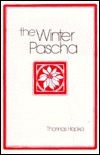
When the winter begins to make way into the Northern World, the Church of Christ begins to celebrate 'a splendid three-day Pascha.' Thus Father Thomas Hopko begins the first of forty meditations for the season of Advent, Christmas and Epiphany, ending with the feast of the Meeting of the Lord in the Temple on the fortieth day after Christ's birth. In the style of his popular book for the paschal fasting season, The Lenten Spring, the author again draws on the biblical readings and liturgical hymns and verses of the season to illumine the way for believers to follow the Church's days of preparation and celebration for the Coming of Jesus Christ, the Son of God, in human flesh. Many references are made to the writings of the saints and Church Fathers, as well as to contemporary Christian teachers and spiritual guides. All those who love the Lord's Coming will find comfort and strength, as well as enlightenment and instruction, for having passed through the Winter Pascha with this book as their companion.
Thomas Hopko is an Orthodox Christian priest and theologian. He was the Dean of Saint Vladimir’s Orthodox Theological Seminary from September 1992 until July 1, 2002 and taught dogmatic theology there from 1968 until 2002. Now retired, he carries the honorary title of Dean Emeritus. Father Hopko is a prominent Orthodox Christian lecturer and speaker, well-known both in Orthodox and ecumenical circles. He has several podcasts on the internet radio station for Orthodox Christians called Ancient Faith Radio
Perfect to read during Advent (clearly as it was intended) I really like Father Thomas' weaving of the hymnography of the church, the bible, and the tradition together to remind us of the historical arc that begins with the first day of Advent and goes through the Nativity, Theophany, and the Presentation on the 40th day after the Nativity.
Really, this book deserves 10 stars. 40 readings of manageable length and immeasurable riches. I think my favorite was the very last--what is the big deal about Mary and Joseph taking baby Jesus to the temple at 40 days and what about old man Simeon, who felt his life was complete now that he had seen the Savior? Fr. Hopko takes questions like this and makes them interesting, helpful, and relevant. (Interesting to note that the presentation of Jesus in the temple ends the 40 day Christmas/Epiphany period). I will come back to this book again.
This was a great liturgical reading that walks you through the Orthodox season of advent, and the post-Christmas cycle of services as well. The rich hymnography and descriptions of why certain things are done during these services was very helpful, as well as seeing the parallels between the Christmas and Pascha cycles. I originally planned to finish it during advent, but was kind of glad I lingered and let it lead me up to Lent - the parallels will be all the fresher in my mind.
Read this alongside Meditations for Advent by Fr. Vasilios Papavasiliou. It contains more details and discussed the link between the Advent-Ephphany season and parallels them with Great Lent. It was an excellent way to focus on Advent, and de-stress from the general "noise" during the month of December.
For the Orthodox Christian, this is a great daily read during the Nativity fast. I will most likely make it an annual read. Fr. Hopko provides fantastic insight in short segments, just enough to digest and contemplate.
A wonderful and inspirational advent read. It has 40 chapters, one fore each of the 40 day's of advent in the Orthodox Tradition. A great book to help us focus on the Winter Pascha.
This book contains 40 short essays pertaining to the celebration of the Nativity of the Lord (Christmas).
Fr. Thomas Hopko offers 40 mediations -- the Advent Fast being 40 days and the period from the feast of the Nativity to its leavetaking also being 40 days -- on the topics related to Nativity, including the saints those feasts are celebrated during Advent, feasts celebrated during the Nativity-Theophany (Ephipany) season, liturgical texts used during this period, different aspects of Christ, the special role of the Theotokos (Virgin Mary), and relevant Orthodox theology.
The liturgical texts could have been better labeled (title, type, and tone) and better cited (type of service, date within the cycle, and calendar date).
Fr. Thomas is very vague about dates. All of the feasts during the Advent-Nativity-Theophany season are fixed, so the calendar dates should have been given whenever possible. As a priest and seminary instructor, time designations like 'on the second day of [x] feast' or ‘on the third day of Christmastide’ have much more meaning to him than they do to laypeople whose understandings are much more vague. The position to or in a feast would be great contextual information to add, but there is no reason not to give the calendar date.
Also, Fr. Thomas does not make it clear that the Orthodox Church celebrates the Adoration of the Magi (Three Wise Men / Three Kings) on December 25 as opposed to on January 6 in western Christianity, instead saying it is part of "the Nativity celebration," which can be interpreted to mean falling anywhere within the 40 day Nativity season.
As a North American, I appreciated that an essay about St. Herman of Alaska was included although the feast day of his glorification (August 9) is more widely celebrated than the feast day of his repose (December 13) ... perhaps because it's easier to travel to Alaska in the fall than in the winter. However, I was disappointed that St. Lucia (Lucy) of Syracuse whose feast day is also December 13 was not mentioned. While St. Lucy was an important saint in the early Christian Church, the celebration of her feast day is not significant in the contemporary Orthodox practice. Nevertheless, St. Lucy remains an important saint in the West. She is one of the very few saints of which most Protestants have heard, and the observance of St. Lucy Day still plays a significant role in Christmas celebrations in modern-day Scandinavia. Her name means "light," and her feast day during Advent heralds the birth of Christ, who is "the Light of the World," which deserves at least a mention.
St. Joseph the Betrothed (commemorated on the second Sunday before the Nativity and the Sunday after the Nativity unless there is no Sunday between December 25 and January 1 in which case his feast day is moved to December 26) is only briefly mentioned during the discussion of the Holy Forefathers. St. Stephen the protomartyr (December 27) and the Feast of the Holy Innocents (December 29) are briefly mentioned in the Chapter 29 "The Blood of the Martyrs." St. Sylvester, Bishop (Pope) of Rome, (western feast day December 31, eastern feast day January 2) is not mentioned at all.
There were no illustrations at all, and the text would have benefited from the inclusion of icons and photographs, especially one of Fr. Alexander Schmemann who is discussed in the book, even in black and white. In this year’s (2024) liturgical wall calendar, there is a beautiful photo of Fr. Alexander Schmemann’s snow covered grave for the month of February. Something like that would have added to the book.
I would greatly enjoy a collection of the kontakion, troparion, and scripture readings for the Advent-Nativity-Theophany period, and this book is the closest thing to that.
This is a beautiful 40 day devotional for the Nativity fast that takes the reader through each different element and day of the Nativity/Epiphany season. It was especially helpful for me, a new Orthodox convert, in understanding the deeper symbolism and traditions of the season. I found it enriching, edifying, and beautifully written. The different songs at the end of each segment were a wonderful, holy touch. I highly recommend to anyone looking for a great meditative guide for Nativity.
I found the organization of the book very challenging. It didn’t feel like it had any flow from day to day, and it jumped all over the place describing celebrations and feasts here there and everywhere. It was also riddled with spelling and grammatical errors (like someone only went over it with a spell checker but failed to edit for context).
I preferred Hopko’s other title for Pascha - The Lenten Spring - which feels like it was much better put together.
Really good Nativity Fast/Advent devotional. It’s clear Fr. Hopko was passionate about dogmatics, but rather than making a dry dogmatics devotional he makes beautiful connections between the Orthodox hymns and beliefs of the church. I wish he’d followed the liturgical calendar rather than jumping around, but I guess it was good to see the connections of Nativity to the rest of the year
A good book with perfect sized chapters for daily investigation, introspection and insight into the Christmas season. The one criticism is that it could be compiled and organized much better. The topics hop around the entire season and are not day / week specific.
How long it took me to read this is not a reflection of its quality! I loved the devotional format and read it seasonally. Most of all, it made me reflect on a period of the liturgical calendar that I never really thought about holistically. It’s a very spiritually rich season.
I really benefitted from this book, though I am sure I could read it every nativity. I learned so much about celebrating the nativity season in its entirety. I recommend this for any orthodox Christian (or otherwise) looking to learn more about this chocked full season in the church calendar.
I have only read one chapter so far, the one on St. Nicholas, because that was the topic of my teen church school class today. It greatly added to the topic for me. The Winter Pascha continued to be a source for the teens in church school. I also used it for Theophany and the Presentation of Christ in the Temple. Fr. Hopko uses many references to texts from the services for the feasts. His own comments are helpful, but the poetry from the services of the Orthodox Church are what we really need. I am so grateful that I picked up this book.
This book opened a new level of meaning and fulfillment into the why and how of the Advent services and hymns guiding me to the celebration of the birth of Christ. I learned about the Saints and Forefathers who wrote them and why. As I read this book, it personalized my journey to prepare and be present in celebrating, embracing and experiencing with all Orthodox Christians the birth of Christ. It really is a Winter Pascha.
40 readings, 40 days leading up to the Nativity feast. I learned so much about the history, traditional practices and background of the Feast and all the celebrations that surround it. Excellent timing - I'll probably do it again next year!