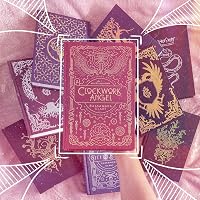
Thank you to NetGalley for a digital copy of this book in exchange for an honest review.
Oh, I just know this book is gonna piss some people off.
I first found out about this book a few months back. Naturally, me being a fan of personality tests, I was intrigued to know what my reading color would be! So when I saw this being offered on NetGalley, I knew I had to read it for myself.
The Good:
You know me. I love a book about books. And you can tell that the author is also passionate about reading and the power of literature. I appreciated his origin story of becoming a reader, from humble beginnings of feeling like reading just wasn’t for him until one day being introduced to the one book that turned him into a reader. I think every reader feels that experience to their core, and you can tell that this was the impetus for him to write this book, to help guide readers to find the right kinds of books that ignite that same spark in them.
This book is also structured really well. The author first introduces you to the different reading colors. From there, he gives you specific book recommendations tailored to your reading color and even color-adjacent picks that you might also like but serve as a good stepping stone toward branching out and finding other books to enjoy that you might never have thought to pick up. On paper, this sounds like an excellent guide to help you pinpoint your reading preferences and recalibrate your reading habits to potentially broaden the kinds of books you pick up. And maybe for some people, this book works for them…
The Not So Good
For me, this book just didn’t land. For one—I still have no idea what my reading color is! The closest I would say I lean toward is an Orange Reader, mixed with maybe Yellow. But even then, there was never a moment while reading the different types where I thought to myself, “This is me!” The experience was more, “I guess this one…?” because in reality, I saw a little bit of myself in a few reading colors, and if I’m being really honest, I could see a little bit of myself across all of the colors. I have picked up fast-paced books that were impossible to put down. I’ve also read books that focused heavily on interpersonal relationships and family dynamics. I’ve picked up books that challenged me in terms of the narrative style, and ones where I stepped away learning something new about the world or about a particular topic. Call me an anomaly or just chalk it up to the fact that readers more often than not are multi-faceted individuals. (I’m gonna go with the second one!) So because of that, this was sort of a frustrating read for me, partly because I didn’t quite know where I landed—and despite its aim to not put readers into a box, this book did exactly that. It declared, “This is the type of reader you are and you like these things and you definitely don’t like these other things” as if two or more things can’t be true at once about readers and their tastes. In this way, I think the author severely underestimates the average reader, assuming that their reading must be severely limited by only reading certain preferred genres, which he claims puts readers in a box. And then he proceeded to create a book personality quiz in which he does exactly that. Oh, the irony…
The Especially Not Good
This leads me to my ultimate gripe with this book: the author reeeeally talks down to readers. Not even just the reader of his book specifically, but to the reading community as a whole. To me, it came across as this guy stepping forward and mansplaining reading to readers everywhere: “Attention, everyone! You’re doing reading wrong. I’m here to fix that for you. You’re welcome.” And listen when I tell you, that’s the quickest way to piss off a community. It just felt insulting, as if the reading community needed this man’s help on how to read better? On that note, it felt like he was really targeting the online book community specifically. And even more specifically, women. Because let’s face it: the online book community is largely made up of women. And the kinds of things he’s calling out, like reading certain female authors and taking pictures for Instagram, are things tied to women in the bookstagram community.
“Over the years, I’ve noticed that certain readers seem to get something real out of their reading lives. These aren’t necessarily the people who read the most books or the hardest books or the books with the prettiest covers for their Instagram.”
Like, damn, we’re not allowed to appreciate pretty book covers? Also sir, you can do both! You can indeed be a critical, thoughtful reader while also appreciating pretty books and wanting to post about your love of books on social media to build connection and community with other readers.
And then he does the thing that I hate…
He’s skeptical of anyone who says they read 100 books a year because it’s apparently impossible, according to him:
“I’m suspicious of anyone claiming massive reading numbers unless they’re unemployed or have achieved some sort of time-dilution superpower… Reading fast isn’t the same as reading well.”
Sigh.
Sir.
SIR.
It is indeed more than possible to read 100 books a year. STOP BEING JEALOUS JUST BECAUSE WOMEN CAN DO IT.
I swear, this conversation comes up weekly. On social media. People in my everyday life. It’s an accusation that comes up over and over, and us readers are sick of having to argue it and justify that yes, it is entirely possible to read this many books a year. No, we’re not lying. We do in fact just read a lot. And especially having to justify this to a man who staunchly denies that women can’t possibly read this many books a year unless they’re lying about it. Or if they are reading this many books, they must be shallow or they’re books that somehow don’t count as “real reading.” It’s just EXHAUSTING and reeks of misogyny.
Anyway, in typical male fashion, he labels these types of readers who read in high numbers, “Brain Rot readers” because even if they could read that many books a year, they can’t possibly be reading anything of substance. That can be the only explanation! But then he seems to contradict himself later on when he declares that you should read books you actually enjoy, not just books you think you’re supposed to be reading.
Like, EXACTLY, SIR. That’s what we’re all saying! That’s how we’re all able to read 100 books a year! Because we’re reading books we actually enjoy, not wasting time slogging through books that we feel we should be enjoying but aren’t.
Anyway, I’m tired of needing to keep having this conversation. I’m tired of having to justify my reading to others. I’m tired of men being skeptical of women who read, and that even if they do read, they must not be reading anything of substance. I’m tired of women not being viewed as “real” readers or not being taken seriously as readers. I’m tired of men being so threatened by the idea of women reading voraciously that they have to disprove it somehow to make themselves feel better. I’m tired of women not being able to exist at all as readers without everything they do being called into question.
Final Thoughts:
I appreciate the aim of this book: to identify your specific reading preferences and use these to guide you through what books you pick up rather than pigeonholing yourself into a single genre. It opens up your reading more by focusing less on genre and more on what types of things you find yourself gravitating toward when you read. (i.e.: fast-paced vs. slow-paced; analytical vs. imaginative). If this system works for you, that’s great. For me personally, I found it very limiting because by design, finding your reading color is still just putting you in a box.
I also can’t stress this enough: I really didn’t appreciate the tone of this book. The author repeatedly talks down to the online book community: implying that people who read a high number of books are lying, claiming that if you read for escapism or enjoyment, then you’re basically rotting your brain, and that posting pictures of books to your Instagram doesn’t make you as serious of a reader. And quite frankly, I’m tired of women not being able to do anything, even enjoying their hobbies, without it being considered silly or less serious by men.
Yet for as much as he belittles the online book community, it’s this very community that has already been coming up with this strategy for finding new books to read long before this author’s Reading Color theory, and it’s this very community that curates book recommendation posts doing this very thing (“If you liked that, try this”) It just came across as deeply patronizing for him to come forward with this book, insulting the very community that he’s trying to market this book to, then declaring that he knows better and he’ll teach all of us how to be better readers. Because apparently, we’re not doing it right.