

What do you think?

The Disappearers
‘Darkness is a mood in Jamaica...'
The Disappearers is Marlon James’s triumphant return to the Jamaica of A Brief History of Seven Killings – a place of heat and chaos, and of danger for anyone outside the heteronormal.
So when eight gay men meet for the first time, in Kingston in 1988, answering the casting call for an openly queer play, they are already taking a big risk. But that is nothing compared to what rains down on them when a mob descends on one of their rehearsals.
By the end of this night, one man is dead, all are injured, and two subsequently disappear.
As the survivors heal, each man finds he must confront the bigotry and homophobia that the attack laid bare. Some try to forget; some embrace their rage; and some simply vanish – but all are forever scarred.
As one of the victims puts it, ‘there’s a difference between when something ends and when something stops’. And this story won’t stop until both the disappearers and the perpetrators have been tracked, along trails both hot and cold, and an ending reached.
Epic and intimate, violent and forgiving, The Disappearers is a tour de force which only Marlon James could have written – both an unflinching portrait of the hatred and shame faced by gay men in a society which refuses to accept them, and a deeply human story of acceptance and insight.
The Disappearers is Marlon James’s triumphant return to the Jamaica of A Brief History of Seven Killings – a place of heat and chaos, and of danger for anyone outside the heteronormal.
So when eight gay men meet for the first time, in Kingston in 1988, answering the casting call for an openly queer play, they are already taking a big risk. But that is nothing compared to what rains down on them when a mob descends on one of their rehearsals.
By the end of this night, one man is dead, all are injured, and two subsequently disappear.
As the survivors heal, each man finds he must confront the bigotry and homophobia that the attack laid bare. Some try to forget; some embrace their rage; and some simply vanish – but all are forever scarred.
As one of the victims puts it, ‘there’s a difference between when something ends and when something stops’. And this story won’t stop until both the disappearers and the perpetrators have been tracked, along trails both hot and cold, and an ending reached.
Epic and intimate, violent and forgiving, The Disappearers is a tour de force which only Marlon James could have written – both an unflinching portrait of the hatred and shame faced by gay men in a society which refuses to accept them, and a deeply human story of acceptance and insight.
616 pages, Kindle Edition
First published September 3, 2026
About the author
Marlon James
31 books5,438 followersMarlon James is a Jamaican-born writer. He has published three novels: John Crow's Devil (2005), The Book of Night Women (2009) and A Brief History of Seven Killings (2014), winner of the 2015 Man Booker Prize. Now living in Minneapolis, James teaches literature at Macalester College in St. Paul, Minnesota.
James was born in Kingston, Jamaica, to parents who were both in the Jamaican police: his mother (who gave him his first prose book, a collection of stories by O. Henry) became a detective and his father (from whom James took a love of Shakespeare and Coleridge) a lawyer. James is a 1991 graduate of the University of the West Indies, where he read Language and Literature. He received a master's degree in creative writing from Wilkes University (2006).
James has taught English and creative writing at Macalester College since 2007. His first novel, John Crow's Devil — which was rejected 70 times before being accepted for publication — tells the story of a biblical struggle in a remote Jamaican village in 1957. His second novel, The Book of Night Women, is about a slave woman's revolt in a Jamaican plantation in the early 19th century. His most recent novel, 2014's A Brief History of Seven Killings, explores several decades of Jamaican history and political instability through the perspectives of many narrators. It won the fiction category of the 2015 OCM Bocas Prize for Caribbean Literature and the 2015 Man Booker Prize for Fiction, having been the first book by a Jamaican author ever to be shortlisted. He is the second Caribbean winner of the prize, following Trinidad-born V. S. Naipaul who won in 1971.
(from Wikipedia)
James was born in Kingston, Jamaica, to parents who were both in the Jamaican police: his mother (who gave him his first prose book, a collection of stories by O. Henry) became a detective and his father (from whom James took a love of Shakespeare and Coleridge) a lawyer. James is a 1991 graduate of the University of the West Indies, where he read Language and Literature. He received a master's degree in creative writing from Wilkes University (2006).
James has taught English and creative writing at Macalester College since 2007. His first novel, John Crow's Devil — which was rejected 70 times before being accepted for publication — tells the story of a biblical struggle in a remote Jamaican village in 1957. His second novel, The Book of Night Women, is about a slave woman's revolt in a Jamaican plantation in the early 19th century. His most recent novel, 2014's A Brief History of Seven Killings, explores several decades of Jamaican history and political instability through the perspectives of many narrators. It won the fiction category of the 2015 OCM Bocas Prize for Caribbean Literature and the 2015 Man Booker Prize for Fiction, having been the first book by a Jamaican author ever to be shortlisted. He is the second Caribbean winner of the prize, following Trinidad-born V. S. Naipaul who won in 1971.
(from Wikipedia)
Ratings & Reviews
Friends & Following
Create a free account to discover what your friends think of this book!
Community Reviews
Displaying 1 - 30 of 557 reviews

Read
August 13, 2026This is one of those books that's so good I forgot at times I was reading a book. It's truly stunning how Marlon James thinks and writes and depicts these characters: their struggles, their glories, their conversations, their pain, their thoughts, their motivations. This is also one of the most difficult and upsetting books I've ever read. But the trauma, pain, and vi0lence is not without purpose. It's graphic in all manner of ways and contains this bodily-ness that very few writers today will even approach. James has crafted a narrative filled with characters that come to life, hold up a mirror to society, and then smash it. It's visceral, deeply moving, and singular.

September 1, 2026
Update : Now shortlisted for the 2026 Booker Prize
Longlisted for the 2026 Booker Prize
This book is relentless, and not always in a good way. It shows its ambitions in the language, length, structure, topics, basically everything. It asks to be read as serious literature, and that made it feel like work despite telling a very personal and important story for a gay reader like myself.
I think the best part remains the beginning. We know from the blurb that something bad is going to happen, but I think it is able to show that a community forced to stay hidden still exists in homophobic places like Jamaica.
We can see how AIDS was used as a tool to dehumanize the people it was killing, the fears of the characters (the act of buying a Prince album is something that must remain hidden for one of them), their difficulties (another is homeless), their own self-hate (one doesn't want to play the woman in the play), but also their hope for first love, for a future when they wouldn't have to hide.
Making a play is a bid for visibility for them. While it is true that they never get to perform it, they saw each other in the rehearsals. It is enough. It could have been the start of a great friendship, and it is, but it is brutally derailed by an attack on them.
As a gay reader, this part was disturbing. It is the most graphic thing I've read. It is relentless. It goes on page after page. It's the total opposite of what happens in Brokeback Mountain (which in itself is hard to revisit because it's one of the saddest things ever), where you get the emotional impact with so little. This book wants to put you there and make you take it. It wants the violence to be unignorable, to break you, to make you numb to it, and that's exactly the point it is trying to make. The violence against these gay men (and gay men in general in countries similar to Jamaica) isn't just emotional. It doesn't stop when a gay man is broken. It stops only when the attacker decides.
What comes next is also true. We see from different perspectives what this hate crime did to the survivors. It broke them in one way or another. One is forced to continue his life as a blind man, another is trying to be the support for the others, one chooses to leave and bury it deep down, one chooses to stay and get his revenge, one disappears. If it sounds poetic, that's a false impression. The book continues to show the ugly side of being a survivor. It remains as violent and graphic as before, and it is 100% the truth, but that doesn't make the reading experience less difficult.
Which brings me to my difficulty in rating the novel. I understand everything it is doing. I want to applaud its ambitions. I don't want to be that guy who asks for difficult reads and when one comes, complains that it shouldn't have been as difficult, that at least one aspect should have been more chill. But I am. And this is my rating... for the moment.
Thanks to the publisher and Edelweiss+ for the advance copy.
Longlisted for the 2026 Booker Prize
This book is relentless, and not always in a good way. It shows its ambitions in the language, length, structure, topics, basically everything. It asks to be read as serious literature, and that made it feel like work despite telling a very personal and important story for a gay reader like myself.
I think the best part remains the beginning. We know from the blurb that something bad is going to happen, but I think it is able to show that a community forced to stay hidden still exists in homophobic places like Jamaica.
We can see how AIDS was used as a tool to dehumanize the people it was killing, the fears of the characters (the act of buying a Prince album is something that must remain hidden for one of them), their difficulties (another is homeless), their own self-hate (one doesn't want to play the woman in the play), but also their hope for first love, for a future when they wouldn't have to hide.
Making a play is a bid for visibility for them. While it is true that they never get to perform it, they saw each other in the rehearsals. It is enough. It could have been the start of a great friendship, and it is, but it is brutally derailed by an attack on them.
As a gay reader, this part was disturbing. It is the most graphic thing I've read. It is relentless. It goes on page after page. It's the total opposite of what happens in Brokeback Mountain (which in itself is hard to revisit because it's one of the saddest things ever), where you get the emotional impact with so little. This book wants to put you there and make you take it. It wants the violence to be unignorable, to break you, to make you numb to it, and that's exactly the point it is trying to make. The violence against these gay men (and gay men in general in countries similar to Jamaica) isn't just emotional. It doesn't stop when a gay man is broken. It stops only when the attacker decides.
What comes next is also true. We see from different perspectives what this hate crime did to the survivors. It broke them in one way or another. One is forced to continue his life as a blind man, another is trying to be the support for the others, one chooses to leave and bury it deep down, one chooses to stay and get his revenge, one disappears. If it sounds poetic, that's a false impression. The book continues to show the ugly side of being a survivor. It remains as violent and graphic as before, and it is 100% the truth, but that doesn't make the reading experience less difficult.
Which brings me to my difficulty in rating the novel. I understand everything it is doing. I want to applaud its ambitions. I don't want to be that guy who asks for difficult reads and when one comes, complains that it shouldn't have been as difficult, that at least one aspect should have been more chill. But I am. And this is my rating... for the moment.
Thanks to the publisher and Edelweiss+ for the advance copy.

September 1, 2026
You’ll have to read Marlon James’s new novel, The Disappearers, wearing asbestos gloves. The pages of this incomparable epic are fueled by desire and torched by rage.
The author, who won a Booker Prize for A Brief History of Seven Killings and then began a trilogy of mind-blowing African fantasies, has returned to Jamaica, his homeland, for what he’s calling his most personal novel.
The Disappearers is a story about living and dying, particularly dying, in the toxic homophobia of the late 20th century, when James was growing up in Kingston begging God to cleanse him. He doesn’t appear in the novel — “I am still lucky,” he quips, “never to have been one of the characters in a Marlon James novel” — but its spirit is informed by his own closeted life before he left the Caribbean. “Whether it was in a plane or a coffin,” he wrote in 2015, “I knew I had to get out of Jamaica.”
Out — and out of Jamaica — for years now, James has produced a book no less ambitious than Beloved, a novel to reckon with the ectoplasm of suffering and restore the presence of vanished people. Just as Toni Morrison’s classic shifted our understanding of the experience and legacy of slavery, so The Disappearers aspires to explode complacency and sear in the minds of readers the horrors of living in a world hostile to homosexuality.
This is an omnivorous novel, a book straining against its covers to contain the whole racial, economic, and political construction of sexual prohibitions imported from Britain and fermented in the Jamaican heat. But the length of The Disappearers — some 616 pages — is only its most obvious challenge. Far greater are....
Read the rest of this review for free on Substack:
https://roncharles.substack.com/p/mar...
The author, who won a Booker Prize for A Brief History of Seven Killings and then began a trilogy of mind-blowing African fantasies, has returned to Jamaica, his homeland, for what he’s calling his most personal novel.
The Disappearers is a story about living and dying, particularly dying, in the toxic homophobia of the late 20th century, when James was growing up in Kingston begging God to cleanse him. He doesn’t appear in the novel — “I am still lucky,” he quips, “never to have been one of the characters in a Marlon James novel” — but its spirit is informed by his own closeted life before he left the Caribbean. “Whether it was in a plane or a coffin,” he wrote in 2015, “I knew I had to get out of Jamaica.”
Out — and out of Jamaica — for years now, James has produced a book no less ambitious than Beloved, a novel to reckon with the ectoplasm of suffering and restore the presence of vanished people. Just as Toni Morrison’s classic shifted our understanding of the experience and legacy of slavery, so The Disappearers aspires to explode complacency and sear in the minds of readers the horrors of living in a world hostile to homosexuality.
This is an omnivorous novel, a book straining against its covers to contain the whole racial, economic, and political construction of sexual prohibitions imported from Britain and fermented in the Jamaican heat. But the length of The Disappearers — some 616 pages — is only its most obvious challenge. Far greater are....
Read the rest of this review for free on Substack:
https://roncharles.substack.com/p/mar...

Review of advance copy received from NetGalley
On the 2026 Longlist for the National Book Award for Fiction.
Shortlist announced 6 October.
SHORTLISTED FOR THE 2026 BOOKER PRIZE Winner will be announced on 9 November.
Rating: 5* of five
The Publisher Says: From Marlon James, author of the Booker Prize–winning A Brief History of Seven Killings: a propulsive novel about the murder of a gay man in 1980s Jamaica and its tragic consequences.
In 1988, eight men in Kingston, Jamaica begin rehearsals for a play. Though strangers to one another, they share an inescapable truth: All of them are gay. And they live in a world that refuses to accept them.
One night the men are savagely beaten and one of them is killed. As their bodies heal, the survivors begin to face the hatred and contempt that the violence laid bare. Some try to ignore what happened. Others double down on retribution. Some disappear completely.
In The Disappearers, Marlon James has written a riveting and deeply human story of men forced to make compromises to survive what the society they live in demands. It is both a dramatic page-turner and an unflinching exploration of queer life in Jamaica during the 1980s and 1990s.
I RECEIVED A DRC FROM THE PUBLISHER VIA NETGALLEY. THANK YOU.
My Review: Y'all do not know what it means to be at risk of your life for what you do in your bedroom. It's okay with church ladies, sports stars, politicians, dumb fucks on street corners, to insult, threaten, jeer at, and...if there are enough of them...chase and beat you, often enough to death, because of what you do in your bedroom.
It's the reality of being yourself as a queer person. It's not different in the US, only for the most part quieter.
So these 640 pages will come as a illusion-threatening denial-generating surprise to the majority of you. It will cause knee-jerk "no, it's not *that* bad." Yes. It is.
Yes. It is.
This story is based on real events. It should shame every one of you who's made a homophobic joke, laughed at stories with lisping queens, or any of the other minstrel-show-with-fags stuff you've seen and heard, because it Others and thus aids in desensitizing murderous idiots. Maybe you didn't mean it to, but it did and it does. I don't think any of you will read this book, so let me tell you what happens:
A bunch of gay guys get together to put on a play that no one is forcing anyone to watch. A gang of those guys who make the jokes you laugh at decide they don't like the fact they're doing this, so they go to the place the rehearsals...not even a public performance...take place, and beat the actors for daring to address the feelings and concerns of people like them before, I remind you, the play that no one is forced to watch unless they choose to so severely one loses his sight.
And one dies.
The remaining six are traumatized.
Because y'all hate people. Who do not ask you to participate in sex, celebrate Otherness, or even make yourselves aware of individual acts of entertainment's existence. "*I* didn't do that" no, but did you ever stop a joke to deride a bigot to interrupt a hate-filled sermon?
No. You did not.
So these eight men lost lives they weren't through living, altered or ended, because no one ever stood up and said "what you do to these men you do also to me" and stood in solidarity at a grocery store, in a meeting, at a dinner party, and said "stop."
Sleep tight.
Shortlist announced 6 October.
SHORTLISTED FOR THE 2026 BOOKER PRIZE Winner will be announced on 9 November.
Rating: 5* of five
The Publisher Says: From Marlon James, author of the Booker Prize–winning A Brief History of Seven Killings: a propulsive novel about the murder of a gay man in 1980s Jamaica and its tragic consequences.
In 1988, eight men in Kingston, Jamaica begin rehearsals for a play. Though strangers to one another, they share an inescapable truth: All of them are gay. And they live in a world that refuses to accept them.
One night the men are savagely beaten and one of them is killed. As their bodies heal, the survivors begin to face the hatred and contempt that the violence laid bare. Some try to ignore what happened. Others double down on retribution. Some disappear completely.
In The Disappearers, Marlon James has written a riveting and deeply human story of men forced to make compromises to survive what the society they live in demands. It is both a dramatic page-turner and an unflinching exploration of queer life in Jamaica during the 1980s and 1990s.
I RECEIVED A DRC FROM THE PUBLISHER VIA NETGALLEY. THANK YOU.
My Review: Y'all do not know what it means to be at risk of your life for what you do in your bedroom. It's okay with church ladies, sports stars, politicians, dumb fucks on street corners, to insult, threaten, jeer at, and...if there are enough of them...chase and beat you, often enough to death, because of what you do in your bedroom.
It's the reality of being yourself as a queer person. It's not different in the US, only for the most part quieter.
So these 640 pages will come as a illusion-threatening denial-generating surprise to the majority of you. It will cause knee-jerk "no, it's not *that* bad." Yes. It is.
Yes. It is.
This story is based on real events. It should shame every one of you who's made a homophobic joke, laughed at stories with lisping queens, or any of the other minstrel-show-with-fags stuff you've seen and heard, because it Others and thus aids in desensitizing murderous idiots. Maybe you didn't mean it to, but it did and it does. I don't think any of you will read this book, so let me tell you what happens:
A bunch of gay guys get together to put on a play that no one is forcing anyone to watch. A gang of those guys who make the jokes you laugh at decide they don't like the fact they're doing this, so they go to the place the rehearsals...not even a public performance...take place, and beat the actors for daring to address the feelings and concerns of people like them before, I remind you, the play that no one is forced to watch unless they choose to so severely one loses his sight.
And one dies.
The remaining six are traumatized.
Because y'all hate people. Who do not ask you to participate in sex, celebrate Otherness, or even make yourselves aware of individual acts of entertainment's existence. "*I* didn't do that" no, but did you ever stop a joke to deride a bigot to interrupt a hate-filled sermon?
No. You did not.
So these eight men lost lives they weren't through living, altered or ended, because no one ever stood up and said "what you do to these men you do also to me" and stood in solidarity at a grocery store, in a meeting, at a dinner party, and said "stop."
Sleep tight.

September 8, 2026
First Impressions
I've now read Marlon James's new 600-plus-page novel, "The Disappearers", and I'm still reeling from everything it stirred up in me. This is not a light or entertaining read, and it was never meant to be; James himself has acknowledged that his books aren't easy. But it took me on a journey that left me both challenged and changed. The novel has only just been published and has already been canonised by critics, with Dwight Garner in the New York Times calling it a “masterpiece and, quite possibly, the novel of the decade or even the century.” That claim has already sparked a lot of pushback and debate. Ron Charles at the Washington Post stated he was “glad to have read it but equally glad to be done with it. To the extent that it’s a great novel, it’s also an ordeal.” Personally, I wouldn't call it an ordeal. The opening section, structured as a 1988 diary kept by one of the central characters, Eddy, actually charmed me: there's real humanity and humour in these entries, and a kind of innocence in how James eases us into the story through the mind of an eighteen-year-old whose day-to-day thoughts are dominated by music and masturbatory fantasies, the ordinary preoccupations of being young.
The Attack and the Many Meanings of "Disappearers"
Eddy answers an ad to join a small group of gay men planning to stage "Fortune and Men's Eyes," John Herbert's 1967 play about a young man's experience of prison, homosexuality and domination. They're meeting in Kingston, Jamaica, in 1988, in a climate of open homophobia, which makes even their private rehearsals dangerous, let alone the ambition of staging the play publicly. That danger catches up with them: the group is horrifically attacked by a homophobic mob, and not everyone survives. Many who do are left severely damaged, physically and emotionally. It’s striking that the author doesn’t allow the attackers to remain an amorphous group; their individual thoughts and each person’s sense of self-justification for committing such a horrendous act is recorded.
From there the novel’s title starts accumulating multiple meanings. There are the attackers, who set out quite literally to disappear these men from their community. There's the central mystery of two survivors who vanish in the aftermath, and the efforts of the remaining group to find out what happened to them. Because this is the late eighties and this is gay life, the novel also vividly depicts the reality of the AIDS crisis and the many people who disappeared because of it. And there's a more internal, more painful sense of the word too: queer people disappearing on each other under pressure, as when one half of a couple is arrested for his homosexuality and his partner won't risk bailing him out, afraid of what association with him might cost. Beyond that, there's the way people can disappear into themselves, silencing whole parts of who they are just to survive inside a homophobic world. James has spoken about having lived through some of this era himself, and while I wouldn't call the novel autobiographical, since its actual events aren't drawn from his own life, it clearly belongs to the world he grew up in during the 1980s, and it's steeped in the music and television of that period. I loved seeing "The Cosby Show" and "Family Ties" referenced early on, both shows that shaped my own childhood crushes on Malcolm-Jamal Warner and Michael J. Fox, so that sense of period and coming-of-age is vividly, specifically evoked, alongside an honest reckoning with how much of that same media culture was openly homophobic at the time.
A Demanding Structure With a Purpose
Much of the novel arrives secondhand, through diary entries, interviews and letters rather than immediate first-person action, and a number of readers have found that structure genuinely challenging, since it holds you at a remove from events as they happen. I'd argue that distance is doing real work: for people who disappear, all that's left of their perspective are the fragments they wrote down or the secondhand accounts others give afterward, so piecing together the truth becomes part of the reading experience itself, not just a stylistic choice. Combined with a large cast of shifting points of view and sections often written in patois, which may be more demanding for readers outside the Caribbean, I understand why this book reportedly has a higher did-not-finish rate than most. But I think the difficulty is worth taking on for where the novel ultimately takes you.
Rage, Justice, and the Weight of Real History
There's enormous heart and humanity here, alongside real heartache, pain, violence and rage, and I think that rage is entirely justified. James has described growing up aware of rumours of an attack like this one, and drawing on both his own memory and interviews with queer Jamaicans in shaping the novel, which makes clear this isn't an isolated invention but something many people actually lived through. It's infuriating to read about a situation where the law doesn't just look away from an attack like this but actively participates in it, where going to the police for help might just mean a different, survivable beating rather than none at all. I don't think this belongs safely in the past, either. Living in London today, I'm aware of legal protections gay people have here, but I also remember a report a couple of years ago of a gay couple attacked at a bus stop I go to regularly with my own husband. Seeing the photos of their injuries changed something in me: I still think about it every time I'm at that bus stop, and there are moments when my husband reaches for my hand and I pull away, weighing wanting to be visibly proud of who we are against a very real, very physical fear. That's just a small, present-day echo of the kind of violence this novel is reckoning with on a much larger historical scale.
The novel doesn't offer easy answers to any of this. In large part it's a revenge story, following several characters and survivors down different paths of retaliation, and reading those sections was genuinely horrific on more than one level: the immediate violence of it, but also an uncomfortable flicker of satisfaction at seeing people held to account when the wider structures of society refuse to do so. That response left me with difficult feelings of shame alongside the horror, because I know a cycle of revenge like this can't actually end well, however understandable its origins.
A Complicated, Unflattened Community
I appreciated how honestly the novel portrays the divisions within this group of men even before the attack: different ways of inhabiting queerness, real disagreements among gay men shaped by class, race and relative attractiveness, and the hierarchies those differences create, which raises the harder question of whether "community" is even the right word for what holds them together. One of the most striking sections follows a group known as the Gully Queens, queer individuals pushed to the margins of society who've built a life for themselves literally in the city's gullies. My one small criticism of the novel is that I wish it had spent more time with them; I think it matters enormously that the most marginalised are seen this clearly, even as I understand why James chose to keep his focus centred on this particular group of men. Women are largely peripheral to the story, though it doesn't look away from violence against them either, including a harrowing account of a lesbian couple attacked and a trans woman brutalised and murdered.
The violence throughout is rendered in unflinching, specific detail rather than glossed over the way it often is in film and television, where a gunshot tends to mean an instant, tidy death. James has said he thinks all violence is gratuitous, addressing a common criticism of books like this head-on, but the violence here isn't there to entertain; it's there to testify that real harm like this actually happened, and it continues to do so around the world.
In Conversation With Queer Literature
The novel also meditates on erasure and absence more broadly: one character speculates that if every gay person in Jamaica simply vanished, the society built on their labour and presence would collapse. That immediately brought to mind one of my favourite recent novels, Ibtisam Azem's "The Book of Disappearance," which imagines all Palestinian Arabs vanishing from the state of Israel overnight. It's a reminder of what fiction can do: offering a genuinely different vantage point on the world we already think we know.
Beyond its central themes, I loved how in conversation the novel is with other literature, from an early nod to Mrs. Bennet in "Pride and Prejudice" to a debate between characters over Anthony Trollope and Charles Dickens, and further back to queer literary forebears like John Rechy, James Baldwin and Jean Genet, writers who were pioneers not just in depicting gay experience explicitly but in modelling ways of actually inhabiting a gay identity. This novel clearly stands in that lineage, extending it with a portrait of gay life that holds real joy alongside real pettiness; there's plenty of bitchiness among these characters too, which felt honest rather than unkind, and a real sense that disappearing from an impossible situation can be freeing even as it carries its own lasting burden. I was also genuinely delighted by a passing reference to Joyce Carol Oates's short story "Where Are You Going, Where Have You Been?," since Oates is my favourite author, and while I can see the argument that some of these literary references stretch plausibility for characters caught in such desperate circumstances, many of these men are highly literary people for whom reading is exactly the kind of refuge and touchstone you'd expect them to reach for.
A Culmination of a Career
Having followed Marlon James's work for over a decade, this feels like a novel he's been building toward for a long time. "A Brief History of Seven Killings" shares some structural DNA with it and includes gay characters of its own, and his Dark Star fantasy trilogy, two books in so far, also features queer characters and explicit gay sex. I had the privilege of helping judge the year "A Brief History of Seven Killings" was up for the Green Carnation Prize, an award specifically for queer writers, not long after it had already won the Booker; we debated whether a novel that had already won the Booker really needed another prize, but ultimately felt it deserved recognition specifically for how complex and fully realised its gay characters were. James has clearly been writing toward queer life for a long time, including in a 2015 personal essay, "From Jamaica to Minnesota to Myself," which I'd recommend alongside the novel; you can feel ideas from that essay finding their fullest expression here.
Verdict
I found this novel mesmerising rather than exhausting, gripped by its twists and turns and by James's language, which brings out the full complexity, contradiction and sheer spark of these characters even in the most difficult circumstances. Is it the novel of the decade? I honestly don't know, but it's an extraordinarily impactful book, and I'm very glad to have read it. I raced through it the first time because I was compelled by the plot and character voices. So I'm looking forward to returning to it more slowly at some point to more deeply take in everything it has to offer. I'd recommend it wholeheartedly, but readers should know what they're signing up for: there's real explicit violence and sex in these pages, though never without purpose. If you've read it, I'd love to know where you land: masterpiece, or overhyped?
Read more of my reviews on my book blog LonesomeReader or check out the videos on my BookTube channel or consider joining my Bookclub
I've now read Marlon James's new 600-plus-page novel, "The Disappearers", and I'm still reeling from everything it stirred up in me. This is not a light or entertaining read, and it was never meant to be; James himself has acknowledged that his books aren't easy. But it took me on a journey that left me both challenged and changed. The novel has only just been published and has already been canonised by critics, with Dwight Garner in the New York Times calling it a “masterpiece and, quite possibly, the novel of the decade or even the century.” That claim has already sparked a lot of pushback and debate. Ron Charles at the Washington Post stated he was “glad to have read it but equally glad to be done with it. To the extent that it’s a great novel, it’s also an ordeal.” Personally, I wouldn't call it an ordeal. The opening section, structured as a 1988 diary kept by one of the central characters, Eddy, actually charmed me: there's real humanity and humour in these entries, and a kind of innocence in how James eases us into the story through the mind of an eighteen-year-old whose day-to-day thoughts are dominated by music and masturbatory fantasies, the ordinary preoccupations of being young.
The Attack and the Many Meanings of "Disappearers"
Eddy answers an ad to join a small group of gay men planning to stage "Fortune and Men's Eyes," John Herbert's 1967 play about a young man's experience of prison, homosexuality and domination. They're meeting in Kingston, Jamaica, in 1988, in a climate of open homophobia, which makes even their private rehearsals dangerous, let alone the ambition of staging the play publicly. That danger catches up with them: the group is horrifically attacked by a homophobic mob, and not everyone survives. Many who do are left severely damaged, physically and emotionally. It’s striking that the author doesn’t allow the attackers to remain an amorphous group; their individual thoughts and each person’s sense of self-justification for committing such a horrendous act is recorded.
From there the novel’s title starts accumulating multiple meanings. There are the attackers, who set out quite literally to disappear these men from their community. There's the central mystery of two survivors who vanish in the aftermath, and the efforts of the remaining group to find out what happened to them. Because this is the late eighties and this is gay life, the novel also vividly depicts the reality of the AIDS crisis and the many people who disappeared because of it. And there's a more internal, more painful sense of the word too: queer people disappearing on each other under pressure, as when one half of a couple is arrested for his homosexuality and his partner won't risk bailing him out, afraid of what association with him might cost. Beyond that, there's the way people can disappear into themselves, silencing whole parts of who they are just to survive inside a homophobic world. James has spoken about having lived through some of this era himself, and while I wouldn't call the novel autobiographical, since its actual events aren't drawn from his own life, it clearly belongs to the world he grew up in during the 1980s, and it's steeped in the music and television of that period. I loved seeing "The Cosby Show" and "Family Ties" referenced early on, both shows that shaped my own childhood crushes on Malcolm-Jamal Warner and Michael J. Fox, so that sense of period and coming-of-age is vividly, specifically evoked, alongside an honest reckoning with how much of that same media culture was openly homophobic at the time.
A Demanding Structure With a Purpose
Much of the novel arrives secondhand, through diary entries, interviews and letters rather than immediate first-person action, and a number of readers have found that structure genuinely challenging, since it holds you at a remove from events as they happen. I'd argue that distance is doing real work: for people who disappear, all that's left of their perspective are the fragments they wrote down or the secondhand accounts others give afterward, so piecing together the truth becomes part of the reading experience itself, not just a stylistic choice. Combined with a large cast of shifting points of view and sections often written in patois, which may be more demanding for readers outside the Caribbean, I understand why this book reportedly has a higher did-not-finish rate than most. But I think the difficulty is worth taking on for where the novel ultimately takes you.
Rage, Justice, and the Weight of Real History
There's enormous heart and humanity here, alongside real heartache, pain, violence and rage, and I think that rage is entirely justified. James has described growing up aware of rumours of an attack like this one, and drawing on both his own memory and interviews with queer Jamaicans in shaping the novel, which makes clear this isn't an isolated invention but something many people actually lived through. It's infuriating to read about a situation where the law doesn't just look away from an attack like this but actively participates in it, where going to the police for help might just mean a different, survivable beating rather than none at all. I don't think this belongs safely in the past, either. Living in London today, I'm aware of legal protections gay people have here, but I also remember a report a couple of years ago of a gay couple attacked at a bus stop I go to regularly with my own husband. Seeing the photos of their injuries changed something in me: I still think about it every time I'm at that bus stop, and there are moments when my husband reaches for my hand and I pull away, weighing wanting to be visibly proud of who we are against a very real, very physical fear. That's just a small, present-day echo of the kind of violence this novel is reckoning with on a much larger historical scale.
The novel doesn't offer easy answers to any of this. In large part it's a revenge story, following several characters and survivors down different paths of retaliation, and reading those sections was genuinely horrific on more than one level: the immediate violence of it, but also an uncomfortable flicker of satisfaction at seeing people held to account when the wider structures of society refuse to do so. That response left me with difficult feelings of shame alongside the horror, because I know a cycle of revenge like this can't actually end well, however understandable its origins.
A Complicated, Unflattened Community
I appreciated how honestly the novel portrays the divisions within this group of men even before the attack: different ways of inhabiting queerness, real disagreements among gay men shaped by class, race and relative attractiveness, and the hierarchies those differences create, which raises the harder question of whether "community" is even the right word for what holds them together. One of the most striking sections follows a group known as the Gully Queens, queer individuals pushed to the margins of society who've built a life for themselves literally in the city's gullies. My one small criticism of the novel is that I wish it had spent more time with them; I think it matters enormously that the most marginalised are seen this clearly, even as I understand why James chose to keep his focus centred on this particular group of men. Women are largely peripheral to the story, though it doesn't look away from violence against them either, including a harrowing account of a lesbian couple attacked and a trans woman brutalised and murdered.
The violence throughout is rendered in unflinching, specific detail rather than glossed over the way it often is in film and television, where a gunshot tends to mean an instant, tidy death. James has said he thinks all violence is gratuitous, addressing a common criticism of books like this head-on, but the violence here isn't there to entertain; it's there to testify that real harm like this actually happened, and it continues to do so around the world.
In Conversation With Queer Literature
The novel also meditates on erasure and absence more broadly: one character speculates that if every gay person in Jamaica simply vanished, the society built on their labour and presence would collapse. That immediately brought to mind one of my favourite recent novels, Ibtisam Azem's "The Book of Disappearance," which imagines all Palestinian Arabs vanishing from the state of Israel overnight. It's a reminder of what fiction can do: offering a genuinely different vantage point on the world we already think we know.
Beyond its central themes, I loved how in conversation the novel is with other literature, from an early nod to Mrs. Bennet in "Pride and Prejudice" to a debate between characters over Anthony Trollope and Charles Dickens, and further back to queer literary forebears like John Rechy, James Baldwin and Jean Genet, writers who were pioneers not just in depicting gay experience explicitly but in modelling ways of actually inhabiting a gay identity. This novel clearly stands in that lineage, extending it with a portrait of gay life that holds real joy alongside real pettiness; there's plenty of bitchiness among these characters too, which felt honest rather than unkind, and a real sense that disappearing from an impossible situation can be freeing even as it carries its own lasting burden. I was also genuinely delighted by a passing reference to Joyce Carol Oates's short story "Where Are You Going, Where Have You Been?," since Oates is my favourite author, and while I can see the argument that some of these literary references stretch plausibility for characters caught in such desperate circumstances, many of these men are highly literary people for whom reading is exactly the kind of refuge and touchstone you'd expect them to reach for.
A Culmination of a Career
Having followed Marlon James's work for over a decade, this feels like a novel he's been building toward for a long time. "A Brief History of Seven Killings" shares some structural DNA with it and includes gay characters of its own, and his Dark Star fantasy trilogy, two books in so far, also features queer characters and explicit gay sex. I had the privilege of helping judge the year "A Brief History of Seven Killings" was up for the Green Carnation Prize, an award specifically for queer writers, not long after it had already won the Booker; we debated whether a novel that had already won the Booker really needed another prize, but ultimately felt it deserved recognition specifically for how complex and fully realised its gay characters were. James has clearly been writing toward queer life for a long time, including in a 2015 personal essay, "From Jamaica to Minnesota to Myself," which I'd recommend alongside the novel; you can feel ideas from that essay finding their fullest expression here.
Verdict
I found this novel mesmerising rather than exhausting, gripped by its twists and turns and by James's language, which brings out the full complexity, contradiction and sheer spark of these characters even in the most difficult circumstances. Is it the novel of the decade? I honestly don't know, but it's an extraordinarily impactful book, and I'm very glad to have read it. I raced through it the first time because I was compelled by the plot and character voices. So I'm looking forward to returning to it more slowly at some point to more deeply take in everything it has to offer. I'd recommend it wholeheartedly, but readers should know what they're signing up for: there's real explicit violence and sex in these pages, though never without purpose. If you've read it, I'd love to know where you land: masterpiece, or overhyped?
Read more of my reviews on my book blog LonesomeReader or check out the videos on my BookTube channel or consider joining my Bookclub

September 1, 2026
This is a damn good book. So well written. So smart. Intense. Manipulative (complimentary). Violent, funny, sexy, fucked up beyond belief while always driving toward the story. The way pop culture influences the book is profound and so well done. Easily a book of 2026.

Review of advance copy received from Publisher
Sometimes I try to picture that year had the play been a success. It leaves me confused. I don't know what success would have meant anyway. What nobody tells you about tragedy is that it Lowers your expectations of people and yourself. Lose your toes and success means still having a f-ing foot. So, success became a rehearsal that did not leave a body count, a reading that did not leave one with his eyes gouged out. I don't know if failure is something that never succeeded or was never tried. Maybe a woman mourns an abortion the same way one does a stillbirth. Somebody out there is saying that communism never failed because it was never tried. I only say that because that is how I feel about this play. Fortune and Men's Eyes. It never had the chance to become a failure so instead it became a ghost. You wouldn't know this but in the Caribbean the stillbirth becomes a peculiar spirit, menacing because it is so innocent. It never grows old enough to know that it shouldn't wail in the early morning like some hacksaw jagging and cutting through the darkness. Like somebody had cut its throat. The only thing a ghost can do is haunt you.
Shortlisted for the 2026 Booker Prize
Longlisted for the 2026 National Book Award
Jamaican novelist Marlon James “A Brief History of Seven Killings” was the winner of the 2015 Booker Prize (as an aside another novel on that year’s shortlist “A Little Life” has clearly had a greater longevity and cult-like divisive status even to the present day). A fictionalised account of Bob Marley (known as “The Singer” throughout) it was distinctive both for its patios and for its violence-infused text dealing with gang, drug, political and CIA-sanctioned violence. I have to say I was a rare dissenter on the novel – my least favourite Booker winner of all time – I found the stream of consciousness slang hard to follow and the sordid and violent world it portrays making it unpleasant reading when I could follow ………… and I think ultimately my issue was that while acknowledging that gangs exist, basing a novel around them felt gratuitous.
Now after a diversion for many years into Afro-Centric Fantasy with his trilogy of “Black Leopard”, “Red Wolf” and “Moon Witch, Spider King”, James returns both to literary fiction, Jamaica and to a world of violence – but here the violence seems to be very necessary and integral to the tale he is telling of a deliberate erasure in Jamaican culture and history of both its gay population and of the terrible and wantonly violent, at times literally murderous persecution of that group.
It is however an equally difficult read – not least as that violence is set aside some lengthy explicitly sexual passages, which mainly describe in almost porn-like detail, transactional often transitory encounters and include various scenes which are at least adjacent to prostitution, forces sexual assaults and even semi-consensual gang-bangs.
The novel has a series of five distinctive sections taking place from 1988 to 2005 although with an epistolary history back to the late 1940s.
It begins with a cast of six wanabee actors, a stage manager and a producer/director Havelock Titus taking part in the latter’s attempt to stage a controversial real-life play (“Fortune and Men’s Eyes”) set in a youth reformatory and exploring homosexuality and sexual power plays in that prison environment – one of the actors Eddy Porteous is the first party narrator. Eddy is attracted to another actor – Matt Chin and also intrigued and a little concerned by the fact that another Jordon Brown seems to be living in his car and visiting the notorious mansion of Paul Royale.
I enjoyed a lot of this first section although I found it hard to really follow the play sections as they were too fragmentary and this did not help with simultaneously trying to get to know the eight protagonists of the novel and the six of the play. I suspect a full appreciation would require a read of the play.
The section ends (no spoilers as its integral to the novel’s blurb) with a violent attack on the play (for which Eddy is not present) – and in a memorably harrowing second section we alternate between various members of the murderous and frenzied mob who descend on the play’s protagonists with terrible consequences (but also with impunity given the societal backlash against homosexuality which has only been magnified by AIDS hysteria). The protagonists include (and are inspired by) a reggae singer Streggeh Don known for his aggressively homophobic lyrics including “Batty is not Pussy”.
The third and longest (and I have to say for me least enjoyable) section tells us of those consequences – one actor killed and sexually assaulted with a tree branch, one with his eyes gouged out, and two subsequently missing (including Matt). The third section is largely told by one of the remaining actors – Jordon – as he and Eddy (Eddy guilty that for family reasons he was not present, Jordon in effect guilty for being relatively unscathed – at least in terms of long term physical impact) both try to come to terms with the mental aftermath of the attack and try to trace the two missing men (Matt in particular proving complex – with even pre attack an apparent series of identities). Both of these quests are linked by the idea that “there’s a difference between when something ends and when something stops” and by linked ideas and different layers of disappearance. And the ostensible set up of this section is that large parts of it are from tapes made by a documentary journalist interviewing both Jordan and (to a lesser extent) Eddy for a project whose working title is the same as the novel. Jordon processes much of life through song lyrics (particularly of the indie/grunge variety) “I wonder if I really don't have a voice of my own with only rock lyrics to talk for me. When I don't have words and my own head feels like it's going to explode, I play the end of Nirvana's "Territorial Pissings" and scream into a pillow. One time when it hit me that I was in my own damn house, I screamed out in the open Gotta find a way, a better way, I'd better wait over and over until I spit something out in the dark that tasted slippery like blood.” – but much of what he processes are the aforementioned sexual encounters including one with someone he believes to be one of the attackers and who he effectively grooms before taking a plotted revenge.
The fourth section is very much a change of pace and style if not theme – a series of rather stylistically restrained and old-fashioned letters from Havelock to a man who pimped him into establishment circles in London post war. As part of this Havelock gives us some clearer explanation of some parts of the previous sections and also reveals his concern that Jordon is carrying out a series of revenge attacks on those who believed participated in the attack as well as in some cases (we learn here and subsequently) sometimes targeted (but sometimes simply tit for tat attacks on heterosexuals) in response to homophobic atrocities.
The fifth and final section is split into two parts – one dark the other redemptive. In the first a by now rather deranged mid 30s Jordon effects his final revenge in a kidnap of Streggeh Don – a scene rendered even more terrible when Haverlock traces him. But the last gives us the story of one of the missing men and his encounter with an Eddy no longer forced to make his sexuality disappear.
Overall it was a novel which feels as necessary as his Booker winner felt to me gratuitous. But at the same time I found it much more striking to reflect on than to actually enjoying reading, and I would therefore hesitate to unreservedly recommend it.
My thank to Viking, Penguin General UK for an ARC via NetGalley and paper ARC.
Of all the f-dup things happening in the world to us, you think that is the thing to not make me sleep at night. No, it wasn't a question. I'm trying to find two gay men who just gone poof when battymen vanishing all around us. That is what AIDS is after all, isn't it? One long set of disappearing acts. First is watching the friends and family disappeal. Second act is when people try to disappear you. Third act is watching your body vanish from itself and wondering where the f- you going, piece by piece, until all of you gone. I swear to God, at one point I used to think people with AIDS just evaporate. If there is a fourth act it's when everybody erase your name as if you were never born in the first place

September 16, 2026
Longlisted for the National Book Award 2026
Longlisted for the Booker Prize 2026
Now THIS is aesthetically forward, daring, no-fucks-given literature, THIS is what prizes need to nominate and recognize, THIS is intelligent and emotionally impactful writing. You want your novels mid-temperature, cozy, reassuring? Go away, read Paulo Coelho or something, this is serious stuff, brutal, angry, heart-wrenching - and it baffles me that some people think there's a lot of explicit sex in here. Have you turned on the TV lately, or looked at magazine ads, or, God forbid, the internet? It seems to me that books, often considered intellectual media (which they aren't necessarily), are frequently held to a weird, puritan standard. What James shows is never gratuitous, and this is a story about violence against gay men in Jamaica in the 1980's and 1990's, a time when the author was so closeted, repressed, and terrified that he sat in Kingston churches trying to pray the gay away, while around him, queer people were shamed, ostracized, attacked, and killed. "The Disappearers" wants readers to take a good, detailed look at that pain. So look, people!
The sprawling tome starts out with eight gay men in Kingston secretly rehearsing John Herbert's prison play Fortune and Men's Eyes - they are attacked by a violent mob (among them men employed to uphold the law, talk about God, or create art), one of the actors is killed. Jamaican society is outraged, and mind you, not because of the violence against innocent compatriotes, but because the victims were gay, so certainly perverts who had it coming. This first part is told via diary entries by Eddy, a young light-skinned man who was the only one who avoided the carnage because he was not present at the faithful rehearsal. From there on, the novel dives into different text forms - letters, interviews, stream-of-consciousness, you name it - to explore how all men affected by the crime have dealt with it, and also to display the reasoning of the attackers, which illustrates the societal climate.
Much like in A Brief History of Seven Killings, James proves that in his polyphonic writing, he does not only change the character who speaks nominally, he actually changes voices and psychological outlooks, emotional registers and intentions. Eddy, who struggles with survivor's guilt, is super memorable, but so is Havelock, the play's HIV-positive director whose letters we read, and especially actor Jordan who, strengthened by John Rechy's The Sexual Outlaw: A Documentary, refuses to be ashamed of who he is: He is fueled by rage about the injustice he and his fellow artists have suffered, and he is seeking revenge. The title points to the many ways people can disappear, not only by leaving, but also by hiding (in a different social class, for instance), by denial, or by other decisions and of course events they can't control.
I also love the many references to Black and /or queer art, Toni Morrison and Prince loom especially large. Marlon James' novels are always ambitious in scope, and this one hits exceptionally hard. I'm not going to lie, this book is a steep mountain to climb, full of dangerous, winding roads and unexpected challenges, but the view from the top is worth it. Give this man his second Booker, he deserves it.
Longlisted for the Booker Prize 2026
Now THIS is aesthetically forward, daring, no-fucks-given literature, THIS is what prizes need to nominate and recognize, THIS is intelligent and emotionally impactful writing. You want your novels mid-temperature, cozy, reassuring? Go away, read Paulo Coelho or something, this is serious stuff, brutal, angry, heart-wrenching - and it baffles me that some people think there's a lot of explicit sex in here. Have you turned on the TV lately, or looked at magazine ads, or, God forbid, the internet? It seems to me that books, often considered intellectual media (which they aren't necessarily), are frequently held to a weird, puritan standard. What James shows is never gratuitous, and this is a story about violence against gay men in Jamaica in the 1980's and 1990's, a time when the author was so closeted, repressed, and terrified that he sat in Kingston churches trying to pray the gay away, while around him, queer people were shamed, ostracized, attacked, and killed. "The Disappearers" wants readers to take a good, detailed look at that pain. So look, people!
The sprawling tome starts out with eight gay men in Kingston secretly rehearsing John Herbert's prison play Fortune and Men's Eyes - they are attacked by a violent mob (among them men employed to uphold the law, talk about God, or create art), one of the actors is killed. Jamaican society is outraged, and mind you, not because of the violence against innocent compatriotes, but because the victims were gay, so certainly perverts who had it coming. This first part is told via diary entries by Eddy, a young light-skinned man who was the only one who avoided the carnage because he was not present at the faithful rehearsal. From there on, the novel dives into different text forms - letters, interviews, stream-of-consciousness, you name it - to explore how all men affected by the crime have dealt with it, and also to display the reasoning of the attackers, which illustrates the societal climate.
Much like in A Brief History of Seven Killings, James proves that in his polyphonic writing, he does not only change the character who speaks nominally, he actually changes voices and psychological outlooks, emotional registers and intentions. Eddy, who struggles with survivor's guilt, is super memorable, but so is Havelock, the play's HIV-positive director whose letters we read, and especially actor Jordan who, strengthened by John Rechy's The Sexual Outlaw: A Documentary, refuses to be ashamed of who he is: He is fueled by rage about the injustice he and his fellow artists have suffered, and he is seeking revenge. The title points to the many ways people can disappear, not only by leaving, but also by hiding (in a different social class, for instance), by denial, or by other decisions and of course events they can't control.
I also love the many references to Black and /or queer art, Toni Morrison and Prince loom especially large. Marlon James' novels are always ambitious in scope, and this one hits exceptionally hard. I'm not going to lie, this book is a steep mountain to climb, full of dangerous, winding roads and unexpected challenges, but the view from the top is worth it. Give this man his second Booker, he deserves it.

September 3, 2026
Booker Longlist #13
3.5, rounded up.
Ostensibly, this should have been right in my wheelhouse, since it begins with the story of a gay theatre troupe - and I taught a gay theatre course at USF. But I had much the same issues with this as I did with James' first Booker winner, A Brief History of Seven Killings: difficulties in following exactly what is happening; keeping the multitude of characters (pardon the expression!) straight; the relentless violence and sexual explicitness; constantly running to the PC to look up the Jamaican patois.
It is also one of those books that, IMHO, would be twice as effective at half the length - not everything included is strictly necessary, and I felt we lost the thread of the story several times while meandering on and on with superfluities and repetitions (looking at you, Pt. 4!).
That said, there are many powerful set pieces, and even if I felt bludgeoned and violated myself at a few points, both the violence and the explicit sex are integral to the work as a whole. The end sequence, though effective, did leave me a trifle flummoxed, in that after all that had gone before, I found it difficult to reconcile that
As I rate and rank books on the basis of personal enjoyment as well as inherent worthiness, this is only going in 4th place in my personal Booker list, since I can't say there was much joy to be found here - although I fully understand those who rank it #1 (... something I can't fathom for those who place, say Helen of Nowhere first). Extolling it as the book of the decade, let alone century, I do find more than a bit hyperbolic, however.
PS- am curious if James had to get permission from John Herbert's estate for use of his play Fortune and Men's Eyes, even though he altered the text, since it's still under copyright. I didn't see any permission mentioned, but I read an ARC.
3.5, rounded up.
Ostensibly, this should have been right in my wheelhouse, since it begins with the story of a gay theatre troupe - and I taught a gay theatre course at USF. But I had much the same issues with this as I did with James' first Booker winner, A Brief History of Seven Killings: difficulties in following exactly what is happening; keeping the multitude of characters (pardon the expression!) straight; the relentless violence and sexual explicitness; constantly running to the PC to look up the Jamaican patois.
It is also one of those books that, IMHO, would be twice as effective at half the length - not everything included is strictly necessary, and I felt we lost the thread of the story several times while meandering on and on with superfluities and repetitions (looking at you, Pt. 4!).
That said, there are many powerful set pieces, and even if I felt bludgeoned and violated myself at a few points, both the violence and the explicit sex are integral to the work as a whole. The end sequence, though effective, did leave me a trifle flummoxed, in that after all that had gone before, I found it difficult to reconcile that
As I rate and rank books on the basis of personal enjoyment as well as inherent worthiness, this is only going in 4th place in my personal Booker list, since I can't say there was much joy to be found here - although I fully understand those who rank it #1 (... something I can't fathom for those who place, say Helen of Nowhere first). Extolling it as the book of the decade, let alone century, I do find more than a bit hyperbolic, however.
PS- am curious if James had to get permission from John Herbert's estate for use of his play Fortune and Men's Eyes, even though he altered the text, since it's still under copyright. I didn't see any permission mentioned, but I read an ARC.

September 24, 2026
Possible spoilers
Wow! - This is a deliberately excessive, stunning, absolute tour de force of both writing and feeling. I am in complete awe of Marlon James and what it must have taken to write this book. Plenty of people have discussed the plot and it's all there in the blurb anyway - but it's impossible to convey adequately the sheer power and intensity of the writing and the affective ability of the text. This feels personal from James and as if he's poured out his blazing heart and soul in textual form, but shaped it all, voiced it and marshalled it through the various characters and narrators into a whole and complete artistic vision that is sublime.
Yes, I've read all the whiney complaints about the violence and the anger and the crude and explicit sex - as if all literature should be decorous and 'nice' and pretty and comforting. Well, this isn't, and has no intention of being placating, easy or comforting for anyone. But I would say that the rawness and roughness and blood and semen is exactly what makes this feel so authentic, and that these elements are shaped by a masterful hand that transmutes so much rage, pain and suffering into something hard-hitting and alive. There's more genuine life, in all its forcefulness, in this book than a shelfful of 'nice' books that won't upset anyone. This is uncompromising. This is literature for adults.
The book this reminds me of most - though not in subject matter - is Toni Morrison's Beloved, another book which is absolutely confrontational, which refuses to look away, which lands with the reader like a kick in the guts.
And after all the shattering journey of this book, James pulls off an ending that is just perfect:
Wow! - This is a deliberately excessive, stunning, absolute tour de force of both writing and feeling. I am in complete awe of Marlon James and what it must have taken to write this book. Plenty of people have discussed the plot and it's all there in the blurb anyway - but it's impossible to convey adequately the sheer power and intensity of the writing and the affective ability of the text. This feels personal from James and as if he's poured out his blazing heart and soul in textual form, but shaped it all, voiced it and marshalled it through the various characters and narrators into a whole and complete artistic vision that is sublime.
Yes, I've read all the whiney complaints about the violence and the anger and the crude and explicit sex - as if all literature should be decorous and 'nice' and pretty and comforting. Well, this isn't, and has no intention of being placating, easy or comforting for anyone. But I would say that the rawness and roughness and blood and semen is exactly what makes this feel so authentic, and that these elements are shaped by a masterful hand that transmutes so much rage, pain and suffering into something hard-hitting and alive. There's more genuine life, in all its forcefulness, in this book than a shelfful of 'nice' books that won't upset anyone. This is uncompromising. This is literature for adults.
The book this reminds me of most - though not in subject matter - is Toni Morrison's Beloved, another book which is absolutely confrontational, which refuses to look away, which lands with the reader like a kick in the guts.
And after all the shattering journey of this book, James pulls off an ending that is just perfect:
"I'm Smitty. You must be Mona."
But he says nothing. He just stares at you in disbelief and grabs your shoulder again, not to feel if you are real but because his knees are buckling under the weight of so much shock and sorrow.

Review of advance copy
Shortlisted for the 2026 Booker Prize
Longlisted for the 2026 National Book Award
"She will come back as fire! Burn all the liars, leave a blanket of ash on the ground”
Frances Farmer Shall Have Her Revenge on Seattle, by Nirvana
I’m back at the end of James Joyce’s “An Encounter” where the narrator discovers that he always despised his friend a little. We about to do this dance? I ask myself. Where gay people try to be gay in the presence of thine enemies. Except there is no Jamaican Polari, no secret Jamaican gay language. I’m sure there is some battyboy code, but I never hang around any society long enough to learn it, except for the sex stuff because that language is business jargon.
John Rechy’s The Sexual Outlaw, page twenty-eight: The promiscuous homosexual is a sexual revolutionary. There is no point to straight sex other than to breed, since the chances of the man and the woman experiencing the same degree of pleasure is next to nil. There is no point to gay sex other than pleasure, since no pussy has ever impregnated a pussy and no asshole can breed.
Marlon James' The Disappearers is a novel in five parts, a searing and explicit confrontation with the violent homophobia of Jamaica in the period in which it is set.
1. THE PLAY, May 1988
2. THE BLACKJACKS, June 1988
3. THE DISAPPEARERS, April–December 1994
4. THE EXILE AND RETURN, February–December 1999
5. THE NEW WORLD, August 2005
THE PLAY is in the form of a journal written by Eddy Porteous, in his late teens. He is one of 5 men who answer a call, coded to reach the gay community, to act in a play.
The director, financer, state manager and volunteer cast:
Havelock Titus, director, producer, former bon vivant
Omar Joseph, his own boss, millionaire, actor
Clive Lim, stage manager
Jordan Brown, expelled student, actor, boy of slender means
Matt Chin, business executive, actor
Rainford Ellis, office worker, actor
Edmond “Eddy” Porteous, student, actor, second son
Orrin Turner, data systems manager, actor
The play is Havelock's adaption of Fortune and Men's Eyes, by John Herbert (the original's title itself taken from a Shakespeare sonnet).
Eddy's journal leads us through the rehearsals for the play, his own troubled home life, and his kinship but also rivalry with fellow cast member Jordan, the two sharing a love of literature but in Eddy's case a need for apporoval and in Jordan's a competing need to be seen as the smartest in the room.
On one hand I really don’t want to be in a car with Jordan, but on the other hand I really want to be in his car. I want to see how a man who lives in his car lives. It must be freeing or something, a space that can set up knowing that no mother will ever walk in to talk about clothes on the floor and porn in the drawers she’s supposed to stop checking. But honestly there is a part of me that also wants to see what life will be like when my parents finally kick me out of the house and disown their son. I feel it coming. Don’t know if it coming soon, but I feel it coming. Telling myself all sort of shit don’t help, stuff like they’re an uptown family, they won’t throw me out on the street, they’ll ship me off to Miami or New York or somewhere in America, which would only make me happier. I think. They can’t have it come out that they have a son on the street, or that he is a battyboy.
The journal ends with Eddy missing a day of rehearsal, due to family issues, and thereby escaping a violent attack on the company from a homophobic mob, which leaves one man dead and another blinded.
THE BLACKJACKS tells the story of that event from the perspective of the attackers, who are led by rapper Streggeh Don, singer of the homophobe's anthem "Batty is not Pussy." The section is told in a series of vox pops.
Corporal T.
First thing we do, we take our unforms off. Put on clothes that make blackness blacker. Ten phone calls to ten men with ten clubs. Call them the blackjack.
Aaron L.
And we walk in on them all wearing stoosh clothes like they sailing in from one hundred years ago. At first it looks like it’s the costumes that turned around frightened. One looks like Sherlock Holmes. Another looks like he walked out of Oliver Twist—not the TV show on Sunday night but the movie where every minute somebody burst out a song. Good movie but as usual no black people star in it, so I know these battyboys are doing the white man thing. White is the root of all sexual sin, since according to Black Israel it’s sexual sin that birthed the white race in the first place.
And one faggot, the older one in the green jacket, says something that sounds like what a Jeeves the butler would say, but we don’t hear it. And another, the one who looks white but is really yellow, says another thing that also sounds stoosh, and a skinny one (three of them are skinny) drops his wrist and says no no no no no, and another skinny one who looks like Kunta Kinte runs so fast that he runs into another TV show, and yet another one whose skin is shoe polish and whose hair is like young Bob Marley, he look at us and scream. No, not a scream but something a dog says before he bites you. Then he grabs a broomstick.
THE DISAPPEARERS begins in April 1994, on the day of Kurt Cobain's death, and is narrated by Jordan. In the section's present he has a sexual relationship with one of the Blackjacks (who doesn't recognise Jordan), a man who took part in the attack 6 years earlier in an unsucessful attempt to expunge his own homosexual feelings.
Jordan quotes music lyrics to express feelings he cannot articulate is his own words, in particular grunge, referencing various songs from, inter alia, Nirvana, Soundgarden, Hole and the Pixies.
I didn’t want to go, but I couldn’t stay there. So I went down to Kingston Harbor and walked the docks all night. There were two things that were supposed to happen. Some boy so poor that he couldn’t afford a sense of right and wrong would see fresh meat with a wallet attached and beat me to a pulp until it dropped out. Or another kind would see fresh meat with a wallet attached and draw down ’pon me to see how much of that wallet he could lick, suck, or fuck out. Like the R&B song said, I was truly down for whatever. I think what happened was the third thing, would-be robbers, fuckers, and killers saw a mad man screaming “She will come back as fire! Burn all the liars, leave a blanket of ash on the ground” and stayed the fuck away.
I couldn’t believe he left us. I couldn’t believe he left me.
My parents kicked me out to live on the street in 1986 when I was seventeen years old, yet April 8, 1994, was the first time I ever felt alone. That’s not true. I’ve felt alone since I was eight years old and realized that Robert Jackson didn’t like me the way I liked him, but this was the first time it felt like this was something someone did to me.
Jordan also looks back on his and Eddy's attempt to find two of their fellow cast members who vanished after the attack, this part primarily told from interviews given by Jordan in 1993 to a journalist, who also spoke with Eddy in 1992.
THE EXILE AND RETURN is a series of letters written in 1999, from the play's director, Havelock, to an old friend Mark, from his time at Oxford and subsequent post-grad time in London. The 61yo Havelock, back in Jamaica after receiving a cocktail of drugs to combat the AIDS he has lived with for over a decade, looks back on his life including, reluctantly, the events of June 1988,
This goddamn business of getting old though. I, Havelock Titus, submit that those who lose their minds early are luckier because they are no longer aware of a mind to lose. They certainly don’t have to be aware of the constant indignities that come with losing one’s body. Add to that, my friend, what was fact only five years ago: that neither of us were never supposed to die of old age. I’m not even talking about AIDS. I mean that as queers, stately old homos, faggots, (or for some Jamaican flavor) battymen, our life expectancies should have run out at least ten years ago.
I for one thought I would go down blazing, and by “blazing,” darling, I do mean in the most literal sense: with a car tire lassoed around my neck and my bound arms and beaten body set afire by a righteous Jamaican mob. We always thought God had already chose the person who would come to kill us. If not with the mob, then the police. If not the cops, then some boy who will love us, murder us, then tell the police that we grabbed his balls, God is his witness.
The letters are erudite (the first opens with a reference to The Life of Hadrian), although wonderfully one is wriiten in Polari. And we also catch up with the present situation of Jordan and Eddy, each still impacted by events 11years earlier, but in very different ways.
THE NEW WORLD is in two parts, the first a monologuefrim a crazed Jordan, now 36, to Streggeh Doh:
June the 3rd, 1988. That’s when you and your closest friends, you and your anti-faggot gestapo, drop down on we like it was Kristallnacht. Don’t bother, you don’t fucking know what that is. You know which one of us was Omar? From the point you all invite yourselves in, there was no way you was going to leave that house with any trace of the gay. Yow, ever hear about this man named Eminem? White rapper. Famous. Biggest in the world. You would like him. But this bredda, his favorite thing to rap about is how he hate homosexuals. Hate them like how Jesus hate sin. Yet, and this is where you come in, Streggeh, there is more cocksucking and butt fucking goin’ on in his records than any gay porn. My point being that for a bunch of men who can’t stand it, you seem really obsessed with how we fuck. I mean, “Batty Is Not Pussy” is basically a manual on gay sex. You even include foreplay.
And the last part reintroduces us to one of those who went missing.
The novel contains copious explicit depictions of sex and violence, sometimes combined, although given the subject matter this feels integral rather than gratuitous, and it falls short, in both extremeness but also literary impact, of the (in)famous The Part about the Crimes of 2666.
An ambitious work and a powerful if far from pleasant read, and one the judges would have struggled to overlook.
A grunge playlist from the novel
Nirvana - Frances Farmer Will Have Her Revenge on Seattle; Radio Friendly Unit Shifter; Territorial Pissings; Come As You Are; Rape Me; and Been a Son as representative of Incesticide, whose sleeve note is referenced
Soundgarden - Superunknown
Hole - Asking For It; Gutless
Young Marble Giants, also Hole - Credit in the Straight World
Pixies - Broken Face
Sonic Youth - Kool Thing and Tunic (Song for Karen) - both as representative songs from Goo, the album cover referenced (James has previously referenced Kool Thing)
The judges' commendation
‘The Disappearers is among Marlon James’s most ambitious and history-making works, a novel that examines territory Caribbean literature has rarely dared to occupy. Beginning in late 1980s Kingston, it follows eight male actors rehearsing what is billed as Jamaica’s first openly gay play. When the men become victims of brutal homophobic violence, the novel shifts register: in the years that follow, one survivor sets out to investigate the fates of the others, and what begins as a theatrical story becomes something closer to a reckoning.
James is a singular literary talent. His dialogue is sharp and propulsive, his phrasing is poetic, visceral and capable of moving from the painful to the darkly hilarious within a single exchange. The Disappearers could be read as a long overdue, clear-eyed confrontation with Jamaican homophobia: unflinching in its honesty, but written with the full complexity and love of someone who knows the place and its contradictions from the inside.’
Longlisted for the 2026 National Book Award
"She will come back as fire! Burn all the liars, leave a blanket of ash on the ground”
Frances Farmer Shall Have Her Revenge on Seattle, by Nirvana
I’m back at the end of James Joyce’s “An Encounter” where the narrator discovers that he always despised his friend a little. We about to do this dance? I ask myself. Where gay people try to be gay in the presence of thine enemies. Except there is no Jamaican Polari, no secret Jamaican gay language. I’m sure there is some battyboy code, but I never hang around any society long enough to learn it, except for the sex stuff because that language is business jargon.
John Rechy’s The Sexual Outlaw, page twenty-eight: The promiscuous homosexual is a sexual revolutionary. There is no point to straight sex other than to breed, since the chances of the man and the woman experiencing the same degree of pleasure is next to nil. There is no point to gay sex other than pleasure, since no pussy has ever impregnated a pussy and no asshole can breed.
Marlon James' The Disappearers is a novel in five parts, a searing and explicit confrontation with the violent homophobia of Jamaica in the period in which it is set.
1. THE PLAY, May 1988
2. THE BLACKJACKS, June 1988
3. THE DISAPPEARERS, April–December 1994
4. THE EXILE AND RETURN, February–December 1999
5. THE NEW WORLD, August 2005
THE PLAY is in the form of a journal written by Eddy Porteous, in his late teens. He is one of 5 men who answer a call, coded to reach the gay community, to act in a play.
The director, financer, state manager and volunteer cast:
Havelock Titus, director, producer, former bon vivant
Omar Joseph, his own boss, millionaire, actor
Clive Lim, stage manager
Jordan Brown, expelled student, actor, boy of slender means
Matt Chin, business executive, actor
Rainford Ellis, office worker, actor
Edmond “Eddy” Porteous, student, actor, second son
Orrin Turner, data systems manager, actor
The play is Havelock's adaption of Fortune and Men's Eyes, by John Herbert (the original's title itself taken from a Shakespeare sonnet).
Eddy's journal leads us through the rehearsals for the play, his own troubled home life, and his kinship but also rivalry with fellow cast member Jordan, the two sharing a love of literature but in Eddy's case a need for apporoval and in Jordan's a competing need to be seen as the smartest in the room.
On one hand I really don’t want to be in a car with Jordan, but on the other hand I really want to be in his car. I want to see how a man who lives in his car lives. It must be freeing or something, a space that can set up knowing that no mother will ever walk in to talk about clothes on the floor and porn in the drawers she’s supposed to stop checking. But honestly there is a part of me that also wants to see what life will be like when my parents finally kick me out of the house and disown their son. I feel it coming. Don’t know if it coming soon, but I feel it coming. Telling myself all sort of shit don’t help, stuff like they’re an uptown family, they won’t throw me out on the street, they’ll ship me off to Miami or New York or somewhere in America, which would only make me happier. I think. They can’t have it come out that they have a son on the street, or that he is a battyboy.
The journal ends with Eddy missing a day of rehearsal, due to family issues, and thereby escaping a violent attack on the company from a homophobic mob, which leaves one man dead and another blinded.
THE BLACKJACKS tells the story of that event from the perspective of the attackers, who are led by rapper Streggeh Don, singer of the homophobe's anthem "Batty is not Pussy." The section is told in a series of vox pops.
Corporal T.
First thing we do, we take our unforms off. Put on clothes that make blackness blacker. Ten phone calls to ten men with ten clubs. Call them the blackjack.
Aaron L.
And we walk in on them all wearing stoosh clothes like they sailing in from one hundred years ago. At first it looks like it’s the costumes that turned around frightened. One looks like Sherlock Holmes. Another looks like he walked out of Oliver Twist—not the TV show on Sunday night but the movie where every minute somebody burst out a song. Good movie but as usual no black people star in it, so I know these battyboys are doing the white man thing. White is the root of all sexual sin, since according to Black Israel it’s sexual sin that birthed the white race in the first place.
And one faggot, the older one in the green jacket, says something that sounds like what a Jeeves the butler would say, but we don’t hear it. And another, the one who looks white but is really yellow, says another thing that also sounds stoosh, and a skinny one (three of them are skinny) drops his wrist and says no no no no no, and another skinny one who looks like Kunta Kinte runs so fast that he runs into another TV show, and yet another one whose skin is shoe polish and whose hair is like young Bob Marley, he look at us and scream. No, not a scream but something a dog says before he bites you. Then he grabs a broomstick.
THE DISAPPEARERS begins in April 1994, on the day of Kurt Cobain's death, and is narrated by Jordan. In the section's present he has a sexual relationship with one of the Blackjacks (who doesn't recognise Jordan), a man who took part in the attack 6 years earlier in an unsucessful attempt to expunge his own homosexual feelings.
Jordan quotes music lyrics to express feelings he cannot articulate is his own words, in particular grunge, referencing various songs from, inter alia, Nirvana, Soundgarden, Hole and the Pixies.
I didn’t want to go, but I couldn’t stay there. So I went down to Kingston Harbor and walked the docks all night. There were two things that were supposed to happen. Some boy so poor that he couldn’t afford a sense of right and wrong would see fresh meat with a wallet attached and beat me to a pulp until it dropped out. Or another kind would see fresh meat with a wallet attached and draw down ’pon me to see how much of that wallet he could lick, suck, or fuck out. Like the R&B song said, I was truly down for whatever. I think what happened was the third thing, would-be robbers, fuckers, and killers saw a mad man screaming “She will come back as fire! Burn all the liars, leave a blanket of ash on the ground” and stayed the fuck away.
I couldn’t believe he left us. I couldn’t believe he left me.
My parents kicked me out to live on the street in 1986 when I was seventeen years old, yet April 8, 1994, was the first time I ever felt alone. That’s not true. I’ve felt alone since I was eight years old and realized that Robert Jackson didn’t like me the way I liked him, but this was the first time it felt like this was something someone did to me.
Jordan also looks back on his and Eddy's attempt to find two of their fellow cast members who vanished after the attack, this part primarily told from interviews given by Jordan in 1993 to a journalist, who also spoke with Eddy in 1992.
THE EXILE AND RETURN is a series of letters written in 1999, from the play's director, Havelock, to an old friend Mark, from his time at Oxford and subsequent post-grad time in London. The 61yo Havelock, back in Jamaica after receiving a cocktail of drugs to combat the AIDS he has lived with for over a decade, looks back on his life including, reluctantly, the events of June 1988,
This goddamn business of getting old though. I, Havelock Titus, submit that those who lose their minds early are luckier because they are no longer aware of a mind to lose. They certainly don’t have to be aware of the constant indignities that come with losing one’s body. Add to that, my friend, what was fact only five years ago: that neither of us were never supposed to die of old age. I’m not even talking about AIDS. I mean that as queers, stately old homos, faggots, (or for some Jamaican flavor) battymen, our life expectancies should have run out at least ten years ago.
I for one thought I would go down blazing, and by “blazing,” darling, I do mean in the most literal sense: with a car tire lassoed around my neck and my bound arms and beaten body set afire by a righteous Jamaican mob. We always thought God had already chose the person who would come to kill us. If not with the mob, then the police. If not the cops, then some boy who will love us, murder us, then tell the police that we grabbed his balls, God is his witness.
The letters are erudite (the first opens with a reference to The Life of Hadrian), although wonderfully one is wriiten in Polari. And we also catch up with the present situation of Jordan and Eddy, each still impacted by events 11years earlier, but in very different ways.
THE NEW WORLD is in two parts, the first a monologuefrim a crazed Jordan, now 36, to Streggeh Doh:
June the 3rd, 1988. That’s when you and your closest friends, you and your anti-faggot gestapo, drop down on we like it was Kristallnacht. Don’t bother, you don’t fucking know what that is. You know which one of us was Omar? From the point you all invite yourselves in, there was no way you was going to leave that house with any trace of the gay. Yow, ever hear about this man named Eminem? White rapper. Famous. Biggest in the world. You would like him. But this bredda, his favorite thing to rap about is how he hate homosexuals. Hate them like how Jesus hate sin. Yet, and this is where you come in, Streggeh, there is more cocksucking and butt fucking goin’ on in his records than any gay porn. My point being that for a bunch of men who can’t stand it, you seem really obsessed with how we fuck. I mean, “Batty Is Not Pussy” is basically a manual on gay sex. You even include foreplay.
And the last part reintroduces us to one of those who went missing.
The novel contains copious explicit depictions of sex and violence, sometimes combined, although given the subject matter this feels integral rather than gratuitous, and it falls short, in both extremeness but also literary impact, of the (in)famous The Part about the Crimes of 2666.
An ambitious work and a powerful if far from pleasant read, and one the judges would have struggled to overlook.
A grunge playlist from the novel
Nirvana - Frances Farmer Will Have Her Revenge on Seattle; Radio Friendly Unit Shifter; Territorial Pissings; Come As You Are; Rape Me; and Been a Son as representative of Incesticide, whose sleeve note is referenced
Soundgarden - Superunknown
Hole - Asking For It; Gutless
Young Marble Giants, also Hole - Credit in the Straight World
Pixies - Broken Face
Sonic Youth - Kool Thing and Tunic (Song for Karen) - both as representative songs from Goo, the album cover referenced (James has previously referenced Kool Thing)
The judges' commendation
‘The Disappearers is among Marlon James’s most ambitious and history-making works, a novel that examines territory Caribbean literature has rarely dared to occupy. Beginning in late 1980s Kingston, it follows eight male actors rehearsing what is billed as Jamaica’s first openly gay play. When the men become victims of brutal homophobic violence, the novel shifts register: in the years that follow, one survivor sets out to investigate the fates of the others, and what begins as a theatrical story becomes something closer to a reckoning.
James is a singular literary talent. His dialogue is sharp and propulsive, his phrasing is poetic, visceral and capable of moving from the painful to the darkly hilarious within a single exchange. The Disappearers could be read as a long overdue, clear-eyed confrontation with Jamaican homophobia: unflinching in its honesty, but written with the full complexity and love of someone who knows the place and its contradictions from the inside.’

Review of advance copy received from Author
Irreverent, Haunting, Unflinching, Violent but also a deeply necessary read.
Set in the 1980s in Kingston, Jamaica we are taken to a theatre for a rehearsal of a play. All the men who gathered are strangers to each other and they share one thing in common- they are all gay. Being gay in Jamaica in the 80s is pretty much a death sentence and they are all hyper aware about this. Their worse fears are realized when one night they are savagely attached by a mob and one of them is beaten to death. The others barely survived the attack and as they heal from the trauma they each process things differently. How can they exist in a world that wants them dead?
In The Disappearers Marlon James attempts to answer this question. Written with heart we meet characters who are just trying to live, exist and take up space in a place that is trying to make them feel small. James did a brilliant job of taking us to Kingston, Jamaica during a time that was violent and unrelenting for gay men. Once you start reading the book you will understand the title and why a book like this needs to be written and read widely.
I cannot wait for more people to experience this.
Set in the 1980s in Kingston, Jamaica we are taken to a theatre for a rehearsal of a play. All the men who gathered are strangers to each other and they share one thing in common- they are all gay. Being gay in Jamaica in the 80s is pretty much a death sentence and they are all hyper aware about this. Their worse fears are realized when one night they are savagely attached by a mob and one of them is beaten to death. The others barely survived the attack and as they heal from the trauma they each process things differently. How can they exist in a world that wants them dead?
In The Disappearers Marlon James attempts to answer this question. Written with heart we meet characters who are just trying to live, exist and take up space in a place that is trying to make them feel small. James did a brilliant job of taking us to Kingston, Jamaica during a time that was violent and unrelenting for gay men. Once you start reading the book you will understand the title and why a book like this needs to be written and read widely.
I cannot wait for more people to experience this.

Review of advance copy received from NetGalley
Booker. shortlist 2026
“Learn to run fast on short notice. I wanted Eddy to see this, after all he just experienced as an exception what some of us experience as a rule. Really"
"At some point I stopped being clever and ended up being unconscious because at about five in the morning I woke up in a hospital ward.."
Once in a while, you read a novel that is so powerful and even graphic that you have to pause now and again to get your thoughts together, take a breath and continue knowing that things will still be a challenging read - but more to the point that what you are reading is important and essential to enter and understand a world of violence and cruelty that is inflicted upon a community.
The Disappearers begins in 1988 in Kingston Jamaica when a group of gay men meet to be cast in an openly gay play; this is dangerous in a society where to be gay - or not heteronormative - is illegal and the law is taken into the hands of anyone who feels the need to use violence as a form of justice. This is the era where the word AIDS was used to legitimise violence as a weapon. It is not long before the men are cruelly and viscously attacked by a group of men ( including police) one is murdered and the others sustain violent injuries. This is not easy reading at all but is so vital.
Each of themes tries other continue their lives in their own way- some want to forget; some want to runaway ; some want retribution. Their struggles are palpable and heartbreaking but even within this group of men there is need to try and understand and accept the choices made by one another.
The world of the men is explored and the hidden world of Jamaican gay community- the prose is explicit, and direct but none of it is written for the sake of deliberate provocation - every element builds a picture of the lives- the tragedies, the battles and sometimes the joys.
Marlon James has written a masterpiece ( yes, Book Longlisted 2026- if it wins it will be a miracle but certainly deserves plaudits and attention)
There is dark humour within the story and the referencing of music during the 80s and 90s adds a strong period dynamic as well as another level of connection with some of the characters as the lyrics enter their thoughts and words as a comfort and power.
Marlon James' words are unwavering /fearless in their desire to make every reader truly understand the vileness of a society that cannot accept difference ( and hides away the hypocrisy of some "straight men")
This will unsettle some readers but in a world where the rise of the rightwing and laws are being being repealed against diversity, then The Disappearers is a powerful reminder how far some parts of the world may have moved forward ( but could easily regress) but also to make us realise that in some places gay sex is still illegal - Jamaica to this very day - and violence is still part of some people's agenda.
This is a story that cries out to let us all be who we want to be and illuminates a world where acceptance is never fully given
Superb.
Thank you Marlon James
Thank you to Hamish Hamilton/Penguin Random House and NetGalley for an advance for an honest and unbiased review
“Learn to run fast on short notice. I wanted Eddy to see this, after all he just experienced as an exception what some of us experience as a rule. Really"
"At some point I stopped being clever and ended up being unconscious because at about five in the morning I woke up in a hospital ward.."
Once in a while, you read a novel that is so powerful and even graphic that you have to pause now and again to get your thoughts together, take a breath and continue knowing that things will still be a challenging read - but more to the point that what you are reading is important and essential to enter and understand a world of violence and cruelty that is inflicted upon a community.
The Disappearers begins in 1988 in Kingston Jamaica when a group of gay men meet to be cast in an openly gay play; this is dangerous in a society where to be gay - or not heteronormative - is illegal and the law is taken into the hands of anyone who feels the need to use violence as a form of justice. This is the era where the word AIDS was used to legitimise violence as a weapon. It is not long before the men are cruelly and viscously attacked by a group of men ( including police) one is murdered and the others sustain violent injuries. This is not easy reading at all but is so vital.
Each of themes tries other continue their lives in their own way- some want to forget; some want to runaway ; some want retribution. Their struggles are palpable and heartbreaking but even within this group of men there is need to try and understand and accept the choices made by one another.
The world of the men is explored and the hidden world of Jamaican gay community- the prose is explicit, and direct but none of it is written for the sake of deliberate provocation - every element builds a picture of the lives- the tragedies, the battles and sometimes the joys.
Marlon James has written a masterpiece ( yes, Book Longlisted 2026- if it wins it will be a miracle but certainly deserves plaudits and attention)
There is dark humour within the story and the referencing of music during the 80s and 90s adds a strong period dynamic as well as another level of connection with some of the characters as the lyrics enter their thoughts and words as a comfort and power.
Marlon James' words are unwavering /fearless in their desire to make every reader truly understand the vileness of a society that cannot accept difference ( and hides away the hypocrisy of some "straight men")
This will unsettle some readers but in a world where the rise of the rightwing and laws are being being repealed against diversity, then The Disappearers is a powerful reminder how far some parts of the world may have moved forward ( but could easily regress) but also to make us realise that in some places gay sex is still illegal - Jamaica to this very day - and violence is still part of some people's agenda.
This is a story that cries out to let us all be who we want to be and illuminates a world where acceptance is never fully given
Superb.
Thank you Marlon James
Thank you to Hamish Hamilton/Penguin Random House and NetGalley for an advance for an honest and unbiased review

Review of advance copy received from NetGalley
How does this man keep churning out banger after banger like this? I’ve read all 6 of his books & each contains moments that get a physical reaction out of me. My fave living author, for sure.
This novel is propulsive, provocative, disgusting, disquieting, daunting, claustrophobic, piercing, upsetting, gut wrenching, entrancing, exhilarating, epic. What a force.
Lemme catch my breath, babe.
This novel is propulsive, provocative, disgusting, disquieting, daunting, claustrophobic, piercing, upsetting, gut wrenching, entrancing, exhilarating, epic. What a force.
Lemme catch my breath, babe.

August 24, 2026
perhaps the most challenging book i’ve ever read. i’m very glad i did—it’s a total feat, and will undoubtably accumulate well-deserved praise.
that being said, i don’t know if i’d be able to read it again, any time soon. it’s enormously difficult to sit with and, at over 600 pages, you sit with the violence and brutality for quite a while.
it’s ultimately an urgent and necessary read. heavy, yes, but intentional down to the last punctuation mark.
that being said, i don’t know if i’d be able to read it again, any time soon. it’s enormously difficult to sit with and, at over 600 pages, you sit with the violence and brutality for quite a while.
it’s ultimately an urgent and necessary read. heavy, yes, but intentional down to the last punctuation mark.
September 8, 2026
Moving, thought-provoking, epic. The Disappearers is a book that will stay with me forever. The journey is long and windy, and will be compared to A Little Life, but there's so much to learn from this reading experience. I am at a loss for words.

September 10, 2026
Respectfully, what the bombaclaat is this. This is what the New York Times is calling the “novel of the century” and a "maximalist banquet?” These are straight-up lies. It’s not a maximalist banquet, it’s a bloated mass in desperate need of a tight edit. There is a decent novel in here, but it’s buried under 300 pages of excess fat. The characters oscillate between being traumatized sex addicts running for their lives and erudite academic snobs, which is exactly who this book is meant to appeal to. This is the same issue I had with “Seven Killings,” as well—I find myself asking, yet again, just who these books are written for. Certainly not Jamaicans. Despite the hackneyed patois, this book is desperate to appeal to the prevailing white intelligentsia, the oversocialized coastal lib who is titillated by tales from the third world, who will readily gobble up poverty porn to earn antiracist asspats. This is my real problem with the book, that it was written so oversocialized white liberals could have permission (from a black Jamaican, no less!) to ooh and ahh at the unbridled savagery of the jungle.
There is a palpably distracting lack of effort to humanize the characters. They are soulless caricatures embodying the worst gay stereotypes you can imagine. They are pimps and prostitutes. One of them is a pedophile running a trafficking ring (he also performs heroic deeds). Everyone is a depraved hypersexual nympho who can’t go two seconds without talking about anal sex. Everyone is unanimously catty, referring to themselves as “cunty,” lavishing the f-word upon themselves and sounding like they’ve walked straight out of RuPaul’s Drag Race circa 2013, not Kingston Jamaica in the 1980s. The book never even explains where they are getting all this contemporary American (specifically NYC ballroom) slang from. Of course, none of them have any personality outside of being dickmatized. The characters are relentlessly objectified and sexualized even when they’re in the midst of crisis and violence. The plot must always stop so the narrative can comment on the size of a phallus or the roundness of a buttock. It’s utterly bizarre how many scenes start out normal and turn into straight-up porn. Characters are going to the bathroom? Boom, sex scene. Characters are grabbing a drink at a bar? Boom, gangbang. One of the characters is stumbling naked out of an older man’s house after experiencing something horrible? The world stops, not so we can empathize, but so we can learn that he has a large member (everyone in this book is packing a footlong, of course). In one scene, a football game is on television. The action pauses so the narrative can jerk itself off over the size and shape of the players’ tuberous, bouncing dongs. (You’d almost think this was homophobic propaganda written by some anti-gay zealot.)
Now, although the characters are hypersexual catty divas who only care about getting laid, they also happen to be erudite scholars who quote Oscar Wilde, James Baldwin, Toni Morrison, Dostoyevsky, the Bible, Charles Dickens, and Nabokov while delivering sweeping commentaries on the sociolinguistic stylings of James Joyce (the phrase “cockstand” is used relentlessly, of course). They sound like they should be teaching the Creative Writing MFA course at Sarah Lawrence. They sound more like English professors than the English professor writing the book. Everyone is morbidly obsessed with American pop culture; everyone listens to Joy Division, The Pixies, Nirvana, Soundgarden, Prince, Lou Reed, and the Smashing Pumpkins (don’t worry; all of these musicians are repeatedly sexualized and objectified) yet they have zero awareness of the gay revolution taking place in New York City? No references to Stonewall? No mention of the lesbians who gave blood to those affected by HIV/AIDS, which is why the ‘L’ was moved to the front of the acronym? Oh no, au contraire, lesbians are maligned as being unhelpful, selfish, and indifferent toward the gay male struggle. Lmao. On that note, the book is also incredibly sexist. Every female character is malicious, laughably ignorant, or both. All of the mothers are pious churchgoing fanatics deeply ashamed of their sons. Every woman in this book is a villain. To be fair, everyone is kind of a villain in this book. The characters live in a black-and-white world; every Jamaican is a rabid homophobe frothing at the mouth, swept up in the disease of mob mentality and walking around with a cutlass on their hip ready to murder gay people on sight. Now, look, it is true that homophobia is hyperbolically over the top in Jamaica—sodomy is still illegal, and mob violence has indeed resulted in mass death with the police looking the other way. There is a lot of dancehall music specifically about assassinating battymen; “Boom Bye Bye” is indeed a real song. This depiction is true to life and the book explains it well. But there are some Jamaicans who legitimately don’t care, who mind their business, who just want to earn a living and be left alone, or who make an effort to understand. Do they exist in this book? Nope! They’re all rabid animals willing to forgo their morals and religious obligations to partake in brutal bloodshed. The scene where a Rastafarian teams up with the police to crack skulls was legitimately hilarious. I still don’t understand if that was supposed to be serious or not. Oh, and of course none of the “villains” are Oxbridge-educated snoots. Unlike our noble stallions, they don’t find time to quote Hamlet and read Love in the time of Cholera while listening to Bach.
I’ll be fair and end with a few positives. I liked the easter eggs, the stuff that only real Jamaicans would know about, like stinking toe and Lady Musgraves and “artises” and blackheart man and meager dog. There are a lot of these and they are fun. The beginning of the book also isn’t bad; Eddy was a compelling character when he wasn’t fixated on dickwatching in the park and cruising in the bathroom at Devon House (as if). The blackjacks scene was wild and there is a pretty excellent portrayal of dissociative psychosis near the end of the book. Soul on Ice gets a shoutout, which is awesome. And yes, the writing has a lot of style. That’s about it.
There is a palpably distracting lack of effort to humanize the characters. They are soulless caricatures embodying the worst gay stereotypes you can imagine. They are pimps and prostitutes. One of them is a pedophile running a trafficking ring (he also performs heroic deeds). Everyone is a depraved hypersexual nympho who can’t go two seconds without talking about anal sex. Everyone is unanimously catty, referring to themselves as “cunty,” lavishing the f-word upon themselves and sounding like they’ve walked straight out of RuPaul’s Drag Race circa 2013, not Kingston Jamaica in the 1980s. The book never even explains where they are getting all this contemporary American (specifically NYC ballroom) slang from. Of course, none of them have any personality outside of being dickmatized. The characters are relentlessly objectified and sexualized even when they’re in the midst of crisis and violence. The plot must always stop so the narrative can comment on the size of a phallus or the roundness of a buttock. It’s utterly bizarre how many scenes start out normal and turn into straight-up porn. Characters are going to the bathroom? Boom, sex scene. Characters are grabbing a drink at a bar? Boom, gangbang. One of the characters is stumbling naked out of an older man’s house after experiencing something horrible? The world stops, not so we can empathize, but so we can learn that he has a large member (everyone in this book is packing a footlong, of course). In one scene, a football game is on television. The action pauses so the narrative can jerk itself off over the size and shape of the players’ tuberous, bouncing dongs. (You’d almost think this was homophobic propaganda written by some anti-gay zealot.)
Now, although the characters are hypersexual catty divas who only care about getting laid, they also happen to be erudite scholars who quote Oscar Wilde, James Baldwin, Toni Morrison, Dostoyevsky, the Bible, Charles Dickens, and Nabokov while delivering sweeping commentaries on the sociolinguistic stylings of James Joyce (the phrase “cockstand” is used relentlessly, of course). They sound like they should be teaching the Creative Writing MFA course at Sarah Lawrence. They sound more like English professors than the English professor writing the book. Everyone is morbidly obsessed with American pop culture; everyone listens to Joy Division, The Pixies, Nirvana, Soundgarden, Prince, Lou Reed, and the Smashing Pumpkins (don’t worry; all of these musicians are repeatedly sexualized and objectified) yet they have zero awareness of the gay revolution taking place in New York City? No references to Stonewall? No mention of the lesbians who gave blood to those affected by HIV/AIDS, which is why the ‘L’ was moved to the front of the acronym? Oh no, au contraire, lesbians are maligned as being unhelpful, selfish, and indifferent toward the gay male struggle. Lmao. On that note, the book is also incredibly sexist. Every female character is malicious, laughably ignorant, or both. All of the mothers are pious churchgoing fanatics deeply ashamed of their sons. Every woman in this book is a villain. To be fair, everyone is kind of a villain in this book. The characters live in a black-and-white world; every Jamaican is a rabid homophobe frothing at the mouth, swept up in the disease of mob mentality and walking around with a cutlass on their hip ready to murder gay people on sight. Now, look, it is true that homophobia is hyperbolically over the top in Jamaica—sodomy is still illegal, and mob violence has indeed resulted in mass death with the police looking the other way. There is a lot of dancehall music specifically about assassinating battymen; “Boom Bye Bye” is indeed a real song. This depiction is true to life and the book explains it well. But there are some Jamaicans who legitimately don’t care, who mind their business, who just want to earn a living and be left alone, or who make an effort to understand. Do they exist in this book? Nope! They’re all rabid animals willing to forgo their morals and religious obligations to partake in brutal bloodshed. The scene where a Rastafarian teams up with the police to crack skulls was legitimately hilarious. I still don’t understand if that was supposed to be serious or not. Oh, and of course none of the “villains” are Oxbridge-educated snoots. Unlike our noble stallions, they don’t find time to quote Hamlet and read Love in the time of Cholera while listening to Bach.
I’ll be fair and end with a few positives. I liked the easter eggs, the stuff that only real Jamaicans would know about, like stinking toe and Lady Musgraves and “artises” and blackheart man and meager dog. There are a lot of these and they are fun. The beginning of the book also isn’t bad; Eddy was a compelling character when he wasn’t fixated on dickwatching in the park and cruising in the bathroom at Devon House (as if). The blackjacks scene was wild and there is a pretty excellent portrayal of dissociative psychosis near the end of the book. Soul on Ice gets a shoutout, which is awesome. And yes, the writing has a lot of style. That’s about it.

September 3, 2026
Didn't enjoy this one. The story I cared about (the tragedy of the gay life in Jamaica) is filtered through annoying characters and storytelling gimmicks that cheapen the message and made this an annoying read. The author chose to frame part one as diary entries yet is written in a way in which nobody would ever write a diary entry. It's not believable as a diary. Above that, the story is further buried under literal entire chapters about porn and masturbation. For a book that I assume is advocating for gay justice all of the characters feel like cheap stereotypes whose only interests are being bitchy and argumentative and having LOTS of sex in the milieu of perverted kink and drug parties. While their tragic backstories were meant to give the characters depth, it didn't. "My dad never loved me" or "I hate myself" is not depth, it's basic motivation. I'm not a prude but I don't want to read about 400 ways to have an orgasm while I'm trying to learn about this world. This book is nothing but porn magazines, cliches, stereotypes, and endless references to 80's tv shows and music. For an author with so much accolade I expected something much better than this. Is this a case where people are giving high ratings just because they feel like they're supposed to?

September 23, 2026
Shortlisted for the Booker Prize 2026
Like Douglas Stuart, James would be a double winner if he wins this year's Booker Prize, and like Stuart's John of John, his book is at least arguably better than the one that won the prize. This is an extraordinary book, perhaps even a masterpiece on its own terms, but it is unlikely to be a book that appeals to a wider audience because of the amount of extreme violence and graphic sex that dominate the narrative. James's account of Jamaica's gay community and their struggles for mere survival is propulsive, vivid and visceral, but 600 pages is a long time to spend in that head-space.
Like Douglas Stuart, James would be a double winner if he wins this year's Booker Prize, and like Stuart's John of John, his book is at least arguably better than the one that won the prize. This is an extraordinary book, perhaps even a masterpiece on its own terms, but it is unlikely to be a book that appeals to a wider audience because of the amount of extreme violence and graphic sex that dominate the narrative. James's account of Jamaica's gay community and their struggles for mere survival is propulsive, vivid and visceral, but 600 pages is a long time to spend in that head-space.

September 8, 2026
booker prize winner imo
Review of advance copy received from NetGalley
[Thanks to Riverhead Books for the opportunity to read an advance of this novel. I doubt I’ll encounter a better new work in/of 2026.]
It’s hard knowing how much relaying is appropriate when writing advance ‘reviews.’ Hell, I don’t write reviews, really just snapshots of my experience with a book. Call me Wilt, the anti-Bloom.
There’s no way to overstate the breadth of James’ achievement in The Disappearers. Its swoop spans almost twenty years; multiple POVs; recognized forms including dramaturgy, epistolary, journalia, etc., and moves through space-time/perspective-voice as masterfully as anyone that’s ever reached his level of ability. I hope that a million conversations are launched by this novel because, goddamnit, it earns every single one it inspires. Whether those are rooted in a passion of concordance (find me there) or vitriol is immaterial; that people will be inspired to exchange ideas peaceably, however volubly, will be far better than the winning of arguments by brass or bullet.
The frank (‘graphic,’ sure…) and committed chronicling of the sexual misadventures of the all male gay cast of characters is a rare exception of sex working in a book for me as the novel is sexuality-in-rectangle; the function and form cross one another in a liminal way I can’t do justice to. As one of the most parochial of bohemians, prolonged sections about fucking usually leave me cold, but James is up to something genuinely brilliant here: the insistence on recording every movement of physical congress (read: straight-up fuckage by the tonnage) does not capture its audience by desensitization, rather it invites you into its capacious but clandestine world by inclusion. If the idea of reading about a man’s tongue going into another man’s ass troubles you, then find reward elsewhere. What begins as one principal’s first erotic fumblings expands castward into a narrative polyopia of homosexuality as individually lived experience. As all of the novel’s arc is homosexual in genesis, nothing is excessive despite it doing for spit what Alphabetical Africa did for the ABCs. How in the fuck can fucking be excessive when contrasted against the applied sociology of gay bashing and murder? Sexual agency functions as signs of life in The Disappearers, even when its presence hails down its own doom, and the human dignity of witnessing that earns all of the tongue-into-asshole prose you can throw a dick at. I won’t break from brushing.
Because that’s really the greatest illusion James conjures here, tricking his reader into congratulating themselves on their acceptance of deviancy from the larger body of heteronormative mores. It is more than likely that someone will offer that James’ novel is ‘progressive’ or ‘transgressive.’ Both of which I would only apply as compliments. We have plenty of milquetoast fresh out of the oven, modern fiction being a shithouse of passivity and catering to microniches. Goddamn it, I wish Oprah still physically enforced her Book Club participation; say what you may about the Second Big O (Otis was first in space), but it’s a fact that she put a lot of great books in hands unlikely to crack those spines. (A well-argued treatise could be written about the younger white male aversion to anything stamped with Winfrey’s seal; man, it’s a fucked-up world).
I lost myself. For a minute there, I lost myself (sing it). Having wasted this much of your time and my time ‘on the clock,’ I will risk pedantry to champion a final suggestion on your reading—should you find any tendency toward self-congratulation for reading outside your comfort zone/seeing ‘humanity’ instead of gay Jamaican manfucking: stop. Recognize the profound moral trust James is extending to you with his arm extended and open-handed, and that it is our privilege to be recognized inside the cast’s (and, really, James’) world. The directionality of that imperative flows from you, through the novel’s experiential wonder, and back to James, or at least I hold that it should. But all things being equal, what do I know? I’m starting to sound like a real asshole myself, and though I am a bespectacled man, I see no tongues extended-in-wait anywhere in my field of vision.
Always a goddamn bridesmaid. Fuck! (and no one get hurt for it).
It’s hard knowing how much relaying is appropriate when writing advance ‘reviews.’ Hell, I don’t write reviews, really just snapshots of my experience with a book. Call me Wilt, the anti-Bloom.
There’s no way to overstate the breadth of James’ achievement in The Disappearers. Its swoop spans almost twenty years; multiple POVs; recognized forms including dramaturgy, epistolary, journalia, etc., and moves through space-time/perspective-voice as masterfully as anyone that’s ever reached his level of ability. I hope that a million conversations are launched by this novel because, goddamnit, it earns every single one it inspires. Whether those are rooted in a passion of concordance (find me there) or vitriol is immaterial; that people will be inspired to exchange ideas peaceably, however volubly, will be far better than the winning of arguments by brass or bullet.
The frank (‘graphic,’ sure…) and committed chronicling of the sexual misadventures of the all male gay cast of characters is a rare exception of sex working in a book for me as the novel is sexuality-in-rectangle; the function and form cross one another in a liminal way I can’t do justice to. As one of the most parochial of bohemians, prolonged sections about fucking usually leave me cold, but James is up to something genuinely brilliant here: the insistence on recording every movement of physical congress (read: straight-up fuckage by the tonnage) does not capture its audience by desensitization, rather it invites you into its capacious but clandestine world by inclusion. If the idea of reading about a man’s tongue going into another man’s ass troubles you, then find reward elsewhere. What begins as one principal’s first erotic fumblings expands castward into a narrative polyopia of homosexuality as individually lived experience. As all of the novel’s arc is homosexual in genesis, nothing is excessive despite it doing for spit what Alphabetical Africa did for the ABCs. How in the fuck can fucking be excessive when contrasted against the applied sociology of gay bashing and murder? Sexual agency functions as signs of life in The Disappearers, even when its presence hails down its own doom, and the human dignity of witnessing that earns all of the tongue-into-asshole prose you can throw a dick at. I won’t break from brushing.
Because that’s really the greatest illusion James conjures here, tricking his reader into congratulating themselves on their acceptance of deviancy from the larger body of heteronormative mores. It is more than likely that someone will offer that James’ novel is ‘progressive’ or ‘transgressive.’ Both of which I would only apply as compliments. We have plenty of milquetoast fresh out of the oven, modern fiction being a shithouse of passivity and catering to microniches. Goddamn it, I wish Oprah still physically enforced her Book Club participation; say what you may about the Second Big O (Otis was first in space), but it’s a fact that she put a lot of great books in hands unlikely to crack those spines. (A well-argued treatise could be written about the younger white male aversion to anything stamped with Winfrey’s seal; man, it’s a fucked-up world).
I lost myself. For a minute there, I lost myself (sing it). Having wasted this much of your time and my time ‘on the clock,’ I will risk pedantry to champion a final suggestion on your reading—should you find any tendency toward self-congratulation for reading outside your comfort zone/seeing ‘humanity’ instead of gay Jamaican manfucking: stop. Recognize the profound moral trust James is extending to you with his arm extended and open-handed, and that it is our privilege to be recognized inside the cast’s (and, really, James’) world. The directionality of that imperative flows from you, through the novel’s experiential wonder, and back to James, or at least I hold that it should. But all things being equal, what do I know? I’m starting to sound like a real asshole myself, and though I am a bespectacled man, I see no tongues extended-in-wait anywhere in my field of vision.
Always a goddamn bridesmaid. Fuck! (and no one get hurt for it).

July 1, 2026
A tour de force. I think this is bigger than I have the words for right now. Brutal. Heartbreaking. Completely had me in its grip. As with all of the best door stoppers, I finished it feeling like I needed to come up for air.
September 22, 2026
Kingston, May 1988. A cast rehearses a play in an old dance hall while different men show up at the same building later that night carrying brooms, bats, and conviction. By morning a handful of actors survive.
One flees to New York carrying revenge like carry-on luggage. Another mails his way from exile in London back to Kingston, one letter at a time. A third grows up worshipping Jesus, denim, and the man he keeps failing to become, in that order.
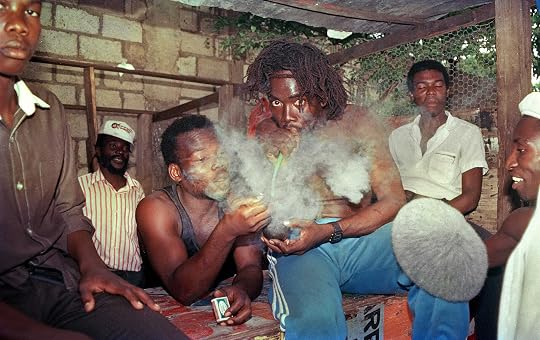
The Disappearers gather through diary pages, courtroom-style testimony, one long series of letters sent by an old queen to a friend across the ocean, and a stretch addressed straight to the reader in second person, as if the reader is the one about to sin. Every voice sounds entirely its own, from a teenage diarist quoting Nirvana lyrics to a chorus of attackers who narrate their own violence like sports commentary.
The book asks for stamina across five long sections and forty years, a cast list long enough to require its own program, and a structure that jumps continents on a whim. The middle section, telling a killer's revenge minute by minute, tests how much dread you can carry. Each voice claims its own space on the page. Havelock Titus, an aging exile brimming with Wilde references and buried terror, could easily fill a book alone.
With an appetite for scale and cruelty, James skips the tidy bow, the stapled lesson, and any villain simple enough to hate cleanly. If you like your literature sprinkled with a healthy dose of raw gay porn, this book is for you. I prefer my books without. I don't think that the book would have lost anything if the 300 pornographic pages were cut. The violence is equally jarring, but I can see why it's necessary. Brace for something demanding and generous in equal measure. Vanish into it. Chances are good you come back changed, if you come back at all.
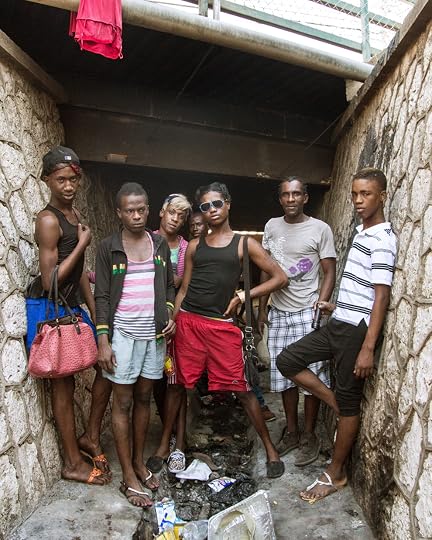
❤️ 🇮🇱
One flees to New York carrying revenge like carry-on luggage. Another mails his way from exile in London back to Kingston, one letter at a time. A third grows up worshipping Jesus, denim, and the man he keeps failing to become, in that order.
The Disappearers gather through diary pages, courtroom-style testimony, one long series of letters sent by an old queen to a friend across the ocean, and a stretch addressed straight to the reader in second person, as if the reader is the one about to sin. Every voice sounds entirely its own, from a teenage diarist quoting Nirvana lyrics to a chorus of attackers who narrate their own violence like sports commentary.
The book asks for stamina across five long sections and forty years, a cast list long enough to require its own program, and a structure that jumps continents on a whim. The middle section, telling a killer's revenge minute by minute, tests how much dread you can carry. Each voice claims its own space on the page. Havelock Titus, an aging exile brimming with Wilde references and buried terror, could easily fill a book alone.
With an appetite for scale and cruelty, James skips the tidy bow, the stapled lesson, and any villain simple enough to hate cleanly. If you like your literature sprinkled with a healthy dose of raw gay porn, this book is for you. I prefer my books without. I don't think that the book would have lost anything if the 300 pornographic pages were cut. The violence is equally jarring, but I can see why it's necessary. Brace for something demanding and generous in equal measure. Vanish into it. Chances are good you come back changed, if you come back at all.
❤️ 🇮🇱

September 20, 2026
The last three words in this novel describe how I feel about it: shock and sorrow. The Disappearers exposes the cruelty and peril that gay men experience in Jamaica — not just in the novel's pivotal violent event but on a constant basis, in their homes, in their schools, in daily life.
It is unrelenting in exposing the darkness and pain in several men's lives. This novel hurts. In his review, Ron Charles suggests reading it with asbestos-lined gloves, and sometimes I need to press pause to take a few breaths.
The only way for them to see us is for us to disappear -Jordan
It is unrelenting in exposing the darkness and pain in several men's lives. This novel hurts. In his review, Ron Charles suggests reading it with asbestos-lined gloves, and sometimes I need to press pause to take a few breaths.
The only way for them to see us is for us to disappear -Jordan

September 5, 2026
James is confronting homophobia and examining the psychological effects of trauma. To do that he has written a book filled with explicit sex and graphic violence. It is deliberately provocative. I can appreciate his point, and I can also say I would not have read this novel without its nomination to the Booker longlist. Pick it up only if this kind of content is something you can handle. It is not my type of book at all.
The book does what James sets out to do but I did not enjoy reading it.
The book does what James sets out to do but I did not enjoy reading it.

September 7, 2026
The Disappearers is a vicious, angry, violent book that still squeezes in as much biting humor as it can—all while the vibrant characters pour right off the pages into your living room or the park or the beach (or your bed lol 😂) with you while you read.
It’s a frantic, polyphonic hot potato of voices tossing a fiery narrative back and forth and around and around. There are two sections at the end that take this already next level novel and send it into space and eternity as an all time great.
More: This book is deliciously pissed off. It’s risky writing. It isn’t over or under edited. It allows this feeling of real human sentiment through because that’s what’s left sometimes when the world is what it is.
Marlon James has such a rare way of bringing the page to life through voice with sharp emotion reminiscent, to me, of Zora Neale Hurston at her best. I see the word “Dickensian” thrown around here and there for this novel, and though the novel even nods respected tribute to “Bleak House,” I think the rest of the novel’s characters and maybe James might hate having such a sticker stamped on. Either way, those are the sort of legends deserving of comparison and discussion when it comes to a novel such as this.
While literature and storytelling is far more than just some gateway into empathy, I have to think that readers hoping to gain insight into other shoes will appreciate this possibly too-immersive experience of a novel. It’s challenging in its structure, it’s delightful in its voice(s), and its messages are only occasionally subtle in the finding at times, most often loud and clear.
Award lovers, this is the book to beat.
A big thank you to @riverheadbooks for sending me this free copy of the book to review. #thedisappearers
It’s a frantic, polyphonic hot potato of voices tossing a fiery narrative back and forth and around and around. There are two sections at the end that take this already next level novel and send it into space and eternity as an all time great.
More: This book is deliciously pissed off. It’s risky writing. It isn’t over or under edited. It allows this feeling of real human sentiment through because that’s what’s left sometimes when the world is what it is.
Marlon James has such a rare way of bringing the page to life through voice with sharp emotion reminiscent, to me, of Zora Neale Hurston at her best. I see the word “Dickensian” thrown around here and there for this novel, and though the novel even nods respected tribute to “Bleak House,” I think the rest of the novel’s characters and maybe James might hate having such a sticker stamped on. Either way, those are the sort of legends deserving of comparison and discussion when it comes to a novel such as this.
While literature and storytelling is far more than just some gateway into empathy, I have to think that readers hoping to gain insight into other shoes will appreciate this possibly too-immersive experience of a novel. It’s challenging in its structure, it’s delightful in its voice(s), and its messages are only occasionally subtle in the finding at times, most often loud and clear.
Award lovers, this is the book to beat.
A big thank you to @riverheadbooks for sending me this free copy of the book to review. #thedisappearers

Read
August 25, 2026For a novel so brutal, so violent, so full of hate, James uses form in such a playful and elegant way. He captures Kingston in 1988 with homosexuality illegal and the AIDS epidemic haunting and hunting his cast of queer thespians. At so many moments I wanted to look away but James ensured that was never an option and he pressed my hand to the fire. This book is a epistolary masterpiece of rage and survival in a world that hates you. The prose is so strong and grounded in a homosexual Caribbean vernacular that brings electrical sparks to the long novel. In terms of The Booker I don’t see how this can’t win. James’s dexterity and virtuosity as a writer is on full display. This book is a comittment but it’s one I was so grateful to devote myself to. Like Angel Down, it transcends itself, what it is, through form. It does things only fiction can do. And for that, I think we have our Booker winner.

Review of advance copy received from NetGalley
3.25 stars
This book was one of the toughest reading experiences I’ve had in a long time; I had to take frequent breaks because the brutality, hatred, and violence it depicts made me physically ill. That said, I am very glad that I read it even though it is not a perfect book.
The Disappearers is about a group of gay men who decide to put on a gay play together, despite the fact that being gay in Jamaica (especially during the 1980s AIDS crisis) is often a death sentence. Mob violence against gay people is normalized, even encouraged, and the men putting on this play are subject to a horrific attack one night while rehearsing. The book follows some of these men’s lives before and after the attack and how they deal with the never-ending trauma of their circumstances.
Marlon James’s skill as a writer is immediately apparent. He has a gift for dialogue, immersive storytelling, and intense emotional impact. It is clear that he writes not only with an intimate knowledge of the book’s time and setting, but with a burning personal need to depict these atrocities on the page.
All that said, however, I think The Disappearers would benefit greatly from a couple more rounds of keen editing. It is over 640 pages long, and I think it would have been much more effective if pared down with focus and intent. As it is, there is a lot of repetition and rambling. That repetition may have been intentional to create a rhyming echo effect throughout the multiple characters’ experiences, but in practice it often comes off as sloppy and redundant. At times, the characters’ voices blend together in a way that suggests a lack of originality, but which could be fixed quite easily with some deliberate editing.
I hope this book wins the Booker prize and gains the recognition it deserves. As it is, however, it reads more like a strong, but messy, first draft that could be transformed into a masterpiece with the help of some focused and attentive edits.

September 17, 2026
My thanks to NetGalley and Riverhead Books for an eARC of this title, published September 1, 2026.
OK, so after 30 years of being on the road, I am kind of addicted to shorter books - books I could read in one week while I was on the road.
Which I know limits my reading. But in some ways I feel that if you can't get your point across in say 230 pp, you ain't doing it right.
And yes, I know that is total BS.
So, after Dwight Gardner's "the greatest thing since sliced bread" review in the NYTBR, I felt like I really did want to make the effort and read this 640 pp tome. James' previous 3 books, including 2 Afro-Fantasies, were all also over 600 pp. Two "shorter" novels were published prior to that.
Set mostly in Jamaica from 1988 to 2005, and centered around a group of mostly young gay men working to put on a play. They are attacked by a small mob; one is killed and all the others bruised physically (one has both his eyes gouged out!), mentally and psychologically. The rest of the book is taken up with their backgrounds, with trying to locate some of them, and with what they do with their lives.
Narrators change. So does font size and style in the 5 sections of the book. Parts are told by 1st, 2nd or 3rd person narrators; some of the story is told by letters, or by the transcription of some interviews recorded by a journalist years after the event.
There is a lot of violence in the book. Some reviewers have compared it to a Cormac McCarthy novel. James has said that the anti-gay violence was so bad in Jamaica when he grew up that he knew he was going to leave Jamaica - either on his own, or in a coffin. One of the recurring themes is the reggae "hit" "Batty is Not P*ssy", which mobs sing and chant as they attack, often killing, gay men. The creator of the song is one of the most brutal attackers of the group.
There is also a lot of very graphic gay sex in the book, especially the first 40% or so (maybe less so as the characters age?). But this is a prime example of why graphic sex, straight or gay, is not pornography. The sex is a statement on the characters - psychological, in terms of power and of class, and in terms of how they see themselves.
There were times I considered making this a DNF. And then there were times I kept reading late into the night. The novel is not only long, but the pages are filled with text. So, while the action/plot on the page moves along quickly, making your way through the physical book is less so.
James fills the books with cultural references - everything from '70's and '80's music (club to Nirvana) to Vivian Gornick and to Trollope vs Dickens (I side with the character on this one).
Really, a great story, well told and involved and technically innovative. Nobel for James down the road (as Gardner suggests)? We'll have to see. That's asking a lot - and he still has one volume of his Afro-Fantasy Trilogy to complete. I am doubting those titles will impress the committee.
As a 640 pp behemoth there is so much more I could write about here.
But I'll just leave it at that I'll be thinking in Jamaican patois for at least the next couple of weeks.
And, I feel like the short last section was not "tacked on" (as one critic suggested), but actual closure. And I am glad to say it is a positive ending.
4.7 out of 5.
OK, so after 30 years of being on the road, I am kind of addicted to shorter books - books I could read in one week while I was on the road.
Which I know limits my reading. But in some ways I feel that if you can't get your point across in say 230 pp, you ain't doing it right.
And yes, I know that is total BS.
So, after Dwight Gardner's "the greatest thing since sliced bread" review in the NYTBR, I felt like I really did want to make the effort and read this 640 pp tome. James' previous 3 books, including 2 Afro-Fantasies, were all also over 600 pp. Two "shorter" novels were published prior to that.
Set mostly in Jamaica from 1988 to 2005, and centered around a group of mostly young gay men working to put on a play. They are attacked by a small mob; one is killed and all the others bruised physically (one has both his eyes gouged out!), mentally and psychologically. The rest of the book is taken up with their backgrounds, with trying to locate some of them, and with what they do with their lives.
Narrators change. So does font size and style in the 5 sections of the book. Parts are told by 1st, 2nd or 3rd person narrators; some of the story is told by letters, or by the transcription of some interviews recorded by a journalist years after the event.
There is a lot of violence in the book. Some reviewers have compared it to a Cormac McCarthy novel. James has said that the anti-gay violence was so bad in Jamaica when he grew up that he knew he was going to leave Jamaica - either on his own, or in a coffin. One of the recurring themes is the reggae "hit" "Batty is Not P*ssy", which mobs sing and chant as they attack, often killing, gay men. The creator of the song is one of the most brutal attackers of the group.
There is also a lot of very graphic gay sex in the book, especially the first 40% or so (maybe less so as the characters age?). But this is a prime example of why graphic sex, straight or gay, is not pornography. The sex is a statement on the characters - psychological, in terms of power and of class, and in terms of how they see themselves.
There were times I considered making this a DNF. And then there were times I kept reading late into the night. The novel is not only long, but the pages are filled with text. So, while the action/plot on the page moves along quickly, making your way through the physical book is less so.
James fills the books with cultural references - everything from '70's and '80's music (club to Nirvana) to Vivian Gornick and to Trollope vs Dickens (I side with the character on this one).
Really, a great story, well told and involved and technically innovative. Nobel for James down the road (as Gardner suggests)? We'll have to see. That's asking a lot - and he still has one volume of his Afro-Fantasy Trilogy to complete. I am doubting those titles will impress the committee.
As a 640 pp behemoth there is so much more I could write about here.
But I'll just leave it at that I'll be thinking in Jamaican patois for at least the next couple of weeks.
And, I feel like the short last section was not "tacked on" (as one critic suggested), but actual closure. And I am glad to say it is a positive ending.
4.7 out of 5.

September 15, 2026
3.5
The Disappearers tells us the story of a group of young gay men who have been assembled to perform a play about homosexuality but in Jamaica their very existence is considered an abomination and the towns people are not about to turn a blind eye.
I wasn't entirely sold on this novel (despite its hard hitting subject matter) until I reached the second half of the book which was, for me, more moving than the first. However, that might have been simply because I got very bored by the numerous lengthy sex scenes in the first half of the novel. I don't think I'm a prude I just find reading about anyone's sex life mind- numbingly dull and Marlon James certainly crammed enough into the first half.
The second half of the novel deals mainly with the aftermath of the horrific beatings and murder of the group of boy actors. There are some truly horrifying scenes described and I spend my time wondering exactly why people feel the need to punish those who have different preferences. It bewilders me.
Jordan is the character whose story affected me most as he struggles to deal with his feelings and desire for revenge.
I have not read any Marlon James previously and its clear why this has earned a place on the Booker longlist.
I partly read the book but also listened to the audiobook which was brilliantly read by an ensemble cast. It certainly brought the characters and action to life.
Thankyou to Netgalley and Penguin General UK for the digital review copy.
The Disappearers tells us the story of a group of young gay men who have been assembled to perform a play about homosexuality but in Jamaica their very existence is considered an abomination and the towns people are not about to turn a blind eye.
I wasn't entirely sold on this novel (despite its hard hitting subject matter) until I reached the second half of the book which was, for me, more moving than the first. However, that might have been simply because I got very bored by the numerous lengthy sex scenes in the first half of the novel. I don't think I'm a prude I just find reading about anyone's sex life mind- numbingly dull and Marlon James certainly crammed enough into the first half.
The second half of the novel deals mainly with the aftermath of the horrific beatings and murder of the group of boy actors. There are some truly horrifying scenes described and I spend my time wondering exactly why people feel the need to punish those who have different preferences. It bewilders me.
Jordan is the character whose story affected me most as he struggles to deal with his feelings and desire for revenge.
I have not read any Marlon James previously and its clear why this has earned a place on the Booker longlist.
I partly read the book but also listened to the audiobook which was brilliantly read by an ensemble cast. It certainly brought the characters and action to life.
Thankyou to Netgalley and Penguin General UK for the digital review copy.
Displaying 1 - 30 of 557 reviews