

What do you think?

Punk'n Heads
This band plays together, lives together…and unfortunately two of them are sleeping together. Whatever, I’m sure it’s fine. Now put on your punk’n mask and let’s rock!
Hannah Lipsky isn’t sure what’s happening. She dreamed of becoming a fine art painter, but after breaking up with her girlfriend, she’s suddenly dropped out of art school, moved into a flophouse, and gotten roped into singing in a campy horror-punk band. With costumes. To make things even more complicated, she might be hooking up with her housemate/bandmate/high school crush, Jerry. Wherever this is leading, it’s going to be messy.
Critically acclaimed, Eisner-nominated creators Nicole Goux (Forest Hills Bootleg Society, Pet Peeves) and Dave Baker (Everyone Is Tulip, Mary Tyler MooreHawk) join forces for a raucous and revealing new graphic novel about making music, making mistakes, facing your past, and choosing your future.
Hannah Lipsky isn’t sure what’s happening. She dreamed of becoming a fine art painter, but after breaking up with her girlfriend, she’s suddenly dropped out of art school, moved into a flophouse, and gotten roped into singing in a campy horror-punk band. With costumes. To make things even more complicated, she might be hooking up with her housemate/bandmate/high school crush, Jerry. Wherever this is leading, it’s going to be messy.
Critically acclaimed, Eisner-nominated creators Nicole Goux (Forest Hills Bootleg Society, Pet Peeves) and Dave Baker (Everyone Is Tulip, Mary Tyler MooreHawk) join forces for a raucous and revealing new graphic novel about making music, making mistakes, facing your past, and choosing your future.
Kindle Edition
First published April 7, 2026
Ratings & Reviews
Friends & Following
Create a free account to discover what your friends think of this book!
Community Reviews
Displaying 1 - 30 of 61 reviews
April 2, 2026
This was fun! It was not incredible but I think I got the concept. And I also really liked the colour palette and that each chapter the colour would change.
Hannah’ girlfriend broke up with her which made her drop out of art school. She ended up moving in with her childhood friend and his roommates, who together made a horror-punk band. After she was convinced to join the band after their vocalist sudden leave, she slowly started to make sense of her life again.
During the graphic novel we spend some time exploring the lives of all the people in the house and end up seeing how their relationships with each other is. As well as what occupies their mind outside of band practice. Personal problems and insecurities.
Sometimes we’re in need of a friend and we don’t even know it, the best thing in the world is when our friends know and each out. That was a nice moment between the characters so I wish I can have friends like that.
The art was amazing!!! It was quite the interesting story indeed. It truly shows that life is a journey and what matters is not the destination but the experience you get along the way. And sometimes talking things out is just what’s needed.
It comes out April 7, definitely recommend!
Thank you NetGalley for the arc.
Hannah’ girlfriend broke up with her which made her drop out of art school. She ended up moving in with her childhood friend and his roommates, who together made a horror-punk band. After she was convinced to join the band after their vocalist sudden leave, she slowly started to make sense of her life again.
During the graphic novel we spend some time exploring the lives of all the people in the house and end up seeing how their relationships with each other is. As well as what occupies their mind outside of band practice. Personal problems and insecurities.
Sometimes we’re in need of a friend and we don’t even know it, the best thing in the world is when our friends know and each out. That was a nice moment between the characters so I wish I can have friends like that.
The art was amazing!!! It was quite the interesting story indeed. It truly shows that life is a journey and what matters is not the destination but the experience you get along the way. And sometimes talking things out is just what’s needed.
It comes out April 7, definitely recommend!
Thank you NetGalley for the arc.

March 15, 2026
a messy little slice of life about bandmates and housemates, each facing their own personal struggles whilst attempting to share a healthy creative collaboration.
this book really captures the spirited transience of early adulthood - being a disaster in the wake of a breakup, moving away because you don't know what else to do, making turbulent, complicated new bonds as you figure yourself out.
it also captures all the vivacity and tension of living in a creative environment with your collaborators. these (mostly queer!) characters exist within a messy web of relationships, and they all have their own heavy shit to deal with.
i can concur that after a toxic breakup,
my favorite part of the book is the dreamy chapter wherein three of our characters visit the hollywood forever cemetery, have a picnic, and befriend some cemetery cats. such a lovely little adventure.
i will always sing the praises of goux's art - wonderful character designs, creative geometric paneling, and adorable details packed into each page. i love the dreamy color palette gradient, flowing from purple to blue to green and so on across chapters.
much appreciated that baker and goux don't shy away from political details here - the band's lyrics are unapologetically galvanizing, and morgan wears ACAB on their costume. i love that the authors chose to keep it real in this regard.
this book reminded me a lot of roaming by the tamaki team. both are reflective comics about messy relationships and the strangeness of this particular time in life.
previously i have adored goux's art in this place kills me with mariko tamaki - now i must seek out her other collaborations with dave baker!
Thank you to NetGalley and IDW Publishing for providing me with a copy of this book in return for an honest review.
this book really captures the spirited transience of early adulthood - being a disaster in the wake of a breakup, moving away because you don't know what else to do, making turbulent, complicated new bonds as you figure yourself out.
it also captures all the vivacity and tension of living in a creative environment with your collaborators. these (mostly queer!) characters exist within a messy web of relationships, and they all have their own heavy shit to deal with.
i can concur that after a toxic breakup,
my favorite part of the book is the dreamy chapter wherein three of our characters visit the hollywood forever cemetery, have a picnic, and befriend some cemetery cats. such a lovely little adventure.
i will always sing the praises of goux's art - wonderful character designs, creative geometric paneling, and adorable details packed into each page. i love the dreamy color palette gradient, flowing from purple to blue to green and so on across chapters.
much appreciated that baker and goux don't shy away from political details here - the band's lyrics are unapologetically galvanizing, and morgan wears ACAB on their costume. i love that the authors chose to keep it real in this regard.
this book reminded me a lot of roaming by the tamaki team. both are reflective comics about messy relationships and the strangeness of this particular time in life.
previously i have adored goux's art in this place kills me with mariko tamaki - now i must seek out her other collaborations with dave baker!
Thank you to NetGalley and IDW Publishing for providing me with a copy of this book in return for an honest review.


April 8, 2026
Baker and Goux captured a pitch-perfect early 20s LA friend group- messy, queer, creative, broke, and carrying burdens beyond their years. Through breakups, backyard gigs, bad jobs and birthdays, the crew stay true to their creative vision and their music. This book feels lived-in and real and I was immediately drawn in by Nicole Goux's warm and cartoony style. This book is out April 2026, pick it up!

Read
January 28, 2026A slice of life comic about a struggling band, which as a rule isn't exactly my bag, but the last thing I read from Dave Baker was the flawed yet fascinating Mary Tyler MooreHawk, so I thought I'd give him another look. And even though that was solo and this is a collaboration with illustrator Nicole Goux, there is a similarity right down to the look, and the use of art that's black, white and a single colour – except that where MTM was bubblegum pink drowning every comics section indistinguishably, and making the story within the story genuinely tough to follow, here it's a different colour each chapter, deployed with much more sensitivity and enabling subtler modulations of mood. The use of layouts and space is canny too, the sort of thing much harder to pull off in serialised comics than a graphic novel like this (which is why, children, there is a value to keeping the actual meaning of 'graphic novel' rather than letting it elide into a euphemism for 'comics when they're trying to impress the neighbours').
The story in service of which all that is deployed follows Hannah, who has dropped out of art school, split with her girlfriend, and ends up living with and then standing in on vocals for cartoon horror punk band Punk'n Heads who, as the name suggests, perform with papier maché pumpkins on their heads. And a lot of what follows is the sort of drifting, navel-gazing twenty-something stuff that I generally wasn't after in a comic even when I was a drifting, navel-gazing twenty-something. But, with the exception of relationships that seem to involve more talking about feelings than acting on them, which continue to grind my gears (and where I think two characters here make a dreadful decision, albeit a believable one), Punk'n Heads mostly pulls off the key trick of making it mean something more, be entertaining to read rather than merely recognisable, use it to express something about the importance and the lure of art. And if that sounds pretentious, it shouldn't: I think the moment I knew they were on to something is the scene where the band are mortified to have been booked for a children's birthday party, but when one of the kids afterwards continues singing their lyric about how capitalism is the enemy, realise: hang on, isn't this exactly what we dreamed of?
(Edelweiss ARC)
The story in service of which all that is deployed follows Hannah, who has dropped out of art school, split with her girlfriend, and ends up living with and then standing in on vocals for cartoon horror punk band Punk'n Heads who, as the name suggests, perform with papier maché pumpkins on their heads. And a lot of what follows is the sort of drifting, navel-gazing twenty-something stuff that I generally wasn't after in a comic even when I was a drifting, navel-gazing twenty-something. But, with the exception of relationships that seem to involve more talking about feelings than acting on them, which continue to grind my gears (and where I think two characters here make a dreadful decision, albeit a believable one), Punk'n Heads mostly pulls off the key trick of making it mean something more, be entertaining to read rather than merely recognisable, use it to express something about the importance and the lure of art. And if that sounds pretentious, it shouldn't: I think the moment I knew they were on to something is the scene where the band are mortified to have been booked for a children's birthday party, but when one of the kids afterwards continues singing their lyric about how capitalism is the enemy, realise: hang on, isn't this exactly what we dreamed of?
(Edelweiss ARC)
Review of advance copy received from Netgalley
I’ll be honest: I don’t have a lot to say about this one, mostly because it didn’t make me feel much of anything.
The main reason this graphic novel gets two stars from me is the art style, which I genuinely enjoyed. I loved the choice to give each chapter its own colour palette; it made the reading experience visually engaging and showed a lot of care on the artistic side. From an aesthetic point of view, Punk'n Head absolutely has its moments.
When it comes to the story, though, it didn’t quite click for me.There are already countless books and graphic novels dealing with themes like depression and creative uncertainty. Not knowing whether your art can sustain you financially or emotionally is very real and very relatable. I get that. But while the themes are familiar, this particular story didn’t bring anything new or especially memorable to the table.
Nothing about it made me go “oh!” or pause to really sit with it. It wasn’t bad, just… fine. And unfortunately, “fine” isn’t always enough to leave a lasting impression.
The main reason this graphic novel gets two stars from me is the art style, which I genuinely enjoyed. I loved the choice to give each chapter its own colour palette; it made the reading experience visually engaging and showed a lot of care on the artistic side. From an aesthetic point of view, Punk'n Head absolutely has its moments.
When it comes to the story, though, it didn’t quite click for me.There are already countless books and graphic novels dealing with themes like depression and creative uncertainty. Not knowing whether your art can sustain you financially or emotionally is very real and very relatable. I get that. But while the themes are familiar, this particular story didn’t bring anything new or especially memorable to the table.
Nothing about it made me go “oh!” or pause to really sit with it. It wasn’t bad, just… fine. And unfortunately, “fine” isn’t always enough to leave a lasting impression.
April 28, 2026
Loved the vibes, the colours, the art style. It felt overstimulating when there was a lot of things going on though. Still enjoyed it though!
May 31, 2026
Punk'n Heads is the sort of graphic novel that is going to be hit or miss for the readers, which is sad because the concept sounded promising.
The story focuses on a young lady, Hannah, who has dropped out of art school and is just trying to find her next path in life. She joins a band, becoming their lead singer, and things go strange and unusual fast. While the main focus is Hannah and her relationships with those around her, we also get flashes and chapters about her bandmates. It's a twisted and illogical mesh that fell short of what it could have been.
Honestly, it's like a band of depressed adults, trying to get their crap together as adults and failing. It was really hard and uncomfortable to read. When it wasn't off-putting, it was boring. It felt a bit too real for a fictional story at times, and it just felt like it could settle on a theme or mood throughout the entire thing.
All this being said, I actually loved the artwork itself. The artist did a phenomenal job. It was truly the best part of this graphic novel. Without this brilliant artistry, I would be giving this book a lower rating. Honestly, I would consider rereading this story if I was to ignore the actual text and dialogue between the characters. It told the story better than the actual words on the page.
Thank you NetGalley and IDE Publishing for giving me an advanced copy of this book in exchange for an honest review.
The story focuses on a young lady, Hannah, who has dropped out of art school and is just trying to find her next path in life. She joins a band, becoming their lead singer, and things go strange and unusual fast. While the main focus is Hannah and her relationships with those around her, we also get flashes and chapters about her bandmates. It's a twisted and illogical mesh that fell short of what it could have been.
Honestly, it's like a band of depressed adults, trying to get their crap together as adults and failing. It was really hard and uncomfortable to read. When it wasn't off-putting, it was boring. It felt a bit too real for a fictional story at times, and it just felt like it could settle on a theme or mood throughout the entire thing.
All this being said, I actually loved the artwork itself. The artist did a phenomenal job. It was truly the best part of this graphic novel. Without this brilliant artistry, I would be giving this book a lower rating. Honestly, I would consider rereading this story if I was to ignore the actual text and dialogue between the characters. It told the story better than the actual words on the page.
Thank you NetGalley and IDE Publishing for giving me an advanced copy of this book in exchange for an honest review.

September 16, 2026
Punk'n Heads is an addition to the heavy shelf of graphic novels about weirdos starting a band, but the book sets itself far apart by focusing more on the characters than the band. Everyone is messy, queer, and broken in their own way, and trying to use their friendships (and the band) to muddle through to a better life.
Each chapter offers a slice of life that moves the overarching story forward (such as it is), while also building one character's depth. It feels a bit like a TV series in that way - you start with a handful of young unknowns and gradually come to know them in complete detail. And care deeply for their well-being!!
Nicole Goux's artwork adds the fifth star for sure. It's cartoonish but detailed and absolutely inviting. I simply loved the world and the characters, even with all their faults. Punk'n Heads truly took me by surprise.
Each chapter offers a slice of life that moves the overarching story forward (such as it is), while also building one character's depth. It feels a bit like a TV series in that way - you start with a handful of young unknowns and gradually come to know them in complete detail. And care deeply for their well-being!!
Nicole Goux's artwork adds the fifth star for sure. It's cartoonish but detailed and absolutely inviting. I simply loved the world and the characters, even with all their faults. Punk'n Heads truly took me by surprise.
Review of advance copy received from NetGalley
Breakfast Pizza, Pumpkin Masks, and the Death of a Former Self
“Punk’n Heads” is funniest when it looks most chaotic – and most serious when it stops pretending chaos is the point
By Demetris Papadimitropoulos | March 27th, 2026
The trickiest thing about an artistic crisis is that it rarely arrives dressed as one. It shows up looking like heartbreak, debt, bad timing, embarrassment, a wrong move south, a right move for the wrong reason. “Punk’n Heads” understands that from the start. Dave Baker and Nicole Goux take a premise that could easily have settled for indie-scene charm – breakup, dropout, flophouse, old crush, punk band, bad jobs, good banter, Los Angeles as equal parts invitation and trap – and turn it into something more searching. What Hannah Lipsky finds in Los Angeles is not the future she thought she wanted. That is the comic’s governing intelligence. It knows that the life that saves you may not resemble the life you had the language to ask for.
Hannah begins in a state of practical and metaphysical disarray. Liz has dumped her. Art school, which should have been the institutional home of her painterly ambition, now looks like an expensive arrangement of false promises. She leaves the Bay, lands in a crowded house called Dumbworld, and gets absorbed into the orbit of Jerry Cho, Morgan Murphy, Birdie Trebuchet, and the horror-punk band “Punk’n Heads.” On one level, the arrangement has all the appeal of the right wrong turn. There is the house, held together by borrowed groceries, improvised rent, rides to work, and the right to get on one another’s nerves before coffee. There is the band, whose pumpkin masks and camp-horror pageantry read as half joke, half doctrine. There is Jerry, the old high-school crush standing in that dangerous spot where nostalgia and possibility begin making eye contact. There is also the grubby glamour of how such a life actually runs: bad gigs, breakfast pizza, costume bags, cheap jobs, late-night artistic debate, and the small civic miracle of somebody else having food in the fridge. Baker and Goux make these details do the work of plot. They are not atmosphere. They are the machinery of survival.
What “Punk’n Heads” cares about, though, is not scene life as lifestyle. It is after something more awkward and more exact: the confusion of a person who no longer knows what counts as the serious version of herself. Hannah thinks of herself as a painter. More than that, she thinks of painting as the fixed point around which the rest of her life was supposed to organize itself. Her breakup, her departure from school, even her drift initially read as damage done to that truth. The better hunch running through the book is that Hannah has not merely gone off course. The course itself has expired beneath her feet. She is not a painter temporarily lost in punk theatrics and communal mess. She is a person discovering that the self she built her future around may have been only one draft among several.
That is why the children’s-birthday-party gig matters so much. On paper it is one of the book’s best jokes: a horror-punk band, scrambling for rent money, realizing too late that they have been booked to play for little kids. It is humiliating, ridiculous, and several miles from any noble fantasy of vocation. It is also the book’s first genuine conversion scene. Hannah, who has been living in a state of bruised suspension, gets pushed into performance not as destiny but as emergency. What emerges is not mastery. It is voltage. The scene is funny because it is absurd, but it matters because it reveals what the book will go on to insist upon: art often begins, or begins again, under conditions too compromised to flatter anyone’s self-image. “Punk’n Heads” has no interest in purity. It trusts improvisation more than self-mythology, which is one reason it feels sharper than its premise first suggests.
That instinct shapes the ensemble as well. One of the comic’s quieter strengths is how well it understands that artistic life is built not from inspiration in the abstract but from logistics, temperament, labor, and appetite. Morgan worries about followers, visual identity, posting schedules, and how to turn a band into something that can survive contact with reality. Jerry cooks, writes songs, and avoids direct speech with almost equal commitment. Birdie disappears into a family crisis involving her brother’s mental illness, and the book abruptly widens. Dumbworld stops reading as lovable chaos once it has to share space with burdens no amount of scene charm can buff into style. Vickie, the departing singer, refuses to remain a stock ex-bandmate with hurt feelings. She carries the sting of replacement and the dignity of self-protection. The ensemble is not perfectly balanced, but it is socially convincing. “Punk’n Heads” gets something right that many books about youth culture miss: scenes are not just aesthetics plus yearning. They are systems of labor, resentment, caretaking, and mutual use. They are what people build when they are not yet stable enough to build anything cleaner.
Goux’s art does an enormous amount of the book’s thinking. This is not a comic that merely illustrates dialogue. It changes the temperature of a room. The shifting spot colors do not behave like ornament so much as emotional weather reports. A breakfast-table argument does not feel like a cemetery walk, and neither feels like a children’s-party set or a late-night kitchen exchange; the pages tell you this before anyone says a word. The line is clean, elastic, and alert without becoming antiseptic. Faces register feeling quickly, but not cheaply. The layouts move with confidence between regular conversational grids, poster-like title pages, mock documents, app interfaces, bursts of graphic emphasis, and quieter arrangements that reduce the world to gesture, object, or pause. Even the zoomed-out page rhythm carries meaning. Some scenes crowd and chatter. Others breathe. Others lock in. The result is a visual intelligence that keeps the comic from ever flattening into illustrated talk.
The pumpkin masks are a good example of how form and theme keep rubbing against each other productively. Characters argue over what they mean – gimmick, mystique, branding exercise, compromise, visual identity, joke – and the comic is smart enough never to resolve the question too neatly. The masks are ridiculous. They are also protective. They make the band legible while threatening to turn that legibility into a cage. In a weaker book, they would stand for one thing and stay there obediently. Here they keep changing pressure depending on who is wearing them, when, and why. That instability is a strength. “Punk’n Heads” understands that persona can be false and useful at the same time. It can help you become visible and estrange you from yourself in the same motion.
The prose – if that is still the right word for writing distributed across speech balloons, captions, chapter headers, fake recaps, and inserted essays – is quick, colloquial, and sharply tuned to social embarrassment. Baker has a strong ear for people who are always half narrating themselves while trying not to say the thing that actually hurts. The dialogue is full of jokes, evasions, flirtation, annoyance, overstatement, and those little bursts of sincerity that arrive from the side rather than the front. The sentences stay brisk and interruptible, built for volley rather than lyrical display. That suits this material. These characters do not speak in polished epiphany. They speak in riffs, slogans, deadpan self-protection, and occasional patches of theory. When the writing is at its best, it catches the exact sound of people performing confidence while privately coming apart.
It is also, mercifully, funny. Not whimsical-funny, not quirk-for-export funny, but funny in the way overextended young adults are funny when the alternatives are despair or sincerity without cover. Breakfast pizza. A grotesquely practical gig negotiation. Kitchen absurdity at indecent hours. Arguments about masks, rehearsal, posting, image. The humor matters because it keeps the book from becoming solemn about its own sensitivity. “Punk’n Heads” knows that scene life is often ridiculous and formative in the same breath. It refuses the pious lie that only grim material can count as serious.
Where the book weakens is exactly where its intelligence becomes most eager to announce itself. “Punk’n Heads” has thought hard about growth, authenticity, survival, branding, departure, and the relation between old selves and future selves. That seriousness is real and mostly earned. But the comic too often states what it has already dramatized. Characters discuss art in increasingly articulate terms. Insert pages offer conceptual framing. The late essay “Evolution or Death” comes close to pinning a note to the book’s lapel and identifying the theme for anyone who somehow missed it. None of this is baseless. The book is indeed about reinvention, and about the difficulty of stepping outside one’s accumulated tools and habits. But its best pages already know that. They know it in color, in pacing, in the gap between the self Hannah advertises on a dating app and the self she is actually becoming, in the way the band becomes an accidental workshop for a life she did not know how to imagine. The intelligence is not the issue. The issue is that the comic occasionally distrusts its own ability to carry an idea without commentary.
The cemetery sequence reveals just how much larger the book’s ambition is than its premise initially lets on. Morgan, who could easily have remained the amusing logistics-brain of the group, becomes a conduit for the comic’s interest in dead artists, fandom, lineage, and the odd intimacy of devotion. The visit to “Hollywood Forever” could have been eccentric local color. Instead it changes the scale of the book. The dead are everywhere in “Punk’nHeads,” not only in mausoleums and old cartoonist lore and obsolete matte-painting craft, but in the form of former selves, former bands, former plans, former futures. The comic is haunted less by mortality than by succession. What survives? What mutates? What becomes source material rather than destination?
Uncle Dougie sharpens that question into something more cutting. His history as a matte painter, and his relation to a form of labor that could sustain a life while hollowing out its center, gives the comic one of its most useful counterweights. He is not simply the wise elder sent in to bless Hannah’s evolution. He embodies a more disquieting possibility: that a skill can pay the bills while failing to answer why you are making anything at all. In his presence, Hannah’s crisis stops looking like ordinary post-breakup drift. It becomes a crisis of motive. What is she for, artistically, if the future she built herself around no longer compels belief? This is where “Punk’n Heads” digs deepest. It is less interested in whether Hannah is talented than in whether she can bear to let an earlier self-concept die.
That is why the ending, which some readers may resist for refusing the most obvious romantic payoff, is the right ending for this book. Hannah and Jerry matter. The comic gives them warmth, chemistry, history, and genuine tenderness. But Hannah’s late realization is that what drew her to Jerry after Liz was not simply love, or not only love. It was refuge. He offered a way of making the future feel continuous with a fantasy she had been carrying for years. The book’s adult move is to refuse to let that fantasy remain the final truth. Hannah understands that what Jerry has actually opened for her is larger and less flattering than the role of beloved. He has become, in effect, a catalyst. The future he gives her is not a settled romantic form but a path of collaboration, performance, and artistic forward motion. “Punk’n Heads” demotes romance without cheapening it, which is riskier – and better – than cashing out in emotional confirmation.
There is a contemporary pressure running underneath all this that the comic never has to drag in by the collar because it is already there in the rooms: the demand that artists be not merely artists but posters, personalities, strategists, brand managers, and full-time stewards of their own legibility. Morgan’s social-media urgency, the arguments over whether the pumpkins are kitsch or identity, the label conversations, the practical question of how anything gets sustained – all of this gives the book a recognizably current scrape. But “Punk’n Heads” is too thoughtful to collapse into platform commentary. What keeps it timely may also keep it from dating too quickly: it understands that the old questions of vocation now arrive with worse interfaces.
The structure is, like much else here, both asset and expense. The episodic design suits the material. Young artistic life often does feel less like a clean arc than a pile of days, shifts, rehearsals, rides, meals, and arguments that only later reveal a pattern. The chapter-open “That was then / This is now” machinery, the faux recaps, the inserted histories and app screens and essays all give the comic the air of a self-mythologizing object, part graphic novel, part band dossier, part zine, part emotional mixtape. Most of the time, those devices do more than organize the story – they alter its meaning. At the same time, the looseness sometimes stays loose. Momentum arrives through recalibration rather than escalation, and that can leave the middle stretches feeling more alive than fully shaped. The book is notably uneven. But its unevenness comes from ambition pushing against execution, not from vacancy. Even when it loosens, it keeps thinking.
At 82/100 – 4 stars, “Punk’n Heads” lands exactly where its best and worst instincts suggest it should: too thoughtful, specific, and formally alert to dismiss, too self-explanatory to call exceptional without qualification. Its central achievement is to show that artistic becoming is rarely solitary and almost never pure. It happens through other people’s kitchens, through absurd gigs, through costumes that are embarrassing and necessary in equal measure, through badly timed conversations, through false starts that turn out not to be false at all, through the unnerving discovery that the life one once treated as authentic may have been only preparatory. Its clearest weakness is a failure of nerve: it does not always trust the pages that are already doing the work. There are tidier books, books that click every beat into place and leave almost nothing loose enough to rattle after the cover closes. “Punk’n Heads” leaves more behind than it perfectly lands. I would rather have that.
Its final insight is not that Hannah has found the right life at last. It is that the life she thought she was protecting may already be over. The discovery is not tragic. It is stranger than that, and better. Hannah does not lose the past so much as hear it shift pitch. The song is still hers. It just sounds, finally, like a departure.
“Punk’n Heads” is funniest when it looks most chaotic – and most serious when it stops pretending chaos is the point
By Demetris Papadimitropoulos | March 27th, 2026
The trickiest thing about an artistic crisis is that it rarely arrives dressed as one. It shows up looking like heartbreak, debt, bad timing, embarrassment, a wrong move south, a right move for the wrong reason. “Punk’n Heads” understands that from the start. Dave Baker and Nicole Goux take a premise that could easily have settled for indie-scene charm – breakup, dropout, flophouse, old crush, punk band, bad jobs, good banter, Los Angeles as equal parts invitation and trap – and turn it into something more searching. What Hannah Lipsky finds in Los Angeles is not the future she thought she wanted. That is the comic’s governing intelligence. It knows that the life that saves you may not resemble the life you had the language to ask for.
Hannah begins in a state of practical and metaphysical disarray. Liz has dumped her. Art school, which should have been the institutional home of her painterly ambition, now looks like an expensive arrangement of false promises. She leaves the Bay, lands in a crowded house called Dumbworld, and gets absorbed into the orbit of Jerry Cho, Morgan Murphy, Birdie Trebuchet, and the horror-punk band “Punk’n Heads.” On one level, the arrangement has all the appeal of the right wrong turn. There is the house, held together by borrowed groceries, improvised rent, rides to work, and the right to get on one another’s nerves before coffee. There is the band, whose pumpkin masks and camp-horror pageantry read as half joke, half doctrine. There is Jerry, the old high-school crush standing in that dangerous spot where nostalgia and possibility begin making eye contact. There is also the grubby glamour of how such a life actually runs: bad gigs, breakfast pizza, costume bags, cheap jobs, late-night artistic debate, and the small civic miracle of somebody else having food in the fridge. Baker and Goux make these details do the work of plot. They are not atmosphere. They are the machinery of survival.
What “Punk’n Heads” cares about, though, is not scene life as lifestyle. It is after something more awkward and more exact: the confusion of a person who no longer knows what counts as the serious version of herself. Hannah thinks of herself as a painter. More than that, she thinks of painting as the fixed point around which the rest of her life was supposed to organize itself. Her breakup, her departure from school, even her drift initially read as damage done to that truth. The better hunch running through the book is that Hannah has not merely gone off course. The course itself has expired beneath her feet. She is not a painter temporarily lost in punk theatrics and communal mess. She is a person discovering that the self she built her future around may have been only one draft among several.
That is why the children’s-birthday-party gig matters so much. On paper it is one of the book’s best jokes: a horror-punk band, scrambling for rent money, realizing too late that they have been booked to play for little kids. It is humiliating, ridiculous, and several miles from any noble fantasy of vocation. It is also the book’s first genuine conversion scene. Hannah, who has been living in a state of bruised suspension, gets pushed into performance not as destiny but as emergency. What emerges is not mastery. It is voltage. The scene is funny because it is absurd, but it matters because it reveals what the book will go on to insist upon: art often begins, or begins again, under conditions too compromised to flatter anyone’s self-image. “Punk’n Heads” has no interest in purity. It trusts improvisation more than self-mythology, which is one reason it feels sharper than its premise first suggests.
That instinct shapes the ensemble as well. One of the comic’s quieter strengths is how well it understands that artistic life is built not from inspiration in the abstract but from logistics, temperament, labor, and appetite. Morgan worries about followers, visual identity, posting schedules, and how to turn a band into something that can survive contact with reality. Jerry cooks, writes songs, and avoids direct speech with almost equal commitment. Birdie disappears into a family crisis involving her brother’s mental illness, and the book abruptly widens. Dumbworld stops reading as lovable chaos once it has to share space with burdens no amount of scene charm can buff into style. Vickie, the departing singer, refuses to remain a stock ex-bandmate with hurt feelings. She carries the sting of replacement and the dignity of self-protection. The ensemble is not perfectly balanced, but it is socially convincing. “Punk’n Heads” gets something right that many books about youth culture miss: scenes are not just aesthetics plus yearning. They are systems of labor, resentment, caretaking, and mutual use. They are what people build when they are not yet stable enough to build anything cleaner.
Goux’s art does an enormous amount of the book’s thinking. This is not a comic that merely illustrates dialogue. It changes the temperature of a room. The shifting spot colors do not behave like ornament so much as emotional weather reports. A breakfast-table argument does not feel like a cemetery walk, and neither feels like a children’s-party set or a late-night kitchen exchange; the pages tell you this before anyone says a word. The line is clean, elastic, and alert without becoming antiseptic. Faces register feeling quickly, but not cheaply. The layouts move with confidence between regular conversational grids, poster-like title pages, mock documents, app interfaces, bursts of graphic emphasis, and quieter arrangements that reduce the world to gesture, object, or pause. Even the zoomed-out page rhythm carries meaning. Some scenes crowd and chatter. Others breathe. Others lock in. The result is a visual intelligence that keeps the comic from ever flattening into illustrated talk.
The pumpkin masks are a good example of how form and theme keep rubbing against each other productively. Characters argue over what they mean – gimmick, mystique, branding exercise, compromise, visual identity, joke – and the comic is smart enough never to resolve the question too neatly. The masks are ridiculous. They are also protective. They make the band legible while threatening to turn that legibility into a cage. In a weaker book, they would stand for one thing and stay there obediently. Here they keep changing pressure depending on who is wearing them, when, and why. That instability is a strength. “Punk’n Heads” understands that persona can be false and useful at the same time. It can help you become visible and estrange you from yourself in the same motion.
The prose – if that is still the right word for writing distributed across speech balloons, captions, chapter headers, fake recaps, and inserted essays – is quick, colloquial, and sharply tuned to social embarrassment. Baker has a strong ear for people who are always half narrating themselves while trying not to say the thing that actually hurts. The dialogue is full of jokes, evasions, flirtation, annoyance, overstatement, and those little bursts of sincerity that arrive from the side rather than the front. The sentences stay brisk and interruptible, built for volley rather than lyrical display. That suits this material. These characters do not speak in polished epiphany. They speak in riffs, slogans, deadpan self-protection, and occasional patches of theory. When the writing is at its best, it catches the exact sound of people performing confidence while privately coming apart.
It is also, mercifully, funny. Not whimsical-funny, not quirk-for-export funny, but funny in the way overextended young adults are funny when the alternatives are despair or sincerity without cover. Breakfast pizza. A grotesquely practical gig negotiation. Kitchen absurdity at indecent hours. Arguments about masks, rehearsal, posting, image. The humor matters because it keeps the book from becoming solemn about its own sensitivity. “Punk’n Heads” knows that scene life is often ridiculous and formative in the same breath. It refuses the pious lie that only grim material can count as serious.
Where the book weakens is exactly where its intelligence becomes most eager to announce itself. “Punk’n Heads” has thought hard about growth, authenticity, survival, branding, departure, and the relation between old selves and future selves. That seriousness is real and mostly earned. But the comic too often states what it has already dramatized. Characters discuss art in increasingly articulate terms. Insert pages offer conceptual framing. The late essay “Evolution or Death” comes close to pinning a note to the book’s lapel and identifying the theme for anyone who somehow missed it. None of this is baseless. The book is indeed about reinvention, and about the difficulty of stepping outside one’s accumulated tools and habits. But its best pages already know that. They know it in color, in pacing, in the gap between the self Hannah advertises on a dating app and the self she is actually becoming, in the way the band becomes an accidental workshop for a life she did not know how to imagine. The intelligence is not the issue. The issue is that the comic occasionally distrusts its own ability to carry an idea without commentary.
The cemetery sequence reveals just how much larger the book’s ambition is than its premise initially lets on. Morgan, who could easily have remained the amusing logistics-brain of the group, becomes a conduit for the comic’s interest in dead artists, fandom, lineage, and the odd intimacy of devotion. The visit to “Hollywood Forever” could have been eccentric local color. Instead it changes the scale of the book. The dead are everywhere in “Punk’nHeads,” not only in mausoleums and old cartoonist lore and obsolete matte-painting craft, but in the form of former selves, former bands, former plans, former futures. The comic is haunted less by mortality than by succession. What survives? What mutates? What becomes source material rather than destination?
Uncle Dougie sharpens that question into something more cutting. His history as a matte painter, and his relation to a form of labor that could sustain a life while hollowing out its center, gives the comic one of its most useful counterweights. He is not simply the wise elder sent in to bless Hannah’s evolution. He embodies a more disquieting possibility: that a skill can pay the bills while failing to answer why you are making anything at all. In his presence, Hannah’s crisis stops looking like ordinary post-breakup drift. It becomes a crisis of motive. What is she for, artistically, if the future she built herself around no longer compels belief? This is where “Punk’n Heads” digs deepest. It is less interested in whether Hannah is talented than in whether she can bear to let an earlier self-concept die.
That is why the ending, which some readers may resist for refusing the most obvious romantic payoff, is the right ending for this book. Hannah and Jerry matter. The comic gives them warmth, chemistry, history, and genuine tenderness. But Hannah’s late realization is that what drew her to Jerry after Liz was not simply love, or not only love. It was refuge. He offered a way of making the future feel continuous with a fantasy she had been carrying for years. The book’s adult move is to refuse to let that fantasy remain the final truth. Hannah understands that what Jerry has actually opened for her is larger and less flattering than the role of beloved. He has become, in effect, a catalyst. The future he gives her is not a settled romantic form but a path of collaboration, performance, and artistic forward motion. “Punk’n Heads” demotes romance without cheapening it, which is riskier – and better – than cashing out in emotional confirmation.
There is a contemporary pressure running underneath all this that the comic never has to drag in by the collar because it is already there in the rooms: the demand that artists be not merely artists but posters, personalities, strategists, brand managers, and full-time stewards of their own legibility. Morgan’s social-media urgency, the arguments over whether the pumpkins are kitsch or identity, the label conversations, the practical question of how anything gets sustained – all of this gives the book a recognizably current scrape. But “Punk’n Heads” is too thoughtful to collapse into platform commentary. What keeps it timely may also keep it from dating too quickly: it understands that the old questions of vocation now arrive with worse interfaces.
The structure is, like much else here, both asset and expense. The episodic design suits the material. Young artistic life often does feel less like a clean arc than a pile of days, shifts, rehearsals, rides, meals, and arguments that only later reveal a pattern. The chapter-open “That was then / This is now” machinery, the faux recaps, the inserted histories and app screens and essays all give the comic the air of a self-mythologizing object, part graphic novel, part band dossier, part zine, part emotional mixtape. Most of the time, those devices do more than organize the story – they alter its meaning. At the same time, the looseness sometimes stays loose. Momentum arrives through recalibration rather than escalation, and that can leave the middle stretches feeling more alive than fully shaped. The book is notably uneven. But its unevenness comes from ambition pushing against execution, not from vacancy. Even when it loosens, it keeps thinking.
At 82/100 – 4 stars, “Punk’n Heads” lands exactly where its best and worst instincts suggest it should: too thoughtful, specific, and formally alert to dismiss, too self-explanatory to call exceptional without qualification. Its central achievement is to show that artistic becoming is rarely solitary and almost never pure. It happens through other people’s kitchens, through absurd gigs, through costumes that are embarrassing and necessary in equal measure, through badly timed conversations, through false starts that turn out not to be false at all, through the unnerving discovery that the life one once treated as authentic may have been only preparatory. Its clearest weakness is a failure of nerve: it does not always trust the pages that are already doing the work. There are tidier books, books that click every beat into place and leave almost nothing loose enough to rattle after the cover closes. “Punk’n Heads” leaves more behind than it perfectly lands. I would rather have that.
Its final insight is not that Hannah has found the right life at last. It is that the life she thought she was protecting may already be over. The discovery is not tragic. It is stranger than that, and better. Hannah does not lose the past so much as hear it shift pitch. The song is still hers. It just sounds, finally, like a departure.

February 4, 2026
My Selling Pitch:
If Dunham’s Girls was about queer kids in L.A., it might look something like this. Messy storytelling, but the art’s gorgeous.
Pre-reading:
Let’s get through a graphic before I leave on my trip! (Lol mission not accomplished.)
(obviously potential spoilers from here on)
Thick of it:
The art style for this is so cute!
A me!
Hi autism.
Jerry sucks.
Hannah and Jerry are pretty awful and selfish.
Fun in funerals, baby.
Why do they always draw the buttholes on cats? It's so gross and unnecessary.
All the different pose angles are really impressive.
DID NOT HAVE THIS BOOK PEGGED FOR FULL FRONTAL LMAO
I really like this comic. There’s a lot of really emotional issues in it.
“Being an artist is telling secrets in public” is one hell of a line.
This reminded me a lot of Girls’ messiness. It’s so enjoyable, but it doesn’t have the best storyline arc to be satisfying. It’s very snippet based.
Post-reading:
This was such messy storytelling, but I still enjoyed it so much. Like I finished and I’m like okay, give me more. The characters are flawed but you root for them. It’s effortlessly diverse and touches on some weighty issues. The art’s gorgeous. Absolutely gorgeous. There’s so many interesting angles and dynamic poses. The panels were clear and easy to read. I enjoyed seeing the body diversity amongst the characters.
There’s so many positive things about this graphic novel, but it’s going to be hard to pitch to people. It doesn’t have a solid throughline to carry the story and give you a satisfying arc. Sure, the author’s note at the end tries to convince you that the real story was the artistic pivot, but everyone picking this up is going to be way more invested in the friends we made along the way. There’s no real clear benchmark of success. We don’t have a romantic relationship that comes to fruition. The band doesn’t suddenly become successful. Hannah and the ex-girlfriend don’t satisfyingly reconcile. Like the story just kinda leaves you hanging. It’s told in a very snippet heavy fashion. You’ll get introduced to a plotline and have enough time to get invested, but then the story just rug pulls on you and abandons whatever was going on for the next storyline. It’s very choppy.
I still think it’s worth picking up, especially if you’re a burnt-out artist. I think you’ll find pieces of yourself in this. The art alone is worth flipping through for.
Who should read this:
Character study fans
Burnt-out artists
Ideal reading time:
Summer
Do I want to reread this:
Yeah
Would I buy this:
Yes
Similar books:
* Ghosted in L. A. by Sina Grace-graphic novel, found family, paranormal, queer romance
* Shin Zero by Mathieu Bablet-graphic novel, dystopian, found family, queer, family drama
* A Thing Called Truth by Iolanda Zanfardino-graphic novel, queer romance, revenge thriller
* The College Try by Olivia Cuartero-Briggs-graphic novel, queer romance, time travel
* Groupies by Helen Mullane-graphic novel, historical, queer, horror, music scene
* Greta and Valdin by Rebecca K. Reily-lit fic, family drama, queer romance
* Passion Project by London Sperry-contemporary romance, messy girl fiction, family drama, mental health
* Daddy Issues by Kate Goldbeck-contemporary romance, messy girl fiction, family drama
Thank you to Netgalley and the publisher for a copy of this book in exchange for an honest review.
If Dunham’s Girls was about queer kids in L.A., it might look something like this. Messy storytelling, but the art’s gorgeous.
Pre-reading:
Let’s get through a graphic before I leave on my trip! (Lol mission not accomplished.)
(obviously potential spoilers from here on)
Thick of it:
The art style for this is so cute!
A me!
Hi autism.
Jerry sucks.
Hannah and Jerry are pretty awful and selfish.
Fun in funerals, baby.
Why do they always draw the buttholes on cats? It's so gross and unnecessary.
All the different pose angles are really impressive.
DID NOT HAVE THIS BOOK PEGGED FOR FULL FRONTAL LMAO
I really like this comic. There’s a lot of really emotional issues in it.
“Being an artist is telling secrets in public” is one hell of a line.
This reminded me a lot of Girls’ messiness. It’s so enjoyable, but it doesn’t have the best storyline arc to be satisfying. It’s very snippet based.
Post-reading:
This was such messy storytelling, but I still enjoyed it so much. Like I finished and I’m like okay, give me more. The characters are flawed but you root for them. It’s effortlessly diverse and touches on some weighty issues. The art’s gorgeous. Absolutely gorgeous. There’s so many interesting angles and dynamic poses. The panels were clear and easy to read. I enjoyed seeing the body diversity amongst the characters.
There’s so many positive things about this graphic novel, but it’s going to be hard to pitch to people. It doesn’t have a solid throughline to carry the story and give you a satisfying arc. Sure, the author’s note at the end tries to convince you that the real story was the artistic pivot, but everyone picking this up is going to be way more invested in the friends we made along the way. There’s no real clear benchmark of success. We don’t have a romantic relationship that comes to fruition. The band doesn’t suddenly become successful. Hannah and the ex-girlfriend don’t satisfyingly reconcile. Like the story just kinda leaves you hanging. It’s told in a very snippet heavy fashion. You’ll get introduced to a plotline and have enough time to get invested, but then the story just rug pulls on you and abandons whatever was going on for the next storyline. It’s very choppy.
I still think it’s worth picking up, especially if you’re a burnt-out artist. I think you’ll find pieces of yourself in this. The art alone is worth flipping through for.
Who should read this:
Character study fans
Burnt-out artists
Ideal reading time:
Summer
Do I want to reread this:
Yeah
Would I buy this:
Yes
Similar books:
* Ghosted in L. A. by Sina Grace-graphic novel, found family, paranormal, queer romance
* Shin Zero by Mathieu Bablet-graphic novel, dystopian, found family, queer, family drama
* A Thing Called Truth by Iolanda Zanfardino-graphic novel, queer romance, revenge thriller
* The College Try by Olivia Cuartero-Briggs-graphic novel, queer romance, time travel
* Groupies by Helen Mullane-graphic novel, historical, queer, horror, music scene
* Greta and Valdin by Rebecca K. Reily-lit fic, family drama, queer romance
* Passion Project by London Sperry-contemporary romance, messy girl fiction, family drama, mental health
* Daddy Issues by Kate Goldbeck-contemporary romance, messy girl fiction, family drama
Thank you to Netgalley and the publisher for a copy of this book in exchange for an honest review.

April 26, 2026
Punk’n Heads by Dave Baker (with art by Nicole Goux) is a messy, loud, & emotionally tangled dive into post-art-school drift, queer identity, & the chaos of creative life.
At its core, the story follows Hannah Lipsky, an art school dropout who stumbles into a horror-punk band while trying to piece herself back together after a breakup. What unfolds is less a clean narrative arc & more a deliberately chaotic snapshot of a life in flux—full of bad decisions, blurred boundaries, & unresolved feelings. Hannah’s rebound connection with her high school crush Jerry adds another layer of complication, especially as living, creating, & sleeping arrangements all collide under one roof.
One of the strongest aspects of Punk’n Heads is its approach to queerness. The characters exist in a space where sexuality & pronouns feel fluid & unforced, which makes the representation feel authentic rather than performative. That ease & openness is refreshing, & it’s clearly aimed at an audience that rarely gets to see this kind of normalization in stories about young creatives.
That said, the book leans heavily into emotional chaos without always offering satisfying payoff. There’s a noticeable lack of accountability for the characters’ choices, & while that may be intentional—mirroring the messiness of real life—it can leave the story feeling unresolved in a frustrating way. The interpersonal drama, especially the cattiness surrounding Jerry, feels more grating than compelling at times. Love triangles tend to bring out the worst in people, but here it borders on exhausting rather than insightful.
Visually, the bichromatic art style (cycling one color alongside black & white) is a bold choice, but it won’t work for everyone. I think it would've been fine if they didn't keep switching the one color (besides black & white) every chapter. It creates a distinct mood, though it may feel limiting or repetitive depending on your taste. One design choice that stood out—though not in a good way for me—was how Hannah is drawn with noticeably thick ankles while no other character shares that feature. It felt oddly specific & distracting, & I kept wondering what the intent was. If it was meant to signal something about her physicality or personality, it didn’t land clearly & instead just pulled me out of the story.
By the end, Hannah does begin to gesture toward independence, trying to separate her sense of purpose from her romantic entanglements. But the emotional cost—particularly how things play out with Jerry—leaves a bittersweet, somewhat sour note.
*I received an advance review copy for free & I am leaving this review voluntarily.*
#ThankGodForARCs
At its core, the story follows Hannah Lipsky, an art school dropout who stumbles into a horror-punk band while trying to piece herself back together after a breakup. What unfolds is less a clean narrative arc & more a deliberately chaotic snapshot of a life in flux—full of bad decisions, blurred boundaries, & unresolved feelings. Hannah’s rebound connection with her high school crush Jerry adds another layer of complication, especially as living, creating, & sleeping arrangements all collide under one roof.
One of the strongest aspects of Punk’n Heads is its approach to queerness. The characters exist in a space where sexuality & pronouns feel fluid & unforced, which makes the representation feel authentic rather than performative. That ease & openness is refreshing, & it’s clearly aimed at an audience that rarely gets to see this kind of normalization in stories about young creatives.
That said, the book leans heavily into emotional chaos without always offering satisfying payoff. There’s a noticeable lack of accountability for the characters’ choices, & while that may be intentional—mirroring the messiness of real life—it can leave the story feeling unresolved in a frustrating way. The interpersonal drama, especially the cattiness surrounding Jerry, feels more grating than compelling at times. Love triangles tend to bring out the worst in people, but here it borders on exhausting rather than insightful.
Visually, the bichromatic art style (cycling one color alongside black & white) is a bold choice, but it won’t work for everyone. I think it would've been fine if they didn't keep switching the one color (besides black & white) every chapter. It creates a distinct mood, though it may feel limiting or repetitive depending on your taste. One design choice that stood out—though not in a good way for me—was how Hannah is drawn with noticeably thick ankles while no other character shares that feature. It felt oddly specific & distracting, & I kept wondering what the intent was. If it was meant to signal something about her physicality or personality, it didn’t land clearly & instead just pulled me out of the story.
By the end, Hannah does begin to gesture toward independence, trying to separate her sense of purpose from her romantic entanglements. But the emotional cost—particularly how things play out with Jerry—leaves a bittersweet, somewhat sour note.
*I received an advance review copy for free & I am leaving this review voluntarily.*
#ThankGodForARCs
Review of advance copy received from Netgalley
Thank you author and Netgallery for this ARC!
I picked this ARC up because it seemed really fun artistic wise and the story blurb was fascinating. It's slice of life for a band trying to be known and make money.
The art style was vibrant and lively. The individual chapters being different colours was such a nice concept, it made the story feel alive. The characters are diverse in both design and personality but have similarities that help make them feel cohesive as a friend group and band. I really enjoyed these aspects of this story!
However, the storyline was very snippety. It would hop from one investment that almost gets you, to another and you are back at square one. It was hard to get super invested into the plot when the plot wasn't cohesive. The relationships, romantical ones, were *very* messy. Which could have been good! But the characters kind of felt bland for this. One was so invested in their past, it turned into obsession through their art. Which can happen, I suppose, but it didn't quite seem to fit the character. Then their new romance that was starting was pretty toxic. Which, again, can happen given everyone in the band seems depressed and self sabotage is a very real issue that depression can have people do. But you would think there would be some form of resolve at the end of the chapters when they "talk" or even at the end of the story. There really wasn't? They kinda forgave without giving the readers a true reason.
I would recommend this to artists! The style is fantastic and given that the characters are artists in their respective categories, it could be quite inspiring. Anyone who likes halloween themed stories, fun colours, and diverse characters in their stories, this may be for you! Just be ready for the storyline to jump from one section to the next without any resolve.
I picked this ARC up because it seemed really fun artistic wise and the story blurb was fascinating. It's slice of life for a band trying to be known and make money.
The art style was vibrant and lively. The individual chapters being different colours was such a nice concept, it made the story feel alive. The characters are diverse in both design and personality but have similarities that help make them feel cohesive as a friend group and band. I really enjoyed these aspects of this story!
However, the storyline was very snippety. It would hop from one investment that almost gets you, to another and you are back at square one. It was hard to get super invested into the plot when the plot wasn't cohesive. The relationships, romantical ones, were *very* messy. Which could have been good! But the characters kind of felt bland for this. One was so invested in their past, it turned into obsession through their art. Which can happen, I suppose, but it didn't quite seem to fit the character. Then their new romance that was starting was pretty toxic. Which, again, can happen given everyone in the band seems depressed and self sabotage is a very real issue that depression can have people do. But you would think there would be some form of resolve at the end of the chapters when they "talk" or even at the end of the story. There really wasn't? They kinda forgave without giving the readers a true reason.
I would recommend this to artists! The style is fantastic and given that the characters are artists in their respective categories, it could be quite inspiring. Anyone who likes halloween themed stories, fun colours, and diverse characters in their stories, this may be for you! Just be ready for the storyline to jump from one section to the next without any resolve.

Review of advance copy received from Netgalley
I’m walking away from this one with mixed feelings. I can absolutely appreciate what the authors did here, but for some reason, it just didn't quite resonate with me the way I expected it to. It had all the elements of a 5-star read on paper, but the actual experience of reading it felt a bit "meh."
The strongest part of this story, by far, is the characterization. Baker and Goux did an incredible job capturing that specific, messy energy of your early twenties. It’s a period of your life that’s just full of questions and constant reform, whether you’re ready for it or not. I loved seeing these young artists reinventing themselves through their work and their relationships; it felt very authentic to that age where you finally start to understand yourself, which usually means having to confront all your preconceived notions about who you were supposed to be.
The characters are all flawed in a way that makes sense and feels deeply human. They have real depth—tangible motivations and fears that drive the plot forward. I really appreciated their designs, too; there’s a lot of personality in how they’re presented.
However, the execution made it a bit of a struggle to get through. The art is quite chaotic, and there is a lot of text packed onto every page. That visual density made the pacing feel heavy, and it was honestly a bit tough to stay fully immersed when the layout felt so overwhelming.
Ultimately, Punk'n Heads is a work I can respect for its message and its layered characters, but the "spark" just wasn't there for me. It’s a solid story about the growing pains of being a young creative, but the friction between the art style and the text-heavy pages kept me from fully connecting with it.
The strongest part of this story, by far, is the characterization. Baker and Goux did an incredible job capturing that specific, messy energy of your early twenties. It’s a period of your life that’s just full of questions and constant reform, whether you’re ready for it or not. I loved seeing these young artists reinventing themselves through their work and their relationships; it felt very authentic to that age where you finally start to understand yourself, which usually means having to confront all your preconceived notions about who you were supposed to be.
The characters are all flawed in a way that makes sense and feels deeply human. They have real depth—tangible motivations and fears that drive the plot forward. I really appreciated their designs, too; there’s a lot of personality in how they’re presented.
However, the execution made it a bit of a struggle to get through. The art is quite chaotic, and there is a lot of text packed onto every page. That visual density made the pacing feel heavy, and it was honestly a bit tough to stay fully immersed when the layout felt so overwhelming.
Ultimately, Punk'n Heads is a work I can respect for its message and its layered characters, but the "spark" just wasn't there for me. It’s a solid story about the growing pains of being a young creative, but the friction between the art style and the text-heavy pages kept me from fully connecting with it.

Review of advance copy received from Netgalley
3.5
On paper, this graphic novel has all the story elements I normally love to see in stories. A little punk band made of a diverse group of roommates, messy siutationships, chaotic bisexuals, struggling artists trying to find meaning in their work, etc. But something about this story just didn't work for me. The plot felt somehow both dragged out and said too little. There were several scenes that I did love, such as two characters briefly discussing how "survival isn't enough", which is a concept I've heard people speak on in real life. There is also another through line that is essentially "You can't rely on others to make you who you are, you have to be yourself for yourself". That and a few other scenes with similar messages, I did enjoy. I understood those messages the story was trying to tell, and did appreciate them. But the overall plot line and how it all interconnects doesn't...really interconnect too well? You get only small amounts of development for each band member, and it feels like not enough. Obviously, there's slightly more on Hannah, as she is supposed to be the focus of this story, but it's not much more. The plot meandered just a bit too much for my taste. I did really enjoy the art style! I always enjoy unique art styles, and this was such a fun one. The limited color palettes are always a fun option for comics, and I loved seeing it here. The character designs I enjoyed as well; everyone felt like they could be someone you could bump into in the punk or art scenes.
Thank you to NetGalley and the publishers for an advanced copy in exchange for my honest review!
On paper, this graphic novel has all the story elements I normally love to see in stories. A little punk band made of a diverse group of roommates, messy siutationships, chaotic bisexuals, struggling artists trying to find meaning in their work, etc. But something about this story just didn't work for me. The plot felt somehow both dragged out and said too little. There were several scenes that I did love, such as two characters briefly discussing how "survival isn't enough", which is a concept I've heard people speak on in real life. There is also another through line that is essentially "You can't rely on others to make you who you are, you have to be yourself for yourself". That and a few other scenes with similar messages, I did enjoy. I understood those messages the story was trying to tell, and did appreciate them. But the overall plot line and how it all interconnects doesn't...really interconnect too well? You get only small amounts of development for each band member, and it feels like not enough. Obviously, there's slightly more on Hannah, as she is supposed to be the focus of this story, but it's not much more. The plot meandered just a bit too much for my taste. I did really enjoy the art style! I always enjoy unique art styles, and this was such a fun one. The limited color palettes are always a fun option for comics, and I loved seeing it here. The character designs I enjoyed as well; everyone felt like they could be someone you could bump into in the punk or art scenes.
Thank you to NetGalley and the publishers for an advanced copy in exchange for my honest review!
April 19, 2026
Thank you to netgalley for an ARC in exchange for an honest review.
I had a great time reading this, I was zooming in on my iPad to make sure I could see all the details of the art. There are so many fun pages of art. I think this is one of those books that you would benefit more from by reading a physical copy.
I thought the characters were fun to read and I liked how they weren’t just flat personality wise. There were some moments where I was just irritated with a character but I welcome that in books, I think it’s great to have characters that aren’t perfect and make odd choices.
I enjoyed the pacing of the reveals of character’s lives and what they were living with. It didn’t feel out of nowhere because you got hints from the dialogue. It did leave me wanting more because it felt like we learnt about a character’s life (so a build up) just to do nothing about it if that makes sense. This might be more to do with the book being a graphic novel but if there’s ever a second book I would definitely be picking it up for this reason.
I found character interactions to be nice to read and there were moments where I was full on giggling. One of those moments was when they were talking about turmeric and saying it didn’t sound real.
Overall, I had a great time reading this book and would love to read more about the characters. I think when we talk about graphic novels we are usually talking about ones for younger readers so I think this is great to have for older readers because of the themes and contents. Graphic novels can be bridges to get non readers into reading and I think this book could definitely be one of those bridges.
I had a great time reading this, I was zooming in on my iPad to make sure I could see all the details of the art. There are so many fun pages of art. I think this is one of those books that you would benefit more from by reading a physical copy.
I thought the characters were fun to read and I liked how they weren’t just flat personality wise. There were some moments where I was just irritated with a character but I welcome that in books, I think it’s great to have characters that aren’t perfect and make odd choices.
I enjoyed the pacing of the reveals of character’s lives and what they were living with. It didn’t feel out of nowhere because you got hints from the dialogue. It did leave me wanting more because it felt like we learnt about a character’s life (so a build up) just to do nothing about it if that makes sense. This might be more to do with the book being a graphic novel but if there’s ever a second book I would definitely be picking it up for this reason.
I found character interactions to be nice to read and there were moments where I was full on giggling. One of those moments was when they were talking about turmeric and saying it didn’t sound real.
Overall, I had a great time reading this book and would love to read more about the characters. I think when we talk about graphic novels we are usually talking about ones for younger readers so I think this is great to have for older readers because of the themes and contents. Graphic novels can be bridges to get non readers into reading and I think this book could definitely be one of those bridges.
Review of advance copy received from Netgalley
I live for weird and interesting, so when I saw that Punk’n Heads was available to read, I wanted to see what it’s all about. I’ve never been the person that goes places to see live music. I’ve literally only been to maybe two concerts in my life, but through the magic of books, movies and tv shows, I’ve learned a lot about them and my interest was peaked.
After a break up from her girlfriend of two years, Hannah decides to drop everything (and drop out of art school) to move to LA and start over. Do her parents know the plan? Nope. Does she have a plan? Not in the least. But she has a friend from high school that has a place she can crash for now.
Jerry lives in a house with three other roommates who also double as his bandmates. But like any band of friends, they have their ups and downs. Each person has their own life that has other highs and lows and alternate personalities are going to clash. So when he invites Hannah to move in, he creates waves… or more yet, this may be the straw that breaks the camels back.
I really liked the concept of the story, but I think this felt rushed. It should have been a longer series where we could have gotten more out of it. I did enjoy the mentioning of zines at one point, because as soon as I saw that, I understood the layouts for the book as a whole. It felt very zine, so that part made me smile.
I recommend this for anyone who likes the ups and downs of friend/family drama or anyone who loves alternative music with a gimmick. It was interesting as a whole.
Thank you to the publisher and NetGalley for my gifted eARC.
After a break up from her girlfriend of two years, Hannah decides to drop everything (and drop out of art school) to move to LA and start over. Do her parents know the plan? Nope. Does she have a plan? Not in the least. But she has a friend from high school that has a place she can crash for now.
Jerry lives in a house with three other roommates who also double as his bandmates. But like any band of friends, they have their ups and downs. Each person has their own life that has other highs and lows and alternate personalities are going to clash. So when he invites Hannah to move in, he creates waves… or more yet, this may be the straw that breaks the camels back.
I really liked the concept of the story, but I think this felt rushed. It should have been a longer series where we could have gotten more out of it. I did enjoy the mentioning of zines at one point, because as soon as I saw that, I understood the layouts for the book as a whole. It felt very zine, so that part made me smile.
I recommend this for anyone who likes the ups and downs of friend/family drama or anyone who loves alternative music with a gimmick. It was interesting as a whole.
Thank you to the publisher and NetGalley for my gifted eARC.

Review of advance copy received from Netgalley
Thank you netgalley for an eARC of this in exchange for an honest review
Punk'n Heads is a graphic novel about a college drop out who moves in with a childhood friend in an effort to both escape a bad breakup and find themselves. The artwork and flow of the story was extremely well done, each panel is oozing with personality without ever being too busy or distracting. The reoccurring "That was then, this is now" chapter breaks with a change to the spot color being used helped separate the chapters in a really satisfying way.
Story wise, each of the character arcs felt very much appropriate for the self aggrandizing 20 something creative cast. Which is a nice way of saying that as a boring 30 something they all seemed like they'd be frustratingly obnoxious to be around in reality, but made for a good story. The reoccurring "survival isn't enough" and focus on debating self worth as a creative seemed to come from a very personal place, which made sense after reading the note from the author at the end.
Where Punk'n Heads fell apart was the focus on the supporting cast. They each had interesting stories going on that could have been compelling, but because of the lack of focus on them they instead made the pacing of the story pacing and those parts of the story seem lacking and unsatisfying with how they were wrapped up by the end.
I will absolutely read more by the author and illustrator, but this didn't quite hit the mark.
Punk'n Heads is a graphic novel about a college drop out who moves in with a childhood friend in an effort to both escape a bad breakup and find themselves. The artwork and flow of the story was extremely well done, each panel is oozing with personality without ever being too busy or distracting. The reoccurring "That was then, this is now" chapter breaks with a change to the spot color being used helped separate the chapters in a really satisfying way.
Story wise, each of the character arcs felt very much appropriate for the self aggrandizing 20 something creative cast. Which is a nice way of saying that as a boring 30 something they all seemed like they'd be frustratingly obnoxious to be around in reality, but made for a good story. The reoccurring "survival isn't enough" and focus on debating self worth as a creative seemed to come from a very personal place, which made sense after reading the note from the author at the end.
Where Punk'n Heads fell apart was the focus on the supporting cast. They each had interesting stories going on that could have been compelling, but because of the lack of focus on them they instead made the pacing of the story pacing and those parts of the story seem lacking and unsatisfying with how they were wrapped up by the end.
I will absolutely read more by the author and illustrator, but this didn't quite hit the mark.

Review of advance copy received from Netgalley
I requested "Punk'n Heads" because of its synopsis, and almost DNF'ed it because of how hard it was to read on my phone. This looks like a zine, style-wise, which was so appropriate for the story, and I grew to love it, but it was a bit challenging initially.
The story was one of the most unique I have read in a long while, following a group of 20-somethings in LA, trying to make it in the music industry, with a small flashback strip at the beginning of each chapter, which I loved and added so much to the story.
The book explores some very important themes through all its characters, and what makes it so special is that it doesn't shy away from making them messy, unkind, or make mistakes. All these characters are going through things, and they don't always find the perfect or even a good solution for their problems, for a multitude of realistic reasons, but they keep trying.
That same realism is extended to the messiness of their romantic relationships and friendships, which was something I really did not expect to like, but I did. I also appreciated how diverse the cast of characters was and how that influenced their storylines, too, with multiple characters being queer.
Thank you to Edelweiss, NetGalley, Top Shelf Productions and IDW Publishing for this DRC.
The story was one of the most unique I have read in a long while, following a group of 20-somethings in LA, trying to make it in the music industry, with a small flashback strip at the beginning of each chapter, which I loved and added so much to the story.
The book explores some very important themes through all its characters, and what makes it so special is that it doesn't shy away from making them messy, unkind, or make mistakes. All these characters are going through things, and they don't always find the perfect or even a good solution for their problems, for a multitude of realistic reasons, but they keep trying.
That same realism is extended to the messiness of their romantic relationships and friendships, which was something I really did not expect to like, but I did. I also appreciated how diverse the cast of characters was and how that influenced their storylines, too, with multiple characters being queer.
Thank you to Edelweiss, NetGalley, Top Shelf Productions and IDW Publishing for this DRC.

May 10, 2026
What a chaos! Full blast of chaotic young adults dramas!
I am not sure how realistic the story was but for me some parts were realistic enough and showed the real-life confusion young adults often felt. Mostly in terms of self worth.
There were many layers in the storylines. Each characters had their own struggles and honestly I felt overwhelmed reading them. The illustrations didn't help much, even made me more overwhelmed with so many details going on and choice of colors.
At the end of the story, I felt really sad for Jerry. Dude was in freaking collaborator-zone whatever was that. Damn! Being in friend-zone is already bad, but he got another level of it into collaborator-zone. Hannah was so mean to him for real. I understand why she was like that but she was really abusing Jerry in their (not)relationship. I still can't get over how she somehow named their (not)relationship as "collaborator".
So many vulnerable moments showed by each characters in this book and those were my favorites. They were not having perfect images and that was completely fine and realistic.
Thank you to Dave Baker, Nicole Goux, IDW Publishing, Top Shelf Productions, and NetGalley for the ARC.
I am not sure how realistic the story was but for me some parts were realistic enough and showed the real-life confusion young adults often felt. Mostly in terms of self worth.
There were many layers in the storylines. Each characters had their own struggles and honestly I felt overwhelmed reading them. The illustrations didn't help much, even made me more overwhelmed with so many details going on and choice of colors.
At the end of the story, I felt really sad for Jerry. Dude was in freaking collaborator-zone whatever was that. Damn! Being in friend-zone is already bad, but he got another level of it into collaborator-zone. Hannah was so mean to him for real. I understand why she was like that but she was really abusing Jerry in their (not)relationship. I still can't get over how she somehow named their (not)relationship as "collaborator".
So many vulnerable moments showed by each characters in this book and those were my favorites. They were not having perfect images and that was completely fine and realistic.
Thank you to Dave Baker, Nicole Goux, IDW Publishing, Top Shelf Productions, and NetGalley for the ARC.
Review of advance copy received from Netgalley
I was super excited to read this because I absolutely adore Nicole Goux's art! It was definitely intriguing and I wanted to keep reading it as soon as I put it down... I think that Hannah and Jerry were kinda insufferable, they didn't seem like very good friends to the other characters and only cared about what was going on with them. But I will say that this is written very well in the sense that I didn't really like them but I liked the story and I wanted to keep reading about them.
The other characters were way more interesting to me, though. I think Morgan and Vickie were definitely my favorites! Vickie felt like the most realistic character, and the most relatable. I think that's also why I liked Morgan so much too, they are in the band but they are also very focused on being able to pay bills and actually getting the band out there.
The highlight of this book is definitely the art, I love how each chapter was a different color and I love Nicole Goux's character designs!
Thank you to Netgalley and the publisher for this ARC. All opinions are my own.
The other characters were way more interesting to me, though. I think Morgan and Vickie were definitely my favorites! Vickie felt like the most realistic character, and the most relatable. I think that's also why I liked Morgan so much too, they are in the band but they are also very focused on being able to pay bills and actually getting the band out there.
The highlight of this book is definitely the art, I love how each chapter was a different color and I love Nicole Goux's character designs!
Thank you to Netgalley and the publisher for this ARC. All opinions are my own.
June 20, 2026
The art here is top-notch – sweetly cartoony, looping lines that soften without losing the real world, sometimes gritty vitality that makes the story work.
The story itself lacks growth for the characters - we see them clash head on with early-20s issues, but I never feel like we see them grow. The ending wraps up too quickly and cutely, and I wish the resolutions that are handed out could be more in the focus.
In fact, as a musician, I feel like that’s what this story could be about - you go through trials; come out seeing things a new way; you write about it. Instead, here, resolutions are sort of handed out, seemingly just so they can get to the end of the story. Ex-lead singer Vicki’s story especially gets cut off before it even gets going.
Still, the journey is everything, and the individual sequences within the book can be truly magical – like when they visit the cemetery with Morgan, or the many house shows the band plays. The writers know this world and it’s fun and satisfying to read their takes on scenesters, hangers-on, and struggling musicians. I’ll be reading them again.
The story itself lacks growth for the characters - we see them clash head on with early-20s issues, but I never feel like we see them grow. The ending wraps up too quickly and cutely, and I wish the resolutions that are handed out could be more in the focus.
In fact, as a musician, I feel like that’s what this story could be about - you go through trials; come out seeing things a new way; you write about it. Instead, here, resolutions are sort of handed out, seemingly just so they can get to the end of the story. Ex-lead singer Vicki’s story especially gets cut off before it even gets going.
Still, the journey is everything, and the individual sequences within the book can be truly magical – like when they visit the cemetery with Morgan, or the many house shows the band plays. The writers know this world and it’s fun and satisfying to read their takes on scenesters, hangers-on, and struggling musicians. I’ll be reading them again.

Review of advance copy received from NetGalley
I love young adult indie bands and all the stories they can inspire, especially when it’s rock or punk – it always adds some energy.
Dave Baker and Nicole Goux convey a wealth of emotion through endearing, well-developed and well-defined characters who feel very real and really resonate with me. Punk’n Heads shows that creativity and art aren’t a walk in the park, but a somewhat chaotic series of stages and trials that lead to something often unexpected.
This comic blends found family, creativity, dreams, self-reflection, facing the difficulties of real life and how to bounce back, and the fact that the life that suits us isn’t necessarily the one we imagined... It’s really rich and very comprehensive.
Visually, I really liked the simplicity of using a single colour per chapter, and I loved the masks.
It really made me want to read more books by Dave Baker and Nicole Goux.
PS: The kids shouting “capitalism is the enemy” – a classic.
Dave Baker and Nicole Goux convey a wealth of emotion through endearing, well-developed and well-defined characters who feel very real and really resonate with me. Punk’n Heads shows that creativity and art aren’t a walk in the park, but a somewhat chaotic series of stages and trials that lead to something often unexpected.
This comic blends found family, creativity, dreams, self-reflection, facing the difficulties of real life and how to bounce back, and the fact that the life that suits us isn’t necessarily the one we imagined... It’s really rich and very comprehensive.
Visually, I really liked the simplicity of using a single colour per chapter, and I loved the masks.
It really made me want to read more books by Dave Baker and Nicole Goux.
PS: The kids shouting “capitalism is the enemy” – a classic.

April 30, 2026
Punk’n Heads, by Nicole Goux and Dave Baker, starts with a familiar trope: four friends just out of college trying to keep a band going, balance their dreams with everyday needs, and keep their connection to one another from slipping away. I’m not Gen Z, but both the situations and the dialogue felt genuine. As the novel goes on, another theme comes to the forefront: the uncertainties of early creative life. The book balances internal dialogue, casual banter, bursts of humor, and visual noise, especially in the music scenes, where Goux’s art turns loud and explicitly chaotic. By the end, the themes are being stated more directly: art is not only something you pursue, but something that finds you and, in doing so, reshapes how you relate to your past. The work is geared toward a young adult audience. It’s charming and often funny, with enough insight to keep it grounded. But it doesn’t go much beyond being what it’s about.
Review of advance copy received from Netgalley
On the surface, there should be a lot to like about this graphic novel: the setting, the antics of the band, and some really good art. But....it just didn't come together for me. I think at the heart of it, I really didn't like or connect with the characters; I like a big messy grow-up and a graphic novel is a great medium for that, but the protagonist(s) never really worked for me; I found myself more frustrated than anything else by the entitlement and immaturity of the core group. I also felt like the frenetic pace and loose storylines didn't work for me, though there were moments, especially in the art style, that were really visually fun and captivating.
While it ultimately wasn't for me, thank you to NetGalley and IDW Publishing | Top Shelf Productions for the opportunity to read and review this DRC. All opinions are mine alone.
While it ultimately wasn't for me, thank you to NetGalley and IDW Publishing | Top Shelf Productions for the opportunity to read and review this DRC. All opinions are mine alone.

Review of advance copy received from Netgalley
Thanks Netgalley and publisher for this graphic novel!
I did appreciate that we got to see young adults who dropped out of college and are starting out a pumpkin band together. I like the fact we have complete opposites to get us engaged in the story. However I felt Hannah x Jerry relationship was quite toxic like Hannah kept wanting to hook up with other girls behind his back an awful lot until she couldn’t. I honestly think they should’ve toned down the romance side of things as it was too much of a distraction tbh. I also felt the reading with the amount of speech bubbles was kinda hard to read like I had to zoom in plenty of times so maybe less text the better…
Other than those few complaints, it was a okish read to pass the time 🤷🏻♀️
I did appreciate that we got to see young adults who dropped out of college and are starting out a pumpkin band together. I like the fact we have complete opposites to get us engaged in the story. However I felt Hannah x Jerry relationship was quite toxic like Hannah kept wanting to hook up with other girls behind his back an awful lot until she couldn’t. I honestly think they should’ve toned down the romance side of things as it was too much of a distraction tbh. I also felt the reading with the amount of speech bubbles was kinda hard to read like I had to zoom in plenty of times so maybe less text the better…
Other than those few complaints, it was a okish read to pass the time 🤷🏻♀️
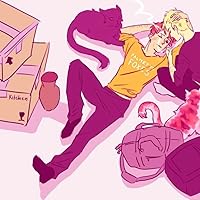
February 6, 2026
This was a decent read, it took me a few hot seconds to really get into it and I did skip around on some parts because I couldn’t really “connect/feel” for some of the characters.
I liked the concept of the story, even if it was alittle all over the place at some points. The main part about being a band of people all different and struggling with their own problems. The diversity is really nice with different characters of POC and LGBTQ+.
I feel like Hannah was definitely all over the place with Jerry and she was really using him in the beginning. I WISH JERRY TOLD HER HIS FEELINGS AT THE END! Even though I get where he’s coming from and putting her feelings first.
Overall rating: 3.5/5
Thank you Netgalley and Idwpublishing for this eArc in exchange for my honest review.
I liked the concept of the story, even if it was alittle all over the place at some points. The main part about being a band of people all different and struggling with their own problems. The diversity is really nice with different characters of POC and LGBTQ+.
I feel like Hannah was definitely all over the place with Jerry and she was really using him in the beginning. I WISH JERRY TOLD HER HIS FEELINGS AT THE END! Even though I get where he’s coming from and putting her feelings first.
Overall rating: 3.5/5
Thank you Netgalley and Idwpublishing for this eArc in exchange for my honest review.
This entire review has been hidden because of spoilers.

Review of advance copy received from Netgalley
I hate to give a less than positive view on this story as it seems personal and meaningful. But, unfortunately, I did not connect with it.
I didn’t connect with the characters in the slightest and felt very bored throughout. I find the characters one dimensional, unlikeable and bland. The found family relationships missed completely for me. The dialogue felt overwritten, clunky and dense. This may be due to it being an electronic copy but the stylistic text choices made it a little difficult to read.
The illustrations are beautiful, admittedly. There were a few witty moments that were charming. I appreciate the diverse representation. Sadly, these are the few positives I could find.
I hope this finds an audience that connects with the intended message. ❤️
I didn’t connect with the characters in the slightest and felt very bored throughout. I find the characters one dimensional, unlikeable and bland. The found family relationships missed completely for me. The dialogue felt overwritten, clunky and dense. This may be due to it being an electronic copy but the stylistic text choices made it a little difficult to read.
The illustrations are beautiful, admittedly. There were a few witty moments that were charming. I appreciate the diverse representation. Sadly, these are the few positives I could find.
I hope this finds an audience that connects with the intended message. ❤️

May 20, 2026
There's a whole lot of navel gazing going on in this book. But it's also solid. It's about Hannah who breaks up with her girlfriend, drops out of art school and suddenly moves from San Francisco to Los Angeles. There she crashes with an old friend, Jerry, who is in a band called the Punk'nheads. Things happen and she joins this horror punk band as its new lead singer. That's the main parts of the story. It's a slice of time for the band members. There's no real story to resolve. Life goes on. I do like that Nicole Goux illustrates this. I just finished Baker's Halloween Boy the other day and that's a master class on why not to do everything yourself, especially the coloring. Goux's art is a lot cleaner and she's got the memo on how to properly illustrate for one color comics.
August 18, 2026
I really enjoyed the artwork of this book. Each chapter being a different color was so fun, although I’m not sure if there was a deeper reason for that or not…however the storyline didn’t land for me. I liked the premise initially and even the plot was interesting to a point. But the characters all lacked any depth or emotional development that makes a graphic novel fun to read. There’s so much less writing in a graphic novel that the characters really have to be strong to suck a reader in and unfortunately this book lacked that. On top of that each character had their own storyline that felt separate from eachother and I didn’t see the importance of including them all. They didn’t build off each other, they just existed next to each other on the pages in this book.
Displaying 1 - 30 of 61 reviews