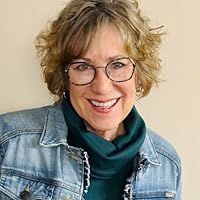
For me, the most affecting stories are those that are leavened with a sardonic sensibility. Italo Calvino, one of my favorite writers, notes “th[e] particular connection between melancholy and humor,” speaking of how great writing “foregrounds [with] tiny, luminous traces that counterpoint the dark catastrophe.” I've always veered toward the great literary comic writers—from Cervantes to Laurence Sterne to Pynchon, with a particular reverence for Nabokov, who believed that the best writing places the reader under a spell.
My debut novel, Someday Everything Will All Make Sense, was a finalist for the Nilsen Prize for a First Novel and an American Fiction Award. My second novel, The Vixen Amber Halloway (Regal House 2024) was a FOREWORD Indies gold medalist and a finalist for an American Fiction Award and a Pencraft Award for Literary Excellence in the thriller category. My third novel, Miracle Grow of the Mind, is forthcoming October 2026, and a novella, Resonance, in June 2027. My fiction has appeared in journals including Fence, Denver Quarterly, Hayden's Ferry Review, Cimarron Review, The Literary Review, The Laurel Review, South Dakota Review, North Dakota Quarterly, The South Carolina Review, The Chattahoochee Review, The Nebraska Review, North Atlantic Review, Sycamore Review, Permafrost, redivider, Literary Orphans, and Literal Latte. My story, “Papijack,” was selected by judge Patrick Ryan as the recipient of the Lamar York Prize for Fiction. My short stories and novellas have been nominated for the Pushcart Prize and have been finalists for the David Meyerson Fiction Prize, the Mary McCarthy Prize, the New Letters short story award, and the Disquiet Literary Prize, among others. My nonfiction has appeared in Writers DIgest, Severance Magazine, and includes “New York est une ville a part,” appearing in chantier d’ecriture (Mémoire d’encrier, A. Heminway, ed.). I am a graduate of New York University, Gallatin Division, and of St. John's University School of Law. My teachers include Rick Moody, Phil Schultz, and Sheila Kohler.
Beneath the satire of miracle cures and parental desperation is a deeply compassionate story about accepting a child on his own terms—and forgiving ourselves for not being able to fix everything. How do you reconcile your dreams of a perfect child with reality? Miracle-Gro of the Mind follows a high-strung mother determined to somehow reprogram her young son, Griffin, with some of the craziest yet weirdly plausible fixes, while the hapless yet endearing father drinks, wishing he were a better father, a better son. And yet, the reader begins to see what the parents, teachers, and quacks cannot: Griffin is in there. The end brings a payoff that left me cheering. Griffin doesn’t need to be reprogrammed; the adults around him do. It’s a funny, heartbreaking reminder that we often underestimate the people we’re trying hardest to save.