The debut novel by one of the bestselling Never Whistle at Night’s most memorable contributors, in which, after a young Anishinaabe woman vanishes, her sister tries to pick up the pieces of her broken family, even as her investigations put her at risk of suffering a similar fate.
Middle Sister is haunted by everyone in her community who has disappeared—as well as those who remain. Her ex-best friend and ex-boyfriend are walking relics of the girl she used to be, while her family—her activist mother, checked-out father, and attention-starved younger siblings—are reminders of the elder sister she can never live up to. Then there’s John Smith, the infamous white man with red cowboy boots living on stolen reservation land, whose obsessive attentions are as repellant as they are compelling. But most of all, there are the thousands of unacknowledged missing and murdered Indigenous women, including Older Sister, whose year-long absence from the reservation has torn her remaining family apart.
With local authorities proving useless, Middle Sister decides to start an investigation of her own, beginning with the mysterious “Eric”—a white man from a neighboring town who Older Sister claimed to love, and who she swore loved her. Attempting to hunt down the correct white Eric in the haystack of Minnesota forces Middle Sister to seek help from the community from which she’s grown alienated, starting with her coworker, Casanova; a stray rez dog; and Nookomis, her grandmother who’s foreseen her own death. Yet John still lurks in the growing wintry shadows, offering a sort of surrender that Middle Sister can’t help being drawn to. In the end, she must either let the guilt consume her or forgive herself and fight.
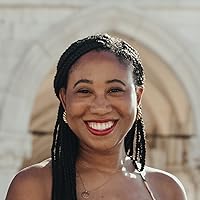
Amber Blaeser-Wardzala is an Anishinaabe writer, beadwork artist, and jingle dress dancer. She is a first-degree descendant of White Earth Nation in Minnesota and grew up in southeastern Wisconsin. She received her MFA from Arizona State University and was the 2024-25 George Bennett Fellow at Phillips Exeter Academy. Her writing has appeared in Never Whistle at Night: An Indigenous Dark Fiction Anthology, The Iowa Review, Joyland, Passages North, CRAFT, and others. She has received support from Storyknife Writers Retreat, Vermont Studio Center, the Hambidge Center, Ragdale Foundation, Write On Door County, Phillips Exeter Academy, the Center for Imagination in the Borderlands, the Virginia G. Piper Center, and the Women’s National Book Association. She is a Visiting Assistant Professor of Fiction at the Ohio State University in Columbus, Ohio where she lives with her overactive dog, Fern.
I'm cutting this one loose....half way through and it is reading too YA with teen drama. Do check out some other reviews...Could be the timing or not. Will not be rating. Onwards......
* A 2016 study by the National Institute of Justice (NIJ) found that more than four in five American Indian and Alaska Native women (84.3 percent) have experienced violence in their lifetime, including 56.1 percent who have experienced sexual violence. * In the year leading up to the study, 39.8 percent of American Indian and Alaska Native women had experienced violence, including 14.4 percent who had experienced sexual violence. * Overall, more than 1.5 million American Indian and Alaska Native women have experienced violence in their lifetime. (https://www.bia.gov/service/mmu/missi...) ********************************************** Overwhelmed with all consuming grief over the loss of their Eldest Daughter and Eldest Sister, a family struggles to deal with her disappearance of a year ago . Through the lives of these characters on this Anishinaaabe rez in Minnesota, the author takes the reader to the stark reality that Indigenous Women face as evidenced by the statistics above . The father has checked out and sits pretty much unresponsive to what’s happening around him drinking beer and ignoring the rest of his family . The mother deals with her grief by becoming a staunch activist for MMIW neglecting the rest of her family . Middle Daughter supports the family and cares for her two younger siblings carrying the burden of her own grief and self imposed guilt. It’s through her point of view that the story unfolds .
It’s slow going as the novel also paints a picture of the day to day life on the rez for her friends, coworkers , elders and other family members, on community and cultural history. The presence of a stranger, a white man obsessed with Middle Daughter adds a level of tension and uncertainty to her desire to find out what happened to her sister .
It’s dark depicting the darkness and fear experienced by indigenous women . A moving story of family, culture, community in the Anishinaaabe tribe. A tribute by Amber Blaeser-Wardzala to her roots and an important message about MMIW.
I received a copy of this book from Knopf though NetGalley
⭐️ 4 ⭐️ Fantastic debut written with so much heart. A contemporary women's fiction/mystery that read more like a character study and a woman's grief journey. The story focuses on an Indigenous woman living on a reservation in Minnesota whose Older Sister went missing a year prior. The only fact she knows is that her sister was dating a white man prior to vanishing. Stricken with guilt and uncertainty, the Middle Sister is hanging on to hope that one day her sister will be back. In the meantime, there is a very creepy white man who buys land on the reservation and begins following her all around. When local authorities fail to act, she decides to take matters into her own hands.
The story feels like a piece of history painted in bright red--a color that I think represents violence, danger and spilled blood. The author gives the voice to the voiceless, women especially who have suffered under a white mans rule, oppression and political injustice. From rape, sexual abuse and multiple vanishings, Another Name for Red is a harrowing page turner. It's perfectly paced and atmospheric. There is a strong sense of dread that comes from colonialism and racism. It's strong in Indigenous culture, identity and spiritual beliefs. The author created a very powerful portrayal of how a crisis impacts a community and those left behind. This is a story that is not to be missed!
Many thanks to NetGalley, Knopf, Pantheon, Vintage and Anchor and the author, Amber Blaeser Wardzala for an early ARC.
"Middle Sister is haunted by everyone in her community who has disappeared—as well as those who remain. Her ex-best friend and ex-boyfriend are walking relics of the girl she used to be, while her family—her activist mother, checked-out father, and attention-starved younger siblings—are reminders of the elder sister she can never live up to. Then there’s John Smith, the infamous white man with red cowboy boots living on stolen reservation land, whose obsessive attentions are as repellant as they are compelling. But most of all, there are the thousands of unacknowledged missing and murdered Indigenous women, including Older Sister, whose year-long absence from the reservation has torn her remaining family apart."
The resilience in the time of grief among the Anishinaabe Reservation is unbreakable. As thousands of Indigenous women go missing across the country, Middle Sister finds the need to investigate after her own sister has disappeared. She looks at various White men suspiciously especially John Smith, who begs for attention from Middle Sister. The investigation becomes dark as the people try to overcome what they don't even know what they are fighting. This book displays several bad addictions the people have. As their worst nightmare is ignored by the town officials, Middle Sister is uncovering secrets and scandals before she is the next victim. This reminds me of the Killers of the Flower Moon and how scandalous it is. Very well written and intriguing! Perfect for the Holiday Indigenous Day or Christopher Columbus Day. Thank you NetGalley and Pantheon for this incredible ARC in exchange for my honest review.
Symbolism rests in those tiny crevices of the heart where words just can't seem to dwell.
There's a bright red dress clipped to the clothesline that seems to dance in the wind. It is somber music only few can hear. Its movement beckons its owner to reclaim that vivid color depicting joy to some and deep sorrow to others.
Amber Blaeser-Wardzala creates a pathway into that sorrow. She writes to the overwhelming tragedy of the loss of thousands of Indigenous women across this country. In particular, she sets her story within the state of Minnesota of which she knows only too well. No light shines upon these forgotten women. Their names are sacred to their families and their memories are lined with hope that they may just appear out of nowhere some day. But as the years go by, hope takes wing.
Middle Sister carries her secret day in and day out. Her last words to Older Sister were filled with venom. She watched as Older Sister left the bonfire.....never to return again. Middle Sister cannot bring herself to tell her grieving parents or her brother, Bobo, or her sister, Prim. She feels that she is responsible for the loss of Older Sister.
Blaeser-Wardzala digs deep into life on the Anishinaabe reservation. Its people try to hold onto the ways of the culture even in the midst of an unaccepting society on the outskirts. She takes us to the jingle dancers at the powwows and to the beadworkers who create magnificent pieces of art. We'll follow Middle Sister to her job at the local hardware store and to the rez dog that brings comfort within her own presence.
Middle Sister takes it upon herself to try and find out what happened to Older Sister. But in her search, she'll have shaken the wrong tree. A White man, who calls himself John Smith, is taken with Middle Sister and follows her throughout the reservation. At first Middle Sister fears his advances, but eventually her curiosity piques. His attention is so desperately needed as she resides in a home frozen in the clutches of grief. Maybe John Smith knows how to find her sister. Maybe, just maybe, her diligence will pay off.
Amber Blaeser-Wardzala opens all the wounds residing inside Middle Sister. She has an uncanny gift of baring her soul and bringing it into the light. Middle Sister is a beacon of loss and a canvas of pain. Sometimes it is through fiction and its characters that the messages of tragedy are displayed. It's almost like tossing a pebble into the pond and watching the concentric circles that widen and widen. Knowledge is power and awareness sheds much needed light so that every individual, every single individual, has value. Nothing less is acceptable.
I received a copy of this book through NetGalley for an honest review. My thanks to Knopf, Pantheon, Viking and Anchor and to the talented Amber Blaeser-Wardzala for the opportunity.
I really wanted to read this author's debut novel after discovering this author in the Never Whistle at Night Anthology. I don't know if I can write a good enough review to express how powerful this book is.
This is a dark, thoughtful, unflinching, yet hopeful novel that explores the disappearance and murders of indigenous women.
Middle Daughter is an Anishinaabe living on the rez. Her sister, Older Daughter, went missing a year ago, and the family has been fractured. No one will speak about the disappearance, and off the rez it is like it never happened. Middle Daughter works to take care of the entire family, and also watches over her younger siblings. While carrying these burdens, she is also dealing with the unwanted attention of a white man living on the rez, known as "John" and "Red Boots". He callously begins to stalk her and call her "Pocahontas". Then, one day, she finds a clue and begins to earnestly seek out answers and information to what really happened to Eldest Daughter.
The feelings that Middle Daughter feels: guilt, frustration, anger, fear, ooze from the page. This is more a character driven story of an indigenous family that is facing the worst kind of horror while being ignored, pushed aside and being treated as if they are invisible. Focusing on Middle Daughter and her family dynamics , we walk alongside her as she faces the challenges and growth through the trauma. The culture of the Anishinaabe comes through. Amber Blaeser-Wardzala gives an in-depth look into the lives of this community and all the things they are facing- alcoholism, addiction and abuse. It is a dark and very emotional read.
Note: Many of the indigenous characters have no “white” names. Middle Sister shares this information when asked what her name is, that she will not give it because saying one’s name bestows power over the person.
This is a compelling and impactful story about the continuing struggles and ignoring of overlooked people. Amber Blaser-Wardzala has used her voice to highlight this injustice and proven herself to be an important author to look out for!
Thank you so much to NetGalley and Pantheon for the ARC. This is my honest and voluntary review.
Hard to believe that this is a debut novel. Amber Blaeser-Wardzala is passionate and rightly so on the subject of Missing and Murdered Indigenous Women ("MMIW"), an atrocity that has been addressed by other authors, mostly who live near the Rez in Minnesota. Primarily William Kent Krueger and Louise Erdrich. So many of these women go missing every year, and the colonizers (as the Anishinaabe think of them) do little or nothing to solve the mystery.
Middle Daughter (as she refers to herself, never revealing another name) has lived for a year with paralyzing guilt, ever since the disappearance of her beloved older sister. This novel deals with the grief of a household, the loss of a vital member of the family, and Middle Daughter tries to address her own sorrow by attempting to provide for them and be their strength. This is a character driven plot, with much internalization on her part, but there are also beautiful descriptions of pow wows, traditions, and spirituality. as Blaeser-Wardzala is herself a member of a tribe, a jingle dancer and beadwork artist, she brings that world to life through personal experience. Highly recommended.
This was a well-written novel and an interesting look into reservation life in Minnesota. It was categorized as a Mystery/Thriller, yet it turned out to be a lot more of a character study and a coming of age story than I expected. I think if it were marketed as such, then my rating would probably be higher. So definitely adjust your expectations going in.
If you enjoy novels about characters in their early twenties experiencing trauma while also undergoing a coming of age, then this might just be the novel for you. I enjoy reading contemporary fiction from authors of color and learning about their cultures and communities, and this story was no exception.
This novel sheds light on the Missing and Murdered Indigenous Women crisis in the US and how institutionalized racism affects this small Anishinaabe community in numerous ways. But more specifically, this story deals with Middle Sister's desire to understand what exactly happened to Older Sister. And since everyone knows that law enforcement doesn't exactly prioritize MMIW cases, there hasn't been any lead or answers to her disappearance.
This is a very dark and slow-moving drama that's primarily focused on Middle Sister's perspective as she lives her life while also trying to understand what might've happened to her Older Sister. She works retail. Her family life is dysfunctional. She still feels some type of way for her ex. And there's a creepy, older white man who's basically stalking her. As her life unfolds, Middle Sister tries to figure out if Older Sister's boyfriend is a suspect.
I really liked the mystery aspect of the story. But like I mentioned earlier, they are few and far between. Everything did eventually build towards a dramatic climax that's straight out of a thriller novel, so at least that part of the story stayed true to the genre. But everything else is pretty much a character-focused drama that's very slice of life.
While this wasn't what I expected, I'd still give this author another try.
This is a deeply moving novel that brings a name, voice, and intimate family perspective to the MMIW crisis. I went into this expecting a mystery or thriller, but I would say this is definitely more general fiction than genre fiction — solving the mystery of what happened to Oldest Daughter isn’t necessarily the driving force of the book, and tense scenes of action or violence aren’t dominant. Instead, this is a character-driven story that explores the day to day life of a girl, her family, and her community reeling in the aftermath of tragedy. None of the characters in this novel are perfect, but their nuance and complexity makes them all feel fully realized and like they play a unique, important role in the overall story. It moves at a slower pace, sinking the reader into the daily life of the Anishinaabe community it is set in. While this story itself is heartbreaking, the warmth and support of family and tradition really shined through for me.
4 / 5 Stars Wow, what a debut! This book was a study in heartbreak and grief and how that permeates into family and community. I thought the author did an amazing job of showing how grief lingers, pops up during both big and small moments, and affects different people differently.
I deeply appreciated how complex Middle Sister’s family was from her two younger siblings, to her disengaged father, her activist mother, and her grandmother (plus all of her extended family). I think it was easy to forget that Middle Sister was only 22 years old because of how parentified she had become, so I appreciated how the author walked the line of Middle Sister as the responsible caregiver and the still learning young adult.
Based on the description of the book, I thought it might read a bit more as a thriller with Middle Sister trying to investigate her sister’s disappearance and that ended up being more of a subplot. The mystery element is still there. The tension is really high with the danger of John but I think it is important to expect more literary fiction than a fast-paced thriller.
The point of reading for me is to feel seen and see. You not only get an amazing character study through Middle Sister but learn about the Anishinaabe culture and community. I highly recommend visiting the National Indigenous Women’s Resource Center to learn even more about the Murdered and Missing Indigenous Women.
You will probably like this book if you like: ⭐ Literary fiction that has a mystery aspect ⭐ Indigenous main characters ⭐ Search for the truth ⭐ Complicated family dynamics ⭐ Exploration of grief and loss
Thank you Knopf, Pantheon, Vintage, and Anchor | Pantheon and NetGalley for providing the ARC! All opinions are my own. Publication Date: October 13, 2026
⋆ ೀ ⋆ Follow me on Instagram @book.recs.by.lina for book recommendations and general fun times ⋆ ೀ ⋆
An unforgettable and unflinching story of a vanished sister and the family that is left devastated. Middle sister navigates her family and her own life amid the rumors that weave through the Rez...who killed Belle, or where did she go? Was it the white man with the red boots or someone else?
Absolutely stunning work woven with delicate details and beautifully crafted atmosphere.
I read in a day. I loved it and can’t stop thinking about it.
This story sheds light on such an important topic, and I appreciated learning about indigenous culture.
That said, I felt so bored reading this book. Labeling this as a mystery/thriller is incredibly generous. It reads so much more like lit fic.
If you’re looking for a book with a solid mystery element, skip this one. But if you want an indigenous story about a woman struggling alongside family challenges, then maybe you’ll enjoy this.
Perfect for readers of Angeline Boulley’s books, Another Name for Red is the story of Middle Sister, a young Anishinaabe woman grieving the disappearance of her older sister, blaming herself for being a potential cause for it, and trying to hold her family together as they all process their loss.
On top of coping with the disappearance of a loved one, Middle Sister and her tribe members experience the discriminations faced by native people and issues endemic at proportionally high levels in their population, alcohol abuse and suicide.
Older Sister’s disappearance isn’t covered up, but it is essentially ignored and dismissed, especially off the reservation. On the rez, people just don’t talk about it, and yet there’s plenty of talk about John, the white man in red boots, and his intense interest in Middle Sister, which angers and upsets her. His interest and the rumors spreading as a result also seems to have on impact on her younger brother Bobo when Middle Sister is already struggling with a mother who’s replaced parenthood with activism and a father who’s just completely checked out on life.
When Middle Sister finds new details on Older Sister’s significant other before her disappearance it gives her a purpose again and might just provide she and her family need, but she still has plenty of other hurdles to face just to get through each day.
The book feels a little disjointed at times, mostly because I think Blaeser-Wardzala is trying to convey to the reader not just Middle Sister trying to cope with her sister’s disappearance, but the struggles native people face every day. These messages are powerful, especially how Older Sister’s disappearance is marginalized and fractures her family, but Middle Sister’s feelings towards John feel all over the board, he disappears from a decent part of the story before reappearing, and it sometimes feels like separate scenes stitched together by how Middle Sister copes with them.
I’m not going to sugarcoat things and say that this is a happy book. Amber Blaeser-Wardzala doesn’t hesitate to integrate the hardships native people face into the story, showing the uphill battle Middle Sister faces not just in getting answers about her sister, but just in living her life everyday. The story covers the murky jurisdiction when indigenous women vanish, the lack of interest in their disappearance because they aren’t white, the racism and discrimination native people face off reservation, the disproportionate struggles with alcoholism and suicide, especially among young people, and the struggle to find jobs and make a living.
While the book isn’t full of warm fuzzies, it does give the reader an enlightening and intense perspective on indignities and marginalization native people face, and the enduring legacy of consequences they deal with across generations from white people imposing their will and ways.
A complimentary copy of this book was provided by the publisher. All thoughts and opinions are my own.
“Another Name For Red” by Amber Blaeser-Wardzala is a thoughtful and poignant novel centered on a family living on a Minnesota reservation. The family has been deeply fractured by the disappearance of a daughter and carries the lasting scars of generations of trauma caused by efforts to erase their culture and identity.
Through their story, this novel honestly explores the ongoing crisis of missing and murdered indigenous women, while also touching on the realities many Native communities continue to face, including addiction, alcoholism, domestic abuse, and the lasting effects of systemic injustice. The characters are all truly flawed which makes them feel very authentic to the story.
This is an impressive debut that offers readers an opportunity to better understand indigenous culture and the challenges many Native communities continue to navigate today. It is, however, a heavy and emotionally difficult read, and readers should be aware that it includes scenes of animal cruelty that will be upsetting to those who are sensitive to that subject.
I recommend this book to anyone who is interested in learning about Indigenous culture and the strength and perseverance it takes for these communities to succeed. 3 1/2 stars rounded up to 4 because of the importance of the topic!
Thank you NetGalley and Knopf, Pantheon, Vintage, and Anchor for the ARC in exchange for my honest review.
An intense story that circles around family, guilt and the real disappearances of young native women on the reservation. Middle Sister is hanging onto the hope that Older Sister will still come home. She disappeared after an argument with Middle Sister and the guilt and uncertainty is slowly destroying her. Rumors of Older Sister dating a white man and the arrival of John, a white man who is showing a creepy interest in Middle Sister may be connected or it is Middle Sister's way of trying to connect and understand Older Sister's state of mind. It is a dangerous game she is playing digging up information while trying to keep the strong connection to her people and customs. A beautiful debut that goes from tender family moments to complete chaos in a heartbeat as well as speaking to the very real problem of native women going missing and the authorities don't seem to care. Fans of Stephen Graham Jones and Chris Whittaker will find much to love here. My thanks to the publisher for the advance copy.
The weekend before powwow, all those between the ages of fifteen and thirty hold a bonfire to drink and have a good time. A year earlier, Older Sister and Middle Sister were attending together, but they had different ideas about how to spend the evening. Older Sister left early. That was the last time anyone saw her, and Middle Sister blames herself.
This book attempts to put a face on the victims and family of Indigenous people who disappear at a staggering rate. The author sets the stage by opening with an encounter Middle Sister has with an older man who goes by John Smith and lives next to the reservation. His reputation precedes him as a strange, creepy person who kills dogs and hangs them on a tree. One day, he shows up at the hardware store where Middle Sister works and tries to engage her, making inappropriate comments as his eyes roam her body. The incident is disturbing, but Middle Sister knows that it need not be a stranger who poses harm. She has to run a mental threat assessment every time a male offers her a ride, even those whom she knows. Every male is a suspect. Every male is a threat.
While the loss of Older Sister and the possibility of another abduction are threads that run through the plot, the narrative is otherwise a summary of daily life told by Middle Sister one year after Older Sister’s disappearance. The two younger children—Prim and Bobo—have made progress by now, and Middle Sister played a role in this. It appears that the oldest, which she now is, has a supporting role in rearing siblings. Prim is a darling character, and Bobo is a typical young boy and wonderful brother to Prim.
The father is described as a quiet and thoughtful man who has been a good parent. He now struggles to overcome his grief, suffering silently and never leaving the home. We don’t know to what measure he sees failure on his part in Older Sister’s disappearance, but surely that is in play. It seems salient to a story such as this considering the general protectiveness fathers have for their daughters and would have been a moving storyline.
The mother finds purpose in running a grassroots campaign to raise awareness about the number of missing and abducted Indigenous persons. Her immersion in this bothers Middle Sister who often yells at her and says she needs to learn to be a mother. This view seems unfair since Middle Sister carries her guilt as a heavy anchor that affects her mood and her interactions with others. As narrator, readers have a front row seat to this.
The loss of a family member is difficult to work through and requires patience and support from others, which Oldest Friend tried to provide. Middle Sister eventually pushes her away. Then, after a cruel breakup with her boyfriend and no contact for a year, on a whim Middle Sister stops by his store for consolation. He is surprised she doesn’t realize how badly she hurt him and expects him to ignore what happened between them. He comments that he lost both parents but didn’t use his grief as an excuse to mistreat others. Oldest Friend finally says what they have been thinking: that she has been treating everyone terribly for too long and drains the life out of those around her. It sounds like harsh feedback, but Middle Sister is drawn that way, and sympathy for her as a character does not easily flow.
Thank you to Knopf, Pantheon, Vintage, and Anchor and to NetGalley for providing this ARC.
3.5 stars. A dark but hope-filled novel exploring the silence that surrounds the deaths of indigenous women to help address the crisis of “missing and murdered indigenous women (MMIW)” in America.
NB: Many of the indigenous characters have no “white” names. As Middle Sister’s observes later in the novel when asked what her name is she will not give it because saying one’s name bestows power over the power.
Middle Sister has been grieving her Older Sister for some time. She’s been missing for about a year. On the rez, no one speaks of it, off the rez it’s like it doesn’t exist. One day a white man in red boots approaches Middle Daughter in the hardware store where she works and says “I’ll call you Pocahontas, and you can call me John.” John makes repeated advances as Middle Daughter tries to care for her younger siblings. One day Middle Daughter discovers a clue and seeks out Older Sister’s boyfriend. Eric, suspecting his involvement. In her quest to find answers, Middle Sister’s grief seeks an ending that may or may not resolve her anguish.
The native culture comes through in this story and the sadness in the plight of silence over missing women seeps into the pages. I think this was the book’s strength - not so the investigation part. This seemed disjointed and hard to understand. Certainly Middle Sister’s almost cavalier decision - to me - near the end was surprising and strange, but I am not of indigenous origins as the author, so I cannot comprehend the depths such sorrow could take to lead someone to such a place. The last chapter infuses hope which considering the intense melancholy of the novel felt good.
This book offers insight into a forgotten topic in white America - its blatant disregard for the devastation it has wrought on indigenous people. Readers who like to explore such topics will find this book interesting and thought provoking.
My thanks to NetGalley and Pantheon for allowing me access to this ARC.
Thank you to NetGalley and Pantheon for providing me with an ARC of this ebook in exchange for an honest review.
I’ve leaned into Indigenous literature in the past few years, and discovered some really great authors. It’s a shame that I only discovered it so late, but I’m glad to see how much representation has changed since when I was young. This book provides a grim, unvarnished portrait of the MMIP (Missing and Murdered Indigenous People) issue. I knew going into this that it wasn’t likely to be a happy read, but it turned out to be a really powerful one and I appreciated that more.
The story focuses on a main character who isn’t named, and is only referred to be her social and family position—Middle Sister, Middle Daughter, Oldest Friend. Everyone on the Rez goes by a nickname, and there seems to be a lot of value in a person’s real name so it isn’t shared very often. Life on the Rez is a lot like small town life, where everyone knows everyone else’s business and families know each other for generations.
When the book opens, we discover that a year ago, Oldest Sister went missing and left the family shattered. Their father doesn’t participate in life—he just sits in front of the TV and doesn’t interact with the family. Their mother has thrown herself into activism for MMIP, but Middle Daughter feels neglected. Her younger siblings, Prim and Bobo, are also affected and the trauma that results from MMIP is a major focus of the story. These characters are all well-developed and complex enough to feel realistic, and the changes that they experience as the result of a daughter going missing occur over the course of the story. In one scene, an Amber Alert is issued for a young white girl who has gone missing, but they haven’t been able to get any support or assistance from cops, either white or tribal.
Our protagonist (sorry, it feels awkward saying Middle Sister) has felt alienated by the trauma and is trying to learn more about what happened to her sister, while simultaneously being responsible for her two younger siblings as well as her father. She’s in her early 20s and works at a hardware store on the Rez, but since Oldest Sister disappeared, she has distanced herself from a boyfriend, best friend, and basically everyone outside of her family. She spends a lot of time with her grandmother, Nookomis, who has foreseen her own death and is preparing for it, so even she’s distracted and is unable to fully offer support.
It felt very much like all of the family members are trying to cope the best they can, but struggle in the absence of answers or even attention from law enforcement. This is an emotionally heavy read and focuses on the trauma associated with MMIP, but especially on how it can impact a family. But it was really Middle Sister’s journey that fascinated me. She crosses paths with a white man who lives on land sneakily stolen from the Rez, and the name he gives her is John Smith, while he calls her Pocahontas. Apparently he doesn’t realize or care that this is a stereotype, but he does seem to have a fetish for Indigenous women. This puts Middle Sister into a bind, because he clearly has an interest in her, and while she is disgusted by him and what he represents, she is also inexplicably drawn to him and the danger he poses.
The story is told with a deliberately moderate pace, allowing the reader to fully grasp the characters and their struggles, but the mystery is also a slow-burn one. As Middle Sister goes through her usual routine, she’s still haunted by the fact that she couldn’t live up to her perfect older sister, as well as the guilt she carries over her part in the disappearance. In the absence of clues, she meanders through daily life while still trying to figure out for sure what happened to her sister. In doing so, she discovers more than she ever realized about her sister.
Overall, this was an outstanding debut. The author portrays Rez life as grim, gritty, and despairing, with few opportunities and a population that is still being picked off by white men. The setting was done beautifully, and I can’t resist a dog that pops up as a character as well. Rather than leaning on action scenes, the author focuses on character dynamics and inner growth in an intentional way. While I didn’t always agree with the choices the characters made, I was still able to empathize, most strongly with Middle Sister. I normally like fast-paced stories, but I really enjoyed the slow-burn mystery aspect of the story since it allowed me to fully become engrossed in the story. There are a lot of Anishinaabe words, and would have liked it there were translations so I could understand the meaning, rather than relying on sparse contextual clues. This is a dark, emotional story—dealing with a missing family member that they suspect is dead, strained family relationships, grief, and the unsettling dynamic that develops between John Smith and the protagonist, which was so uncomfortable to read about. However, the subject matter is deliberately unsettling and traumatic, and I appreciated the look at a family who has lost a daughter to MMIP a year into the future. Blaeser-Wardzala does a fantastic job of exploring family trauma and coping skills, whether they are healthy or not. Either way, this is not only a fantastic portrayal of Indigenous characters, but also addresses a major issue faced by Indigenous people in the present day.
Bottom line: An addictive and engrossing read focusing on an MMIP and how it impacts a family a year after the disappearance, but it also focuses on heavy themes like grief, trauma, and the issue of MMIP while incorporating traditional Indigenous practices.
Such an impactful novel debut! Blaeser-Wardzala is an Anishinaabe first degree descendant of White Earth Nation and truly brings attention to some of the plights of our Indigenous people. More than four in five American Indian and Alaska Native women (84.3 percent) have experienced violence in their lifetime, including 56.1 percent who have experienced SA.
In this story, we are following Middle Daughter as she grapples with her grief and guilt following the disappearance of her older sister. As her family struggles to put the pieces back together, Middle Daughter continues to look for her missing sister, even if that means putting herself in harm's way.
This is a slow paced literary fiction with an element of mystery so I don't think it will appeal to people who are looking for thriller vibes or crazy twists. I struggled to get into the story for the first ~60 pages. After that, I was totay engrossed in this story. I could feel the pain of these characters and felt like Middle Daughter's emotions were shown in such a raw and compelling way. I really enjoyed the rest of the book and flew through it in just 2 sittings.
If you're curious about Anishinaable culture, enjoy literary fiction, and character driven stories, then you should pick this one up! (Also check your trigger warnings!)
Thank you Pantheon for the gifted ARC, all opinions are my own.
Another Name for Red was one of my most anticipated reads this year. Blaeser-Wardzala's debut novel was emotionally-charged and infuriating in the most powerful ways. The omission of names was the most blaring feature of this novel, with our protagonist and all surrounding women having no name but their family designation relative to the missing sister (i.e. "Middle Sister," "Youngest Sister," "Aunty," "Mother," "Grandmother,") and so on. To me, this was incredibly symbolic. It spoke to the erasure of MMIW cases in media, where names of missing Indigenous women are never common knowledge like their White counterparts. It also spoke to a matriarchal model of kinship.
The mystery aspect of this book was unique because we aren't necessarily trying to figure out "whodunnit," but rather moving through Middle Sister's grief with her. This story made a powerful statement about how grief is often something that's exploited by predators. Middle Sister's grief at the loss of her sister and her family's grief preventing them from showing up for one another, it was a heartbreaking dynamic to read.
I appreciated this novel and how it discussed the very real experiences of many Indigenous people in so-called America. Rather than being a fast-paced thriller with twists and turns, it was a slower glimpse into a grieving family's fight for the truth. Please read with care.
I picked this one up for the Goodreads Native American Heritage Month Challenge, and I'm glad I did!
I really enjoyed the complicated family relationships, the mystery surrounding the missing sister, and the emotional toll her disappearance took on everyone. I also appreciated learning more about Anishinaabe culture and the heartbreaking reality of missing and murdered Indigenous women.
Having previously run a missing persons group for Minnesota, I know how real this issue is and how often these women receive little to no media attention. It's absolutely heartbreaking how many cases go unnoticed and how little coverage these women receive.
Some of the attitudes toward white people felt a little too generalized for me, especially compared with my own experiences living in North Dakota. But overall, this was a moving, thought-provoking story that kept me invested. A solid four stars!
I always assumed the benefit of being part of a tribe would be the community support. This book makes it seem like that might not be the case. The main character is being pursued by a much older white man, and she is terrified of him. She thinks he is going to make her disappear like other native women disappear without a trace. The terror is so well described that it's a visceral twist in the reader's gut. This is the book that I would recommend for a man who doesn't understand the fear that women feel. The cleverness of the man who pushes just a little without doing anything that he could be objectively called on. The leering, the following is all he said/she said. Very deniable if she tries to go for help. That's the cleverness of a practiced predator. She does not feel, however, that she can turn to anyone for help. Not her parents, not her best friend, not her ex, not her coworkers. There is literally no one on the entire reservation that she thought would help her against this man. Not only do they not help her-- they gossip about her and this much older man. It's profoundly sad. That's just the very beginning of the book. The first few chapters are that kind of bleak. At times the mood is so bleak that there's a temptation for a DNF. However, I am glad I persisted, because I really liked the ending.
This is a good book for people who enjoy learning about other cultures, people who want to learn about the problems faced by others, and people who enjoy missing person stories. A good ownvoices awareness book.
Thank you so much to Pantheon for an Arc of Another Name for Red in exchange for my honest review!
Books like this are exactly why I love reading Debut novels. To read something that is so obviously personal and poignant in the authors life feels like such an honor as a reader.
You can absolutely tell how passionate Amber Blaeser-Wardzala is about the Middle Daughters story and the impact that the disappearance of Older Sister has on her and how that trauma ripples through their family.
The guilt, anger, confusion and blame that echos in Middle Daughters daily life while reading really makes you connect with her on such a deep level. I also loved that Amber chose to never name Middle Daughter, it really helped with the "this could be you, this is us" feel of the story.
I also really want to give the author kudos for how well the grooming and sexual assault portions of this story were handled. I'm always weary when I see trigger warnings for SA and Violence against women but the way it was written and entwined with the storyline was very well done.
Some important facts that this book helps highlight:
Murder is the 3rd leading cause of death for Indigenous Women.
More than 4 out of 5 Indigenous Women have experienced violence (84.3%)
More than half Indigenous Women experience sexual violence (56.1%)
Favorite Quotes:
"no one was looking at me—a relief. I was back to being someone people avoided because of the haunted look in my eyes. They could feel the weight of my grief trying to suck them in and swallow them whole, destroy them too."
"Lovers give only temporary happiness, a sense of false stability: they make you think everything is okay, that you have someone you can always rely on, and then they’ll leave you just like everyone else— no warning, just gone."
"And as I spun around, I wished to whatever was listening that that was true, that I was no longer a caterpillar so helpless to the world around it, but had shifted into a monarch butterfly. Because monarchs are foul tasting and poisonous."
This was a remarkable debut novel! I was completely shocked as I read the book and uncovered all the hidden truths within.
Middle Sister is trying to keep her family together while also searching for her missing Older Sister. She has to step up and help care for her younger siblings and parents as they struggle to move forward without knowing Older Sister's fate. When John Smith starts speaking to her at work, everyone on the reservation believes that they are now a couple. She has to battle her own warring emotions: not wanting to speak to him, but feeling a pull toward him for an unknown reason.
I keep saying this, but this book was remarkable. I was constantly questioning where the plot was going to go. Middle Sister is processing her grief, guilt, and fear in real time. She is a completely different person after her sister's disappearance, and she doesn't know if she will ever become that previous person again. Seeing the devastating effect the loss of Older Sister has on the family is always a unique perspective. Blaeser-Wardzala did an amazing job of informing the audience about the real history of missing indigenous women and men and really highlighted the neglect in the justice system and the media in not putting more effort into finding them. This was new information to me, and it has been running through my mind since I read this book. She infused so much of her culture throughout this book that I learned so much about jingle dance and beadwork. The language is so descriptive and immersive.
Overall, if you are in the mood for complex characters, complex family dynamics, a grief journey, and a mystery thriller that will keep you on your toes, then this is the book for you! She has a fan in me now and I will definitely be picking up more of her books in the future.
Another Name for Red nearly broke me, and at the same time was a heck of a mystery/suspense!
I requested this book from Knopf Doubleday on NetGalley because I have a particular interest in justice for victimized women, and have become heartbroken specifically for the many missing and murdered indigenous women. I have ecperiemfer many of the flaws and shortcomings in the justice system and respect for the many good people trying to work within that system. Seeing stories like this, even fictional, out in the world gives me hope for change.
But off my soap box, what did I think of this book? It’s fantastic. As a thriller/suspense it really delivers, but it’s built on a framework that also provides a lot of emotional depth and cultural impact. I loved the traditional tidbits of Anishinaabe life, sad though many of them were. The stark reality of the battle to get support for the investigation of MMIW was shattering, especially in light of the various ways you see Older Sister’s family members spiral in their grief.
While in some ways I suspected the ending, there was were aspects of it that took me by surprise. I absolutely loved Nookomis, the grandmother. She really grounded the story for me emotionally. While Middle Sister in the main character, Nookomis provides a touch point at the center of everything that seemed to help keep both Middle Sister and me from going off the rails emotionally.
I highly recommend this for lovers of emotionally relevant suspense/thrillers, complex family dynamics, those interested in indigenous culture, and even true crime readers who would like to experience a small piece of the MMIW crisis through the lens of a bereaved family.
This one is going to stick with me for a while. I’m pretty shocked that Another Name for Red is a debut novel because Amber Blaeser-Wardzala writes with so much confidence and emotional depth.
At the center of the story is Middle Sister, a young Anishinaabe woman whose older sister has been missing for a year. With her family unraveling under the weight of grief and local authorities offering little help, she begins searching for answers herself. But this becomes so much more than an investigation into one missing woman; it’s also a story about a family trying to survive an unimaginable loss and the devastating reality of missing and murdered Indigenous women.
There is so much to take from this book. Love, loss, grief, guilt, complicated family dynamics, difficult relationships, identity, community, anger, forgiveness, and the ways people cope when something happens that can’t simply be fixed. Some of the relationships in this story are incredibly messy and uncomfortable, but I think that’s part of what made them feel so human.
This isn’t necessarily an easy or comfortable read, and there were moments that were difficult to sit with, but I think that’s also why it made such an impression on me. There are layers here that I know I’ll continue thinking about long after finishing it.
For a debut novel, this was incredibly impressive, and I’m very interested to see what Amber Blaeser-Wardzala writes next.
4.25⭐️ haunting, emotional, complicated, and one I won’t be forgetting anytime soon.
Thank you to NetGalley and Pantheon for the advanced copy in exchange for my honest review. Another Name for Red publishes October 13, 2026.
Currently sobbing because this pulled on my heartstrings, reminding me on the ongoing fight that Natives face in this country.
The story follows Middle Sister, who is grieving her missing sister around the one year mark of her being gone. Her dad is an alcoholic, her mother is always gone at protests, her grandmother believes she’s dying soon, and she is set up to watch her two younger siblings while everything is going to shit around her.
What I liked most about this story is that it’s not your average sad story about reservations and the genocide of Native Americans. It shows the real lives of people, from the multitude of deaths brought on by trauma and addiction, to businesses closing down due to casinos, to white men still stealing land and living on reservations, to alcoholism, to white men thinking they’re owed native women’s bodies, and so much more.
The ending is detrimentally sad, but I think it shows that not everyone gets a happy ending in this country. Not everyone gets an amber alert sent out on their disappearance and is found safe and sound, with no one blaming them for going missing. It’s a sad reality that we have to face if we truly want to get better as a country.
I won't lie: Middle Sister was stressing me out the whole book. We enter the story about a year after Oldest Sister has gone missing. Middle Sister's family is fractured: her father hasn't left the house in months, her mother is always out doing outreach and protesting, her younger brother BoBo is becoming someone she doesn't recognize, and her younger sister is trying in her own way to keep the family together. Middle Sister is struggling with not only supporting her whole family monetarily, but providing support and care to her younger siblings and dealing with the loss of Oldest Sister and the secret she harbors related to her disappearance. Looming in the background is the rez creepy old white man who becomes obessed with Middle Sister. This book is really well written. I was sad, angry, disgusted, irritated, anxious. I felt for Middler Sister. Nookomis, her grandmother, was a favorite character. I also really liked the rez dog. I am definitely interested to see more from this author.
*Thank you to Pantheon and NetGalley for the eARC. All thoughts are my own.*
Thank you Pantheon Books for providing this book for review via NetGalley!
Another Name for Red is a prime example that, without a doubt, you can learn new things from a fictional novel. I was unaware of just how many Indigenous women, girls, and two-spirits have gone missing or were murdered before reading but now, thanks to Amber Blaeser-Wardzala, I’m more knowledgeable about this ongoing, heartbreaking crisis.
The novel follows Middle Daughter in the aftermath of her older sister going missing a year before. We witness how the absence of her sister has destroyed their once harmonious family and the heavy pain and guilt Middle Daughter feels day after day as she continues to look for her sister.
From page one, I was completely invested in this story and it was written in such an engaging way that although I read this on a sunny 71 degree day in October, I felt like it was winter time in Minnesota and I was trudging through the snow right alongside Middle Daughter.
I strongly recommend picking up this book to learn more about the Anishinaabe people, the pain of life after losing a loved one, and the MMIW2G crisis.