Victory is won or lost in battle, but all military history shows that adequate logistic support is essential to the winning of battles.
In World War II, logistic support of the fleet in the Pacific became a problem of such magnitude and diversity, as well as vital necessity, that all operations against Japan hinged upon it. The advance against the enemy moved our fleet progressively farther and farther away from the west coast of the United States, from Pearl Harbor, and from other sources of supply, to support our fleet we constructed temporary bases for various uses, and we formed floating mobile service squadrons and other logistic support groups. These floating organizations remained near the fighting fleet, supplying food, ammunition, and other necessities while rendering repair services close to the combat areas, this support enabled the fleet to keep unrelenting pressure upon the enemy by obviating the return of the fleet to home bases.
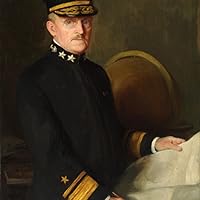
Because of the knowledge gained during his South Pacific service and particularly from his experience as Commander of Service Squadron Ten, the largest of the mobile squadrons, Rear Admiral W.R. Carter was chosen to write this history of logistics afloat in the Pacific. The opinions expressed and the conclusions reached are those of the author.- Secretary of the Navy, Dan Kimball
A great book, providing a detailed narrative history of Pacific Fleet’s Service Force during WWII. Written by an active participant who was present from start to finish, this book does at times read like an extended after action report. But the repetitive style and continued storyline serve to, like any good post action report, enhance the lessons learned and provide an easy flow from problem to solution. The transformation from a Base Force, suitable to War Plan Orange’s singular thrust across the Pacific, to a Service Force supporting multiple operations across a variety of logistical and service lines of effort in an island hopping campaign is a main component of the story. The initial years saw the establishment of large shore hubs, with Seabees creating small cities of piers, airports, and buildings on jungle islands. But by the end of the war the afloat base, which just needed a sheltered cove or atoll for ships to anchor, was found to be a more suitable method of forward service support. Likewise the practice of afloat logistics shifted from inefficient anchored lighterage to the massive Underway Replenishment formations which truly defined the Pacific Fleet’s combat power. The need to continuously update the command structure to suit the current needs, with desired changes pushed from the subordinate units upward, was one of the more interesting aspects. While the areas that developed into the biggest unforeseen issues, such as the lack of sufficient ocean tugs to support crippled ships in early engagements and the unanticipated ammunition expenditures at the start of the Kamikaze attacks, were lessons learned that are still of great consideration today. If professionals talk tactics while amateurs talk logistics, this book should be high on any maritime professional’s reading list. Highly recommended for those wanting to know more about logistics in the high end fight.
This is a detailed examination of the logistical requirements for the United States Navy in the Pacific during WWII. In a broader context it also includes some information on the logistics for amphibious operations such as Leyte and Okinawa.
I had started this book primarily to answer some questions I had about Pacific strategy. James Ellman in his critique of MacArthur suggested that the SWPA was an unnecessary theater of war and that the United States would have been better off concentrating on the Central Pacific under Nimitz. I found this compelling and fascinating.
This work goes some way towards explaining the decision to fight in the Solomons and New Guinea, at least in the early stages of the war.
Carter informs us that, initially, the United States was dependent upon shore-based facilities and this largely explains the genesis of MacArthur's theater. The Navy had to develop bases such as Pago Pago in Samoa and Bora Bora in French Polynesia, and to some extent was dependent upon bases in New Zealand and Australia.
These were inconveniently distant from the action, however, and the Navy was soon developing floating logistics.
The story of these takes up the bulk of the text in this book, and we read ad nauseam about tankers refueling ships. This is the most repetitive subject, over and over we read about how many barrels of oil or aviation fuel each tanker carried or supplied.
Oil was clearly the most important single resource, and the Navy was able to provide it via tankers while underway.
But this was far from the only requirement. Surprisingly enough, potable water was a constant demand and one that wasn't always adequately met. Other requirements included fresh and frozen food, dry food, and things like entertainment for the sailors in the form of films.
Estimates of numbers of logistics ships were woefully conservative, and eventually the service squadrons expanded to include hundreds of ships of various types and classes.
One interesting fact here is the ability of ships to undertake repairs while afloat, and huge floating docks that could accommodate even carriers and battleships were eventually constructed and towed from base to base.
In this respect, we learn that the Navy was able to establish bases anywhere they could find a sheltered harbor spacious enough to shelter the logistics fleet. This enabled the United States to island-hop past Japanese bases such as Rabaul and Truk, since any number of islands could be rapidly turned into bases such as Majuro, Eniwetok, Ulithi, and even Kerama Retto immediately adjacent to Okinawa.
Okinawa and Buckner Bay were themselves rapidly transformed into forward bases in preparation for the invasion of Japan, which was ultimately cancelled due to Japan's decision to surrender.
Carter makes it clear that without this logistic feat the Pacific War would have been much bloodier and would have lasted much longer. It is truly an incredible achievement and up-ended all of Japan's calculations.
Japan believed that by controlling a few key points, she could indefinitely delay the advance of the United States into the Western Pacific. This was a solid rationale in light of the interwar period, when no Service Squadrons had ever existed and based on all prior naval experience that indicated extensive bases were necessary to conduct operations.
This was something of an axiom for naval strategists. Ever since Mahan bases have received a premium of attention.
But the Service Squadrons revolutionized naval warfare by allowing the United States to dispense with fixed shore bases and leap-frog from island to island using floating facilities.
Japan, assuming the US would be required to assault heavily fortified bases like Rabaul and Truk, strongly entrenched these places only to have the US ignore them and establish bases in undeveloped islands.
Reading this, however, caused me to reflect on James Wood's short book on the strategy of japan in the Pacific, and what alternatives Japan might have pursued for a more successful outcome.
One fascinating suggestion he mentioned was the use of submarines, noting that Japan had no parallel for the tonnage war being waged by Germany in the Atlantic.
Wood argued that the US had long vulnerable supply lines and Japanese submarines might have wrought havoc on them had the IJN had a more sophisticated submarine doctrine.
In relation to this work about fleet logistics, you have to marvel at the curious inability of Japan to interfere with these operations. Most of these vessels would have been easy prey to submarines, or to more intensive aircraft attacks.
Carter does mention a few midget submarine attacks, and some kamikaze attacks towards the end, but these strike one as feeble efforts and Japan could have hit the Service Squadrons much harder. At one point Carter notes that during the move to Ulithi the whole apparatus was sailing along at only about five knots, and is at a loss to explain why the Japanese did not attack the mobile fleet train at all during this vulnerable moment.
We might well ask the same question, and wonder whether the US advance was enormously expedited by the failure of Japan to identify the Service Squadrons as a priority target.
Carter suggests that this story is extremely informative for any student of naval power, and it surely is. But one lesson might be that in a future naval war, a new opponent may not be so blind as was Japan, and floating logistics, while possible, may prove more difficult to defend and utilize.
All in all this is a monumental work that should be studied by anyone interested in seapower and the Pacific War.
This book does exactly what it purports to do, tell the story of fleet logistics in the Pacific in the second world war. The book is very detailed and contains fascinating info on all aspects of the Navy's advance base Force and logistics structure.
Unfortunately the detail can become daunting and the book is tedious to read. That puts this book outside the realm of the casual 'history buff' and I could really only recommend this book to Naval or maritime professionals or the extreme enthusiast.
This book filled in the gap that existed for me in understanding Pacific theater logistics in WW2. I am sure glad Rear Admiral Carter left this detailed overview of the operations of the US Navy Service Squadrons. I had already read how as the war progressed the US Navy had transitioned from using shore bases to floating bases. This book explains how this logistics transition occurred
One of the classics of the Second World War in the Pacific, Worrall Reed "Nick" Carter's unsurpassed story of the US Navy's mobile logistical fleet (they didn't call it that, but so it was) that supported and supplied the enormous naval operations of that war is a must-read for anyone who wants to comprehend the massive effort that went into defeating the Japanese at sea. Recommended to anyone with an interest in that war, or in logistics in general.
The book was interesting but it was more a summary of logistics actions ie barrels of oil delivered, tons of ammunition moved, etc, than stories about how it was all accomplished.
The book had many missing pages. Also some editing errors. One was based instead of basis. A great deal of raw tonnage numbers which became tedious after a while.