The stories in Things Kept, Things Left Behind explore the ambiguities of kept secrets, the tangles of abandoned pasts, and uneasy accommodations. Jim Tomlinson’s characters each face the desire to reclaim dreams left behind, along with something of the dreamer that was also lost. Starkly rendered, these spiraling characters inhabit a specific place and class--small-town Kentucky, working-class America--but the stories, told in all their humor and tragedy, are universal. In each story the characters face conflict, sometimes within themselves, sometimes with each other. Each carries a past and with it an urge to return and repair. In “First Husband, First Wife,” ex-spouses are repeatedly drawn together by a shared history they cannot seem to escape, and they are finally forced to choose between leaving the past or leaving each other. LeAnn and Cass are grown sisters who conspire to help their prideful mother in “Things Kept.” “Prologue” is a voyeuristic journey through the surprisingly different lives of two star-crossed friends, each with its successes and pitfalls, told through their letters over thirty-five years. In “Stainless,” Annie and Warren divide their possessions on the final night of their marriage. Their realtor has advised them to “declutter” the house they are leaving, but they discover that most of the clutter cannot be so easily removed. The choices are never simple, and for every thing kept, something must be abandoned. Tomlinson’s characters struggle but eventually find their way, often unknowingly, to points of departure, to places where things just might change.
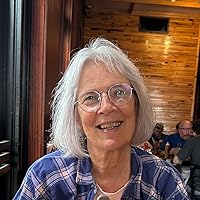
Jim Tomlinson grew up in a small northern Illinois town and lived for many years in a small New England town. He lives now in rural Kentucky with his wife, fiber artist Gin Petty.
Jim's stories have appeared in Five Points, Shenandoah, Bellevue Literary Review, New Stories From The South and elsewhere. His fiction has been shortlisted for both Best American Short Stories and Best American Mystery Stories. Along with the Al Smith Fellowship from the Kentucky Arts Council, Jim is the recipient of a National Endowment for the Arts Literature Fellowship, and a Walter E. Dakin Fellowship to Sewanee Writers Conference.
His most recent book of stories, Nothing Like An Ocean, is the follow-up to his debut collection, Things Kept, Things Left Behind, which won the 2006 Iowa Short Fiction Award.
I loved so much about Jim Tomlinson's short story collection, Things Kept, Things Left Behind. It was one of those reads that I felt compelled to carefully portion out so as to not have it be over too quickly. I wanted to savor it. I hated for it to end.
The book has a beautiful, poignantly apt cover design with a number of excellent blurbs on the back, but one blurb in particular expressed what I found most to love about the collection. George Saunders wrote, "Jim Tomlinson uses the traditional gifts of the writer--love of place, a keen eye for the telling detail, unflagging interest in the human heart--to bring to life a very specific and eye-opening version of America, particularly working-class, rural America...his care for these people and his generosity toward them are evident on every page."
I have actually put off writing this review for over a week, because what I most wanted to do was point to Saunders' words and shout, "What he said!" But that would do a disservice to all of Jim's hard work and I truly was transported by the very real characters and their situations, so who better to discuss the book than me? I am a product of that "working-class rural America" that Saunders mentions and when Cass (in the the half-title story "Things Kept") says, "When he comes to see Ma, don't matter if it's a hundred degrees, Dale here is wearing long sleeves so she don't see them tattoos he's got drawed on his arms," I KNOW her. She is utterly, absolutely real to me.
And in particular, I was impressed by how the women in Things Kept, Things Left Behind are portrayed. In the reading, I had the sense that, while writing, Jim allowed them to live and breathe. They have flaws and desires and idiosyncracies that allowed me to see and appreciate them, warts and all--like real people. I think that can be difficult enough when we are creating characters; doubly so when we are creating characters across a gender divide. But there is no gender divide in this collection. Men cheat, women cheat, men love obsessively, women love obsessively, both succeed, both fail. It is such an even-handed look at what makes us human.
I am also so grateful that Jim resisted the urge that so many (particularly southern) writers of late have embraced: the urge to gently mock their characters. A fascinating article by Jonathan Dee (in Esquire?) opened my eyes to this, and ever since I have been sensitive to the notion that we, as writers, should respect our characters. As storytellers, you could even say we have a duty to let the characters show us their character, without a wink-wink, nudge-nudge by the author, over the character's head. I have been guilty of this in my own writing, but I have to say it was such a pleasure to read a book of stories in which the characters are allowed to blunder and fumble and generally be human, without commentary (spoken or unspoken) from the author. "They are who they are," Tomlinson seems to say. "I just write about 'em, I don't judge 'em."
tomlinson is a breath of fresh air. stories that center on relationships, these characters leap off the page, announcing their truths, faults and most importantly, their dreams. wow, what a collection.
Tomlinson, takes what appears to be ordinary character who encounter seemingly ordinary experiences and turns them into a wonderful reading experience. My favorites are Things Kept and Things Left Behind. Things Kept is the story of one woman's wish and means of holding on to the things which her husband leaves behind when he dies, in light of, her children's wish to sell them. Things left behind is the story of what is left behind in a motel room of married lovers and the final destination of the item. Excellent read, I think I just upped my rating to 5 stars.
Haunting and riveting. This short story collection puts some of the other heftier volumes by famous literary authors to shame. Tomlinson brings the reader to the momentous peak of compelling decision seamlessly, quietly -- moments of such sparkling magnitude and drama, rendered so powerfully, with dark layers of emotional undertone, and without fanfare, on which life itself can be said to turn -- viz Toby Polk who finds himself back from Iraq and out to avenge his father. His father had been rendered a cripple years earlier when accidentally shot with a cross-bow by Embry, a lawyer, neighbor. But the devastating consequence of this accident is to drive the family apart -- the mother leaves with her two sons, and the sons spend their miserable years trying to avoid being beaten by their mother's sick new boyfriend. Toby blames all this on Embry. At the crucial moment though, wounded (perhaps mortally) by Embry again, in a devastating replay of the accident with his father, Toby, who is a dead accurate marksman, finds himself unable to make that critical leap. Moral undercurrents splice together like fine cross-hairs, rendering this story memorable and extraordinary.
Tomlinson’s deft masterful touch of leaving a reader gasping for more is not more evident than in the debut story of this collection, First Husband, First Wife. Jerry and Cheryl, a young couple, once were married to each other, coming back together again after subsequent multiple failed relationships. An uneasy alliance, they seem held together by spines of love as fragile as lines of sand and Tomlinson brings us to a terrific climactic moment of compelling conflict when Cheryl is offered a lighter plea bargain for a crime both committed of stealing prescription drugs while Jerry was convicted and had to serve eight months in prison. There’s a catch though – if she accepts this plea bargain, she’s proscribed from contact with a convicted felon, which means Jerry and Cheryl will have to separate for two years. Cheryl finds herself examining the exact nature of their bonds of love; how and in what form the crack of a hairline fissure in the relationship comes is something she’d never have guessed. What really spices up this story and drives it beyond the realm of the ordinary are the detailed descriptions of the woman going about her profession as a hairdresser -- setting the hair of a child-corpse eleven years of age at a mortician's. It's horrific, and yet, there's a morbid curiosity that makes one unable to avert one's gaze.
I'm a self-confessed sob for stories about siblings and the story "Lake Charles" was not just disturbing, it haunted me in my dreams (probably didn't help to read it right before bedtime!). Here, two brothers -- Randy the younger and Ben the older -- sit around a campfire with a luminous, desirable young nubile female with dreams of writing her own songs and making it big. The relationship between these two brothers -- changed drastically by an accident which killed their mother and rendered Randy brain-damaged and violent -- is the focal point in this story, and Tomlinson leads us with a sure hand between the banks of sibling duty and responsibility and that of guilt and the correspondent desire for freedom and happiness. Episodes of unexpected drama catapult the story into the realm of the horrific as we watch real life tragedy unfold, in symbolic manifestation of past tragedies -- here in this story, Randy's hand is practically roasted and as he exits offstage,our female dreamer makes a pass at Ben, who finds himself torn deeply between caring for his brother and the passionate desire to escape and find happiness for himself.
These stories are unique not only because they are strides away from the cookie-cutter MFA turgid models that are churned out yearly, but because of their courage in addressing the unaddressable -- the shocking, life-halting tragedies that shape people's lives.
Things Kept, Things Left Behind is a coming-out celebration for a terrific writer named Jim Tomlinson. The inability to finish reading short story collections is one of my shameful flaws. I write the things, but I struggle to read them. I buy Best American Short Stories nearly every year, read several, let the rest languish. But the why of that failing is a subject for another blog because Things Kept, Things Left Behind is an exception--a group of short stories that captivated me. You can begin with some of the names--Arnel Embry, Grandpa Coy, Dexter Chalk, Cousin Shuey-- wonderfully evocative of the rural Kentucky environment where the stories are set. You can go on to the smells.You’ll never run into a writer with a keener nose; and the images, impressive in themselves, don’t simply add texture to the prose, they become a primary tool for creating plot and character: “She liked the familiar smell of him, slightly musky, with a hint of machine oil that lingered even after he’d showered. It was the smell of his work, the smell of lathes and grinders and milling machines. And it was not so different...from the smell of her father, the smell of locomotives.” You can go on to the sentences--simple, clear, incisive, Carver-like. Try these: “Sometimes she thinks of herself as a howl. The wail of a coyote, maybe, or a lone banshee, a shriek dying away in the night without reaching ears.” or “He feels the sting of her pity. It’s the last thing he wants from a wife.” Add to these the common setting, the unerring sense of how psychological conflict evokes emotional and physical combat, and you end up with a series of tales that approach novelistic unity. This is a debut collection, and the jacket notes say that Tomlinson is “hard at work on a novel.” I’d gladly read another collection from Jim, but I must confess, I’m really looking forward to the novel.
Each of the stories in this collection is handled with great care and finesse, creating a whole that leaves the reader feeling both satisfied and heartbroken.
Basically, these are not easy stories to read because of the sadness and deep hurt they depict, and yet after reading them you will feel hopeful, despite the tragic beauty of the world--best exemplified in the character LeAnn:
"Sometimes she thinks of herself as a howl. The wail of a coyote, maybe, or a lone banshee, a shriek dying away in the night without reaching ears. Piercing, like something wrenched raw from an orphaned soul. A hollow thing, haunted, a sound that lives on, still shrill in memory long after its echo dies out."
If I were asked to compare Tomlinson's world to that of another writer, I would choose Andre Dubus--as both so beautifully, and skillfully, portray that which is damaged and brutal in life, that which is violent and beautiful. Much like Dubus's stories, these are stories of families broken or cobbled together, of people on the edge, of anger, of betrayal, and above all else, of desperation and shame.
I hope you will buy and read this collection (and also suggest to your library that they order a copy), as you will not regret it. Not by a long shot.
(Short stories.) The stories are all about folks in or from the small town of Spivey, Kentucky, whose lives have not gone the way they expected. Tomlinson is a wonderful writer, he reminds me somewhat of Kent Haruf. I suspect it’s something about the universal truths in the less-complicated masculine point of view. While it was coincidental that I read much of this during and immediately after what turned out to be my 92-year-old father’s surprisingly brief terminal illness and death, these short seemed especially spot-on for this moment in my own life.
This was a wonderful collection of short stories. Occasionally, I found the stories TOO short and was aching for more resolution of issues raised in the plots; that's the only reason I am unable to give the novel five stars. The author gets extra points for the thought-provoking title (also the title of one of the stories). The idea of "things kept" and "things left behind" touches all of the stories in the book in ways that will leave you thinking about the characters and plots for days.
This book is getting all those stars because I published one of the stories, "First Husband, First Wife," in Five Points. I can't wait to read the rest of the book, which I'm sure will be just as good. I'm also calling Jim someone I know even though I really know him only from email exchanges about the story.
I read this collection in 24 hours. I couldn't stop turning the pages. These stories have just the right details to put the reader into the place and time. The characters are wonderfully developed in a few short pages. This is what great short story writers do and I think Jim Tomlinson is one of them.
Beautifully realized characters, interesting plots, lovingly crafted stories. Jim Tomlinson knows these people and these places like the back of his hand. He's a masterful and generous writer. I loved these stories and hated to say goodbye to the people in them at the end.
A wonderful writer and a wonderful teacher. He read at the Carnegie Center last week and I loved every moment of it. Now that I've been introduced to his work I can't wait for his next new work. (Hi Jim!)
Very well written series of short stories based on people from a small American town, dealing with ordinary yet often extraordinary day to day issues. I think if you are American, and more specifically from Kentucky, this novel would resonate much more strongly.