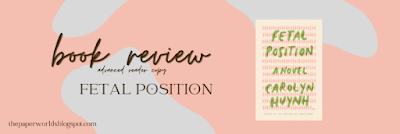
From the author of the Good Morning America Book Club Pick The Fortunes of Jaded Women comes a heart-pounding speculative novel in which a burnt-out corporate woman joins a startup that promises domestic ease and meaning through enforced motherhood—but as women begin to disappear, she must confront the violent cost of complicity before the state-sanctioned solution claims her body for good. Set moments in the near future, “high-value” intelligent women are recruited by a mysterious start-up called Hatch to become traditional wives, to help combat the historically low birthrate and the male loneliness epidemic. The incentives? You’ll no longer have to work your corporate job, you’ll get a subsidized house, land, and a robot butler that’ll do all your errands and domestic labor for you. The catch? You simply trade in your corporate labor for child labor—through being inseminated with organic sperm through a male match. Women in this timeline no longer care for children or marriage, and if they choose to have a child, there’s an option of being inseminated neo-vitro with lab-grown, artificial sperm. The men really are dying out. Hatch believes they’ve privatized a solution to this, but providing incentives upon incentives, and specifically recruiting lonely, corporate women. Lena Do is one of those women. She’s been stuck in corporate America for far too long—even though she’s exceptionally good at her job, she hates her life. The loneliness of the capitalistic milieu and grind is her entire world. She’s lonely, but not in the sense that we know. Like many people around her, she has no nuclear family, no cousins, no support system. Family trees have shrunk the past few generations—and she has residual resentment towards her late mother, the great scientist, Gemma Do, who had her neo-vitro. Lena has no biological father, but the mystery of why her mother chose to have her has haunted her ever since childhood. When Lena gets an invite to Hatch, she leaves behind everything she’s ever known to join a cause she’s been taught her whole life to hate. But when women start disappearing and dying around her, she races against the clock to uncover the truth behind the company before her insemination is successful, and she’s trapped forever. With biting social critique, Fetal Position examines survival, complicity, and the chilling reality of what happens when government policies decide who deserves love—and who deserves to live.
Carolyn Huynh is a novelist, screenwriter, and playwright. She loves writing about unhinged women who never learn from their mistakes, but yearn for joy. A homegrown Californian, she resides in Los Angeles with her partner, daughter, and demon girl dog. When she’s not writing, Carolyn daydreams about having iced coffee on a rooftop in Ho Chi Minh City.
Thank you to NetGalley and the publisher for the digital ARC in exchange for an honest review.
ANHPI Month 2026 #6
Carolyn's first book is an in-depth discourse about women in the Vietnamese diaspora, set up and down the west coast.
Her second features the racism and struggles Vietnamese refugees had to face in a small fishing village near Houston.
This book goes in a completely different direction, taking AI and the tradwife narrative and giving it a very Vietnamese American spin. It's giving Silvia Moreno-Garcia.
Part 1: Red
I am obsessed with the tradwife discourse. I have at least two other books on my shelves dedicated to this topic.
In a near world where men are bottom feeders, Lena is a "high-value intelligent woman" that is exhausted from the corporate grind. Her yellow eyes deem her as other, namely that her mother used artificial sperm to create her.
Pippa is a peppy blonde mom of four sons for Hatch, a semi-secretive startup where women are taught to leave behind their hatred for men and expected to rest their bodies for insemination with "natural" sperm.
Here the men aren't degraded. Here they are allowed some freedoms, such as choosing the gender of their future children. All the children at Hatch, from babies to age four, are boys.
We meet James, Lena's match. Every so often, something causes Lena's memory to glitch. Let's hold onto this for later. When it happens with James, she overlooks it, but I didn't.
Who is he? Why are they given the nicest house at Hatch? What was her mother really doing in her lab? Can we trust the AI bots?
Part 2: White
I powered through this part and the next, because 1) the mystery is eating at me and 2) I was on a plane and decided not to work.
Who are Ori's parents? Why is his name making my ears ring like Lena's? Am I AI enhanced? Just kidding.
I'm very curious as to Pippa and Martha's roles in this whole endeavor. Every time I see a "women supporting women" meme I shake my head, because women do not support women.
I won't lie. I never trusted James. I'm not even sure who first said this to me, and my dad loves repeating it, but "he's just a man."
How are the Domexes involved? Obviously, we can't trust the bots. But how much can't we trust the bots?
And this is where it gets interesting. When Lena stumble upon the boys, namely Ori, he is far more intelligent than his age suggests. And the recruited mothers are getting dumber by the day. Are the children inheriting intelligence? Or stealing it?
I suppose we can go back to Pippa and Martha, and the role of women as a whole. Not that I think Pippa is smart enough to back anything solid, but why is a board of women promoting the creation of intelligent boys? It's giving blue pill women.
Lena's brain goes through it best when it's not glitching. What happened to the other women? Why are the rest of the women getting dumber and losing their learned skills? Did the women that left really leave? Did they die?
Part 3: Blue
I knew they were stealing intelligence from the women. I'm so smart. I'd get conned by Hatch, too. How does one live a life of leisure without having to birth four sons?
In wanting to know who was behind this, I knew we couldn't trust a certain man. He's based on a tech billionaire. Make your guesses as to which one. The man is literally insane.
Fantastic dystopian discourse aside, I think my favorite part of this book is that Lena can just be Vietnamese American without the whole book being about that. We're given Lena's surname in Part 1. Her mom makes her thit kho (not named as such, IYKYK) in Part 3. And that's basically it.
On that note, I'd say this is more about fragile masculinity than race. Men should be lonelier.
This entire review has been hidden because of spoilers.
Thank you to Atria Books and NetGalley for this ARC in exchange for my honest review.
Fetal Position takes place in a future where women largely run society, robots handle most labor and men have become increasingly irrelevant both economically and reproductively. Birth rates are collapsing, there’s a full-blown “male loneliness epidemic,” and women no longer even need men reproductively thanks to lab-grown sperm. Enter Hatch: a company offering women financial security, beautiful homes and lifelong support in exchange for motherhood. The pitch is simple. Leave the grindset behind and become tradwife propaganda with excellent healthcare.
Hatch never feels cartoonishly evil... but hella creepy. Like if your Instagram feed also had A24 trailer energy. Carolyn Huynh understands exactly how appealing this kind of system would become in a world built on burnout and isolation. Lena isn’t weak for wanting rest or connection. The horror comes from the way autonomy, ambition and identity slowly start getting reframed as obstacles to joy. The book has a very polished, curated kind of creepiness to it. Everything looks comforting on the surface while something deeply wrong buzzes underneath. Strange behavior from the children. Memory glitches. Unsettling AI interactions. The growing sense that women at Hatch are giving up far more than they realize. It all builds into an atmosphere that becomes increasingly unsettling as the story progresses.
If I have any complaint, and believe me, it’s minor, I struggled a little with how quickly I saw certain reveals coming compared to Lena and the other women recruited by Hatch. These are supposed to be some of the smartest, most successful women in society, after all. Why did a DEI hire like me see the red flags first?! 😅 There’s maybe an in-universe explanation for that, but I’m not entirely convinced the timeline fully supports it. Still, I had an absolute blast with this overall.
WHEN THE PERFECT LIFE COMES WITH A PRICE… 🌟🌟🌟🌟 In a near future start up company, Hatch, recruits "High Value" intelligent women to become traditional wives, combating historically low birth rates and the male loneliness epidemic.
Recuited by Hatch, Lena who is lonely and exhausted with corporate life and desperate for human connection, is promised a beautiful home, triple her salary, a robotic butler who does all errands and household chores, and a loving family. All she has to do is accept the terms, marry, and procreate.
Things get seriously weird as inconsistencies at Hatch, questionable medical ethics, a controlling environment, robots replacing humans, and the disturbing discovery that women are disappearing.
Wow I never read anything like this before. The book was glued to my hand because I was so intrigued, uncomfortable, suspicious, and increasingly paranoid the deeper I got. That feeling that something was seriously wrong kept getting stronger as the tension slowly increased. I had no idea where the story was going. And the AI/robot element? Wow! As someone who already has mixed feelings about how much AI is becoming part of our lives and the idea of robots replacing humans, this one really got under my skin. I sure hope this isn't a glimpse of where our world could be headed, because… NOPE. The thought of designer babies creeps me out. Great book though. Seriously thought provoking. Can't wait to talk about this book with others.
Fetal Position explores loneliness, motherhood, bodily autonomy, technology, and what happens when human connection becomes something that can be optimized, controlled, and bought.
Pre-order this now. Release day is 12/ 01 / 2026.
Thank you Netgalley, Carolyn Huynh, and Atria Books, and Simon and Schuster for the ARC.
My first Goodreads giveaway! I was excited to get an ARC of this book, I loved her book The Family Recipe. This book is definitely strays far from her usual work and unfortunately I didn't really like it. It took until the end for me to understand what was happening, which is the only redeeming reason why there are 3 stars.
After getting to the end, I liked the concept and I'll certainly keep reading her books but this genre is not her strong suit.
Thanks Goodreads for the giveaway, I'll pass it on to see what others think!
Thank you @atriabooks for my copy! I’m not sure why I haven’t seen this one all over but it’s a banger! I love a feminist dystopian novel. Lots of social commentary in this one and it was all juicy goodness.
Hatch felt all too realistic and bots well…I think those are in our future sooner than we think. I thought the whole concept of women in power, a men’s loneliness epidemic and lab grown children so unique. The world building is done so succinctly and well that you feel part of the world itself.
Lena was complex. I did not understand all her motives, but I think this was by design as the ending really hit me with a bang. I new one of the “major twists” from the beginning but getting to it and the understanding of the entire situation was sort of brilliant on Huynh’s part.
This is an ambitious story and I really loved it. When I wasn’t reading it, I was thinking about it, and I thought the ending concept was superb. I will be looking for more of Huynh’s work. Give this a shot, friends, you won’t be sorry!
Fetal Position by Carolyn Huynh. Thanks to Atria for the gifted Arc ⭐️⭐️⭐️
In the near future, “high value” women are recruited for a start up called Hatch. They become traditional wife’s to help the declining birth rate and male loneliness epidemic. When Lena, burnt out from the corporate world, joins, she’s ready for a lift of relaxation and luxury, but when women became disappearing around her she wants to uncover the truth.
This future world the author created was very interesting to read about. Sometimes science fiction can be overly complex and difficult to understand but this was not at all. I felt the society was easily explained in a way that fit with the plot and didn’t feel like I was being “told”. Once Lena moved to Hatch, it started becoming a bit creepy and a sense of dread arose. I like how it all tied together in the end.
“It didn’t matter if you were bot or human, a large corporation or a fresh start-up, competition for moving up the ladder remained the same.”
Read if you like: -Dystopian or sci-fi -Social commentary of gender roles -Speculative fiction -Motherhood tropes
This is another book I won in a giveaway. It’s not the type of book I would normally choose, but I’m glad I read it. I wanted to keep reading and enjoyed the suspense as I didn’t know how it would end. I’m usually not a sci-fi fan, but I enjoyed this book.
Oooooph. This book did not work for me, which is unfortunate because the premise and description had me hooked and excited to read. I found the writing of this author to be particularly immature and juvenile, which will work well for some readers but didn’t work at all for me.
A lot of the twists were blatantly obvious way before being announced, which made this book ultimately pretty boring. This is an idea that I feel could have been better explored by a different writer maybe? This just came across to me as Tradwife fic handled poorly. Not my fave.
Thank you NetGalley, as always, for the advance read!
A dystopian novel packing a punch by looking at the trad wife phenomenon, motherhood and the role of men in female-dominated society.
“A girl out of line means society is on the decline! Inseminate her to dominate her!” is a “colloquial chant” the children (all boys) sing on the playground of the Hatch facility where our main character, Lena Do, lives. Hatch is a new start up offering women an escape from their jobs and the pressures they are under in a female dominated society by choosing motherhood. Birth rates are down because “women lack the time and inclination to reproduce” so Hatch is making motherhood a cozy financial proposition if you are a “high-value intelligent woman.” Lena’s potential new partner, James, the sperm donor, is attractive and a good conversationalist, making the new life seem a good choice - plus Lena is lonely. But Lena also notices things - subtle memory losses, vanishing mothers, surveillance. What is happening?
Lena represents a lot of women who are not accepted for various reasons. While her world has still put her at the top of the ladder she desires more and is lured by the prospect of this offered by Hatch. And that world the author has created is chilling but revealing in a way of the allure of the tradwife “profession.” I enjoyed the sinister forces at work at Hatch and somewhat felt sorry for the men in this dystopian world - but I also think that was clever on the author’s part to show men functioning in the same way women often function in our world. The vital question asked in this book about motherhood is resolved in the exquisite ending to it. Who needs a man you ask?
I loved the clever satire of this book. I was hooked from the beginning. I read the author’s first book and loved it! This is very different from that book but I loved this one too. Huynh is a writer to be aware of. These are some of the reasons I gave this book five stars.
My thanks to NetGalley and Simon and Schuster for granting me access to this ARC.
Need another trad wife book this year? I would say yes, if you like a mix of dystopian, sci-fi, and speculative fiction? There is a splash of AI horror and mystery to this one as well.
This one takes a look at the world in a future where women dominate the work force. There is little need for men. Birthrates are on a severe decline. So much so that the government is paying people 1K a pop just to go on dates, but male prospects aren’t proving worth the effort. Certainly not for Lena Do.
But then Lena receives an invite from HATCH, a commune like setting where women can escape the demands of society, address the oppressive levels of loneliness they feel, and bask in highly attuned bots serving them while they focus on one simple job. To get organically inseminated.
The beginning of the book did work for me, the setting, the build up of knowing something is not quite right. The pacing was a bit challenging for me, with a lot of backstory involving Lena’s mom, her research, and their fraught relationship. But the social critique part had me very intrigued.
So why only a 3 star for me:
Thanks to NetGalley and Atria Books for the opportunity to read and review this eARC in exchange for an honest review.
Thanks to NetGalley and Atria books for inviting me to read and review this eARC in exchange for an honest review! All opinions and statements are my own.
ty to netgalley and the publisher for a copy of my ARC
i’ve been a fan of carolyn’s since her first 2 books, and lowkey had no idea what fetal position was about before hitting that request button on netgalley lol
as intrigued as i am by the tradwife discourse that plagues social media, i can’t get myself to actually watch any of it due to getting severe secondhand embarrassment. the premise of fetal position follows lena in an almost dystopian society where women rule everything (yay!), and men have become basically obsolete (double yay!)
enter hatch, a stealth startup promoting that women quit their jobs and put their bodies on sale to reverse the declining birth rate. what seems promising at first with no labor, triple salary, paid off house (in this economy?!), quickly turns more sinister as the MC, lena, starts to realize everything at hatch is not what it seems
fetal position tackles many very relevant issues in today’s society regarding gender roles, misogyny, and technology. this story is well worth reading in this crazy world that we live in. well done, carolyn!
I am conflicted on this one. The setup is very interesting: the book is set in a future world where more and more women are choosing to remain single and childfree. A company, Hatch, recruits women to get paid to have kids. Oh, and there are robots doing all the housework/childcare. I thought the setup was good, but I did not like the main character, Lena. She was so dumb. Part of this was explained at the end, but I just found myself scoffing at how clueless she was, especially considering who her mother was. Like… you never considered that this wasn’t all above board? I liked the inclusion of the bots, but their depiction was inconsistent - are they super soldiers or what? The ending was rushed and a bit silly. So, it’s an interesting premise/story, but the execution had me scratching my head at times.
FETAL POSITION RATING: 4.25 GENRE: Speculative fiction
Fetal Position is set in a world where women are the dominant gender alongside bots while men are reduced to secondary citizens as the nuclear family becomes obsolete. Our narrator, Lena Do, is tired of the corporate rat race and plagued by loneliness. She signs up for Hatch, a company attempting to increase the declining birth rates. Hatch promises that in exchange for being inseminated by a natural male’s sperm, you will receive a stipend double your current salary, a home, and a Domex robot that will take care of your daily household chores — offering a life of leisure while being used as a human incubator.
Carolyn Huynh’s book, though seemingly far-fetched, isn’t that far off from the current state of society. Men are experiencing an epidemic of male loneliness, while women are selective of their partners; no longer beholden to financial ties. Fetal Position has a deep look at the way society views women, even when women are the leaders of the world. The underlying commentary in which women are always viewed as being used for their skills rather than for who they are.
Though a relatively short read, I highly enjoyed the nuances of this book and found it hauntingly realistic. I fear that our society is moving in the direction where Fetal Position becomes reality, though I hope we learn the lessons that that Huynh subtly shares.
Thank you to Netgalley and Atria for an advanced reader’s copy of Fetal Position. I look forward picking up a physical copy on pub date 12/1/26.
Fetal Position was such an interesting read because it felt like the sci-fi version of Yesteryear. I went into it not really knowing what to expect, and honestly, I probably wouldn’t have picked it up myself if I had seen it in a bookstore. I’m glad I ended up reading it, though, especially because Lena and her mother were such compelling characters. The story takes place in a near future dystopian world where capitalism exists without patriarchy. Women are at the top of society, domestic labor has basically been eliminated through technology and robots, and men have become second-class citizens. It was such an interesting reversal of the world we know, and I liked seeing what that kind of society could look like. I kept thinking, can we women ever catch a break? Whether women are expected to make babies or are being worked to death by capitalism, it feels like there’s always some system demanding something from us. I’d recommend this to anyone who likes medium-paced sci-fi, dystopian stories, trad-wife themes! It was definitely different from what I usually read, but in a good way. I’m really glad I was gifted this book because I probably would have passed it up otherwise. Overall, I’d give Fetal Position 3.7 stars. This book made me think, and I enjoyed the experience of reading it.
Thank you to NetGalley and Atria Publishing for providing me with an ARC in exchange for my honest review.
Brief synopsis: In a near future plagued by plummeting birthrates and a male loneliness epidemic, a mysterious start-up called Hatch recruits “high-value” women with a seductive promise: trade your grueling work life for subsidized security, a beautiful home, and a robotic butler to handle every domestic burden.
I was intrigued and horrified and wildly invested. I flew through this dystopian read. Our main character, Lena, grapples with so many of the choices of the modern woman - work life, children, connection, loneliness. Men are not factored into daily life - women do it all. Lena is DONE with her day in and day out and lured by the promise of rest - all she has to do is sign away her body (and the 18 years following and agree to marry a man. Domestic bots are there to help - exploring the sentience of robots and AI, one of my favorite topics to read about. There are also some deep explorations of loneliness as well as commentary on motherhood and mother-daughter relationships.
Definitely want to read this author’s backlist!
Read if you like: Annie Bot by Sierra Greer , Yesteryear by Caro Clare Burke, or Fallow by Sarah Anderson
Special thanks you to Atria Books for sending me an advanced copy of this book. The publication date is early December 2026.
This is a dystopian novel that solidly reflects the horrors of our times. It's also my first experience with this author, and I expect it won't be my last based on a positive impression overall.
In this society, women are thriving but they are tired. What better way to give them a break than to let a woman stop using her brain and start using her uterus?! Ugh. The women affiliated with Hatch are renting their bodies (a very troubling concept) to help men build a legacy. No thanks!
The central character has secrets, and a big one is hinted at frequently throughout the novel until more detail gets revealed. This character (Lena) brings readers into the psychology behind the women who sign up for this, um, opportunity?, and we also get deeper into her mind and experience. I especially enjoyed learning more about Lena's mother and her general early life.
Aspects of this world feel a little too similar to other dystopian texts and tropes, but there is enough innovation here to help this stand out. Struggling with that balance made my investment shaky at times, but overall, I enjoyed this read.
*Special thanks to NetGalley and Atria Books for this arc, which I received in exchange for an honest review. The opinions expressed here are my own.
This has such a unique premise! Set in a near future world where men have been reduced to lower than housebots and women are in the highest power positions with no need for male partner. This is a world where women can have a child through invitro without a male donor so really, who needs men? The story follows Lena, a child born from this new concept, as she grapples with loneliness and the need to step away from her high strung corporate life. In comes Hatch, a program that seeks out intelligent, high powered women to leave it all behind and become a traditional wife with all their needs taken care of, they just have to have the babies! Easy, right?
My only gripe may come from the fact that these are meant to be the highest caliber of women recruited by Hatch, so how are they so naive to the goings on when it's so blatantly obvious to us as readers seeing this through Lena's lens (even Lena takes her sweet time to catch on). In saying this I do think even when you're sure you know where the story is going it's going to take a slightly different route to what you're used to so that was refreshing and kept me intrigued.
I was hooked from the beginning. This what’s such an enjoyable, fascinating and thought provoking dystopian thriller. I did find at some points of the book the author did not trust her audience to understand certain themes, which caused a lot of unnecessary repetition… some of it was a little too predictable, but even with these two critiques, I found the premise of the book extremely intriguing. I can tell I will be thinking about this one for quite a while. I do wish she fleshed out the ending a bit more, I would have loved to know how everything was settled between Hatch, all the children, and the women in the end…
Thank you Artita books for the advance copy of this book.
Fetal Position is a tense psychological thriller/sci-fi novel where Lena (a burned-out corporate woman) joins a program promising an easier life for women in exchange for help combating the low birth-rate. Women in this program basically get paid to vacation for 18 years. It sounds too good to be true, right?
What if men worked in secretarial roles and women were the CEOs and leaders of Fortune 500 companies? What if women didn’t need men to procreate? This novel explores so many different facets of society that the patriarchy has strictly defined for women in the present day and completely flipped the script. The male population is dying out and based off how the men act in the novel… it’s no wonder. Women have learned how to use artificial sperm to conceive and no long need men to do much of anything.
In addition to being self-sufficient, robots also enter the chat. AI has developed to cook and clean, while human behaviors fuel their algorithm to anticipate the needs of the humans they serve. What happens when these bots start to develop feelings? Can they?
This book reminded me so much of 1984. It gives me “banned book” vibes, but in the best way. It makes the reader pause and think. Fetal Position explored a dystopia I have often thought about while working in a male-dominated field. This was one that kept me turning the pages, because the program called Hatch seemed way too good to be true. The ending completely baffled me and this is so outside of what I normally would read!
Overall, this would make a wonderful book club pick, because it would generate tons of wonderful discourse about the future of AI and how it fits into society. Thank you to NetGalley and Atria for the ARC!
Thank you to Atria for the advanced reader copy for review.
Huynh adds her voice to the broader zeitgeist and discourse surrounding trad wives that’s percolating in the book industry right now with her new release Fetal Position. Taking on a more classic scifi dystopian tone, it has all the ominous, unsettling and uncomfortable feelings I love about dystopian and speculative fiction.
In a society where seventh wave feminism has tipped societal norms and women hold much of the social and economic power, Lena is tired of the intense and lonely corporate grind. She joins Hatch, a company combatting the declining birth rate and male loneliness epidemic by recruiting successful, ‘high-power’ women to have children and ‘become’ trad wives. Incentivizing the women through promises of fulfillment, luxury, rest, financial stability and ‘family’ life - and an escape from living only to work, Hatch attempts to lull women back into their traditional roles, swapping out their dreams of personal labour for child labour.
I think this book tackles an ambitious scope of issues; fragile masculinity, disillusionment, choice and consent, patriarchy under capitalism, pyramid schemes and predatory social marketing, incel culture, and the ethics of data collection (and weaponization). In Fetal Position, the pursuit of freedom, autonomy and ambition become forces that ultimately stifle women’s joy and happiness and upset the order of nature, and Huyhn considers the extremes taken to correct this.
I’m split on whether Huyhn is completely successful on execution and I don’t love the recurring one-dimensional take (in many books) that feminism and women’s liberation equates to women wanting to grind in corporate life. I found the characters to be a little bit one dimensional and sometimes frustratingly obtuse, despite being framed as very intelligent humans. The tech was also a bit convoluted; I still can’t quite picture the robots in this world nor do I really understand how the pattern recognition works. But the author definitely has something interesting to say about how society continues to try to convince women that shrinking themselves and sacrificing what they want will fix society’s problems.
I recommend this for fans of Don’t Worry Darling and Sarah Anderson’s new book, Fallow.
FETAL POSITION asks readers to imagine a world where women have seemingly overcome the patriarchy by advancing through their career and even motherhood without the need of men. However, in a world where many tasks are relegated to AI robots, the burnt out main character, Lena, exists in an increasingly lonely world (and not just for the men who are suffering from their own loneliness epidemic). When Lena is lured into a tradwife startup, giving up the corporate grind for a beautiful home equipped with robots to do all the work, she quickly senses that nothing is as they appear. At times violent, what's sinister about this dysptopian, futuristic world is that the problems are all too real in our present day.
What I appreciate most in Carolyn's writing is that she always recognizes the humanity underneath the chaos. There's real love on the other side of longing, often appearing in ways we don't see the first time around. Carolyn's writing packs a punch, no matter what genre she writes.
*Thank you Atria for letting me read an early copy.
Received this as an ARC around lunchtime, worked a full day, and then gobbled this up in a single sitting. This was riveting from start to finish. Rarely does a novel so wholly absorb in and satiate you from beginning to end.
This is one of those books that could easily find itself on a reading list or syllabus for an English course or introductory women’s studies class. It’s timely and frighteningly on the nose for the direction society could head in on matters like the so-called “male loneliness epidemic”, incel ideology in youth, the rise of tradfem/homesteading, and selective feminism in the face of late stage capitalism. I was engrossed, and I’ll be buying a physical copy come December. Highly recommend.
4.25 - I really liked this! it’s hard to nail a mix of creepiness and heart but somehow, those are the exact words I’d use to describe this book. I really got Lena and her choice to join Hatch - especially in a world where while men no longer hold women down, seeing the bonds of womanhood and sisterhood thin under the strain of capitalism was probably just as sinister as the main plot point of the book.
like other reviewers - I did have some guesses as to where I thought it was going and was more or less right on a fair share of them, but I didn’t enjoy it any less for it because of the heart- watching Lena look for her family and her connections in it all was heartwarming.
This is a spoiler-free review! The version I am reading is an ARC - any changes made for the final publication are not reflected in this review. Fetal Position will be available to purchase on December 8, 2026.
I would first like to thank NetGalley and Atria Books for providing me a copy in exchange for an honest review. The premise of this book, in addition to the alluring cover, really made me stop in my tracks - a declining birthrate, male loneliness epidemic at its height, and seventh wave feminism catapulting women into a world fueled by robot servants and climbing the corporate ladder. But what if the modern, independent, corporate woman grew tired of her success? What if the burn out lured her into a mindset of looking for a way out? Lena Do, a product created by artificial sperm and the daughter of Gemma Do, a pioneer in technological advancements, is supposed to be loving every minute of her child-free, man-free life. Hatch, a start-up garnering traction by promising select women a relaxing, ease-filled life in exchange for producing children for men who want to continue their lineage, catches the eye of Lena when she reaches her breaking point, and she soon finds herself shuttled away to the trad wife lifestyle. The cost? More than she ever anticipated.
Science fiction is such an impactful genre, especially when the concepts at its core hit all too close to home - government policing bodies, making decisions on who can love who - it is jarring in its similarities to the current modern age. Much like in Annie Bot by Sierra Greer, readers are exposed to how even in a futuristic setting that operates under the illusion that women are appreciated, men still are able to use them for their own personal advantages. Huynh creates a world that has women at the top of the career ladder and men at the very last rung, with the appearance that they can only make it in life with the assistance of robot butlers at home as their jobs are replaced by the very things that do their laundry. The sentience of the robots provides an interesting perspective throughout the book - they are not human, yet there is an eerie underlying feeling like they know the characters so much more intensely than another human could. Anticipating needs, telling them how to feel, and being an intricate part of day-to-day tasks makes them an ever-present entity that the characters and the readers cannot escape.
The way Lena slowly falls deeper into Hatch and the promised lifestyle while still remaining hesitant regarding how their practices actually work shows the duality of woman - she is supposedly here to leave behind the hardship of her current life, yet she is determined to discover the secrets those in charge of Hatch are keeping from the women. As more women begin to disappear or meet an untimely end, Lena's suspicions grow deeper, she is thrust into a dangerous game of ensuring her life is not put on the line while she attempts to get to the bottom of what exactly Hatch is using these women for beyond being baby machines.
As Lena's backstory is slowly uncovered and the readers become exposed to the likelihood of her presence causing more harm than good to Hatch's operation, we also see the horrors of incel dogma impacting the children birthed from Hatch. Without having father figures, their ideology still becomes rooted in misogyny and their distaste towards stay-at-home mothers and career women is present without the social construct at play. While they were basically engineered to think this way, it was ever too real as today's modern society is encompassed by being male-centered, even when it comes to women's issues and rights.
Since this is an advanced reader copy, I expected a few typos here and there and likely some choppiness before the final draft - the main thing that stood out to me was an inconsistency about 75% into the book, where it notes that Lena is being asked about a lease renewal for her second insemination. Why is this odd? Because she already had her second insemination - failed, nonetheless - so unless the author was trying to rewrite history, an update is to be made. Obviously I would not let this influence my overall opinion of the book since I know it is not the final version.
An interesting exploration of motherhood, influence, and survival, Fetal Position dives into the thought process of what if being a mother was able to be profitable and be engineered? What are the costs? And more importantly, what are the sacrifices?
You can catch up with me and my current reads by friending me on Goodreads (maddymartinelli), Instagram (@thepaperworlds), Twitter (@thepaperworlds), and following this blog in order to stay up-to-date with any reviews, blog tours, and more!
Fetal Position is an very ambitious book with lots to say, but unfortunately those ideas are not particularly groundbreaking or compellingly conveyed.
The premise of the book, a woman leaving her high-stakes corporate job to instead get paid to try and reverse population decline by having children, is something that immediately grabs hold of your attention and imagination. It's a dystopian idea that isn't as far-fetched as it might originally have been, although in the modern age, being paid for childbirth is a downright luxury compared to the reality of how over-regulated women's bodies are.
Because of the current state of women's rights in the US, learning more about the world our main character Lena lives in soured me on the book considerably right off the bat. While there's certainly something interesting to examine in the idea of a world where the matriarchy is just as bad as the patriarchy, I don't think Carolyn Huynh fleshed out the world enough for it to feel believable. Rather, it read as almost comedic, where men are ridiculed just for existing and women have taken over all the positions of power only to be unreasonably miserable all the time. Huynh paints an incredibly bleak picture, with the end goal of conveying her message with all the subtlety of a train wreck: maybe capitalism is the true evil. (These words are literally said at one point.)
To that end, Huynh can't seem to decide what she wants to express or focus on in this novel; we have the themes of patriarchy vs. matriarchy, misogyny and misandry, capitalism and the corporate grind, loneliness and isolation, parenting, pregnancy, robots and AI, eugenics, and a complicated mother-daughter relationship. There are parts of this book that I find deeply interesting, like Lena's relationship with her mother and the robot that helped raise her. There's something shining there, just under the surface, about the struggle of a mother to raise a child alongside her grander ambitions, about a child who doesn't understand the fleeting and inconsistent love of her mother. But this gets lost in the bizarre backdrop of the evil matriarchy, and for a book that's meant to be about pregnancy and children, there's very little of either.
Our protagonist, Lena, felt very aimless and suffered from one of the greater sins of character development: we're told how smart she is, how talented she is at recognizing patterns, and then it takes her the entire book to figure out the mystery of who her husband is when I had it pegged more or less from his introduction. It's a fairly obvious reveal, and I don't think the choice of husband is a particularly bad one, but it was absolutely infuriating to watch Lena bumble around, absolutely clueless to all the very obvious things happening around her.
Overall, I think the prose itself is quite thoughtful, but I found the ideas overall reductive and poorly executed. In my opinion, Huynh would have benefitted greatly from picking one or two ideas, making them really cohesive, and really delving into the meat of the issues or plot. I can see a gem glimmering somewhere in there, but there's just too much dirt for it really shine.
[This ARC was provided by Atria Books via NetGalley in exchange for an honest review.]
I finished reading Fetal Position by Carolyn Huynh last night and then I turned off my iPad, rolled over, and slept like a baby. I know that’s a pretty lame way to start a review. But, what really should have happened when I finished the book was me lying in the dark, wide eyed, concerned, and unable to sleep as Ms. Huynh’s vision of the near future and a society where high-value intelligent women are recruited to become traditional wives in order to combat a historically low birthrates, and, if the women agree, they will get riches, housing, land, and a robot that will wait on them 24/7 all for the price of being many-times over medically inseminated, go full term if pregnated, and then start over again, should have worried me, enthralled me, and thoroughly convince me that the premise of Fetal Position was indeed a brutal portrayal of our very near future.
Well…as I mentioned, I slept like a baby.
Fetal Position has a great premise and a super main character in Lena Do to journey through this dystopian world. However, I felt the emotional aspect of the novel fell flat, even from the beginning. Lena did not seem like someone who would sign away her life to Hatch. As a person who could see patterns in everything, the Lena portrayed would have seen from the start something was not exactly good with Hatch.
Many times, throughout the novel, I felt Lena was acting like Lois Lane from Superman who had slyly infiltrated Hatch to work on an expose. She was always hearing and seeing things that she should not have ever heard or seen unless she was on an actual fact-finding mission to expose Hatch. And for goodness sakes, when she did hear or see things, I kept thinking RUN LENA RUN, but no. Like a good Lois Lane, she was gonna get the story no matter what happens next. The reason I kept thinking RUN LENA RUN was because Hatch, a huge corporation that was even more powerful than initially described, would have killed off Lena, disappeared her, or shackled her in a dungeon to continue their nefarious business practices. Plus, if she could read patterns so well, she should have been miles away from Hatch; but instead, she used really weak reasons to stay.
The robots were never portrayed consistently as in some scenes they seem to act as super-cops with infrared capabilities and then two scenes later, more like Barney Fife with a broken flashlight.
For the most part, ignoring some of the not-so-great scenes and plotting, I was intrigued by Fetal Position as I was hoping for a satisfying ending. The first half of the book did move well and kept my interest. The last few chapters, well, they kind of had things that made me sit up and say “wait…what?” I mean, seriously, deus ex machina much!
I will say that I enjoyed reading Fetal Position and, more than likely, many readers will. I’m just disheartened that the full potentials of this novel were not met. Fetal Position could have been a contender!
An E-ARC of Fetal Position by Carolyn Huynh was provided by Atria books via NetGalley in exchange for my honest review.
Thank you to NetGalley and Atria Books for this ARC!
I really enjoyed this speculative fiction/sci-fi book. I was a bit hesitant to read this, as I had read two similar books this past year (Yesteryear by Caro Claire Burke and the ARC Trad Wife by Sarah Langan), but I felt like this was still very different and interesting due to the sci-fi element of it. All of this feels extremely relevant.
Here is a little synopsis - imagine a world where women are excelling in academics and the corporate world. They are all crushing it, they are the executives and climbing the corporate ladder. Meanwhile, the men are the DEI hires. Their social status is lesser than the bots, who complete the everyday menial tasks. Women don't need men, so birth rates are declining, males are complaining of a loneliness epidemic. On paper, this sounds like everything we are currently fighting for. However, the women are so burnt out in their corporate jobs. They are lonely too. Besides just going to the office, coming homing to a lonely apartment, and ordering drone delivery food.
Our main character Lena is one of these high achieving women. On paper, she has it all. A lucrative private equity job. But at the end of the day, she feels lonely. Therefore, when she sees an ad for a stealth startup that aims to solve the declining birth rate and the male loneliness epidemic by recruiting for "traditional wives" who agree to be inseminated using organic sperm, she is more than intrigued. She's allured by getting 3x her corporate salary and not having to lift a single finger, because all the work is done by robots. She bites the bullet and embarks on this journey where she learns that nothing is as it seems.
This book reminded me of the quote - ""I want AI to do my laundry and dishes so that I can do art and writing, not for AI to do my art and writing so that I can do laundry and dishes." In this world, I feel like this is what's being done where these bots are doing the manual labor, so the women can focus on their careers. I thought the technological aspects of this book, specially the robots, was extremely interesting and relevant. Even the tidbits of training algorithm was intriguing.
I felt like this book was more a technological/sci-fi book to me, while exploring the trad-wife aspect on the side. However, I do think that it was intriguing that they also had the social-media side of the trad-wife and how this essentially serves as a pyramid scheme. It's fascinating that this type of propaganda was still alluring to corporate women that are earning a lot of money. I liked the way loneliness between women were also explored. Since the nature of their roles were so competitive, they didn't have close friendships or bonds.
Fetal Position is an ambitious novel contending with the intersection of capitalism, patriarchy, and procreation that doesn't quite hold up under its own weight. It's got a wildly compelling premise, but squanders it through a lack of subtlety, consistency, and thematic depth.
With ideas as interesting as these, I really would've liked elements of surprise and novelty, and barring that, at least a little bit of subtlety about where it's all headed. Fetal Position offers none of that. It's going exactly where you think it is, and it tells you so early on, the instant a particular character - more caricature, really, one who's very recognizable from real life - appears. The family-drama subplot is also similarly signposted, to the point that the flashback chapters really don't add much, because the twist they're working towards was already spoiled early on. In the end, all we really get is that capitalism and the patriarchy are two sides of the same coin, but I struggle to imagine that anyone who picks up this book doesn't already know that. If you're looking for fresh, deep feminist or class analysis, you won't find it here.
The book also suffers from narrative inconsistency. At times it seems like a straightforward reversal of current gender roles as it pertains to the workplace, but there are some ways in which men retain the very excess of privilege that they have IRL today. We're also told FMC Lena is incredibly intelligent, but that's not at all reflected in her thoughts or actions. No, magically knowing that someone is *Morse-code blinking at you* does not count. (What??? The shark had already jumped by that point, but I still cringed hard.) And do not get me started on the ear-buzzing pattern-matching nonsense (as an autistic person, I hated this a lot). Then there's the bots: are they intelligent thinkers, or mindless drones? I don't get the sense that Huynh is purposefully playing with readers' expectations and trying to ask us big questions, but rather that she is herself undecided. The effect is to make the world-building uneven, and quite underwhelming.
I read Fetal Position soon after Fallow by Sarah Anderson, another speculative book that imagines how motherhood might get even worse than it is today. Interestingly, both books go in the direction of women joining startups for the purpose of giving birth. Fallow was not a 5-star read for me, but it's tighter, better written, and more effective than Fetal Position. Importantly, it's just a much more enjoyable read, full of humor and none of the dour, rather listless vibes of Fetal Position. If you're even a little interested in the latter's themes, Fallow is a must-read.
Thanks to NetGalley and the publisher for the ARC!
Fetal Position by Fetal Position was the kind of dystopian novel that made me uncomfortable in a way that felt intentional and honestly a little too realistic for comfort.
As someone who raised her daughter to be independent, ambitious, and never define her worth through a man, this book hit a nerve for me. The entire concept of women being gently manipulated back into “traditional roles” under the disguise of comfort, luxury, and fulfillment was honestly terrifying. Carolyn Huynh takes the tradwife narrative, corporate burnout, AI, loneliness, and reproductive politics and twists them into something that feels believable enough to make you stop and think.
Lena Do is exhausted from the nonstop corporate grind and gets pulled into Hatch, a company promising women a softer, easier life through motherhood and domesticity. At first glance, Hatch almost sounds appealing—beautiful homes, financial stability, robot assistants, no more hustle culture. But underneath all of it is this unsettling message that women should shrink themselves to solve society’s problems and make men feel important again.
That’s where this book really worked for me.
I appreciated that Lena wasn’t written as weak for wanting rest or connection. She’s lonely, burned out, emotionally complicated, and trying to figure out where she belongs. But the story never loses sight of how dangerous it becomes when women are pushed to sacrifice their intelligence, independence, and identity for the comfort of others.
The atmosphere throughout the book is incredibly creepy without relying on nonstop action. There’s this constant feeling that something is wrong. The memory glitches, the AI bots, the disappearing women, the strange behavior of the children—it all slowly builds into something much darker than I expected.
I did figure out parts of the twist fairly early, and there were moments where the pacing felt repetitive for me, which kept this from being a full 5-star read. But overall, I was still very invested in the bigger commentary and flew through the second half.
What I also loved was that Lena’s Vietnamese American identity existed naturally within the story without becoming the entire story. It added depth without overshadowing the dystopian themes.
This book feels like a warning wrapped inside speculative fiction. It’s about power, control, loneliness, capitalism, fragile masculinity, and the ways society still tries to convince women that becoming smaller is somehow the answer.
And personally? I’ll always root for women choosing their own success, their own identity, and their own future—regardless of what a man or society says they should want.