

What do you think?

Boudoir
Teddý lives with her parents on a farm in the Icelandic wilderness. It’s 1962, and the world is changing, although you wouldn’t know it from the stark quiet of the lava fields and mountains that mark the boundaries of the young woman’s existence. But after two chance encounters, Teddý’s dreams of a world beyond begin to crystallise, albeit in strange and unexpected ways, as we follow one woman’s life over five decades, from farm to city to the skies. Taking us from the grandeur of rural Iceland to the glossy, sticky world of 1970s air travel, via check fraud, thwarted ambition and lost astronauts, Boudoir is a novel about reinvention, dislocation, and the forceful gravity of the lives and selves we think we’ve left behind.
224 pages, Paperback
First published January 1, 2021
About the author
Sigrún Pálsdóttir
10 books28 followersSigrún Pálsdóttir is a writer and historian. Born in Reykjavík in 1967, she completed a PhD on the history of ideas at the University of Oxford in 2001, after which she was a research fellow and lecturer at the University of Iceland. She worked as the editor of Saga, the principal peer-reviewed journal for Icelandic history, from 2008 to 2016, and she has been a freelance writer since 2007. She first came to prominence as a writer of historical biographies. Her debut in 2010 was the acclaimed Þóra biskups (Thora: A Bishop’s Daughter), followed by Ferðasaga (Uncertain Seas) in 2010, the story of a young couple and their three children who were killed while sailing from New York to Iceland aboard a ship torpedoed by a German submarine in 1944. Her first novel, Kompa (That Little Dark Room), was released in 2016 and her second, Delluferðin, in late 2019. Pálsdóttir’s biographies have been nominated for the Icelandic Literary Prize, the Women’s Literature Prize and the DV Cultural Prize for Literature. Her book Ferðasaga was chosen as the best biography of 2013 by booksellers in Iceland. Kompa, her debut novel, was nominated for the Icelandic Women’s Literature Prize in 2016 and in 2019 was published in the US by Open Letter (University of Rochester’s literary translation press) under the title History. A Mess.
Ratings & Reviews
Friends & Following
Create a free account to discover what your friends think of this book!
Community Reviews
Displaying 1 - 22 of 22 reviews

April 5, 2026
Théodora was no ordinary young woman. Her combination of reticence and persistence made her somehow strange.
Boudoir (2026) is Lytton Smith's translation of Dyngja (2021) by Sigrún Pálsdóttir.
This is the second novel by the translator/author in English after the fascinating History. A Mess.
Both novel are published by Peirene Press in the UK (and Open Letter in the US), a wonderful press, first under the stewardship of Meike Ziervogel for 14 years, and for the last five years by Stella Sabin and James Tookey.
The original title contains a play on words, dyngja being both a women’s inner room, bower, or weaving room; but also a shield volcano. And a crucial scene in the novel plays out in the Ódáðahraun lava fields, where (in real-life, as in the novel), NASA astronauts came to train in 1965 and again in 1967, the area believed by scientists to be the closest on earth to the lunar landscape.
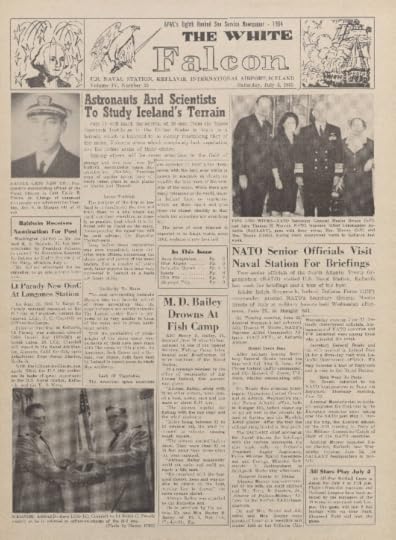
The novel is narrated from the perspective of Théodora, aka Teddy. In 1962, when it opens she is a teenager living with her parents on a farm near to Ódáðahraun. A visiting photographer, Mr Cooper, from the US Army Map Service, added by a locsal scientist from the Icelandic National Survey, are surveying the area, but when the latter badly twists his ankle on the rocks, the two come to the farm in search of help, and Cooper ends up co-opting Teddy (who he initially assumes is a boy) to help him. Reviewing her findings later in America, he realises she is numerically gifted, something of which she and her parents were aware, but which had not proven terribly useful in her current domestic situation.
Mr Cooper writes, from the US, to Teddy and her parents urging her to go to college. And the story that follows over the next 9 years takes Teddy from her remote cottage, first north to the coastal town of Akureyri, then south to the capital; spend the night in a remote cave with one of the training NATO astronauts; form an odd relationship of convenience with a childhood admirer; land a pilotless plane; and work in a bank, where she dabbles in cheque fraud to finance her ambitions to become a commercial pilot.
Throughout Teddy, a memorably drawn character, displays the mixture of stubborness and opacity referred to in the opening quote:
Sigurdur rose from his desk. He looked at her, this young woman he couldn't figure out. A strange bird, as he sometimes put it to his colleagues when she could not hear him. For despite being perceptive and shrewd, she sometimes seemed to him disconnected from her surroundings, out to sea. Or, rather, she was on a constant journey between worlds and would change topics on the slightest occasion, saying something that ended a conversation or silenced a group. It wasn't that her words were in any way inappropriate, but that they seemed arbitrary, abstract, nothing more than the result of reflections whose source no one could fathom.
and encounters sexism, people assuming she can not do what she clearly has done, and who judge her on the looks rather than her ability.
"Her name is Theodóra. She goes by "Teddý". And she is a cashier at the National Bank in town.'
It did not take Frank long to work out which of the three women sitting behind the counter was the one he needed to see. Her fringe almost covered her eyes, causing the onlooker's attention to focus on her unusually full, pale lips, which opened very slowly as if the world had suddenly changed gears: 'Good morning? The voice, while not exactly unfriendly, was flat and the girl's attitude seemed distant.
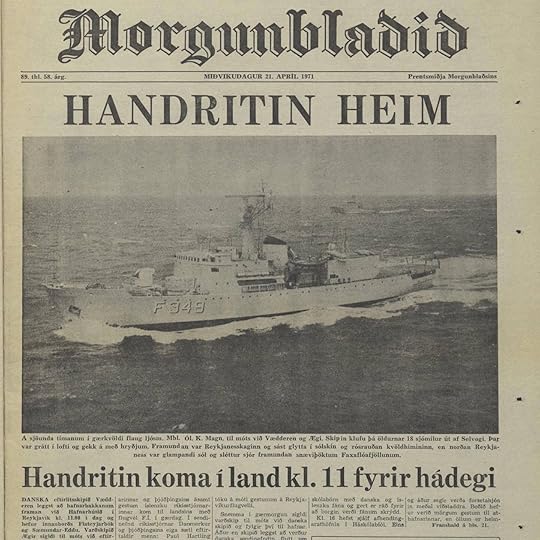
Throughout, the novel contains references to Iceland's history of the period and the broader world context - a crucial scene that puts a seeming end to her pilot ambitions, but takes her on a different route, taking place in April 1971, the day the long-campaigned for return of 13th and 14th century historical documents from Denmark to Iceland took place:
The close third-person narration alternates with vignettes, not ordered chronologically, from Teddy's subsequent 33 years as a air stewardess, from 1971 to 2004, told in italics as memories, and in one crucial case a dream, rather than in the moment narration.
And the novel contains a wonderful 'aftermath' a few months later where Teddy, not yet 60, finally achieves her ambitions, drawing on her one night in the lava field with an astronaut, but in different a way that confounds the expectations of the businessmen who patronised her in her former guise.
Engrossing.
Peirene Press
Founded in 2008, we’ve been a key player in the thriving UK independent publishing scene for over a decade, publishing books from 25 countries and 20 different languages. Traditionally a publisher of European novellas in translation, we now publish writing from all over the world and are expanding our list to publish literary fiction of all shapes and sizes. Our books are regularly listed for significant UK literary and translation prizes, including the International Booker Prize, and in 2023 we won the Dublin Literary Award with our book Marzahn, Mon Amour by Katja Oskamp, translated from German by Jo Heinrich.
Our subscribers are the foundation of everything we do at Peirene. Their support and commitment empowers us to make bold editorial choices and to invest in ambitious, thought-provoking writing.
Boudoir (2026) is Lytton Smith's translation of Dyngja (2021) by Sigrún Pálsdóttir.
This is the second novel by the translator/author in English after the fascinating History. A Mess.
Both novel are published by Peirene Press in the UK (and Open Letter in the US), a wonderful press, first under the stewardship of Meike Ziervogel for 14 years, and for the last five years by Stella Sabin and James Tookey.
The original title contains a play on words, dyngja being both a women’s inner room, bower, or weaving room; but also a shield volcano. And a crucial scene in the novel plays out in the Ódáðahraun lava fields, where (in real-life, as in the novel), NASA astronauts came to train in 1965 and again in 1967, the area believed by scientists to be the closest on earth to the lunar landscape.
The novel is narrated from the perspective of Théodora, aka Teddy. In 1962, when it opens she is a teenager living with her parents on a farm near to Ódáðahraun. A visiting photographer, Mr Cooper, from the US Army Map Service, added by a locsal scientist from the Icelandic National Survey, are surveying the area, but when the latter badly twists his ankle on the rocks, the two come to the farm in search of help, and Cooper ends up co-opting Teddy (who he initially assumes is a boy) to help him. Reviewing her findings later in America, he realises she is numerically gifted, something of which she and her parents were aware, but which had not proven terribly useful in her current domestic situation.
Mr Cooper writes, from the US, to Teddy and her parents urging her to go to college. And the story that follows over the next 9 years takes Teddy from her remote cottage, first north to the coastal town of Akureyri, then south to the capital; spend the night in a remote cave with one of the training NATO astronauts; form an odd relationship of convenience with a childhood admirer; land a pilotless plane; and work in a bank, where she dabbles in cheque fraud to finance her ambitions to become a commercial pilot.
Throughout Teddy, a memorably drawn character, displays the mixture of stubborness and opacity referred to in the opening quote:
Sigurdur rose from his desk. He looked at her, this young woman he couldn't figure out. A strange bird, as he sometimes put it to his colleagues when she could not hear him. For despite being perceptive and shrewd, she sometimes seemed to him disconnected from her surroundings, out to sea. Or, rather, she was on a constant journey between worlds and would change topics on the slightest occasion, saying something that ended a conversation or silenced a group. It wasn't that her words were in any way inappropriate, but that they seemed arbitrary, abstract, nothing more than the result of reflections whose source no one could fathom.
and encounters sexism, people assuming she can not do what she clearly has done, and who judge her on the looks rather than her ability.
"Her name is Theodóra. She goes by "Teddý". And she is a cashier at the National Bank in town.'
It did not take Frank long to work out which of the three women sitting behind the counter was the one he needed to see. Her fringe almost covered her eyes, causing the onlooker's attention to focus on her unusually full, pale lips, which opened very slowly as if the world had suddenly changed gears: 'Good morning? The voice, while not exactly unfriendly, was flat and the girl's attitude seemed distant.
Throughout, the novel contains references to Iceland's history of the period and the broader world context - a crucial scene that puts a seeming end to her pilot ambitions, but takes her on a different route, taking place in April 1971, the day the long-campaigned for return of 13th and 14th century historical documents from Denmark to Iceland took place:
The close third-person narration alternates with vignettes, not ordered chronologically, from Teddy's subsequent 33 years as a air stewardess, from 1971 to 2004, told in italics as memories, and in one crucial case a dream, rather than in the moment narration.
And the novel contains a wonderful 'aftermath' a few months later where Teddy, not yet 60, finally achieves her ambitions, drawing on her one night in the lava field with an astronaut, but in different a way that confounds the expectations of the businessmen who patronised her in her former guise.
Engrossing.
Peirene Press
Founded in 2008, we’ve been a key player in the thriving UK independent publishing scene for over a decade, publishing books from 25 countries and 20 different languages. Traditionally a publisher of European novellas in translation, we now publish writing from all over the world and are expanding our list to publish literary fiction of all shapes and sizes. Our books are regularly listed for significant UK literary and translation prizes, including the International Booker Prize, and in 2023 we won the Dublin Literary Award with our book Marzahn, Mon Amour by Katja Oskamp, translated from German by Jo Heinrich.
Our subscribers are the foundation of everything we do at Peirene. Their support and commitment empowers us to make bold editorial choices and to invest in ambitious, thought-provoking writing.

August 25, 2026
Set in 1962, at a time of great change in the world, teenager Teddý lives with her parents on a remote farm in the Icelandic wilderness. Her life is dominated by lava fields, mountains and her approaching womanhood.
An American scientist is researching in the area, and when his assistant falls ill, he co-opts Teddý to help him for a couple of days. This is the first of two opportunities that fall at the perfect time in Teddý's life. Some time later, she is out riding her horse, and as a storm arrives, shelters with another American, similarly working in the area. It turns out, the American is training as an astronaut.
Greatly influenced by these two random meetings, Teddý's ambition to move away grows, as does her interest in flying, especially when she is at first told that that would not be possible for a woman.
This is a novel about dreams and opportunities. There maybe a convenient coincidence or two, but that is not the point of the novel. Pálsdóttir writes particularly well when describing her protagonist over the course of fity years, with an element of mystery to her, and yet fiercely determined. It would be easy for the story to become predictable and formulaic, but Pálsdóttir makes sure that doesn't happen.
An American scientist is researching in the area, and when his assistant falls ill, he co-opts Teddý to help him for a couple of days. This is the first of two opportunities that fall at the perfect time in Teddý's life. Some time later, she is out riding her horse, and as a storm arrives, shelters with another American, similarly working in the area. It turns out, the American is training as an astronaut.
Greatly influenced by these two random meetings, Teddý's ambition to move away grows, as does her interest in flying, especially when she is at first told that that would not be possible for a woman.
This is a novel about dreams and opportunities. There maybe a convenient coincidence or two, but that is not the point of the novel. Pálsdóttir writes particularly well when describing her protagonist over the course of fity years, with an element of mystery to her, and yet fiercely determined. It would be easy for the story to become predictable and formulaic, but Pálsdóttir makes sure that doesn't happen.
September 16, 2026
Fékk hana líklega í jólagjöf 2021 og hún endaði ofan í kassa, ákvað að lesa hana þegar Erika sagði mér að það ætti að þýða bókina á ensku. Mér fannst þetta sísta bókin eftir Sigrúnu sem ég hef lesið. Þó að byrjunin hafi gripið þá fannst mér endirinn bara eitthvað kjánalegur. Alveg áhugaverð bók og alveg þess virði að lesa en ekki negla

August 8, 2026
I read this book in its English translation, published by pereine press (beautiful cover and perfect sized writing!). It was engaging from the start in quite a compelling and diverse story (sometimes a little too diverse) about an Icelandic girl, to woman and adulthood, navigating the difficulties faced by ambitious and clever women in the past. It was a slightly incredulous highly entertaining read. Hope it becomes a popular book in English as it is well deserved!

June 27, 2022
Algjörlega frábær. Teddý elst upp í á bæ við Suðurárbotna, einn af draumastöðum þessa lands, og er dreymir stóra drauma. Vil ekki segja of mikið til að spilla ekki fyrir öðrum en ég mæli svo sannarlega með þessari bók. Höfundur hefur greinilega vandað vel til verka því allar flugtendar lýsingar stóðust uppá punkt og prik.

Review of advance copy received from Publisher
This wonderful, rather misleadingly titled novel spans 5 decades, telling us the story of neurodivergent protagonist Teddý from 1962 onwards, interspersed with the experiences of an air hostess, going backwards in time from 2004, with the three letter airport codes of each trip shown each time, which I found a fun touch. I confess it did take me a couple of goes to get to grips with the timelines going in different directions, and the following text not relating to the stewardess sections!
Teddý is a numbers whizz, and at the urging of an American cartographer visiting Iceland who she briefly assists, attends college and graduates exceptionally well. On returning home she goes for a horse ride but becomes lost in the fog, and bumps into a training astronaut who has similarly got himself lost, and they spend the night in a shepherd hut. This chance encounter has twin consequences that profoundly influence the future path of Teddý's life, a relationship that is more about security than love, a career, and a passionate secret hobby, before the house of cards inevitably comes tumbling down about her ears.
The book is not a very long read and I found I couldn't put it down, I was absolutely entranced and fully invested in Teddý's life, rooting for her and wishing things could be different - as indeed they would be scant years later.
In some respects this is a story that could take place in almost any location of that era, but the beginning, setting up the story, is a set of circumstances unique to Iceland, and also the sense of limitless opportunity that is inherent in a much smaller population - you can do almost anything in an environment which lacks the kind of competition in numbers of more populous countries, and this has encouraged an unusually high level of entrepreneurship and just general 'having a go' in Iceland. If you can imagine it, you have a good chance of being able to make it happen. Sadly this doesn't fully work for Teddý, though she is certainly making strides in the right direction for the generation of women following her.
The novel is beautifully written, with well drawn characters, gentle but engaging pacing and a wonderful plot. If I had never been to Iceland, would I find this book painted a portrait of the country well for me? In some ways yes, but in others, as mentioned, the story is driven more after the opening by the characters and plot, so I would give it 5 stars for content but 4 (to perhaps 4.5!) for location.
If I were to pick any flaws, they would be that an enraging word is not revealed, and I'm too curious! And also the use of giggling on occasion for men, when I felt a chuckle would be more fitting in the context, but this is doubtless a translation point, which is otherwise ably handled by Lytton Smith. Full marks to Peirene press as well for naming the translator on the cover - credit where credit's due! Sigrún Pálsdóttir is absolutely an author to be keeping an eye out for in future.
With thanks to Peirene Press and TripFiction for an advance copy of the book in exchange for an honest, unbiased review. This wonderful, rather misleadingly titled novel spans 5 decades, telling us the story of neurodivergent protagonist Teddý from 1962 onwards, interspersed with the experiences of an air hostess, going backwards in time from 2004, with the three letter airport codes of each trip shown each time, which I found a fun touch. I confess it did take me a couple of goes to get to grips with the timelines going in different directions, and the following text not relating to the stewardess sections!
Teddý is a numbers whizz, and at the urging of an American cartographer visiting Iceland who she briefly assists, attends college and graduates exceptionally well. On returning home she goes for a horse ride but becomes lost in the fog, and bumps into a training astronaut who has similarly got himself lost, and they spend the night in a shepherd hut. This chance encounter has twin consequences that profoundly influence the future path of Teddý's life, a relationship that is more about security than love, a career, and a passionate secret hobby, before the house of cards inevitably comes tumbling down about her ears.
The book is not a very long read and I found I couldn't put it down, I was absolutely entranced and fully invested in Teddý's life, rooting for her and wishing things could be different - as indeed they would be scant years later.
In some respects this is a story that could take place in almost any location of that era, but the beginning, setting up the story, is a set of circumstances unique to Iceland, and also the sense of limitless opportunity that is inherent in a much smaller population - you can do almost anything in an environment which lacks the kind of competition in numbers of more populous countries, and this has encouraged an unusually high level of entrepreneurship and just general 'having a go' in Iceland. If you can imagine it, you have a good chance of being able to make it happen. Sadly this doesn't fully work for Teddý, though she is certainly making strides in the right direction for the generation of women following her.
The novel is beautifully written, with well drawn characters, gentle but engaging pacing and a wonderful plot. If I had never been to Iceland, would I find this book painted a portrait of the country well for me? In some ways yes, but in others, as mentioned, the story is driven more after the opening by the characters and plot, so I would give it 5 stars for content but 4 (to perhaps 4.5!) for location.
If I were to pick any flaws, they would be that an enraging word is not revealed, and I'm too curious! And also men giggling, which undoubtedly they do on occasion, but I find the word draws quite a different picture mentally than perhaps a chuckle might have done, which to me seemed more in keeping with the context in which it happened, but this is doubtless something from the translation side, which, this minor point aside, is ably handled by Lytton Smith. Full marks to Peirene press as well for naming the translator on the cover - credit where credit's due! Sigrún Pálsdóttir is absolutely an author to be keeping an eye out for in future.
Teddý is a numbers whizz, and at the urging of an American cartographer visiting Iceland who she briefly assists, attends college and graduates exceptionally well. On returning home she goes for a horse ride but becomes lost in the fog, and bumps into a training astronaut who has similarly got himself lost, and they spend the night in a shepherd hut. This chance encounter has twin consequences that profoundly influence the future path of Teddý's life, a relationship that is more about security than love, a career, and a passionate secret hobby, before the house of cards inevitably comes tumbling down about her ears.
The book is not a very long read and I found I couldn't put it down, I was absolutely entranced and fully invested in Teddý's life, rooting for her and wishing things could be different - as indeed they would be scant years later.
In some respects this is a story that could take place in almost any location of that era, but the beginning, setting up the story, is a set of circumstances unique to Iceland, and also the sense of limitless opportunity that is inherent in a much smaller population - you can do almost anything in an environment which lacks the kind of competition in numbers of more populous countries, and this has encouraged an unusually high level of entrepreneurship and just general 'having a go' in Iceland. If you can imagine it, you have a good chance of being able to make it happen. Sadly this doesn't fully work for Teddý, though she is certainly making strides in the right direction for the generation of women following her.
The novel is beautifully written, with well drawn characters, gentle but engaging pacing and a wonderful plot. If I had never been to Iceland, would I find this book painted a portrait of the country well for me? In some ways yes, but in others, as mentioned, the story is driven more after the opening by the characters and plot, so I would give it 5 stars for content but 4 (to perhaps 4.5!) for location.
If I were to pick any flaws, they would be that an enraging word is not revealed, and I'm too curious! And also the use of giggling on occasion for men, when I felt a chuckle would be more fitting in the context, but this is doubtless a translation point, which is otherwise ably handled by Lytton Smith. Full marks to Peirene press as well for naming the translator on the cover - credit where credit's due! Sigrún Pálsdóttir is absolutely an author to be keeping an eye out for in future.
With thanks to Peirene Press and TripFiction for an advance copy of the book in exchange for an honest, unbiased review. This wonderful, rather misleadingly titled novel spans 5 decades, telling us the story of neurodivergent protagonist Teddý from 1962 onwards, interspersed with the experiences of an air hostess, going backwards in time from 2004, with the three letter airport codes of each trip shown each time, which I found a fun touch. I confess it did take me a couple of goes to get to grips with the timelines going in different directions, and the following text not relating to the stewardess sections!
Teddý is a numbers whizz, and at the urging of an American cartographer visiting Iceland who she briefly assists, attends college and graduates exceptionally well. On returning home she goes for a horse ride but becomes lost in the fog, and bumps into a training astronaut who has similarly got himself lost, and they spend the night in a shepherd hut. This chance encounter has twin consequences that profoundly influence the future path of Teddý's life, a relationship that is more about security than love, a career, and a passionate secret hobby, before the house of cards inevitably comes tumbling down about her ears.
The book is not a very long read and I found I couldn't put it down, I was absolutely entranced and fully invested in Teddý's life, rooting for her and wishing things could be different - as indeed they would be scant years later.
In some respects this is a story that could take place in almost any location of that era, but the beginning, setting up the story, is a set of circumstances unique to Iceland, and also the sense of limitless opportunity that is inherent in a much smaller population - you can do almost anything in an environment which lacks the kind of competition in numbers of more populous countries, and this has encouraged an unusually high level of entrepreneurship and just general 'having a go' in Iceland. If you can imagine it, you have a good chance of being able to make it happen. Sadly this doesn't fully work for Teddý, though she is certainly making strides in the right direction for the generation of women following her.
The novel is beautifully written, with well drawn characters, gentle but engaging pacing and a wonderful plot. If I had never been to Iceland, would I find this book painted a portrait of the country well for me? In some ways yes, but in others, as mentioned, the story is driven more after the opening by the characters and plot, so I would give it 5 stars for content but 4 (to perhaps 4.5!) for location.
If I were to pick any flaws, they would be that an enraging word is not revealed, and I'm too curious! And also men giggling, which undoubtedly they do on occasion, but I find the word draws quite a different picture mentally than perhaps a chuckle might have done, which to me seemed more in keeping with the context in which it happened, but this is doubtless something from the translation side, which, this minor point aside, is ably handled by Lytton Smith. Full marks to Peirene press as well for naming the translator on the cover - credit where credit's due! Sigrún Pálsdóttir is absolutely an author to be keeping an eye out for in future.

September 18, 2026
"𝘏𝘰𝘸 𝘸𝘢𝘴 𝘪𝘵 𝘱𝘰𝘴𝘴𝘪𝘣𝘭𝘦 𝘵𝘰 𝘬𝘯𝘰𝘸 𝘰𝘯𝘦 𝘱𝘦𝘳𝘴𝘰𝘯 𝘴𝘰 𝘸𝘦𝘭𝘭, 𝘸𝘪𝘵𝘩𝘰𝘶𝘵 𝘢𝘤𝘵𝘶𝘢𝘭𝘭𝘺 𝘬𝘯𝘰𝘸𝘪𝘯𝘨 𝘢𝘯𝘺𝘵𝘩𝘪𝘯𝘨 𝘢𝘣𝘰𝘶𝘵 𝘵𝘩𝘦𝘮?"
I came across this one on Open Letter Book's website when they had their sale for WIT month and was intrigued by the cover, then the premise. Originally published in Icelandic this short novel (177 pages) covers about five decades in the life of Teddý, a woman who, like most of us, yearns for more with her life.
It unfolds in ways I hadn't expected but honestly that's okay. At times a tad incredulous, it was entertaining, yet also relatable: the suffocating sexist expectations Teddý experiences, the way society attempts to box her into a mold she cannot fit in, the potential she possesses that surprises everyone, herself included, to the point that others try to suppress it and she tries to hide it. It is quietly feminist in that readers will find themselves rooting for Teddý to break free and fly (quite literally) above and away all that tries to cage her, even when she doesn't always make the wisest decisions to attempt such feats.
The ending left me scratching my head a little bit as to precisely what happens, so I will have to reread it to understand fully. Throughout there were parts I wish had more explanation for or at least spent more time with - that's the downside to short fiction, sometimes a few more pages would be appreciated. The translation was done beautifully though, and I am curious about one of Pálsdóttir's other works, Embroidery.
For a brief read to jaunt over to an island nation I have yet to visit but deeply want to, this one was worth picking up. 3.75 rounded up to 4
I came across this one on Open Letter Book's website when they had their sale for WIT month and was intrigued by the cover, then the premise. Originally published in Icelandic this short novel (177 pages) covers about five decades in the life of Teddý, a woman who, like most of us, yearns for more with her life.
It unfolds in ways I hadn't expected but honestly that's okay. At times a tad incredulous, it was entertaining, yet also relatable: the suffocating sexist expectations Teddý experiences, the way society attempts to box her into a mold she cannot fit in, the potential she possesses that surprises everyone, herself included, to the point that others try to suppress it and she tries to hide it. It is quietly feminist in that readers will find themselves rooting for Teddý to break free and fly (quite literally) above and away all that tries to cage her, even when she doesn't always make the wisest decisions to attempt such feats.
The ending left me scratching my head a little bit as to precisely what happens, so I will have to reread it to understand fully. Throughout there were parts I wish had more explanation for or at least spent more time with - that's the downside to short fiction, sometimes a few more pages would be appreciated. The translation was done beautifully though, and I am curious about one of Pálsdóttir's other works, Embroidery.
For a brief read to jaunt over to an island nation I have yet to visit but deeply want to, this one was worth picking up. 3.75 rounded up to 4

Review of advance copy received from Publisher
Pereine Press Subscription 2026
A fun immersion into the world of 60/70s Iceland – complete with linoleum flooring, avocado bathrooms and smoking in planes.
It begins with Teddy a slightly terse mathematically talented teen in rural Iceland, being co-opted to help some US scientists to explore the local lava lakes.
We then follow Teddy as she fights for her place in the world, through various historical events; the moon landing – interested to find out that Iceland missed these being televised because of the national broadcaster being on holiday - the 1975 Women’s strike, the return of the Icelandic Sagas from Denmark …
The writing is very minimal, it has that ‘blink and you will miss it’ aspect so I had to keep going back and rereading certain passages to make sure that what I though had happened had actually happened. It was like a breath of fresh air to read though; there was not a superfluous word in the entire book. Great setting and character.
A fun immersion into the world of 60/70s Iceland – complete with linoleum flooring, avocado bathrooms and smoking in planes.
It begins with Teddy a slightly terse mathematically talented teen in rural Iceland, being co-opted to help some US scientists to explore the local lava lakes.
We then follow Teddy as she fights for her place in the world, through various historical events; the moon landing – interested to find out that Iceland missed these being televised because of the national broadcaster being on holiday - the 1975 Women’s strike, the return of the Icelandic Sagas from Denmark …
The writing is very minimal, it has that ‘blink and you will miss it’ aspect so I had to keep going back and rereading certain passages to make sure that what I though had happened had actually happened. It was like a breath of fresh air to read though; there was not a superfluous word in the entire book. Great setting and character.
October 4, 2026
Really interesting book, I thought it was written in a unique way, and it was captivating enough that I wanted to go back and reread parts to fully understand them and keep moving forward to see what happened next. I think the vagueness did lead me to misunderstand a few parts of what happened and I'm still not entirely certain on everything but it was a good read.
August 15, 2026
“All she knew was that something had go change; she just did not know exactly what.”
I’m so confused and dissapointed by this book. The starting was incredible - World building, interesting, mythical, and the closer you got to the end the more dissapointing it became.
Why did her husband do that to herself? Why was her miscarriage not further explored? Why was her female friendships and the communist side of things not further explored??? Why did everything have to be so confusing to the point where it was no longer enjoyable?
Dissapointing! Would not recommend even though its so mythical and lovely to start off with.
I’m so confused and dissapointed by this book. The starting was incredible - World building, interesting, mythical, and the closer you got to the end the more dissapointing it became.
Why did her husband do that to herself? Why was her miscarriage not further explored? Why was her female friendships and the communist side of things not further explored??? Why did everything have to be so confusing to the point where it was no longer enjoyable?
Dissapointing! Would not recommend even though its so mythical and lovely to start off with.
This entire review has been hidden because of spoilers.

March 18, 2022
Ung kona úr sveit að berjast í heimi karlmanna til að gera það sem hana langar til. Sniðuglega samin bók, uppbyggingin þétt og stíllinn seiðandi. Hraun og malbik setja mark sitt á söguna og söguhetjan gefst aldrei upp. Góð bók.

March 6, 2022
Frábær bók. Alveg jafn skemmtileg og Delluferðin.

April 19, 2022
Hún Teddý! Ég hló og grét, ekkert neins staðar ofsagt, lesandanum eftirlátið að draga ályktanir. Af hverju var enginn búinn að segja mér almennilega af þessum höfundi?
May 11, 2022
Það er glæsileiki yfir stíl Sigrúnar, hún er frábær stílisti og sagnamaður og hér eru margar ógleymanlegar myndir: og öryggi.
October 9, 2026
I grabbed this book on a whim, and really enjoyed it. Its a quick read at 170 pages. It was definitely a different book, with its own feel to it. Teddy was a unique character. Loved the ending
June 8, 2022
Góð saga. Áhugaverð sviðsmynd. Umhverfið skemmtilegt þar sem frelsi Ódáðahrauns og hrátt Breiðholtið í byggingu mynda ramma um afmörkuð tækifæri konu í karlaheimi. Vel gerður sögulegur og umhverfislegur rammi. Hins vegar óþarflega sundurlaus og hrá eins og handrit sem eftir er að fínkemba og mýkja,
May 4, 2026
This wonderful, rather misleadingly titled novel spans 5 decades, telling us the story of neurodivergent protagonist Teddý from 1962 onwards, interspersed with the experiences of an air hostess, going backwards in time from 2004, with the three letter airport codes of each trip shown each time, which I found a fun touch. I confess it did take me a couple of goes to get to grips with the timelines going in different directions, and the following text not relating to the stewardess sections!
Teddý is a numbers whizz, and at the urging of an American cartographer visiting Iceland who she briefly assists, attends college and graduates exceptionally well. On returning home she goes for a horse ride but becomes lost in the fog, and bumps into a training astronaut who has similarly got himself lost, and they spend the night in a shepherd hut. This chance encounter has twin consequences that profoundly influence the future path of Teddý's life, a relationship that is more about security than love, a career, and a passionate secret hobby, before the house of cards inevitably comes tumbling down about her ears.
The book is not a very long read and I found I couldn't put it down, I was absolutely entranced and fully invested in Teddý's life, rooting for her and wishing things could be different - as indeed they would be scant years later.
In some respects this is a story that could take place in almost any location of that era, but the beginning, setting up the story, is a set of circumstances unique to Iceland, and also the sense of limitless opportunity that is inherent in a much smaller population - you can do almost anything in an environment which lacks the kind of competition in numbers of more populous countries, and this has encouraged an unusually high level of entrepreneurship and just general 'having a go' in Iceland. If you can imagine it, you have a good chance of being able to make it happen. Sadly this doesn't fully work for Teddý, though she is certainly making strides in the right direction for the generation of women following her.
The novel is beautifully written, with well drawn characters, gentle but engaging pacing and a wonderful plot. If I had never been to Iceland, would I find this book painted a portrait of the country well for me? In some ways yes, but in others, as mentioned, the story is driven more after the opening by the characters and plot, so I would give it 5 stars for content but 4 (to perhaps 4.5!) for location.
If I were to pick any flaws, they would be that an enraging word is not revealed, and I'm too curious! And also the use of giggling on occasion for men, when I felt a chuckle would be more fitting in the context, but this is doubtless a translation point, which is otherwise ably handled by Lytton Smith. Full marks to Peirene press as well for naming the translator on the cover - credit where credit's due! Sigrún Pálsdóttir is absolutely an author to be keeping an eye out for in future.
With thanks to Peirene Press and TripFiction for an advance copy of the book in exchange for an honest, unbiased review.
Teddý is a numbers whizz, and at the urging of an American cartographer visiting Iceland who she briefly assists, attends college and graduates exceptionally well. On returning home she goes for a horse ride but becomes lost in the fog, and bumps into a training astronaut who has similarly got himself lost, and they spend the night in a shepherd hut. This chance encounter has twin consequences that profoundly influence the future path of Teddý's life, a relationship that is more about security than love, a career, and a passionate secret hobby, before the house of cards inevitably comes tumbling down about her ears.
The book is not a very long read and I found I couldn't put it down, I was absolutely entranced and fully invested in Teddý's life, rooting for her and wishing things could be different - as indeed they would be scant years later.
In some respects this is a story that could take place in almost any location of that era, but the beginning, setting up the story, is a set of circumstances unique to Iceland, and also the sense of limitless opportunity that is inherent in a much smaller population - you can do almost anything in an environment which lacks the kind of competition in numbers of more populous countries, and this has encouraged an unusually high level of entrepreneurship and just general 'having a go' in Iceland. If you can imagine it, you have a good chance of being able to make it happen. Sadly this doesn't fully work for Teddý, though she is certainly making strides in the right direction for the generation of women following her.
The novel is beautifully written, with well drawn characters, gentle but engaging pacing and a wonderful plot. If I had never been to Iceland, would I find this book painted a portrait of the country well for me? In some ways yes, but in others, as mentioned, the story is driven more after the opening by the characters and plot, so I would give it 5 stars for content but 4 (to perhaps 4.5!) for location.
If I were to pick any flaws, they would be that an enraging word is not revealed, and I'm too curious! And also the use of giggling on occasion for men, when I felt a chuckle would be more fitting in the context, but this is doubtless a translation point, which is otherwise ably handled by Lytton Smith. Full marks to Peirene press as well for naming the translator on the cover - credit where credit's due! Sigrún Pálsdóttir is absolutely an author to be keeping an eye out for in future.
With thanks to Peirene Press and TripFiction for an advance copy of the book in exchange for an honest, unbiased review.
June 10, 2026
“Live in your life, Theodóra. Don’t think yourself out of it”
Teddý is quiet, determined and resourceful, and somehow manages to face everything life throws her way with an almost unnerving calmness. At no point did I know where this book was going.
Teddý is quiet, determined and resourceful, and somehow manages to face everything life throws her way with an almost unnerving calmness. At no point did I know where this book was going.
Review of advance copy received from Publisher
A great story and so well written. Loved it.

August 2, 2026
Fun, inspiring, found myself rooting for Teddý all the way, we do what we have to do and if we can answer the callings deep inside our soul then all the better. Learned plenty about Iceland, inspired also to visit.

April 22, 2026
A truly odd novel, in quite a wonderful way.
The story of a woman, and Iceland, in the last forty years of the XX century, with sexism, micro aggressions, thwarted dreams and a picaresque journey - both literal and metaphorical.
A very enjoyable anti-dramatic style that contributes to the atmospheric flavour of the novel. Every frustration, set back, injustice and abuse are seen through the eyes of a narrator that is delightfully tuned into a matter-of-fact and no nonse perspective.
The story of a woman, and Iceland, in the last forty years of the XX century, with sexism, micro aggressions, thwarted dreams and a picaresque journey - both literal and metaphorical.
A very enjoyable anti-dramatic style that contributes to the atmospheric flavour of the novel. Every frustration, set back, injustice and abuse are seen through the eyes of a narrator that is delightfully tuned into a matter-of-fact and no nonse perspective.

Displaying 1 - 22 of 22 reviews