

What do you think?
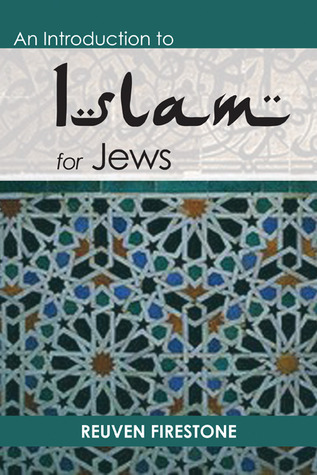
An Introduction to Islam for Jews
Muslim-Jewish relations in the United States, Israel, and Europe are tenuous. Jews and Muslims struggle to understand one another and know little about each other’s traditions and beliefs. Firestone explains the remarkable similarities and profound differences between Judaism and Islam, the complex history of Jihad, the legal and religious positions of Jews in the world of Islam, how various expressions of Islam (Sunni, Shi`a, Sufi, Salafi, etc.) regard Jews, the range of Muslim views about Israel, and much more. He addresses these issues and others with candor and integrity, and he writes with language, symbols, and ideas that make sense to Jews. Exploring these subjects in today’s vexed political climate is a delicate undertaking. Firestone draws on the research and writings of generations of Muslim, Jewish, and other scholars, as well as his own considerable expertise in this field. The book’s tone is neither disparaging, apologetic, nor triumphal. Firestone provides many original sources in translation, as well as an appendix of additional key sources in context. Most importantly, this book is readable and reasoned, presenting to readers for the first time the complexity of Islam and its relationship toward Jews and Judaism.
304 pages, Paperback
First published May 1, 2008
Ratings & Reviews
Friends & Following
Create a free account to discover what your friends think of this book!
Community Reviews
Displaying 1 - 15 of 15 reviews

January 27, 2015
Firestone's book fills a niche in that covers both an introduction to Islamic religion and culture as well as comparative religious treatments on the relationship between people of the book. It is a fairly balanced tome that seeks to balance a deep sense of sympathy with Islamic religion and culture with an honest treatment of tensions between Islamic and Jewish cultures. Many will see this balance as either "white-washing" the history of Muslim-Jewish relations or a subtle undermining of the truth of either the Torah or the Qu'ran. In many more negative reviews, I have seen accusations that Firestone ignores the doctrine of tahrif, which Firestone does not name, but discuss. He also discusses counter-veiling tendencies in the Qu'ran and the Hadith as well as the ways the Hadith developed in more strict way it first appears in the Qu'ran, and that this actually does parallel, fairly directly, halakkah developments and the oral law in Judaism.
Indeed, Firestone makes it clear that distrust between Judaism and Islam goes both ways and has a long history. While it is true that Firestone does paint things sympathetically, he does not deny the particular tension between Jews and Muslims. Indeed, he points out that while Jewish and Islamic theology and approaches to religious law are actually more similar than either Jewish and Christian or Christian and Muslim relations, Islamic tradition has been more forgiving of Christians as people of the book than Jews, and has made less claims on its tradition beyond the Qu'rans particular reading of stories that also appear in the gospels, albiet in a profoundly different light in creedal Christian readings.
Firestone points out a lot of both the cultural and linguistic relationship to the Judaism in the Qu'ran and in Arabic culture at large. The clear relationship of Hebrew and Arabic as semitic languages, the mutual readings of the common tradition, and the overlapping and often competing cultural mileau is brought into focus. Historical development of Islam is discussed in some detail as are competing traditions of Shari'ia. The tensions of the "Jewish Golden Age" in Islamic Spain are brought out clearly as are the occasional backlashes against Jews in the pre-modern Muslim world. Firestone does mention that these were not as brutal or repressive as in Christian Europe nor were massacres of Jews as common as in pre-reformation Christian world or the early 20th century.
Firestone does shy away from discussing the tensions post-Zionism too directly, and this is small flaw in the book. The reversal of Muslim fortunes under modernity is discussed as is colonialism, but the establishment of Israel out of the British mandate is glossed over in a few sentences, and the profound distrust this creates on both sides of the divide is played down.
That caveat is an important one as is some of the historical tensions described within the Firestone's treatment. It strives to me honest and yet respectful of believers in all three of the largest "Abrahamic" faiths, and while I think it works, that is still going to be alienating to some.
Indeed, Firestone makes it clear that distrust between Judaism and Islam goes both ways and has a long history. While it is true that Firestone does paint things sympathetically, he does not deny the particular tension between Jews and Muslims. Indeed, he points out that while Jewish and Islamic theology and approaches to religious law are actually more similar than either Jewish and Christian or Christian and Muslim relations, Islamic tradition has been more forgiving of Christians as people of the book than Jews, and has made less claims on its tradition beyond the Qu'rans particular reading of stories that also appear in the gospels, albiet in a profoundly different light in creedal Christian readings.
Firestone points out a lot of both the cultural and linguistic relationship to the Judaism in the Qu'ran and in Arabic culture at large. The clear relationship of Hebrew and Arabic as semitic languages, the mutual readings of the common tradition, and the overlapping and often competing cultural mileau is brought into focus. Historical development of Islam is discussed in some detail as are competing traditions of Shari'ia. The tensions of the "Jewish Golden Age" in Islamic Spain are brought out clearly as are the occasional backlashes against Jews in the pre-modern Muslim world. Firestone does mention that these were not as brutal or repressive as in Christian Europe nor were massacres of Jews as common as in pre-reformation Christian world or the early 20th century.
Firestone does shy away from discussing the tensions post-Zionism too directly, and this is small flaw in the book. The reversal of Muslim fortunes under modernity is discussed as is colonialism, but the establishment of Israel out of the British mandate is glossed over in a few sentences, and the profound distrust this creates on both sides of the divide is played down.
That caveat is an important one as is some of the historical tensions described within the Firestone's treatment. It strives to me honest and yet respectful of believers in all three of the largest "Abrahamic" faiths, and while I think it works, that is still going to be alienating to some.
Read
November 18, 2015Some see the book as wonderful. Others as a whitewash of its subject. I have to agree with the latter. Of course this "historian" admits in the intro that his approach is to be "sympathetic to Islam. " So, no surprise.
This historian writes that despite lack of evidence, one can surmise that some Jews were in Muhammed's early armies. Despite lack of evidence?
Modernity, (with which Islam struggles--some would argue, it rejects--today) emerged in response to "natural developments that occurred in the West." Just how this happened, what is meant by modernity, and how it emerged from "natural" developments, he doesn't say. It has nothing to do w/ ancient roots of Western thought from Greece and Rome--roots including democracy, science, government by consent of the governed, and elevation of the individual over clan and tribe? Those things are key to modernity.
Author is at pains to find Judaic parallels to everything in Islam. So yes, places under Islamic law today practice stoning for some crimes. But wait, the Hebrew Bible prescribes stoning too! End of discussion. No mention that followers of the Bible haven't carried out stoning for millennia--if ever.
Rather than go on at length about this apology for the religion the book examines, I would suggest reading eminent scholars of Islam, such as Bernard Lewis (dean of them all), Martin Kramer, Efraim Karsh for an understanding of the past and therefore of the events of today's world.
This historian writes that despite lack of evidence, one can surmise that some Jews were in Muhammed's early armies. Despite lack of evidence?
Modernity, (with which Islam struggles--some would argue, it rejects--today) emerged in response to "natural developments that occurred in the West." Just how this happened, what is meant by modernity, and how it emerged from "natural" developments, he doesn't say. It has nothing to do w/ ancient roots of Western thought from Greece and Rome--roots including democracy, science, government by consent of the governed, and elevation of the individual over clan and tribe? Those things are key to modernity.
Author is at pains to find Judaic parallels to everything in Islam. So yes, places under Islamic law today practice stoning for some crimes. But wait, the Hebrew Bible prescribes stoning too! End of discussion. No mention that followers of the Bible haven't carried out stoning for millennia--if ever.
Rather than go on at length about this apology for the religion the book examines, I would suggest reading eminent scholars of Islam, such as Bernard Lewis (dean of them all), Martin Kramer, Efraim Karsh for an understanding of the past and therefore of the events of today's world.

March 21, 2011
Firestone's book is balanced, empathic and meticulously researched, so why the three stars? While I appreciate the deep historical grounding, and he examination of various hadithic traditions, the book fails to give a sense of what it is like to be a member of this dynamic, complex, conflicted religion. Modern Islam faces grand challenges in reconciling divinely inspired scripture with a pluralistic world, or integrating jihad (literally "the struggle", and not necessarily a military one) into ordinary life, and this book doesn't shed much light on those major problems. Even if such a task is beyond the scope of this book, I don't have a sense of what is essential about Islam. 90% of Judaism can be summed up in the story of Abraham and Isaac and the Exodus. I don't know what narratives are similarly grounding for Muslims.
Firestone is assiduously neutral, and obviously cares deeply about religion, but sometimes failing to express an opinion can be as bad as expressing the wrong one.
Firestone is assiduously neutral, and obviously cares deeply about religion, but sometimes failing to express an opinion can be as bad as expressing the wrong one.
Read
June 18, 2024This book is divided into 3 sections: Islamic history, theology, and practice. Jews living in the Hijaz influenced early Islamic teachings, which were drawn from their customs and the oral tradition. The conflict and enmity resulting from their rejection of Muhammad is recorded in the Qur'an and has shaped Muslim attitudes to Jews.
Firestone's comparisons to Judaism, especially in terms of religious customs and linguistic similarities, made the content more relatable. The author adopts a sympathetic view of Islam and, when addressing controversial topics such as honor killings, suicide bombings, and Jihad, he argues that these issues are either not core to Islam, are reflections of historical prejudices, or can be interpreted in ways that present a more moderate view.
Firestone's comparisons to Judaism, especially in terms of religious customs and linguistic similarities, made the content more relatable. The author adopts a sympathetic view of Islam and, when addressing controversial topics such as honor killings, suicide bombings, and Jihad, he argues that these issues are either not core to Islam, are reflections of historical prejudices, or can be interpreted in ways that present a more moderate view.
September 16, 2026
I found Reuven Firestone’s An Introduction to Islam for Jews to be a thoughtful and accessible introduction to Islam. I especially appreciated the way Firestone explains both the similarities and differences between Judaism and Islam without reducing one religion to the other. His discussion of Islamic history, the Qur’an, Islamic law, jihad, and Muslim views of Jews helped me understand subjects that are often presented in an oversimplified way. I also valued his balanced tone. He neither idealizes Islam nor portrays it unfairly. I would recommend this book to anyone seeking a more informed and respectful understanding of Jewish-Muslim relations.
September 16, 2026
This book changed the way I think about Islam and its relationship with Judaism. Before reading it, I understood some basic similarities between the two traditions, but I did not fully appreciate their shared history or their important theological differences. Firestone explains Islam in terms that are especially meaningful to Jewish readers, which made difficult subjects easier for me to understand. I found the historical sections particularly valuable because they showed that Jewish-Muslim relations have never been entirely simple or uniform. I finished the book feeling better informed and more prepared for serious interfaith dialogue.
September 16, 2026
I appreciated the book’s emphasis on understanding rather than argument. Firestone writes about Islam from a Jewish perspective, but he does not use Judaism as a way to judge or dismiss Islam. Instead, he uses points of comparison to make both traditions more understandable. I found his treatment of Jews in Islamic history and Muslim attitudes toward Judaism especially important. The book helped me see how ignorance and political tension can distort religious understanding. I believe this would be a valuable book for Jewish readers, Muslim readers, and anyone interested in improving Jewish-Muslim relations.
September 16, 2026
I found An Introduction to Islam for Jews informative and valuable, although I sometimes felt that the amount of historical and theological detail slowed the pace. Some sections required careful reading, and I occasionally wished Firestone would summarize his main points more directly. Nevertheless, I thought the depth was also one of the book’s strengths. He gives readers a serious introduction rather than a collection of generalizations. I especially appreciated the fair treatment of sensitive subjects and the effort to distinguish between Islam as a religion and the actions of particular political or extremist movements.
September 16, 2026
I consider this one of the most useful introductory books on Islam for a Jewish audience. Firestone combines expertise in Jewish and Islamic studies with a clear concern for interfaith understanding. I found his explanations of scripture, theology, law, religious practice, and Muslim diversity both informative and respectful. The book also helped me understand why comparisons between Judaism and Islam can be useful, but also why the two traditions should not be treated as identical. I would strongly recommend it to students, educators, clergy, and readers who want to replace stereotypes with knowledge.

September 16, 2026
I was impressed by the amount of scholarship in this book, but I never felt overwhelmed by the academic material. Firestone presents Islamic history, theology, scripture, law, and religious practice in a clear and organized way. I found the glossary, notes, bibliography, and translated source material especially helpful. The book gave me enough background to understand major Islamic concepts while also showing how diverse Muslim beliefs and practices can be. I would describe this as a reliable beginner’s guide that still offers enough depth for students and serious general readers.
September 16, 2026
What I liked most about this book was its honesty. Firestone does not hide the difficult parts of Islamic history, including conflicts involving Jews, questions surrounding jihad, and differing Muslim views of Israel. At the same time, he avoids treating isolated historical events or extremist interpretations as the complete meaning of Islam. I found this balance refreshing. The book recognizes that Islam contains many schools, traditions, and interpretations. I came away with a more complex and realistic understanding rather than a simple positive or negative impression.
September 16, 2026
I would recommend this book to anyone who knows very little about Islam and wants a serious place to begin. Firestone explains basic Islamic beliefs, the Five Pillars, the Qur’an, the Prophet Muhammad, Islamic law, Sufism, Shi’a Islam, and everyday religious practice. I found the writing clear enough for a general reader, even when the subject became complicated. The Jewish focus also made the material especially relevant to me because it connected Islamic ideas with concepts familiar from Jewish tradition. This is not a quick, superficial overview, but it is an approachable one.
April 26, 2026
A useful reference, particularly on the early history of Islam.

September 23, 2010
"This volume presumes some knowledge of interfaith studies, and, in that sense, some knowledge of how Judaism differs from Christianity, but it is not just for Jews. Instead, this volume is probably the best concise overview of Islam available in English. [return][return]While one may differ with the judgments of the author here and there, he is unfailingly balanced and at least references all major contrary opinions. One cannot do everything in roughly 250 pages [plus a glossary of Arabic terms, a bibliography for further reading, a table of biblical and koranic references and a good index], but this volume covers more territory better and more clearly than any other comparable volume. [return][return]The author is a scholar of the best sort and should be congratulated on his achievement."

February 5, 2010
This was an excellent book! It wasn't always the easiest read but it was well worth it. The author did a great job at explaining Islam, while keeping the opinions very balanced. For instance, on things such as rights of women, he took care to point out the similiarities in traditional islam and orthodox judaism. The fact that this book was written for people with a Jewish perspective made much more of a difference than I thought it would. I really liked how he incorporated the two religion's histories.
Displaying 1 - 15 of 15 reviews