

What do you think?

Well, They are Gone, and Here Must I Remain
'Ye Ice-Falls! Ye that from the mountain's brow Adown enormous ravines slope amain -...'
A selection of Coleridge's poems, including 'This Lime-Tree Bower My Prison' and 'Frost at Midnight'
Introducing Little Black Classics: 80 books for Penguin's 80th birthday. Little Black Classics celebrate the huge range and diversity of Penguin Classics, with books from around the world and across many centuries. They take us from a balloon ride over Victorian London to a garden of blossom in Japan, from Tierra del Fuego to 16th century California and the Russian steppe. Here are stories lyrical and savage; poems epic and intimate; essays satirical and inspirational; and ideas that have shaped the lives of millions.
Samuel Taylor Coleridge (1772-1834).
Coleridge's Selected Poetry, The Complete Poems and (with William Wordsworth) Lyrical Ballads are available in Penguin Classics.
A selection of Coleridge's poems, including 'This Lime-Tree Bower My Prison' and 'Frost at Midnight'
Introducing Little Black Classics: 80 books for Penguin's 80th birthday. Little Black Classics celebrate the huge range and diversity of Penguin Classics, with books from around the world and across many centuries. They take us from a balloon ride over Victorian London to a garden of blossom in Japan, from Tierra del Fuego to 16th century California and the Russian steppe. Here are stories lyrical and savage; poems epic and intimate; essays satirical and inspirational; and ideas that have shaped the lives of millions.
Samuel Taylor Coleridge (1772-1834).
Coleridge's Selected Poetry, The Complete Poems and (with William Wordsworth) Lyrical Ballads are available in Penguin Classics.
64 pages, Paperback
First published February 26, 2015
About the author
Samuel Taylor Coleridge
2,321 books907 followersSamuel Taylor Coleridge (1772-1834) was an English poet, critic, and philosopher who was, along with his friend William Wordsworth, one of the founders of the Romantic Movement in England and one of the Lake Poets. He is probably best known for his poems The Rime of the Ancient Mariner and Kubla Khan, as well as his major prose work Biographia Literaria.
Ratings & Reviews
Friends & Following
Create a free account to discover what your friends think of this book!
Community Reviews
Displaying 1 - 30 of 99 reviews

April 30, 2018
Did you ever hear of Samuel Taylor Coleridge’s incredible fondness for a popular fad of the British Romantic Period - The Aeolian Harp?
Huh? Run that by me again?
Well, this harp was made for the leisured class in the shape of the Lyre of Orpheus: but it was a lyre with such delicately sensitive strings, that if you placed it on an outdoor table at teatime, random gusts of wind could create a kind of ethereal music in the air!
And Coleridge saw in it a symbol of his own sensitivities.
When he was young - like all of us - his senses were always on full alert to subtle changes of mood and colour - like a multidimensional miracle. And
Then, he became famous.
But after his cause célèbre youth, with all its masterpieces and joyful fame, his health collapsed.
I think a lot of us old folks can relate to at least a lesser degree. Life had lost its sparkle - as you’ll see...
It was 1847. The voice of a great poet had long remained idle.
Samuel Taylor Coleridge’s daughter Sara told his readers that, by way of explanation for his long periods of inactivity, her father suffered from a certain ‘nerveless languor’ that affected his motor movements.
There are the reports, too, that the laudanum (medicinal heroin) that he was prescribed enhanced this disability, though it may have calmed his nerves.
But the first of the few poems I know that make reference to this ailment is the one quoted in this slim volume’s title: This Lime Tree Bower My Prison.
Poor Coleridge - his genius seemed squandered - though as one wag wisely noted ‘even disability can become a vocation!’
But what a hard vocation.
One can see the ever-positive though sidelined Coleridge in this poem, finding joy in the fact that his wonderful friend Charles Lamb (whose life as a caregiver, foregoing all stellar literary glory, was a TRUE vocation and an ideal for poor Coleridge) can still appreciate the beauty of the Lake District without him:
So my friend
Struck with deep joy may stand, as I have stood,
Silent with swimming sense... gazing round on the wide landscape
There may be a slight bit of envy there, too. But I wouldn’t blame him for a moment!
So: was Coleridge, when he penned this and other poetic conversations collected herein, the one who, early or late in his life, invented English 'conversational poetry'?
My sophomore year English prof said he was, and his opinion meant a great deal to us young literary wannabes.
You see, George Whalley was one of the editors for the current Oxford edition of Coleridge’s works.
That was no sneezing matter for us bit-playing hippie-esh sloppy scholars! No, for us George was a worthy object of our veneration and awe.
But if he was right, Coleridge was not really swimming against the Romantic current by writing that way.
For by now light and casual writing was Cool.
The ripple effect of Laurence Sterne's loose conversational tone in Tristram Shandy had by now spread through Europe, a blessed anodyne for the grim effects of the Industrial Revolution, and the traditional gravitas of classical literature.
And after Rousseau too, everyone - including Coleridge - was trying to live in greater accord with the natural rhythms of the rural countryside.
Wherever the truth lies, one thing is for sure: the easy conversational style of this little book's poetry influenced many future poets - from Browning to George MacDonald, from Pound to Robert Lowell, and well beyond into the 21st century.
And Coleridge is no gnarled old chestnut of a bard...
No, he will always remain FUN to read!
Whatever depressive misgivings he may have had about that.
Huh? Run that by me again?
Well, this harp was made for the leisured class in the shape of the Lyre of Orpheus: but it was a lyre with such delicately sensitive strings, that if you placed it on an outdoor table at teatime, random gusts of wind could create a kind of ethereal music in the air!
And Coleridge saw in it a symbol of his own sensitivities.
When he was young - like all of us - his senses were always on full alert to subtle changes of mood and colour - like a multidimensional miracle. And
Then, he became famous.
But after his cause célèbre youth, with all its masterpieces and joyful fame, his health collapsed.
I think a lot of us old folks can relate to at least a lesser degree. Life had lost its sparkle - as you’ll see...
It was 1847. The voice of a great poet had long remained idle.
Samuel Taylor Coleridge’s daughter Sara told his readers that, by way of explanation for his long periods of inactivity, her father suffered from a certain ‘nerveless languor’ that affected his motor movements.
There are the reports, too, that the laudanum (medicinal heroin) that he was prescribed enhanced this disability, though it may have calmed his nerves.
But the first of the few poems I know that make reference to this ailment is the one quoted in this slim volume’s title: This Lime Tree Bower My Prison.
Poor Coleridge - his genius seemed squandered - though as one wag wisely noted ‘even disability can become a vocation!’
But what a hard vocation.
One can see the ever-positive though sidelined Coleridge in this poem, finding joy in the fact that his wonderful friend Charles Lamb (whose life as a caregiver, foregoing all stellar literary glory, was a TRUE vocation and an ideal for poor Coleridge) can still appreciate the beauty of the Lake District without him:
So my friend
Struck with deep joy may stand, as I have stood,
Silent with swimming sense... gazing round on the wide landscape
There may be a slight bit of envy there, too. But I wouldn’t blame him for a moment!
So: was Coleridge, when he penned this and other poetic conversations collected herein, the one who, early or late in his life, invented English 'conversational poetry'?
My sophomore year English prof said he was, and his opinion meant a great deal to us young literary wannabes.
You see, George Whalley was one of the editors for the current Oxford edition of Coleridge’s works.
That was no sneezing matter for us bit-playing hippie-esh sloppy scholars! No, for us George was a worthy object of our veneration and awe.
But if he was right, Coleridge was not really swimming against the Romantic current by writing that way.
For by now light and casual writing was Cool.
The ripple effect of Laurence Sterne's loose conversational tone in Tristram Shandy had by now spread through Europe, a blessed anodyne for the grim effects of the Industrial Revolution, and the traditional gravitas of classical literature.
And after Rousseau too, everyone - including Coleridge - was trying to live in greater accord with the natural rhythms of the rural countryside.
Wherever the truth lies, one thing is for sure: the easy conversational style of this little book's poetry influenced many future poets - from Browning to George MacDonald, from Pound to Robert Lowell, and well beyond into the 21st century.
And Coleridge is no gnarled old chestnut of a bard...
No, he will always remain FUN to read!
Whatever depressive misgivings he may have had about that.

February 28, 2016
It’s been far too long since I wrote a review for a selection of poetry. This was good overall, but I always find that the editors of this series haven’t picked the best poem for the title. Without a doubt, the most memorable poem in here is The Nightingale. It’s a beautiful poem. It also sounds like a better title than Well they are gone, and here I must remain.It’s an odd choice; it sounds a little clunky for a title, long winded too. So, I’m going to focus on my favourite poem in here; it’s perfect and encompasses many of the ideas of the picturesque romantic era of English literature.
And hark! the Nightingale begins its song,
'Most musical, most melancholy' bird!
A melancholy bird? Oh! idle thought!
In Nature there is nothing melancholy.

The Nightingale is a great poem. Here’s a wonderful audio version I listened to whilst writing this review; it’s really quite emotive: https://www.youtube.com/watch?v=FQYGY...
This was a good selection; it’s a shame about the title though.
Penguin Little Black Classic- 35
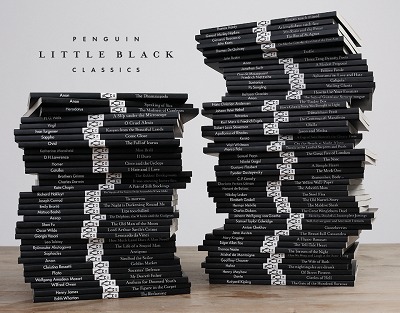
The Little Black Classic Collection by penguin looks like it contains lots of hidden gems. I couldn’t help it; they looked so good that I went and bought them all. I shall post a short review after reading each one. No doubt it will take me several months to get through all of them! Hopefully I will find some classic authors, from across the ages, that I may not have come across had I not bought this collection.
And hark! the Nightingale begins its song,
'Most musical, most melancholy' bird!
A melancholy bird? Oh! idle thought!
In Nature there is nothing melancholy.
The Nightingale is a great poem. Here’s a wonderful audio version I listened to whilst writing this review; it’s really quite emotive: https://www.youtube.com/watch?v=FQYGY...
This was a good selection; it’s a shame about the title though.
Penguin Little Black Classic- 35
The Little Black Classic Collection by penguin looks like it contains lots of hidden gems. I couldn’t help it; they looked so good that I went and bought them all. I shall post a short review after reading each one. No doubt it will take me several months to get through all of them! Hopefully I will find some classic authors, from across the ages, that I may not have come across had I not bought this collection.

October 17, 2017
"In nature there is nothing melancholy."
- Samuel Taylor Coleridge, "The Nightingale"

Vol N° 35 of my Penguin Little Black Classics Box Set. This volume contains 20 of Coleridge's poems assembled from Penguin's book Selected Poetry and The Penguin Book of Romantic Poetry. Included, with individual ratings, are:
1. Lines Composed while Climbing the Left Ascent of Brockley Coomb, Somersetshire, May 1795 - ★★★
2. The Eolian Harp - ★★★★
3. This Lime-Tree Bower My Prison - ★★★★★
4. Frost at Midnight - ★★★★★
5. Fears in Solitude - ★★★★★
6. The Nightingale - ★★★★★
7. Love - ★★★★
8. Lines Written in the Album at Elbingerode, in the Hartz Forest - ★★★★
9. Hymn before Sun-Rise, in the Vale of Chamouni - ★★★★
10. Lady, to Death we're Doom'd... - ★★★★★
11. The Blossoming of the Solitary Date-Tree - ★★★★★
12. O Sara! Never Rashly Let Me Go - ★★★
13. You Mould My Hopes - ★★★
14. The Tropic Tree - ★★★★
15. The Yellow Hammer - ★★★
16. The Pang More Sharp Than All - ★★★★
17. Limbo - ★★★
18. The Pains of Sleep - ★★★★
19. The Knight's Tomb - ★★★
20. Fancy in Nubibus - ★★★
I'm not sure why I haven't read deeper into Coleridge than his greats (Kubla Khan, Rime Of The Ancient Mariner, etc), but I was seriously amazed by "Fears in Solitude." Perhaps it is just our age, or the fact that today is election day (on of several), or my state of mind, but a couple lines hit me hard:
"We have drunk up, demure as at a grace,
Pollutions from the brimming cup of wealth;
Contemptuous of all honourable rule,
Yet bartering freedom and the poor man's life
For gold, as at a market! The sweet words
Of Christian promise, words that even yet
Might stem destruction, were they wisely preached,
Are muttered o'er by men, whose tones proclaim
How flat and wearisome they feel their trade:
Rank scoffers some, but most too indolent
To deem them falsehoods or to know their truth."
and
"We send our mandates for the certain death
Of thousands and ten thousands! Boys and girls,
And women, that would groan to see a child
Pull off an insect's wing, all read of war,
The best amusement for our morning meal!
The poor wretch, who has learnt his only prayers
From curses, and who knows scarcely words enough
To ask a blessing from his Heavenly Father,
Becomes a fluent phraseman, absolute
And technical in victories and defeats,
And all our dainty terms for fratricide;
Terms which we trundle smoothly o'er our tongues
Like mere abstractions, empty sounds to which
We join no feeling and attach no form!
As if the soldier died without a wound;
As if the fibres of this godlike frame
Were gored without a pang; as if the wretch,
Who fell in battle, doing bloody deeds,
Passed off to Heaven, translated and not killed;
As though he had no wife to pine for him,
No God to judge him!"
and, finally
"For never can true courage dwell with them,
Who, playing tricks with conscience, dare not look
At their own vices. We have been too long
Dupes of a deep delusion ! Some, belike,
Groaning with restless enmity, expect
All change from change of constituted power ;
As if a Government had been a robe,
On which our vice and wretchedness were tagged
Like fancy-points and fringes, with the robe
Pulled off at pleasure."
Amen Coleridge. Amen!
- Samuel Taylor Coleridge, "The Nightingale"
Vol N° 35 of my Penguin Little Black Classics Box Set. This volume contains 20 of Coleridge's poems assembled from Penguin's book Selected Poetry and The Penguin Book of Romantic Poetry. Included, with individual ratings, are:
1. Lines Composed while Climbing the Left Ascent of Brockley Coomb, Somersetshire, May 1795 - ★★★
2. The Eolian Harp - ★★★★
3. This Lime-Tree Bower My Prison - ★★★★★
4. Frost at Midnight - ★★★★★
5. Fears in Solitude - ★★★★★
6. The Nightingale - ★★★★★
7. Love - ★★★★
8. Lines Written in the Album at Elbingerode, in the Hartz Forest - ★★★★
9. Hymn before Sun-Rise, in the Vale of Chamouni - ★★★★
10. Lady, to Death we're Doom'd... - ★★★★★
11. The Blossoming of the Solitary Date-Tree - ★★★★★
12. O Sara! Never Rashly Let Me Go - ★★★
13. You Mould My Hopes - ★★★
14. The Tropic Tree - ★★★★
15. The Yellow Hammer - ★★★
16. The Pang More Sharp Than All - ★★★★
17. Limbo - ★★★
18. The Pains of Sleep - ★★★★
19. The Knight's Tomb - ★★★
20. Fancy in Nubibus - ★★★
I'm not sure why I haven't read deeper into Coleridge than his greats (Kubla Khan, Rime Of The Ancient Mariner, etc), but I was seriously amazed by "Fears in Solitude." Perhaps it is just our age, or the fact that today is election day (on of several), or my state of mind, but a couple lines hit me hard:
"We have drunk up, demure as at a grace,
Pollutions from the brimming cup of wealth;
Contemptuous of all honourable rule,
Yet bartering freedom and the poor man's life
For gold, as at a market! The sweet words
Of Christian promise, words that even yet
Might stem destruction, were they wisely preached,
Are muttered o'er by men, whose tones proclaim
How flat and wearisome they feel their trade:
Rank scoffers some, but most too indolent
To deem them falsehoods or to know their truth."
and
"We send our mandates for the certain death
Of thousands and ten thousands! Boys and girls,
And women, that would groan to see a child
Pull off an insect's wing, all read of war,
The best amusement for our morning meal!
The poor wretch, who has learnt his only prayers
From curses, and who knows scarcely words enough
To ask a blessing from his Heavenly Father,
Becomes a fluent phraseman, absolute
And technical in victories and defeats,
And all our dainty terms for fratricide;
Terms which we trundle smoothly o'er our tongues
Like mere abstractions, empty sounds to which
We join no feeling and attach no form!
As if the soldier died without a wound;
As if the fibres of this godlike frame
Were gored without a pang; as if the wretch,
Who fell in battle, doing bloody deeds,
Passed off to Heaven, translated and not killed;
As though he had no wife to pine for him,
No God to judge him!"
and, finally
"For never can true courage dwell with them,
Who, playing tricks with conscience, dare not look
At their own vices. We have been too long
Dupes of a deep delusion ! Some, belike,
Groaning with restless enmity, expect
All change from change of constituted power ;
As if a Government had been a robe,
On which our vice and wretchedness were tagged
Like fancy-points and fringes, with the robe
Pulled off at pleasure."
Amen Coleridge. Amen!

December 12, 2020
3.5*
A wonderful selection of poems about love, nature, and landscape! Some of my favorites were, "This Lime-Tree Bower My Prison," "Frost at Midnight," "The Nightingale," and "Love."
A wonderful selection of poems about love, nature, and landscape! Some of my favorites were, "This Lime-Tree Bower My Prison," "Frost at Midnight," "The Nightingale," and "Love."

August 1, 2024
3 ☆
the title is beautiful, the poems are... alright
the title is beautiful, the poems are... alright

May 12, 2015
After the turgid Doctor Who book this was a breath of fresh air. Over the last year it as been a enjoyable learning curve with poetry and one I want to persue more. The pleasure in coleridge's writing has been enhanced by a love of history but more importantly the conveyance of the words. Reading poetry in a modern mind can be tedious and uneventful, however if one can understand the period in which the author lived a greater understanding of the work can be obtained.
Thankyou Mr Coleridge, I had the pleasure of reading this along a country lane in bloom; is there any better way? No, thought so!
Thankyou Mr Coleridge, I had the pleasure of reading this along a country lane in bloom; is there any better way? No, thought so!

April 2, 2018
All thoughts, all passions, all delights,
Whatever stirs this mortal frame,
Are all but ministers of Love,
And feed his sacred flame.

July 20, 2019
This was a strange reading experience: I felt like I was presented something well written, something of quality, crafted with care and talent and yet it was a drag to get through. Maybe it's personal and I'm just witnessing a phase in which I can't properly appreciate poetry, but maybe Coleridge's writing also just seemed a little trivial to me.

Samuel Taylor Coleridge was an important figure of the Romantic Movement, which is all you need to know to feel set up for his writing. I think I might have read too many poems of the Romantic era, as these were lovely, but didn't really stick. He writes about passion, torment and love in a conversational (but I'd say still soppy) way.
As a person, his life was rather tragic. Not only was he suffering from anxiety and depression, but he also wasn't in a great physical state, which led him to take (and become addicted to) opium.
Maybe Coleridge's poetry would be a good starting point for people interested in the Romantic movement, as his style of writing is lyrical and still straight-forward, which makes the whole thing less intimidating and also simply easier to understand. I personally can't really see myself returning to this little volume.
In 2015 Penguin introduced the Little Black Classics series to celebrate Penguin's 80th birthday. Including little stories from "around the world and across many centuries" as the publisher describes, I have been intrigued to read those for a long time, before finally having started. I hope to sooner or later read and review all of them!
Samuel Taylor Coleridge was an important figure of the Romantic Movement, which is all you need to know to feel set up for his writing. I think I might have read too many poems of the Romantic era, as these were lovely, but didn't really stick. He writes about passion, torment and love in a conversational (but I'd say still soppy) way.
As a person, his life was rather tragic. Not only was he suffering from anxiety and depression, but he also wasn't in a great physical state, which led him to take (and become addicted to) opium.
Maybe Coleridge's poetry would be a good starting point for people interested in the Romantic movement, as his style of writing is lyrical and still straight-forward, which makes the whole thing less intimidating and also simply easier to understand. I personally can't really see myself returning to this little volume.
In 2015 Penguin introduced the Little Black Classics series to celebrate Penguin's 80th birthday. Including little stories from "around the world and across many centuries" as the publisher describes, I have been intrigued to read those for a long time, before finally having started. I hope to sooner or later read and review all of them!

October 11, 2017
Samuel Taylor Coleridge was an English poet, literary critic, philosopher and theologian who, with his friend William Wordsworth, was a founder of the Romantic Movement in England and a member of the Lake Poets.
I was pleasantly surprised by his verse. He won't become one of my favorite poets, but it was fun to examine his branch of poetry. Coleridge wrote in a very straight-forward and casual style, not minding flowery language much (which was refreshing to see).
Upon researching him, I discovered that he actually came up with the very idea of "Conversational Poetry" – the idea of utilising common, everyday language to express profound poetic images. Apparently Wordsworth, the more famous of the two, is often credited for that, which sucks. Ugh. That's such a Potter-Weasley-dilemma. ;)
Colerdige wrote eight "Conversation Poems", five of which are included in here. Each details a particular life experience which led to the poet's examination of nature and the role of poetry, and they are all structured in a similar way: The speaker begins with a description of the landscape; an aspect or change of aspect in the landscape evokes a varied by integral process of memory, thought, anticipation, and feeling which remains closely intervolved with the outer scene. In the course of this meditation the lyric speaker achieves an insight, faces up to a tragic loss, comes to a moral decision, or resolves an emotional problem.
Sounds too theoretical for you? Let's examine This Lime-Tree Bower My Prison together. During summer 1797, Coleridge spent time with many of his friends, including William and Dorothy Wordsworth, and his wife Sara Fricker. During this time, he suffered an accident in which his foot was burned. As a result, he was left alone at Poole's property underneath a lime tree, while the Wordsworths and his wife went on a journey across the Quantocks.
The poem starts as follows:
However, he seeks to discover the environment that his friends are exploring by linking the lime-tree bower to the Quantocks where they were out walking.
It's fascinating to join Coleridge on his emotional rollercoaster and witness how he draws conclusions and comes to his enlightments. It's also interesting to see what big of a role nature plays. Coleridge comes to an understanding of nature while isolated with his thoughts. Nature becomes a comfort, however, the poet remembers the loneliness when he felt isolated from nature and other people.
Since he is musing a lot about his children and his wife, his verse is very personal and it is possible to connect with Coleridge and his hopes and fears on a more deeper level.
In conclusion, I will most definitely get back to this collection and reread it for many years to come. I think there's a lot to unpack here, and I just grasped the surface.
I was pleasantly surprised by his verse. He won't become one of my favorite poets, but it was fun to examine his branch of poetry. Coleridge wrote in a very straight-forward and casual style, not minding flowery language much (which was refreshing to see).
Upon researching him, I discovered that he actually came up with the very idea of "Conversational Poetry" – the idea of utilising common, everyday language to express profound poetic images. Apparently Wordsworth, the more famous of the two, is often credited for that, which sucks. Ugh. That's such a Potter-Weasley-dilemma. ;)
Colerdige wrote eight "Conversation Poems", five of which are included in here. Each details a particular life experience which led to the poet's examination of nature and the role of poetry, and they are all structured in a similar way: The speaker begins with a description of the landscape; an aspect or change of aspect in the landscape evokes a varied by integral process of memory, thought, anticipation, and feeling which remains closely intervolved with the outer scene. In the course of this meditation the lyric speaker achieves an insight, faces up to a tragic loss, comes to a moral decision, or resolves an emotional problem.
Sounds too theoretical for you? Let's examine This Lime-Tree Bower My Prison together. During summer 1797, Coleridge spent time with many of his friends, including William and Dorothy Wordsworth, and his wife Sara Fricker. During this time, he suffered an accident in which his foot was burned. As a result, he was left alone at Poole's property underneath a lime tree, while the Wordsworths and his wife went on a journey across the Quantocks.
The poem starts as follows:
Well, they are gone, and here I must remain,You can tell he's pissed (rightly so, let's be real, his friends are dicks). He contemplates the beauty of nature which he'll miss out on because he can't join his friends on their walk.
This lime-tree bower my prison! I have lost
Beauties and feelings, such as would have been
Most sweet to my remembrance even when age
Had dimm'd mine eyes to blindness!
However, he seeks to discover the environment that his friends are exploring by linking the lime-tree bower to the Quantocks where they were out walking.
A delightAlthough he is separated from them, the poet connects to his distant friends and they are able to share in a common view on life.
Comes sudden to my heart, and I am glad
As I myself were there! Nor in this bower,
This little lime-tree bower, have I not mark'd
Much that has sooth'd me.
and sometimesThe poem describes Coleridge's loneliness and solitude throughout, yet he is glad that his friends are able to experience nature. Because of this, he is able to tolerate his prison, which he views as merely physical rather than intellectual.
'Tis well to be bereft of promis'd good,
That we may lift the soul, and contemplate
With lively joy the joys we cannot share
It's fascinating to join Coleridge on his emotional rollercoaster and witness how he draws conclusions and comes to his enlightments. It's also interesting to see what big of a role nature plays. Coleridge comes to an understanding of nature while isolated with his thoughts. Nature becomes a comfort, however, the poet remembers the loneliness when he felt isolated from nature and other people.
Since he is musing a lot about his children and his wife, his verse is very personal and it is possible to connect with Coleridge and his hopes and fears on a more deeper level.
And hopes, and fears that kindle hope,Whilst researching him, I also learned that throughout his adult life Coleridge had crippling bouts of anxiety and depression; it has been speculated that he had bipolar disorder, which had not been defined during his lifetime. He was physically unhealthy, which may have stemmed from a bout of rheumatic fever and other childhood illnesses. He was treated for these conditions with laudanum, which fostered a lifelong opium addiction – which is quite crazy to think about, and really saddens me.
An undistinguishable throng,
And gentle wishes long subdued,
Subdued and cherished long!
In conclusion, I will most definitely get back to this collection and reread it for many years to come. I think there's a lot to unpack here, and I just grasped the surface.

August 23, 2017
Well, they are gone, and here must I remain - a long title for a short collection of poetry. Maybe a bit of a weird choice, since it is quite the mouthful. On the other hand though, it sort of resembles perfectly the kind of romantic poetry that is collected here.
Coleridge was one of these authors that have been passed around in my English Lit class - particularly The Rime of the Ancient Mariner. I liked the poems here well enough, if maybe a little wordy - not unlike the title.
~Little Black Classics #35~
Find this and other reviews on https://www.urlphantomhive.com
Coleridge was one of these authors that have been passed around in my English Lit class - particularly The Rime of the Ancient Mariner. I liked the poems here well enough, if maybe a little wordy - not unlike the title.
~Little Black Classics #35~
Find this and other reviews on https://www.urlphantomhive.com

May 3, 2024
Well, that certainly has disappointed me greatly.
Out of twenty poems I enjoyed... three?
'Love', 'Lady, to Death we're Doom'd', and 'The Pains of Sleep'
The remaining seventeen were at best mediocre.
I certainly wasn't expecting the title to be so shallow - 'Well, they are gone, and here I must remain' is the opening line of 'This Lime-tree Bower my Prison' which is nothing but a child having a tantrum, because he sprained his ankle and can't go play (no, really, the author is crying because he can't go on a walk with his friends).
In short, it is a compilation of a white-christian-english-man's monologues.
Surprisingly, there was one line that got me:
'Why was I made for Love and Love denied to me?'
Out of twenty poems I enjoyed... three?
'Love', 'Lady, to Death we're Doom'd', and 'The Pains of Sleep'
The remaining seventeen were at best mediocre.
I certainly wasn't expecting the title to be so shallow - 'Well, they are gone, and here I must remain' is the opening line of 'This Lime-tree Bower my Prison' which is nothing but a child having a tantrum, because he sprained his ankle and can't go play (no, really, the author is crying because he can't go on a walk with his friends).
In short, it is a compilation of a white-christian-english-man's monologues.
Surprisingly, there was one line that got me:
'Why was I made for Love and Love denied to me?'

January 20, 2021
A nice collection of poems, though I did struggle a bit with the form and structure. I'm still somewhat of a newcomer to reading poetry which could be why I struggled, but it did take away from my enjoyment either way.
Still a good little set of poems but not for me, at least not at this stage of my poetic journey.
Still a good little set of poems but not for me, at least not at this stage of my poetic journey.

November 22, 2021
2 out of 5 stars
Tell me again why do I keep trying to like romantic poetry? I struggled with this. It is clear the author is a talented poet, but what always gets me with poems like these is how verbose they feel at times (I'm looking at you also, Wordsworth). Anyway, à chacun son goût.
Happy reading!
Tell me again why do I keep trying to like romantic poetry? I struggled with this. It is clear the author is a talented poet, but what always gets me with poems like these is how verbose they feel at times (I'm looking at you also, Wordsworth). Anyway, à chacun son goût.
Happy reading!

January 7, 2024
I enjoyed reading these poems. I had never read a poem by Samuel Taylor Coleridge before and I think this collection won't be the last I'll read.
A quote I really resonated with is from Coleridge's poem "The Pains of Sleep" (quite fitting, if you know me):
A quote I really resonated with is from Coleridge's poem "The Pains of Sleep" (quite fitting, if you know me):
To be beloved is all I need,
And whom I love, I love indeed.

December 15, 2024
read this a while back but forgot to add ittt
some of the best poetry ever im obsessed with ‘The Pains of Sleep’ so beautiful
some of the best poetry ever im obsessed with ‘The Pains of Sleep’ so beautiful

December 29, 2018
Every now and then I seem to enjoy reminding myself that poetry is not quite my thing. That being said, I think my not clicking with this collection is not entirely my fault. I understood and even liked a couple of the poems but, for the most part, I couldn't follow them. The short ones offered less room for STC to jump from one theme to the next and lose me along the way, so I tended to enjoy those more.
A few passages stood out but, for the most part, again: not quite my thing.
A few passages stood out but, for the most part, again: not quite my thing.
![Profile Image for [ J o ].](https://i.gr-assets.com/images/S/compressed.photo.goodreads.com/users/1673171874i/4639825._UY200_CR4,0,200,200_.jpg)
June 27, 2015
Samuel Taylor Coleridge was a 19th Century English poet who, alongside William Wordsworth, founded the Romantic movement.
O! It is pleasant, with a heart at ease,
Just after sunset, or by moonlight skies,
To make the shifting clouds be what you please,
Or let the easily persuaded eyes
Own each quaint likeness issuing from the mould
I haven't read much Coleridge but I was surprised that these poems were concerned with God and Religion far more than I should have been. They were very romantic: ideals of nature and love were rife within, but they did not seem to flow well. His style was quite disjointed, though there were times when I could envision what he was describing.
Blog | Instagram | Twitter | Pinterest | Shop | Etsy
O! It is pleasant, with a heart at ease,
Just after sunset, or by moonlight skies,
To make the shifting clouds be what you please,
Or let the easily persuaded eyes
Own each quaint likeness issuing from the mould
I haven't read much Coleridge but I was surprised that these poems were concerned with God and Religion far more than I should have been. They were very romantic: ideals of nature and love were rife within, but they did not seem to flow well. His style was quite disjointed, though there were times when I could envision what he was describing.
Blog | Instagram | Twitter | Pinterest | Shop | Etsy

December 13, 2016
It is now clear to me I am doomed to live my life with a complete lack of appreciation for poetry. Thank you, Little Black Classics range, for helping me see and understand this. A few of the poetry editions have filled me with some sort of emotion, but I always dread them. Coleridge was no different.
Having read Rime of the Ancient Mariner, and also having enjoyed it (although I promise this isn't just because it's famous), although dreading this instalment, I was also expecting much more from it. Here we have a collection of poems focusing mostly on love, religion, and nature. The style of these weren't quite what my imbecile brain can follow or comprehend, never mind become excited about. The rhythm seemed very off, certainly not captivating, although I'm sure it's probably some sort of revered rhythm I've never heard of.
Is there such a thing as Poetry for Dummies?
Having read Rime of the Ancient Mariner, and also having enjoyed it (although I promise this isn't just because it's famous), although dreading this instalment, I was also expecting much more from it. Here we have a collection of poems focusing mostly on love, religion, and nature. The style of these weren't quite what my imbecile brain can follow or comprehend, never mind become excited about. The rhythm seemed very off, certainly not captivating, although I'm sure it's probably some sort of revered rhythm I've never heard of.
Is there such a thing as Poetry for Dummies?

January 25, 2022
I didn't really find this very interesting

January 24, 2022
Starting it, I had assumed the work to be another cliché admiration of nature— the kind of poetry that barely interests me. But as I kept going, I noticed there's more to it. There is nature's connection to love; love being found in and through one's other half; hopeless romanticism (if I got it right); and agony. My personal favourites are "Fear in Solitude", written "during the alarm of an invasion", and "The Pains of Sleep". Overall, this was...not a bad collection of Coleridge's poetry, given I had still skipped a handful of them.
"To be beloved is all I need,
And whom I love, I love indeed."
"To be beloved is all I need,
And whom I love, I love indeed."

July 20, 2025
idk man i feel like these mini penguin editions have a very weird formula when it comes to collating which poems should be included. a few of these were beautiful, my favourites were 'fears in solitude', 'the nightingale', 'love', and 'limbo'. but i struggled to appreciate a fair few of them, and overall didn't love this particular poetry collection. will definitely return to coleridge in the future, as i feel this collection doesn't paint him in the best light.
rating: 2.5/5, rounding up to 3 for goodreads.
rating: 2.5/5, rounding up to 3 for goodreads.

May 4, 2026
I thoroughly enjoyed this collection of some of Coleridge's most well-renowned works. Funnily enough, I picked it up because my copy has a misprint (Penguin's Little Black Classics collection misspelled Coleridge as Caleridge).
The Nightingale is so incredibly well written and complements another of my favorite poems, that being Keats' "Ode to a Nightingale." Rather than characterizing the nightingale's song as a melancholy melody, Coleridge praises it as a pure expression of nature's beauty and rejects those who describe it as sorrowful. How wonderful!
reccomend!
The Nightingale is so incredibly well written and complements another of my favorite poems, that being Keats' "Ode to a Nightingale." Rather than characterizing the nightingale's song as a melancholy melody, Coleridge praises it as a pure expression of nature's beauty and rejects those who describe it as sorrowful. How wonderful!
reccomend!

September 14, 2024
“And grateful, that by nature’s quietness
And solitary musings, all my heart
Is softened, and made worthy to indulge
Love, and the thoughts that yearn for human kind.”
- Samuel Taylor Coleridge, Fears in Solitude
Some of my favourites:
- Frost at midnight
- The Nightingale
- Love
- The Blossoming of the Solitary Date-Tree
- You mould my hopes
- Limbo
- The Pains of sleep
And solitary musings, all my heart
Is softened, and made worthy to indulge
Love, and the thoughts that yearn for human kind.”
- Samuel Taylor Coleridge, Fears in Solitude
Some of my favourites:
- Frost at midnight
- The Nightingale
- Love
- The Blossoming of the Solitary Date-Tree
- You mould my hopes
- Limbo
- The Pains of sleep

January 11, 2021
My favourites from the collection :
- This Lime-Tree Bower My Prison
- The Nightingale
- Love
- Frost At Midnight
- Fears in Solitude
- This Lime-Tree Bower My Prison
- The Nightingale
- Love
- Frost At Midnight
- Fears in Solitude

October 23, 2021
Interesting collection of more traditional rhyme, and poetry more focussed on metre, maybe prose poetry.

August 17, 2023
“She loves me best, whene’er I sing
The songs that make her grieve.”
The songs that make her grieve.”

October 4, 2023
Whenever Coleridge finishes a poem, a coin is flipped.
Read
January 24, 2024this is a collection of poems that are mostly about love- too bad i’m aromantic!

October 11, 2015
Exactly what I expected when I picked it up. I'm not a big poetry fan, but read enough of Coleridge to enjoy a bit of his work every now and then. My favorite of his poems isn't included here, but this compilation is still a nice read, allowing someone to get a taste of his work.

June 2, 2015
Gosh, he rattles on a bit, doesn't he?
Displaying 1 - 30 of 99 reviews