Two of Dickens' hilarious early stories from Sketches by Boz: 'The Great Winglebury Duel' and 'Bloomsbury Christening'
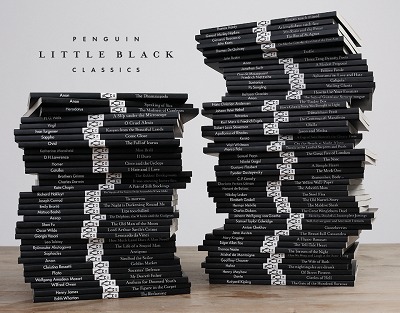
Introducing Little Black Classics: 80 books for Penguin's 80th birthday. Little Black Classics celebrate the huge range and diversity of Penguin Classics, with books from around the world and across many centuries. They take us from a balloon ride over Victorian London to a garden of blossom in Japan, from Tierra del Fuego to 16th century California and the Russian steppe. Here are stories lyrical and savage; poems epic and intimate; essays satirical and inspirational; and ideas that have shaped the lives of millions.
Charles Dickens (1812-1870).
All Dickens' novels and other major works are available in Penguin Classics.
Charles John Huffam Dickens (1812-1870) was a writer and social critic who created some of the world's best-known fictional characters and is regarded as the greatest novelist of the Victorian era. His works enjoyed unprecedented popularity during his lifetime, and by the twentieth century critics and scholars had recognised him as a literary genius. His novels and short stories enjoy lasting popularity.
Dickens left school to work in a factory when his father was incarcerated in a debtors' prison. Despite his lack of formal education, he edited a weekly journal for 20 years, wrote 15 novels, five novellas, hundreds of short stories and non-fiction articles, lectured and performed extensively, was an indefatigable letter writer, and campaigned vigorously for children's rights, education, and other social reforms.
Dickens was regarded as the literary colossus of his age. His 1843 novella, A Christmas Carol, remains popular and continues to inspire adaptations in every artistic genre. Oliver Twist and Great Expectations are also frequently adapted, and, like many of his novels, evoke images of early Victorian London. His 1859 novel, A Tale of Two Cities, set in London and Paris, is his best-known work of historical fiction. Dickens's creative genius has been praised by fellow writers—from Leo Tolstoy to George Orwell and G. K. Chesterton—for its realism, comedy, prose style, unique characterisations, and social criticism. On the other hand, Oscar Wilde, Henry James, and Virginia Woolf complained of a lack of psychological depth, loose writing, and a vein of saccharine sentimentalism. The term Dickensian is used to describe something that is reminiscent of Dickens and his writings, such as poor social conditions or comically repulsive characters.
On 8 June 1870, Dickens suffered another stroke at his home after a full day's work on Edwin Drood. He never regained consciousness, and the next day he died at Gad's Hill Place. Contrary to his wish to be buried at Rochester Cathedral "in an inexpensive, unostentatious, and strictly private manner," he was laid to rest in the Poets' Corner of Westminster Abbey. A printed epitaph circulated at the time of the funeral reads: "To the Memory of Charles Dickens (England's most popular author) who died at his residence, Higham, near Rochester, Kent, 9 June 1870, aged 58 years. He was a sympathiser with the poor, the suffering, and the oppressed; and by his death, one of England's greatest writers is lost to the world." His last words were: "On the ground", in response to his sister-in-law Georgina's request that he lie down.
1# Story – The Great Winglebury Duel – It was a story about mistaken identity and with humour within it, something I wasn’t expecting but this made it all the more enjoyable to read. 2# Story – The Steam Excursion - It is about a law student, who proceeds on a steamship excursion.
I love some of Dickens’ novels, but I absolutely hated these two short stories. They are so boring and painfully uninteresting in thier density; I really struggled with both and just couldn’t get into the plots. Only because this was written by Dickens did I try to read each story multiple times, but it made no difference as I had the same reaction each time. These stories are just awful and unapproachable.
If you’ve not read any Dickens then do not start here because there enough to put a reader of Dickens for life, which would be such a shame because Dickens is, of course, a brilliant writer. If you’ve not read any Dickens then I recommend starting with Great Expectations, as it is a wonderful novel.
Penguin Little Black Classic- 37
The Little Black Classic Collection by penguin looks like it contains lots of hidden gems. I couldn’t help it; they looked so good that I went and bought them all. I shall post a short review after reading each one. No doubt it will take me several months to get through all of them! Hopefully I will find some classic authors, from across the ages, that I may not have come across had I not bought this collection.
Charles Dickens was a 19th Century English writer who wrote 15 novels and hundreds of short stories. He was also keen on social commentary and worked hard to show the poor conditions that working class people suffered, especially in London and the North-West.
This Little Black Classics contains two short stories that he wrote under his pseudonym of Boz, and can be found in Sketches by Boz. If you've never read any Dickens before I highly recommend this as a starting point: they do not contain the great social commentary of his novels, but they do contain the characterisation and humour that can be found everywhere else. The Great Winglebury Duel (4 stars) is a better story than The Steam Excursion (2.7 stars) but both of them give you a wonderful sense of his writing style. He has a mastery over the English language unrivalled and he just seems to have a knack in describing certain situations in an often tongue-in-cheek manner. He is unapologetically criticising of both the mannerisms of women and men which is often hard to find in pre-21st Century writing.
I really enjoyed this, no surprise there since it's Dickens. Although, I do wish we could have had more room for character development...the one thing that's hard to capture in short stories!
1. The Great Winglebury Duel - ★★★ 2. The Steam Excursion - ★★★★
They were actually both quite enjoyable, and showed some early Dickens flair for narrative, characters and setting, but I just didn't think Dickens had enough room to develop these ideas beyond the sketch level (hence the name of the collection). "The Steam Excursion" appeared originally in The Monthly Magazine, October 1834. "The Great Winglebury Duel" appeared originally in the First Series of Sketches by Boz, 8 February 1836.
Having spent much of the past year or so reading Dostoyevsky, Zola and Tolstoy it seemed about time to get stuck in to some of the British classics that have so far passed me by. Having recently started Dickens' Great Expectations I thought that I'd actually go one step back and read a couple of his very early short stories. Both of these stories were originally published in 1836 and they show a writer emerging, just as the world around him is modernising. In these he captures the end of Hanoverian Britain and hints at the modernity to come. His writing and turn of phrase is already uniquely convoluted with a sense of character description that is a joy to follow.
What is most interesting though is how these early stories, which place him chronologically closer to Austen than they do to Tolstoy show how he was already poking fun (sometimes with quite a dose of venom) at the mores of British society, more social commentary than society ball. They truly show the first steps along the bridge between two literary worlds and it is almost possible to imagine the excitement with which these stories would have been greeted by the public at the time.
Fascinating, undoubtedly; but overall completely enjoyable.
This is my second foray into the world of Dickens and I must say it has been a pleasure beyond measure. Many nay sayers have given it one star which is a shame, Dickens fabulous wordplay and skill make him a master of his craft. Even these early works show us what will evolve into his well known masterpieces there is nothing dull here whatsoever. The title story is an amusing piece of wit involving letters being ascribed to the wrong person, characters who are described in the way that his unique to Dickens. The second story The Steam Excursion, while not as grand has the first but is still typically, full of the things that make the man a writer with a keen eye on life and society of the time and a worthwhile read.
I am developing a love of writing for this period and find it sad that those who have not enjoyed it are the same that have five starred rubbish like harry potter and the hunger games (no this is not a new title!) with their slack structure and lack of creativity.
P.S. A muggle is a '20s era jazz term for pot smokers and a Petronus is a verrry old name, you could equally call it a David or a Sarah.
Two short comedic stories. The first The Great Winglebury Duel is about a coward trying to avoid a duel. Mistaken identity and people who are not very likable with an amusing if misogynistic ending.
The Steam Excursion about a disastrous pleasure trip on the Thames was amusing but no real plot. The characters were interesting and the fake Captain and battle between the two families of who is the most unlikeable.
Well, this was an odd one. I did like the first story but the second one seemed unnecessary to me... As always with Dickens' stories, they are either hit or miss for me. I just seem to struggle with his characters in particular. The Great Winglebury Duel - 3/5 - this short story was amusing and I liked the element of the mix-up - also: Dickens seems to have a vendetta against waiters... The Steam Excursion - 1/5 - with this I didn't care much for the characters and I found the story to be quite unsubstantial
If you like short humorous stories involving sugar mamas, toy boys, incompetent mayors, and the gentry acting in a most ridiculous manner – then this one’s for you.
Written in 1836, The Great Winglebury duel begins with the arrival of a Mr Trott into the town of Winglebury, where he is presented with a letter requesting his presence at a duel at dawn by a Mr Hunter (their squabble is, of course, over a woman).
The letter signs off with the following delightful quip:
‘You had better not order your breakfast in the morning till you have seen me. It may be an unnecessary expense.’
To which Mr Trott responds:
‘With a gentlemanly note to Mr Horace Hunter, intimating that he thirsted for his destruction and would do himself the pleasure of slaughtering him the next morning without fail.’
These 1800s gentlemen are such drama queens. Love it.
What follows is a comedy of errors in which a case of mistaken identity yields surprisingly agreeable results for all parties involved.
***
The Steam Excursion offers up a witty and humorous look inside an ‘upper class’ party aboard a steam boat.
The story’s protagonist Mr Percy Noakes, whose studies are sadly being interrupted by all the parties he attends (poor man, must be rough) makes the following logical (and dare I say, intelligent) decision:
After mature reflection, [he] made up his mind not to study at all – a laudable determination, to which he adhered in the most praiseworthy manner.
Here here! What could be more noble than giving up law school to party and get wasted on brandy? Amiright
Percy and his friend Hardy gather to form a committee who will then gather to decide the event’s guest list. Don’t they have anything better to do, you might say? Of course not, they’re the nobility!
The names of the different members of the committee were agreed on, after as much discussion between him and Mr Hardy as if at least the fate of nations had depended on their appointment.
But the forming of the guest list (via a ballot system) proves a little too difficult for the assembled committee of noble men.
The balloting proceeded; but one little circumstance which Mr Percy Noakes had not originally foreseen, prevented the system working quite as well as he had anticipated – every body was black balled.
Seriously noble men, get your shit together – you’re beginning to resemble the Australian Parliament.
But the ladies can be counted on to bring some much-needed sense to these arrangements…right? WRONG! This is best seen in the rival mothers and daughters who trade thinly veiled insults like it’s a god-damn sport. So funny. So accurate.
‘How d’ye do, dear?’ said the Misses Briggs to the Misses Taunton. (The word ‘dear’ among girls is frequently synonymous with ‘wretch’).
Another fine example of idiocy is seen when the weather goes to hell but all the passengers are fully committed to the idea that everything is ABSOLUTELY FINE.
‘Don’t it rain?’ inquired the old gentleman […] ‘I think it does – a little,’ replied Mr Percy Noakes, who could hardly hear himself speak, in consequence of the pattering on the deck. ‘Don’t it blow?’ inquired some one else. ‘No – I don’t think it does,’ responded Hardy, sincerely wishing he could persuade himself it did not, for he sat near the door, and was almost blown off his seat.
How do the guests deal with this horrible weather? Denial, drunken speeches, and bizarre physical manoeuvres are among the responses. But my personal fave has got to be:
Several ominous demands were made for small glasses of brandy.
This is just a taste of the shenanigans and eye-roll worthy behaviour that ensue. All in all, these stories are witty, silly and a bit of fun. Also, I have no idea what it tastes like but I suddenly want some brandy.
After Great Expectations and this I have come to the conclusion that Dickens is simply not for me. I'm still willing to be persuaded to try another of his novels but I'm very wary now (I do feel bad about it though!).
I am way behind on my classics and I am willing to admit it. This means so far, I had not read much of Charles Dickens besides A Christmas Carol. This edition contains two short stories, and they were quite nice but lacked something. Maybe, because the typical social criticism was largely absent, it felt like something was missing. While I haven't read enough of his work, this seems like a rather odd start if you are new to Charles Dickens.
not sure about the first story - but i think that’s maybe bcos i read it when I was half asleep, so I don’t think I really understood it properly at all. I liked the second story though, about the rich people having a disaster party on a boat. that was good.
Heads up! There's a one sentence tl;dr at the end of this review.
In a time before our present, in the land of England which was ruled by the honorable Victoria, queen of the United Kingdom of Great Britain and Ireland and from 1876 additionally known as the Empress of India, there lived a man known by many for his famous works; initially serialized and then later published independently; as Mr. Charles Dickens, who was remarkable in himself for being of little social standing and yet making for himself the life of a colossus in the world of popular literature, enjoyed by young and elderly folk alike; and that being without a mention of the social divide that his skilled appeal succeeded in crossing.
Here among the many diverse volumes of the Penguin Little Black Classics, there sits a volume composed of two brief tales of the aforementioned write Mr. Charles Dickens, and they seem to be in part a reflection on his style. Although within these volumes there may be little of the commentary on society that the writer has made his name for, and additionally perhaps the largest part of his continued reputation and fame, looking as one could upon the diverse popularity of the novel The Adventures of Oliver Twist or the novella A Christmas Carol, both still frequently adapted into various forms up to the present day, but there is within these volumes much of the Victorian style that can both hamper and enrich the reading experience.
Personally, within my own feelings and amongst the responses that they are inclined to generate within myself, the Victorian style generates little of the enjoyment and pleasure of reading that one would find within texts of a less unusual style. My feelings lend me to opine that the era had contained with in its transient culture, a sense of needing to present oneself as being of sufficient skill or knowledge, thus I mean to, in essential essence, show-off, and display oneself as being an intellectual to gain any general substantial credit from a mainstream of society at the time. This doesn't mean to discredit works of the period in themselves to any degree, but merely to insinuate that the use of language, dated as it is by any definition, fails to resonate with myself to anything close to the substantial degree necessary to incline myself to explore the works of this period in closer detail from the perspective of prose; without of course regard to the larger factors at play.
All of this said, and with of course the recollection being kept in mind that the text here read; and additionally the text that you, my reader, are continuing to dwell your eyes upon; is of my own personal opinion and nature, it can still be remarked that these two tales within this volume are of no substantial offense and for those interested in the style of Dickens could provide a satisfactory amuse bouche, so to speak, into the greater canon of his style, and the style of his period. However, if one simply approaches the volume in search of the social commentary on which so much of Mr. Charles Dickens's reputation remains to be held, then perhaps one would be best off approaching an alternate entry point into the author's works as a whole.
tl;dr: In essence, my point amongst this Dickensian mass, is that these stories are inoffensive, but generally lack the social commentary that Dickens was famous for.
I am fairly sure that Charles Dickens is not for everyone; of what I am certain, however, is that Charles Dickens is definitely not for me. This paperback, which collects The Great Winglebury Duel and The Steam Excursion is laborious at best. Each page is a chore, and leads nowhere interesting. I'm sure this means something to someone out there - Dickens is one of the most famous literary names of all time, and his fame (I am fairly certain) is unlikely to be based on his inadequacies as a writer. However, I find the majority of his passages to be over-explained, but at the same time thin in important information. The Steam Excursion is the greatest example of this - there is an abundance of secondary characters that serve very little purpose, yet their profile is nonetheless excruciatingly explained. I think the overriding criticism here however, lies not in how melodic the writing is, but how dull the stories are. They're not long at all, but they're equally as uninteresting as they are disappointing.
In this Penguin Classics series, The Great Wingleburry Duel consist of two short stories, first the title itself and the second, The Steam Excursion. Dickens is one of the greatest authors, but I think if you haven’t read any Dickens work, this one won’t steal your attention right away—that’s what happen to me. In both short stories, the plots are okay, flowing smoothly, the characters are okay too, but not really strong that they are easily forgotten. In short, this book is easy to read, but not memorable enough.
Apart from how I feel about this book, this one proves that literature is a useful tools to portray people’s lives at that time—the way people exclaim ‘capital!’ when they are mesmerized by something or the way they talk when they threat, “Should I be disappointed of seeing you there, I will do myself the pleasure of calling with a horsewhip.” It gives us a glimpse of the language use by people in 19 century.
Anyway, my reading slump is still in acute mode and I’m still struggling to read again. So, to the tiny Penguin Classics I go.
The first story The Great Winglebury Duel was definitely my favourite out of the two, a story about mistaken identity. I loved the humour that Dickens brought to this story which wasn't something I was expecting but it made it all the more enjoyable.
The Steam Excursion was a bit dull I have to admit and I guess I was expecting these to both be dull, and so at least I was right with this one. I couldn't get into it as much as I did with the first story, and no doubt I'll feel the same when I work my way through Dickens' notable works.
Overall, having not read any other Dickens before I'm excited to get stuck into some more Dickens and I'm glad I begun with these two short stories to give me a taster of Dickens' style of writing and witty humour.
This was silly and fun throughout, I had a blast reading it. It was ridiculous but that’s what I love about Dickens’ writing! The poor MC in this was STRESSED hahaha, let my man rest!!
The Steam Excursion
Less funny than the previous story but did make me laugh here and there!
Let this not be your first Dickens. It takes time to master one's craft and man was Dickens a noob here. The stories do have potential and I am sure they would have been more enjoyable in the Victorian era, but now they are not worth it unless you wish to read everything Dickens has ever penned.
The first story is honestly not that bad, but the second story is just such a waste of time
So the book is a collection of two short stories. Didn't like the first one. The writing was dense and not at all gripping. The second one was quite the contradictory. Vivid characters, Simplistic setting, Fast paced, and has that Dickens' element in the writing. Overall, I enjoyed it.
"The Great Winglebury Duel", the first story included in this book, was intriguing and very entertaining. (4.5 stars) The second story, "The Steam Excursion" was fun, but without any plot and I liked it less. (3 stars)






![Profile Image for [ J o ].](https://i.gr-assets.com/images/S/compressed.photo.goodreads.com/users/1673171874i/4639825._UY200_CR4,0,200,200_.jpg)