

What do you think?

A Hippo Banquet
'While engaged on this hunt I felt the earth quiver under my feet, and heard a soft big soughing sound, and looking round saw I had dropped in on a hippo banquet...'
Told with verve and self-mocking wit, the adventures of doughty female Victorian explorer Mary Kingsley describe stumbling upon five hippos by night, dodging elephants and fighting off a leopard with a stool. Introducing Little Black Classics: 80 books for Penguin's 80th birthday. Little Black Classics celebrate the huge range and diversity of Penguin Classics, with books from around the world and across many centuries. They take us from a balloon ride over Victorian London to a garden of blossom in Japan, from Tierra del Fuego to 16th-century California and the Russian steppe. Here are stories lyrical and savage; poems epic and intimate; essays satirical and inspirational; and ideas that have shaped the lives of millions.
Mary Henrietta Kingsley (1862-1900).
Kingsley's work is available in Penguin Classics in Travels in West Africa.
Told with verve and self-mocking wit, the adventures of doughty female Victorian explorer Mary Kingsley describe stumbling upon five hippos by night, dodging elephants and fighting off a leopard with a stool. Introducing Little Black Classics: 80 books for Penguin's 80th birthday. Little Black Classics celebrate the huge range and diversity of Penguin Classics, with books from around the world and across many centuries. They take us from a balloon ride over Victorian London to a garden of blossom in Japan, from Tierra del Fuego to 16th-century California and the Russian steppe. Here are stories lyrical and savage; poems epic and intimate; essays satirical and inspirational; and ideas that have shaped the lives of millions.
Mary Henrietta Kingsley (1862-1900).
Kingsley's work is available in Penguin Classics in Travels in West Africa.
52 pages, Paperback
First published January 1, 1897
About the author
Mary H. Kingsley
20 books23 followersMary Henrietta Kingsley was born in Islington, London on 13 October 1862, the daughter and oldest child of doctor, traveler, and writer George Kingsley and Mary Bailey.
Kingsley wrote two books about her experiences: Travels in West Africa (1897), which was an immediate best-seller, and West African Studies (1899), both of which granted her vast respect and prestige within the scholarly community. Some newspapers, however, refused to publish reviews of her works, such as the Times colonial editor Flora Shaw. Though some argue this is likely on the grounds that her beliefs countered the imperialistic intentions of the British Empire and the notion that Africans were inferior peoples, this is not entirely true, as she did support British traders and British indirect rule in Africa, and thus cannot entirely explain her sometimes unfavorable reception.
During the Second Boer War, Kingsley travelled to Cape Town and volunteered as a nurse. She was stationed at Simon's Town hospital, where she treated Boer prisoners of war. After contributing her services to the ill for about two months, she developed symptoms of typhoid and died on 3 June 1900. In accordance with her wishes, she was buried at sea.
Kingsley wrote two books about her experiences: Travels in West Africa (1897), which was an immediate best-seller, and West African Studies (1899), both of which granted her vast respect and prestige within the scholarly community. Some newspapers, however, refused to publish reviews of her works, such as the Times colonial editor Flora Shaw. Though some argue this is likely on the grounds that her beliefs countered the imperialistic intentions of the British Empire and the notion that Africans were inferior peoples, this is not entirely true, as she did support British traders and British indirect rule in Africa, and thus cannot entirely explain her sometimes unfavorable reception.
During the Second Boer War, Kingsley travelled to Cape Town and volunteered as a nurse. She was stationed at Simon's Town hospital, where she treated Boer prisoners of war. After contributing her services to the ill for about two months, she developed symptoms of typhoid and died on 3 June 1900. In accordance with her wishes, she was buried at sea.
Ratings & Reviews
Friends & Following
Create a free account to discover what your friends think of this book!
Community Reviews
Displaying 1 - 30 of 74 reviews

February 6, 2016
I’ve got a great deal of respect for Mary Kingsley. Being an explorer was typically a man’s role; it’s something he would do if he had spare time and money in the Victorian age. It was almost a symbol of status and reputation to go and explore other continents and come back with animalistic trophies to hang on one’s wall. It was a man’s game in a cruel man’s world. So, for Mary Kingsley to go ahead and be an explorer anyway was quite a brave thing to do; it symbolises her willpower and determination to do what she wanted to do regardless of gender stereotypes. She just doesn’t care what other people thing about her.
These four entries do reveal a lot about Victorian society. They’re not directly concerned with the era, but whist Kingsley narrates her travel logs she reveals the massive difference in social stance in the sexes. It was considered inappropriate for a woman to travel alone, let alone go exploring to a faraway continent. Her observations are quite amusing, though I don’t agree with her assessment of Hippopotamus. I think Hippos are really quite cute. Not everything has to be majestic to be so.
“At present I am undecided whether nature tried 'her 'prentice hand' on them in her earliest youth, or whether, having got thoroughly tired of making the delicately beautiful antelopes, corallines, butterflies,and orchids, she just said 'Goodness! I am quite worn out with this finicking work. Here, just put these other viscera into big bags - I can't bother any more.”

She transgresses the boundaries between what was considered typical male and female behaviour. She’s a tough girl. And that’s not to mention the entire scene where she gets attacked by a leopard; she is forced to defend herself with just a cheap wooden stall. She is, indeed, a strong woman, and her journal entries are entertaining, funny and full of personality. This is worth a read.
Penguin Little Black Classic- 33
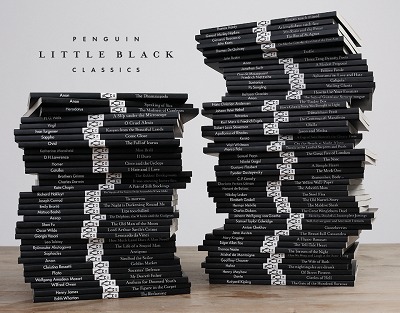
The Little Black Classic Collection by penguin looks like it contains lots of hidden gems. I couldn’t help it; they looked so good that I went and bought them all. I shall post a short review after reading each one. No doubt it will take me several months to get through all of them! Hopefully I will find some classic authors, from across the ages, that I may not have come across had I not bought this collection.
These four entries do reveal a lot about Victorian society. They’re not directly concerned with the era, but whist Kingsley narrates her travel logs she reveals the massive difference in social stance in the sexes. It was considered inappropriate for a woman to travel alone, let alone go exploring to a faraway continent. Her observations are quite amusing, though I don’t agree with her assessment of Hippopotamus. I think Hippos are really quite cute. Not everything has to be majestic to be so.
“At present I am undecided whether nature tried 'her 'prentice hand' on them in her earliest youth, or whether, having got thoroughly tired of making the delicately beautiful antelopes, corallines, butterflies,and orchids, she just said 'Goodness! I am quite worn out with this finicking work. Here, just put these other viscera into big bags - I can't bother any more.”
She transgresses the boundaries between what was considered typical male and female behaviour. She’s a tough girl. And that’s not to mention the entire scene where she gets attacked by a leopard; she is forced to defend herself with just a cheap wooden stall. She is, indeed, a strong woman, and her journal entries are entertaining, funny and full of personality. This is worth a read.
Penguin Little Black Classic- 33
The Little Black Classic Collection by penguin looks like it contains lots of hidden gems. I couldn’t help it; they looked so good that I went and bought them all. I shall post a short review after reading each one. No doubt it will take me several months to get through all of them! Hopefully I will find some classic authors, from across the ages, that I may not have come across had I not bought this collection.

October 17, 2017
"Indeed the ways of Providence here are wonderful in their strange dual intention to preserve and to destroy;"
- Mary Kingsley, A Hippo Banquet

Vol N° 32 of my Penguin Little Black Classics Box Set. This volume contains exerpts from Kingsley's 1897 book 'Travels in West Africa'. The following are the four pieces in Vol 32:
1. A Hippo Banquet - ★★★★★
2. Five Gorillas - ★★★
3. Elephant Hunt - ★★★★★
4. Fight with a Leopard - ★★★★★
First, I really enjoyed this small piece. Mary Kingsley reminds me of those Victorian women you see in E.M Forster novels or in various Victorian BBC dramas: completely bold, confident, and immune to the full danger they are in. It is as if this scientific suffragette just carries the confidence of the British Empire with her wherever she goes. That said, probably my only negative on this work (and it isn't super negative given the time and place this was written) was her writing might have contributed in some form or fashion to British/European colonization of Africa AND stereotyping of African tribes. Maybe. For me, at least in these writings, she is fantastically droll, witty, self-effacing, and completely delivers the scene and the smell of her experiences with Hippos, Gorillas, Elephants, Leopards, and various tribes of West Africa.
- Mary Kingsley, A Hippo Banquet
Vol N° 32 of my Penguin Little Black Classics Box Set. This volume contains exerpts from Kingsley's 1897 book 'Travels in West Africa'. The following are the four pieces in Vol 32:
1. A Hippo Banquet - ★★★★★
2. Five Gorillas - ★★★
3. Elephant Hunt - ★★★★★
4. Fight with a Leopard - ★★★★★
First, I really enjoyed this small piece. Mary Kingsley reminds me of those Victorian women you see in E.M Forster novels or in various Victorian BBC dramas: completely bold, confident, and immune to the full danger they are in. It is as if this scientific suffragette just carries the confidence of the British Empire with her wherever she goes. That said, probably my only negative on this work (and it isn't super negative given the time and place this was written) was her writing might have contributed in some form or fashion to British/European colonization of Africa AND stereotyping of African tribes. Maybe. For me, at least in these writings, she is fantastically droll, witty, self-effacing, and completely delivers the scene and the smell of her experiences with Hippos, Gorillas, Elephants, Leopards, and various tribes of West Africa.
January 2, 2023
Ciekawa i przystępnie napisana, ale nie wzbudziła we mnie żadnych szczególnych emocji.
![Profile Image for [ J o ].](https://i.gr-assets.com/images/S/compressed.photo.goodreads.com/users/1673171874i/4639825._UY200_CR4,0,200,200_.jpg)
June 9, 2015
Mary Kingsley was an 19th Century English scientific writer and explorer. She wrote two books about her journeys through Africa and helped to change Europe's view of the African cultures and British Imperialism.
I had never heard of Mary Kingsley before I picked this book up and I think that is the greatest tragedy. How many men have I heard of who travelled the world, how many men I have read who spoke of daring deeds and exotic places. And here we have a woman who travelled alone and of her own interest to a land that, at the time, appeared to be wild and definitely not a place for a Victorian lady.
She has a wonderful turn of phrase and although she often reminds us that she is, of course, a woman, everything she does is everything an explorer should do. She fought off two Leopards as they fought dogs and she stumbled upon almost every creature known to man by accident, but did not run in fear but instead stood and watched. She did not take any crap from any man, whether or not they wore a British Military Uniform or a simple loincloth about his groin.
And, despite what we may think of the Victorian period, she was greatly received by her male contemporaries, but she did not enjoy the label of being a "new woman". She was not concerned with Feminism, instead she concerned herself with her own well-being, science and the preservation of African culture. She died of Typhoid whilst serving a nurse during the Second Boer War. She was not a woman, a new woman or a man, she was simply a scientist and writer; a Human Being.
Blog | Instagram | Twitter | Pinterest | Shop | Etsy
I had never heard of Mary Kingsley before I picked this book up and I think that is the greatest tragedy. How many men have I heard of who travelled the world, how many men I have read who spoke of daring deeds and exotic places. And here we have a woman who travelled alone and of her own interest to a land that, at the time, appeared to be wild and definitely not a place for a Victorian lady.
She has a wonderful turn of phrase and although she often reminds us that she is, of course, a woman, everything she does is everything an explorer should do. She fought off two Leopards as they fought dogs and she stumbled upon almost every creature known to man by accident, but did not run in fear but instead stood and watched. She did not take any crap from any man, whether or not they wore a British Military Uniform or a simple loincloth about his groin.
And, despite what we may think of the Victorian period, she was greatly received by her male contemporaries, but she did not enjoy the label of being a "new woman". She was not concerned with Feminism, instead she concerned herself with her own well-being, science and the preservation of African culture. She died of Typhoid whilst serving a nurse during the Second Boer War. She was not a woman, a new woman or a man, she was simply a scientist and writer; a Human Being.
Blog | Instagram | Twitter | Pinterest | Shop | Etsy

May 12, 2015
This lady is an explorer in a time when you expect it to be male dominated like most things at this time. She seems to be a lone explorer and not in the company of white men. Like any good explorer she had a team of natives with her and dispels the myth of rape and assualt of a lone woman by the native "savages".
Although the writing was plodding in places I give it a four star rating for her bravery. YOU ROCK, GIRL.
Although the writing was plodding in places I give it a four star rating for her bravery. YOU ROCK, GIRL.

April 1, 2018
Mary Kingsley is certainly a woman to admire. She was a British explorer of the 19th century, who studied cultures and peoples in West Africa. Back in the day, it certainly wasn't a job often done by women and her development sounds like straight out of a blockbuster.

From an early age on she was more interested in science and stories of explorers than those of romantic novelists such as Jane Austen and the Brontë sisters. When her parents became ill and died soon after, she was freed from the responsibility of looking after them and decided to finish a book about African culture which her father had started and decided to go and explore West Africa.
A Hippo Banquet is a collection of excerpts from her travel journal, which are reflective, observant and occasionally amusing. Being the emancipated woman she wanted to be, she travelled without any men to protect her, but with a translator and the help of a few natives. The gender-based thinking of the Victorian Era shines through, for she has to fight a leopard with a wooden stool as it wouldn't be "ladylike" to carry around a gun. (And yet, she does it! And thereby saves the dog the leopard was attacking. What a woman.) I would recommend this to everyone interested in natural history and explorers' journals.
In 2015 Penguin introduced the Little Black Classics series to celebrate Penguin's 80th birthday. Including little stories from "around the world and across many centuries" as the publisher describes, I have been intrigued to read those for a long time, before finally having started. I hope to sooner or later read and review all of them!
From an early age on she was more interested in science and stories of explorers than those of romantic novelists such as Jane Austen and the Brontë sisters. When her parents became ill and died soon after, she was freed from the responsibility of looking after them and decided to finish a book about African culture which her father had started and decided to go and explore West Africa.
A Hippo Banquet is a collection of excerpts from her travel journal, which are reflective, observant and occasionally amusing. Being the emancipated woman she wanted to be, she travelled without any men to protect her, but with a translator and the help of a few natives. The gender-based thinking of the Victorian Era shines through, for she has to fight a leopard with a wooden stool as it wouldn't be "ladylike" to carry around a gun. (And yet, she does it! And thereby saves the dog the leopard was attacking. What a woman.) I would recommend this to everyone interested in natural history and explorers' journals.
In 2015 Penguin introduced the Little Black Classics series to celebrate Penguin's 80th birthday. Including little stories from "around the world and across many centuries" as the publisher describes, I have been intrigued to read those for a long time, before finally having started. I hope to sooner or later read and review all of them!

December 21, 2015
This book was read for the #readwomen month.
A lady whose works helped shift African perceptions by the British as well as what British imperialism was? Sign me the hell up for that! I do disagree with her views on the suffragette movement, but this book is not about that so I will not mention it.
This is her book of her describing rivets and lands in West Africa, and it was very beautiful as well as hilarious. Read her for a feel of the time and imperialism, and how some believed themselves superior to others, she will not disappoint on that aspect.
A lady whose works helped shift African perceptions by the British as well as what British imperialism was? Sign me the hell up for that! I do disagree with her views on the suffragette movement, but this book is not about that so I will not mention it.
This is her book of her describing rivets and lands in West Africa, and it was very beautiful as well as hilarious. Read her for a feel of the time and imperialism, and how some believed themselves superior to others, she will not disappoint on that aspect.

March 11, 2015
MHK is not only the quintessential Victorian female explorer, but she writes in a style I find hilarious. Its hard to describe accurately, but to read it in modern times it comes across as sort of pretentious or pompous, using a lot of words I only vaguely understand, but also in a self deprecating sort of way, which just makes her descriptions amusing.
Page 4 "Geographical research in this region is fraught with difficulty, I find, owing to different tribes calling one in the same place by different names; and I am sure the Royal Geographical Society ought to insert amongst their "hints" that every traveller in this region should carefully learn every separate native word, or set of words, signifying "I don't know," - four villages and two rivers I have come across out here solemnly set down with various forms of this statement, for their native name."
Page 12, while discussing Hippopotamus "At present I am undecided whether nature tried 'her 'prentice hand' on them in her earliest youth, or whether, having got thoroughly tired of making the delicately beautiful antelopes, corallines, butterflies,and orchids, she just said 'Goodness! I am quite worn out with this finicking work. Here, just put these other viscera into big bags - I can't bother any more.' "
Page 4 "Geographical research in this region is fraught with difficulty, I find, owing to different tribes calling one in the same place by different names; and I am sure the Royal Geographical Society ought to insert amongst their "hints" that every traveller in this region should carefully learn every separate native word, or set of words, signifying "I don't know," - four villages and two rivers I have come across out here solemnly set down with various forms of this statement, for their native name."
Page 12, while discussing Hippopotamus "At present I am undecided whether nature tried 'her 'prentice hand' on them in her earliest youth, or whether, having got thoroughly tired of making the delicately beautiful antelopes, corallines, butterflies,and orchids, she just said 'Goodness! I am quite worn out with this finicking work. Here, just put these other viscera into big bags - I can't bother any more.' "

February 8, 2021
I wish, in another life, I was a gentleman living and working in London, in the end of the nineteenth century, thinking first to myself that all the world owed me a living, priding myself on my chivalrous charms and the collection of leather-bound tomes in my cosy study and all set to marry some fine young maiden with an equal taste in literature and poetry. And then, one day, as I would be walking by the Strand or Piccadilly, a newspaper boy would cry out aloud the latest story of Mary Henrietta Kingsley, one of the first ever women to explore the depths of uncharted and unmapped Africa and could boast of a career of adventures and exploits that would have humbled most of her male peers, let alone that admirable chap Allan Quatermain and, yes even that exaggerated, overblown action film hero, Indiana Jones, who is more of a James Bond (of the films, that is) disguised as a so-called archaeologist. And I am afraid that I would have to forego, forever, my said engagement with some mild-mannered maiden from the country and I would pack my bags, catch a steamer and ship off to Africa to find this brave-hearted, gallant, swashbuckling lady and somehow, if I am as courageous as her, I would try to save her from a leopard about to spring or an elephant chased out by ivory hunters. But I am not sure if that gallant lass would agree.
Indeed, Miss Kingsley's heroism, courage, candour and journalistic portrayal of the land that excited, enticed, intrigued, puzzled and amused her so vividly, cannot be denied or just called as a fad of her age. She was a woman well ahead of her times and even today, considering just how slow and unwilling people have been in seeing more women as tough-willed but also wonderfully perceptive explorers and adventurers, she would be nothing less than a firecracker.
The four concise, conversational and crisply written pieces in this small collection, including mainly of excerpts from the whole ensemble called "Travels In West Africa", are thus worth the five stars that I award them here, because even as they are fragments of a much larger, more comprehensive body of work, they are such delightful fragments on their own too. Glittering with casual wit, written with a candid sense of humour and bemused warmth, at times thrillingly tense and at other times, objective and astute, these diary entries and chronicles are a testament to all the fine things that I have said about Miss Kingsley above in my besotted admiration.
We follow her sailing insistently with her aides in her canoe, spotting horn bills, cranes and crocodiles upstream; we are exasperated with her as interminably long palavers for exchange of services are held by the tribesmen; we are propelled along with her wanderlust as she sets out to explore sandbanks in the twilight of night; we are mesmerised and charmed by her easy-to-read yet elegant depictions of the exotic flora and fauna that flourish and thrive in these uncharted depths and we are also enthralled and tickled by her encounters with the titular rotund monstrosities, the charming but potentially dangerous elephants, the yawning, lazing crocodiles, the swinging gorillas and the dignified leopards too.
And through it all and through her little asides on the ugly nature of ivory trade and her candour and compassion for her African comrades and fellows in adventures, we also come to know a woman bursting with exuberance, wit, pluck, courage and objectivity - a woman we just cannot help wanting to know more of.
To sign off, let me quote the oddest choice of lyric.
"Rebel rebel, you've torn your dress
Rebel rebel, your face is a mess
Rebel rebel, how could they know?
Hot tramp, I love you so!"
Indeed, Miss Kingsley's heroism, courage, candour and journalistic portrayal of the land that excited, enticed, intrigued, puzzled and amused her so vividly, cannot be denied or just called as a fad of her age. She was a woman well ahead of her times and even today, considering just how slow and unwilling people have been in seeing more women as tough-willed but also wonderfully perceptive explorers and adventurers, she would be nothing less than a firecracker.
The four concise, conversational and crisply written pieces in this small collection, including mainly of excerpts from the whole ensemble called "Travels In West Africa", are thus worth the five stars that I award them here, because even as they are fragments of a much larger, more comprehensive body of work, they are such delightful fragments on their own too. Glittering with casual wit, written with a candid sense of humour and bemused warmth, at times thrillingly tense and at other times, objective and astute, these diary entries and chronicles are a testament to all the fine things that I have said about Miss Kingsley above in my besotted admiration.
We follow her sailing insistently with her aides in her canoe, spotting horn bills, cranes and crocodiles upstream; we are exasperated with her as interminably long palavers for exchange of services are held by the tribesmen; we are propelled along with her wanderlust as she sets out to explore sandbanks in the twilight of night; we are mesmerised and charmed by her easy-to-read yet elegant depictions of the exotic flora and fauna that flourish and thrive in these uncharted depths and we are also enthralled and tickled by her encounters with the titular rotund monstrosities, the charming but potentially dangerous elephants, the yawning, lazing crocodiles, the swinging gorillas and the dignified leopards too.
And through it all and through her little asides on the ugly nature of ivory trade and her candour and compassion for her African comrades and fellows in adventures, we also come to know a woman bursting with exuberance, wit, pluck, courage and objectivity - a woman we just cannot help wanting to know more of.
To sign off, let me quote the oddest choice of lyric.
"Rebel rebel, you've torn your dress
Rebel rebel, your face is a mess
Rebel rebel, how could they know?
Hot tramp, I love you so!"

July 10, 2015
Read all my reviews on http://urlphantomhive.booklikes.com
This was an interesting read. The Hippo Banquet features travel stories by Mary Kingsley, being an explorer in a time where female explorers were very rare. So for that I found it interesting to read about and she actually writes quite well. However, her views are very Victorian (obviously) and I've found that I never like these travel stories very much.
~Little Black Classics #32~
This was an interesting read. The Hippo Banquet features travel stories by Mary Kingsley, being an explorer in a time where female explorers were very rare. So for that I found it interesting to read about and she actually writes quite well. However, her views are very Victorian (obviously) and I've found that I never like these travel stories very much.
~Little Black Classics #32~
January 2, 2025
What a woman. But these stories were a bit eh meh for me, would love to read some of her other longer form stuff might be a bit better

March 14, 2026
Problematisch und langweilig, hab nach dem ersten Kapitel aufgehört

February 26, 2015
I've never heard of Mary Kingsley before (natural history really isn't my forte!) but I was intrigued by the description of a "fearless, pioneering Victorian female explorer". The writing is very lively and beautifully conjures up images of West African rivers and forests. I'm quite tempted to read the full version of Travels in West African, not least because I'd like to know more about the explorer herself!

December 20, 2025
I’m continuing with my project to read the books I own but haven’t read, in order of how long I’ve had them. I bought a few of these tiny black classics when they first came out while I was at uni, but somehow their small leaf-like quality means I never read many of them because I could barely see them.
In this one, a Victorian lady from north London decides to travel round Africa, possibly in the style of Miss Fanshawe from Miss Fanshaw’s dragon adventure. This is a few extracts from her book Travels in West Africa. She died when she was 38 of typhoid fever while working as a nurse for the boer war. It’s food for thought when a restricted Victorian woman leads a far more adventurous than me a liberated woman in the 21st century. But I am still not going to go to the jungle, even if I am allowed to.
Rather a lot to begin with about sandbanks and their orientations (things like “N.N.W”) peppered with dated descriptions of native people. Wading through this is worth it for occasionally brilliant paragraphs.
Quotes:
I am sure the Royal Geographical Society ought to insert among their ‘Hints' that every traveller in this region should carefully learn every separate native word, or set of words, signifying 'I don't know,' - four villages and two rivers I have come across out here solemnly set down with various forms of this statement, for their native name.
These hippos always look to me as if they were the first or last creations in the animal world. At present I am undecided whether Nature tried 'her 'prentice hand' on them in her earliest youth, or whether, having got thoroughly tired of making the delicately beautiful antelopes, corallines, butterflies, and orchids, she just said: 'Goodness! I am quite worn out with this finicking work. Here, just put these other viscera into big bags - I can't bother any more?'
We pass out of it into a channel. Current flowing north. As we are entering the channel between banks of grass-overgrown sand, a superb white crane is seen standing on the sand edge to the left. Gray Shirt attempts to get a shot at it, but it - alarmed at our unusual appearance - raises itself up with one of those graceful preliminary curtseys, and after one or two preliminary flaps spreads its broad wings and sweeps away, with its long legs trailing behind it like a thing on a Japanese screen.
Drying one's self on one's cummerbund is not pure joy, but it can be done when you put your mind to it.
More than ever did I regret not having secured one of those sort of two phenomena. What a joy a real devil, appropriately put up in raw alcohol, would have been to my scientific friends!
these possessions, though not great, were as dangerous to the body as a million sterling is said to be to the soul,
although a good snake, properly cooked, is one of the best meats one gets out here,
Wiki went off into a paroxysm of falsetto sneezes the like of which I have never heard; nor evidently had the gorilla,
I have no hesitation in saying that the gorilla is the most horrible wild animal I have seen.
and many a wild story the handles of your table knives could tell you…. For ivory is everywhere an evil thing before which the quest for gold sinks into a parlour game;
I thought before this experience that I had touched bottom in smells when once I spent the outside of a week in a village, on the sand bank in front of which a portly hippopotamus, who had been shot up river, got stranded, and proceeded energetically to melt into its elemental gases; but that was a passing whiff to this.
I must say the African leopard is an audacious animal, although it is ungrateful of me to say a word against him, after the way he has let me off personally, and I will speak of his extreme beauty as compensation for my ingratitude.
In this one, a Victorian lady from north London decides to travel round Africa, possibly in the style of Miss Fanshawe from Miss Fanshaw’s dragon adventure. This is a few extracts from her book Travels in West Africa. She died when she was 38 of typhoid fever while working as a nurse for the boer war. It’s food for thought when a restricted Victorian woman leads a far more adventurous than me a liberated woman in the 21st century. But I am still not going to go to the jungle, even if I am allowed to.
Rather a lot to begin with about sandbanks and their orientations (things like “N.N.W”) peppered with dated descriptions of native people. Wading through this is worth it for occasionally brilliant paragraphs.
Quotes:
I am sure the Royal Geographical Society ought to insert among their ‘Hints' that every traveller in this region should carefully learn every separate native word, or set of words, signifying 'I don't know,' - four villages and two rivers I have come across out here solemnly set down with various forms of this statement, for their native name.
These hippos always look to me as if they were the first or last creations in the animal world. At present I am undecided whether Nature tried 'her 'prentice hand' on them in her earliest youth, or whether, having got thoroughly tired of making the delicately beautiful antelopes, corallines, butterflies, and orchids, she just said: 'Goodness! I am quite worn out with this finicking work. Here, just put these other viscera into big bags - I can't bother any more?'
We pass out of it into a channel. Current flowing north. As we are entering the channel between banks of grass-overgrown sand, a superb white crane is seen standing on the sand edge to the left. Gray Shirt attempts to get a shot at it, but it - alarmed at our unusual appearance - raises itself up with one of those graceful preliminary curtseys, and after one or two preliminary flaps spreads its broad wings and sweeps away, with its long legs trailing behind it like a thing on a Japanese screen.
Drying one's self on one's cummerbund is not pure joy, but it can be done when you put your mind to it.
More than ever did I regret not having secured one of those sort of two phenomena. What a joy a real devil, appropriately put up in raw alcohol, would have been to my scientific friends!
these possessions, though not great, were as dangerous to the body as a million sterling is said to be to the soul,
although a good snake, properly cooked, is one of the best meats one gets out here,
Wiki went off into a paroxysm of falsetto sneezes the like of which I have never heard; nor evidently had the gorilla,
I have no hesitation in saying that the gorilla is the most horrible wild animal I have seen.
and many a wild story the handles of your table knives could tell you…. For ivory is everywhere an evil thing before which the quest for gold sinks into a parlour game;
I thought before this experience that I had touched bottom in smells when once I spent the outside of a week in a village, on the sand bank in front of which a portly hippopotamus, who had been shot up river, got stranded, and proceeded energetically to melt into its elemental gases; but that was a passing whiff to this.
I must say the African leopard is an audacious animal, although it is ungrateful of me to say a word against him, after the way he has let me off personally, and I will speak of his extreme beauty as compensation for my ingratitude.

April 28, 2022
I like her so much better as a person (or at least as a literary persona) than most of the other Victorian adventurer types I've read. A really fine eye for detail especially in nature - animals, weather, geography, etc. There is definitely still period typical racism (including at least one slur), but much less of it than I was expecting. And imperialism, but very forthright and explicit, nearly tongue in cheek, rather than just taking it for granted all the time. She really does seem, most of the time, to have grasped her situation as a human among fellow humans rather than a superior being of some sort, which .. is a very low bar that many Victorian writers do not achieve. Also she wasn't into hunting and did very little collecting, which was a nice change from the out and out animal-slaughtering Victorian scientists I'm more used to.
I'm definitely interested to read more by her in future.
I'm definitely interested to read more by her in future.
April 19, 2025
mary kingsley really pioneered the “white people fucking around and finding out with tornados” trend, huh.
in all seriousness, i think kingsley writes beautifully about nature and her discoveries in an unfamiliar climate and environment. however, the way she writes about indigenous africans is disrespectful and racist in a way that is not surprising but still disappointing.
in all seriousness, i think kingsley writes beautifully about nature and her discoveries in an unfamiliar climate and environment. however, the way she writes about indigenous africans is disrespectful and racist in a way that is not surprising but still disappointing.
January 21, 2019
The book is an interesting read mainly because it was written by a female explorer from the 19th century. Her description of life in Africa are worth the read. The writing style, being somewhat archaic, was not so much to my liking, neither was the story.

February 14, 2025
Keeping in mind when it was written, this is a wonderful glimpse into the world of a female victorian explorer. Her descriptions of people may be outdated and somewhat uncomfortable to read, but the way she describes the natural world is wonderful.

July 7, 2025
I am utterly disgusted by this book and its inclusion in the Penguin Little Classics.
By no means do I plan to stand on the high moral ground of an SJW or even as an experienced academic on the matter, yet, while reading it, it’s obvious the colonialism and racism in the text.
The book narrates the travels of Kingsley through Africa, documenting local customs of tribes and their animals. I do not even want to start on the hunting ramble, what I want to comment on is the problematic representation of local natives as savages, pagans, or the mockery of how they speak English phrases. Even if the story is narrated by a woman defying conventional gender roles, why should we learn about African stories through the lens of a colonizer benefiting directly from the exploitation of natural resources?
There is a part of me that tried to enjoy the book as an old traveling book, but every page the narrator said something that broke the suspension of disbelief. I can imagine the criticism in my comment as “But this book is important because it showcases the narrative style which is important to the history of literature,” or “But if you start cancelling authors, you are going to be left with nothing to read.” WA WA WA, it sounds like “I can excuse racism, but I draw the line at animal cruelty.”// "You can excuse racism?"
By no means do I plan to stand on the high moral ground of an SJW or even as an experienced academic on the matter, yet, while reading it, it’s obvious the colonialism and racism in the text.
The book narrates the travels of Kingsley through Africa, documenting local customs of tribes and their animals. I do not even want to start on the hunting ramble, what I want to comment on is the problematic representation of local natives as savages, pagans, or the mockery of how they speak English phrases. Even if the story is narrated by a woman defying conventional gender roles, why should we learn about African stories through the lens of a colonizer benefiting directly from the exploitation of natural resources?
There is a part of me that tried to enjoy the book as an old traveling book, but every page the narrator said something that broke the suspension of disbelief. I can imagine the criticism in my comment as “But this book is important because it showcases the narrative style which is important to the history of literature,” or “But if you start cancelling authors, you are going to be left with nothing to read.” WA WA WA, it sounds like “I can excuse racism, but I draw the line at animal cruelty.”// "You can excuse racism?"
April 6, 2024
props for being a woman in ur field of study, but ew on everything else babe

September 9, 2016
I get up without delay, and find myself quite well. The cat has thrown a basin of water neatly over into my bag during her nocturnal hunts; and when my tea comes in I am informed a man 'done die' in the night, which explains the firing of guns I heard. I inquire what he has died of, and am told 'He just truck luck, and then he die.' His widows are having their faces painted white by sympathetic lady friends, and are attired in their oldest, dirtiest clothes, and but very few of them; still, they seem to be taking things in a resigned spirit.
I really did not know what I was missing before I read this Victorian lady explorer.
I really did not know what I was missing before I read this Victorian lady explorer.

January 31, 2022
I didn't know anything about Mary Kingsley before reading this and clearly she was a woman who pushed against the gender barriers of Victorian era. However, these ideas around gender are ingrained in her account, frequently apologising for her emotions, despite them being legitimate in potentially scary situations as coming across a leopard in the wild while alone, for example. The writing throughout is understandably archaic and reflective of its time, but the narrative was also quite dry and held the reader at a distance, so it's not a style with which I connected. Some of the stories related should be exciting, but I almost felt like I was reading a dull textbook at times. I probably wouldn't have persevered, had the book not been so small and short.
While I might now be moved to find out more about Mary Kingsley herself, I think I small leave her narratives alone because I don't think they're for me.
While I might now be moved to find out more about Mary Kingsley herself, I think I small leave her narratives alone because I don't think they're for me.

April 23, 2015
The experiences of Mary Kingsley are interesting: she spends her time among West African wildlife and tribespeople. She seems a gregarious type, with much resourcefulness and bravery. The first two stories in this volume are fairly plodding affairs as she sets the scene, while the final two are much packer, detailing as they do, encounters with dangerous animals in the wild. This book is clearly of its time and must have been very interesting for contempories. I cannot say that the writing was tight enough for it to fulfil my own personal wishes for visceral thrills or deep insights, however.

November 11, 2015
Actually more like a 3.5 star rating.
This book was a lot more funny and witty than I expected. It was a very enjoyable read though some parts felt a bit anticlimactic. One thing that I very much appreciate about this book is the fact that the author writes about Africa and its inhabitants in a very respectful way, which is not found often in these travel journals from that time for as far as I know.
I definitely want more so I hopefully will be able to pick up "Travels in West Africa" sometimes soon.
This book was a lot more funny and witty than I expected. It was a very enjoyable read though some parts felt a bit anticlimactic. One thing that I very much appreciate about this book is the fact that the author writes about Africa and its inhabitants in a very respectful way, which is not found often in these travel journals from that time for as far as I know.
I definitely want more so I hopefully will be able to pick up "Travels in West Africa" sometimes soon.

December 8, 2021
It's actually great to see a 19th century woman going out to break the stereotype of accounting travel events only being exclusive to men, but God I wish it wasn't this excruciatingly boring.

November 15, 2016
I had never heard of Mary Kingsley before picking up this book, and I'm both ashamed and amazed at this fact. A woman choosing to be an explorer in Victorian times was shocking; exploration and travel were men's hobbies (usually for the very rich) and for Kingsley to simply take off and pursue her dream, not bothering one ounce about what society's opinion of this was, shows complete strength and drive.
No doubt dispelling many social expectations of the time, she travels alone with only an interpreter and natives guiding her through the jungles. Not a single white man 'escorts' her on her mission; she learns as much of the language and dialect as she can, and survives an emancipated woman. And what a woman.
Her musings on her time in Africa are peppered with humour alongside hints at the danger she was in, between both the big game and the natives. Although she reminds us frequently of her feminine disadvantage (with female locals fleeing upon seeing what they believe to be a white woman devil), she also shows us determination; whether that be eating a snake her awestruck companions believe to be treacherous, or fighting off a leopard with a wooden stool matters not. Despite her dangers, a clear love of animals seeped through her words, and this was the most heartening aspect of all.
The writing itself is gorgeous; I loved reading her descriptions of her surroundings and the animals she encountered. My favourites were the birds; their colours, their bodies, their behaviours. She captured all of these beautifully, and I could picture everything so vividly, I thought I could smell the gunpowder.
For me, this volume is what the Little Black Classics range is all about; opening readers up to writing they otherwise wouldn't be exposed to, and prompting them to look at these types of historical figures in more depth. This was absolutely captivating, and an excellent legacy for an excellent woman.
No doubt dispelling many social expectations of the time, she travels alone with only an interpreter and natives guiding her through the jungles. Not a single white man 'escorts' her on her mission; she learns as much of the language and dialect as she can, and survives an emancipated woman. And what a woman.
Her musings on her time in Africa are peppered with humour alongside hints at the danger she was in, between both the big game and the natives. Although she reminds us frequently of her feminine disadvantage (with female locals fleeing upon seeing what they believe to be a white woman devil), she also shows us determination; whether that be eating a snake her awestruck companions believe to be treacherous, or fighting off a leopard with a wooden stool matters not. Despite her dangers, a clear love of animals seeped through her words, and this was the most heartening aspect of all.
The writing itself is gorgeous; I loved reading her descriptions of her surroundings and the animals she encountered. My favourites were the birds; their colours, their bodies, their behaviours. She captured all of these beautifully, and I could picture everything so vividly, I thought I could smell the gunpowder.
For me, this volume is what the Little Black Classics range is all about; opening readers up to writing they otherwise wouldn't be exposed to, and prompting them to look at these types of historical figures in more depth. This was absolutely captivating, and an excellent legacy for an excellent woman.

June 23, 2024
Mary Kingsley was a Victorian explorer who spent a good time of her life travelling through Africa, and trying to educate others about the uniqueness she found there - both in terms of culture, as well as the local flora and fauna. Despite being labelled as a 'New Woman' she rejected any links to feminist movements of the time and did not support womens' suffrage - some say in an attempt to not encounter any resistence with her work - but was a remarkable individual way ahead of her time in many ways.
Here, she mostly describes various encounters during her travels in Africa, and documents peculiarities of the cultures of the tribes she spends time with, from how they go about their daily activities to how they name bodies of water. However, for the majority of the time, her logs refer to encounters with animals - she is equally repulsed and amazed by huge hippos, is distraught by the smells from rotting elephant corpses that had been hunted for ivory (which she also witnesses and describes in detail), and is lucky enough to survive two encounters with leopards that had tried to kill dogs in her vicinity. The narration is, well, Victorian - which makes the whole thing a bit windy and unfocussed at times, but that was to be expected. I did not enjoy it greatly all things considered, but I am bumping my initial rating by one star in recognition of the historical significance of Mary Kingsley's work.
Here, she mostly describes various encounters during her travels in Africa, and documents peculiarities of the cultures of the tribes she spends time with, from how they go about their daily activities to how they name bodies of water. However, for the majority of the time, her logs refer to encounters with animals - she is equally repulsed and amazed by huge hippos, is distraught by the smells from rotting elephant corpses that had been hunted for ivory (which she also witnesses and describes in detail), and is lucky enough to survive two encounters with leopards that had tried to kill dogs in her vicinity. The narration is, well, Victorian - which makes the whole thing a bit windy and unfocussed at times, but that was to be expected. I did not enjoy it greatly all things considered, but I am bumping my initial rating by one star in recognition of the historical significance of Mary Kingsley's work.

June 11, 2017
Though there are definitely instances and opinions in here that date the work somewhat and which I don't personally agree with - like hunting elephants and thinking gorillas are hideously ugly - I am really glad it introduced me to Mary Kingsley, a fascinating woman who was operating independently and with respect in a truly male dominated world as an explorer and scientist way back in the 1800s; an achievement not to be sniffed at.
The fact that a white, Victorian Englishwoman was exploring Africa on her own; living in the jungle, studying indigenous culture, travelling, learning the native tongue and hunting with naked, black tribesmen, and that she didn't seem at all fazed by the experience is nothing short of remarkable. Whilst the sections detailing the practicalities of travelling were a bit dense for me, the sections when she described the animals and scenery she encountered were full of beauty, charm and often surprising humour too, such as this description of hippos:
“At present I am undecided whether nature tried her 'prentice hand' on them in her earliest youth, or whether, having got thoroughly tired of making the delicately beautiful antelopes, corallines, butterflies, and orchids, she just said, 'Goodness! I am quite worn out with this finicking work. Here, just put these other viscera into big bags - I can't bother any more.'”
The fact that a white, Victorian Englishwoman was exploring Africa on her own; living in the jungle, studying indigenous culture, travelling, learning the native tongue and hunting with naked, black tribesmen, and that she didn't seem at all fazed by the experience is nothing short of remarkable. Whilst the sections detailing the practicalities of travelling were a bit dense for me, the sections when she described the animals and scenery she encountered were full of beauty, charm and often surprising humour too, such as this description of hippos:
“At present I am undecided whether nature tried her 'prentice hand' on them in her earliest youth, or whether, having got thoroughly tired of making the delicately beautiful antelopes, corallines, butterflies, and orchids, she just said, 'Goodness! I am quite worn out with this finicking work. Here, just put these other viscera into big bags - I can't bother any more.'”

July 25, 2026
Extracts from the travelogue of a Victorian explorer more people should know about.
A Hippo Banquet is a quadrilogy of tales from Kingsley's expedition of Africa, particularly the swamp land. This lady has come as prepared as any gentleman would (in some cases with more respect for the indigenous culture) and has a team of likeable guides. Together they narrowly avoid fatal run-ins with leopards, gorillas, elephants and, of course, hippopotami.
Kingsley's accounts of her extraordinary adventures are very readable with wit and prim eccentricity. I marvelled at her bravery in breaking up a fight between a leopard and a dog. I was horrified at the sheer cruelty of Fan tribesman trapping and killing distressed elephants for ivory.
Mind you, her penchant for describing boating through swamp vegetation did bore me. Call me a petulant boy but I wanted more tales of close encounters with deadly wildlife. Perhaps one day I will acquire a copy of Kingsley's full travel diaries and satisfy that urge.
For now though I highly recommend this sampler book to anyone intrigued by a No-Nonsense Englishwoman taking in wonders far from home and without a socially-approved chaperone.
A Hippo Banquet is a quadrilogy of tales from Kingsley's expedition of Africa, particularly the swamp land. This lady has come as prepared as any gentleman would (in some cases with more respect for the indigenous culture) and has a team of likeable guides. Together they narrowly avoid fatal run-ins with leopards, gorillas, elephants and, of course, hippopotami.
Kingsley's accounts of her extraordinary adventures are very readable with wit and prim eccentricity. I marvelled at her bravery in breaking up a fight between a leopard and a dog. I was horrified at the sheer cruelty of Fan tribesman trapping and killing distressed elephants for ivory.
Mind you, her penchant for describing boating through swamp vegetation did bore me. Call me a petulant boy but I wanted more tales of close encounters with deadly wildlife. Perhaps one day I will acquire a copy of Kingsley's full travel diaries and satisfy that urge.
For now though I highly recommend this sampler book to anyone intrigued by a No-Nonsense Englishwoman taking in wonders far from home and without a socially-approved chaperone.
Displaying 1 - 30 of 74 reviews