

What do you think?

Wailing Ghosts
'...revealing great shining fangs more than three inches long.'
Some of the most macabre and wonderful of all Chinese stories, including 'The Golden Goblet', 'Scorched Moth the Daoist' and 'The Black Beast'
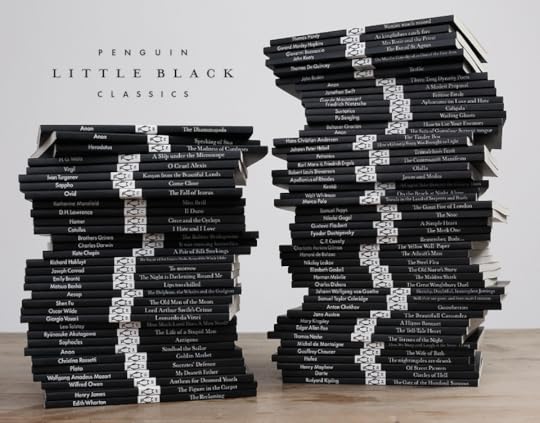
Introducing Little Black Classics: 80 books for Penguin's 80th birthday. Little Black Classics celebrate the huge range and diversity of Penguin Classics, with books from around the world and across many centuries. They take us from a balloon ride over Victorian London to a garden of blossom in Japan, from Tierra del Fuego to 16th century California and the Russian steppe. Here are stories lyrical and savage; poems epic and intimate; essays satirical and inspirational; and ideas that have shaped the lives of millions.
Pu Songling (1640-1715).
Pu Songling's Strange Tales from a Chinese Studio is available in Penguin Classics.
Some of the most macabre and wonderful of all Chinese stories, including 'The Golden Goblet', 'Scorched Moth the Daoist' and 'The Black Beast'
Introducing Little Black Classics: 80 books for Penguin's 80th birthday. Little Black Classics celebrate the huge range and diversity of Penguin Classics, with books from around the world and across many centuries. They take us from a balloon ride over Victorian London to a garden of blossom in Japan, from Tierra del Fuego to 16th century California and the Russian steppe. Here are stories lyrical and savage; poems epic and intimate; essays satirical and inspirational; and ideas that have shaped the lives of millions.
Pu Songling (1640-1715).
Pu Songling's Strange Tales from a Chinese Studio is available in Penguin Classics.
56 pages, Paperback
First published January 1, 1740
About the author
Pu Songling
437 books92 followersPu Songling (simplified Chinese: 蒲松龄; traditional Chinese: 蒲松齡; pinyin: Pú Sōnglíng; Wade–Giles: P'u Sung-ling, June 5, 1640—February 25, 1715) was a Qing Dynasty Chinese writer, best known as the author of Strange Stories from a Chinese Studio.
Pu was born into a poor landlord-merchant family from Zichuan (淄川, now Zibo, Shandong). At the age of nineteen, he received the gongsheng degree in the civil service examination, but it was not until he was seventy-one that he received the xiucai degree.
He spent most of his life working as a private tutor, and collecting the stories that were later published in Strange Stories from a Chinese Studio. Some critics attribute the Vernacular Chinese novel Xingshi Yinyuan Zhuan to him.
Pu was born into a poor landlord-merchant family from Zichuan (淄川, now Zibo, Shandong). At the age of nineteen, he received the gongsheng degree in the civil service examination, but it was not until he was seventy-one that he received the xiucai degree.
He spent most of his life working as a private tutor, and collecting the stories that were later published in Strange Stories from a Chinese Studio. Some critics attribute the Vernacular Chinese novel Xingshi Yinyuan Zhuan to him.
Ratings & Reviews
Friends & Following
Create a free account to discover what your friends think of this book!
Community Reviews
Displaying 1 - 30 of 302 reviews

November 19, 2015
We all know someone who tells absolutely terrible jokes. I’m not talking about the kind of jokes that are so terrible that they actually become funny, but the kind that are so terrible that they remain terrible. That’s a whole new level of terribleness. The only difference with Pu Songling’s terrible jokes is that they take on the form of short stories.
He’s full of dark and ironic humour. But, for me, a story needs more than a moment of irony or morbid injustice for it to be funny. The endings of most of the stories in here just left me wondering why anybody would actually bother to write them. They’re just utterly redundant. One of the stories describes a man who somehow survives a very near decapitation (I don’t need to mention the impossibilities of the situation) only to have his head fall of completely in a laughing fit some ten years later. That’s it. It’s a little ironic, that’s all it’s got. There is simply no more substance to it than that. There’s just nothing else to say about it.
I really don’t like this style of writing, and whilst I don’t directly hate it, I’ll never be trying anything else like it. To my mind, it is a low form of wit, if it can even be considered witty at all. I’d avoid this if you prefer humour that is actually developed. This just felt silly.
Penguin Little Black Classic- 07
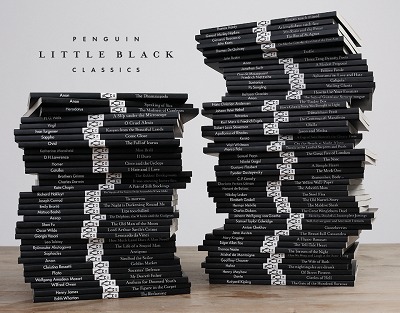
The Little Black Classic Collection by penguin looks like it contains lots of hidden gems. I couldn’t help it; they looked so good that I went and bought them all. I shall post a short review after reading each one. No doubt it will take me several months to get through all of them! Hopefully I will find some classic authors, from across the ages, that I may not have come across had I not bought this collection.
He’s full of dark and ironic humour. But, for me, a story needs more than a moment of irony or morbid injustice for it to be funny. The endings of most of the stories in here just left me wondering why anybody would actually bother to write them. They’re just utterly redundant. One of the stories describes a man who somehow survives a very near decapitation (I don’t need to mention the impossibilities of the situation) only to have his head fall of completely in a laughing fit some ten years later. That’s it. It’s a little ironic, that’s all it’s got. There is simply no more substance to it than that. There’s just nothing else to say about it.
I really don’t like this style of writing, and whilst I don’t directly hate it, I’ll never be trying anything else like it. To my mind, it is a low form of wit, if it can even be considered witty at all. I’d avoid this if you prefer humour that is actually developed. This just felt silly.
Penguin Little Black Classic- 07
The Little Black Classic Collection by penguin looks like it contains lots of hidden gems. I couldn’t help it; they looked so good that I went and bought them all. I shall post a short review after reading each one. No doubt it will take me several months to get through all of them! Hopefully I will find some classic authors, from across the ages, that I may not have come across had I not bought this collection.

June 20, 2019
While Charles Perrault, under the reign of the Sun King, compiled folk tales into what became a classic of Western European literature, Contes de ma mère l’Oye, Pu Songling, under the reign of the Qianlong Emperor, composed a similar book, Strange Stories from a Chinese Studio, now a classic of Chinese storytelling.
This volume is a short collection of these stories, most of them containing a fantastical element, magic, ghosts, waking dreams. A few of them, like “Growing Pears” have the tone of comedy, others, like “King of the Nine Mountains” have a tragic twist, others still like “The Black Beast” are somewhat enigmatic. All in all, there is a familiar and enjoyable whiff from The Arabian Nights.
This volume is a short collection of these stories, most of them containing a fantastical element, magic, ghosts, waking dreams. A few of them, like “Growing Pears” have the tone of comedy, others, like “King of the Nine Mountains” have a tragic twist, others still like “The Black Beast” are somewhat enigmatic. All in all, there is a familiar and enjoyable whiff from The Arabian Nights.

May 12, 2015
A beautiful selection of fables and tales. It is sad to see such a remarkable little book so underated, go back and read them again in the context of when they were scribed. A little knowledge of chinese myths and history would go a long way to appreciate these little gems. If you think that rubbish of the likes of Potter, twilight and grey are better then go away and come back when you have read a book.

March 5, 2018
"The slender arc of the moon shining in the western sky seemed to hold the hills in its mouth."
- Pu Songling, "The Golden Goblet"

Vol 7 of my Penguin Little Black Classics Box Set. This book is a series of short stories by Pu Songling (b. 1640), translated by John Minford, that focus on ghosts, trolls, faries, and the space between the normal and the paranormal. It is like a 17th century version of the X-files. Some of the stories were pretty damn good, and some were like boring police reports of a troll biting a farmer's head. I remember reading several of the stories in another collection 35+ years ago when I was 9 or 10. I was obsessed with fables and stories from Japan and China when I was in 2nd and 3rd grade. This book was worth reading, just for the nostalgia factor.
Here is a list of the stories in this short book:
1. The Troll
2. The Monster in the Buckwheat
3. Stealing a Peach
4. Growing Pears
5. The Golden Goblet
6. Wailing Ghosts
7. Scorched Moth the Taoist
8. The Giant Turtle
9. A Fatal Joke
10. A Prank
11. King of the Nine Mountains
12. Butterfly
13. The Black Beast
14. The Stone Bowl
- Pu Songling, "The Golden Goblet"
Vol 7 of my Penguin Little Black Classics Box Set. This book is a series of short stories by Pu Songling (b. 1640), translated by John Minford, that focus on ghosts, trolls, faries, and the space between the normal and the paranormal. It is like a 17th century version of the X-files. Some of the stories were pretty damn good, and some were like boring police reports of a troll biting a farmer's head. I remember reading several of the stories in another collection 35+ years ago when I was 9 or 10. I was obsessed with fables and stories from Japan and China when I was in 2nd and 3rd grade. This book was worth reading, just for the nostalgia factor.
Here is a list of the stories in this short book:
1. The Troll
2. The Monster in the Buckwheat
3. Stealing a Peach
4. Growing Pears
5. The Golden Goblet
6. Wailing Ghosts
7. Scorched Moth the Taoist
8. The Giant Turtle
9. A Fatal Joke
10. A Prank
11. King of the Nine Mountains
12. Butterfly
13. The Black Beast
14. The Stone Bowl

March 23, 2015
This slim volume contains a number of delightfully weird stories taken from "Strange Tales from a Chinese Studio" by Pu Songling (1640 - 1715). Apart from the fact that they are populated by supernatural beings (ghosts, poltergeists, shapeshifters and fantastic beasts), what makes these tales "weird" is that they defy Western conventions of the ghost or gothic story. Those expecting elaborate scene-painting or profound psychological probing will be disappointed. Instead, atmosphere and character are evoked in a few broad brushstrokes and the reader is immediately thrust into the narrative. The most otherworldly of happenings are described in matter-of-fact prose of fable-like simplicity - as if the boundary with the supernatural were but a veil which can be easily brushed away. The brevity of the tales needs some getting used to (some of the stories are only a couple of pages long) but the style grows on you and becomes unexpectedly addictive. Fans of the gothic who wish to read something different should look no further.
October 22, 2021
To opowieści, których mogłabym słuchać przy ognisku. Bardzo pozytywnie mnie zaskoczyły.

August 31, 2022
Pu Songling's stories operate on a similar level to the pieces of creative writing I wrote for my teachers when I was about 11, and, although I have no real axe to grind with this book, "mostly inoffensive" is probably the highest praise I could bestow upon it.
These stories might be of academic interest as a result of their place in history, but for a casual reader like myself, the only interesting thing about reading this sort of aged storytelling is that it impresses upon you just how short on entertainment people living before the advent of TV were, and how easy it must have been to wow them with general nonsensical supernatural weird stuff... Of course, the population at large was less scientific and much more superstitious back in the day.
These stories might be of academic interest as a result of their place in history, but for a casual reader like myself, the only interesting thing about reading this sort of aged storytelling is that it impresses upon you just how short on entertainment people living before the advent of TV were, and how easy it must have been to wow them with general nonsensical supernatural weird stuff... Of course, the population at large was less scientific and much more superstitious back in the day.


April 4, 2016
A really interesting collection Chinese folklore. At times dark, at times funny. Enjoyable if you remember you are reading folklore.

May 9, 2020
Plague Review 8: Wailing Ghosts by Pu Songling
Pu Songling's tales are about the mystical and weird phenomenon he encountered or heard of from his friends or in some cases from his friend's friend. The stories range from creature encounters, ghost stories, accounts of magic trick shows, and even short and gruesome "flash fiction". I went into this collection without knowing the context in which the stories were written. (There is no Introduction from any expert academic) But the most important thing to consider is the fact that A CASUAL HORROR FAN WILL ENJOY THESE STORIES. There is something for everyone, from tales of quiet horror and dread to gruesome yarns about monsters/cryptids. There is also a nice blending of the horrors of reality with those of the otherworldly; the tale "Butterfly" takes into account the real-life and disgusting effects of Syphilis and mixes it with the idea of otherworldly beings in the form of beautiful women.
In short, it's hard to believe that these tales were written in the 17th century; they may very well part of the foundation of horror tropes we see today, together with classics such as Grimm's tales, etc.
If you think this collection is for you, check out the discussion below of seven (7) stories in it.
1. The Troll
A second-hand account of a man visited by an evil creature while studying in a temple. The shocks and scare are upfront, the ending brings a chill, and the creature's origins are neither explained nor even hinted at.
2. The Monster in the Buckwheat
Another monster story. This time, it's about a creature stalking farmers in a buckwheat field. After initially driving it away, the monster comes back to harass them a second time. After another encounter, the monster claims a life. And the creature's origins are never explained.
I was surprised at the gory and graphic descriptions in this one.
3. Stealing a Peach
Pu Songling recounts a bizarre experience he had in his childhood while attending the Spring Festival. It involves the magic tricks of a traveling father and son who promised to produce a peach from heaven in front of the audience and the mandarins. The trick is grotesque but the reveal is priceless and awesome. (The trick is reminiscent of the Indian Rope Trick)
4. Growing Pears
A Taoist monk demonstrates to the masses how selfless he is by giving them pears from a tree he magically grew in a moment's notice. All of this to teach a greedy pear vendor a lesson. But is there magic involved?
5. The Golden Goblet
A trendsetting story, one that predates popular urban legends like Resurrection Mary as well as modern works like Stephen King's 1408. Read and be amazed.
6. Wailing Ghosts
Education Minister Wang Qixiang's home is the site of a massacre of rebels by government forces. After the clean-up of the physical bodies, the spirits remain. And they don't fear the human authority of Wang Qixiang.
7. Scorched Moth the Taoist
Hanlin academician Dong is hounded by fox-spirits in his home. Seeking to avoid them, he changes his residence. But the fox-spirits follow him still. His only hope is the famed exorcist Scorched Moth.
Like the previous story, this is another tale of exorcism. The methods are very unlike what western readers are accustomed to, so no crucifixes and holy water.
Pu Songling's tales are about the mystical and weird phenomenon he encountered or heard of from his friends or in some cases from his friend's friend. The stories range from creature encounters, ghost stories, accounts of magic trick shows, and even short and gruesome "flash fiction". I went into this collection without knowing the context in which the stories were written. (There is no Introduction from any expert academic) But the most important thing to consider is the fact that A CASUAL HORROR FAN WILL ENJOY THESE STORIES. There is something for everyone, from tales of quiet horror and dread to gruesome yarns about monsters/cryptids. There is also a nice blending of the horrors of reality with those of the otherworldly; the tale "Butterfly" takes into account the real-life and disgusting effects of Syphilis and mixes it with the idea of otherworldly beings in the form of beautiful women.
In short, it's hard to believe that these tales were written in the 17th century; they may very well part of the foundation of horror tropes we see today, together with classics such as Grimm's tales, etc.
If you think this collection is for you, check out the discussion below of seven (7) stories in it.
1. The Troll
A second-hand account of a man visited by an evil creature while studying in a temple. The shocks and scare are upfront, the ending brings a chill, and the creature's origins are neither explained nor even hinted at.
2. The Monster in the Buckwheat
Another monster story. This time, it's about a creature stalking farmers in a buckwheat field. After initially driving it away, the monster comes back to harass them a second time. After another encounter, the monster claims a life. And the creature's origins are never explained.
I was surprised at the gory and graphic descriptions in this one.
3. Stealing a Peach
Pu Songling recounts a bizarre experience he had in his childhood while attending the Spring Festival. It involves the magic tricks of a traveling father and son who promised to produce a peach from heaven in front of the audience and the mandarins. The trick is grotesque but the reveal is priceless and awesome. (The trick is reminiscent of the Indian Rope Trick)
4. Growing Pears
A Taoist monk demonstrates to the masses how selfless he is by giving them pears from a tree he magically grew in a moment's notice. All of this to teach a greedy pear vendor a lesson. But is there magic involved?
5. The Golden Goblet
A trendsetting story, one that predates popular urban legends like Resurrection Mary as well as modern works like Stephen King's 1408. Read and be amazed.
6. Wailing Ghosts
Education Minister Wang Qixiang's home is the site of a massacre of rebels by government forces. After the clean-up of the physical bodies, the spirits remain. And they don't fear the human authority of Wang Qixiang.
7. Scorched Moth the Taoist
Hanlin academician Dong is hounded by fox-spirits in his home. Seeking to avoid them, he changes his residence. But the fox-spirits follow him still. His only hope is the famed exorcist Scorched Moth.
Like the previous story, this is another tale of exorcism. The methods are very unlike what western readers are accustomed to, so no crucifixes and holy water.

April 25, 2015
Fourteen short stories in this penguin Little Black Classic, and be aware some are very short - like 2-3 pages long. This book is an excerpt or selection taken from "Strange Tales from a Chinese Studio" by Pu Songling (1640 - 1715).
They are readable, and descriptive, and all deal with some aspect of the supernatural, but for me they don't really qualify as stories... they are more, I don't really know, like a statement of description...
What I am trying to say, is they don't follow traditional lines, they throw the reader straight in with little description of the scene, describes an event, and that is the end. They generally end really abruptly, without a resolution or a morale as expected in a fable.
There are a couple of stories which were a little more 'normal', and I enjoyed more - these were Butterfly, Growing Pears and The Golden Goblet.
This is the shortest story, as I cannot be arsed typing a longer one! Hopefully this explains what I am on about above!
A Prank
A certain fellow of my home district, a well-known prankster and libertine, was out one day strolling in the countryside when he saw a young girl approaching on a pony.
"I'll get a laugh out of her, see if I don't!" he called out to his companions.
They were sceptical of his chances of success and wagered a banquet on it, even as he hurried forward in front of the girl's pony and cried out loudly, "I want to die! I want to die..."
He took hold of a tall millet stalk that was growing over a nearby wall and, bending it so that it projected a foot into the road, untied the sash of his gown and threw it over the stalk, making a noose in it and slipping it round his neck, as if to hang himself. As she came closer, the girl laughed at him, and by now his friends were also in fits. The girl then rode on into the distance, but the man still did not move, which caused his friends to laugh all the more. Presently they went up and looked at him: his tongue was protruding from his mouth, his eyes were closed. He was quite lifeless.
Strange that a man could succeed in hanging himself from a millet stalk. Let this be a warning to libertines and pranksters.
They are readable, and descriptive, and all deal with some aspect of the supernatural, but for me they don't really qualify as stories... they are more, I don't really know, like a statement of description...
What I am trying to say, is they don't follow traditional lines, they throw the reader straight in with little description of the scene, describes an event, and that is the end. They generally end really abruptly, without a resolution or a morale as expected in a fable.
There are a couple of stories which were a little more 'normal', and I enjoyed more - these were Butterfly, Growing Pears and The Golden Goblet.
This is the shortest story, as I cannot be arsed typing a longer one! Hopefully this explains what I am on about above!
A Prank
A certain fellow of my home district, a well-known prankster and libertine, was out one day strolling in the countryside when he saw a young girl approaching on a pony.
"I'll get a laugh out of her, see if I don't!" he called out to his companions.
They were sceptical of his chances of success and wagered a banquet on it, even as he hurried forward in front of the girl's pony and cried out loudly, "I want to die! I want to die..."
He took hold of a tall millet stalk that was growing over a nearby wall and, bending it so that it projected a foot into the road, untied the sash of his gown and threw it over the stalk, making a noose in it and slipping it round his neck, as if to hang himself. As she came closer, the girl laughed at him, and by now his friends were also in fits. The girl then rode on into the distance, but the man still did not move, which caused his friends to laugh all the more. Presently they went up and looked at him: his tongue was protruding from his mouth, his eyes were closed. He was quite lifeless.
Strange that a man could succeed in hanging himself from a millet stalk. Let this be a warning to libertines and pranksters.

March 30, 2015
This unfortunately wasn't for me. The stories were short which didn't bother me, but I felt they ultimately didn't have much of an impact. Endings were abrupt, and just felt ultimately a bit shrug-worthy. I did enjoy the surprise illustrations though!

August 11, 2026
2.5 ⭐️
This was nice to read about classic Chinese tales. There were a couple that I liked and found very funny. I do believe some were so short it makes it hard sometimes to take something from it. On the other hand, some stories don’t need a meaning and are just for you to hear.
This was nice to read about classic Chinese tales. There were a couple that I liked and found very funny. I do believe some were so short it makes it hard sometimes to take something from it. On the other hand, some stories don’t need a meaning and are just for you to hear.

Read
July 11, 201556 σελίδες, 14 ιστορίες = 4 σελίδες η ιστορία μέσος όρος
Πολύ σύντομες ιστορίες ευκολοδιάβαστες αλλά και ευκολοξέχαστες. . .
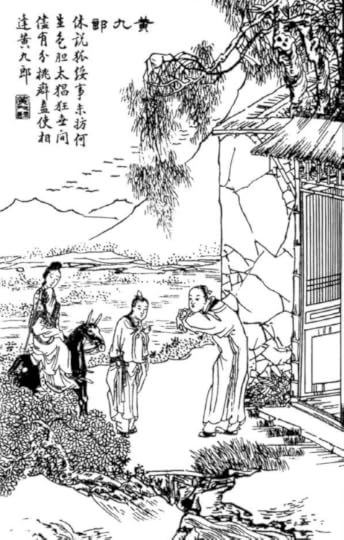
Με όμορφες εικόνες από το κινέζικο πρωτότυπο.
Κινέζικες ιστορίες του 17ου αιώνα. Ιστορίες φαντασίας με φαντάσματα, στοιχειά, δαίμονες, ταχυδακτυλουργικά τρικς και άλλα. Το αρνητικό είναι ότι είναι πολύ σύντομες και δεν σου μένει κάτι μετά.
Όπως και τα άλλα βιβλιαράκια της σειράς "Penguin Little Black Classics" δεν είναι παρά δείγματα και όχι κανονικά βιβλία.
Αυτό η έκδοση είναι από το Strange Tales from a Chinese Studio πάλι από το Penguins αλλά με 106 ιστορίες σε 600 κάτι σελίδες. Άρα αν κάποιος ενδιαφέρεται, να πιάσει το ολοκληρωμένο βιβλίο όχι αυτό το κουτσουρεμένο. 3 αστεράκια
Πολύ σύντομες ιστορίες ευκολοδιάβαστες αλλά και ευκολοξέχαστες. . .
Με όμορφες εικόνες από το κινέζικο πρωτότυπο.
Κινέζικες ιστορίες του 17ου αιώνα. Ιστορίες φαντασίας με φαντάσματα, στοιχειά, δαίμονες, ταχυδακτυλουργικά τρικς και άλλα. Το αρνητικό είναι ότι είναι πολύ σύντομες και δεν σου μένει κάτι μετά.
Όπως και τα άλλα βιβλιαράκια της σειράς "Penguin Little Black Classics" δεν είναι παρά δείγματα και όχι κανονικά βιβλία.
Αυτό η έκδοση είναι από το Strange Tales from a Chinese Studio πάλι από το Penguins αλλά με 106 ιστορίες σε 600 κάτι σελίδες. Άρα αν κάποιος ενδιαφέρεται, να πιάσει το ολοκληρωμένο βιβλίο όχι αυτό το κουτσουρεμένο. 3 αστεράκια
![Profile Image for [ J o ].](https://i.gr-assets.com/images/S/compressed.photo.goodreads.com/users/1673171874i/4639825._UY200_CR4,0,200,200_.jpg)
March 24, 2015
Very short Chinese tales from Pu Songling, from Zibo in the 17th century concerning ghosts, ghoulies and quite a lot of fox-spirits.
If short, Chinese tales are your thing (or you think they may be) then these are definitely for you. Personally I found them to be repetitive, badly written and akin to many such other stories of a similar length. It is, however, nice to enjoy another culture, particularly when it's obvious there are themes that are genuinely universal and can be seen in tales like these all over the world.
Blog | Instagram | Twitter | Pinterest | Shop | Etsy
If short, Chinese tales are your thing (or you think they may be) then these are definitely for you. Personally I found them to be repetitive, badly written and akin to many such other stories of a similar length. It is, however, nice to enjoy another culture, particularly when it's obvious there are themes that are genuinely universal and can be seen in tales like these all over the world.
Blog | Instagram | Twitter | Pinterest | Shop | Etsy

November 1, 2016
Read all my reviews on http://urlphantomhive.booklikes.com
According to the blurb Wailing Ghosts collects some of the most wonderful stories in Chinese literature. Unfortunately for me, I didn't like them. With some stories I was wondering if I was missing the clue, because the end was rather abrupt and not funny. At other times I was wondering if time might have influenced the appreciation of the stories. It could also just have been me.
They were very short but the writing wasn't particularly good. Still it was an easy read, but I wouldn't quickly pick up something else by this author.
Little Black Classics #7
According to the blurb Wailing Ghosts collects some of the most wonderful stories in Chinese literature. Unfortunately for me, I didn't like them. With some stories I was wondering if I was missing the clue, because the end was rather abrupt and not funny. At other times I was wondering if time might have influenced the appreciation of the stories. It could also just have been me.
They were very short but the writing wasn't particularly good. Still it was an easy read, but I wouldn't quickly pick up something else by this author.
Little Black Classics #7

January 13, 2021
Wailing Ghosts is a collection of short stories catering the weird, the haunted, the mystical and the fantasy realms of literature. This one is a "Little Black Classics" so it's short. But despite being short, I thoroughly enjoyed reading the collections of stories.
And with that, here are my short review/impression on each story in the collection:
- The Troll: Off to a good start.
- The Monster in the Buckwheat: (FORE)HEADSHOT!
- Stealing A Peach: WTF??!!
- Golden Goblet: Ok
- Wailing Ghosts: HUH??!!
- Scorched Moth the Taoist: Ok
- The Giant Turtle: CHINESE BOWSER!!!
- A Fatal Joke: Another WTF??!!
- A Prank: "IZZAPRANK" gone wrong
- King of the Nine Mountains: The least impressive story in the collection for me. But hey - the twist is good.
- Butterfly: My favourite story in the collection.
- Black Beast: (FORE)HEADSHOT - Animal Edition
- Stone Bowl: Aquarium turned into drugs!
And with that, here are my short review/impression on each story in the collection:
- The Troll: Off to a good start.
- The Monster in the Buckwheat: (FORE)HEADSHOT!
- Stealing A Peach: WTF??!!
- Golden Goblet: Ok
- Wailing Ghosts: HUH??!!
- Scorched Moth the Taoist: Ok
- The Giant Turtle: CHINESE BOWSER!!!
- A Fatal Joke: Another WTF??!!
- A Prank: "IZZAPRANK" gone wrong
- King of the Nine Mountains: The least impressive story in the collection for me. But hey - the twist is good.
- Butterfly: My favourite story in the collection.
- Black Beast: (FORE)HEADSHOT - Animal Edition
- Stone Bowl: Aquarium turned into drugs!

January 25, 2019
These classical Chinese short stories are a bit like Edgar Allen Poe meeting Geoffrey Chaucer. I was a big fan of them and I’d like to read more Songling in the future. It’s definitely recommended from me.

March 27, 2018
Very short and mostly very strange stories. Almost all of them included kind of magic, which I liked. From some I just couldn't get any meaning.

August 17, 2020
Odd stories that never succeed in causing goosebumps. Perhaps they would benefit from being whispered in the dark or told around a campfire; as they are, they're too short to delight and too stiff to be shocking.
July 17, 2025
the first half brought in the specific vibes i needed for this chilly morning
February 7, 2026
Některý povídky mě bavily, ale některý tolik ne. Jsou to takový ty klasický východoasijský bajky s deep poučením :D každopádně bylo to fajn, ale nějak extrémně mě to nezaujalo

November 11, 2023
lieb die Füchse!

October 31, 2017
2 Stars
January 8, 2017
This is the seventh of the Little Black Classics from Penguin Books. It's miniature tales of the paranormal, from Classical China.
Most of these were miniature to say the least, but still interesting. I enjoyed all of the tales and read through them quickly in one morning.
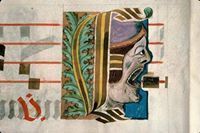
At first I was a little worried since I thought they were going to be scary, and I can't always handle that. But they were comical and at times weird. But highly enjoyable. There were a few black and white pictures in the book that made it nicer to read, they were situated by the stories to which they belonged to.
So far this is one of my favorites in this set.
Most of these were miniature to say the least, but still interesting. I enjoyed all of the tales and read through them quickly in one morning.
At first I was a little worried since I thought they were going to be scary, and I can't always handle that. But they were comical and at times weird. But highly enjoyable. There were a few black and white pictures in the book that made it nicer to read, they were situated by the stories to which they belonged to.
So far this is one of my favorites in this set.

July 31, 2017
Real rating: 5.6/10
I generally give classics some benefit of the doubt, but Pu Songling's stories are not translatable into English, in China there have been movies and TV shows based off these tales, but in English they are tepid horror tales that turn the Raven from psychological horror to thriller. Stories like the Black Beast are a page, or half a page depending on the size of your book. Most of the stories amount to monster showing up and then monster leaving, as if the sheer notion of the monster existing is enough. Again in the Chinese there is a vague ethereal quality to these stories, but in the English it is completely void of this quality.
Also if you know your Chinese folk tales and legends their are romance and love stories that contain more horror elements than these tales.
I generally give classics some benefit of the doubt, but Pu Songling's stories are not translatable into English, in China there have been movies and TV shows based off these tales, but in English they are tepid horror tales that turn the Raven from psychological horror to thriller. Stories like the Black Beast are a page, or half a page depending on the size of your book. Most of the stories amount to monster showing up and then monster leaving, as if the sheer notion of the monster existing is enough. Again in the Chinese there is a vague ethereal quality to these stories, but in the English it is completely void of this quality.
Also if you know your Chinese folk tales and legends their are romance and love stories that contain more horror elements than these tales.

August 29, 2015
An interesting collection of Chinese folktales. Some are a bit abrupt like The Black Beast. But there are several good stories in this collection. My favorites are: The Golden Goblet, King of the Nine Mountains and Butterfly.

June 10, 2015
There wasn't much of a story in some of them but mere narration of an incident. It could be that I don't fully understand the time and culture that's present in these stories.
January 31, 2016
Hier wordt het tijds- en cultuurverschil me een beetje te veel denk ik. "Een boer had een geest gezien. Niemand geloofde hem. De geest kwam en nam een hap uit zijn hoofd. EINDE"
July 18, 2024
finished and liked- Stealing a Peach, The Golden Goblet, King of the Nine Mountains and The Stone Bowl.
Displaying 1 - 30 of 302 reviews