Jump to ratings and reviews
Rate this book

A Cup of Sake Beneath the Cherry Trees

Rate this book
'It is a most wonderful comfort to sit alone beneath a lamp, book spread before you, and commune with someone from the past whom you have never met...'

Moonlight, sake, spring blossom, idle moments, a woman's hair - these exquisite reflections on life's fleeting pleasures by a thirteenth-century Japanese monk are delicately attuned to nature and the senses.

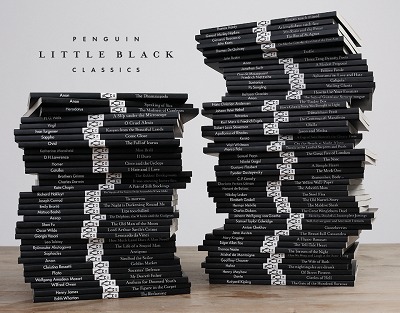
Introducing Little Black Classics: 80 books for Penguin's 80th birthday. Little Black Classics celebrate the huge range and diversity of Penguin Classics, with books from around the world and across many centuries. They take us from a balloon ride over Victorian London to a garden of blossom in Japan, from Tierra del Fuego to 16th-century California and the Russian steppe. Here are stories lyrical and savage; poems epic and intimate; essays satirical and inspirational; and ideas that have shaped the lives of millions.

Yoshida Kenko (c. 1283-1352).

Kenko's work is included in Penguin Classics in Essays in Idleness and Hojoki.

51 pages, Paperback

First published January 1, 1340

166 people are currently reading
5468 people want to read

About the author

Yoshida Kenkō

44 books88 followers
Yoshida Kenkō (吉田 兼好, 1283? – 1350?) was a Japanese author and Buddhist monk. His most famous work is Tsurezuregusa (Essays in Idleness), one of the most studied works of medieval Japanese literature. Kenko wrote during the Muromachi and Kamakura periods.

Ratings & Reviews

What do you think?
Rate this book

Friends & Following

Create a free account to discover what your friends think of this book!

Community Reviews

5 stars
771 (20%)
4 stars
1,538 (41%)
3 stars
1,085 (29%)
2 stars
255 (6%)
1 star
53 (1%)
Displaying 1 - 30 of 540 reviews
Profile Image for Valeriu Gherghel.
Author 6 books2,067 followers
May 30, 2024
Notațiile călugărului buddhist Yoshida Kenkō (c. 1283-1352) pot fi socotite și astăzi o lecție de simplitate și înțelepciune. Unele gînduri rămîn permanent valabile. Ferice de cel care e în stare să le aplice firesc, fără să-i pese de părerea celorlalți...

Yoshida Kenkō a fost influențat de proza fragmentară a lui Sei Shōnagon, la care trimite în cîteva rînduri. Învățăturile călugărului nu se deosebesc de sfaturile cinicilor. Un înțelept trebuie să deteste posesiunile, să înțeleagă că viața se compune din clipe fulgerătoare de frumusețe și că frumusețea însăși e prețuită tocmai datorită caracterului ei pieritor. Trandafirul e frumos pentru că este efemer.

Ofer cîteva extrase în speranța că vă voi face curioși, chiar dacă numita curiozitate nu e cea mai prețuită virtute în buddhism:

„Nu te poți încrede în nimic de pe lumea asta. Proștii își pun toată încrederea în lucruri și, astfel, devin mînioși și nefericiți”.

„E un lucru minunat să trăiești modest, să eviți plăcerile și bogăția și să nu-ți dorești nici glorie și nici avere. Înțelepții au fost rareori bogați. Cîndva a trăit în China un om cu numele Xu You, care nu poseda nimic: pînă și apa o bea din căușul mîinilor. Cînd a văzut asta, cineva i-a dat o tărtăcuță de dovleac sunătoare ca să o folosească în loc de cană; el a atîrnat-o într-un copac, dar, într-o zi, cînd a auzit cum șuieră în bătaia vîntului, a aruncat-o, deranjat de zgomotul pe care-l făcea, și s-a întors la obiceiul de a bea apă din căușul mîinii. Iată un spirit liber și pur!”.

„Un om cuminte nu va muri lăsînd în urmă obiecte de preț. O colecție de obiecte banale arată prost, în timp ce unele, bine alese, ar sugera atașamentul pueril față de lucrurile acestei lumi. Și e cu atît mai nepotrivit să lași în urmă o acumulare vastă. Vor avea loc lupte urîte după ce-o să mori și toată lumea o să vrea să pună mîna pe cîte ceva. Dacă plănuiești să lași ceva unei persoane anume, atunci mai bine o faci cît încă mai ești în viață. Anumite lucruri sînt necesare pentru trailul de zi cu zi, dar un om n-ar mai trebui să posede nimic altceva”.

„Adevăratul înțelept nu are cunoștințe sau virtute, nici onoare, nici faimă”.

„Se zvonea despre un călugăr novice din Inaba că are o fată frumoasă, și mulți bărbați veneau să-i ceară mîna. Dar fata nu mînca nimic altceva în afară de castane și nu se atingea de cereale, așa că tatăl ei a decis că era prea excentrică pentru a se mărita și i-a respins pe toți”.

P. S. La Editura Humanitas s-a tradus din engleză, în 2016, lucrarea lui Yoshida Kenkō,
Tsurezuregusa (Însemnări din ceasuri de zăbavă). O ceașcă de sake sub cirești este doar o selecție din Tsurezuregusa. N-am avut norocul să găsesc în vreo librărie ediția de la Humanitas.
Profile Image for Sean Barrs .
1,121 reviews47.9k followers
February 22, 2016
What strange folly, to beguile the tedious hours like this all day before my ink stone, jotting down at random the idle thoughts that cross my mind

Well, the first sentence certainly caught my attention because that’s exactly what I do with my book reviews. I sit in front of my notebook, with my pen in hand, and write the first thought that comes into my head in regards to the book. Admittedly, the train of thought is less random, but I still write down what comes to my mind. Later on, I organise it and turn it into a coherent book review. I only wish that Kenko had done something similar because this is a very random collection of thoughts. There is no perceivable ordering or any organisation.

I struggled with this initially because I like things to be categorised and structured. I don’t like mess and books that are all over the place. Indeed, this edition could be read back to front or odd pages first and even numbered pages after. It could even be picked up in the middle. It is, quite literally, the idle and most random thoughts of the author. He ponders all manner of things in here. However, once I got over the lack of coherence in the writings, I did find some wisdom and perhaps even a kindred spirit.

"It is a most wonderful comfort to sit alone beneath a lamp, book spread before you, and commune with someone from the past who you have never met".

description

I found myself agreeing with many of the author’s opinions. He is easy to sympathise with and relate to. He was clearly man who appreciated his books, and understood the comfort and joy that can be found within the pages of a worthy tome. He’s observations on how one should live their life are also quite accurate, at least in my opinion. He suggests that wealth should not be the measure of one’s life because it disturbs peace and tranquillity; it only leads to a corrupt mind, and cause other’s to lust over your treasure. I think in principle its sound advice, but not always in practice. Wealth can be accumulated and used benevolently, though that is quite rare. I just think at times, his thoughts sounded similar to my own.

"What happiness it is to sit in conversation with someone of like mind, warmed by candid discussion of the amusing and fleeting ways of the world……but such a friend is hard to find, and instead you do your best to fit in with whatever the other is saying, feeling deeply alone."

I feel like the author has made many true observations that will ring true in the heart of any bookworm. He understands because, by the sounds of things, he was one once too. I’m very glad I read this, and I do recommend it to those that wish to, as Kenko put it, commune with someone from the past.

description

Penguin Little Black Classic- 11

description

The Little Black Classic Collection by penguin looks like it contains lots of hidden gems. I couldn’t help it; they looked so good that I went and bought them all. I shall post a short review after reading each one. No doubt it will take me several months to get through all of them! Hopefully I will find some classic authors, from across the ages, that I may not have come across had I not bought this collection.
Profile Image for Helga.
1,386 reviews479 followers
April 20, 2025
What a glorious luxury it is to taste life to the full for even a single year. If you constantly regret life’s passing, even a thousand long years will seem but the dream of a night.

This is a collection of essays or should I say philosophical notes by a 14th century Japanese poet and monk.
The overall theme revolves around life’s fleeting nature and its impermanence, finding joy and contentment in the unadorned and realizing the beauty in simplicity and the incomplete.

It is a most wonderful comfort to sit alone beneath a lamp, book spread before you, and commune with someone from the past whom you have never met.
Profile Image for 7jane.
825 reviews367 followers
June 3, 2018
"It is a most wonderful comfort to sit alone beneath a lamp, book spread before you, and commune with someone from the past whom you have never met."

A good selection bundle from "Essays In Idlelness" (c.1329-31), which I've read, in its Finnish translation, a couple year ago - and which I should reread at some point. The book was written in the author's later years (no doubt because he had time *lol*). It's a collection of reflections on idle moments and life's fleeting joys. Observations mix with stories. Sei Shonagon and 'The Tale Of Genji' are mentioned.

The subjects vary: on qualities of man/life (incl. wealth, pursuing goals, idleness vs. busy with the world), love, seasons and nature, on luck, right friends, treatment of animals, who is truly a criminal, ways of drinking, home style (he really love wabi-sabi style of living)... there's much to talk about, even in this selection. You might take pauses in reading even here, since it might become a bit mind-numbing (but that doesn't take any from the quality of the book or the writing).

A good taster that makes you want to read the main thing, or something you can take with you if you don't want to take the whole book along with you; it's a cheap book with quality content, and thus a good choice and experience.
Profile Image for Flo.
649 reviews2,245 followers
February 12, 2018
If our life did not fade and vanish like the dews of Adashino's graves or the drifting smoke from Toribe's burning grounds, but lingered on for ever, how little the world would move us. It is the ephemeral nature of things that makes them wonderful.
Among all living creatures, it is man that lives the longest. The brief dayfly dies before evening; summer's cicada knows neither spring not autumn. What a glorious luxury it is to taste life to the full for even a single year. If you constantly regret life's passing, even a thousand long years will seem but the dream of a night.

I must have read this a hundred times; different words to express the same point of view, but only now - *putting pieces of mind together*

~

It is a most wonderful comfort to sit alone beneath a lamp, book spread before you, and commune with someone from the past whom you have never met.

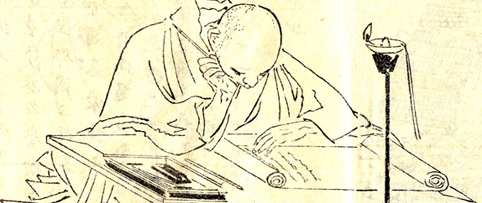
With pithiness and elegance, Kenkō described my entire world.


Jan 30, 18
* Later on my blog.
Profile Image for Darwin8u.
1,835 reviews9,034 followers
March 21, 2018
"It is the emphemeral nature of things that makes them wonderful."
Yoshida Kenkō, Essays in Idleness

description

Vol 11 of my Penguin Little Black Classics Box Set. It contains selections from Kenkō's (Japanese author and Buddhist monk; 1283-1352) Essays in Idleness aka The Harvest of Leisure. As a half-assed, lazy, Zen Mormon, I completely dug this. My whole point of pushing through Penguin's Little Black Classics is to find gems I had only read bits of, or was only aware of partially. Reading this introduction has pushed Kenkō forward a whole bunch in my to-read list.

Some of my favorite observations:

"things thought but left unsaid only fester inside you..."
"I have relinquished all that ties me to the world, but one thing that still haunts me is the beauty of the sky."
"It is a most wonderful comfort to sit alone beneath a lamp, a book spread before you, and commune with someone from the past whom you have never met."
"Even people who seem to lack any finer feelings will sometimes say something impressive."
"If you can never linger beneath the clouded moon on a plum-scented evening, nor find yourself recalling the dawns when you made your way home through the dew-soaked grasses by her gate after a night of love, you had best not aspire to be a lover at all."
Profile Image for Leonard Gaya.
Author 1 book1,172 followers
November 21, 2019
I had practically no knowledge of Yoshida Kenkō’s writings before reading this short taster. Kenkō was a Buddhist hermit who lived in early 14th-century Japan, and this is a selection from his Essays in Idleness. These short texts are, for the most part, reflections on life, fleeting moments of happiness, the beauty found in small things, how to lead a good life and so on — even on how to drink responsibly! All the while, the author keeps jumping randomly from one remark, comment or anecdote to the next.

In a way, Kenkō shares some similarities with parts of Western philosophy, especially ancient wisdom and spirituality, typically the writings of the Stoics or the Epicureans. It even bears some resemblance to philosophers such as Montaigne, Pascal or Nietzsche. However, there is probably something particular that shines through in this book. Kenkō has a clear inclination for poetic descriptions, and his attitude is always light and gentle, almost appeasing.
Profile Image for Michelle Curie.
1,082 reviews458 followers
July 29, 2016
I wonder if Kenkō had many friends. He scorns gossip and too much talking, spending more time with people than necessary and is not a fan of the physical closeness followed by marriage either. And yet, he comes across as an attentive and comfortable person with some important questions to ask.

Yoshida Kenkō was a Japanese author and Buddhist monk, who lived in the 13th century. In this Little Black Classic, we are presented a very random collection of writings in which he reflects on a very random collection of observations.


The writing was approachable, clear and easy to understand (and in some cases, relate to). It's remarkable, considering how this has been written hundreds of years ago. I suspect that any bookworm will find comfort in his words:

"It is a most wonderful comfort to sit alone beneath a lamp, book spread before you, and commune with someone from the past whom you have never met."

Funny to think that some things just don't change, no matter how many centuries pass! While some passages are descriptive, most are of a more reflective nature. Those were the interesting ones that made this book one of my favorites in the series so far:

"Neither those who praise us nor those who denigrate will remain in the world for long, and others who hear their opinions will be gone in short order as well. Just who should we feel ashamed before, then? Whose is the recognition we should crave?"

When he starts to talk about social matters, I found myself rather amused. He's quite blunt about his feelings towards other people and doesn't shy away from explicitly saying that he has better things to do with his time than talking. All in all, this was a fun short little read that I thought of as insightful and entertaining.

Roughly a year ago Penguin introduced the Little Black Classics series to celebrate Penguin's 80th birthday. Including little stories from "around the world and across many centuries" as the publisher describes, I have been intrigued to read those for a long time, before finally having started. I hope to sooner or later read and review all of them!
Profile Image for Chris_P.
385 reviews346 followers
December 3, 2015
"It is a most wonderful comfort to sit alone beneath a lamp, book spread before you, and commune with someone from the past whom you have never met."

"It is an excellent thing to live modestly, shun luxury and wealth and not lust after fame and fortune. Rare has been the wise man who was rich."

"How mutable the flower of the human heart, a fluttering blossom gone before the breeze's touch - so we recall the bygone years when the heart of another was our close companion, each dear word that stirred us then still unforgotten; and yet, it is the way of things that the beloved should move into worlds beyond our own, a parting far sadder than from the dead."

"Rather than seizing thieves and punishing their crimes, it would be better to make the world a place where people did not go hungry or cold.(...)People steal from extremity. There will be no end to crime while the world is not governed well and men suffer from cold and starvation. It is cruel to make people suffer and drive them to break the law, then treat the poor as criminals.As for how to improve people's lives, there can be no doubt that it would benefit those below if people in high positions were to cease their luxurious and wasteful ways and instead were kind and tender to the people, and encouraged agriculture. The true criminal must be defined as a man who commits a crime though he is as decently fed and clothed as the others."

"If you can never linger beneath the clouded moon on a plum-scented evening, nor find yourself recalling the dawns when you made your way through the dew-soaked grasses by her gate after a night of love, you had best not aspire to be a lover at all."

This little black book is filled with timeless, everyday-life philosophy that truely makes you realize how some things will never be dated.
Profile Image for Sotiria Lazaridou.
737 reviews55 followers
November 25, 2025
A Cup of Sake Beneath the Cherry Trees is a brief yet quietly resonant work that earns its 4 stars through the elegance of its simplicity. it reads less like a conventional narrative and more like an intimate conversation with a wandering mind, one that observes life with a blend of wry humour, gentle melancholy and a deep appreciation for fleeting beauty. the prose carries the texture of stillness, inviting the reader to dwell in its pauses rather than rush through its pages. though its episodic structure may feel airy at times, that lightness is precisely what gives the book its charm: it offers reflections that settle softly but unmistakably. it is a contemplative sip of literature, as it feels unassuming, subtly fragrant and ultimately satisfying, leaving behind an aftertaste that lingers longer than expected.
Profile Image for Anima.
431 reviews80 followers
February 21, 2019
‘What happiness to sit in intimate conversation with someone of like mind, warmed by candid discussion of the amusing and fleeting ways of this world … but such a friend is hard to find, and instead you sit there doing your best to fit in with whatever the other is saying, feeling deeply alone.‘
‘A man famed for his tree-climbing skills once directed another to climb a tall tree and cut branches. While the fellow was precariously balanced aloft, the tree-climber watched without a word, but when he was descending and had reached the height of the eaves the expert called to him, ‘Careful how you go! Take care coming down!’
‘Why do you say that? He’s so far down now that he could leap to the ground from there,’ I said.
‘Just so,’ replied the tree-climber. ‘While he’s up there among the treacherous branches I need not say a word – his fear is enough to guide him. It’s in the easy places that mistakes will always occur.’
Profile Image for Zak.
409 reviews32 followers
November 26, 2017
Observations of a 13th-century Japanese monk. While there are some nuggets of wisdom here, the writing doesn't particularly strike me as coming from a highly enlightened person. Yoshida Kenko comes across as somewhat of a misanthrope, with his fair share of prejudices. The writing reveals flashes of egotism and I found some of his points hard to agree with. This leads me to believe that whatever 'wisdom' he exhibits is knowledge that is learned and parroted from Buddhist scriptures and not the type that is derived from reflection and self-realisation. I am surprised this has been included in the Penguin "Little Black Classics" series.

Final rating: 2.5*
Profile Image for Magdalena Golden.
252 reviews15 followers
April 27, 2015
The book, being an account of a medieval monk, obviously contains passages which are either dated or constricted or both. But the most stunning thing about it is that the vast majority is neither. Reading those short musings and observations it's easy to realise how, despite the world we live in changing daily, the people have not really changed all that much over the past 700 years. Which can be both comforting or disheartening, depending how you look at it ;)
Profile Image for [ J o ].
1,966 reviews551 followers
February 9, 2017
Yoshida Kenko was a 13th-14th Century Japanese Buddhist Monk and wrote essays in idleness, though he wrote poetry, too.

This book contains select passages from his Essays in Idleness, which concern so many different themes, ranging from the marvel of nature to passing musings on death. Like a lot of past male writings, there is occasional misogyny, with an odd and contradictory love toward women at the same time. His musings are all at the same time lyrical and beautiful, haunting and jarring and altogether a wonder to read.


Blog | Instagram | Twitter | Pinterest | Shop | Etsy
Profile Image for umama..
44 reviews13 followers
October 20, 2025
2.5 ⭐... i guess
there was some part i liked, some part i hated, some i didn't quite get it and some i skipped. i have mix feelings about this book. but what i liked i really liked a lot.
Profile Image for Vishy.
806 reviews285 followers
January 28, 2020
I have wanted to read Yoshida Kenko's little gem for a long time. It contains selections from Kenko's longer book 'Essays in Idleness'. Yoshida Kenko was a Japanese Zen monk who lived between the late 1200s and the middle 1300s. In this book, in pieces ranging in length from a few lines to a few pages, Kenko shares his thoughts on anything and everything – about life, nature, the changing seasons, love, beauty, the pleasures of reading, the pleasures of drinking sake, the pleasures of idleness, the beauty of imperfection, following the Buddhist path and many other topics in between. Many of the pieces are like beautiful essays. Some of them are prescriptive, but still beautiful. The book featured these legendary lines, of course :

"It is a most wonderful comfort to sit alone beneath a lamp, book spread before you, and commune with someone from the past whom you have never met."

Which was exactly what I was doing while reading Kenko's book.

There were also insightful passages like this :

"If our life did not fade and vanish like the dews of Adashino's graves or the drifting smoke from Toribe's burning grounds, but lingered on for ever, how little the world would move us. It is the ephemeral nature of things that makes them wonderful.
Among all living creatures, it is man that lives longest. The brief dayfly dies before evening; summer's cicada knows neither spring nor autumn. What a glorious luxury it is to taste life to the full for even a single year. If you constantly regret life's passing, even a thousand long years will seem but the dream of a night."

There were also beautiful stories which offered words of wisdom.

I had so many favourite lines and passages in the book, in nearly every page. I am so glad I read Kenko's book. It is a beautiful, little gem. I want to read the longer version 'Essays in Idleness' now.

Have you read Kenko's book? What do you think about it?
Profile Image for Rikke.
615 reviews654 followers
January 9, 2019
It is a most wonderful comfort to sit alone beneath a lamp, book spread before you, and commune with someone from the past whom you have never met.

Beautifully written. If I had a pen while reading this book, it would have been a beautiful massacre of underlined sentences, a firework of tiny stars and exclamation marks.

These tiny essay excerptions from a thirteenth-century Japanese monk leaves much food for thought. When reading Kenkō's praises of boredom, I couldn't help but wonder how he would feel about today's smartphones, stealing away our minutes, filling our pauses. I'm sure he would have much to say about the subject.

And that's the thing that impresses me about his writing; it feels so very modern. So many of his arguments and thoughts are applicable to the lives we lead today. I could easily have been fooled into thinking that book was more recently published.

There is nothing finer than to be alone with nothing to distract you.
Profile Image for Anastasia Kay.
572 reviews57 followers
August 26, 2015
a tiny shiny diamond....it was the title which captured me in buying it but I was astonished finding myself rejoice as the pages were turning down....it's the kind of book I love to come back and read on and on....
Profile Image for Vanessa ♔.
236 reviews15 followers
March 7, 2025
A bunch of observations written down by a monk of the 13th century.

Some things he wrote were relatable, some were just weird, the rest was common sense, so nothing new.
Profile Image for Jade.
97 reviews77 followers
October 20, 2022
“rather than seizing thieves and punishing their crimes, it would be better to make the world a place where people did not go hungry or cold”- wanneer een motherfucking monnik uit de veertiende eeuw het beter begrijpt dan mark rutte
Profile Image for Dario Boen.
163 reviews13 followers
April 19, 2024
While this had some goated insights I do feel that bro oftentimes portrays his opinion on life as evident and universally true. I don't agree with everything and would say this book is a 50/50, but that makes it all the better because you learn your own views better through adversity. Of course bro also lived a long ass time ago in Japan so there are bound to be some takes that are outdated. Enjoyed this nevertheless
Profile Image for asih simanis.
207 reviews130 followers
April 9, 2017
"To be born into this world, it seems, brings with it so much to long for"

This book is filled with many pleasant beautiful writings such as this. But at some point it felt to me that it became a ramble of a person who hated everyone else because he knew best how to live, a bit Seneca like. Ah well it's an old book, written in the 1300s, what can you expect?
Profile Image for hafsah.
524 reviews253 followers
May 2, 2024
bro just wants to stay at home 24/7, look at the moon, and write in his lil journal.........and i respect it
Profile Image for Showering.
155 reviews10 followers
April 15, 2022
"Should we look at the spring blossoms only in full flower, or the moon only when cloudless and clear? To long for the moon with the rain before you, or to lie curtained in your room while the spring passes unseen, is yet more poignant and deeply moving."

I have finished reading this last week (I think) so this is my pending review for this book. This is my first penguin classic book, A Cup of Sake Beneath the Cherry Tree by Kenkō. To be honest, even though it only contain about 51 pages, it took me quite a long time to finish it just because I find it hard to understand the words & I get sleepy when reading it 🤣 Basically the author just dump different things on every passage which makes me freaking confuse at first and my mind all jumbled up. BUT all passages amazed me in different sorts of way. Yoshida Kenkō is a 13th century Japanese Buddhist monk and basically this are all from his observations + concerns on different aspects of things. Though I get sleepy when reading it, it is still beautiful written and that's why I manage not to fall asleep. I'm giving it 4 ⭐️ for the beautifully written and it also about so many things that I find impressive. I definitely love his poems too! Im glad I pick this up, I love challenging myself to read things I'm not familiar with, I ain't stopping, will definitely collect more this little black penguin classics ❤️

Profile Image for cathy.
126 reviews3 followers
April 15, 2025
this little book contained a multitude of wise words on the ephemeral cycle of oneself and how that very fragile nature makes life so profoundly meaningful. even though I disagreed with some beliefs in this Buddhist collection (the way this monk thought about women and trust specifically), I was still so immersed, pondering and conversing with the text and its beautiful words. I already know this will be a book that I will return to very often
Profile Image for Eadweard.
604 reviews521 followers
December 20, 2017
" Should we look at the spring blossoms only in full flower, or the moon only when cloudless and clear? To long for the moon with the rain before you, or to lie curtained in your room while the spring passes unseen, is yet more poignant and deeply moving. A branch of blossoms on the verge of opening, a garden strewn with fading petals, have more to please the eye. Could poems on the themes of ‘Going to view the blossoms to find them already fallen’ or ‘Written when I was prevented from going to see the flowers’ be deemed inferior to ‘On seeing the blossoms’? It is natural human feeling to yearn over the falling blossoms and the setting moon – yet some, it seems, are so insensitive that they will declare that since this branch and that have already shed their flowers, there is nothing worth seeing any longer. "


-----


" In all things, the beginning and end are the most engaging. Does the love of man and woman suggest only their embraces? No, the sorrow of lovers parted before they met, laments over promises betrayed, long lonely nights spent sleepless until dawn, pining thoughts for one in some far place, a woman left sighing over past love in her tumbledown abode – it is these, surely, that embody the romance of love. "


-----


" Among the people coming and going in front of the stands there are many you recognize, making you realize there are not really so many people in this world. Even if you were destined to die after all these others, clearly your own death cannot be far away. When a large vessel filled with water is pierced with a tiny hole, though each drop is small it will go on relentlessly leaking until soon the vessel is empty. The city is filled with people, but not a day would go by without someone dying. And is it only one or two a day? There are times when the corpses on the pyres of Toribe, Funaoka and elsewhere further afield are piled high, but no day passes without a funeral. And so the coffin sellers no sooner make one than it is sold. Be they young, be they strong, the time of death comes upon all unawares. It is an extraordinary miracle that we have escaped it until now. Can we ever, even briefly, have peace of mind in this world? "
Profile Image for Shazia Noor.
198 reviews22 followers
November 2, 2020
'It is a most wonderful comfort to sit alone beneath a lamp, book spread before you, and commune with someone from the past whom you have never met...'

"A Cup of Sake Beneath the Cherry Trees" is written by a Japanese author and a Buddhist monk, Yoshida Kenkō and translated by Meredith McKinney. This book is a set of random observations and thoughts regarding random things in life. You can read this book from anywhere, from the middle or the end, because there's no organised manner in which it is written and that really didn't bother me much. A very short read but full of wisdom and tranquility. I agreed with Kenkō at so many points that felt like they're my own beliefs.
There are times when some truths and facts make us laugh and so did a paragraph about going to meet someone and staying longer than needed did to me. I read that passage twice or thrice.😂
It's a book easy to read and relate to. Glad that I read it.❤️

Definitely recommend everyone to read it!
Profile Image for Larisa.
154 reviews8 followers
March 3, 2024
"If our life did not fade and vanish like the dews of Adashino's graves or the drifting smoke from Toribe's burning grounds, but lingered on for ever, how little the world would move us. It is the ephemeral nature of things that makes them wonderful."

"No, the sorrow of lovers parted before they met, laments over promises betrayed, long lonely nights spent sleepless until dawn, pining thoughts for one in some far place, a woman left sighing over past love in her tumbledown abode - it is these, surely, that embody the romance of love."
Displaying 1 - 30 of 540 reviews

Can't find what you're looking for?

Get help and learn more about the design.